Euro ≠ “Bad Marriage”
Euro is an incomplete currency union running on TARGET2 & ECB QE plumbing. Breakup = instant redenomination risk, spiking term premia, bank runs & capital controls. You don’t fix an OCA by nuking the unit of account; you finish banking & fiscal union.
The Euro is like a bad marriage. Many think it should end, but divorce is scary, especially when one side keeps threatening the apocalypse. The truth is that Europe would be stronger without the Euro and better able to confront myriad external threats...
https://t.co/ytcaAzhqX6
Piketty’s Green Utopia Is Just Planning with Better Branding
Piketty represents the old left-wing temptation: solve inequality and climate through planning, limits and redistribution. The sensible answer is different: freedom, innovation, competition and growth. Solar, wind and batteries became viable because markets innovated — not because planners ordered stagnation.
The world today is characterized by large-scale inequalities. And a climate crisis is looming over us.
We urgently need a new vision for global progress in the 21st Century. One that grounds human development and equality in planetary habitability.
What would it take to achieve high prosperity and equality while remaining within planetary boundaries?
The World Inequality Lab is very excited to launch the #GlobalJusticeReport.
[1/7]
Britain After the Illusion
Blair’s essay sounds like frustration — almost desperation.
He sees a UK losing power in a G2/G3 world, trapped by obsolete politics, weak growth and Brexit’s spectacular strategic damage.
“Global Britain” was never a strategy. It was a slogan masking geoeconomic decline.
The Danish Experiment
Food VAT cuts, free dental care, lower taxes, strict migration, 5% defence and EU tech sovereignty.
Frederiksen’s new coalition may be messy — but it captures Europe’s new dilemma: protect citizens, stay competitive, rearm fast, and control borders.
https://t.co/NpdkPbYdkf
Japan’s Silent “Liz Truss” Moment
When yields rise and the currency falls, something deeper is breaking. Japan is showing the new G10 macro rule: debt is no longer free, central banks cannot suppress bond markets forever, and FX becomes the verdict on credibility.
I'm endlessly amazed by the group-think in global macro. There's endless coverage of the fiscal struggles of the UK and its "Liz Truss" bond market blow-up in 2022. But Japan is in exactly this kind of blow-up for 2 years now and you hear nothing about it.
https://t.co/reEY3Tj3pl
The AI Shock: Productivity, Power and Interest Rates (a must read)
AI is not just about jobs or chatbots.
It is entering the core of macroeconomics: productivity, inflation, neutral rates, asset bubbles, data centres, energy and geopolitical power. Central banks are waking up to the real issue: AI may be disinflationary. But the AI investment boom may also push rates higher.
This Riksbank paper is well worth reading.
https://t.co/ebDaior9Ib
Europe’s AI Moment: SoftBank Bets on France
SoftBank’s €75bn move into Hauts-de-France shows that the AI race is becoming a race for sovereign infrastructure: electricity, data centres, chips, industrial supply chains and regulatory speed.
France is playing its nuclear card and leading the way. The rest of Europe must now decide whether it wants to be a digital colony — or a geoeconomic actor.
https://t.co/mjrxZtUmh1
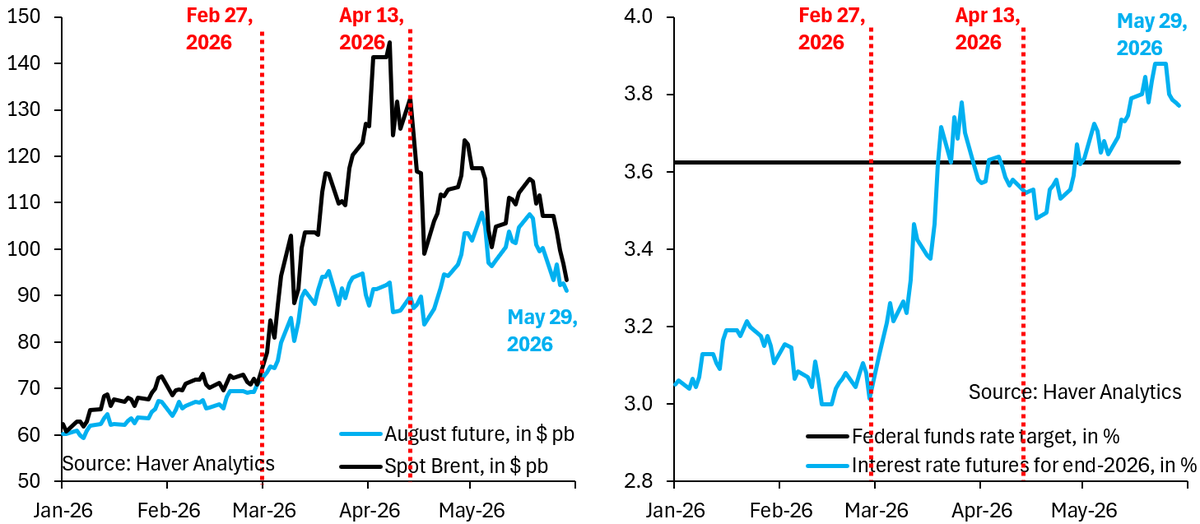
Oil Says Relief. Rates Say Anxiety.
A good point by @robin_j_brooks. Oil is no longer validating the inflation scare. Rates still are. That means markets may be pricing more than energy: fiscal risk, tariff risk, geopolitics and Fed credibility. The disconnect will close. The question is whether via cuts, a weaker dollar — or a credibility repricing.
There's a disconnect in markets at the moment. Oil prices have fallen substantially from their highs back in early April (lhs), but rates markets still price hikes from the Fed this year (rhs). That'll resolve in favor of cuts from the Fed and Dollar down.
https://t.co/gtp8nl1bGE
One of the most pivotal defenses of democracy and rules-based order. A must watch
Teodoro today, in Singapore, like Carney at Davos, understands that middle powers must stop performing obedience to a broken order. Rules still matter. But they only survive if countries with legitimacy, courage and strategic autonomy are willing to defend them.
https://t.co/ZQfoSVys0R
Europe Fiscal Schizophrenia Dilema
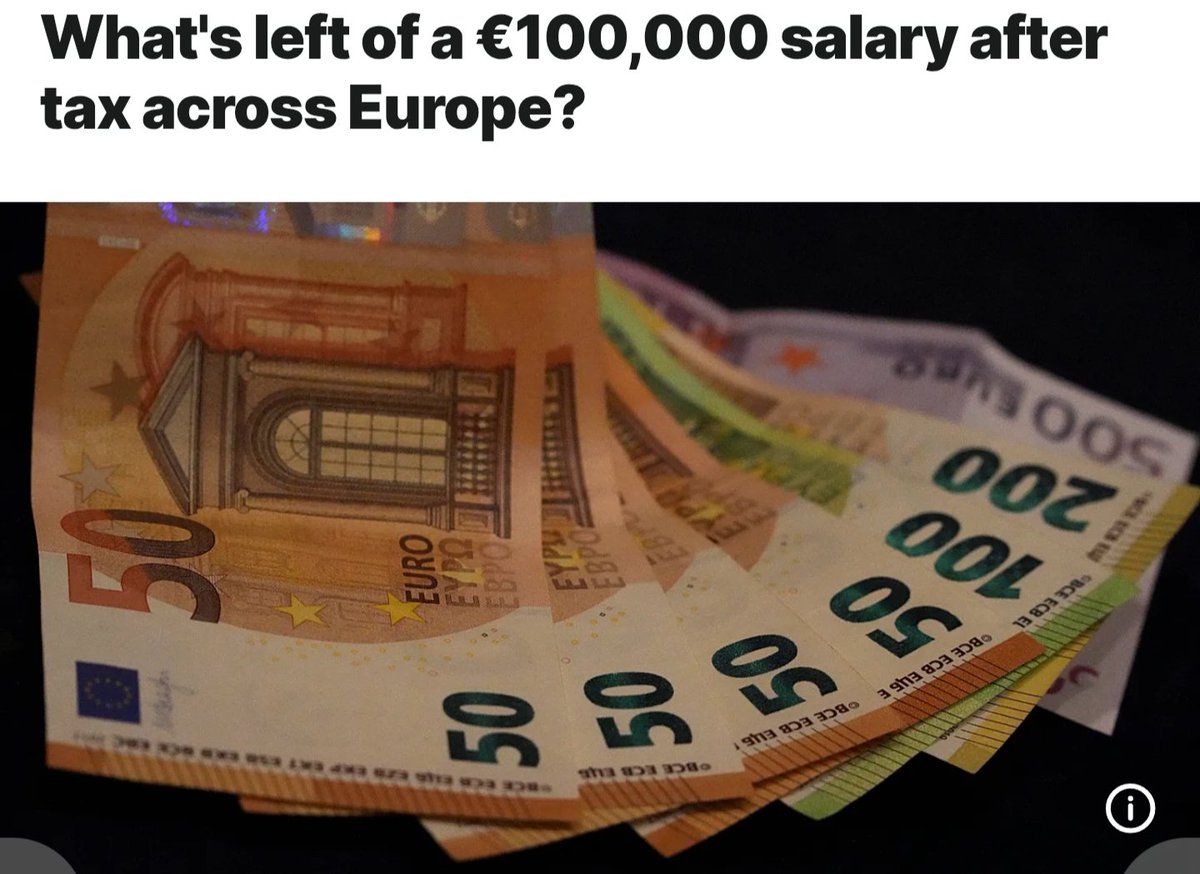
Europe courts foreign investors with incentives, golden doors and soft treatment — while squeezing local residents, professionals and entrepreneurs through brutal income taxation. FDI is welcomed. Domestic ambition is taxed.
https://t.co/q1S5F5Wnir
@__paleologo I disagree 1000%. The Luce is a turning point. A master stroke. A fabulous milestone and not just one more electric car desperately trying to compete with Chinese rivals. Well done Ferrari! Superbe.
The Silent Time Bomb Beneath the Global Economy
The FT rightly warns that fertility decline is no longer a rich-country anomaly, but a global transition moving at asymmetric speeds. Europe, China, Japan and Korea face demographic compression; Africa still has demographic expansion, but with risks of underemployment and migration pressure. The geoeconomic equation is brutal: GDP potential = labour force growth + productivity growth. If births fall and productivity does not accelerate, ageing economies lose fiscal space, industrial capacity and strategic autonomy. Demography is becoming hard power. A must read.
https://t.co/bSoFW15tm4
Beijing Summit: Did Trump Win Deals, or Did Xi Preserve Geoeconomic Leverage?
Trump took America’s corporate A-list to Beijing and came back with pageantry, vague soy/oil promises and a Boeing commitment — not a strategic reset. Xi kept leverage on rare earths, tech and Taiwan, and paid mostly in maybes. That is not victory. It is managed dependence.
https://t.co/PJ3smCpz60
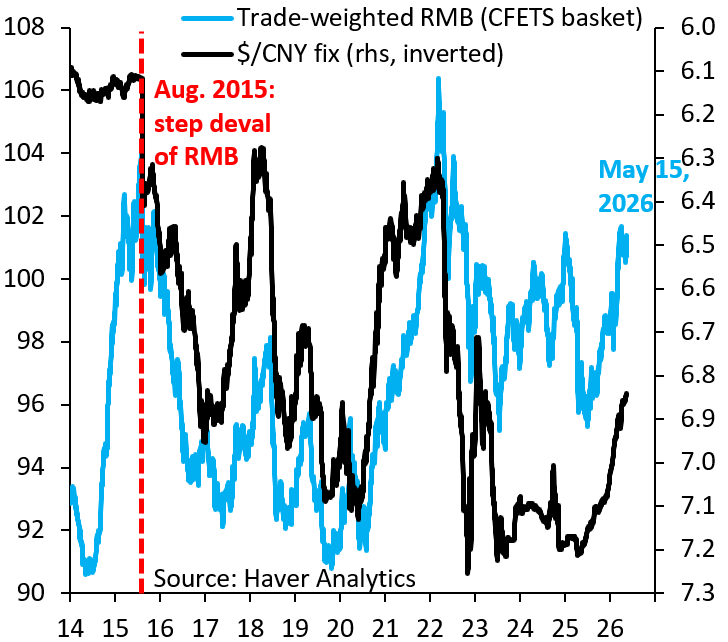
The RMB Trap: How China Makes the World Pay for Its Mercantilism
China is not trying to win a fair productivity race. It is trying to lock the world into structural dependency on Chinese industrial capacity, while pushing the adjustment burden onto everyone else. The result is simple: China exports deflation, absorbs global demand, and forces others to carry the cost.
The single best thing China can do for the world is to allow the massively undervalued RMB to rise, but it'll never do that. RMB is just a function of China's mercantilist growth model that takes growth for itself from everyone else. That'll never change.
https://t.co/zG0TRyqSFt
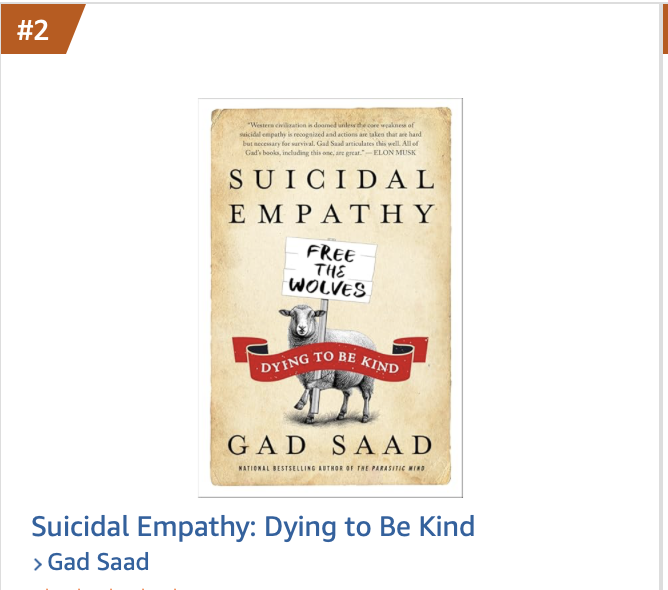
Can the West Survive Its Own Compassion?
Gad Saad’s “Suicidal Empathy” is really about a hard civilizational question: can liberal societies remain humane without becoming strategically naïve? Empathy is a virtue. But when detached from reciprocity, borders, law and consequences, it can become a vulnerability. A must read.
Read This Before Talking About Oil
This FT piece is essential reading. Too many policymakers, analysts and investors still treat the oil futures curve as a crystal ball. It is not. It is a stressed map of hedging, scarcity, liquidity and risk. If you want to understand oil, inflation and geopolitics, start here.
https://t.co/8B1KqdWoHd
Europe 2050: Vision or Scenario Discipline?
Europe 2050 is the right question—but the wrong method if it becomes one destination. In a world of war, AI, climate shocks and demographic decline, Europe needs not a vision but scenario discipline: conditional futures, triggers, and options to pivot before history does.
I have embarked, with Beatrice Weder di Mauro, Pascal Lamy, and Enrico Letta on a major project, called Europe 2050. The idea is to think about what we want Europe to be in 2050, look at where it is today, and how we can go from here to there. (Thanks to Mr Putin and Trump for forcing us to think about the role of Europe, and hopefully, for Europe to do what needs to be done).
To achieve this, we have invited a number of experts, be it on trade, on defense, on regulation, on European institutions, on populism, etc, to write short notes, which we shall put on the web as they come during the spring and the summer. Some contributions are likely to be more vision-like, others to be more narrowly focused and technical. (We shall write a stock taking paper at the end). I do not expect the project to come out with a generally agreed plan, but more to serve as a toolbox for what needs to be done. https://t.co/ED8mpelDf5
I intend to tweet about each contribution, starting with the first two. Comments welcome.
Is Krugman Comforting Europe Into Decline?
Krugman is right that Europe is not Mississippi. But Garicano is right on the deeper point: Europe’s crisis is not poverty, it is strategic ageing. Current-price PPP may comfort living-standard comparisons; it cannot hide a 30-year productivity, ICT and now AI frontier gap. “Don’t worry” is not analysis. It is anaesthesia.
Krugman's "Don't worry, be happy" message to Europe this weekend is damaging to Europe's reform agenda. He uses current-price PPP to wave away the structural productivity gap that @a_bergeaud and others have carefully documented. Europe is not collapsing, but it is stuck in a two-speed trap: Eastern catch-up, Southern stagnation, a chronic innovation gap with the US frontier since the mid-1990s, as I wrote this week in Silicon Continent. (Both posts linked in replies.)
The gap reflects how we lost our tech leadership in the ICT revolution (as PK does recognize) and now risk something more serious with AI. Draghi called it a near-crisis for a reason. Read @a_bergeaud's thread below on why the methodology, and the choice between current and constant-price PPP, matters, and why current PPP is not the right way to think about long term growth.
Is Hormuz Becoming the World’s Stress Test?
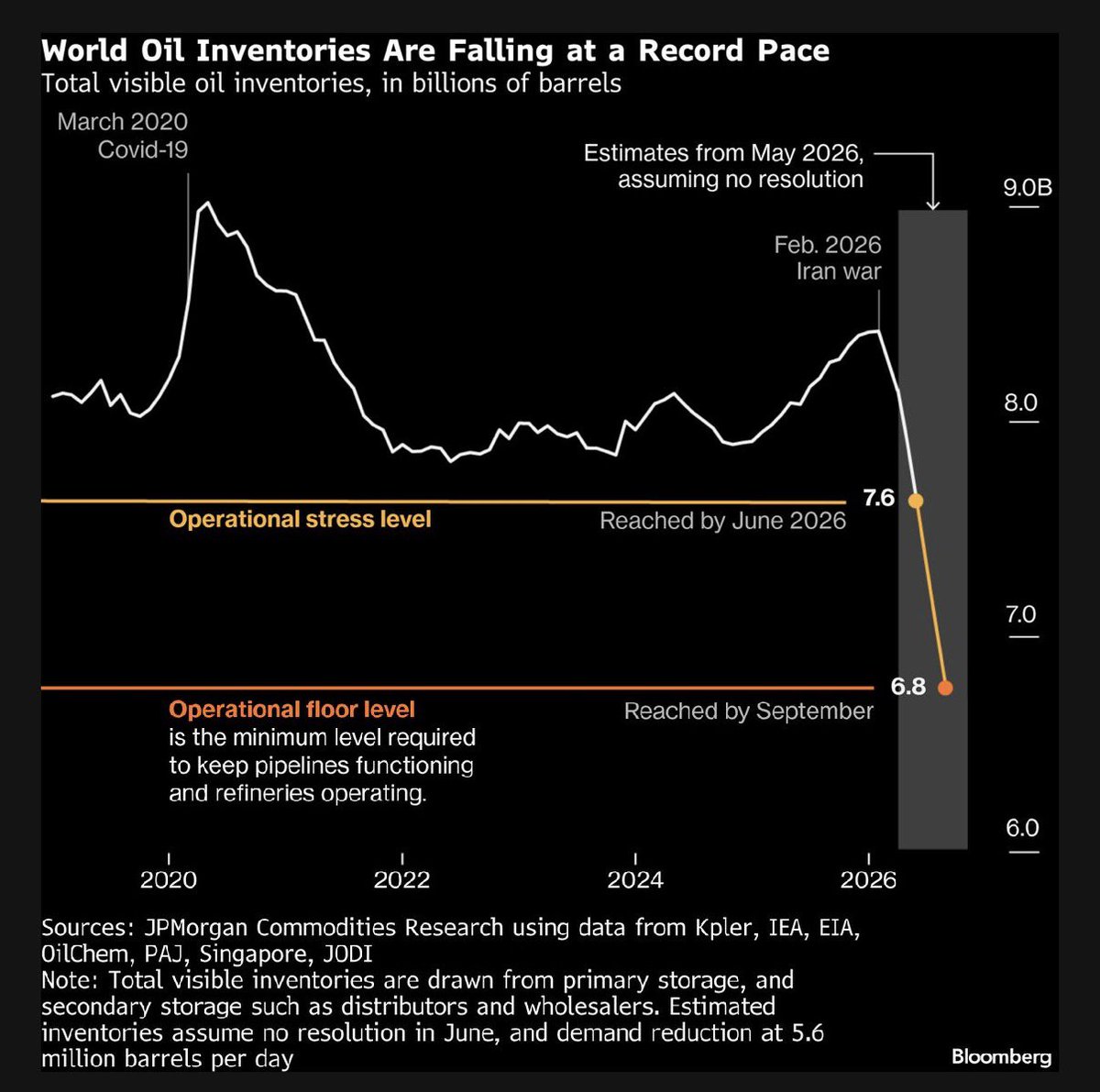
Oil markets are no longer just pricing fear; they are burning the physical buffer that makes fear manageable. If Hormuz disruption keeps draining inventories faster than diplomacy restores flows, this becomes a geoeconomic stress test of states, industries and social stability.
Bloomberg:
“The world has burned through oilinventories at a record speed as the Iran war throttles flows from the Persian Gulf…
The rapidly shrinking stockpiles mean that the risk of even more extreme price spikes and shortages is getting ever-closer, leaving governments and industries with fewer options to cushion the impact of the loss of more than a billion barrels of supply, two months into the near-closure of the Strait of Hormuz.”
#economy #oil #markets #middleeastwar
AI and Jobs: Apocalypse or Recomposition?
@robin_j_brooks may be directionally right, but the data is still too early to declare a white-collar “rust belt”. Business AI is only now entering real workflows. The shock may come — but it will be less about AI killing jobs than about reorganising tasks, wages, cities and power.
There's a lot of white-collar jobs that can be automated away. That's not about AI, but just about repetitive, automatable stuff. We're on the cusp of another "rust belt" shock in the labor market, only now it'll hit cities like NY, SF and Washington DC...
https://t.co/xyPGafYRYZ





![PikettyWIL's tweet photo. The world today is characterized by large-scale inequalities. And a climate crisis is looming over us.
We urgently need a new vision for global progress in the 21st Century. One that grounds human development and equality in planetary habitability.
What would it take to achieve high prosperity and equality while remaining within planetary boundaries?
The World Inequality Lab is very excited to launch the #GlobalJusticeReport.
[1/7]](https://pbs.twimg.com/media/HJ6fXhVXwAEULdM.png)