13/17 Podemos entonces marcar una clara diferencia entre simplemente "explorar" y "jugar". Explorar hace que busquemos y resolvamos sorpresas, mientras que jugar implica también CREAR sorpresas para luego resolverlas.
Fascinante, sensillamente.
The most pressing issue of our time is oligarchy & the power of Big Tech billionaires over AI.
We can’t allow a handful of greedy people to play God & determine the future of humanity—our economy, environment, democracy, privacy & more—without public input.
CONGRESS MUST ACT.
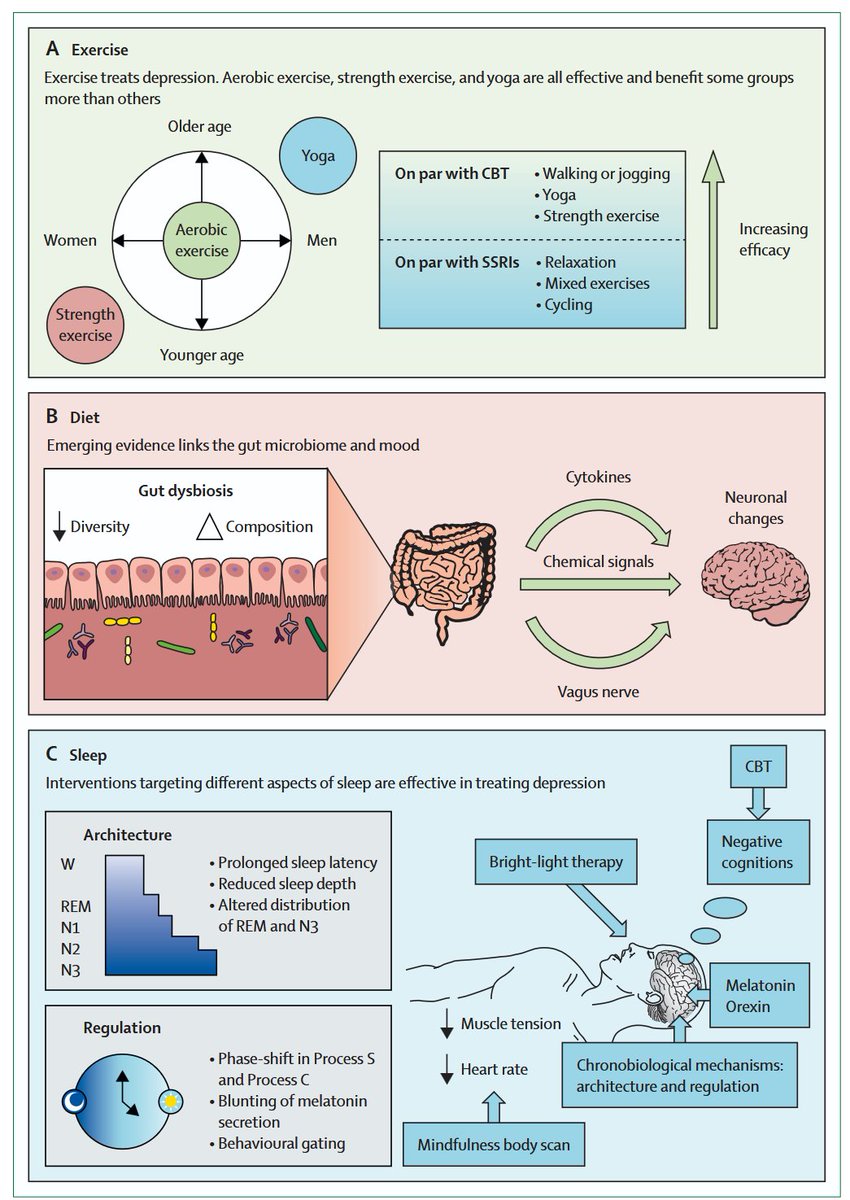
THE LANCET....
Bewegungstherapie ist bei geringer-moderater Depression vergleichbar effektiv wie CBT und Medikation. Aber wir sind in Deutschland scheinbar nicht in der Lage, solche Programme in die Regelversorgung zu bringen. @Karl_Lauterbach
https://t.co/HCS5I8CGWy
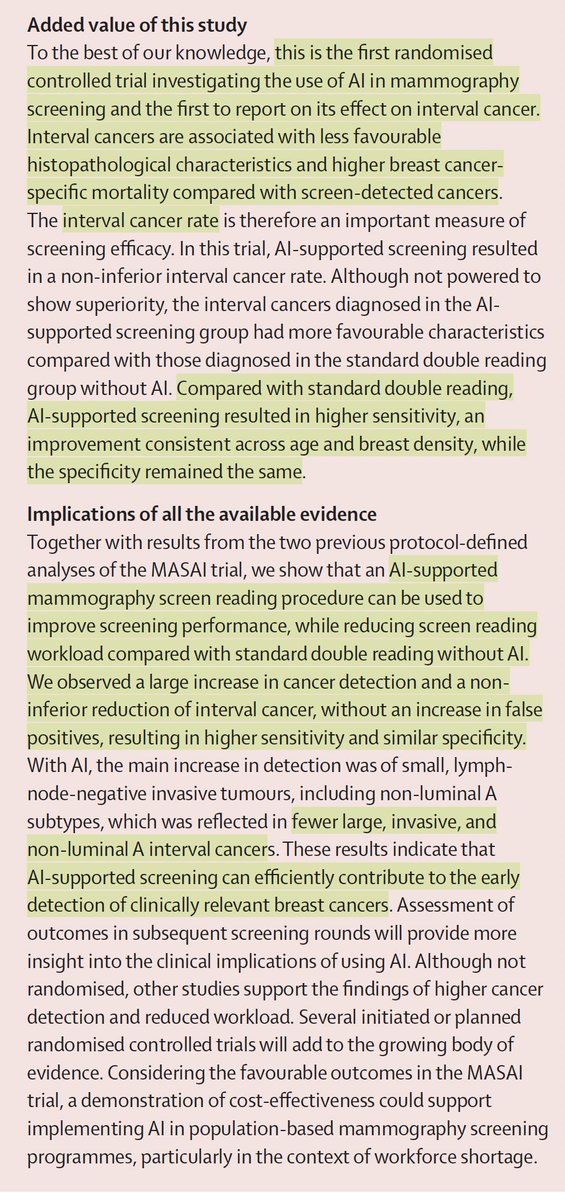
The largest randomized trial of medical A.I.
—Over 100,000 women in Sweden
—radiologist + AI vs 2 radiologists, in follow-up
—AI added led to 29% more cancer detected, 44% reduced workload, and
—Less cancer dx in subsequent 2 years, and, when found, less aggressive
https://t.co/e1hY3F0cGo
@snickalous For sure. I'd say plenty of MSK issues are local manifestations of systemic issues. @DerekGriffin86 talks a lot about this. Two papers below which I think Derek has shared before
https://t.co/bWyyyrdkvQ
https://t.co/8xQavX4DA1
Con la dinámica para conocernos "El sol brilla en..." inicia el curso "Evaluación y tratamiento del dolor crónico basado en los últimos avances de la neurociencia" de la mano de @ManuelSantosBe2 , en el Centro Integral de Fisioterapia y Neurorrehabilitación Neufis, de Vitoria.
The mind-bending power of placebo
Studies with open-label placebos — sugar pills given without deception — suggest that the placebo effect is more psychologically complex than previously thought.
https://t.co/SmTrAxyzij
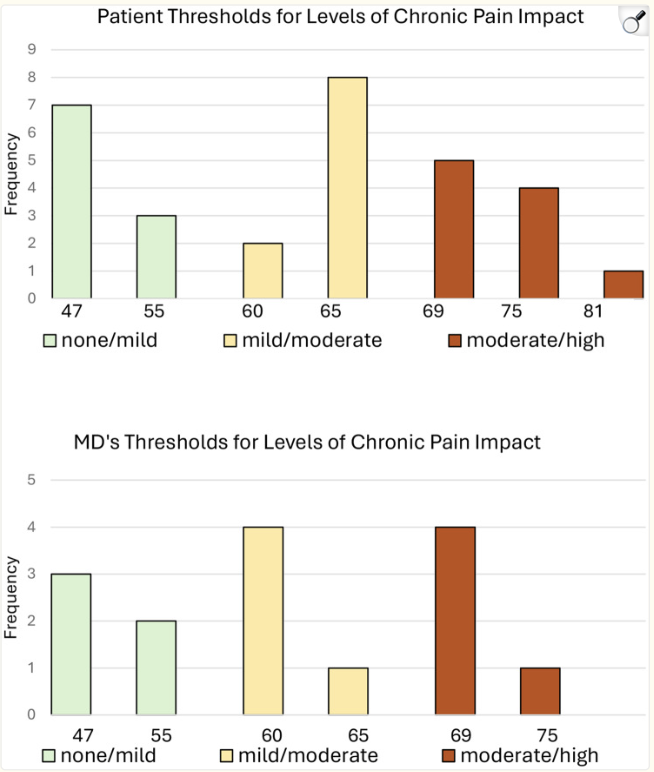
New study: Chronic pain is different for everyone, but how do we define “mild,” “moderate,” or “high” impact? Researchers worked with patients and clinicians to set clear cutoffs using PROMIS Pain Interference scores, which measure how much pain disrupts daily life.
They created “score stories” showing what life looks like at different levels. Both patients and clinicians mostly agreed on the thresholds, though they differed a bit on the middle range. Applying these new cutoffs to large patient groups showed fewer people meet the “high impact” category compared with older methods.
Why it matters: Using a shared, patient-informed scale helps doctors and patients talk about pain in a common language—and could improve care and research.
Image description: Figure 1 shows how people living with chronic pain (PLwCP) and doctors set their pain level cutoffs. Neither group agreed completely, but most were very close—within one step (about 5 points). One person with chronic pain set the cutoff for high pain 2 steps higher (12 points) than most others. Four people with chronic pain changed their answers, while no doctors did.
Acknowledgements
•Published in Journal of Patient-Reported Outcomes (2025).
•DOI: 10.1186/s41687-025-00908-y | PMID: 40824460
•Authors: Karon F. Cook, Dokyoung Sophia You, Michael Von Korff, Sean C. Mackey
Full paper: https://t.co/KbU9P99Vqt
New Study On Text Neck:
1️⃣ Cervical flexion posture during smartphone use was not a risk factor for neck pain.
2️⃣ Low sleep quality was a risk factor for neck pain.
3️⃣ Insufficient levels of physical activity were a risk factor for neck pain.
@AdamMeakins@GregLehman@tomgoom
A new study shows that fibromyalgia can follow fecal matter from humans into mice. 💩 Gross? Yes. Fascinating? Also yes. New post, 2-min read:
https://t.co/vnfvxzOo4d
What trustworthy MSK info is available to the communities you serve?
Check our FREE MSK Self-care guides designed to
⬆️Prevention
⬇️Health inequality - 🌍languages
⬆️Self-management
⬆️Physical activity/+ve lifestyle
⬇️?Unnecessary care
🔗https://t.co/97OHI088h6 #Physio24
We are moving to new definitions of success for organisations & systems, says @indy_johar. It is less about prescribed “end-states” (targets & standards to be achieved) & more about creating the conditions for change - diverse people working well together, having a sense of agency, adapting quickly & creating shared futures.
He sets out key leadership shifts including:
1. Focusing on relationships, not just plans: Success comes from strong trust & communication between people & teams, making it easier to handle challenges & seize opportunities.
2. Treating goals as guides, not set-in-stone: Use goals to give direction but be ready to adjust them as circumstances change & new opportunities arise.
3. Strengthening the “agentic capacity” of diverse people: Enable people to sense, interpret, act & learn together across the system so coherence is built from the ground up—not imposed from above.
4. Pushing authority and accountability closer to where challenges & opportunities happen: So decisions can be made quickly & locally.
5. Measuring improvement in adaptability & collaboration: not just results: A healthy system is one that can handle diversity, make sense of new information & adjust quickly — not just one that delivers on a fixed plan.
6. Investing in trust & learning systems: Make time & space for teams to learn from what’s working & what’s not & share that knowledge openly.
7. Operating across different time horizons simultaneously: (i) current urgencies & institutional realities (e.g. targets, reporting cycles). (ii) transitional infrastructures for reflection & adaptation; (iii) long-term investments in trust, feedback & sensing new directions.
https://t.co/n4ym52oBdu. Via @karas01
Exercise is an antidepressant.
A new meta-analysis of 26 randomized controlled studies found that both aerobic and resistance training significantly reduced symptoms of depression and anxiety, often rivaling standard treatments like medication and therapy.
Although both modes were beneficial, aerobic exercise had a slightly greater impact on depression, while resistance training showed a modest edge for anxiety.
Many of the included studies didn't even meet the minimum weekly physical activity recommendations for aerobic or resistance exercise, and even then, reduced depressive and anxiety symptoms significantly.
For those with depression or anxiety, movement is powerful medicine. And the dose needed might be smaller than you think.
The Combined Influences of Exercise, Diet and Sleep on Neuroplasticity
Neuroplasticity👉🏼the brain’s ability to undergo structural and functional adaptations in response to learning or experience
#health
https://t.co/m4CTuutuQr
Now published!
Possibly the first ToC predicated on exotic states in a mainstream journal. Yet computationally tight enough to inform AI. Here's an extreme compression ⤵️