Exploring China’s stories to map the world of tomorrow: data & ideas
Funded by the Carnegie Corporation of New York, NYU Shanghai & NYU, and the British Academy
▪️ Day 1: five closed-door roundtables
▪️ Day 2: four research sessions, a dedicated Mapping Global China session and a closing roundtable
More details coming soon. Stay tuned!
#GlobalChina#ChinaLatinAmerica#LatinAmerica
📍 Rio de Janeiro | 3–4 December 2026
How is the legal architecture of China's global engagement encountered, mediated and reworked across Latin America? 🌎⚖️
The workshop brings together experts on investment, regulation, dispute resolution, development, technology, environmental governance and geopolitical competition. It's built for deep exchange rather than short presentations:
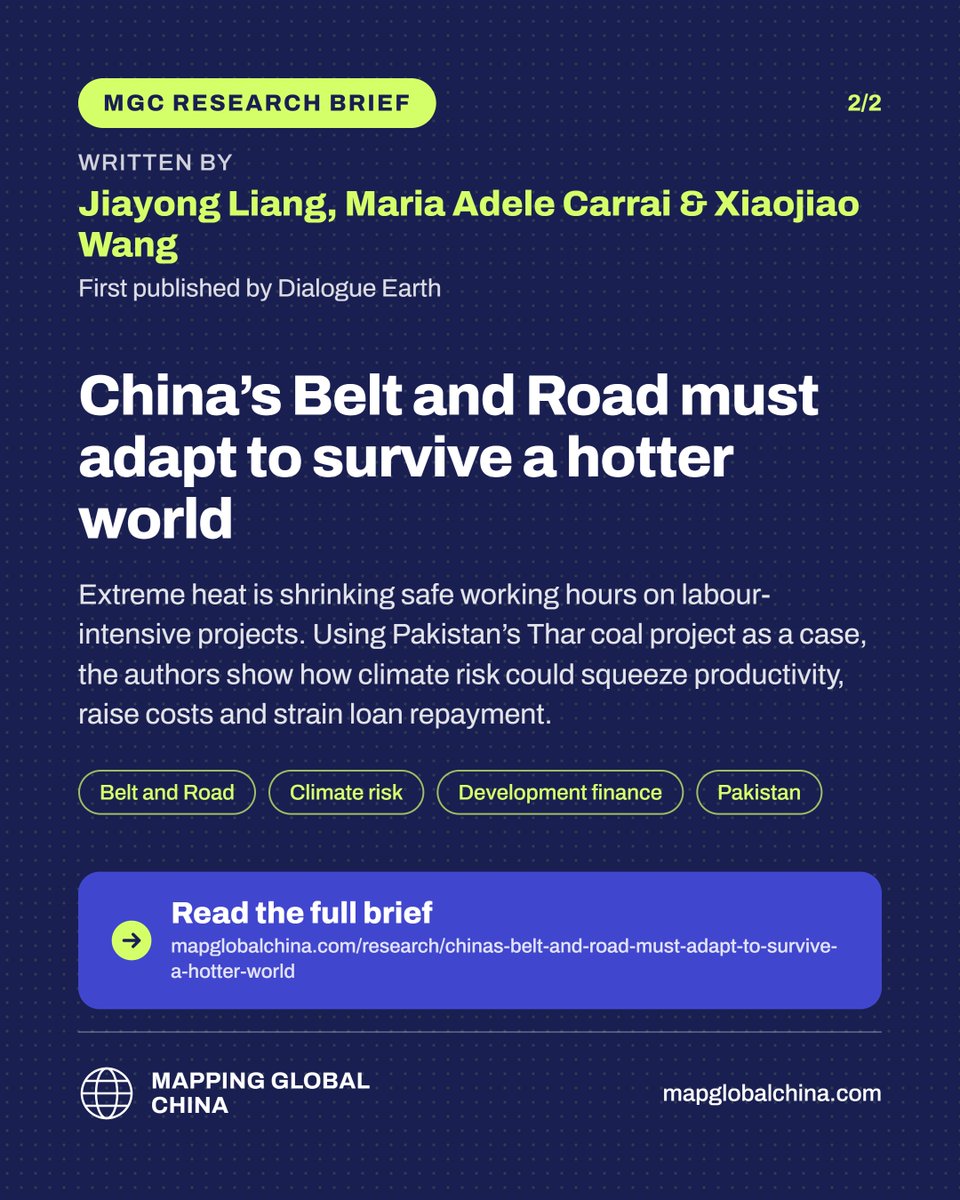
🌡️ Can China’s Belt and Road Initiative survive a hotter world?
As extreme heat intensifies, climate change is becoming an increasingly important challenge for the sustainability of China’s overseas infrastructure investments.
Their analysis highlights how extreme heat is blurring the line between economic opportunity and physical peril, raising important questions about climate risk, development finance and the future of the Belt and Road Initiative.
Kiwuwa also explains why China puts culture at the centre of its soft power, through Chinese-language teaching abroad, support for university curricula and media. He sees people-to-people exchanges as the route to mutual understanding.
Why ultimatums don’t work with China: a look back 🇨🇳🤝
We recorded this conversation with David Kiwuwa (Associate Professor of International Studies, University of Nottingham) one year ago. His argument has aged well.
Fast forward to today. After the tariff escalation of 2025, Washington and Beijing are working through truces, summits and extensions instead. The latest one keeps the 2025 truce going until January 2027, while both sides push for a bigger deal.
Think tanks, universities, government institutions and international organisations will discuss how regions respond as the international order changes.
With the British Academy and the University of Oxford, we co-organise two sessions on Wednesday 4 November.
How are great powers present in Central Asia? And how do people in the region encounter China?
On 4–5 November, the Think Road Forum 2026 meets in Tashkent: "Global Transformation and Regional Dynamics: Central Asia in the Emerging International Order".
Shorter version (Twitter)
Soybeans and beef go out; phones, machinery and now Chinese cars come in. 🇦🇷🚗 Máximo Badaró (CONICET / EIDAES) explains why Argentina’s trade with China is so unbalanced, and why Chinese brands are winning over the Argentine press.
#MappingGlobalChina
Cheap EVs, batteries and solar panels: a win for consumers or a threat to producers? 🔋⚡️ Kyle Chan of Brookings tells @adele_carrai what’s really driving China’s “overcapacity” and why it means two very different things depending on where you stand.
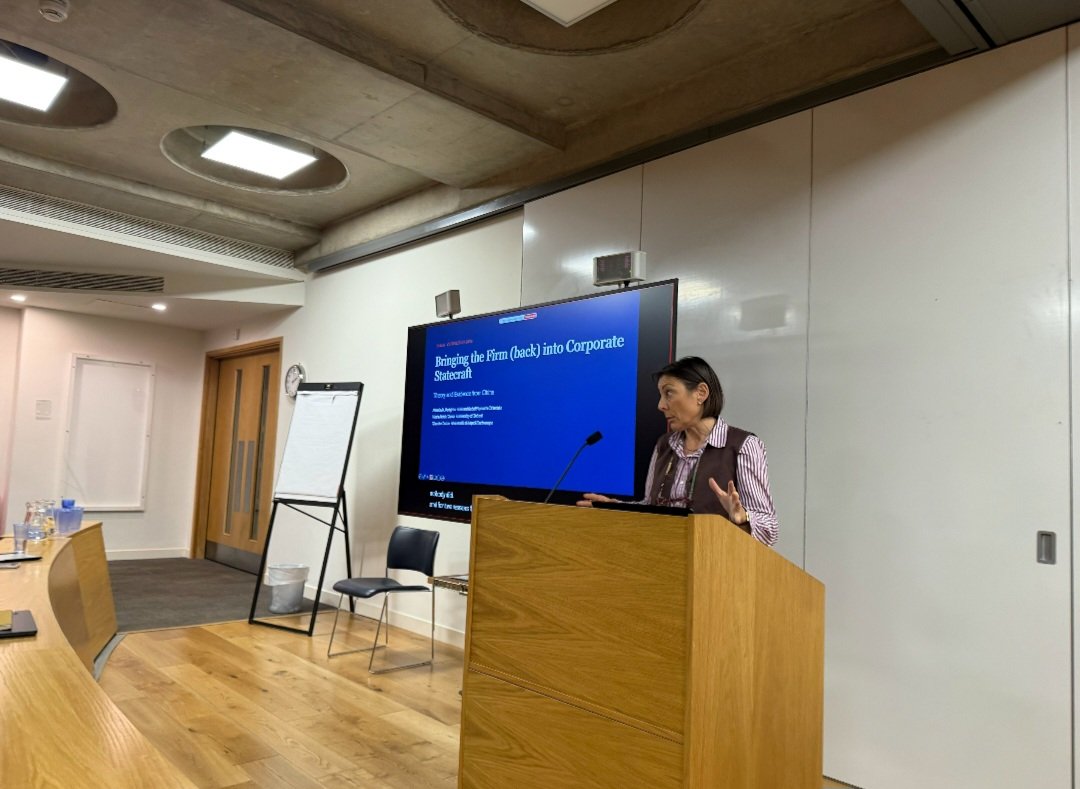
Yesterday at the University of Oxford's China Centre, @MapGlobalChina brought together a diverse array of scholars to tackle these questions at our roundtable, Unpacking Chinese Global Influence: Mapping Global China and Chinese Corporate Statecraft.
Beyond the state-versus-market divide: Rethinking Chinese Corporate Statecraft 🌏
How do Chinese companies shape China's global influence? And how can we actually measure corporate statecraft, rather than simply assume that Chinese firms act on behalf of the state?