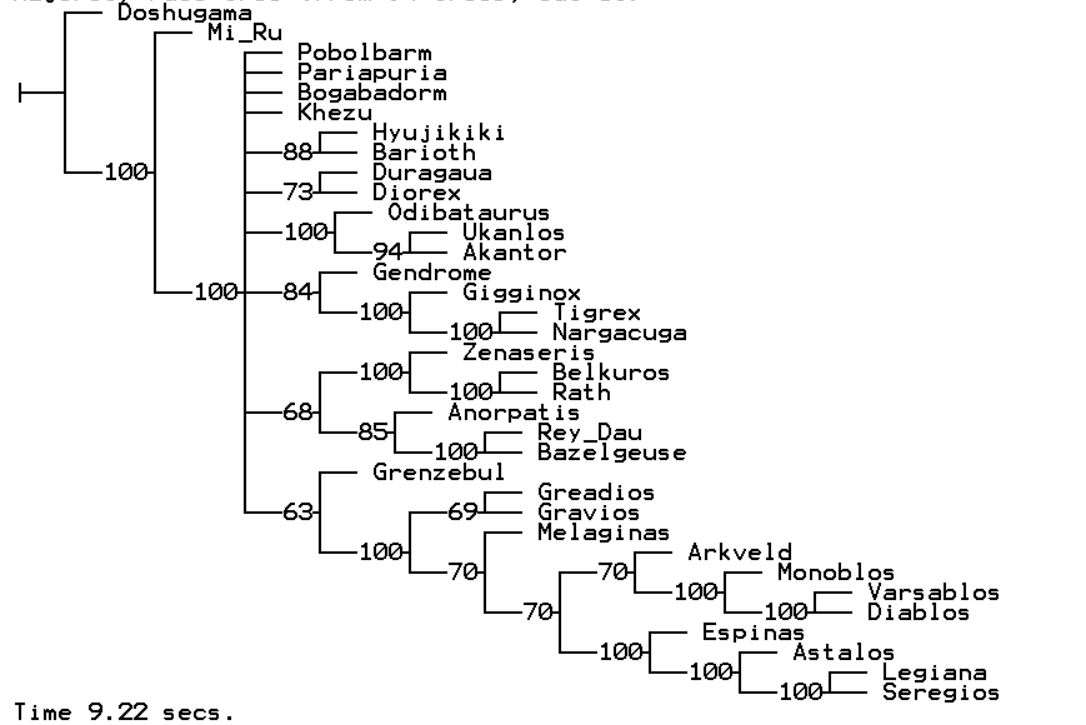
@Antrodemus The big reason was that it was a bird wyvern and, in our eyes, would likely match a hypothetical flying wyvern better than the previous outgroup of doshaguma
So yeah, turns out Flying Wyverns aren't as consistent as they may seem, with so many species having such a wide variety of characteristics.
Any input from true Monster Hunter loremasters would be greatly appreciated.
#MonsterHunter
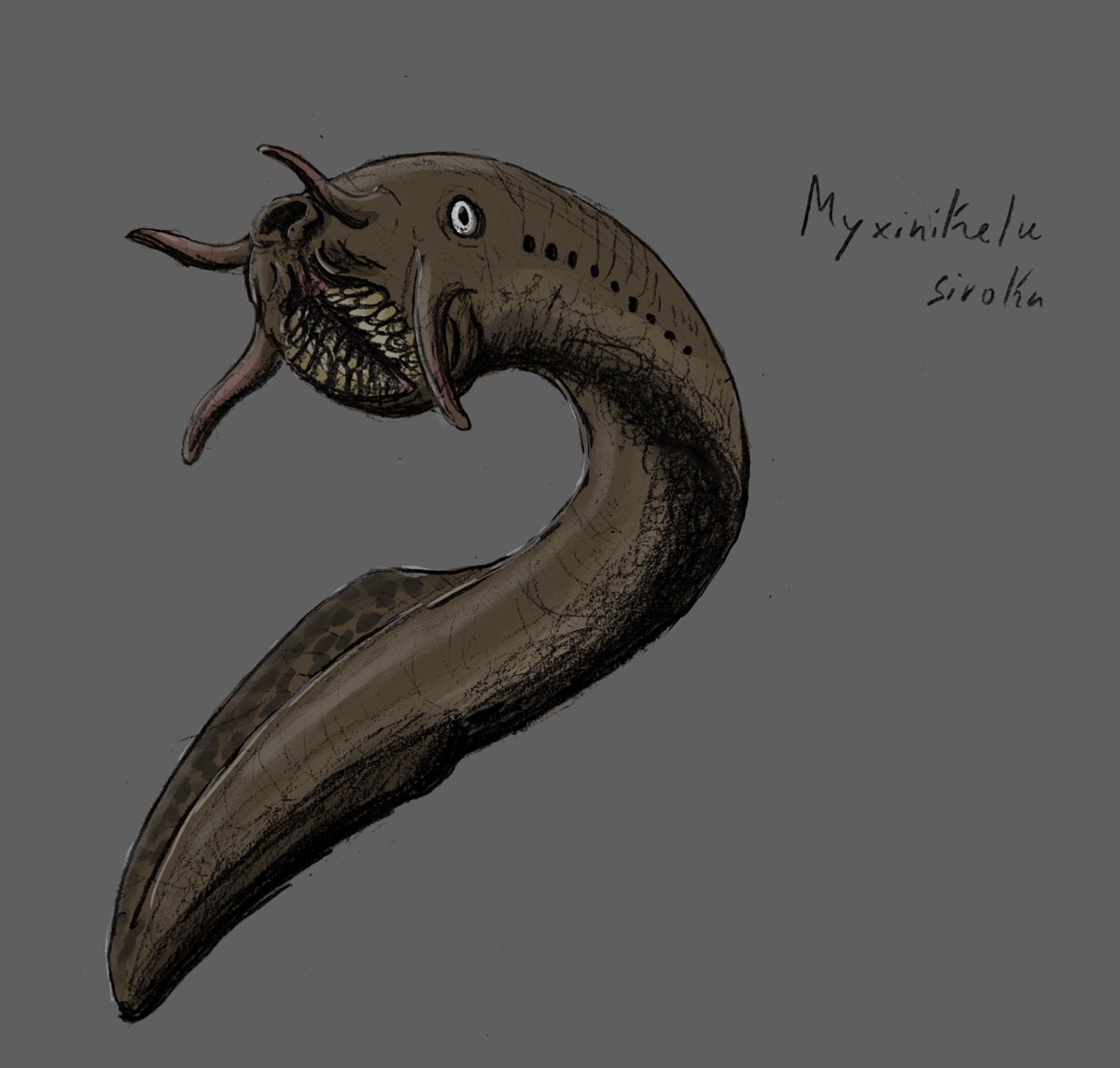
Myxinikela siroka was a hagfish from the Mazon Creek Fossil Beds.
Naturally, the obvious characteristic in this animal that we don’t see in modern hagfish are those big ol eyes, which researchers propose are seen in the fossils of this animal.
Oxalaia returns?
There are unpublished fossils from Brazil that might support #Oxalaia quilombensis is a valid taxon distinct from #Spinosaurus aegyptiacus. However, the excitement of referring these elements to Oxalaia should be quelled as overlap with the holotype is unknown.
Norellraptor barboldi is a microraptorine dromaeosaur, and is named after Mark Norell and Rinchen Barsbold, two paleontologists who unfortunately passed away this year.
This little raptor's anatomy shows that flight likely evolved several times among dinosaurs.
I’m proud to finally showcase something I had been working on for the past several months!
I had been in collaboration with the Bernice Pauahi Bishop Museum in Honolulu, Hawai’i for illustrations in celebration of the 50th anniversary of the discovery of the megamouth shark!
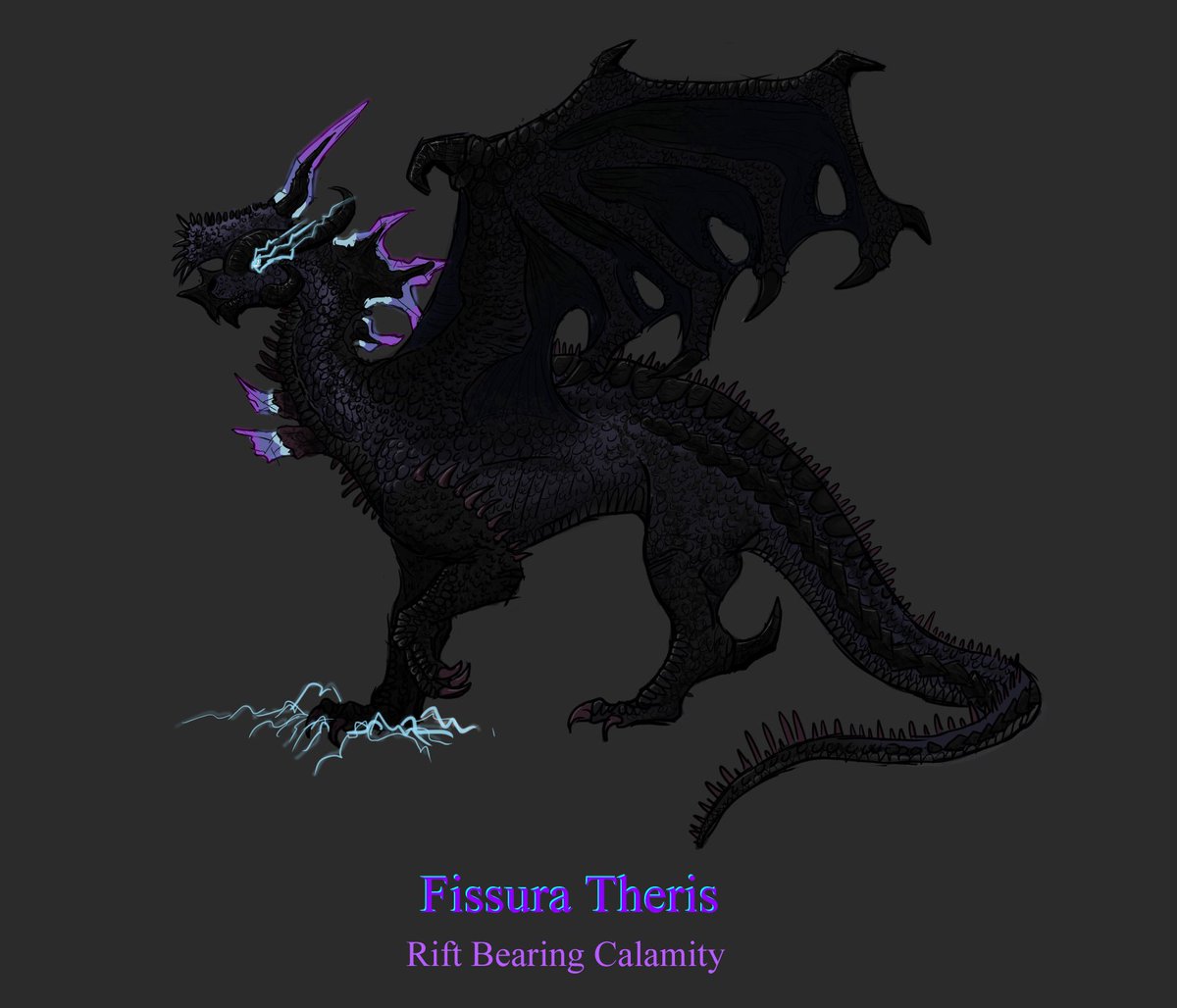
so given Monster Hunter Outlanders got a unique elder, I decided to try and imagine a "black dragon" for Monster Hunter Now, based on the little emblem for elder dragon hunts from the game
Just published in @ZoolJLinnSoc, myself, @chrissygarros, Fatima Iftikhar, @Paleofolk, Hallie Street-Sampson, and Mike Caldwell redescribe severe facial pathologies in two Mosasaurus hoffmannii
https://t.co/YyjxbO28f5
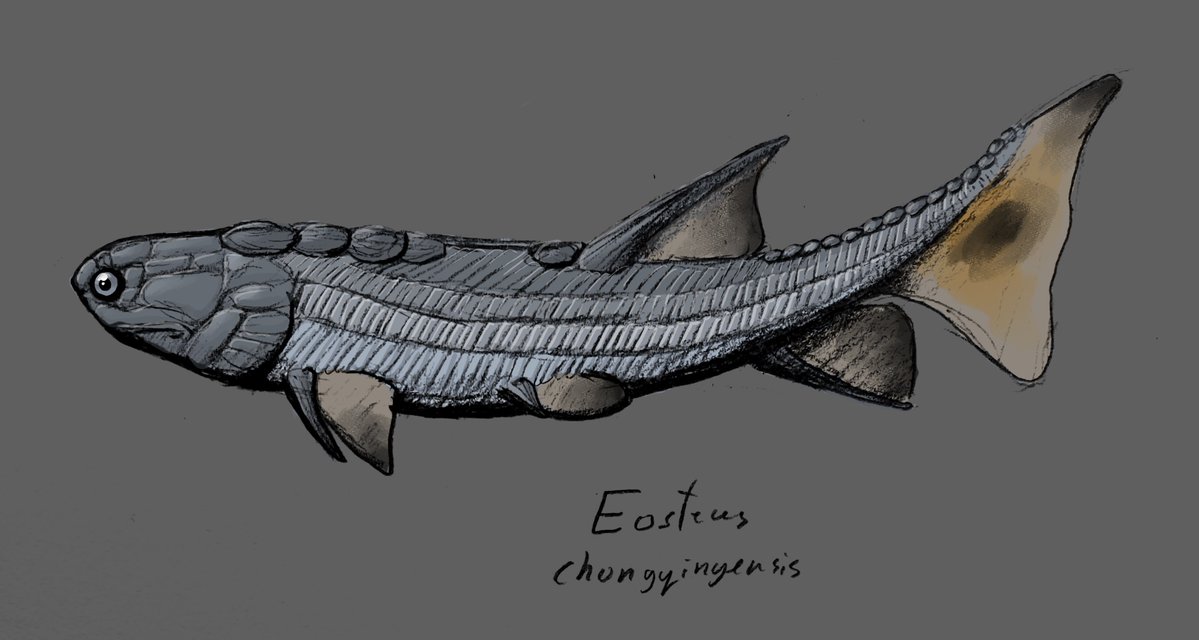
A new critter to share with yall, the Silurian fish Eosteus! This thing was pretty tiny, but was one of the earliest bony fishes. Similar to other early bony fish, it had tough, bony scales covering it’s whole body, and spines similar to acanthodians (spiny sharks)
Taking a break from the dinosaurs, and going into the ice age as we enter the chilly season. Panthera fossilis is seamingly the ancestor to Panthera spelae, the cave lion. That said, some would label this animal as a subspecies of P. spelae given the differences are mostly size