L'ancien ministre de la Justice et président du Conseil constitutionnel Robert Badinter est mort à l'âge de 95 ans. Il avait notamment été l'artisan de l'abolition de la peine de mort en France en 1981.
@DeutschesHausNY@MarcHooghe@MiladaVachudova@NYUCEMS looks forward to the Dec 6 "Political Trust in Europe: Is there a Crisis, and Does it Matter," Max Weber Chair event, which will be held at @DeutschesHausNY. For more information and to RSVP, please visit: https://t.co/SL66yA84B6
Join us and @NYUCEMS on 12/6 at 6 PM for a discussion about "Political Trust in Europe: Is there a Crisis, and Does It Matter?" w/ @MarcHooghe, Mark Warren, @MiladaVachudova, and moderated by Thomas Zittel. Details and RSVP here https://t.co/4Ghn5ORm6h
#FirstView from @CJPS_RCSP -
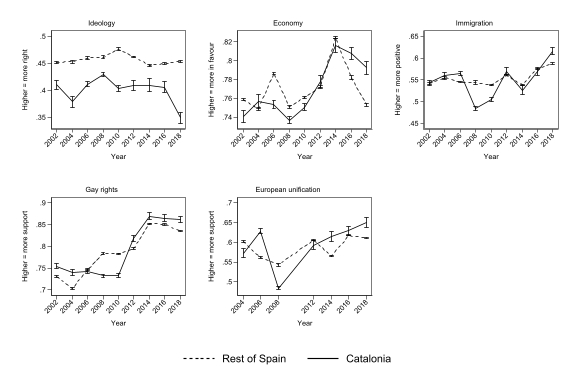
Toward an Ever Looser Union? Investigating Diverging Trends in Public Opinion in Three Divided Societies - https://t.co/i40Rscsj7P
- @dieter_stiers & Marc Hooghe (@KU_Leuven)
Clear results, and this analysis was of course heavily inspired by the seminal work of Arend Lijphart on divided societies. Results are also in line with an earlier article in Publius on public opinion in 🇧🇪 : https://t.co/3XGx8Ttgtr , so there seems to be a general pattern.
Does public opinion grow apart in divided societies like 🇨🇦, 🇬🇧, or 🇪🇸? In our new study @CJPS_RCSP, @MarcHooghe and I find that even though there are differences between regions, these have been rather stable over the last 20 years.
https://t.co/8JoYgFcokZ
Happy and honoured to receive a senior postdoctoral grant of @FWOVlaanderen to spend three years investigating electoral behaviour @FSW_KULEUVEN, with special attention for voting at 16, compulsory voting, and the legitimacy of election results. Looking forward to it very much!
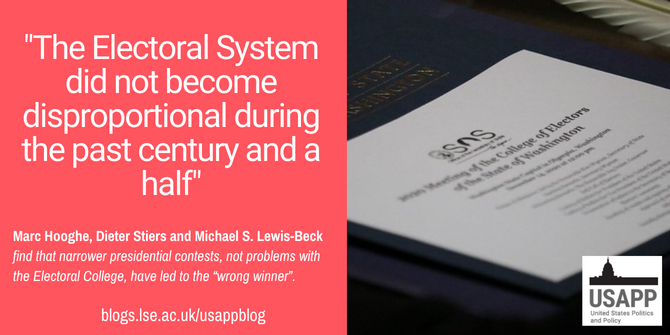
Has the Electoral College grown more disproportional, and does it benefit one party over the other? Our analysis of U.S. elections of almost 150 year suggests it has not. Blog @LSEUSAblog below, and full article (with @MarcHooghe and @mlewisbeck) here: https://t.co/26atz8OP4A
Another article resulting from the #WinterSchoolElections, with excellent co-authors. So, adding a limited number of bonus votes to the winner of the popular vote could eliminate the likelihood that the "wrong winner" would be selected.
Narrower presidential contests, not problems with the Electoral College, have led to the “wrong winner” find @marchooghe@dieter_stiers and @mlewisbeck https://t.co/TNMexU4STT
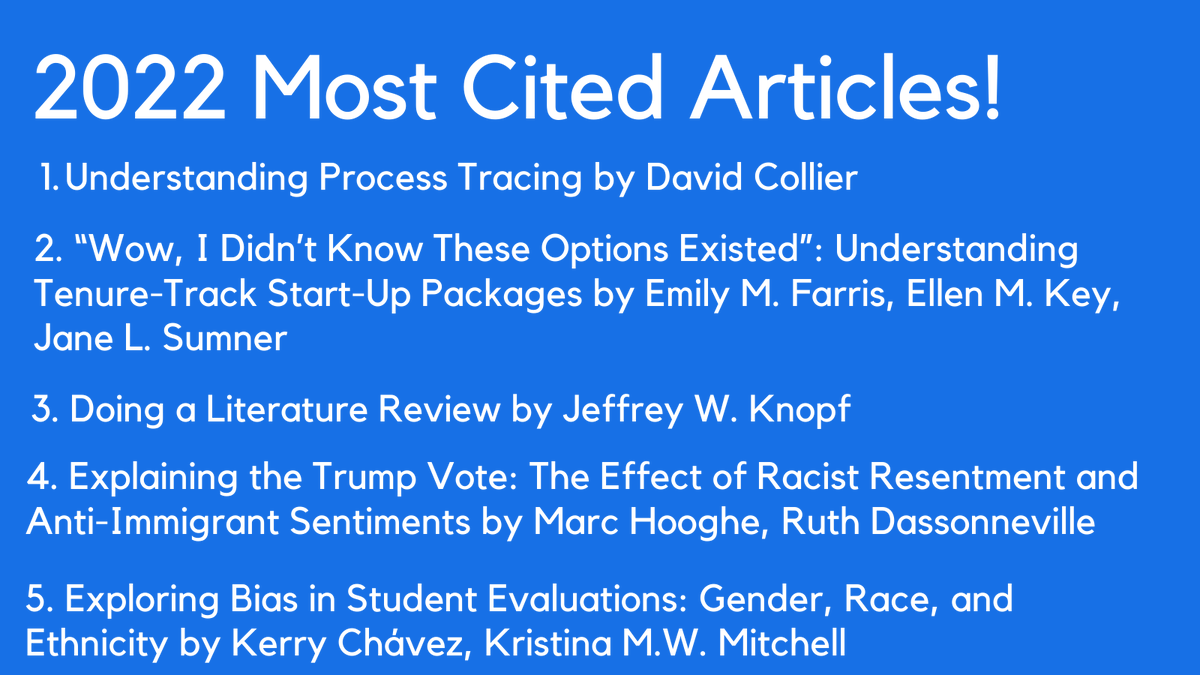
Check out our top cited articles in 2022 ft. @emayfarris, @ellenmkey, @MarcHooghe, @r_dassonneville, @KMWMitchell and others now free access until end of Feb!
https://t.co/Fq484zEXgw
https://t.co/xIr4RWyQcQ
https://t.co/Q7w7lFGkKO
https://t.co/M4WA07JMPZ
https://t.co/Bs3XJm8IQw
📢NEW article on citizenship norms, 1999-2016 w/@MarcHooghe@zsuzsabakk & Roberto Di Mari! We find that "duty-based" & "engaged" norms remain stable - but other groups change in prevalence. Nice timing to discuss in ECPR political culture series Dec 13 👇
https://t.co/eXIr31UHtk
#SpotlightOnBelgium 🇧🇪
Does supporting a restrictive view on the inclusion of immigrants find its origin in a localized feeling of group identity? @MarcHooghe & @dieter_stiers test this hypothesis with a household survey in the Belgian city of Ghent.
https://t.co/WzWmVDsRrX
Thanks to all lecturers, participants and @ECPR_povb for making this a wonderful week to remember. Glad that after some interruption the #WinterSchoolElections tradition is as strong as ever. See you at the 8th edition.
Les élections vous intéressent et vous voulez les étudier? @MarcHooghe et moi cherchons un doctorant en recherche électorale @FSW_KULEUVEN. Pour plus d'informations, n'hésitez pas à nous contacter. Vous pouvez poser votre candidature ici : https://t.co/64N3C7MqYc