@jamesharrigan@NYFedResearch@jamesharrigan apologies many faces of friends and colleagues were left out, I only went 15 years back …but I am sure they are all near and dear to Paolo
My colleague, friend, and mentor Paolo Pesenti just retired from @NYFedResearch I made a video for him inspired by the British series Slow Horses, which Paolo liked a lot —partly because there are clear parallels between the main character, played by Gary Oldman, and him. 1/n
This approach turned out pretty well for the research group of the NY Fed. I have been happy working with Paolo. In the video you will see many others who worked with Paolo. They all thrived at the NY Fed, and that's because Paolo put them in an environment where they could do so
Both are extremely laid back. They also kind of look like one another. And very important for those of us who worked with Paolo, both have an approach to management that mainly consists in letting people do whatever they want and having faith that this will lead to good outcomes
#AMEC#NYFed will host a symposium on The Secular Rise in Markups: Measurement, Causes, and Macroeconomic Implications. Register and watch it online! https://t.co/ig3x9fFcHT
AHEAD ON OCT. 16
Our next #AMEC symposium focuses on the "The Secular Rise in Markups: Measurement, Causes, and Macroeconomic Implications."
The event is open to the public virtually. Register to watch:
https://t.co/DfEHs3hgXV
“Measurement" will be covered by Susanto Basu, Jan Eeckhout, and Devesh Raval. "Causes" by Janice Eberly, Pinelopi Goldberg (@PennyG_Yale), and Matthias Kehrig (@MacroMatthias); and "Macro Implications" by David Baqaee (@DBaqaee), @GautiEggertsson, and @Jonheathcote.
Videos from the #AMEC#NYFed symposium on “The K-ShapedEconomy” are up! The symposium included great sessions on 1) Evidence of a K-shaped economy in micro-level data (@marthagimbel, @pascaljnoel, James Ziliak) …
We recently hosted “The K-Shaped Economy,” a symposium organized by the Applied Macroeconomics and Econometrics Center (#AMEC), which included research on the evidence of divergence in micro-level data—i.e., is the economy splitting into two tiers? Watch: https://t.co/6Pf2KoSGfR
I am truly honored and grateful to the Econometric Society. The best part of this recognition is being able to share it with three former students, now friends, and rising stars of the profession.
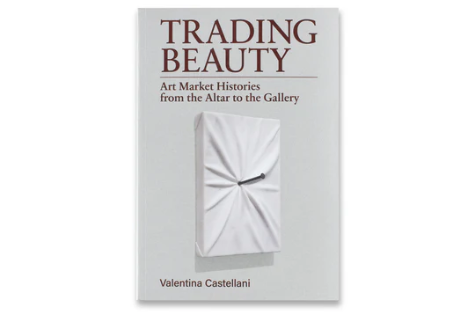
Proud spouse post: my better half has written a beautiful book on the history of the art market called "Trading Beauty: Art Market Histories from the Altar to the Gallery." Highly recommended to anyone who likes art history and the evolution of markets.
Her interview with Art News is here, if you wish to learn more https://t.co/MP8Z0twy9g
Available for pre-order here: https://t.co/jGgPne9kIu
I will teach a course at CEMFI in Madrid from 8/31 to 9/4. I will teach tools in macroeconometrics: VARs, state-space models, TV coefficients, factor and SV models, DSGE and DSGE-VARs, and model averaging
https://t.co/jy7ZjE2Qra
@Francesco_Bia, @gprimce, Frank Schorfheide, and I wrote a #VoxEU piece on our PhD advisor, Chris Sims. It discusses what he meant for economics, and for us https://t.co/zbeETvBmjJ
Growth in 2026 is expected to be more robust, and inflation more persistent, than predicted in December. Stronger investment is the main driver for higher growth, while cost-push shocks, possibly capturing the effects of tariffs, are the key factors behind higher inflation.
DSGE Model Forecast: March 2026
Compared to the December 2025 forecast, growth in 2026 is expected to be more robust and inflation more persistent.
https://t.co/gYPyXBERdu
#AMEC