Japanese actor Hiroyuki Sanada spoke about the contradictions of human nature:
“Some people dream of having a swimming pool at home, while those who have one hardly ever use it. Those who have lost a loved one feel a profound sense of loss, while others often complain about their living relatives. Those without a partner long for one, while those who have one often don't appreciate it. The hungry would give anything for a meal, while the satiated complain about the taste of their food. Those without a car dream of owning one, while those who have a car are always looking for a better one.”
The key to happiness is gratitude: truly seeing and appreciating what we already have, and understanding that somewhere, someone would give anything for what we take for granted.
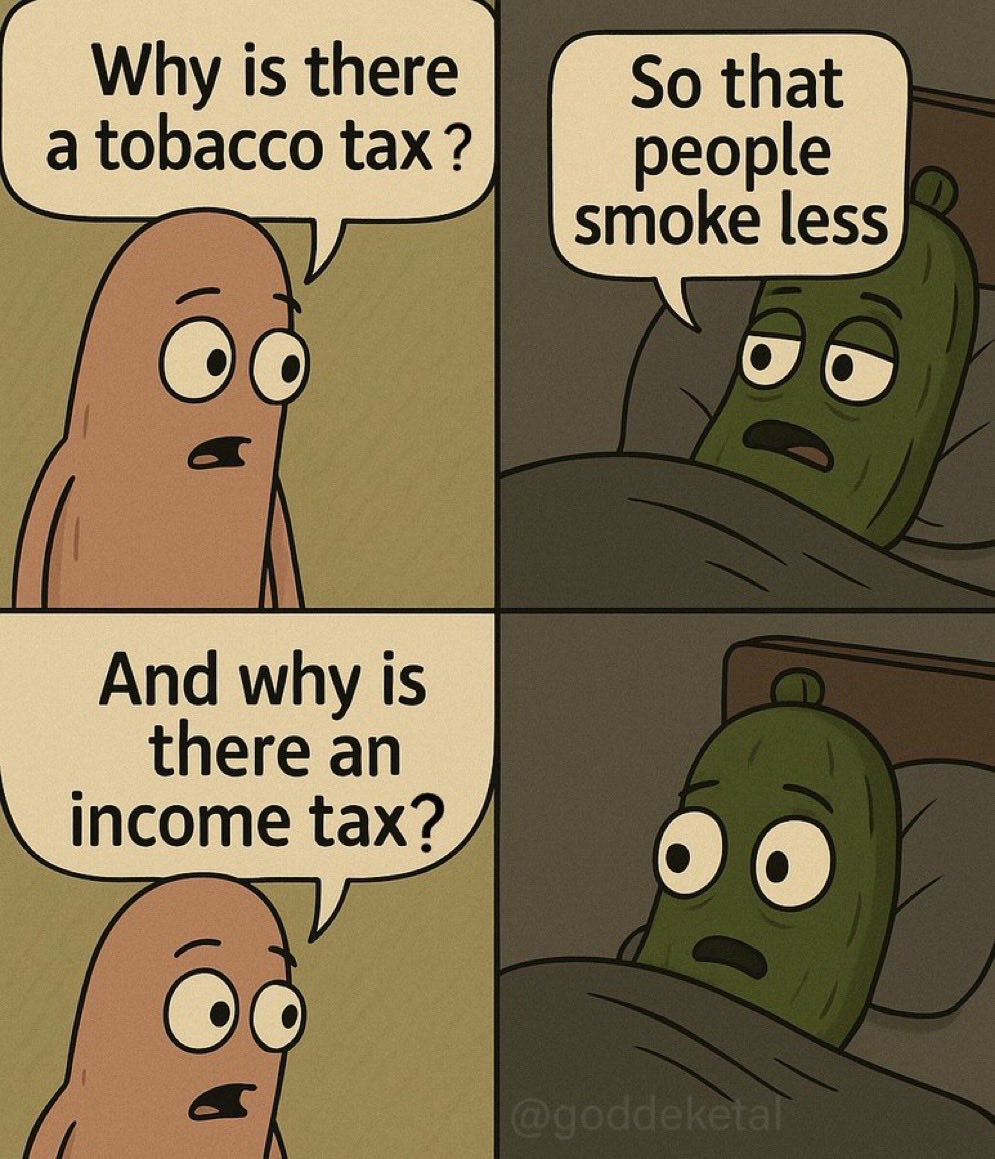
🚨A capital gains tax is an extremely unfair tax to investors, let me explain why.
It’s basically a tax on inflation.
Think about it: when you receive income from a job, that money is in current dollars. When you get rental income or royalties, it’s in current dollars. But with capital gains, you’re comparing the price you sell something for today with the price you bought it for years ago.
Those are not the same dollars.
There’s been inflation in between. And the fact that something sells for a higher price now doesn’t necessarily mean it’s worth more, it often just means the dollar has been devalued. It takes more dollars to buy the same thing.
Now, how much inflation has there actually been? The government might say it’s 4%.
But do you believe that?
Many argue it’s closer to 10%. John Williams at ShadowStats even suggests it’s consistently higher than what the government reports.
Let’s take a simple example. You buy a rental property for $300,000. Five years later, you sell it for $500,000. The house hasn’t really gained value, it’s older, has more wear and tear, but you’re now being taxed on a $200,000 “gain.”
At a 20% capital gains tax rate, that’s $40,000 in tax.
But you didn’t make $200,000 in real profit, that’s just inflation. The government is taxing what they inflated.
Inflation is a form of stealing. And now they're taxing you on what they already stole.
Let’s look at crypto. Say you bought Bitcoin at $10,000, and now it's worth $1,000,000. Still the same Bitcoin, its quality hasn’t changed. But everything else around it has declined in value because the dollar has lost so much purchasing power through money printing.
So why should you be taxed on a $990,000 gain?
The government wants 20%, nearly $200,000, of that. But what did they do to earn it? You took the risk, held through the emotional turmoil, and now they get a cut?
And it’s not even just 20%, when you add the Net Investment Income Tax (NIIT), you’re up to around 24%. That’s nearly a quarter of your gain.
It’s not fair. This is a tax on inflation, created by government policy.
What’s the solution?
One proposal is to index capital gains to inflation. That means the longer you’ve held an asset, the more you adjust its sale value based on inflation before calculating tax. But that depends on whether you trust the IRS to determine a fair inflation rate.
Another approach, already adopted by several countries in Europe and Asia, is much simpler:
Zero tax on long-term capital gains.
If you hold an asset for more than a year, no tax. Period.
The whole reason we have different tax rates for short- and long-term gains is to discourage constant trading (or “churning”), which doesn’t contribute to real economic growth. Long-term investment, on the other hand, brings stability, liquidity, and sustained value.
Eliminating long-term capital gains tax would have a low impact on the economy, but a big positive effect on investment in the U.S.
What do you think?
Should the government act now, especially with tax reform discussions tied to the Clarity Law?
Maybe this is the time for Donald Trump to step up and say: Capital gains tax is unfair because it taxes inflation, it’s time to remove long-term capital gains from the tax code.
STRATEGY'S STRC PAYS AN AMAZING 11.5% DIVIDEND RATE AND RETIREES CAN BENEFIT FROM THE RETURN OF CAPITAL (RoC) TAX TREATMENT.
In today's video, I walk through how RoC works and explain the tax impact on holding STRC in a taxable account, a traditional IRA, and a ROTH IRA.
Este fue el último tweet de Willie Colon en su cuenta en X y no tiene desperdicio.
Siempre válido para los actuales momentos donde las nuevas generaciones necesitan una calibración de valores con la familia y con su círculo de personas mayores para no sucumbir a ideologías.
El último objetivo de Trump para un cambio de régimen: ¿Qué tienen en común la Reserva Federal con Venezuela y Groenlandia? Han sido blanco del presidente Trump para un cambio de régimen. https://t.co/ziXT7LozBP
@AlexaGomezDos Imagino que es una broma. Y si es real, si yo fuera uno de los invitados, como mínimo preguntaría qué está incluido con los $50 de la entrada, por lo menos una botellita de Anis del Mono
📊💰 Another Retiree Comparison — Same Capital. Different Outcomes.
$JEPQ (Gen 1) vs $QQQI (Gen 2)
📆 Timeframe: Jan 30, 2024 – Dec 18, 2025
This is what $350,000 actually paid a retiree in REAL CASH.
Not paper gains.
Not DRIP fantasies.
Not selling shares.
Income replaced work.
Retiree living off income ONLY
No DRIP ❌
No selling shares ❌
Income withdrawn 💵
Let’s use real data, not vibes.
⸻
🧮 REAL-LIFE SCENARIO (Portfolio Visualizer)
• Starting balance: $350,000 each
• Income: 100% withdrawn
• Timeframe: 2024–2025
This is groceries.
This is insurance.
This is property taxes.
This is travel.
This is peace of mind.
⸻
💰 ACTUAL CASH A RETIREE RECEIVED (2025)
🔵 $JEPQ: $30,998
🔵 $QQQI: $45,461
➡️ $QQQI paid ~46% MORE income
On the same capital.
Without selling a single share.
That’s the difference between:
• “I hope this lasts”
and
• “I’m covered.”
⸻
🧾 WHAT THESE FUNDS ACTUALLY ARE (Issuer Data)
🔴 $JEPQ (Gen 1 – JPMorgan)
• Expense ratio: 0.35%
• Dividend yield: 9.84%
• 12-mo rolling yield: 10.99%
• 30-Day SEC yield: 11.52%
🔵 $QQQI (Gen 2 – NEOS)
• Expense ratio: 0.68%
• Distribution rate: 14.01%
• 30-Day SEC yield: 0.02% ⚠️
Important:
SEC yield does NOT capture options income.
This is why retirees get misled.
⸻
💰 REAL MONEY COMPARISON
What $350,000 Actually Did (No Dividends Reinvested)
💵 🔵 JEPQ
•Starting capital: $350,000
•Ending value: $470,736
•Dollar gain: +$120,736
•Total return: +34.49%
•Annualized: ~16.92%
⸻
🔵 QQQI
•Starting capital: $350,000
•Ending value: $480,938
•Dollar gain: +$130,938
•Total return: +37.12%
•Annualized: ~18.12%
⸻
🧮 Difference
•QQQI finished ahead by: ~$10,200 on $350k
•Same timeframe
•Same starting capital
•No dividends reinvested
Both paid income.
Both preserved capital.
One paid more.
⸻
📉 WHAT HAPPENS WHEN MARKETS GET UGLY (RISK)
🔻 Max drawdown
• $JEPQ: -10.67%
• $QQQI: -10.37%
📊 Volatility
• $JEPQ: 11.24%
• $QQQI: 12.56%
⚖️ Risk-adjusted results
• Sharpe: JEPQ 0.97 | QQQI 1.20
• Sortino: JEPQ 1.43 | QQQI 2.00
Translation:
$QQQI took similar risk
and got paid more for it.
⸻
🧠 THIS IS WHERE RETIREES GET TRICKED
SEC yield ≠ real income.
Option premiums often show up as ROC or non-SEC income.
That does not automatically mean NAV erosion.
The test is simple:
➡️ Did total return keep up with distributions?
Here, it did.
⸻
🧓 RETIREMENT REALITY CHECK
✔️ Bills paid without selling shares
✔️ Higher income
✔️ Higher total return
✔️ Similar drawdowns
✔️ Fee difference earned back
✔️ Capital preserved
✔️ Income actually spendable
This is what replacing a paycheck looks like.
⸻
🎯 BOTTOM LINE
🔴 $JEPQ (Gen 1)
• Lower fee
• Conservative
• Smoother income
🔵 $QQQI (Gen 2)
• Much higher income
• Higher total return
• Better risk-adjusted metrics
• More tax-efficient option structure
👉 If you’re living off income and not selling shares,
$QQQI has objectively delivered more cash with similar risk.
No narratives.
No marketing.
Just numbers — and real life
CONCERNING: Banks in Vietnam are closing accounts unless customers update biometrics in person.
If you’re out of the country, your money can be frozen.
86M Vietnamese just learned money in the bank isn’t really yours.
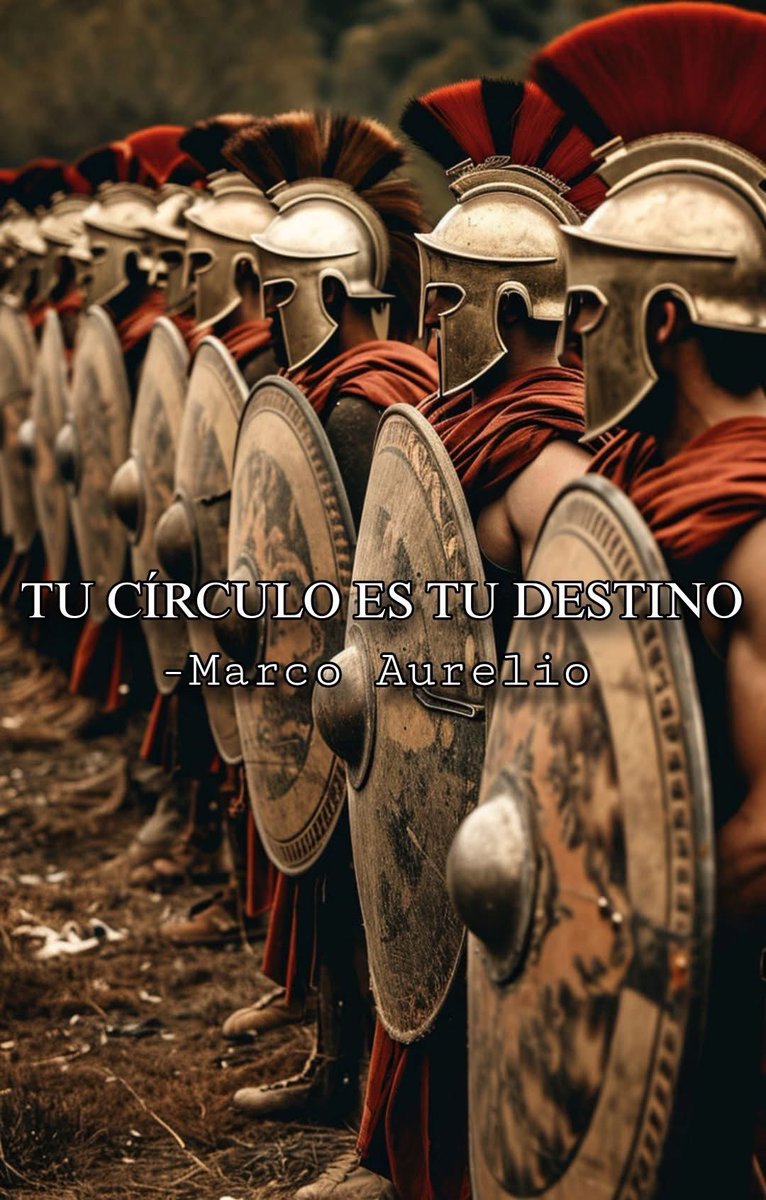
Marco Aurelio entendía algo que muchos hombres descubren tarde:
cada persona que permites cerca de tu vida moldea tu espíritu, a veces más que tus propias decisiones.
No por lo que te dicen, sino por lo que normalizan.
Un amigo sin disciplina te enseña a justificar tu pereza.
Un amigo sin dirección te empuja a caminar sin mapa.
Un amigo sin carácter te arrastra a la mediocridad… y todo sin levantar la voz.
La decadencia nunca llega de golpe.
Llega en forma de bromas, “no pasa nada”, “mañana lo haces”, “igual y no es para tanto”.
Pequeñas erosiones.
Pequeños descuidos.
Pequeños conformismos que van limando tu temple.
Por eso los estoicos eran selectivos. No por soberbia, sino por supervivencia interior.
Entendían que tu círculo es un espejo, y un espejo sucio distorsiona quién eres.
Rodearte de hombres que piensan, que se exigen, que se callan para escuchar, que actúan con honor…
te obliga a elevarte.
Te empuja a tu mejor versión sin que te des cuenta.
El círculo correcto no te celebra siempre, pero tampoco te abandona.
Te confronta, te pule, te sostiene.
Y si estás rodeado de almas pequeñas, no esperes que la tuya crezca.
Elegir a quién dejas entrar no es frialdad.
Es filosofía aplicada.
Es protección mental.
Es destino.
Porque al final…
no eres solo lo que haces, sino también a quién decides tener a tu lado mientras lo haces.
When an empire runs out of its own money, it is able to increase the supply of money. However, printing more money causes borrowing to increase creating a financial bubble. I urge you to watch “The Changing World Order” on my YouTube channel to understand how, and what it means for all of us.
#principles #raydalio