@macnonesiste Poi con JMartinez si è avuto lo stesso caso con il Bologna che ci costò lo scudetto del Milan: Non si passa al portiere nello specchio di porta, sempre ad uscire
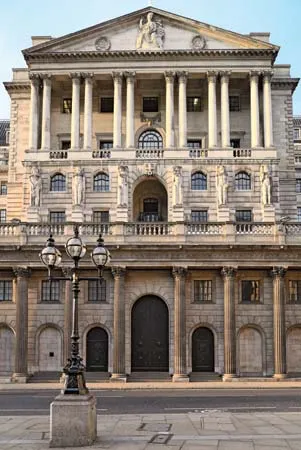
The Bank of England was born in 1694 to fund a war. William III needed £1.2 million to fight Louis XIV, Parliament wouldn't raise the taxes, and a group of London merchants solved the problem by creating money from nothing. That arrangement has never really ended.
The mechanics were straightforward. The merchants lent the Crown £1.2 million. In exchange, they received a royal charter permitting them to issue banknotes far in excess of their actual gold reserves. They created credit, lent it to the government, and charged 8% annual interest plus management fees. The government got its war. The bankers got a legally protected monopoly over English money. Naturally, inflation followed.
Murray Rothbard traced this exact model across three centuries of central banking history. The pattern never changes: crisis, emergency, currency expansion, wealth transfer from savers to the politically connected.
By 1720 the South Sea Company's collapse wiped out ordinary English investors who had trusted a financial system the Bank quietly backstopped and promoted. The Bank's founders, by contrast, had already cashed out.
1694 is not ancient history; the template is still running today. Every quantitative easing program, every emergency lending facility, every "temporary" credit expansion traces its intellectual and institutional lineage directly to Threadneedle Street in the reign of William III.
The wars changed. The monarchs changed. The creditors collecting interest on government debt kept their seats.
Friedrich Hayek – The Man Who Gave the Counter-March Its Strategy.
Gramsci invented the long march through the institutions. Dutschke gave it its name. They built the infrastructure of the left’s cultural dominance – and it worked. But there was a man on the other side who understood the mechanism just as clearly and built a counter-strategy that produced Thatcher, Reagan, and Milei. His name was Friedrich Hayek. And his strategy is still underused – including in Poland.
1. The key text is not The Road to Serfdom. It is a 1949 essay almost nobody has read: The Intellectuals and Socialism. Why do socialist ideas keep winning politically, even when the evidence against them accumulates? Because you are watching the final stage of a process that began decades earlier. Before any idea reaches parliament, it circulates among academics. From them it passes to the secondhand dealers – the writers, teachers, journalists who translate abstract ideas into the common assumptions of an entire society. By the time the politician acts, the intellectual work is already done. The politician is not the beginning of change. He is its final expression.
2. He called them secondhand dealers in ideas – the most important role in the intellectual supply chain. The academic produces the idea. The secondhand dealer makes it thinkable for millions who will never read the academic paper. If he wrote the essay today he would add influencers, podcasters, and profiles like this one to the list. The mechanism is the same. The distribution is faster. Which is why the counter-march can now move at a speed Hayek could not have imagined.
3. He did not stop at the essay. He built institutions. The Mont Pelerin Society – 1947. The Atlas Network – founded after Hayek explained the way to change society was not to enter politics but to change the intellectual climate first. These institutions spent decades producing ideas considered radical and politically impossible – and then Thatcher happened. Then Reagan. Then Milei. Thatcher said of them: "There were not many of them, not everyone wanted to listen – but they were right, and they saved Great Britain."
4. The difference between the Gramscian left and the Hayekian right is not the strategy. The strategy is the same: change the intellectual climate, move the Overton Window, wait for the political moment when what was previously unthinkable becomes inevitable. The difference is that the left funded it systematically for fifty years. The right understood it in theory and underfunded it in practice – treating independent think tanks as expensive hobbies rather than load-bearing infrastructure for ideas you want to become policy.
5. Both sides understood the mechanism. One funded it properly. The other kept looking for the politician — the next Reagan, the next Milei — without understanding that before each of them there were decades of institutional work that nobody filmed. You cannot skip the intellectual work and go straight to the politician. Someone must produce the ideas. Someone must translate them for millions. Someone must fund the institutions that do both for twenty years, including when the ideas are unfashionable.
6. The series you are reading is the Hayekian strategy running at 2026 speed. The secondhand dealing – civilizational argument translated into the format that reaches millions who will never read Gramsci or Hayek but who recognize the mechanism when they see it named. Musk and Milei repost it because they recognize the intellectual supply chain working in real time. The Overton Window is moving. The counter-march has a distribution platform the left cannot control.
7. Hayek died in 1992, vindicated on everything, implemented insufficiently. And then the tide came back – because the intellectual infrastructure was never built at the scale the long march had built theirs. We are building it now. This series is part of it. The work is not finished. It has barely begun.
Quella tedesca non fu una riunificazione, ma un'annessione come ha spiegato benissimo e con cognizione di causa @Comunardo nel suo "Anschluss".
Un'annessione che comportò la totale e rapidissima deindustrializzazione dell'Est, l'aumento dell'emigrazione da Est a Ovest e un enorme divario occupazionale e salariale che persiste tutt'oggi tra lavoratori dell'Est e dell'Ovest.
Una storia che assomiglia tanto, troppo, a quella dell'Unione Europea e dell'Eurozona.
Tuttora sussistono delle marcate differenze sotto il profilo economico e sociale tra l’ex Germania Ovest e l’ex DDR: basti pensare che un lavoratore dell’Est riceve uno stipendio pari a circa il 70% di un lavoratore dell’Ovest (circa 13.000 euro in meno l’anno) e che la disoccupazione è tuttora superiore del 50% circa rispetto a quella dell’Ovest (e nonostante un’emigrazione che ha interessato milioni di cittadini della ex Germania Est).
Molte città e paesi, soprattutto nelle aree rurali, si sono spopolati. Una ricerca dell’istituto di ricerca tedesco Ifo di qualche anno fa ha reso noto che, mentre la parte occidentale della Germania ha oggi più abitanti di quanti ne abbia mai avuti, la parte orientale è tornata ad avere gli abitanti che aveva nel 1905.
Queste differenze si riflettono anche in un voto molto differente da quello espresso nei Länder dell’Ovest, e che penalizza in particolare i partiti di governo (basta vedere il successo di AfD nelle ultime elezioni).
Un sondaggio ha evidenziato che i cittadini dell’Est si sentono cittadini di serie B. È difficile dar loro torto. Ma soprattutto, col passare del tempo, è sempre più difficile addebitare quelle differenze a “quello che c’era prima”. Non soltanto perché dalla caduta del Muro sono ormai passati 35 anni e perché Kohl aveva promesso “paesaggi fiorenti” all’Est in due-tre anni.
Ma per un motivo più sostanziale: perché gran parte del fossato che non si chiude tra Est e Ovest è stato scavato con l’unificazione, per il modo in cui essa è stata realizzata. L’unificazione politica è del 3 ottobre 1990. Era stata preceduta, il primo luglio 1990, da un’unione monetaria affrettata e mal congegnata.
Affrettata, perché avveniva in assenza di una convergenza economica (per questo motivo gli stessi esperti economici del governo di Bonn l’avevano sconsigliata); all’obiettivo politico di “fare presto”, di giungere quanto prima possibile all’unità politica tra le due Germanie, veniva di fatto sacrificata la possibilità di un’unione economica più equilibrata e meno traumatica per le regioni dell’Est.
Ad aggravare le cose, l’unione monetaria è stata anche mal congegnata: infatti essa stabiliva un cambio alla pari tra due monete tra le quali i rapporti di cambio a fine 1989 erano regolati secondo un rapporto di 1 a 4,44 (ossia, 1 marco ovest equivaleva a 4,44 marchi dell’est).
Apparentemente, si trattava di un regalo ai consumatori dell’Est. In realtà rappresentò la rovina per le imprese dell’Est, in cui prezzi conobbero automaticamente un aumento del 350%.
Il risultato fu l’immediato crollo della produzione industriale dell’Est (-35% nel solo mese di luglio 1990), licenziamenti di massa e il fallimento di fatto di gran parte delle imprese della Germania Est.
Queste imprese furono poi tutte privatizzate nel giro di pochi anni a prezzi irrisori, o semplicemente liquidate, da un organismo, la Treuhandanstalt, che operò in modo a dir poco discutibile.
Il risultato fu in ogni caso un processo di deindustrializzazione senza precedenti in Europa, le cui conseguenze si continuano a pagare oggi. Anche in termini politici.
Si sapeva che sarebbe andata così, scrive Schauble. Il 17 aprile del 90 incontrarono, lui e Hans Tietmeyer - uno dei negoziatori dell’unione monetaria per la Germania ovest e anche per i rapporti di cambio all’interno nell’euro - Lothar de Maizière «A Lohatr era ben chiaro esattamente come a Tietmeyer e a me ,che con l’introduzione della moneta occidentale le imprese della DDR non sarebbero più state in grado di competere».
Tra il 1989 e il 1991 il PIL della ex DDR crolla del 44%. In Grecia il crollo del PIL è stato del 26% in più anni.
Crolla del 65% la produzione industriale e crollano le esportazioni. La Germania Est era uno dei Paesi più avanzati del blocco socialista con tre mercati: quello interno, il mercato occidentale e quello dei Paesi dell’Est.
Con l’introduzione del marco ovest le imprese persero tutti e 3 quei mercati. Le merci dell’Ovest erano più competitive nel mercato interno.
4 milioni di persone sono scappate dall’est all’ovest, mentre solamente 1,5 dall’ovest all’est. 1 milione e 800milla disoccupati.
Ancora oggi un abitante dell’est ha il doppio delle possibilità di essere disoccupato rispetto a un cittadino dell’ovest e se lavora guadagna circa il 70% di un lavoratore dell’ovest.
Il valore iniziale della Treuhandanstalt fu stimato in 600 miliardi di marchi dell’ovest, numeri di 35 anni fa. Non solo non si vide l’ombra di quei 600 miliardi, ma a fine svendita l’ente vantava un buco superiore ai 250 miliardi di marchi. Tutte imprese in difficoltà a causa della rivalutazione estrema della moneta. Vengono privatizzate con criteri abbastanza bizzarri.
Per esempio si decise che non avesse senso salvare quelle imprese che esportavano verso i Paesi dell’est. Privatizzato in maniera rapida e poco trasparente. Molte imprese furono vendute al prezzo simbolico di 1 marco. Al fianco del quale vennero spesso corrisposti cospicui aiuti di Stato per mantenere i livelli occupazionali. Cosa che non avvenne Di 4 milioni e 100mila ex impiegati delle imprese dell’Est, dopo il periodo 90 e il 94, ne restarono soltanto 100 mila.
Più di 7.100 aziende furono cedute a prezzo di favore agli amici imprenditori dell'Ovest. Milioni di marchi persi per la Germania dell'Est
Un pezzo del Paese divenne così strutturalmente dipendente da quello più industrializzato. Bisogna finanziare i consumi. Dare un reddito a chi non ha più un lavoro. Con i trasferimenti fiscali. Ancora oggi poco meno della metà della popolazione della Germania est ha il grosso della sua base reddituale derivante da questi strumenti.
Secondo alcune stime ci vorranno ancora 30 anni affinché l’Est raggiunga le condizioni dell’Ovest, per altre ce ne vorranno 100, mentre per un giornalista tedesco, sul FT, 320 anni.
Il mezzogiorno era lo spettro dell’unificazione, il rischio della mezzogiornificazione dell’Est. Alcuni economisti tedeschi sono giunti ad affermare, come Thomas G. Betz, che «il concetto di mezzogiorno per l’Est della Germania è un complimento immeritato».
In effetti il Sud dell’Italia ha un deficit commerciale rispetto al Nord del 12,5%, mentre l’Est della Germania del 45% rispetto all’Ovest. Un valore che resta un punto di riferimento in quanto nella storia non ci sono esempi di una situazione comparabile.
Il 47% degli adulti della Germania dell’est sopravvive prevalentemente grazie all’assistenza sociale.
Un insegnamento importante di questa triste storia è che la moneta non è mai soltanto una moneta. Ogni moneta incorpora un sistema giuridico. È un metodo di governo.
La storia dell’annessione dell’ex Germania dell’Est ha delle evidenti similitudini con la storia dei Paesi periferici dell’Unione Europea e dell’Eurozona. La storia dell’Italia degli ultimi 30 anni ricorda tristemente quella dell’ex DDR. Anche in questo caso, si sapeva come sarebbe andata a finire. Con la progressiva deindustrializzazione dei Paesi annessi.
Il voto in Islanda non è stato un incidente di percorso, come non lo sarà il voto di domenica prossima in Sassonia-Anhalt. Continuare a rimuovere il problema non aiuta. Inefficace anche la denuncia del fascismo alle porte.
Nel commento per il Fatto quotidiano, provo a trarre qualche “lezione” da Reykjavík.
Ne parliamo, a partire da oggi pomeriggio fino a domenica, alla nostra scuola di politica (il programma nel post fissato).
@fattoquotidiano #Europa @alemannoEU@RivistaLaFionda@EuroBriefing@PTridico
The European Union produces regulation the way bad central banks produce currency: compulsively, at accelerating volume, with complete indifference to the damage it causes.
Since 2019, the European Commission has pushed through the Green Deal, the AI Act, the Digital Markets Act, the Corporate Sustainability Reporting Directive, and the Carbon Border Adjustment Mechanism. Each one arrived packaged as protection. Each one transferred decision-making authority from entrepreneurs to bureaucrats in Brussels who bear zero cost for being wrong.
The numbers are brutal. EU productivity growth has averaged roughly 0.7 percent annually since 2010, less than half the U.S. rate over the same period. European venture capital investment in 2025 sat at roughly one-fifth of American levels. The continent that produced BASF, Siemens, and Volkswagen now watches its flagship companies relocate operations or announce layoffs. BASF itself committed to permanently shrinking its Ludwigshafen headquarters, citing energy costs and regulatory compliance loads.
Prices coordinate information that no regulator possesses. When Brussels mandates energy transition timelines faster than markets can absorb, you pay the gap directly, through electricity bills that German households now carry at roughly 35 euro cents per kilowatt-hour, nearly triple the American average. Manufacturers pay more. They produce less. They hire fewer people.
Regulation compounds. Every new layer of compliance raises the fixed cost of operating, which advantages large incumbents and crushes the small firms that create most net employment. Regulation does not prevent monopoly. It cements it. Existing giants absorb the compliance cost and then lobby for tighter rules their smaller competitors cannot survive.
Regulators are not protecting Europe. You are watching a continent price itself out of its own future.
@Gitro77 Non sarebbe il caso di mettere i nostri responsabili (..) di fronte al quesito: siete favorevoli o no alla ipotesi di Spinelli? (Lo so è da ingenui) Ma la passività odierna è allarmante
🚨🇺🇸 CAR@LHO, QUE LAPADA! 🔥🔥🔥
CNN: “Este é um imigrante sem documentos...”
Miller: “Eles estavam aqui ILEGALMENTE?”
CNN: “Quero que esta seja uma discussão de boa-fé...”
Miller: “Quando você usa uma linguagem feita para ocultar a verdade, isso NÃO é boa-fé. Um ESTRANGEIRO ILEGAL é um ESTRANGEIRO ILEGAL. Eles não são ‘imigrantes sem documentos’.”
CNN: “Stephen, estamos tentando humanizar o debate...”
Miller: “Humanizar? Então vamos humanizar o Código Penal também. O assaltante de banco passa a ser ‘especialista em retirada sem agendamento prévio’. O estelionatário vira ‘empreendedor de narrativas financeiras alternativas’. O cara que entra na sua casa sem convite é só um ‘visitante com documentação pendente’. Que tal?”
CNN: “Isso é uma analogia grosseira.”
Miller: “Grosseira é fingir que a lei federal some porque a redação da CNN inventou um eufemismo mais fofo. ‘Sem documentos’ soa como alguém que esqueceu a carteira no Uber. Não. É alguém que cruzou a fronteira sem autorização, ficou, e agora a imprensa trata o estatuto jurídico como se fosse uma questão de estilo de escrita.”
CNN: “Mas muitos contribuem para a economia...”
Miller: “Ah, o argumento clássico: o crime deixa de ser crime se a pessoa lava prato ou constrói telhado. Pelo mesmo critério, o contrabandista de cigarro também ‘contribui’, gera emprego no transporte. Quer que a gente chame ele de ‘empreendedor logístico informal’? A CNN topa?”
CNN: “Você está polarizando.”
Miller: “Não. Eu estou recusando o dicionário de marketing. Vocês mudam a palavra, depois acusam quem usa o termo legal de ser ‘desumano’. É o truque mais velho do livro: primeiro suaviza o vocabulário, depois declara vitória moral. Os Estados Unidos já cansaram desse teatro. Chamem o que é. Ou admitam que o objetivo nunca foi clareza — foi controle da narrativa.”
The oldest financial trick in history is being used on you right now. Ancient Rome couldn't stop using it either, and it played a part in bringing down the whole empire...
For two hundred years the Roman denarius was one of the most trusted coins in the world: under Augustus it was struck from silver that ran around 95% to 98% pure, a small disc of real metal that a soldier or a shopkeeper could hold and believe in. It held its value across the whole Mediterranean because there was something genuinely valuable inside it.
Then the emperors discovered a trick that every government since has been tempted by. If you melt down the coins, mix in a little cheap copper, and mint them again, you get more coins out of the same silver. To the eye, nothing has changed. The face on the front is the same. But now the state has more money to spend, and it costs them nothing to make.
Nero began it after the great fire of Rome in AD 64, dropping the silver to about 90%. It was barely noticeable, which was precisely the point. But once the door was open, no emperor could resist walking through it. Each one who needed to pay the army or fund his ambitions shaved off a little more.
By the reign of Septimius Severus the denarius was down to about half silver. His son Caracalla went further, and by the time of Gallienus in the 260s the coinage that had once been nearly pure held around 5% silver. It had become a copper token dipped in a thin silver wash, and everyone knew it...
The result was exactly what you would expect, and exactly what we fear today: prices spiraled. The more coins the mint stamped out, the less each one was worth, and the cost of everything climbed to catch up. Trust in the money collapsed so completely that soldiers began refusing to be paid in it and demanded grain and goods instead.
The same thing is happening to your money right now: according to the U.S. Bureau of Labor Statistics, the dollar has lost more than 96% of its purchasing power since 1913, the year the Federal Reserve was created. What a single dollar bought then takes more than thirty dollars to buy today.
The coin was silver and the modern equivalent is paper, but the pattern is the same that ate the denarius: a slow, relentless erosion of value that the people holding the money can feel but cannot stop.
Keynes called it by its real name: theft. "By a continuing process of inflation," he wrote, "governments can confiscate, secretly and unobserved, an important part of the wealth of their citizens." And Milton Friedman put it even more bluntly: "Inflation is the one form of taxation that can be imposed without legislation."
This is one of the most important lessons Rome has to teach: a currency almost never dies in one dramatic stroke, it is always worn away a little at a time by rulers who tell themselves that this once, in this emergency, it will be fine, and by citizens who do not notice until the coin in their hand is copper wearing a thin coat of silver. As Ludwig von Mises, who watched the great European currencies collapse in the twentieth century, put it:
"Government is the only agency that can take a useful commodity like paper, slap some ink on it, and render it totally worthless."
Many people cite GDP to show off which country is "the richest" or use GDP per capita to show off who is more productive. I find it more interesting to look at what people end up OWNING and what they CAN BUY for that money.
As long as you calculate everything in US$ and don't adjust for purchasing power it doesn't mean anything. Yes, US salaries are often double that of Japan, but then real estate or even food prices are easily 3-5 times as high. So here's the top 30 of MEDIAN* NET WEALTH per adult ADJUSTED FOR PURCHASING POWER.
The US being way down is not surprising considering that people are notoriously indebted all the time, and buy everything on credit, but it also shows how litte their already small savings can get them.
*Median is more realistic than average here, because in the US the high number of billionaires would actually skew the results upwards, not reflecting reality very well.
@macnonesiste@xelagrillo Non so se questi commenti siano davvero disinteressati ma da sempre attorno all'Inter ogni anno si cercano dei giocatori da 'puntare a prescindere' . LH ha la sfortuna di prestarsi a ruoli non proprio suoi che lo portano a fare prestazioni utili ma spesso non scintillanti
@macnonesiste Mi riferivo al possesso palla accellerando la circolazione del pallone azzerando il possesso dell'avversario (possesso Inter 1' tempo 74%; 2' tempo 54%) Forse le energie erano finite ma ho visto nel 2' tempo un calo netto di qualità nei passaggi