I'm no longer "visibly limited" on my main account @marcusx191 (X doesn't call this a shadowban) thank god! And again, please follow this account in case something happens to my main one.
On May 7th, Governor Kathy Hochul announced that New York's Fiscal Year 2027 budget will become the first law in the United States to mandate surveillance software inside every 3D printer sold within the state.
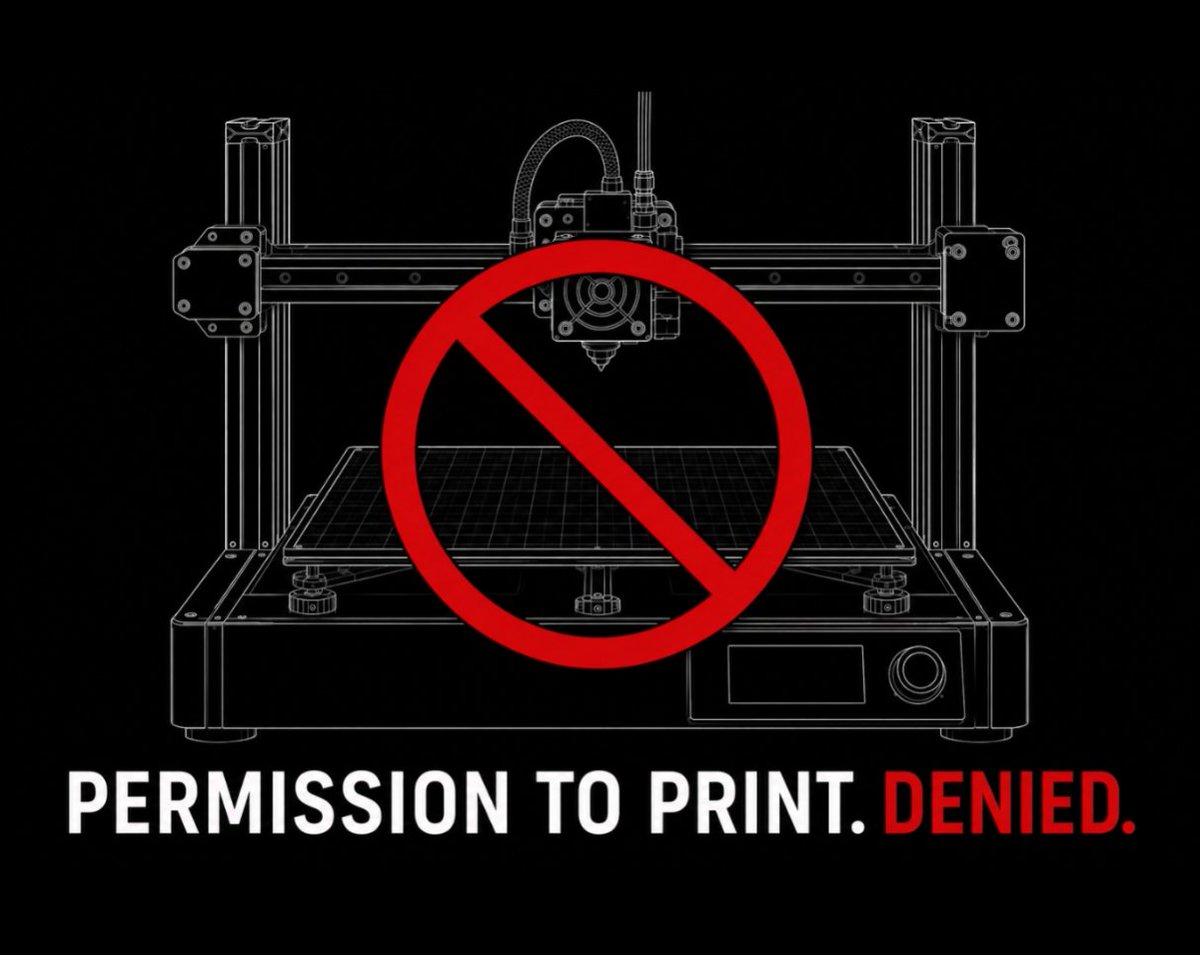
It will make it a Class E felony to possess or share a 3D-printable file capable of producing a firearm component. Every printer sold in New York must ship with print-blocking algorithms that scan each job in real time and refuse to execute anything the algorithm flags.
The sales pitch is "ghost guns." The mechanism is a permission gate inside a machine you paid for.
Pilot tests of the proposed algorithm by an open-firmware team triggered the block on 17% of non-weapon prints. Brackets that resemble triggers. Cylinders that resemble barrels. A model train coupling. A bottle opener. The algorithm cannot tell. It will refuse the print and log the attempt to whatever server the manufacturer is required to maintain.
The same arithmetic the printing-press licensors used in 1660. The same arithmetic the Stationers' Company used to brand a printer's son for distributing tracts the Crown had not approved. The same arithmetic the early DRM crowd used to make a DVD ripper a federal criminal in 1998.
A tool you bought, in a room you own, with electricity you paid for, becomes a deputy of the state at the moment of purchase and remains one for the lifetime of the device.
Anything that takes a digital design file and outputs a physical object is now within the reach of a state that has declared it owns the question of which physical objects you are permitted to bring into existence inside your own house.
The fence has spent forty years moving inward. Around the song first. Around the page. Around the cipher. Around the camera roll. Now, finally, around the workbench. The state has run out of digital territory to enclose and has started enclosing the atoms.
The maker who prints a bracket for a broken washing machine tonight commits the same act, technically, that the law is written to stop. The algorithm will not know the difference. It is not designed to know the difference. It is designed to fail closed, to refuse first and let the human appeal upward through whatever bureaucratic channel the manufacturer designs, if any, on whatever timeline the manufacturer chooses, with whatever paper trail attaches to the request. Permission to print, denied. Submit a ticket. Wait.
Unfortunately for New York, and fortunately for us, the firmware on every consumer 3D printer is open or near-open. All of them forkable, all of them flashable, all of them already installed on millions of machines outside the reach of any future New York compliance certificate.
The CAD files at issue are mathematical descriptions of geometry that will be mirrored on a thousand drives in a thousand jurisdictions before the ink on the bill is dry. The state cannot bind geometry. It can only bind the people who agree to be bound.
Forty years from now nobody will remember the ghost gun argument. They will remember the year a state government decided that the physical output of a private machine was the state's business at the point of manufacture.
🚨 Censorship in Japan
> Japan’s Ministry of Internal Affairs is pushing age restrictions on SNS to “combat addiction” among minors.
Key elements:
• Force platforms to implement age restrictions + age-appropriate filters **at signup** (many are currently off by default)
• Create a risk-evaluation system for each SNS service
• Consider legal amendments — conclusions targeted for this summer
> Framed as child protection, but this gives government the power to dictate how private platforms must operate for young users.
This is a slippery slope toward digital censorship and reduced information access. Parents should monitor what their kids see online. Not politicians!
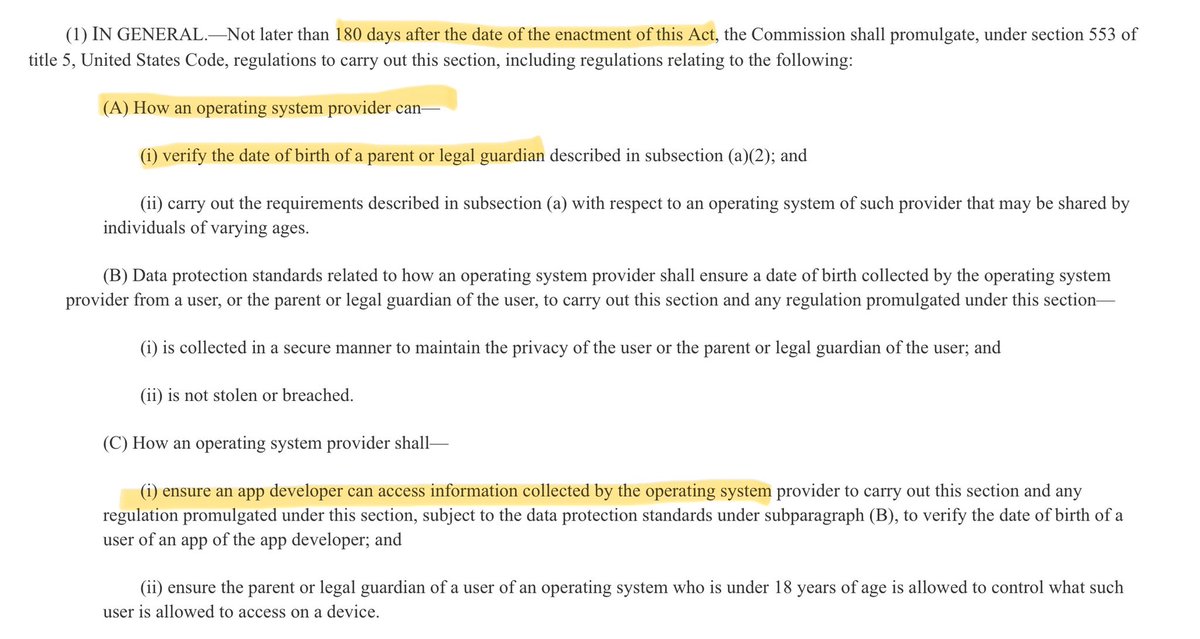
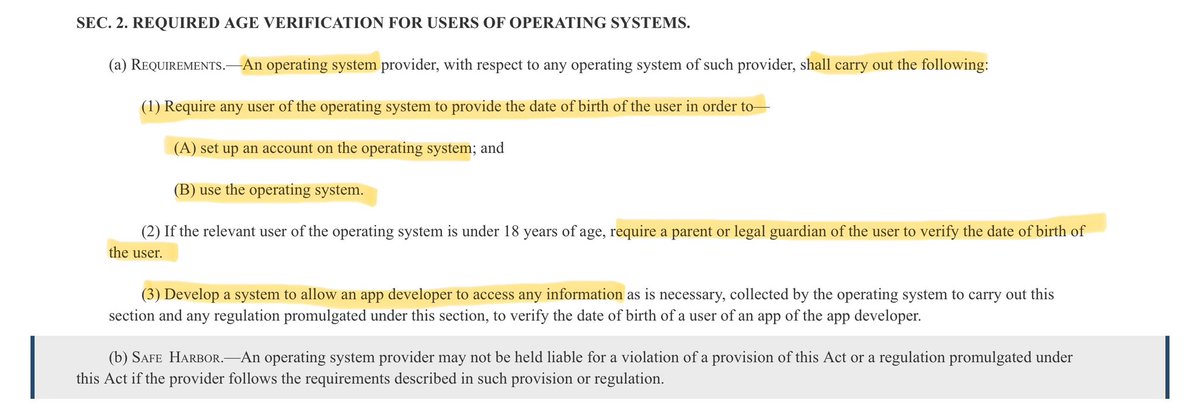
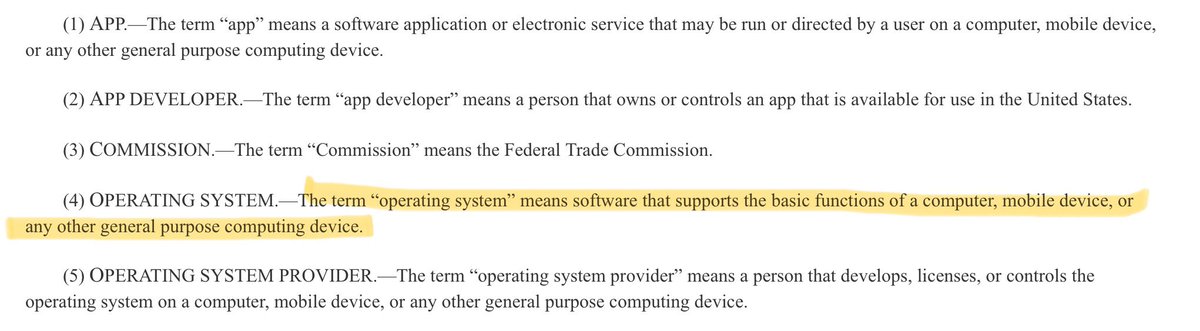
The full text for HR 8250, the proposed Federal law which would require all Operating Systems to implement Age Verification, has just been made publicly available.
It is short, poorly written, clearly not at all thought out, and almost entirely devoid of specifics.
Some key points:
- The bill does not specify how age verification would work at all. It states that the Federal Trade Commission would have 180 days to specify the exact mechanism and requirements for Age Verification within the Operating Systems.
- The Federal Trade Commission would also specify data storage protection requirements as well as requirements for how the Operating System must provide access to collected user data.
- This bill would apply to ALL Operating Systems. Everything from Windows to Linux to embedded systems. Yes, even to a smart refrigerator. The “Operating System” definition is incredibly broad.
- The law will be considered in effect 1 year from the date it is enacted.
- Violations of the law will be handled under the Federal Trade Commission Act.
- It is given the “Short Title” of “Parents Decide Act”.
https://t.co/u22o583kH2
Microsoft is rolling out mandatory age verification in Singapore and some people are locked and can’t play their own games
Xbox and Microsoft Store users must now verify their age to access 18+ rated games and apps, even ones they already own.
Verification options include logging in with Singpass, completing a facial selfie scan, or uploading a government ID such as a passport or NRIC.
Sweden is reversing its digital-first schools.
They're spending over $137 million on physical textbooks and novels for better reading and focus.
Smartphones will also be banned nationwide in schools from this autumn.
I'm no longer "visibly limited" on my main account @marcusx191 (X doesn't call this a shadowban) thank god! And again, please follow this account in case something happens to my main one.
I'm no longer "visibly limited" (X doesn't call this a shadowban) thank god! And again, please follow my alternate account @Marcus28070 in case something happens to my account.
Walmart and Amazon make niche retail almost impossible.
Private equity firms picked at the carcass.
I’ve heard that some groups deliberately ran otherwise healthy malls out of business for tax breaks.
Malls were already struggling.
2008 was the killshot.
Serious Question:
We all know how Aka Akasaka fucked up the ending to Oshi no Ko and its mostly hated. However if we got an anime original ending do you think it could save the series?
With how much the Official Oshi no Ko account from Japan is posting Pro Aqua x Ruby. I assume we are getting Mengo-sensei's ending that was planned in the beginning for the anime
If that happens OnK will be a Top 5 Series