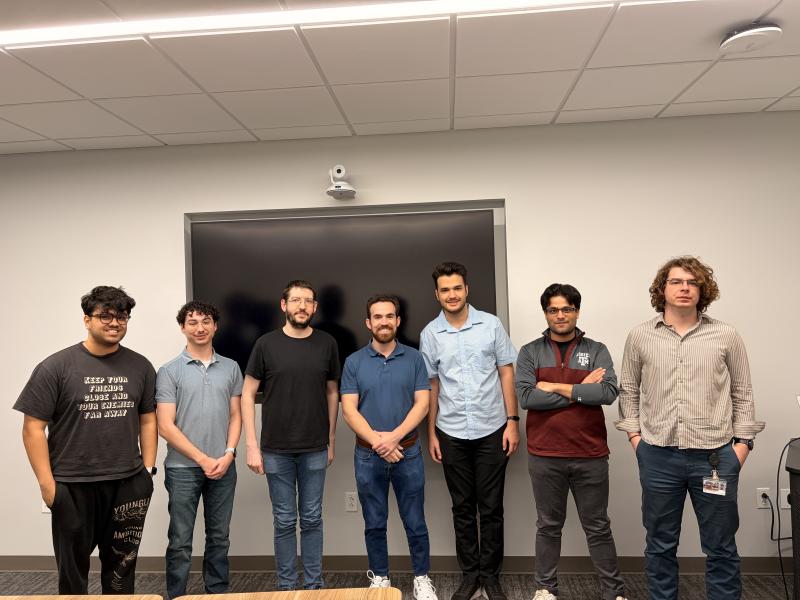
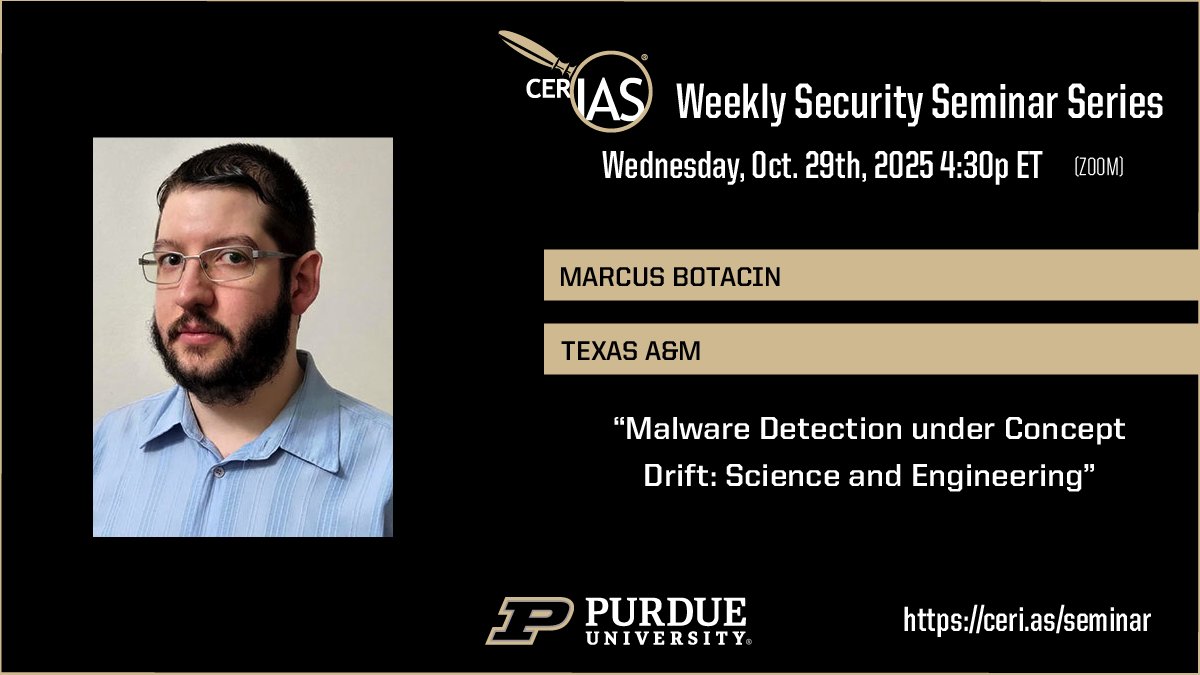
[Big News] I started as CS Assistant Professor @ Texas A&M @TAMUEngineering I'm looking for new collaborators and new students to keep researching malware and systems security. Get in touch! https://t.co/fEcxot8mVi
What if cybersecurity defenses did more than detect an attacker’s behavior and actively disrupted what the attacker planned to do next?
In this clip from #CYBRHAKCAST, Texas A&M professor and cybersecurity researcher Marcus Botacin explores how defenders can introduce unpredictability into an environment, forcing attackers to adjust their next steps and making established attack sequences more difficult to complete.
Building on Marcus’s #CYBRSECCON presentation, hosts Michael Farnum and Phillip Wylie continue the conversation about distributed attacks, evolving malware, and how new defensive approaches could help security teams stay ahead of increasingly evasive threats.
Watch or listen to the full episode on #CYBRSECMedia:
https://t.co/Bd7BU1yxLb
#CYBRSECCommunity #CYBRSECEvents #CYBRHAKCAST #CyberDefense #Malware #ThreatPrevention #CybersecurityResearch #Cybersecurity
@V0iD_0daY Yes, have to unpack first; otherwise, it does not work really well (you know, limits of static analysis). The solution still runs if packed (it accepts any labeled cluster as input), but the generated patterns do not generalize very well: clustering UPX rather than families.
We have a new paper out "AutoPYara: Next-Gen YARA Rule Generator for Malware Family Clustering" (https://t.co/CSpeQKIZwM) to appear on ACSAC. You can install the tool from Pypi (https://t.co/3h9r8RhMBn) and automatically generate Yara rules!
📣 The program for #ACSAC2026 is now available on the conference website 📣 https://t.co/m12IzGt7g3
If anything looks interesting to you, early bird registration is still possible until 16th November 2026: https://t.co/GNBpdryVL5
The video of my talk "You Can See Me but You Can’t Track Me: Evading Behavioral Detection with Distributed Malware and Covert Synchronization Channels" is online: https://t.co/X4n4NJqnDm
🥛 Fairlife has temporarily stopped producing milk in the United States after a ransomware attack disrupted some of the company’s production systems.
Coca-Cola, which owns Fairlife, says law enforcement has been notified and an investigation is underway. The company says the attack has not affected the quality or safety of its products, and Canadian operations remain unaffected. It is not yet clear when U.S. production will resume.
The recording of my talk "Hardware is the New Software: The Next-Gen AntiViruses and how your hardware will self-secure your system!" is available at: https://t.co/VIArc7bYYR