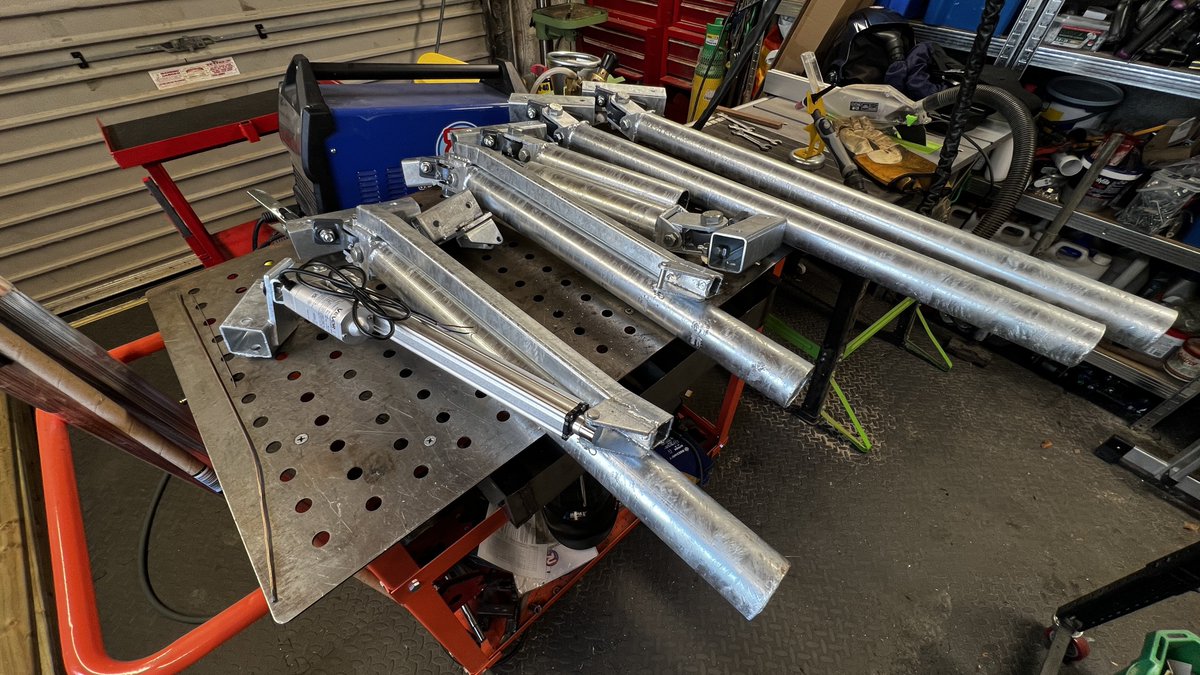
I decided to make my garden solar arrays track the sun. No, it’s probably not financially worth it, but it has been a fun project.
The arrays point Southeast so are great for the morning sun, but by mid afternoon their output starts to drop. Given the slope of the garden making them track around in azimuth was not really feasible, so I designed them to rotate on the diagonal. This allows better generation through more of the day. The front array moves from 33 degrees to the SE, through horizontal, to 16 degrees to the NW. As the rear array is in shadow from the bushes towards sunset there isn’t much point in having it go past horizontal, however, as it gets the sun first in the morning, due to its higher position, I have it start the day at 45 degrees to the SE.
The arrays are controlled by an Arduino Nano ESP32, which also connects to my Home Assistant for monitoring and control. There is a GPS to provide a time signal and an L298N based dual channel motor controller for the two linear actuators. The arrays position is monitored by the Arduino using a 3-axis accelerometer on each array. I have added two Light Dependant Resistors (LDRs) to the front array to give solar tracking based on light intensity. The rear array basically tracks the position of the front array.
The software I have written uses the “SolarCalculator Library for Arduino “ to calculate the suns transit (time the sun is the highest in the sky) for my location and then it calculates the optimum angle for the panels from there based to their orientation. The LDRs feed into the equation to allow an adjustment of up to 15 degrees from the calculated angle. Combining the two methods ensures the arrays are always pointing it the correct direction and aren’t affected too much by-passing clouds or overcast days.
The video is sped up x4, they are not fast, but more than fast enough to keep up with the sun. After sunset, they reset to point to the East ready for the next day. I have added a small solar panel to charge a 12V battery to power the whole system. I also have manual controls so can drive the arrays independently of the electronics if it all goes wrong. The linear actuators are also quick and easy to swap out or replace with a steel bar if required. I did the maths on the structure for windspeeds of 140 kph, which should be more than enough for my location.
@lakecitysky@Tesla Sentry mode activated at home too and schedule disappeared again. Input a new schedule then the original one reappeared!
Current software seems a bit buggy. Car 2026.14.2 app v4.56.0
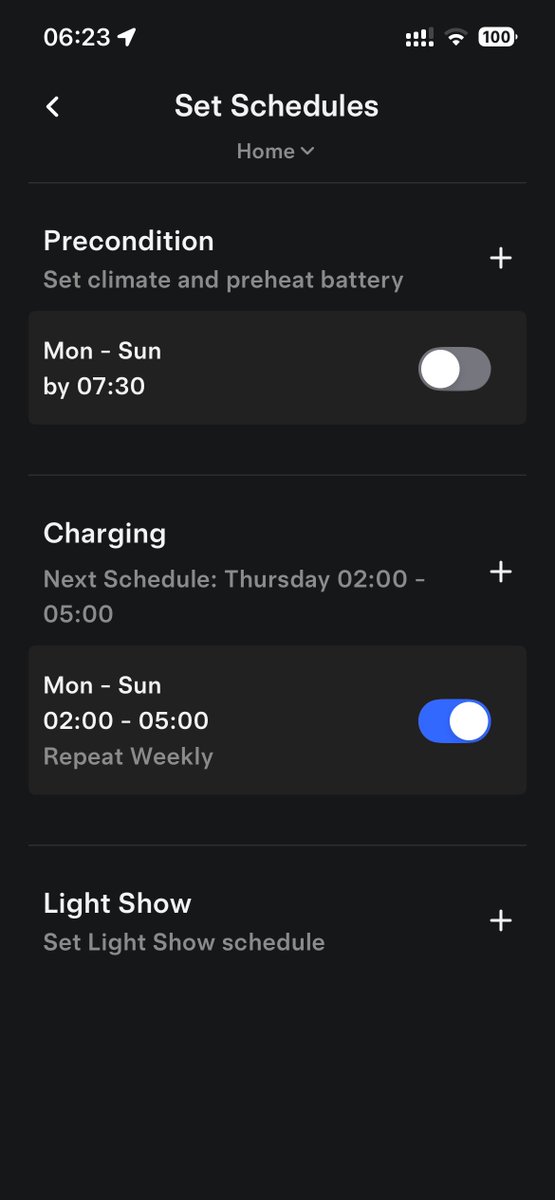
Did anyone else’s @Tesla fail to charge on the schedule last night with App version 4.55.6? Mine is saying it will start charging on Thursday at 02:00 even though its set to charge every night. Looks like a software bug to me.
Tesla wall socket charger, first time its failed for me 🤷♂️
@teslaeurope@teslaeurope
@battleangelviv@elonmusk There are a lot in the UK too! Victorians took saplings back for their stately home parks. Obviously they are still relativity small (but big compared to local trees) as they are so young.
Other owners have confirmed theirs haven’t charged either. @Tesla can you ask your software team to look at app 4.55.6 (or car software 2026.8.6) please.