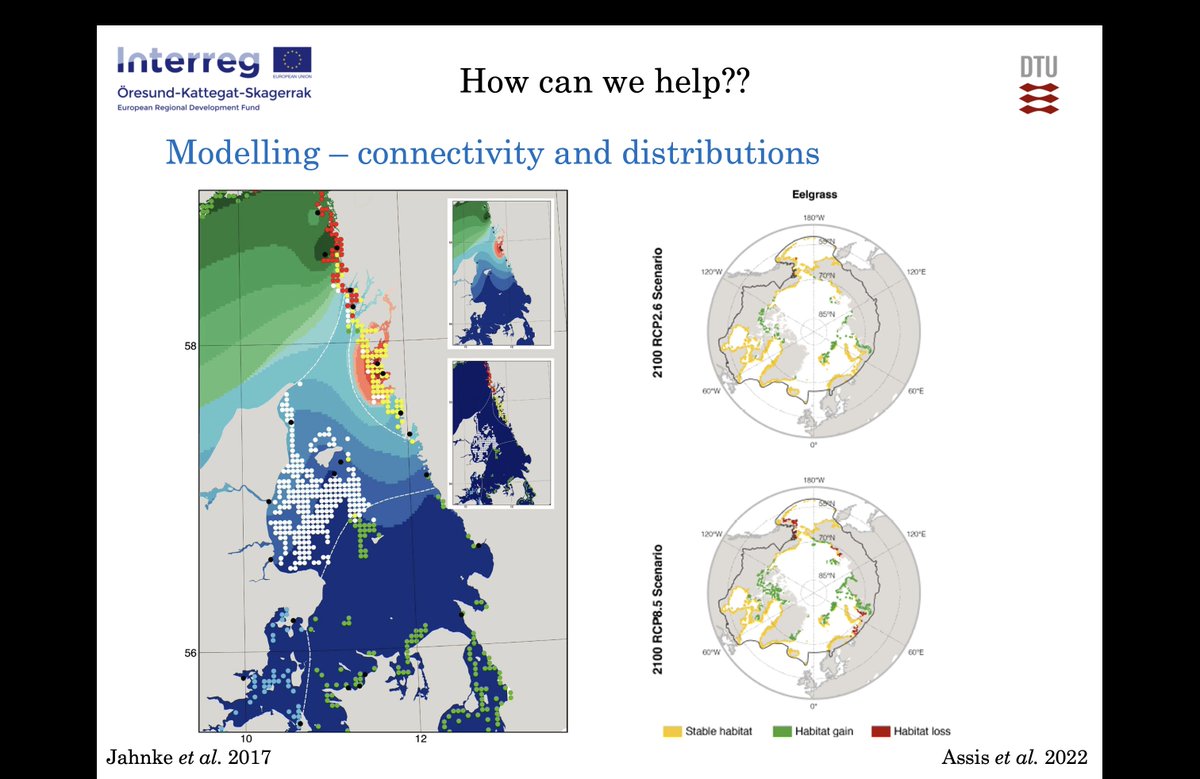
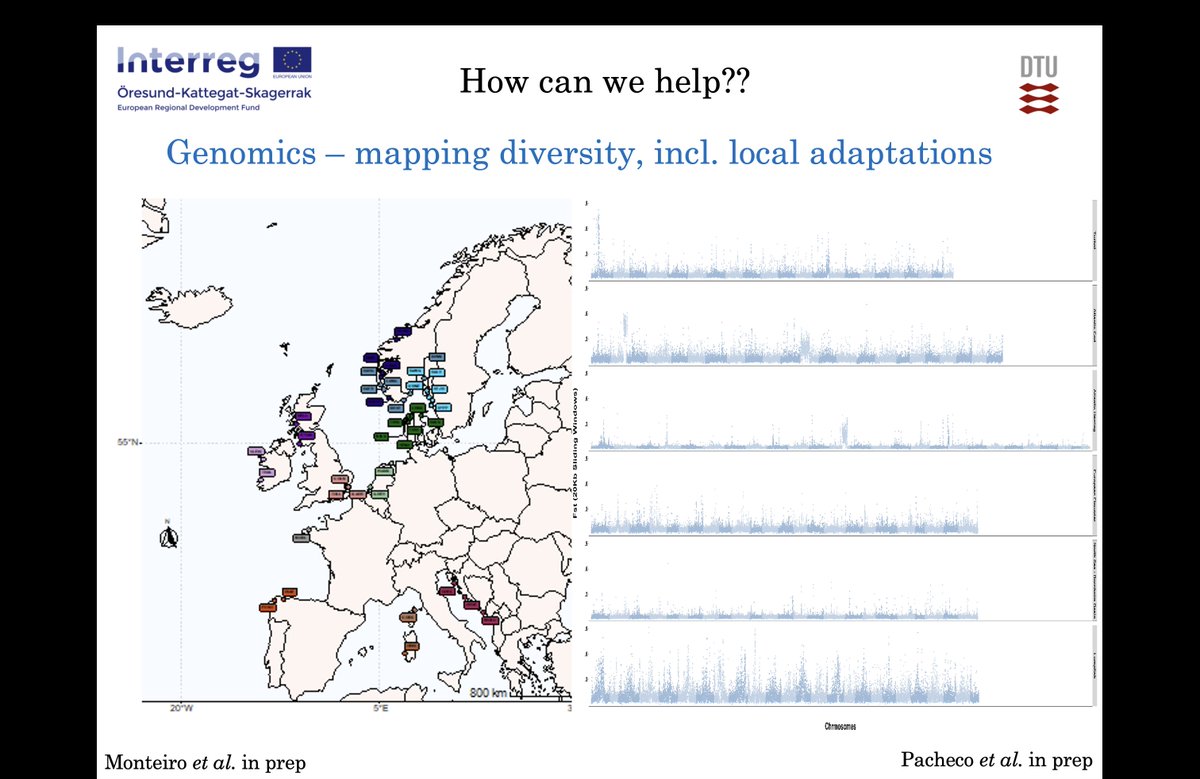
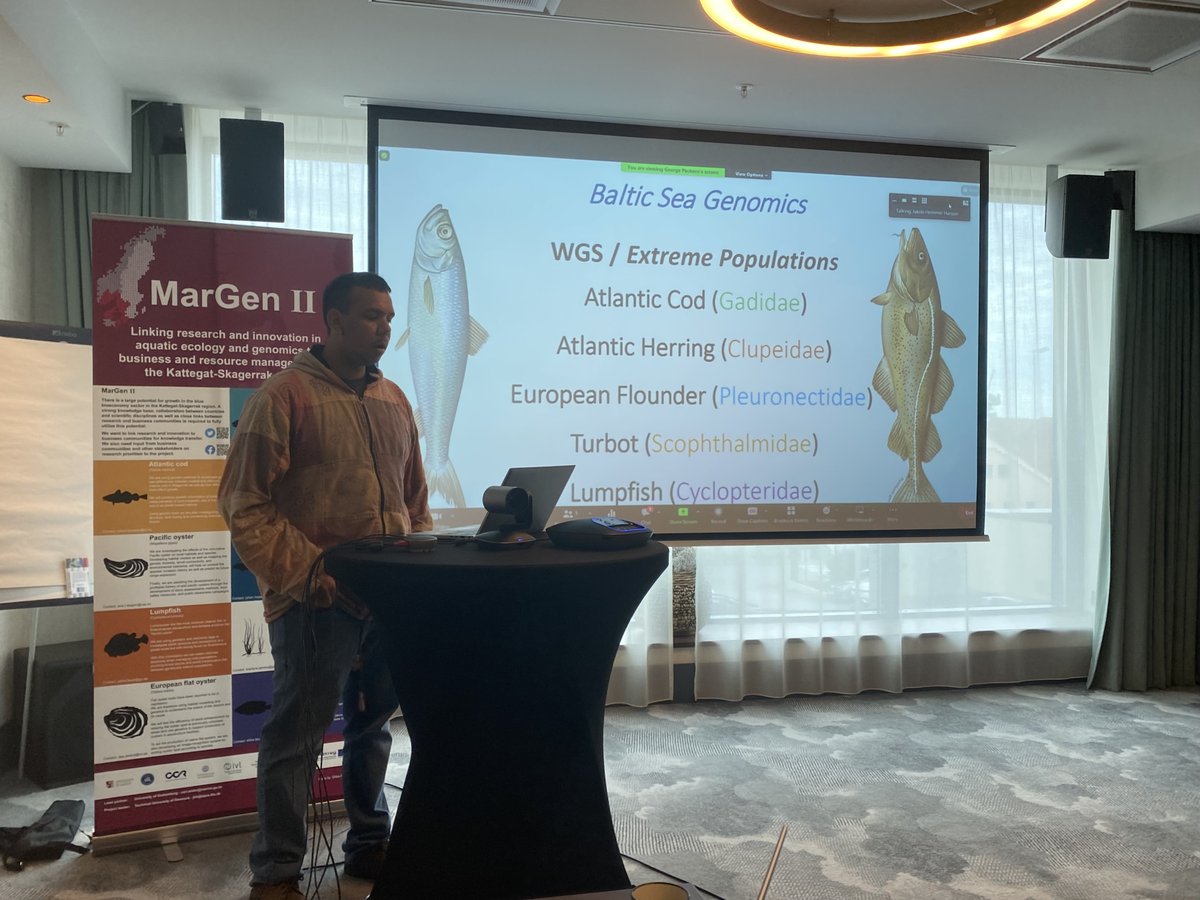
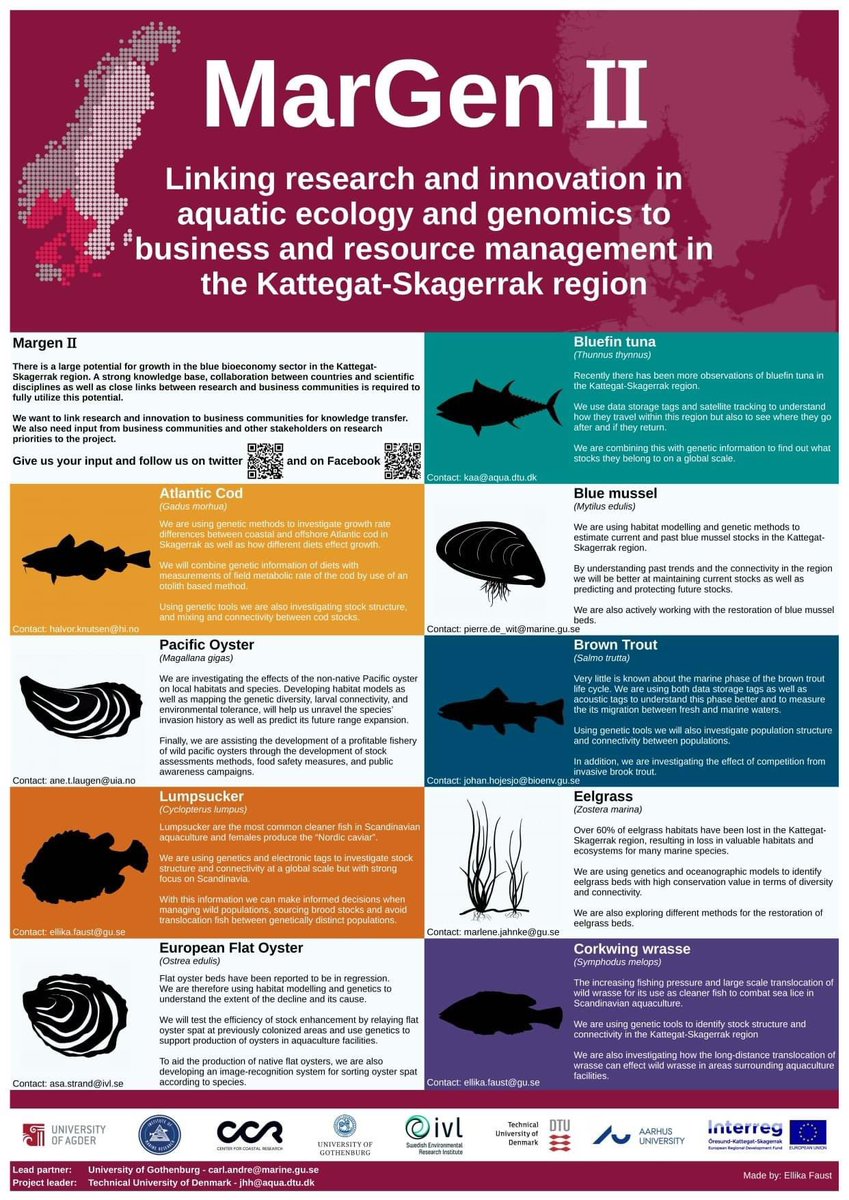
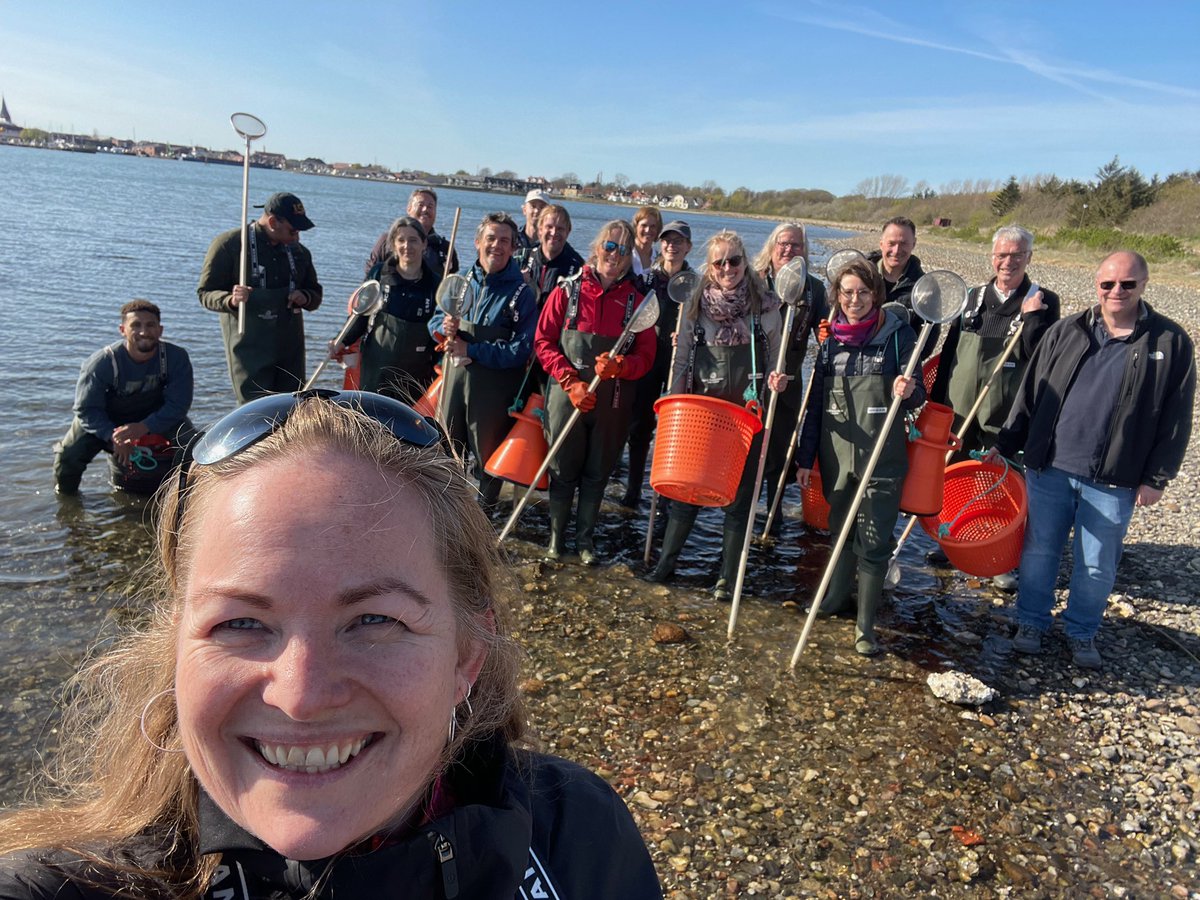
We are happy so many stakeholders are joining us today to link research and innovation in aquatic ecology and genomics to business and resource management in the Kattegat-Skagerrak region. Talking about #Tagging#Biologging#Modelling#Genomics and much more
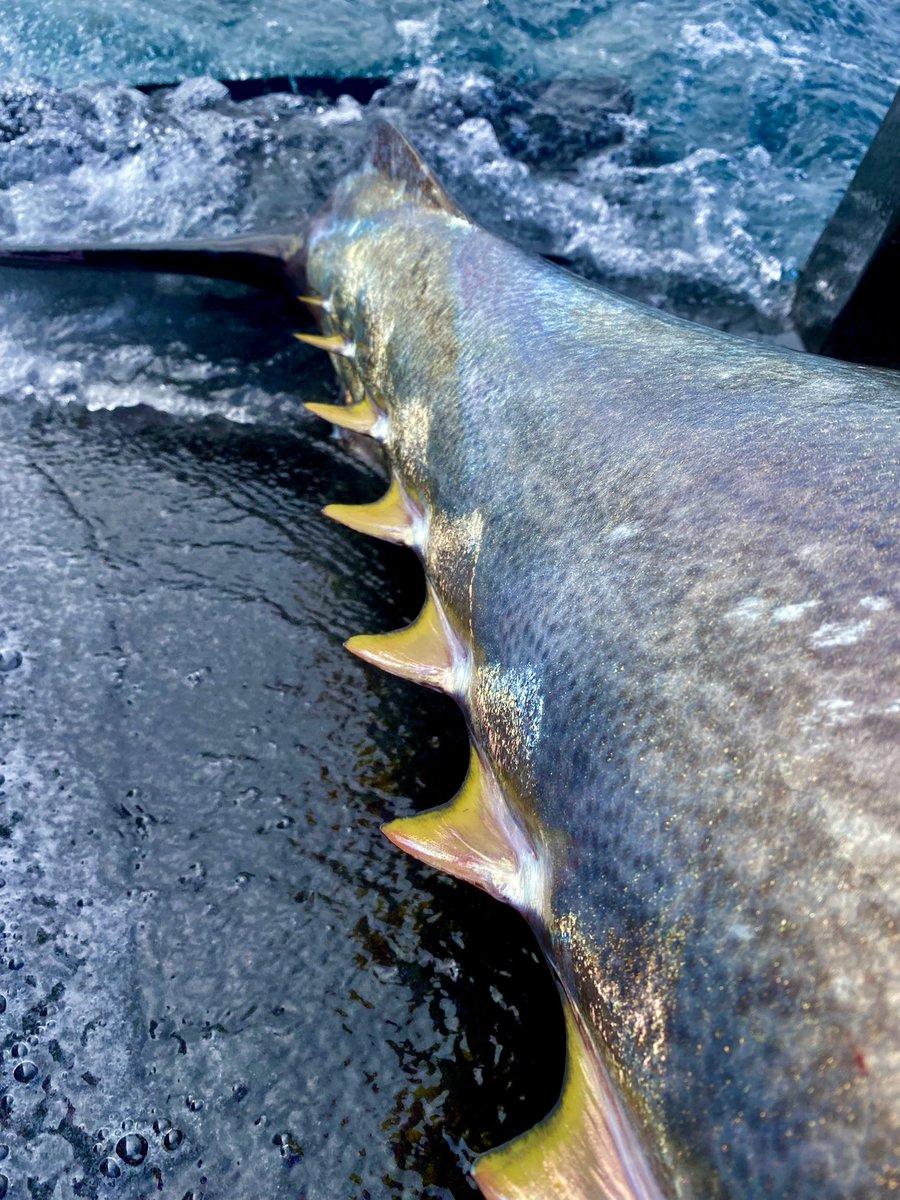
Here @kbg_conserv and @LeneSortland are ready for this year's #BluefinTuna tagging in the Kattegat and Skagerrak. We wish you the best of luck and lots of success!
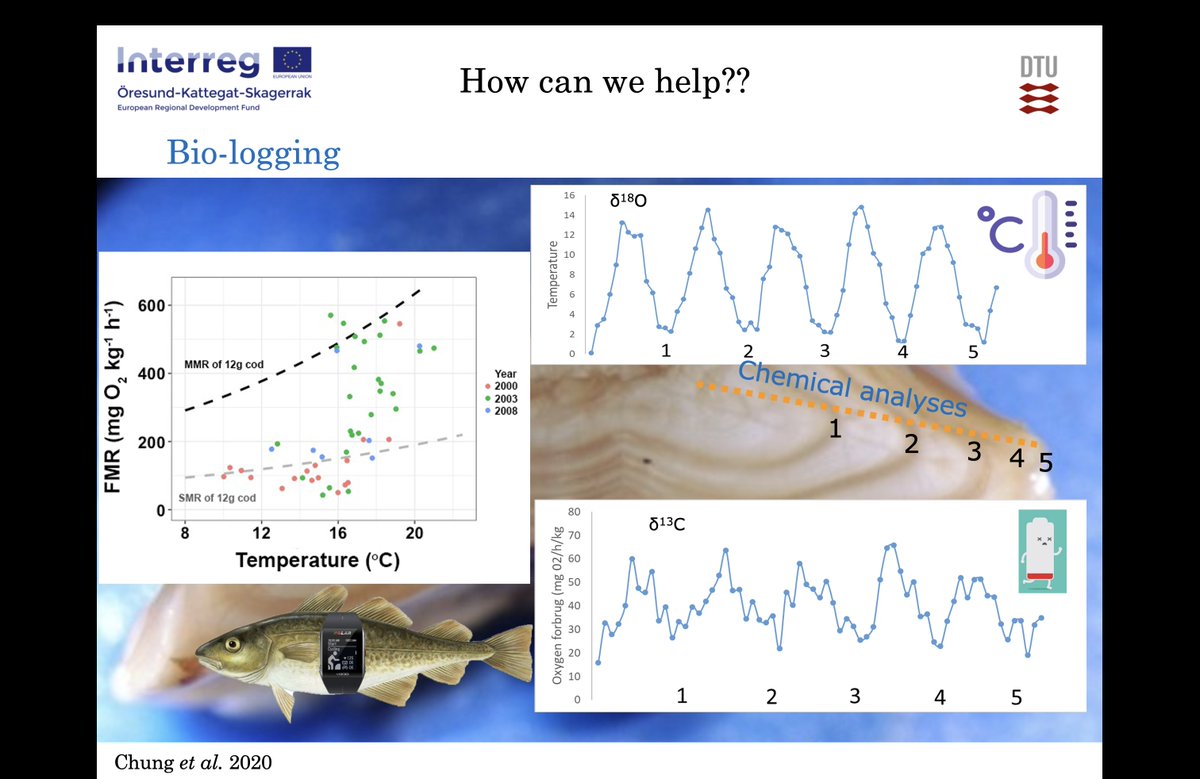
@gotjevonleesen starts the first session of our last @Margen_II meeting by sharing her recent results on how the future change in water temperature may alter metabolic rate in #AtlanticCod
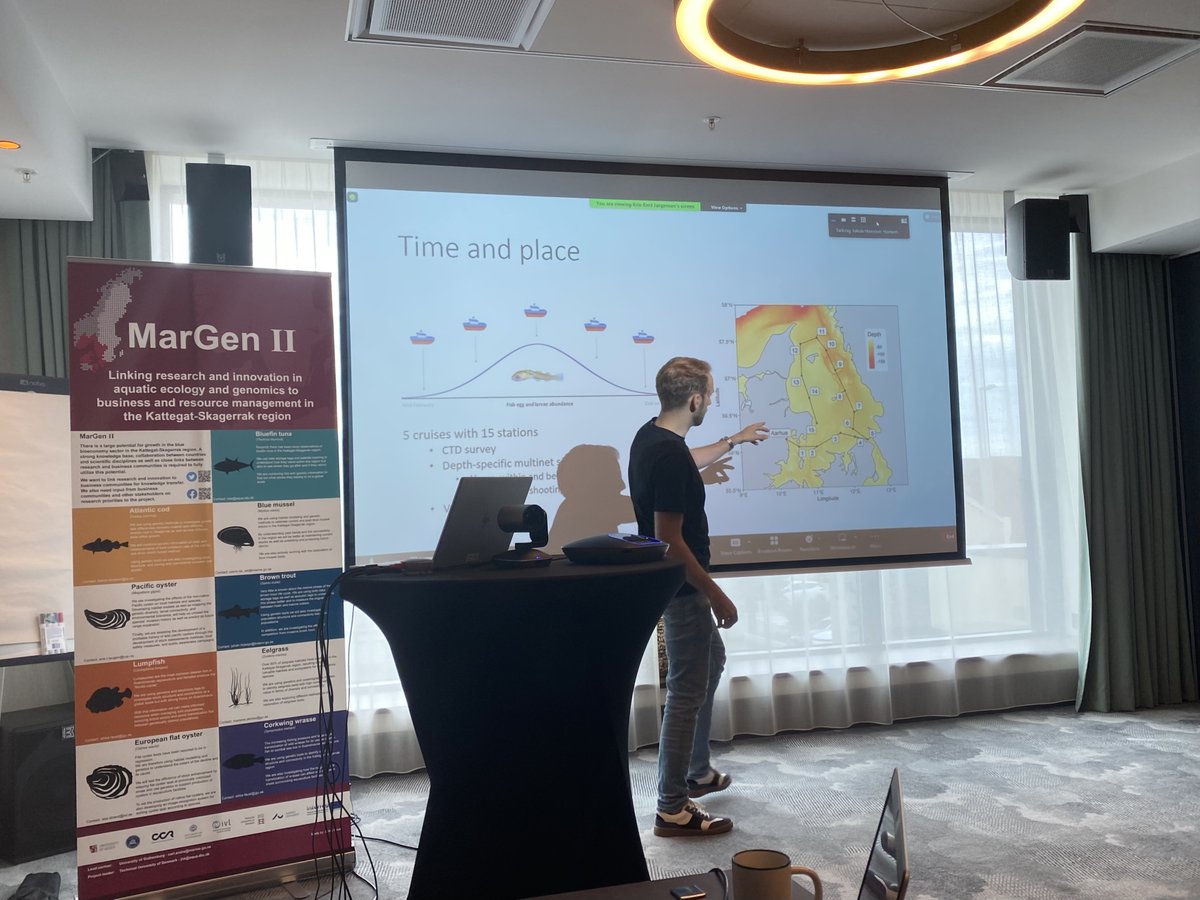
Potentially some new species of fish in the #Kattegat?Based on early results of Kris-Emil who is investigating fish eggs and larvae abundance, biodiversity and different depth in the Kattegat
Back from a good day of tagging BFT in Scandinavian Bluefin Marathon. Today we tagged and released 22 large BFT up to 276 cm. Couldn't have done it without a fantastic crew and funding from the EU project Margen II, the Danish Ministry of food, ICCAT and Tunforeningen af 2019.
@gotjevonleesen starts the first session of our last @Margen_II meeting by sharing her recent results on how the future change in water temperature may alter metabolic rate in #AtlanticCod
The final Margen_II meeting is already happening this week, and we hope to see many stakeholders joining us on the 26th of August. We will present and discuss project results on shellfish and coastal fish. More info at https://t.co/NNtJXVPWJG
Every year millions of cleaner fish are caught along the Swedish coasts and transported to salmon farms in Norway for parasite control. In our next Sea and Society Talk on August 30 @EllikaFaust@goteborgsuni discuss the effects of this translocations: https://t.co/eleZVBtdkn
New Margen II paper, which uses genomic data to reconstruct the demographic history of European and American eel for the past millions of years. It shows that the current population declines are extreme compared to previous population history. https://t.co/2FA4T96lzR @MollerMMH
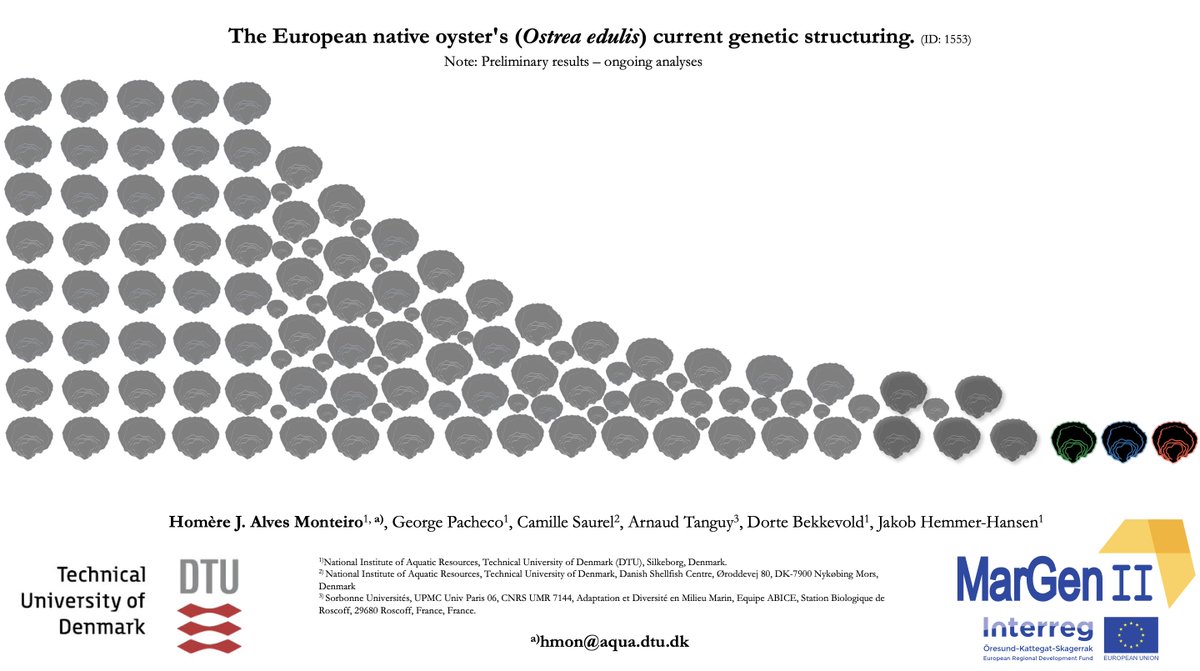
I'll talk about our @Margen_II ongoing whole genome sequencing analysis of the Native European Oyster (Ostrea edulis) 🦪 at #ESEB2022. We found some genomic patterns underlying population divergence that could potentially be adaptive (inversions !!!). At 4 pm Monday at S11 😉.
MarGen_II final meeting with online stakeholder session on August 26 approaching; we present and discuss project results on shellfish and coastal fish. Let us know if you are interested in attending! More info at https://t.co/odsVF7fZ5p
New Margen II paper about methylation in European eel. It shows that #epigenetics may play a role in local adaptive responses and in speciation of European and American eel. #EuropeanEel https://t.co/AsBqL9tf1B
Lumpfish, lumpsucker or adorable little grape fish, call it what you want. But did you know that your local lumpfish might be just that, a local who came back?
‼️Preprint out‼️https://t.co/oNylEc4w58
🧵 below
#OneMoreChapterDone#PhDThesisInProgress
@EevaJansson @Havforskningen
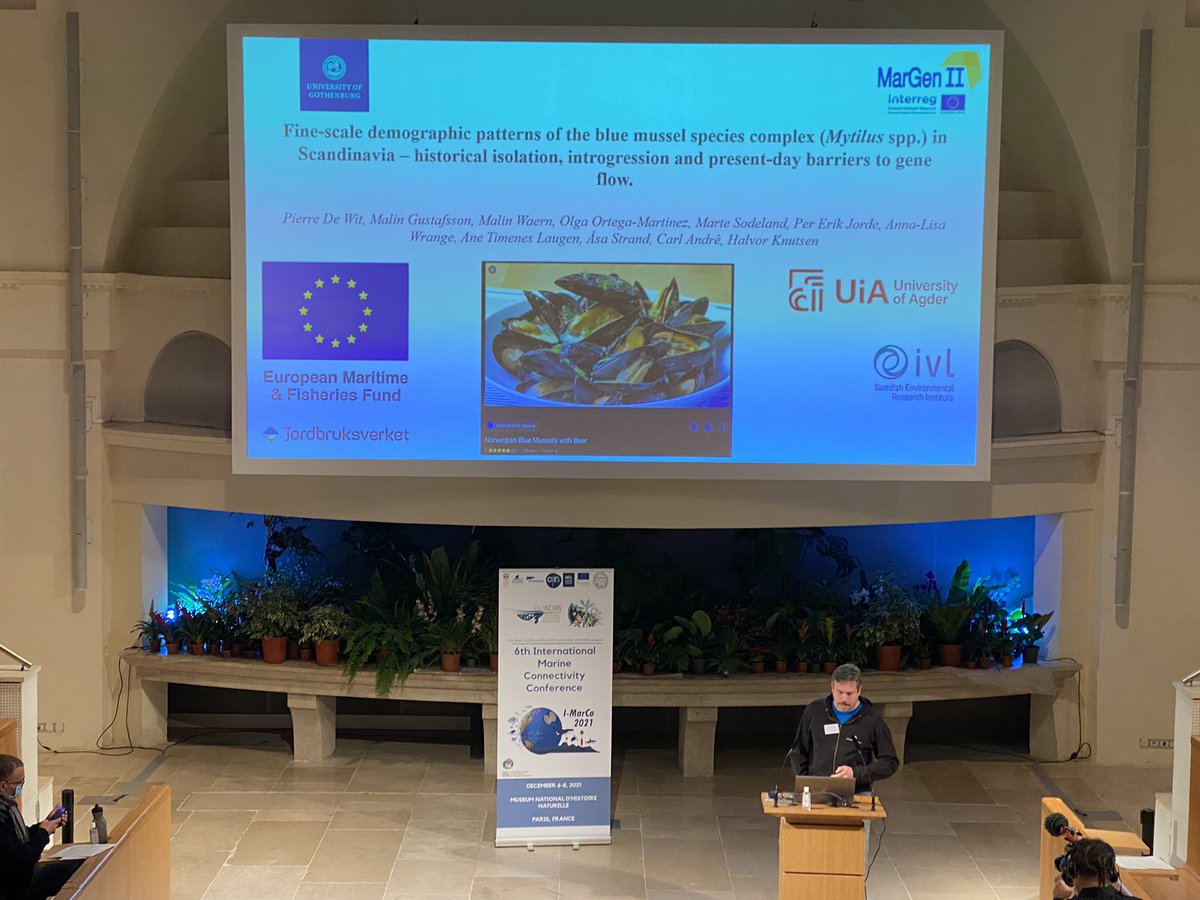
The common blue mussel in Scandinavia has a complex history of isolation, introgression and barriers to gene flow, @pierre_dewit explained at #imarco2021