𝗔𝗹𝗿𝗲𝗮𝗱𝘆 𝘂𝘀𝗶𝗻𝗴 𝗠𝗮𝗿𝗴𝗶𝗻𝗡𝗼𝘁𝗲 𝟰?
You can upgrade right inside the app — no new download or separate purchase needed. Your study sets, notes, and purchased features all carry over.
Prefer the classic MN4 interface? You can switch back anytime.
𝗠𝗮𝗿𝗴𝗶𝗻𝗡𝗼𝘁𝗲 𝟱 𝗶𝘀 𝗰𝗼𝗺𝗶𝗻𝗴 𝘀𝗼𝗼𝗻.
After 13 years of continuous refinement, MarginNote's fifth major release brings a more intuitive interface, stronger data protection, and new ways to work with external AI tools.
Sneak peeks start this week 👀
Adjust Page Order After Reorganization
Edit PDF Page Order
Virtual pages created from TOC items, Thumbnails, Bookmarks, or Annotations can be further rearranged using Edit PDF Pages to modify the page order.
Cross-Document Reorganization
Drag Document Tabs to Reorganize Across Documents
To virtually merge documents, just drag one document tab onto another. You can either append it to the end of that document or create a new merged virtual document.
Reorganize by Selected Region
Use the Hand Tool to Select Regions
Use the hand tool to precisely select text or regions on a page. Drag the selected region to the tab bar to reorganize pages (Append / Create New).
Reorganize via Bookmarks / Annotations
Drag Bookmarks / Annotations to the Tab Bar
Similar to thumbnails: switch to Bookmarks or Annotations view, long press the target page or annotation region, then drag it to the tab bar to reorganize pages (Append / Create New).
Reorganize via Thumbnails
Drag Thumbnails to the Tab Bar
Switch to Thumbnails view, long press the desired page, then drag it onto another document tab or the New Document button to reorganize pages (Append / Create New).
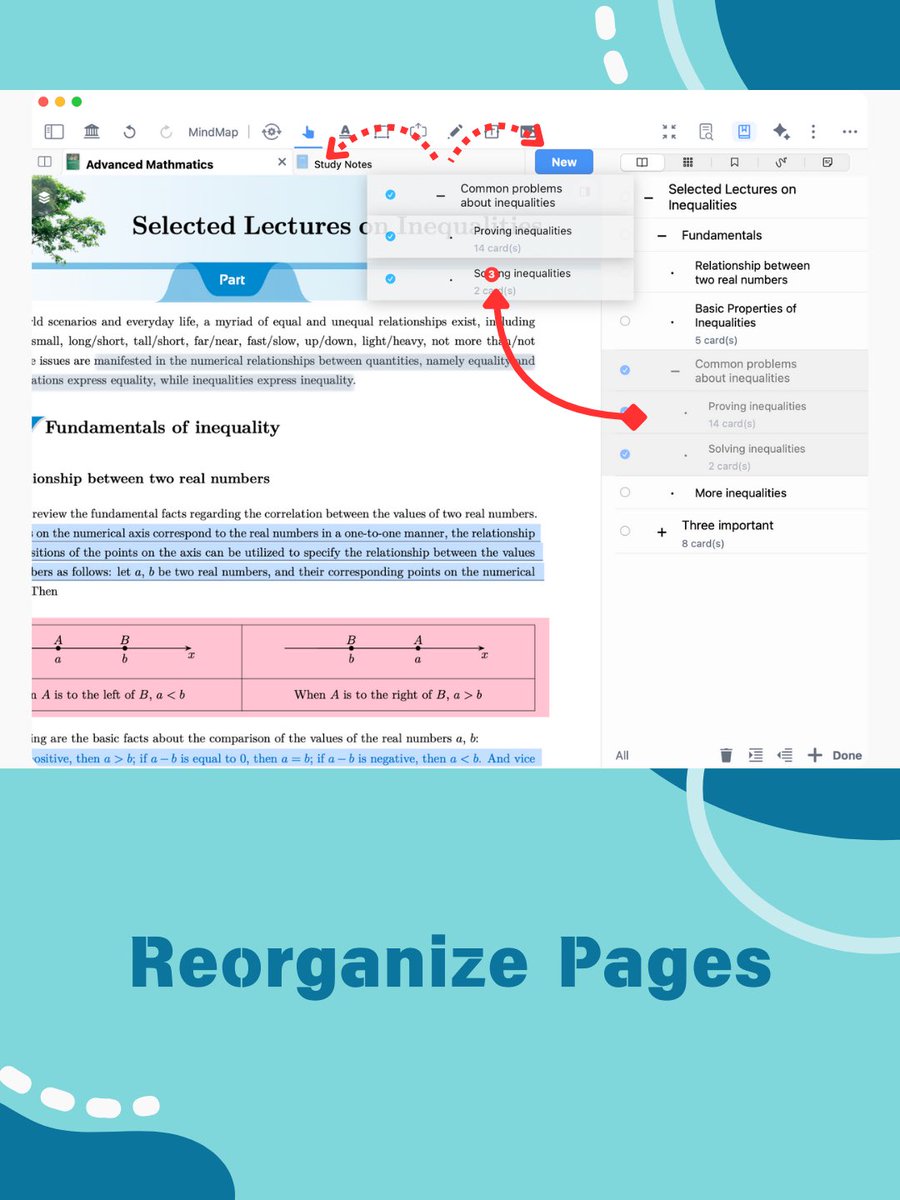
Reorganize via Table of Contents
② Reorganize Multiple TOC Items
Tap the Edit button in the TOC view, select multiple items, then drag them to the blue New Document button in the tab bar. A new virtual document will be created automatically based on your selected TOC items.
Reorganize via Table of Contents
① Drag a Single TOC Item
Open the Table of Contents view. Long press a TOC item and drag it onto another document’s tab in the tab bar to append all pages under that TOC item to the target document.
Pre-Reorganization Setup
Enable the Document Tab Bar
To virtually split and reorganize the document, first enable Document Tabs (or use shortcut ⇧+H) to open the document workspace tab bar.
🌟 Virtual documents created via Reorganization will not display previous margin notes—they will be saved as excerpts or cards inside the card grouping board.
⚠️ In MarginNote 4, page reorganization is performed virtually based on the source PDF. Do not delete the source document to avoid ⛓️💥 broken links or blank pages.
Table-of-Contents Folding & Page Reorganization — Reorganize Pages ✨
Powered by PDF tab pages and virtualization, you can drag and drop Table of Contents items, Thumbnails, Bookmarks, Annotations, or selected regions to assemble virtual pages—allowing you to freely reorganize document content and build your own personalized study set.
🛠️ Two ways to virtually reorganize pages (Append / Create New), neither will affect the source document or annotation data.
🔚 Append Document: Append pages to the end of the target document via reference.
🆕 Create New Document: Create a new virtual document.
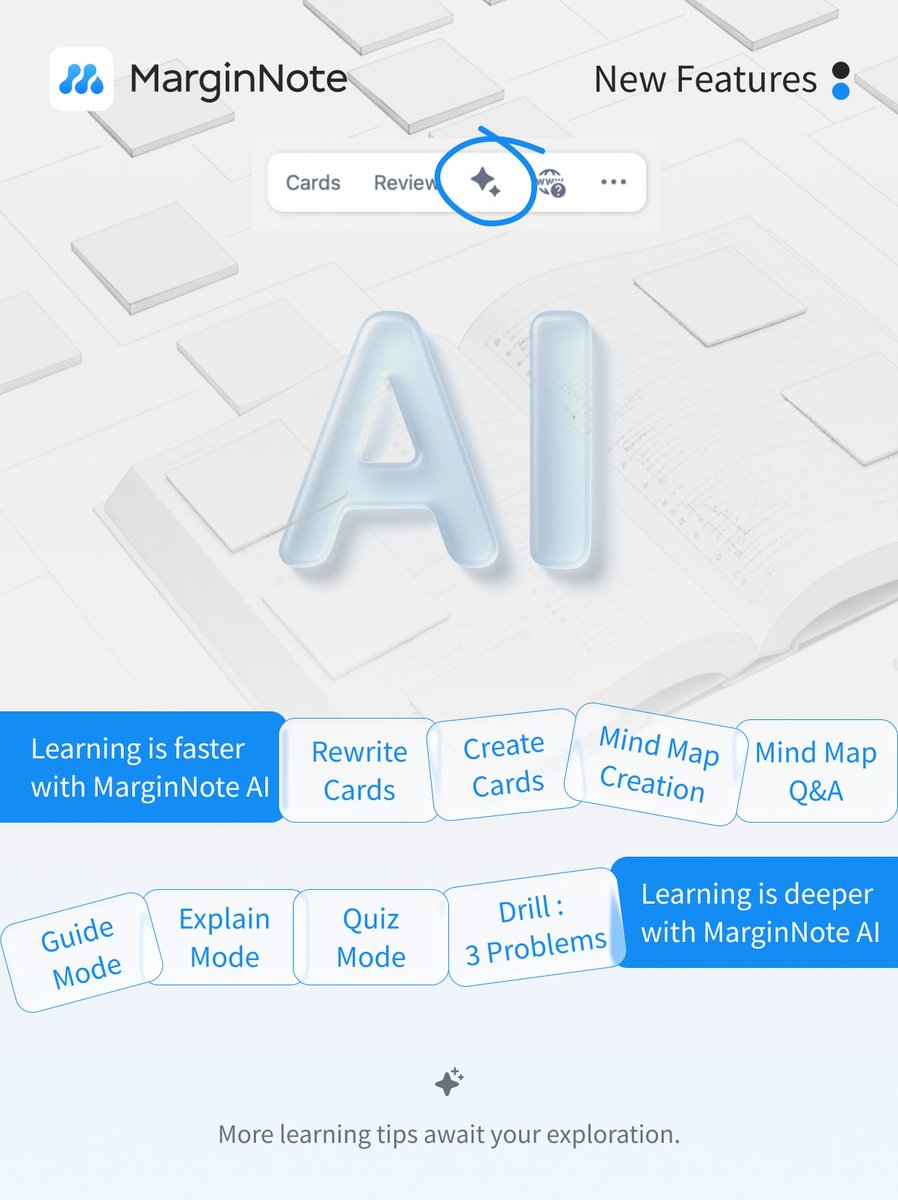
💡 Smartly Reinvented, Sincerely Crafted — MarginNote AI Has Arrived
🚀 More than Answers — It Executes
Introducing the all-new MarginNote AI, a next-generation upgrade that covers 15 core features across the document, mind map, and review workflows.
By turning each process into programmable micro-tasks, MarginNote AI helps you learn smarter, faster, and with greater precision.
✨ What’s New in Version 4.2.0 (AI Edition)
📘 Document Mode
- Build an AI-generated Table of Contents for your entire PDF
- Ask questions across the whole document
- Auto-excerpt key information intelligently
🧠 Mind Map Mode
- Generate a knowledge network with only one tap
- Create child mind maps and rearrange branches freely
- Visualize your learning process like never before
🗂 Flashcard Mode
- Rewrite titles, create cloze exercises, and batch polish cards effortlessly
- Convert handwriting and formulas into clean, full-text Markdown
🎁 AI Welcome Package
💎 For all existing users
Upgrade to v4.2.0 or later to instantly receive 300 AI credits —
permanently valid, with full access to all AI features.
🌟 For Max users
Upgrade to v4.2.0 or later and enjoy a monthly 300-credit allowance:
- Max Lifetime Users: 300 AI credits/month for three consecutive years after first AI use
- Max Subscription Users: 300 AI credits/month during your active subscription
(Check or manage your AI credits: MarginNote 4 → Settings → AI Credits)
🔧 Smarter Workflows, Stronger Knowledge Flow
This update enhances AI capabilities and streamlines the entire knowledge flow — from reading and thinking to review and memorization.
We invite you to share your feedback via the community or email — let MarginNote AI become your ultimate intelligent learning assistant.
- MarginNote International Community: https://t.co/xnHDy8zNyI
- Customer Support Email: [email protected]
How to Adjust the Folded Range?
2. Refold After Adjustment
After adjusting the fold range, simply tap the icon on the right side of the dividing line. From the pop-up menu, select Collapse to fold the newly adjusted area.
How to Adjust the Folded Range?
1. Unfold and Drag Edges
Click the ↕ Expand button to open the collapsed content. Long press the icon to select the folded top/bottom edge until the dotted line turns blue, then drag to adjust the range.
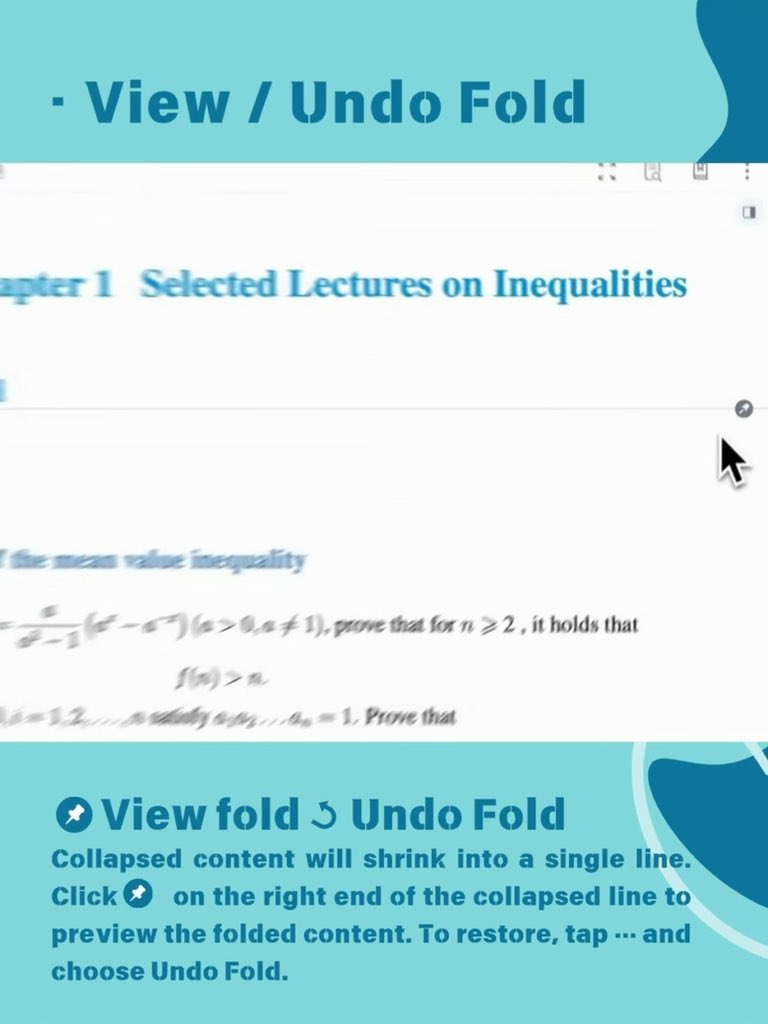
View / Undo Fold
Collapsed content will shrink into a single line. Click the icon on the right end of the collapsed line to preview the folded content. To restore, tap … and choose Undo Fold.
Folding Methods
3. Split & Fold
Long press anywhere on the document page and choose Split & Fold from the pop-up menu. This allows you to collapse content above or below the dividing line with one click, or fold the middle part by dragging.