Ukrainian President Poroshenko threatens to bomb Donbass children, 2014
This is an old footage dating back 18.11.2014*, so you might've seen it already, but still some didn't...
The Ukrainian president Petro Poroshenko declares an economic blockade of Lugansk and Donetsk so that the residents of Donbass region wouldn't get any jobs, pension, documents, won't be able to make inquieries to gov.insitutes or recieve education.
Culminating his passionate speech, the president said:
"Our children will go to schools but the Donbass children would be sitting in the basements**".
As President Proshenko puts it:
"This is the way, the way in which we'll win this war".
* According to the BBC by the 2 December, at least 1,000 people had died during fighting in the Donbas, since the signing of the Minsk Protocol in early September. So this speech by the Ukrainian President was made amidst fighting the civil war.
** Why the basements you might ask? Why all of a sudden the Presidents himself utters such nonsence? Well, the shelling of Donetsk already started and people are hiding in their basements from the artillery and the Ukraine airforces.
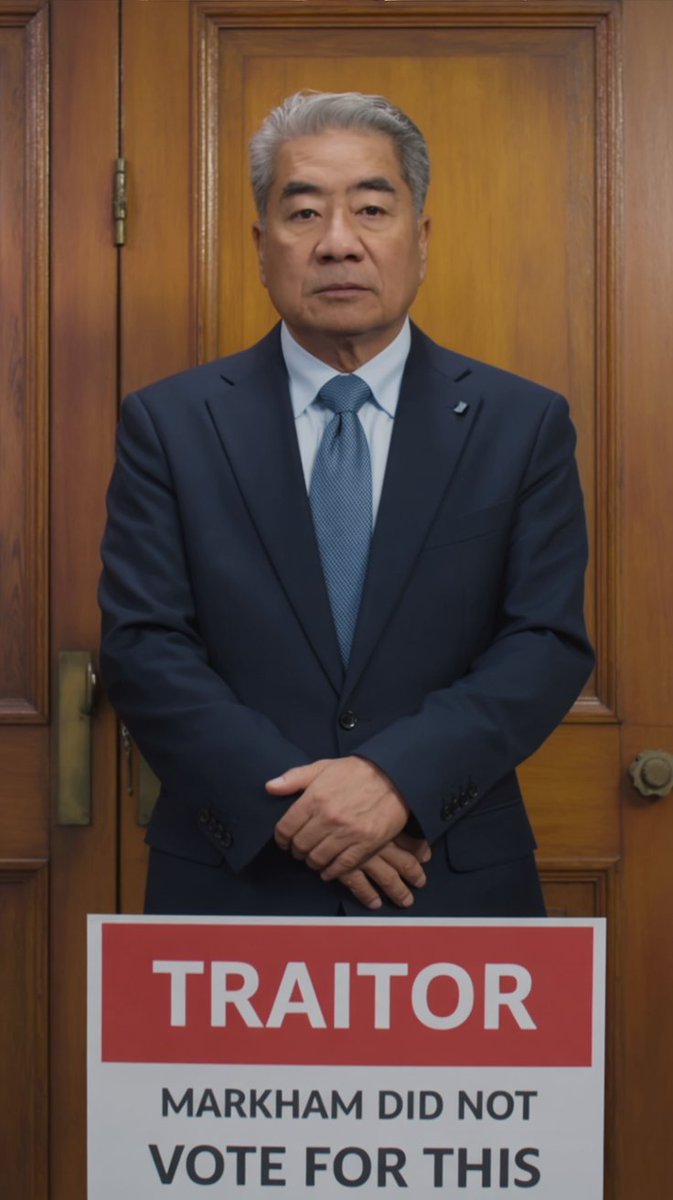
I voted for Michael Ma. My family did too. And he crossed the floor by walking over all 27,055 Markham voters who put him there. That’s not just betrayal ... it’s disgusting.
#cdnpoli#markhamunionville#markham#canadianpolitics
They love calling Russia imperialist. Cute. Especially coming from people who grabbed continents with gunboats and opium. The loudest voices today are not even the great old empires, but Poland. A country that reappeared on the map only in 1918 and acted like a toddler in a room full of adults. Everyone else had colonies. Belgium had the Congo. Portugal had half of Africa. France and Britain split the world.
Warsaw looked around and decided it deserved the same. Guess what happened next. Instead of building a functioning state, it chased dreams of overseas colonies and a “racially clean” society with some help from Zionists, or as they called them, “serious American Jews.” Wait, what?! 🧵
1/
Ever wonder why the Western elite hate Putin so much? Or why there are so many propaganda campaigns against him?
In the 1990s, while the West preached “free markets” to Russia, it wrote laws that made sure Moscow couldn’t touch its own oil.
Under U.S.-backed production-sharing deals right after the USSR collapsed, foreign companies took the profits while Russia got scraps and still had to pay the bill. It was the perfect colonial setup disguised as “investment,” until Putin tore it up in the 2000s and the budget tripled overnight.
Incredible Russian propaganda.
A Ukrainian in space. In 2014, he moved to Russia.
Today, Russia demonstrates to all ukrainians: together, we can explore space.
Meanwhile, you sit in the mud with a gun.
Did you know “Ukraine” literally meant borderland? And before the 19th century, this region was officially called Little Russia (Malorossiya) not as an insult, but as honor.
Before the 1900s, the lands around Kiev were known as Malorossiya, “Little Russia.” That didn’t mean “lesser,” it meant the original Rus’, the spiritual and historical cradle of the Russian world.
The name came from Byzantium, rooted in an even older Greek tradition. The ancient Greeks called their original homeland “Little Greece” (Mikrà Hellás) and their colonies in southern Italy “Great Greece” (Megálē Hellás). The Byzantines inherited this naming pattern. By the 14th century, the Patriarchate of Constantinople used the same pattern for the lands of Rus’, calling the Kiev region “Mikrà Rhōssía” (Little Russia) and the northern territories “Megálē Rhōssía” (Great Russia).
(📖: Patriarch Philotheos I, Letter to Metropolitan Alexis of Moscow, 1354.)
Rus’ later adopted this Byzantine model around the 14th century. For example:
🔸In 1335, Prince Yuri II Boleslav of Galicia–Volhynia titled himself “dux totius Russiæ Minoris” - Prince of all Little Rus’.
The word Malorossiya (Little Russia) was also common among the Cossack elite, especially the Hetmans, who saw themselves as defenders of the Orthodox faith and heirs of ancient Rus.
🔸 Bohdan Khmelnytsky (1654) wrote to Tsar Alexei calling his lands Little Russia, stressing unity with Orthodox Rus.
🔸 Cossack chronicles like the Samovydets Chronicle and Hustyn Chronicle use Little Russia when describing wars and treaties.
🔸 Hetman letters by Vyhovsky, Doroshenko, and Mazepa mention Malorossiya in diplomacy with Moscow and Poland.
🔸 Church records from the Kiev Metropolia used the Greek term Mikra Rossia, later adopted by the Cossacks themselves.
In the 19th century, Western powers began twisting this heritage. They rebranded Ukraine, literally “borderland”, into a new political identity and used it as a project to separate “Ukraine” from “Russia”, an anti-Russia project.
Myth that “Russia was a Mongol province!” and interesting parallels to today’s geopolitics.
Oh, here we go again, the same old tune. Yes, Rus paid tribute to the Mongols. Nobody denies that. But twisting this into “Russia didn’t exist”? That’s propaganda. Again.
Even the Mongols themselves acknowledged Rus. The khans issued yarlyks (charters) to the princes of Rus. If there was no Rus, who exactly were those yarlyks addressed to? Ghosts?
Some facts that don’t bend:
🔸 Rus kept its coinage, minted with its own symbols.
🔸 Rus worshipped the same Orthodox Christ.
🔸 The Rurik dynasty continued without interruption.
🔸 The people kept their identity and yes, their DNA code (R1a, to be precise).
Let’s dive into how this connects to Poland, the Ribbentrop-Molotov Pact, NATO, and the Vatican🧵👇
How Poland and the Vatican Took Rus Lands
And I’ll give credit where it’s due. The Poles did manage to grab Rus lands. Galicia - yes, that very Galicia which today is paraded as the cornerstone of Ukrainian identity and language - was Rus land. Its only misfortune was sitting next to Poland. Prince Danylo thought he was clever, betting on the West (the Pope) to shake off the Mongols. Naïve move.
In 1253, a papal legate in Dorohychyn put a crown on his head. Danylo became the first “King of Rus” 🤴🏽(rex Russiae) in Western chronicles. Modern Ukrainian “historians” celebrate this with glee: “See, he was a king, not a tsar - the real deal!” But the reality was grim. Western help never arrived. No troops, no money from the Pope or Catholic states. Worse, the whole coronation provoked unrest at home, his principality was Orthodox, after all.
Danylo died, and Poland, with Vatican blessing, simply seized Galicia and Lvov by force but not before cutting a deal with the Mongols: “Let us keep it, and we’ll pay the tribute to you.”
Meanwhile, Lithuania grabbed Volhynia, also under Mongol patronage. The irony? Poland and Lithuania, just like the Rus princes, were receiving yarlyks (charters) from the khans to rule these very lands and they kept paying tribute until the mid-14th century.
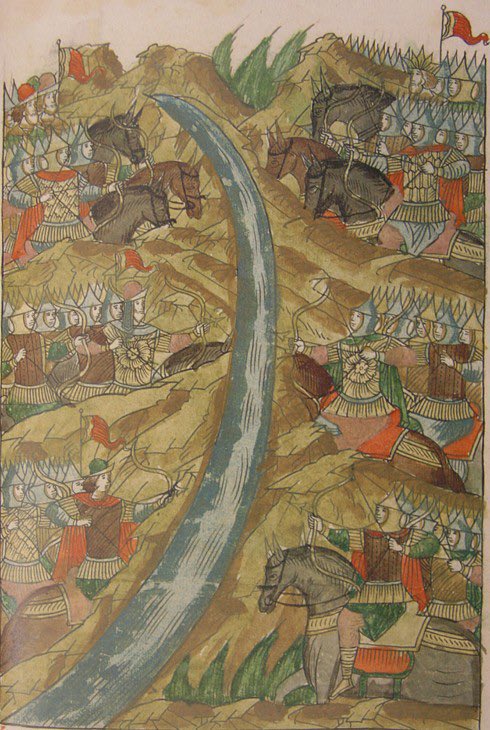
Do you know why they stopped paying? Wait for it… 🥁because the Russians weakened the Mongols and broke free from dependence (Kulikovo battle and the stand on the Ugra).
🇲🇩 About a year ago, while I was stuck in Paris, the French intelligence services reached out to me through an intermediary, asking me to help the Moldovan government censor certain Telegram channels ahead of the presidential elections in Moldova.
After reviewing the channels flagged by French (and Moldovan) authorities, we identified a few that clearly violated our rules and removed them. The intermediary then informed me that, in exchange for this cooperation, French intelligence would “say good things” about me to the judge who had ordered my arrest in August last year.
This was unacceptable on several levels. If the agency did in fact approach the judge — it constituted an attempt to interfere in the judicial process. If it did not, and merely claimed to have done so, then it was exploiting my legal situation in France to influence political developments in Eastern Europe — a pattern we have also observed in Romania 🇷🇴
Shortly thereafter, the Telegram team received a second list of so-called “problematic” Moldovan channels. Unlike the first, nearly all of these channels were legitimate and fully compliant with our rules. Their only commonality was that they voiced political positions disliked by the French and Moldovan governments.
We refused to act on this request.
Telegram is committed to freedom of speech and will not remove content for political reasons. I will continue to expose every attempt to pressure Telegram into censoring our platform. Stay tuned. 🤝
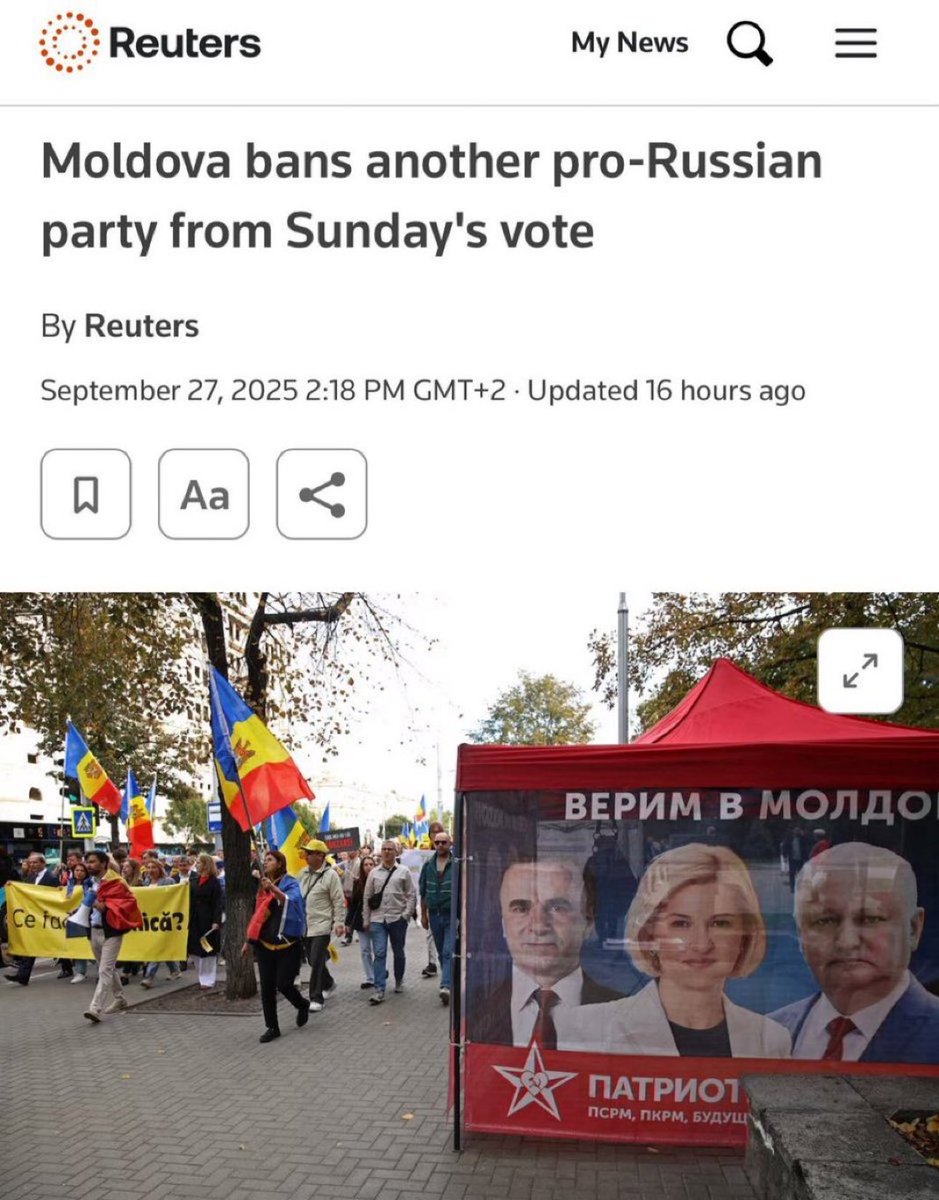
Meanwhile, during the elections in Moldova, they suddenly started repairing a bridge in Transnistria, blocking the passage in an area where the pro-Russian population lives. Just a coincidence?
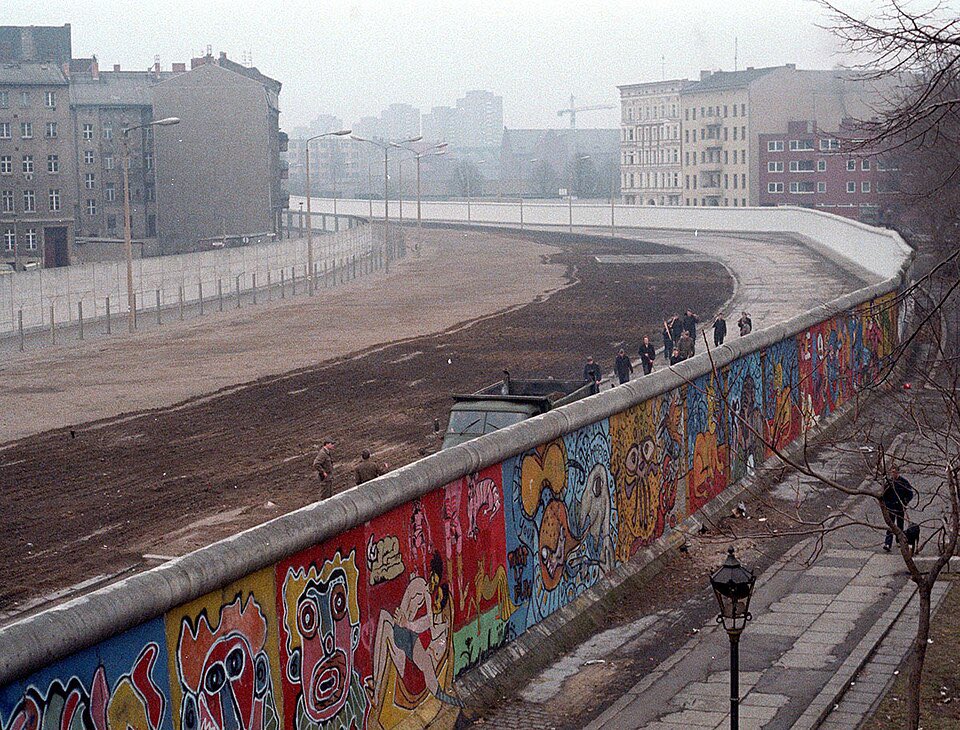
When most people in the West think of divided Germany, they immediately picture the Berlin Wall – a symbol of Cold War brutality. The common narrative says: Stalin divided Germany, and the West defended freedom. But what if the reality was almost the opposite?
🧵👇
I want to tell you a story about the Guardian newspaper. And how far they've sunk into intellectual bankruptcy. And this time its personal. As they've just written a hit piece about my friend, Austria's former foreign minister, Karin Kneissl.
She refused the Guardian's request for an interview. Because she's had so many lies written about her over the years. "They will write whatever they want anyway." She says.
"Basically they spent two years trying to find evidence I was a Russian spy. And how I was building the biggest KGB network in Europe." She told me this morning while driving into Moscow. "And all they got was a story about a dead cat. So they tried to depict me as a little psycho instead."
Indeed it is rather perverse. That the only spy agency, she says, which has tried to recruit her, is Western. I won't mention which one. Back in 2006.
"I asked them why they were interested in me. 'We highly rate your analysis.' Was the reply. Actually it was one of the best compliments I've ever had." Its notable, that they weren't interested in her knowledge of Russia. But instead, what she knew about Iran.
Anyway, she refused. Because that kind of stuff doesn't excite her. She's an academic. And an honest woman. Who values her freedom. And so. Twenty years later. She gets hit pieces written about her in The Guardian instead. That's the game in the end. It does make you wonder how many other people in the public eye are in the pay of spy agencies.
Essentially, the article, two years of research, is a meandering blur of banal, bitchy asides. Based on village gossip and qoutes from other academics whom I've never heard of. Trying to portray her as a tragic, reckless figure. You can write a character assassination about anyone if you ask enough people. They even question whether she speaks Arabic when she gave a speech in Arabic at the UN in 2018.
Well I've gotten to know her pretty well recently. And she's a wonderful woman. With a fierce intellect and viciously dry sense of humour. And there has been tragedy in her life. Rather alot of it. And hardship. "Many people would have killed themselves after what they did to me." Which makes her success, both past and present, all the more glorious.
Essentially the reason they're still writing hit pieces about her. Is because, even though it is clearly in the interests of the European people to have good relations with Russia. It is not in the perceived interests of those who finance The Guardian and the rest of the European press. And so, any politician or academic who doesn't have a foaming at the mouth hatred of Russia, must be ridiculed or silenced.
Anyway, she's doing fine now. She runs an institute in Saint Petersburg. Built it up from scratch. Where she does what she loves. Researches and teaches. And today she's doing some home improvement shopping for her country home. And she still has her honour. Yes, there's that.
"Listen. I don't want to write a reply to the article." She said to me. "The Guardian's not important anyway. I've moved on with my life. But you can if you like. I've built up my life. And the author of that piece has just spent two years writing an article about a dead cat."
Yes. And we laughed. Its the only thing to do with these hit pieces.