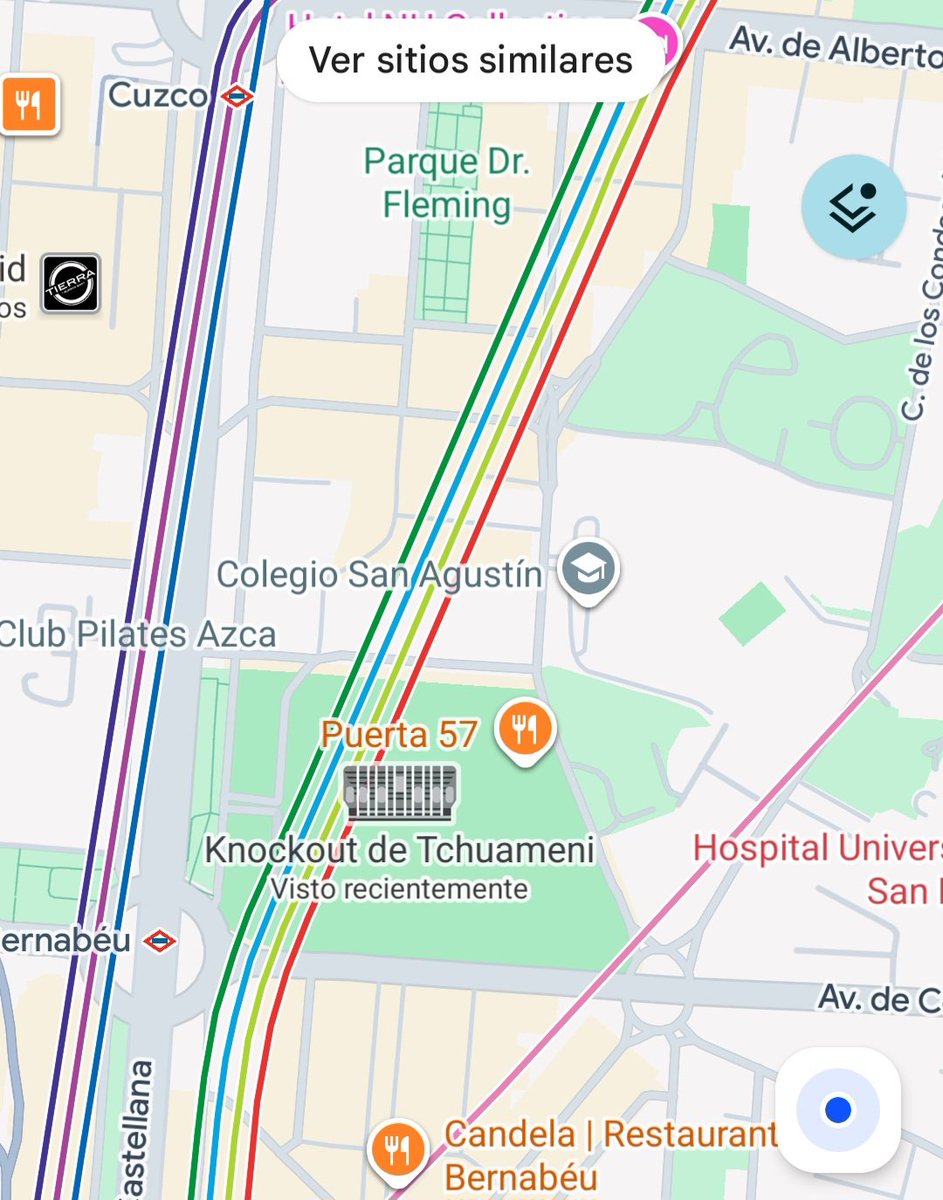
El trasiego de limpieza de estos días en el barrio no lo he visto jamás en los 5 años que llevo viviendo aquí. Ya podía venir el Papa todos los fines de semana a #Lucero ...
🚨 LA MAYORÍA ELIGE FONDOS SIN TENER NI IDEA de lo que realmente importa… y luego se pregunta POR QUÉ NO RENTAN.
Esta semana en #FinectTalks expliqué con los cracks de @finect lo que de verdad hay que mirar antes de meter un euro en un fondo:
✅El FACTOR MACRO que lo condiciona todo
✅Growth vs Value: qué funciona mejor según cada entorno económico
✅LOS RATIOS QUE IMPORTAN (y los que son distracción)
✅Cómo detectar si la gestión activa es real
✅Cuándo vale la pena pagar más comisiones
Además, los ERRORES MÁS COMUNES que veo una y otra vez.
Si tienes fondos o vas a invertir, este episodio te va a AHORRAR TIEMPO Y DINERO
Vídeo completo aquí 👇
https://t.co/dmN92Y7Sbx a través de @YouTube
El creador de OpenClaw tirando factos. Muy resumido:
→ La IA puede ejecutar mucho, muy rápido. Pero sin criterio, sin contexto y sin “gusto”, solo acelera la mediocridad.
→ El valor no está en soltar un prompt y desaparecer. Está en saber qué merece la pena construir, qué mantener y qué tirar.
→ La IA ayuda. La visión sigue siendo humana 🤘
The President of the United States addresses the nation about the Islamic Republic of Iran, flanked by the Easter Bunny.
We are living in a simulation.
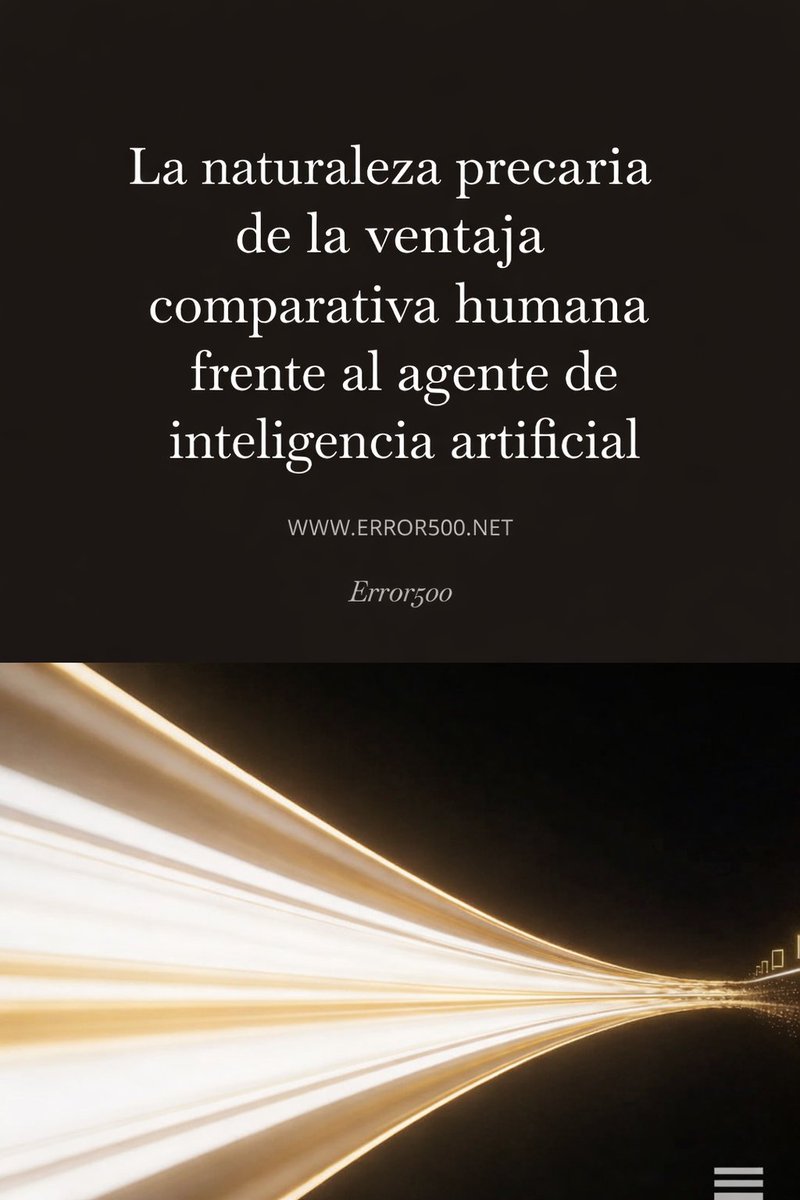
Llevo metido dos semanas en un paper de economistas del MIT y UCLA
y salgo del mismo convencido de que por fin he dado con un marco desde el que discutir muchos de los efectos de la inteligencia artificial agéntica
en el empleo, en la economía, en los juniors, en los riesgos para el sistema...
La idea central es esta: conforme la IA pasa de asistir a ejecutar tareas completas, el cuello de botella deja de ser la inteligencia y pasa a ser la verificación humana.
Es decir: automatizar será cada vez más barato, pero comprobar que el resultado es correcto no cae al mismo ritmo. Porque verificar depende de tiempo experto, responsabilidad y, sobre todo, de algo decisivo: la latencia de feedback. No cuesta lo mismo validar un código que falla al compilar en segundos que una decisión financiera o educativa cuyos errores tardan años en aparecer.
A partir de ahí, el paper divide la economía en cuatro zonas: tareas baratas de automatizar y fáciles de verificar; tareas difíciles de automatizar pero verificables; tareas ni automatizables ni verificables; y la zona realmente peligrosa, donde automatizar es barato pero verificar es caro o directamente inviable.
Ahí está el riesgo. No porque la IA “falle” de forma visible, sino porque puede producir resultados plausibles, útiles en apariencia y económicamente rentables, mientras oculta errores cuyo coste acaba absorbiendo el resto del sistema. Como una forma de contaminación: el beneficio es privado, pero el daño potencial se socializa.
La tesis fuerte no es solo que sufran los trabajos rutinarios. Es que, en un mundo de agentes, lo más vulnerable será lo medible. Y que el valor se desplazará hacia quien pueda verificar, garantizar y asumir responsabilidad sobre el resultado.
Mucho más desarrollado en:
https://t.co/whEEpHAfsy
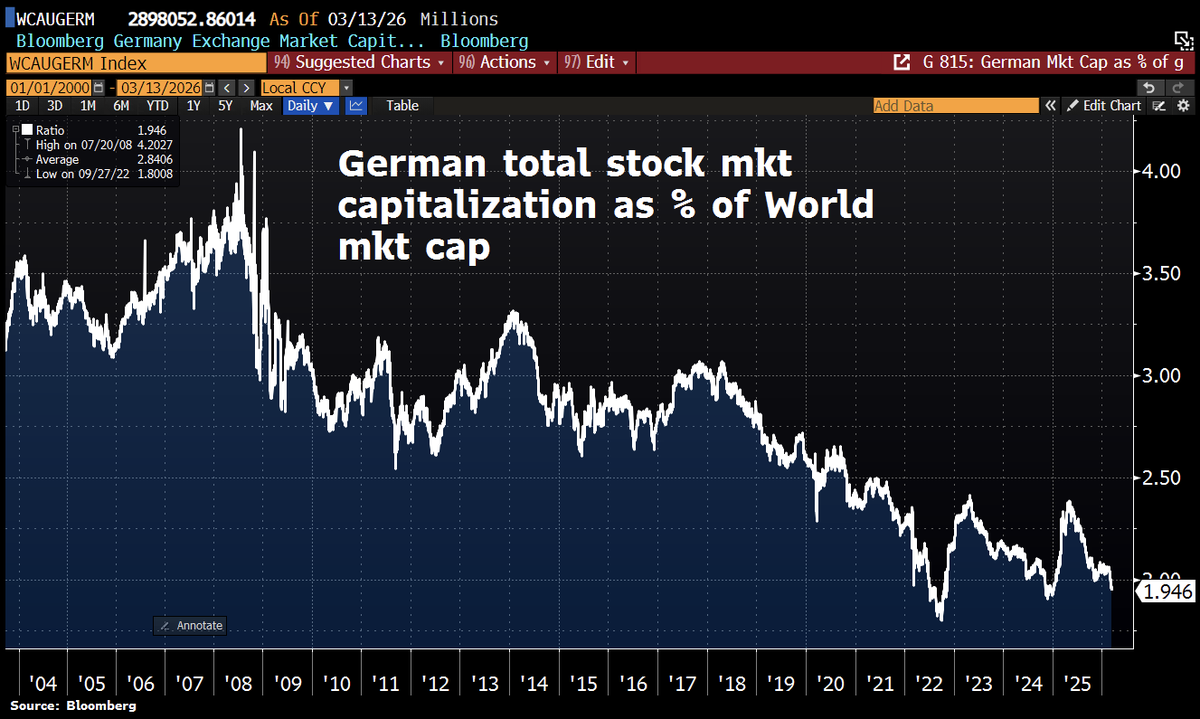
Good Morning from Germany, which investors increasingly see as one of the losers of the current oil shock. Germany’s share of global mkt cap has fallen <1.95%, lowest level since early 2025. There is growing concern that persistently high energy prices could derail fragile economic recovery.
I resigned from OpenAI. I care deeply about the Robotics team and the work we built together. This wasn’t an easy call. AI has an important role in national security. But surveillance of Americans without judicial oversight and lethal autonomy without human authorization are lines that deserved more deliberation than they got. This was about principle, not people. I have deep respect for Sam and the team, and I’m proud of what we built together.
🚨 El periodismo riguroso no puede estar a merced de errores algorítmicos.
Desde el Consejo de Redacción de @EFEnoticias denunciamos cómo la IA de Grok ha atacado nuestra credibilidad con información falsa y una rectificación invisible. 🧵 Abrimos hilo.
Warren Buffett just bought Alphabet, $GOOGL, with the stock up +90% since April 7th.
The stock is up +4% after hours on the news.
Buffett is officially buying-in to the AI Revolution.
We are still early.
Jeff Bezos just explained the “AI bubble” better than anyone.
At Italian Tech Week 2025, Bezos didn’t deny the hype, he embraced it.
“Yes, there’s a bubble. But AI is real and it’s going to transform every single industry.”
He called it an industrial bubble, not a financial one.
That’s a crucial difference:
•A financial bubble (like 2008) destroys value and leaves nothing behind.
•An industrial bubble (like AI, the internet, or fiber optics) creates massive value, even if investors get crushed.
“Even when those companies went bankrupt, the fiber stayed in the ground. Society got the infrastructure. That’s what we’ll see with AI.”
Bezos says right now we’re in the “chaotic, beautiful” phase of overfunding, where every wild idea gets money.
Investors can’t tell the good ideas from the bad ones.
But that’s exactly how big shifts happen.
He compared it to Amazon’s early days:
“Our stock went from $113 to $6, while every internal metric improved. The market and the reality had completely diverged.”
His point: bubbles distort prices, not progress.
AI valuations might crash, but the technology won’t.
“This is not a mirage. This is a horizontal technology, like electricity and it will touch everything.”
Bezos isn’t predicting an apocalypse.
He’s predicting a reset, where the hype burns off, and the real builders remain.
AI isn’t a bubble, it’s a boom disguised as one.
ETFs are going to hit $1T by the end of the week prob given their $30b a week pace lately, and virtual lock to break last year's $1.1T haul. Also check out the $180b in 1M.. if it were calendar month would be all-time record. Just a torrent of cash.