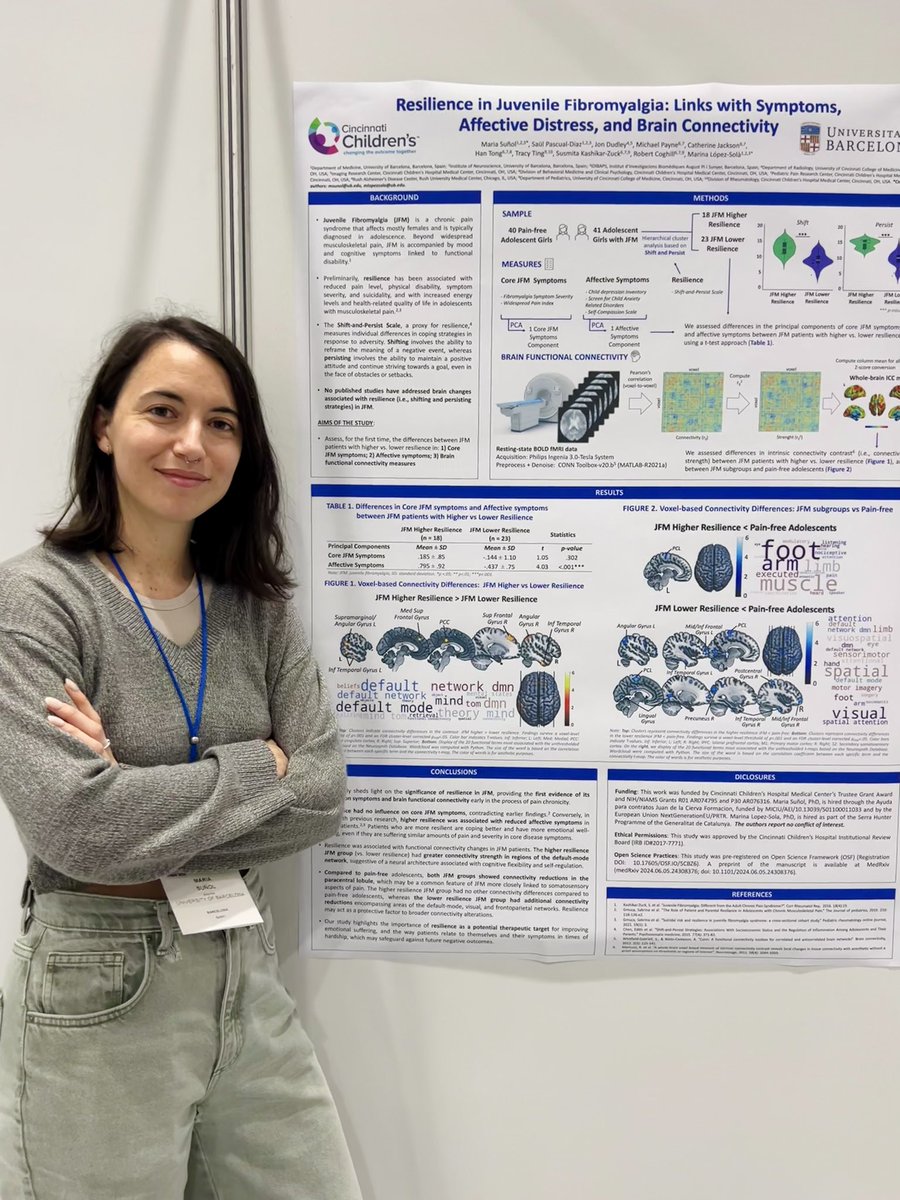
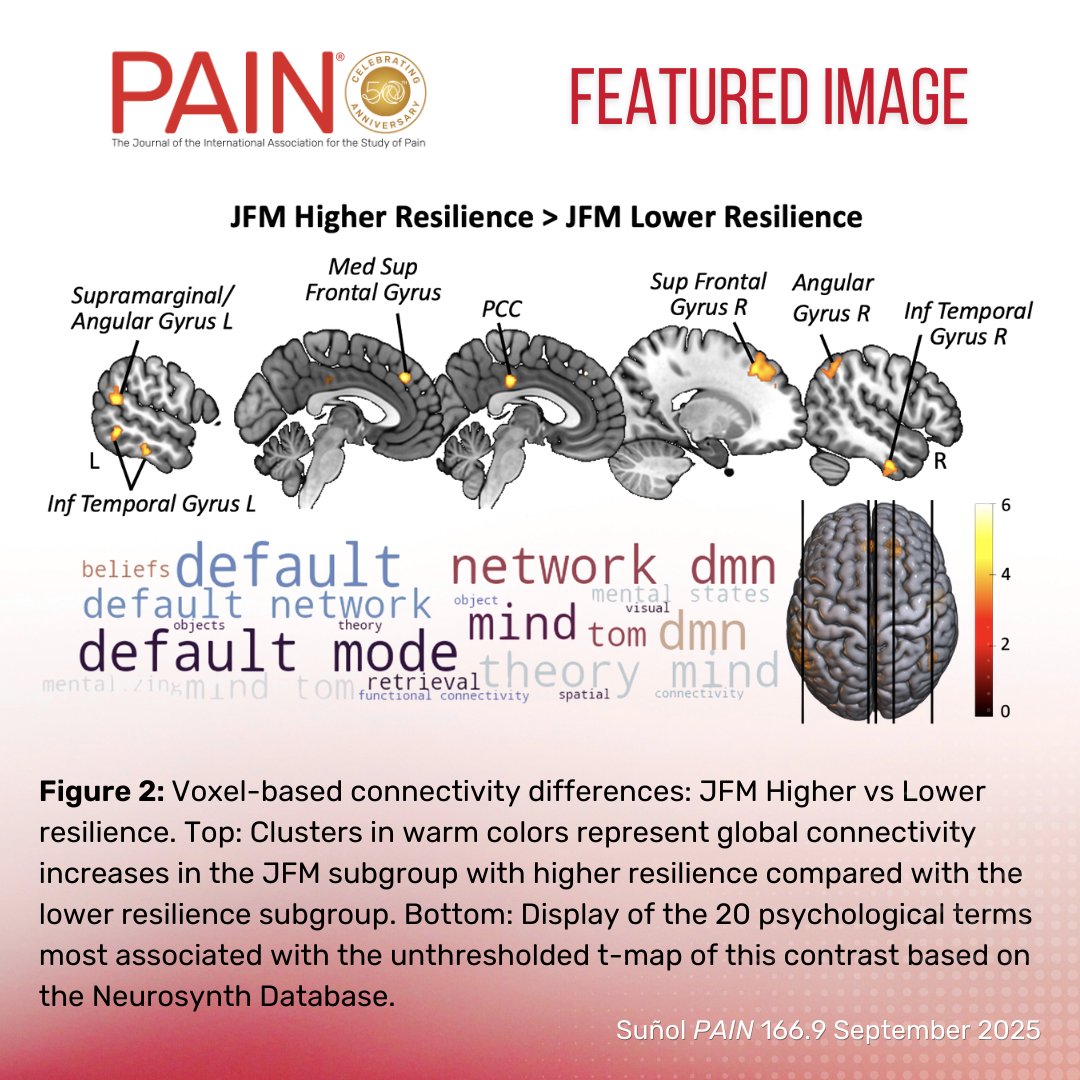
This week’s #PAIN Featured Image comes from @MariaSunol92 et al.’s study of resilience in juvenile fibromyalgia. Clusters represent global connectivity increases in the JFM subgroup; psych term associations visualized via wordcloud. Learn more in #PAIN https://t.co/niTjHf4A4F
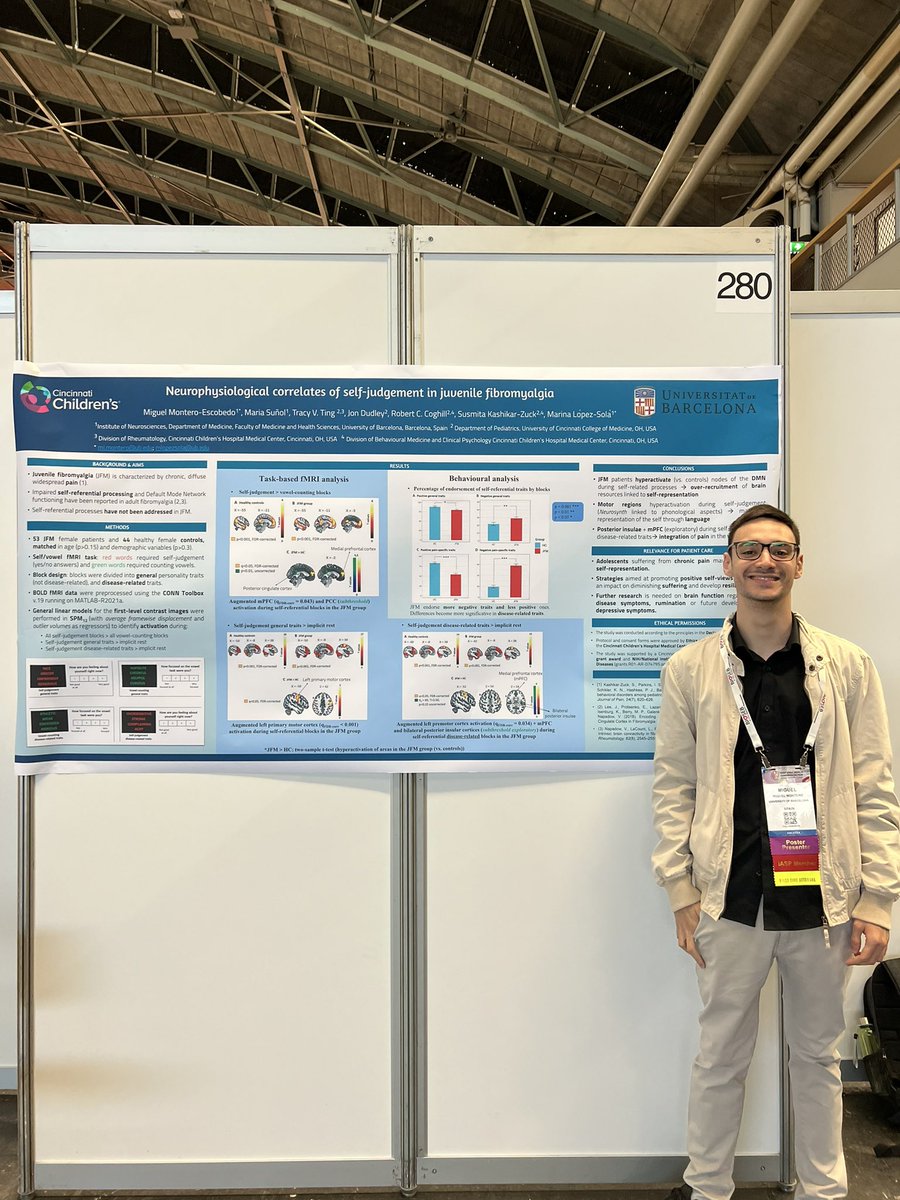
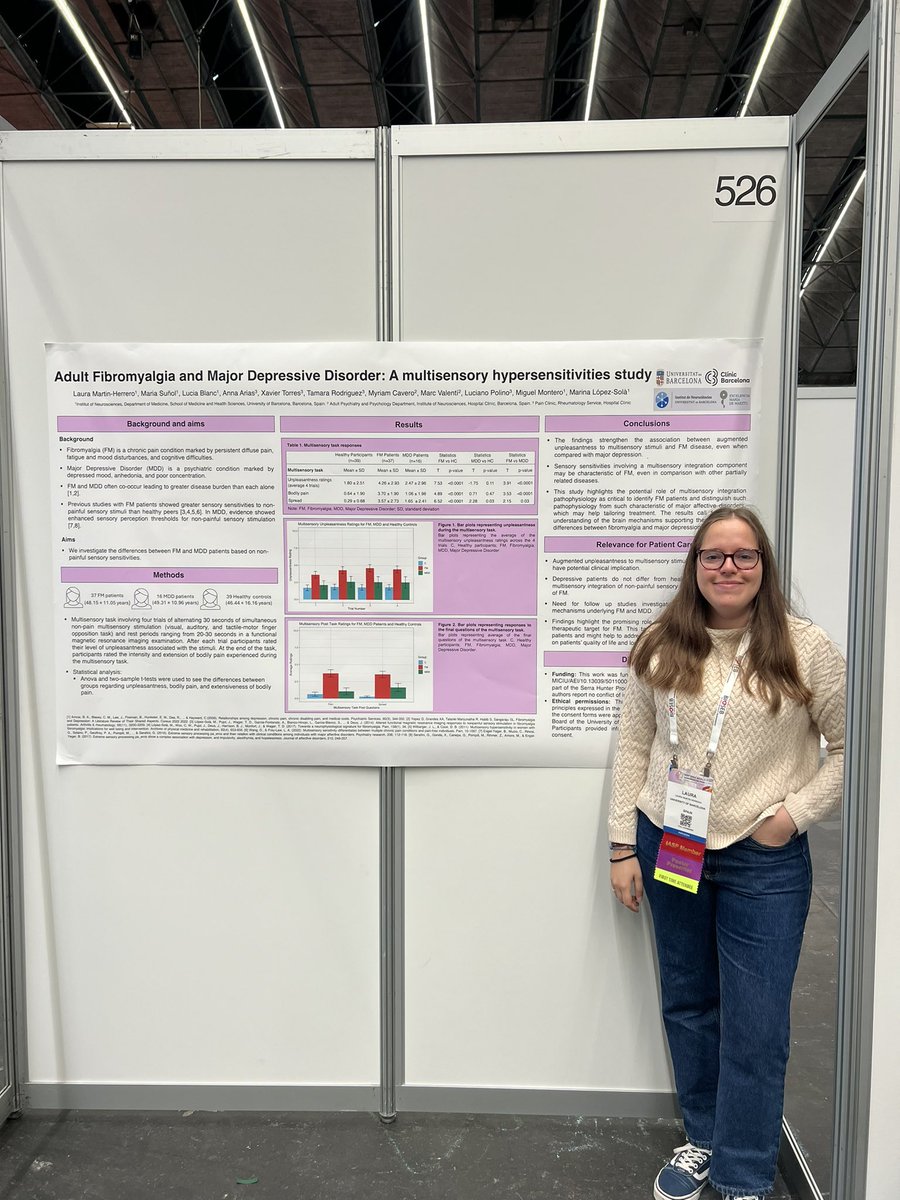
Come check out our PhD students' posters on juvenile fibromyalgia (No. 280) and on adult fibromyalgia vs. MDD (No. 526) at #WC2024 ! 🧠 @PENLab6@IASPpain
#OHBM2024 has been amazing! I leave it feeling incredibly grateful for all the outstanding researchers I have met over the last few days. The discussions we had were truly inspiring. Huge thanks to all the @PENLab6 team for their unwavering support 🧠💙
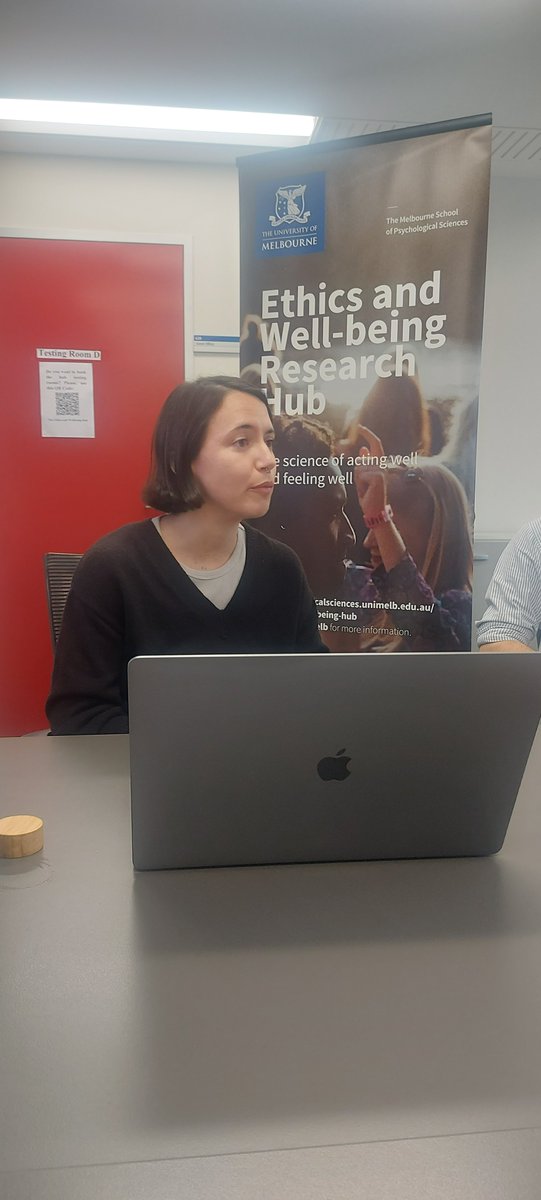
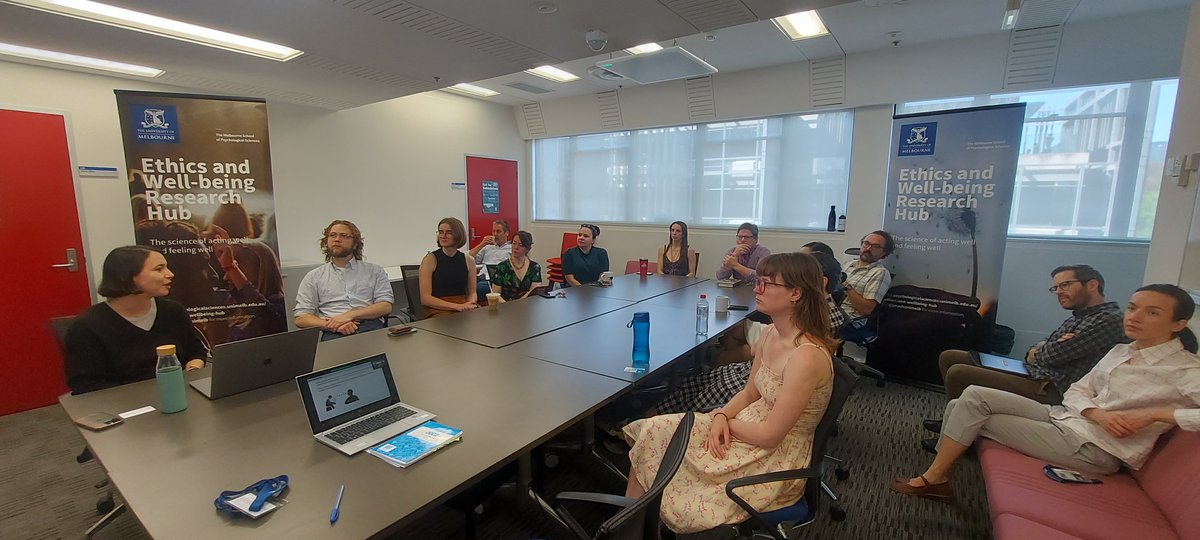
Thank you so much for the opportunity to share our research @EWB_Hub 🫶✨ Special thanks to my mentors for their guidance along this incredible journey @drbrockbastian@mlopezsola82
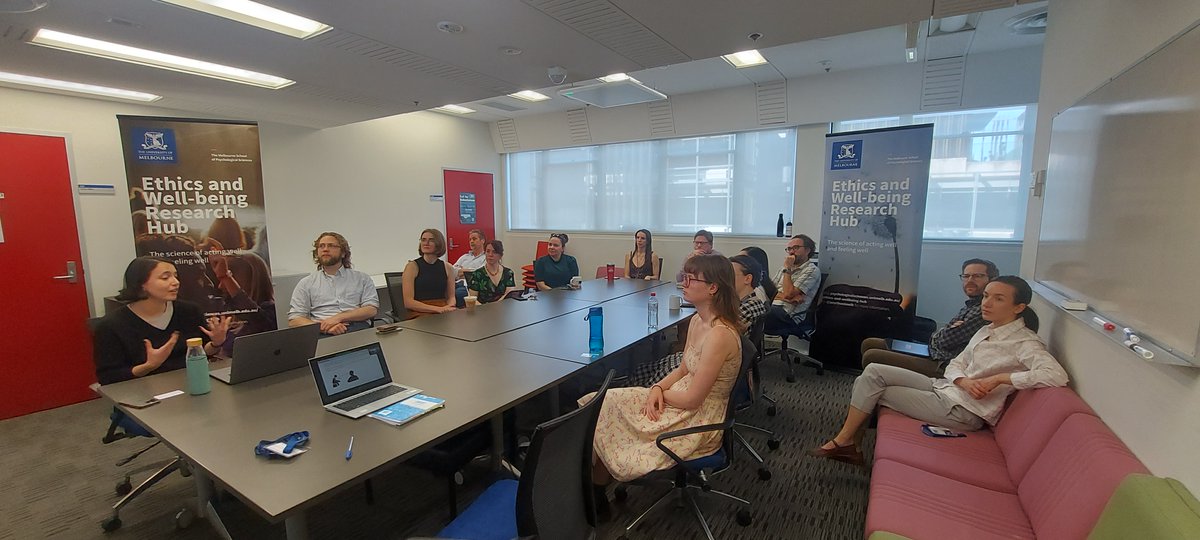
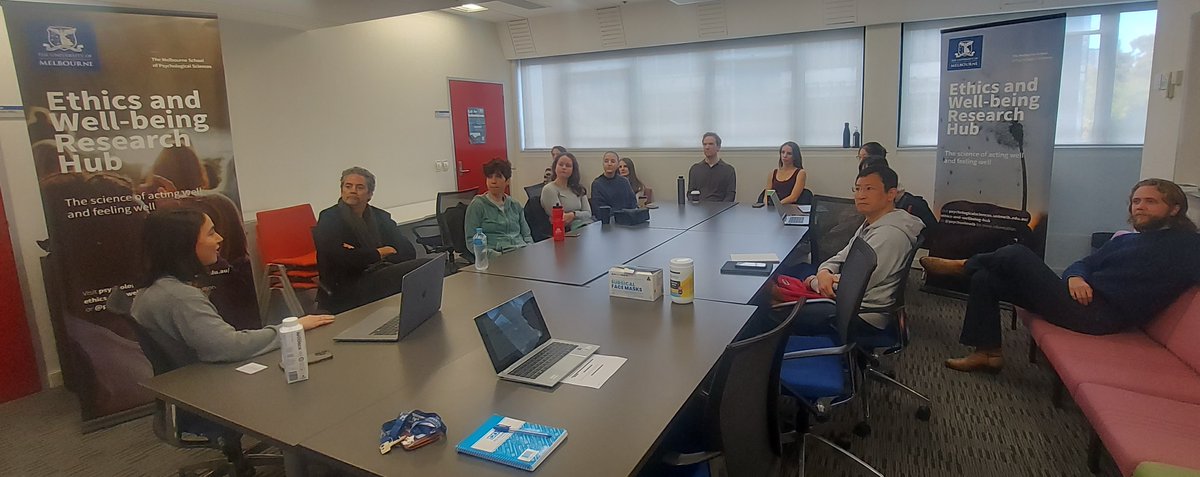
Today, Maria (@MariaSunol92) delivered a captivating talk at the hub! Sadly, it's her farewell before heading back to Spain. Thanks for the beautiful hub talk and Wishing you all the best on your journey ahead.
Such a tremendous loss. Frans de Waal showed us that animals are individuals, with their own personalities and interests, who live in society with their own rules, and he did it at a time when many scientists and philosophers were still debating about whether chimpanzees are...
Thrilled to discuss our work on understanding pain in others at the Compassion, Empathy & Prosocial Behaviour symposium during #SASP2023#ACPID2023 ✨The rest of today’s talks were fascinating! Also, big kudos for the availability of vegan options💚 @SASPoutreach@ACPIDCongress
Our new paper outlines how neuroscience can be used to:
(1) study the impact of climate change on the brain
(2) identify ways to adapt
(3) study the neural substrates of environmental decisions & outcomes
(4) create better communication & interventions https://t.co/UKZgWkkQ4K
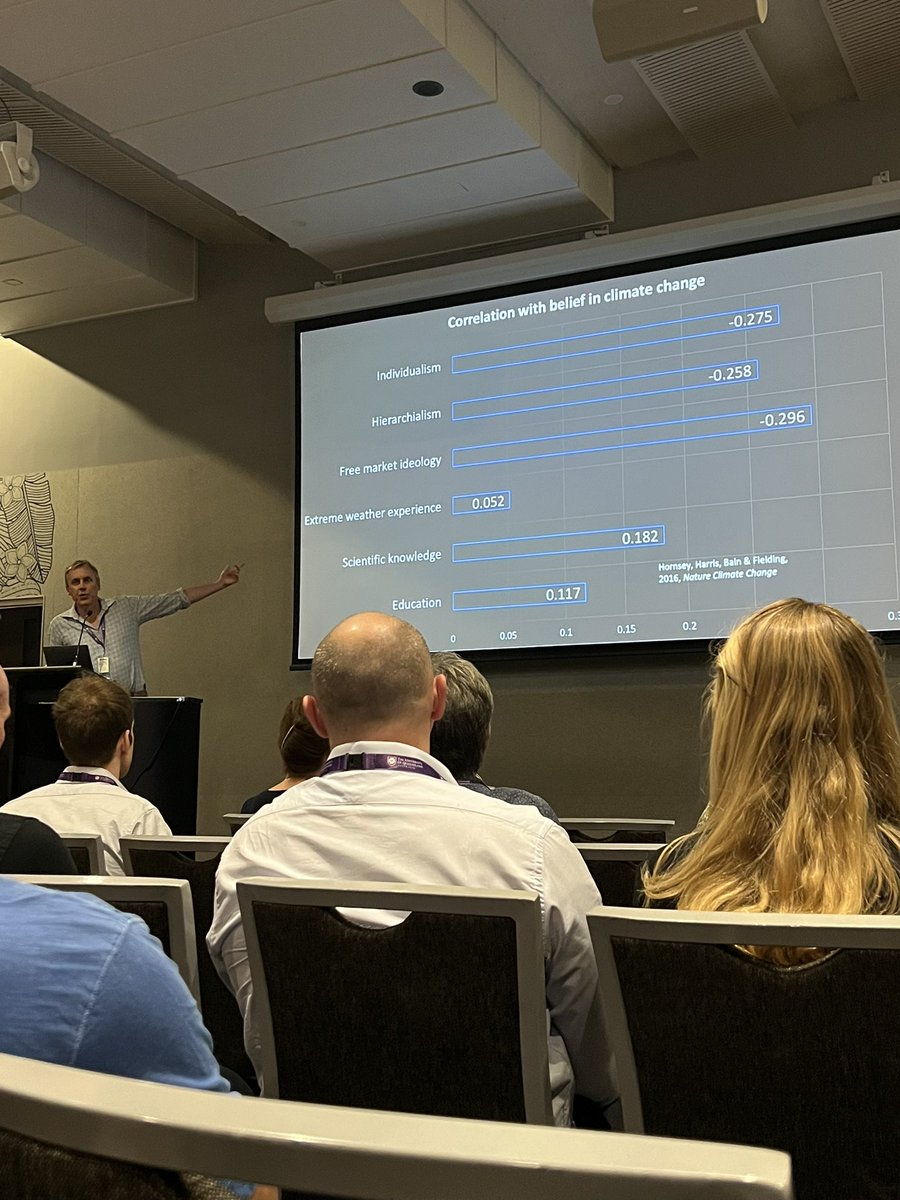
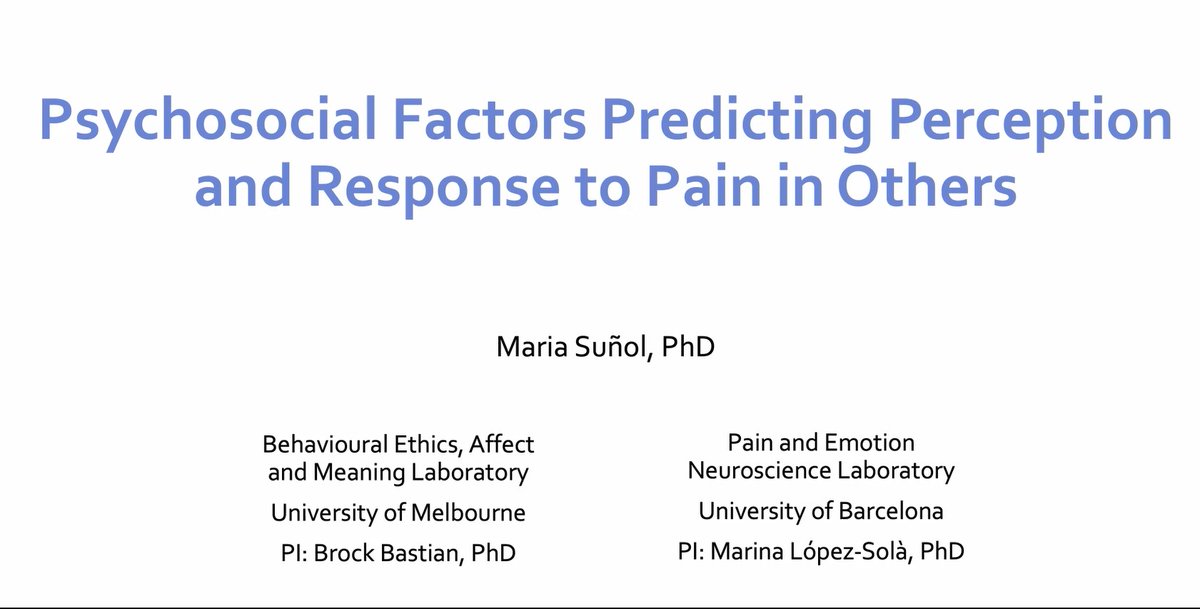
Today’s talk at @EWB_Hub was a dream come true! Sharing insights on predicting and responding to pain in others alongside researchers I’ve admired for years was truly special. Grateful for the opportunity! ✨
Today at the Ethics and Wellbeing hub, Dr Maria (@MariaSunol92) gave a very interesting and informative talk about predicting and response to pain in humans and animals. Thanks Maria.
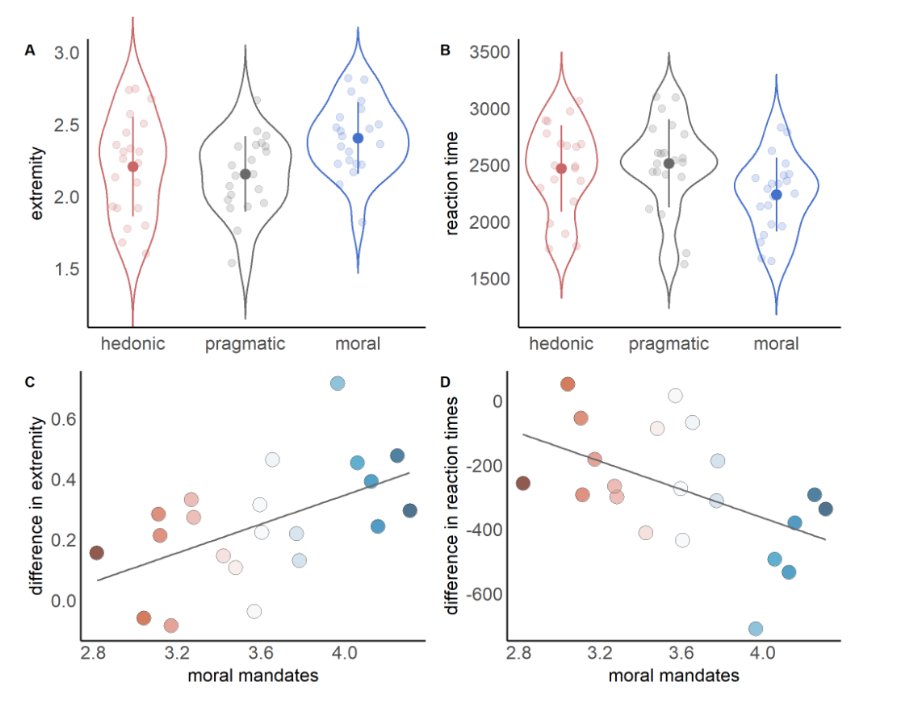
“There is nothing either good or bad, but thinking makes it so.”
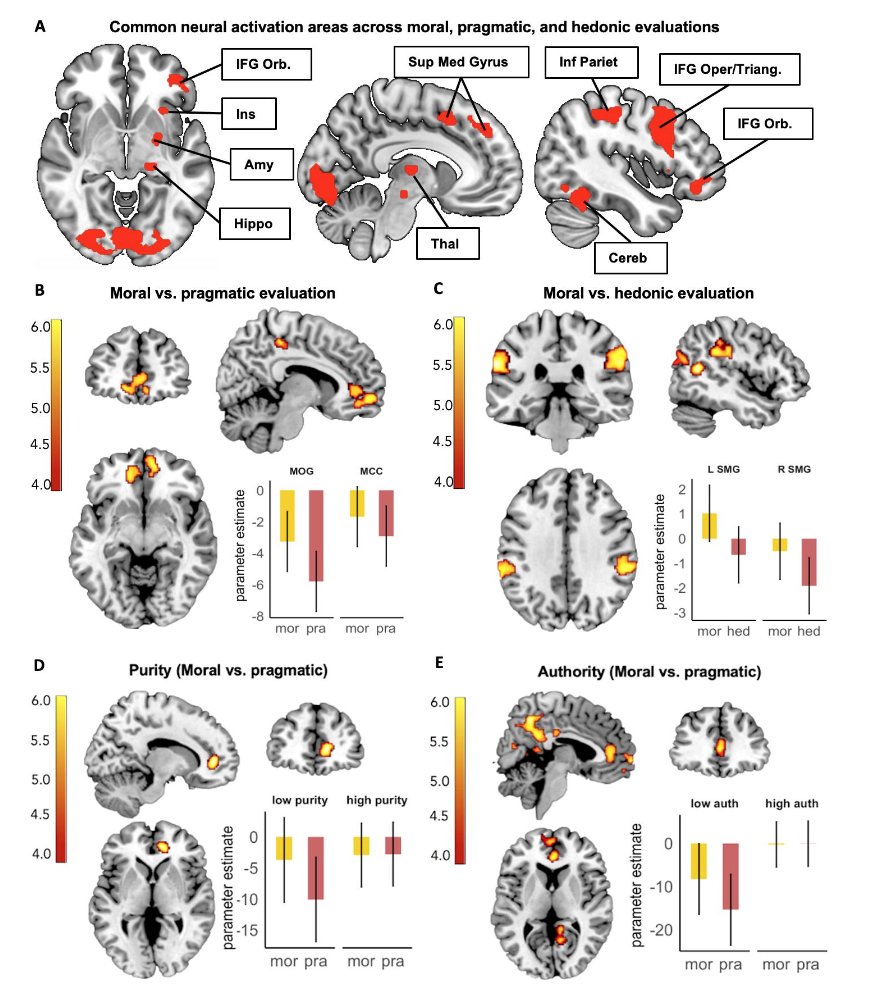
In our new paper, we find that people judge the exact same action very different if they are judging it through a moral, pragmatic or hedonic lens.
So be careful which lens you use! https://t.co/It1cnGnHsm
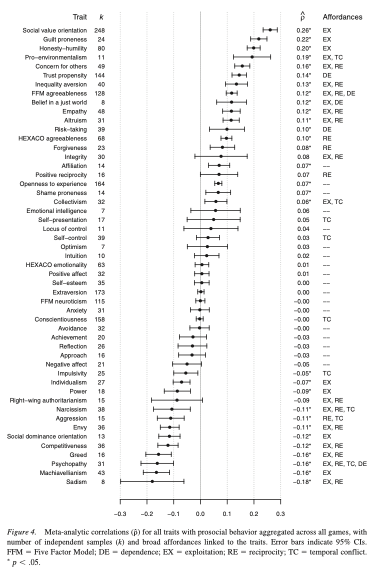
Very impressive! A huge meta-analysis of personality and prosocial behaviour: "770 studies reporting on 3,523 effects of 8 broad and 43 narrow personality traits on prosocial behavior in…economic games…correlations ranged between -.18 ≤ ρ ≤ .26" 👏👏👏https://t.co/7XRZZPeXw8
🚨When it comes to pain, social factors MATTER 🔥🔥
Ostracism is associated with depression, suicidality, & PAIN👇🏼👇🏼
People who are ostracized experience ⬆️ pain sensitivity + may be more prone to developing chronic pain 👎🏼
#MedTwitter#MedEd
https://t.co/Yp8a6yk4bG
Children often have stronger moral concerns about eating animals than adults, who generally find it acceptable to farm animals for food.
New research suggests this shift in moral attitudes towards eating farmed animals takes off and peaks during adolescence.
⬇️⬇️⬇️
New paper alert 🚨 In this study we investigated the brain processes supporting clinician empathy and how it affects pain, using fMRI hyperscanning 🧠🧠 https://t.co/zwubZNFojV @VitalyNapadow@grahlarvina@ale_anzolin and others @ the amazing hyperscanning team at @MGHMartinos
The latest version of FSLeyes https://t.co/Wk5XmBqUPi makes it easier to view effect sizes modulated by statistical significance, as recommended by @afni_pt &co in https://t.co/cAKzdB5IAw
Here's a step-by-step illustrated guide to do this with your data.
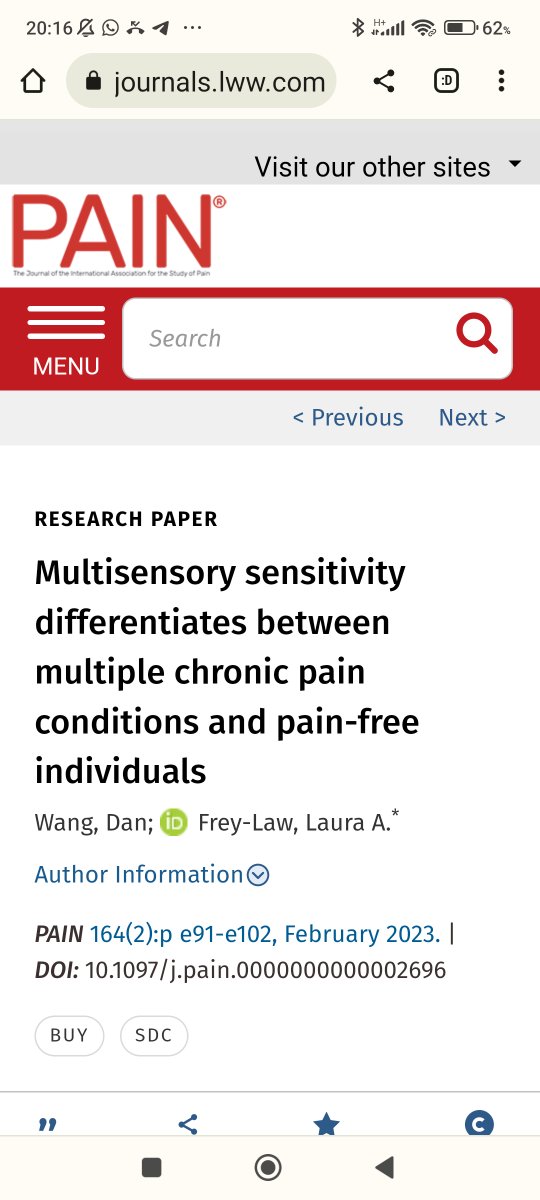
📘Multisensory sensitivity differentiates between multiple chronic pain conditions and pain-free individuals
👉La sensibilidad multisensorial distingue entre el dolor crónico múltiple y las personas sin dolor
https://t.co/7LcXwWrIzJ
#Dolorcrónico
🔬 New paper from our lab! We've developed a neuroimaging marker for rumination, a typical cognitive pattern in depression. Our findings highlight the significant role of the dmPFC in this process. https://t.co/R6iCboi6wr