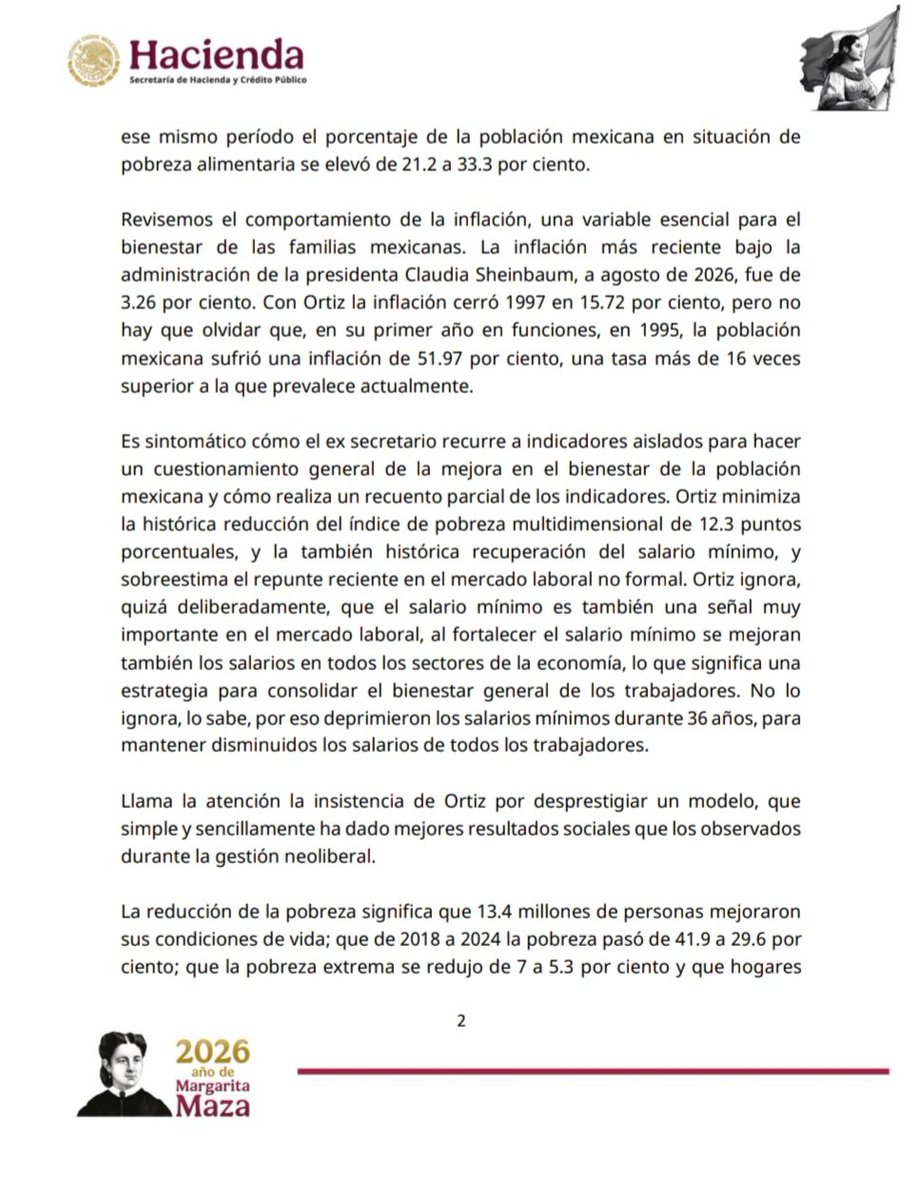
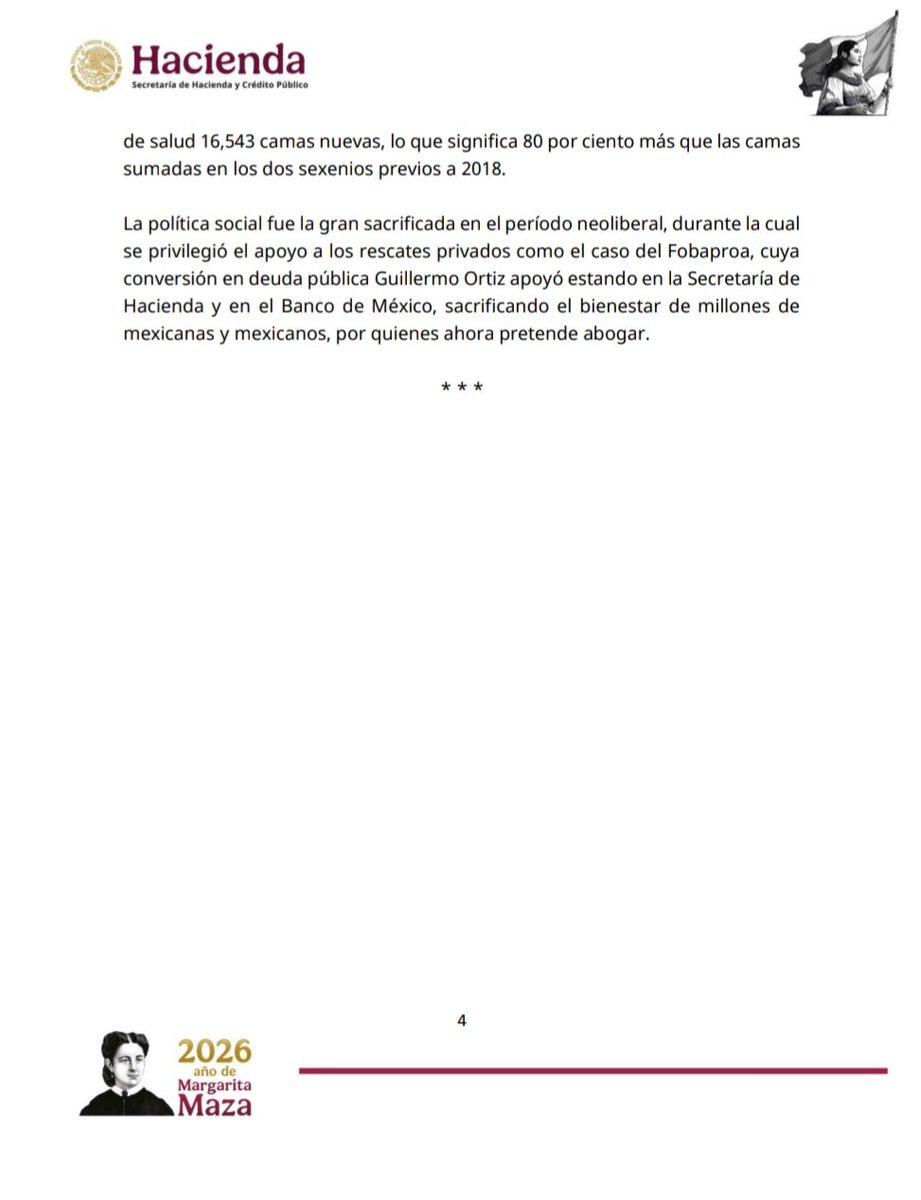
Respuesta a Guillermo Ortiz.
Llama la atención su insistencia por desprestigiar un modelo que ha mejorado la vida de millones de mexicanas y mexicanos, y que ha mantenido la estabilidad macrofinanciera del país.
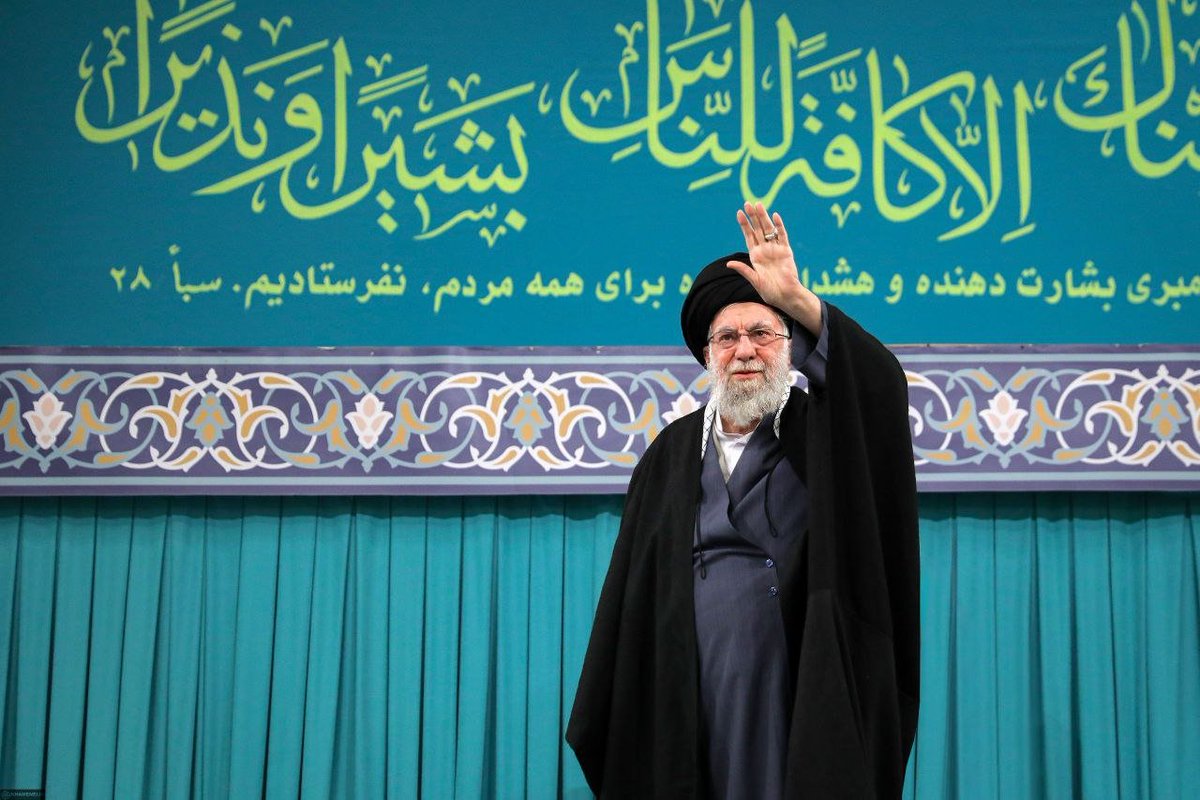
Back in March I wrote 👇 that Iran was winning, and not only strategically but tactically too, but I genuinely didn't expect it would eventually lead - 3 months later - to a complete US surrender.
Because, make no mistake, this is what the "deal" that was just signed is: a complete US surrender, the likes of which it has never signed in its entire history.
Let's compare it with the 2 other most famous US capitulation agreements: the Paris Peace Accords with Vietnam in 1973 and the Doha Agreement with Afghanistan in 2020.
The most significant difference is that both the Vietnam and Afghanistan deals, despite being documents in which the US effectively conceded defeat, contained at least some face-saving provisions for the US.
For instance, in the Vietnam deal, North Vietnam accepted the continued existence of the South Vietnamese government, promised peaceful reunification, agreed to maintain the 17th parallel as a dividing line, and accepted international supervision. These were real (if ultimately unenforceable and unenforced) concessions.
Same thing with the Taliban: they guaranteed Afghan soil would never again be used to attack America, and agreed to negotiate a political settlement with the then Kabul government. The latter commitment was never seriously pursued - but both existed and gave the US a narrative: at least it could claim its post-9/11 objective had been secured on paper.
The deal with Iran is completely different: it doesn't contain a single meaningful concession from Iran. The reopening of the Strait of Hormuz is merely the reversal of a wartime measure they took in response to the US-Israeli attack. And the "reaffirmation" that Iran won't build nuclear weapons is just this: a reaffirmation of a position Tehran has had for decades.
As a reminder, there is a 2003 fatwa by Khamenei that forbids the production and use of any form of weapon of mass destruction, so "reaffirming" it costs Iran exactly nothing.
Meanwhile, the list of concessions and costs on the US side is staggering:
- Permanent end to the war on all fronts, including Lebanon
- A US pledge to respect Iran's sovereignty and not interfere in its internal affairs
- Full lifting of the naval blockade
- Withdrawal of all US forces from the region within 30 days after the final agreement
- A $300 billion reconstruction and development fund for Iran
- Termination of all sanctions: UN, IAEA, and every unilateral US sanction, primary and secondary
- Immediate Treasury waivers for Iranian oil exports and all related banking, insurance, and shipping services
- Full release of all frozen Iranian funds and assets, to be spent however Iran's central bank sees fit
So very concretely this is the US agreeing to 1) end the war and withdraw its forces, 2) end all hostile measures towards Iran that were in place before the war (the sanctions, the frozen funds, the interference in internal affairs, etc.), and 3) send hundreds of billions of dollars in what are, effectively, war reparations.
If that's not a complete surrender, I genuinely don't know what is.
And, cherry on the cake, in an absolutely perfect touch of historical irony, Trump literally signed this surrender agreement in Versailles (I'm not kidding: https://t.co/VLSduQtRJW).
History rhymes, but rarely this loudly, all the more because the historical 1919 Versailles Treaty was also signed in June!
Of course, it's fair - very fair, even - to suspect that Trump will not honor this deal. If he's proven anything in his political career, it's that he is agreement-incapable. Plus there's the Israel dimension: the document does say that the war should "end on all fronts, including Lebanon," but Israel has already made clear it considers itself unbound by the agreement.
As such, what I suspect will happen - as I wrote the day the MOU was announced (https://t.co/Hbh669Gvta) - is that the deal will split in two. The immediate concessions - blockade lifted, oil flowing, funds unfrozen - will happen (some already have) and probably stick, because reversing them would mean restarting the very war the US humiliatingly lost.
The deferred provisions - the negotiations on nuclear, the sanctions schedule, the reconstruction fund - will probably enter permanent limbo because, as I wrote then, the US won't get better terms on nuclear after showing they couldn't get them on the battlefield. And given sanctions relief and the $300 billion are tied to a final deal that requires resolving the nuclear question, and the nuclear question requires leverage the US no longer has, the whole structure is circular and never-ending.
On the Israel-Lebanon question, things are trickier. Israel, in some way, finds itself in a South Vietnam situation with its patron having negotiated a surrender over its head. The difference is that Thieu was too weak to sabotage the Paris Accords, whereas Netanyahu isn't: his ability to escalate in Lebanon gives him a de facto veto over the deal's most fragile provision.
Realistically speaking though, it's hard to imagine the US willing to restart the war, which is its own form of deterrence: if Israel keeps striking Lebanon in violation of the ceasefire, Iran can now retaliate with far greater confidence that the US won't come to the rescue - which ought to give Israel pause.
In effect, the end result is that the US security umbrella over Israel just got a lot thinner. Which means that, for the first time in a long time, Israel has to calculate the cost of provoking Iran without assuming the US will absorb the consequences. This points towards restraint, at least for any rational actor. But then again, the same government that dragged the US into this war in the first place has not exactly been a model of strategic rationality...
In any case, it's undeniable that Iran has just achieved something no other country has managed, ever: it withstood the full force of the US and Israeli military machines, and extracted a surrender agreement that makes the Paris Peace Accords look like a US victory by comparison.
To refer back to the title of my article below 👇: this was the first multipolar war, and Iran has definitely earned its place as one of the poles.
This is a really fascinating paper that everyone interested in China's industrial policy should read.
It destroys so many myths (see below), and is written by deeply credible people who conducted over three years of fieldwork in China and interviewed 60+ Chinese officials, entrepreneurs, and engineers. When it comes to China studies, it literally doesn't get more rigorous than this.
First myth it destroys: contrary to popular belief, Beijing's industrial policy didn't build the companies that became China's EV champions. They rose largely **despite** it, through its cracks.
For sure, Beijing did favor EVs as an industry and pushed hard for it but their big bet was SOEs (State Owned Enterprises): research grants, pilot programs, licenses, cheap credit - virtually all of it flowed to state firms.
The result? China's actual EV champions - BYD, Geely, NIO, XPeng, Li Auto, etc. - are overwhelmingly private firms that succeeded despite Beijing favoring their SOE competitors.
How so? Because, when favoring SOEs, the central government didn't just pick winning companies, it picked winning cities, each SOE being anchored in a specific city: Shanghai (SAIC), Changchun (FAW), Wuhan-Shiyan (Dongfeng), etc.
Which means that every city not on the list, that wanted a piece of the auto boom, had only one option left: team up with private entrepreneurs who were equally excluded from central government favor.
That's what truly fueled China's EV miracle: an alliance of the excluded, between local private entrepreneurs and local mayors.
This is the biggest misconception this paper destroys: the reality is that the "Chinese state capitalism" that many in the West think powered the EV boom actually tried to block many of these companies from existing. In effect, it was closer to an obstacle course that local actors (mayors and provinces) learned to game.
Geely - now the third largest automaker in China - is a fantastic example of this.
First of all, it started off illegal since, to build passenger cars, you had to have a central government license and they couldn't get one. Zhejiang Province told them to go ahead regardless because the province had hundreds of auto parts suppliers but no carmaker of its own.
It's only a couple of years later, recognizing the fait-accompli that Geely was producing cars and was competitive, that the central government admitted them to the National Sedan Catalog - effectively legalizing them retroactively because there were facts on the ground.
Then there was the Volvo acquisition in 2010, which is fair to say - looking back - proved to be the most strategically valuable acquisition in Chinese automotive history. Despite it being presented at the time (and still described this way today) as "China buying Volvo", all 3 major state-backed banks in China (Export-Import Bank, China Development Bank, Bank of China) refused to finance the deal. The only state-bank money Geely managed to get was a $200 million loan from a provincial branch of China Construction Bank - a tiny fraction of what the deal required.
Geely actually did the deal with Goldman Sachs money via Hong Kong plus loans and equity from four local governments (Chengdu, Zhangjiakou, Daqing, Shanghai's Jiading district), each of which bought in by securing a Volvo plant or headquarters for itself.
In effect, the doors that Beijing controlled were largely closed to Geely, but it made it because the doors subnational actors controlled were opened.
Which all means this paper destroys another very common myth: the big merit of the central government in all this was to be relatively chill about it, to NOT be dictatorial.
I just imagine if that had happened in France and you had - say - the mayor of Lyon or Marseilles open, fund and promote an unlicensed carmaker against Renault: the préfet would shut it down within weeks, and the mayor would be lucky to escape prosecution.
That's the irony: on industrial policy, the supposedly "totalitarian" Chinese state proved more tolerant of local defiance than most Western liberal democracies would be. Beijing's greatest contribution to the EV miracle wasn't the plan - it was looking the other way while the plan was being violated.
To be sure, the paper doesn't hide the costs of this system: ferocious local competition also produced what's known today in China as "involution" (内卷-Neijuan, basically a hypercompetitive price war), as well as some spectacular failures. For instance one county lost 6.6 billion yuan on a carmaker that never really made cars.
But that's precisely the point: this is a high-risk, high-reward model of decentralized experimentation, the very opposite of the careful central planning Westerners imagine.
I've repeated this countless times but it bears repeating again: the single greatest misconception people have about China is - probably because we wrongly associate communism with centralized control - that it is a monolith run from Beijing. Some even say it's run by "one man."
The reality is the exact opposite: China is, in practice, one of the most decentralized countries on earth. Roughly 85% of government spending in China happens at the subnational level - against about 30% in the average OECD country (and even less in France, which is actually one of the most centrally controlled countries on earth). A Chinese mayor commands fiscal resources, land, investment funds and policy latitude that virtually no Western mayor could dream of.
Last but not least, I'd be remiss not to mention what the paper has to say on the positive legacy of Mao and its role in the rise of EVs (given I myself wrote an article titled "Mao's economic record wasn't bad, actually": https://t.co/1NZgHqBHwg).
When it comes to China myths, none is more entrenched than the idea that Mao left behind nothing but ruins.
This paper confirms a key argument of my article: Mao's deliberate dispersal of industry across China (during the Great Leap Forward and Cultural Revolution decentralizations) left dozens of cities with their own small auto works. Inefficient, yes - but these scattered factories survived into the 1990s and became the seed stock of everything that followed: the industrial base, the engineers, and the production licenses that EV startups would use to enter the market.
The paper even says it outright: the fragmentation that industrial policy "sought to eradicate" is "precisely" what "ironically enabled" the EV sector's rapid rise.
This is exactly the mechanism I described in my Mao article: structures built in the Mao era - communes becoming township governments, commune enterprises becoming TVEs, Third Front factories seeding interior industrialization - became load-bearing foundations of the reform miracle.
Fittingly, the spark for China's first municipal carmaker adventure was literally a TVE (Township and Village Enterprise), the institutional descendants of Mao's commune enterprises: Tongbao, a kit-car maker in Wuhu whose success stunned local officials into building what became Chery (one of China's biggest carmakers today). You can't tell the story of China's EV miracle without crediting the legacy of Mao.
What's the biggest lesson in all this for Western policymakers?
The obvious one is that the part of industrial policy that most people assume China does and that they sometimes want to copy - i.e. the state picking winners - is actually the part that failed.
The part that did succeed is the China nobody in the West believes exists: a radically decentralized system with a high degree of tolerance for disobedience and experimentation.
We imagine China as a country where nothing happens without Beijing's approval when the reality is closer to the opposite: China's EV miracle happened precisely because localities asked for forgiveness rather than permission.
All in all, and this is the lesson I often come back to, this is yet another illustration of the importance of understanding China for what it is as opposed to the caricature we've built of it. This matters whichever "camp" you're in. If you see China as a rival, you can't compete with someone you don't understand. If you see them as a source of lessons, you can't emulate what you've misunderstood. Whatever you want from China - to compete with it or learn from it - the entry fee is the same: genuinely understanding it.
This (https://t.co/vsbyqxllFG) is, by any measure, an extraordinary article: Prince Turki Al-Faisal is a son of King Faisal and ran Saudi intelligence (the GID) for over two decades.
He is writing that the plan of "the US-Israeli war on Iran" was "to ignite war between us [Saudi Arabia] and Iran," so that Israel could "impose its will on the region and remained the only actor in our surroundings."
This further confirms that, contrary to what many have asserted, the notion that the Saudis were quietly backing the war on Iran was a myth (alongside the recent fact the Saudis denied the U.S. access to its bases and airspace: https://t.co/Q5xiUT7rCA).
From the horse's mouth they're literally saying it was as much a war on them as it was on Iran!
Pretty crazy when you think about it: this is Saudi Arabia saying that their real enemy in this war was the U.S. and Israel. Hard to overstate how significant a rupture this represents.
Now of course they could be saying so because, seeing how the war turned out, they're trying to retroactively position themselves on the winning side (at least strategically, by saying they didn't take the bait), or trying to justify domestically why they absorbed hits from Iran without retaliating.
And, of course, it's not like they're presenting Iran as some sort of ally here: Prince Turki explicitly calls them a "neighbor" that caused "pains."
But still, the end result remains: the Saudi establishment is now committing, on the record and in plain language, to a framing in which, while Iran is a "painful neighbor", the U.S. and Israel represent the deeper strategic threat, having tried to engineer their destruction.
If you had any lingering doubt that this war accelerated the collapse of U.S. influence in the region, this should settle it.
When simulation becomes the norm, it weakens the human capacity for discernment. As a result, our social bonds close in upon themselves, forming self-referential circuits that no longer expose us to reality. We thus come to live within bubbles, impermeable to one another. Feeling threatened by anyone who is different, we grow unaccustomed to encounter and dialogue. In this way, polarization, conflict, fear and violence spread. What is at stake is not merely the risk of error, but a transformation in our very relationship with truth.
Yu Yongding: "There Is No 'Consumption-Driven' Growth Model, and China’s Infrastructure Investment Is Far From Saturated."
Outstanding article by one of China's leading economists cuts right through the economic confusion and factual and theoretical non sequiturs in much of the Western media. Compulsory reading for anyone who wants to seriously understand China's economy. https://t.co/VrKyDhEhMN
@RayDalio this time you're really repeating yankee propaganda, as you repeat that "Iran (is) a threat to its neighbors and the world". Your country is the one who is a threat to neighbors and the world!
There are only two options, to stand with Iran or to stand with paedophiles, cannibals who worship Baal. Anything other than that is a distortion of reality.
This is what it looks like when private equity replaces the state in foreign policy.
Blair is the architect. A leaked prospectus his institute contributed to projected $185 billion "in revenue for industry" from Gaza over ten years. The proposal: sell Palestinian public land through blockchain tokens to foreign investors.
Kushner commissioned Blair's institute to design the governance framework. It became the 20-point plan.
Blair has done this before. As Middle East Quartet Envoy, he collected £2.5M/year from JPMorgan while trading Palestinian war crimes charges at the UN for a telecom deal JPMorgan profited from. He designs the frameworks. The money follows.
The capital web:
Apollo Global Management ($900B in assets) connects nearly everyone on the board. Rowan is CEO. Kushner got a $184M loan from Apollo while in the White House. Witkoff has Apollo partnerships worth hundreds of millions. Apollo executives fund Rubio.
Zionist ties run through the same names. Rowan leads multiple pro-Israel organizations and donated $1M to the Western Wall Foundation. Rubio's top patron Norman Braman gave $311K to support an illegal West Bank settlement. Kushner built the Abraham Accords specifically to bypass Palestinian claims.
Gulf sovereign wealth runs through them too. Kushner took $2B from the Saudis after leaving office. Witkoff sold Qatar the Park Lane Hotel for $623M. His son pitched Qatar a separate multibillion-dollar fund while his father was negotiating the ceasefire. Saudi money funds The Blair Institute.
The Marshall Plan ran through government agencies. Iraq ran through USAID and military contractors. Gaza runs through private equity.
The state handles the destruction. Private equity feasts on the corpse.
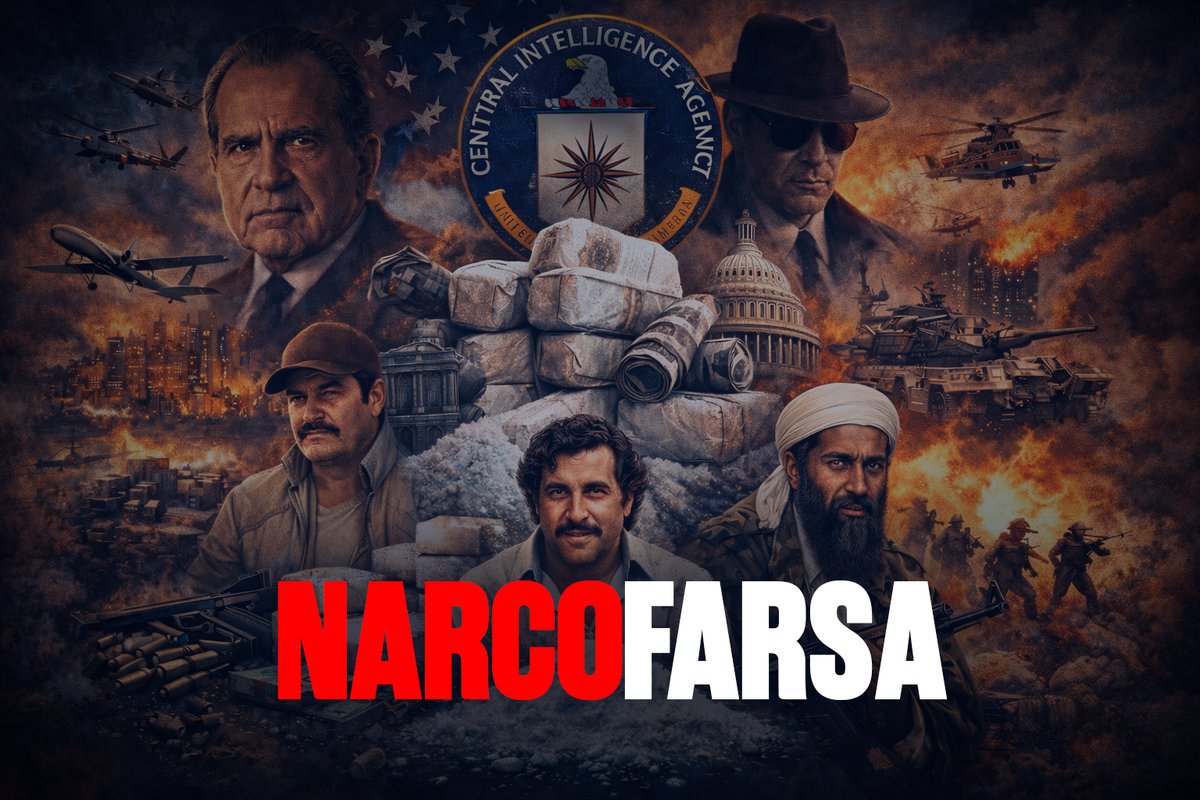
La NARCOFARSA
A continuación presentaré 20 casos ampliamente documentados de cómo ha operado históricamente la FARSA del NARCOTRÁFICO como una forma de dominación imperialista encabezada por EE.UU. y sus aliados. Narcotráfico y terrorismo son formas de DOMINACIÓN IMPERIAL. 🪡🧵