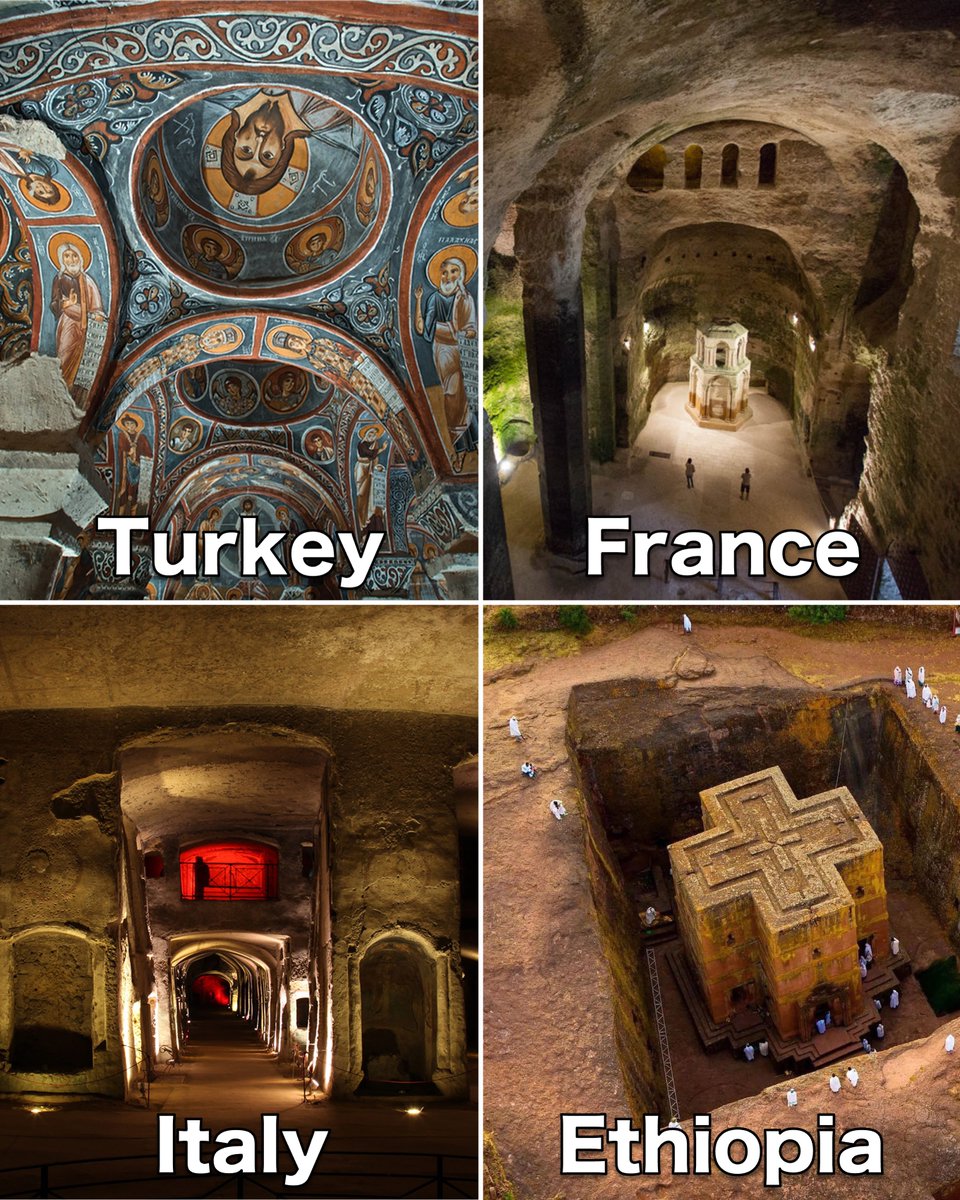
For much of its history, Christianity was forced to convene in secret.
So, Christians carved breathtaking churches — or entire cities — deep below ground.
What they built can be hard to believe... (thread) 🧵
🎓📽️Conoce al Dr. @PhD_RCarcamo director del Doctorado en Psicología y Salud Mental
En este video te cuenta la importancia del programa y por qué recomienda estudiarlo en nuestra universidad. ¡Descubre más! ➡️https://t.co/X0r0ZDX8ou #DoctoradosUSS#Admisión2025
🕰️🔍El Dr. Patricio Herrera, director del Doctorado en Historia, nos habla sobre la importancia del historiador para decodificar nuestro tiempo histórico. Lee la entrevista completa aquí:
https://t.co/P1sdEeC3HZ
#Historia#DoctoradosUSS#InvestigaciónUSS#Admisión2025
I couldn't be happier that my article "Motivation Alignment, Historical Cleavages, and Women’s Suffrage in Latin America," published in @PoPpublicsphere, has received the Mary Parker Follett Prize of APSA's Politics and History Section.
Open access here: https://t.co/S3xIzoOrIM
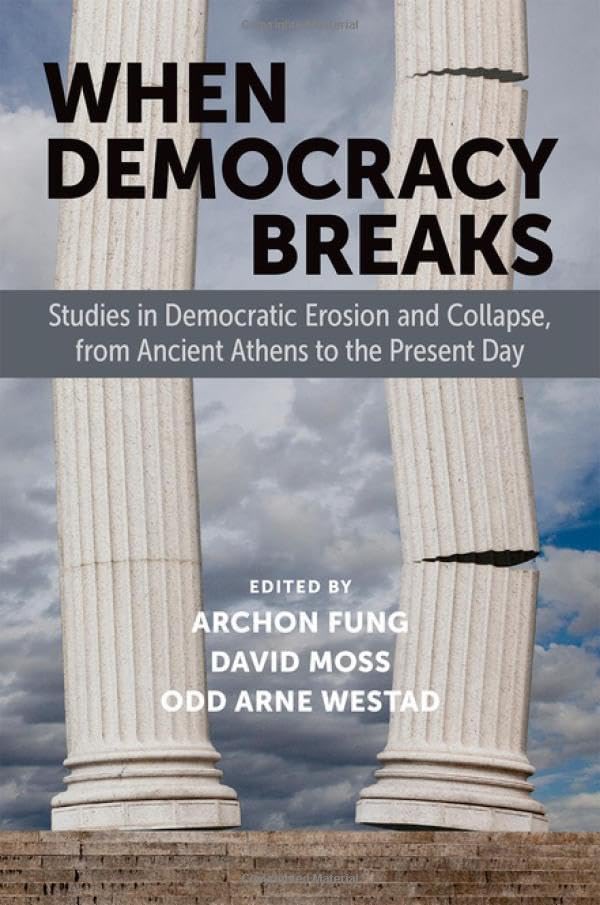
This democracy geek podcast by Justin Kempf, David Moss, Arne Westad and me on our new edited volume, When Democracy Breaks @HarvardAsh
https://t.co/1HhMaNNkgP…
Read the whole book here, for free on open access:
https://t.co/0pPYHjalPE
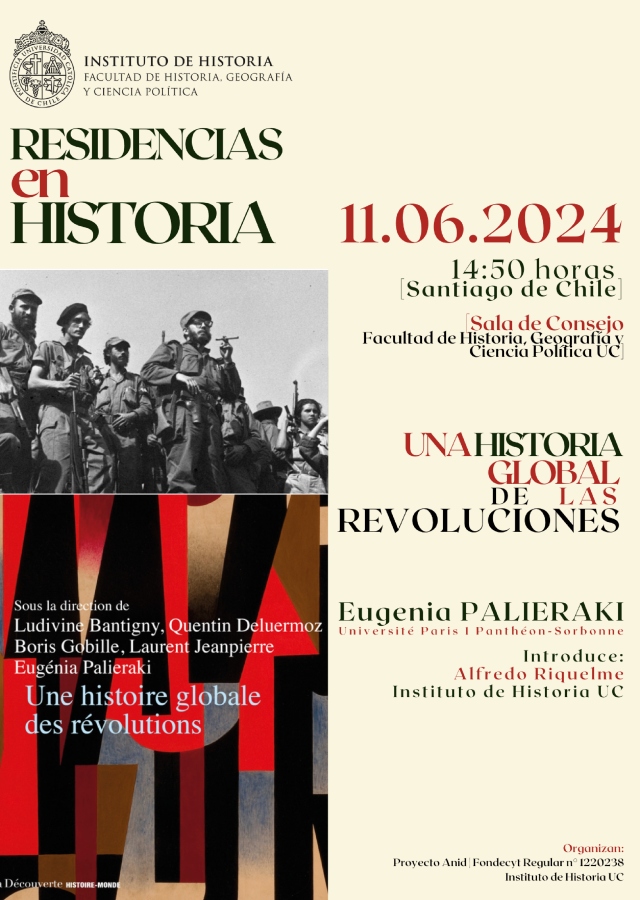
📢 ¡No te pierdas! Residencias en Historia con Eugenia Palieraki de la Universidad de París I Panthéon-Sorbonne.
🗣️ "Una historia global de las revoluciones"
🗓️ Martes 11 de junio
⏰14:50 hrs.
📍 Sala Consejo Facultad
Introduce: Alfredo Riquelme - Historia UC
The mystery of Plato’s final resting place appears to have been solved after advanced scanning techniques dubbed a “bionic eye” were able to penetrate a 2,000-year-old carbonised scroll.
Often hailed as the greatest philosopher who ever lived, conflicting accounts exist over Plato’s final years and death around 348 BC. However, new research claims to have uncovered Plato’s exact burial site: in the garden of his academy in Athens, near to a sacred shrine. The location was recorded in a text by the Epicurean philosopher Philodemus, among thousands of ancient texts in the Roman town of Herculaneum that were damaged after nearby Mount Vesuvius erupted in 79 AD.
A team of experts were able to uncover passages of The History of the Academy written by Philodemus which described the school Plato set up in his name and where he tutored his most famous student, Aristotle.
Costanza Miliani, the director of the Institute of Heritage Science at Italy’s National Research Council, told The Times: “Carbon-based ink was used to write on the scrolls, which were basically themselves turned to carbon by the eruption, making them very difficult to read.”
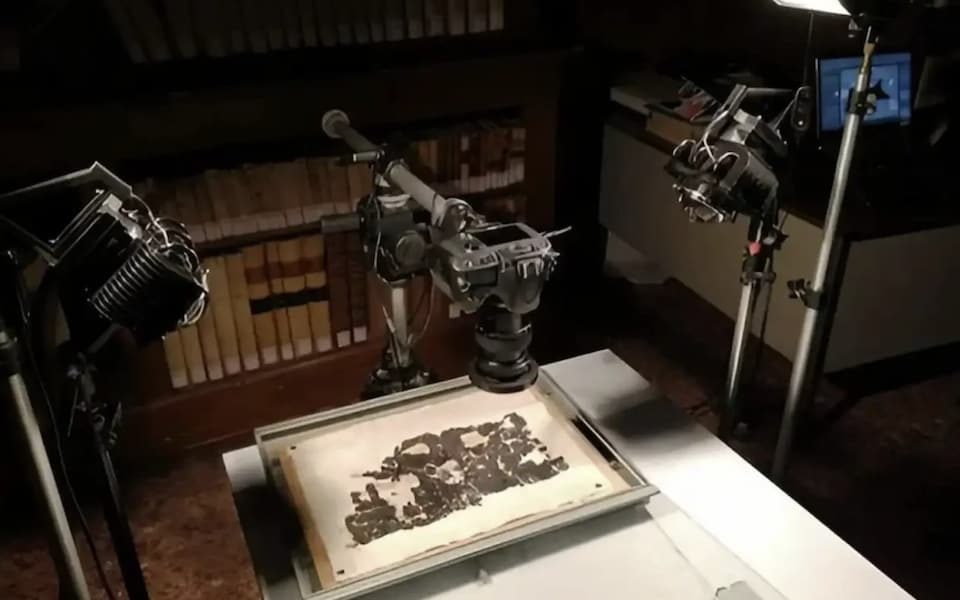
Although most of this particular document had previously been read following an effort to decipher it in 1991, Ms Miliani’s team was able to uncover about 30% more of the carbonised papyrus. They used infrared and X-ray scanners, described as a “bionic eye”, to decipher more than 1000 words of The History of the Academy which were previously illegible.
It has made locating Plato’s exact burial site possible for the first time, according to Prof Graziano Ranocchia, who presented the results of the project. “We knew Plato was buried at the academy, which was very large, but thanks to the scans we now know he was buried in a garden in a private area, near the sacred shrine to the Muses,” he said.
The text also suggests that the previously held account of Plato’s capture by Dionysius, the ruler of Syracuse who was thought to have sold him into slavery around 387 BC, may not be accurate. In fact, Prof Ranocchia says that by Philodemus’ account, “it appears that Plato was sold as a slave as early as in 404 BC, when the Spartans conquered Aegina, or, alternatively, in 399 BC, immediately after the death of Socrates”.
History of the Academy is among the collection of texts found buried inside a villa thought to belong to Julius Caesar’s son-in-law and known as the Herculaneum Papyri. It constitutes the largest surviving library from the Greco-Roman world, and most of what has proven legible has been attributed to Philodemus.
Thousands of manuscripts – possibly including works by Aeschylus, Sappho, or even texts about the early years of Christianity – were deemed irreparably damaged but classicists hope breakthroughs in technology could uncover fresh revelations.
The effort to read the papyri started three years ago and will be completed in 2026.
Prof Ranocchia said the team expects “to make real progress” as it turns its “bionic eye” on other fragments of text. Earlier this year, a group of university students were also able to decipher some charred texts among Herculaneum papyri using artificial intelligence.
While much of Plato’s work has survived in the intervening millennia since his death, it has been impossible to produce a complete biography of his life. He was taught by Socrates, who serves as a narrator in Plato’s dialogues, texts which are credited with the development of metaphysics, ethics, epistemology and aesthetics in Western philosophy.
📷 : The 'bionic eye' used to penetrate the 2000 year-old scroll.
#archaeohistories
The mystery of Plato’s final resting place appears to have been solved after advanced scanning techniques dubbed a “bionic eye” were able to penetrate a 2,000-year-old carbonised scroll.
Often hailed as the greatest philosopher who ever lived, conflicting accounts exist over Plato’s final years and death around 348 BC. However, new research claims to have uncovered Plato’s exact burial site: in the garden of his academy in Athens, near to a sacred shrine. The location was recorded in a text by the Epicurean philosopher Philodemus, among thousands of ancient texts in the Roman town of Herculaneum that were damaged after nearby Mount Vesuvius erupted in 79 AD.
A team of experts were able to uncover passages of The History of the Academy written by Philodemus which described the school Plato set up in his name and where he tutored his most famous student, Aristotle.
Costanza Miliani, the director of the Institute of Heritage Science at Italy’s National Research Council, told The Times: “Carbon-based ink was used to write on the scrolls, which were basically themselves turned to carbon by the eruption, making them very difficult to read.”
Although most of this particular document had previously been read following an effort to decipher it in 1991, Ms Miliani’s team was able to uncover about 30% more of the carbonised papyrus. They used infrared and X-ray scanners, described as a “bionic eye”, to decipher more than 1000 words of The History of the Academy which were previously illegible.
It has made locating Plato’s exact burial site possible for the first time, according to Prof Graziano Ranocchia, who presented the results of the project. “We knew Plato was buried at the academy, which was very large, but thanks to the scans we now know he was buried in a garden in a private area, near the sacred shrine to the Muses,” he said.
The text also suggests that the previously held account of Plato’s capture by Dionysius, the ruler of Syracuse who was thought to have sold him into slavery around 387 BC, may not be accurate. In fact, Prof Ranocchia says that by Philodemus’ account, “it appears that Plato was sold as a slave as early as in 404 BC, when the Spartans conquered Aegina, or, alternatively, in 399 BC, immediately after the death of Socrates”.
History of the Academy is among the collection of texts found buried inside a villa thought to belong to Julius Caesar’s son-in-law and known as the Herculaneum Papyri. It constitutes the largest surviving library from the Greco-Roman world, and most of what has proven legible has been attributed to Philodemus.
Thousands of manuscripts – possibly including works by Aeschylus, Sappho, or even texts about the early years of Christianity – were deemed irreparably damaged but classicists hope breakthroughs in technology could uncover fresh revelations.
The effort to read the papyri started three years ago and will be completed in 2026.
Prof Ranocchia said the team expects “to make real progress” as it turns its “bionic eye” on other fragments of text. Earlier this year, a group of university students were also able to decipher some charred texts among Herculaneum papyri using artificial intelligence.
While much of Plato’s work has survived in the intervening millennia since his death, it has been impossible to produce a complete biography of his life. He was taught by Socrates, who serves as a narrator in Plato’s dialogues, texts which are credited with the development of metaphysics, ethics, epistemology and aesthetics in Western philosophy.
📷 : The 'bionic eye' used to penetrate the 2000 year-old scroll.
#archaeohistories