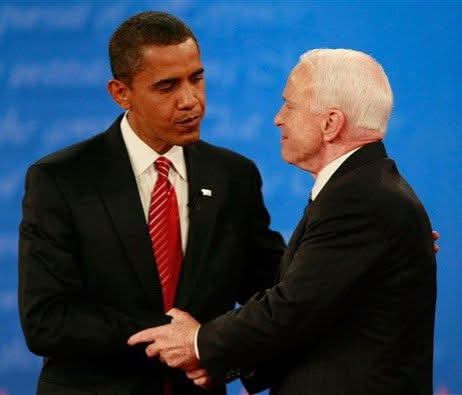
"Circa early 2018, somewhere in the quiet of his beloved Cornville, Arizona ranch, John McCain — living with the knowledge that his days were growing shorter — made a decision that was so perfectly, mischievously, achingly him that it made the whole country smile through their tears when they finally heard about it: he picked up the phone and called Barack Obama, the man who had defeated him for the presidency a decade earlier, and asked him to speak at his funeral. Obama later said that when that call came, he felt 'sadness and also a certain surprise' — and then, with the warmth that defined him, he recognized exactly what McCain was doing, telling mourners at the Washington National Cathedral on September 1, 2018 that the invitation showed McCain's 'irreverence, his sense of humor, a little bit of a mischievous streak' — because, as Obama put it to a cathedral that erupted in laughter through their grief, 'what better way to get a last laugh than to make George and I say nice things about him to a national audience?' It was John McCain's final act of political theater, and it was genius — choosing the two men who had each defeated him for the presidency to stand before the nation and celebrate his life, sending a message louder than any speech he could have given himself: that in America, rivalry and respect are not opposites, that the man you run against can still be the man you trust with your legacy, and that decency is not weakness but the most durable form of strength. Obama stood at that altar and told the packed cathedral that McCain had 'made this country better,' that he had made Obama a better president, and that when all was said and done, despite every disagreement, 'we never doubted the other man's sincerity or the other man's patriotism' — and in the front pew, Cindy McCain wept, because her husband had arranged, from the very edge of his life, one last beautiful lesson in what it means to be an American.
A reminder that Jimmy Carter sold his peanut farm to avoid conflicts of interest.
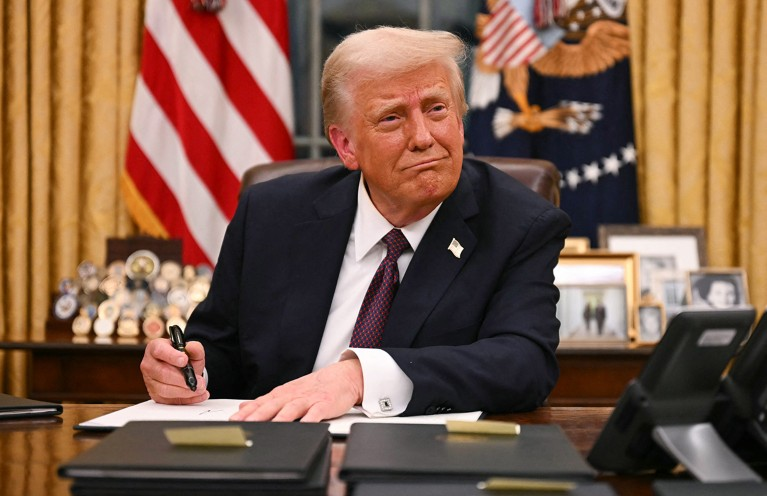
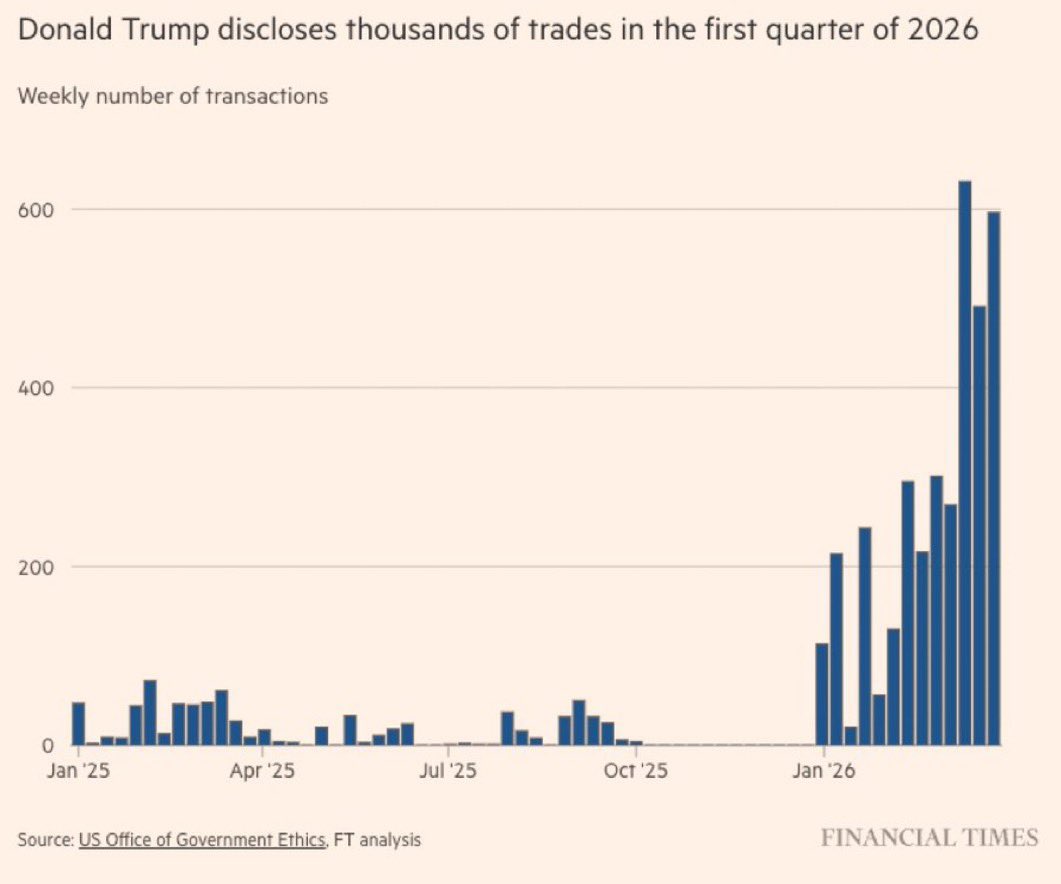
Now we have a president openly buying and selling stocks and crypto while his family business keeps making business deals all over the world that directly profit him, and it’s all treated as normal.
Meanwhile, Republicans like James Comer and Jim Jordan are still obsessing over Hunter Biden’s paintings and Hillary Clinton’s emails.
Drain. The. Swamp
Basic economics: demand for insulin is INELASTIC, so “supply and demand” economics fail because people die without it and will buy it at any price charged.
Therefore, regulation is necessary.
When Barack Obama entered the Hiroshima Peace Memorial Park on May 27, 2016 — becoming the first sitting U.S. president to visit the city destroyed by the United States in August 1945 — the world focused on his speech. Cameras showed the wreath at the cenotaph. Headlines rightly emphasized the weight of the moment. But almost no one noticed a short, quiet Japanese man standing among the official delegation.
His name was Shigeaki Mori. He was eight years old on the day of the atomic bombing. By 2016, he was the only person who knew the names of all twelve Americans who died in Hiroshima — U.S. prisoners of war whom America had never fully accounted for.
Mori spent forty years finding them. Not for money. Not by order. Simply because he believed the dead should have names.
He was born in Hiroshima on March 29, 1937. On the morning of August 6, 1945, he was crossing a small bridge about 2.5 kilometers from the epicenter. The blast threw him into the stream below. Decades later, he recalled:
“I climbed out and saw a woman stumbling toward me. Her body was covered in blood, her organs hanging out. Holding them, she asked where the hospital was. I cried and ran away.”
He was eight. And there were no hospitals left.
Mori survived. He grew up in postwar Japan, worked ordinary jobs — in a brokerage, later at a piano factory — but dreamed of becoming a historian. He never got a formal degree. So he became one on weekends.
In the 1970s, a professor showed him a document: a list of twelve American airmen shot down over Japan in 1945. They were crew members of two B-24 bombers — Lonesome Lady and Taloa — captured and held in Hiroshima, just 400 meters from where the bomb exploded.
They died from their own country’s bomb.
For decades, their story was barely acknowledged. Families were told only: “missing, presumed dead.” No details. No truth.
Mori decided to find it.
Without funding or institutional support, he spent decades reconstructing their fate — comparing archives, tracking records, even locating surviving crew members. One by one, he restored their identities.
Then he wrote letters.
In broken English, he contacted families across the U.S. — often seventy years too late — explaining what had happened to their sons, brothers, husbands.
In 2008, he published his research, which eventually led the U.S. government to officially acknowledge the deaths of the twelve American POWs in Hiroshima.
In 2016, a documentary introduced his story to a wider audience. During Obama’s visit, Mori was invited to attend. In his speech, Obama mentioned the victims — including “twelve Americans held in captivity.”
For the first time, a sitting U.S. president publicly acknowledged them on Japanese soil.
After the speech, Obama approached Mori — a small, elderly man who bowed politely. Then, unexpectedly, the president opened his arms.
They embraced.
The image went around the world.
In 2018, at age 79, Mori visited the United States for the first time. He attended memorial events, spoke publicly, and finally met some of the families he had written to for decades.
When asked why he devoted his life to Americans who died beside him, Mori answered:
“My work was not about people from an enemy country. It was about human beings.”
Shigeaki Mori died in Hiroshima on March 14, 2026. He was 88 years old.
This new Trump & team argument that NATO is failing the US by not supporting the US war of choice in Iran is ahistorical. NATO is a defensive alliance. NATO traditionally has never followed a NATO ally into wars of choice, including:
US war in Iraq.
UK war in the Falklands
France's war with Algeria
Portugal's wars in Angola/Mozambique
US war in Vietnam
Turkey's war/occupation in Cyprus
I could go on.
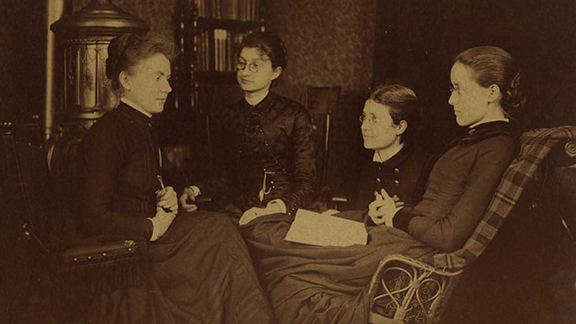
Before #WomensHistoryMonth ends, a look back at some of the pioneering women who helped make medical & scientific history at @umich, starting in 1870 when our @UMichMedSchool became the first major school to accept women alongside men: https://t.co/RXornLtdTZ
@umichBentley
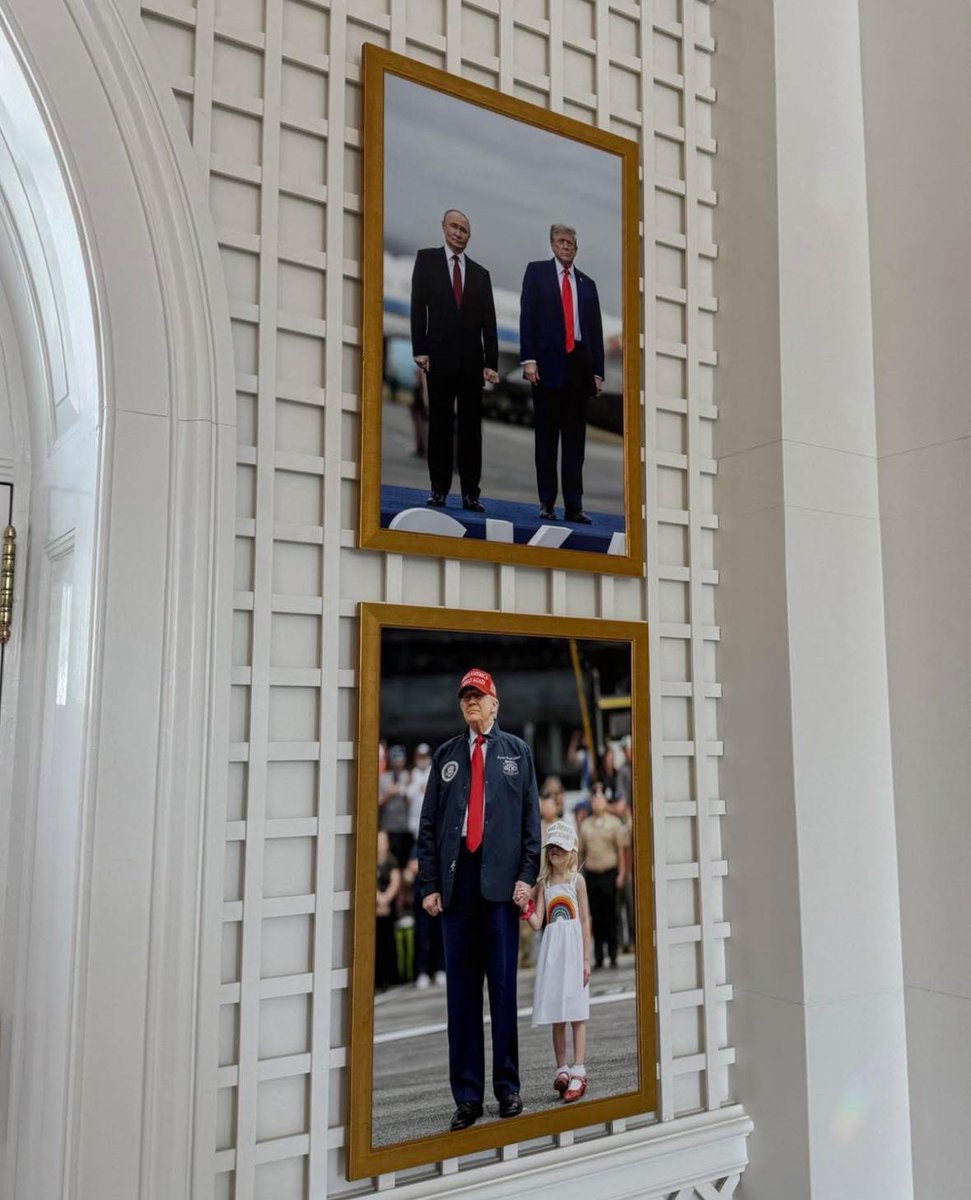
BREAKING: Eagle-eyed PBS reporter Elizabeth Landers spots a literal photo of Vladimir Putin hanging in the White House, situated in a place of honor in a vestibule connecting the West Wing and Residence.
The picture is of the murderous Russian war criminal and Donald Trump at their Alaska summit and hangs above a picture of Trump with one of his grandchildren, making his priorities clear.
It couldn’t possibly be any more on-the-nose. An image of one of America’s worst enemies now hangs in the People’s House because Trump serves him.
Show this to MAGA next time they deny the fact that Trump works for Putin.
Please like and share!
Stephen Colbert: “Where are the Epstein Files? We were told there would be Epstein Files. You signed a law mandating you would have to release the Epstein Files by the middle of last month, but you still haven’t. It kind of makes you seem like a… pedophile protector!”
Trump’s Complicity in the Khashoggi Murder:
How Donald Trump’s cover-up of Jamal Khashoggi’s assassination revealed the pattern of corruption that still defines his relationship with Saudi Arabia... and the world
As the world revisits the relationship between Donald Trump and Saudi Arabia’s Crown Prince Mohammed bin Salman (MBS), it’s worth recalling one of the most chilling episodes of modern diplomacy that marked a turning point for American credibility. The 2018 murder of journalist Jamal Khashoggi was not only a grotesque act of political violence, it was also a test of moral leadership. Trump failed that test spectacularly and chose personal gain and political convenience over truth and justice.
I write this as someone who served on the White House National Security Council (NSC) at the time. Crisis management for this episode was jointly conducted by the Middle East and European Affairs directorates, the latter overseeing Turkey, where the crime occurred. From inside government the episode was recognized for what it was: a clear test of whether the United States would uphold its values when confronted with an autocrat’s brutality.
The Murder and the Cover-Up
The killing took place in Istanbul, Turkey, on October 2, 2018, inside the Saudi consulate. Despite overwhelming evidence — including audio recordings captured by Turkish intelligence and forensic proof tying the murder squad directly to senior Saudi officials that was later transmitted to the CIA — Trump publicly exonerated MBS, insisting the Crown Prince “knew nothing about it.”
Trump absolved MBS despite the CIA’s internal conclusion that he had personally approved the killing. Both contemporaneous media reports and a later declassified 2021 Office of the Director of National Intelligence report confirm that Trump was aware of MBS’s complicity and still participated in the cover-up.
He ignored all of it. Trump dismissed the CIA’s assessment with his characteristic shrug — “Maybe he did and maybe he didn’t” — and dictated a formal White House statement asserting that America would remain a “steadfast partner” of Saudi Arabia, citing arms sales and investment. That statement, issued on November 20, 2018, was a transactional absolution, broadcast to the world.
The Transactional Relationship
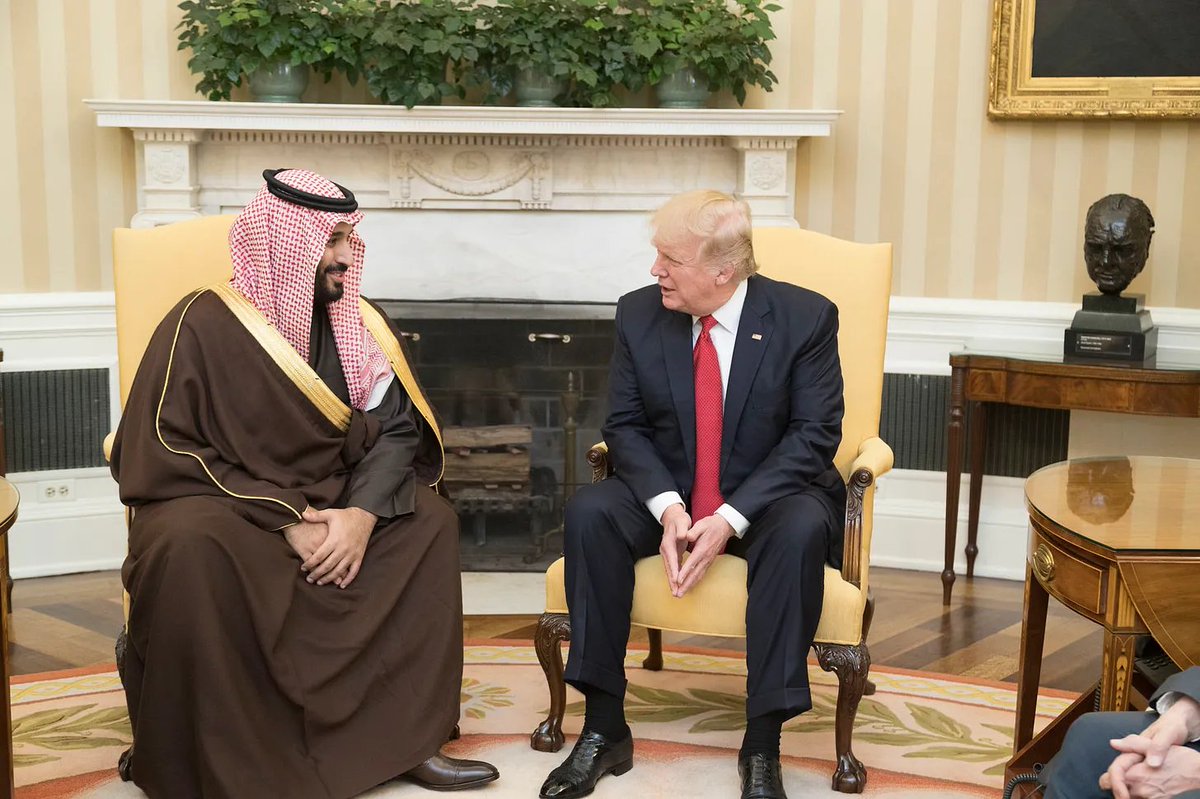
Trump’s relationship with MBS had already been defined by money and spectacle. In March 2018, he hosted the Crown Prince in the Oval Office, complete with printed charts displaying billions in Saudi arms purchases — props to flatter MBS and himself alike.
In November 2025, Trump once again rolled out the red carpet, staging a lavish, state-level reception and once again asserting that MBS bore no responsibility for Khashoggi’s murder. Reopening this abhorrent episode was more than a gesture of friendship: it was a reminder of the debt MBS owes Trump for having whitewashed that crime seven years earlier (TIME coverage).
The rewards for Trump have been substantial. His family and enterprises have become beneficiaries of Saudi-linked investments and partnerships:
Jared Kushner’s Affinity Partners secured a $2 billion investment from Saudi Arabia’s Public Investment Fund shortly after leaving government.
The Saudi-funded LIV Golf tour now stages high-profile tournaments at Trump-owned courses across the United States and abroad.
And in 2025, the Saudi developer Dar Global announced plans to tokenize a Trump-branded hotel project in the Maldives via cryptocurrency, enabling Gulf investors to profit through digital assets tied to Trump’s brand.
While direct Saudi government cryptocurrency investments personally enriching Trump are only now being uncovered, the pattern is unmistakable. The Trump Organization continues to act as a conduit for Gulf capital and crypto-financed projects, following the same transactional logic that began with Khashoggi’s cover-up.
The Unreleased Call Record
The most damning evidence remains hidden. The detailed call readout between Trump and MBS following Khashoggi’s murder exists - it is not conjecture. Its release would confirm what Trump’s public statements already reveal: a callous disregard for the murder of an American resident and journalist, an eagerness to shield an authoritarian ally, and a willingness to trade America’s integrity for personal benefit.
Like the infamous Trump–Zelenskyy call that exposed his attempt to extort Ukraine, the Trump–MBS call would show a similar pattern: transactional diplomacy devoid of morality. It is another piece in the broader story of a man who used the presidency to enrich himself, reward foreign autocrats, and dismantle the ethical foundations of U.S. foreign policy.
Why It Matters
When I testified before Congress in 2019, I said, “Here, right matters.” That principle applies far beyond our borders. It matters that we tell the truth about what happened to Jamal Khashoggi and about the American president who chose profit over principle.
This episode wasn’t an isolated moral failure; it was the opening chapter of a larger betrayal. Trump’s indifference to Khashoggi’s murder, his obstruction of accountability, and his continuing entanglement with Saudi-backed ventures form a straight line of corruption that runs from Istanbul in 2018 to Riyadh and Palm Beach today.
Releasing the Trump–MBS call record would not only offer closure for Khashoggi’s family; it would give the American people a clear, documented view of how Trump subordinated U.S. values to personal greed. The truth must be part of the historical record and accountability, even delayed, still matters.