Very pleased to see this out! If you are working on impact (and/or incident) monitoring & reporting anywhere, I would really appreciate feedback & I'm open to chatting more about this!
In a new Research Report, our Research Associate @MarieIrad highlights how key stakeholders can improve the monitoring of AI impacts and incidents in Africa. Read the full report here: https://t.co/JGYUl8R7lW
When you forget to cancel a subscription & you suddenly see a random notification saying “Payment Successfull, Your subscription has been renewed.”
The fourth edition of the Africa AI Policy Opportunities Digest is out with the latest fellowships, events, funding, and courses!
https://t.co/JiWGVsP8eQ
When people say "I'd do anything for my child," everyone praises them, but when a parent risks crossing a border to save their child from war, poverty, or danger, suddenly they're treated like criminals.
Call for Research Fellows – AIReKEMA Project
Advancing Indigenous and Refugee Knowledge on Migration in Africa will select 12 Research Fellows who have experience on topics related to migration and conflict resolution
Deadline: 1 June 2026
For more info https://t.co/orPPIbMZfl
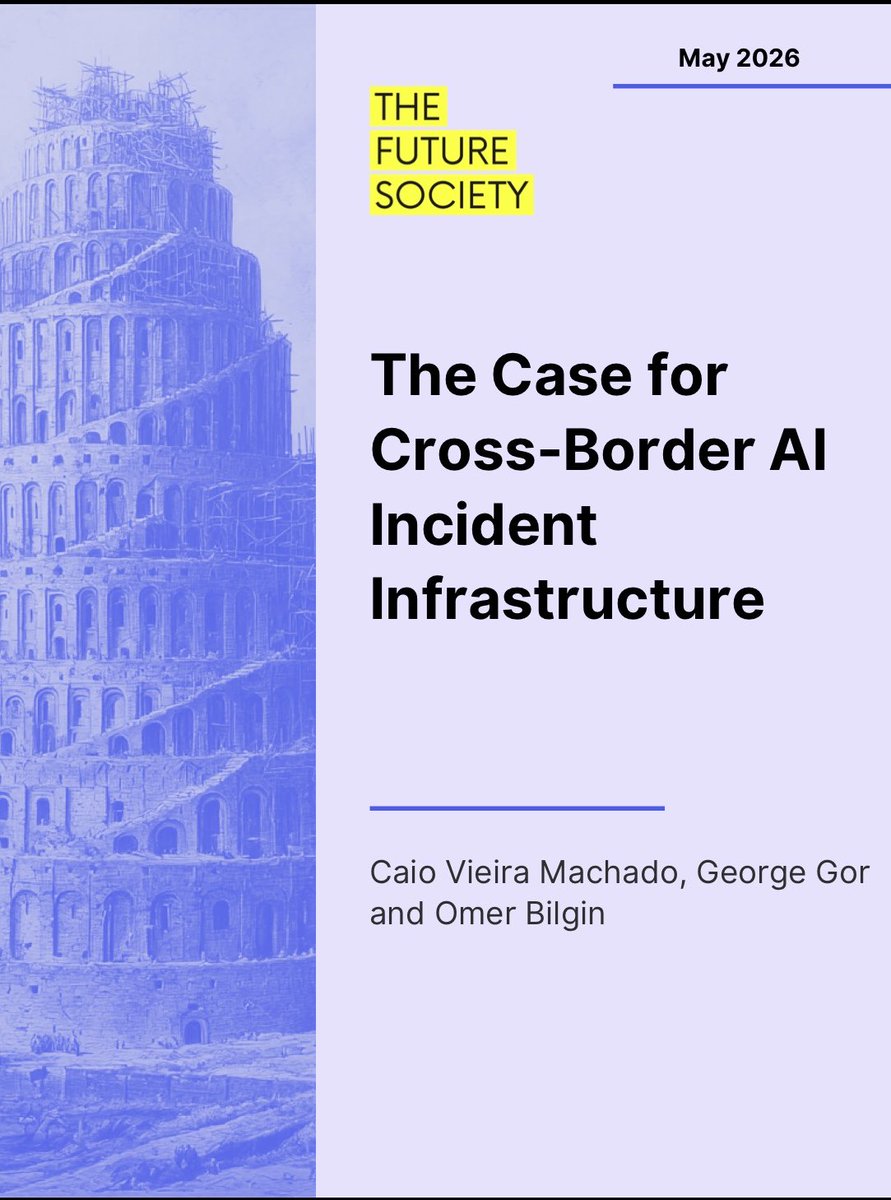
We must always endeavour to learn from past mistakes. @caiocvm, @OmerBilginAI and I set out why severe AI incidents warrant policymakers’ attention.
The evidence is already in plain sight. Incidents carry information about failure modes, affected populations, and gaps in oversight. But sharing that information is hard, and without it countries have no way to coordinate a response. This is more important now, when AI causes severe harm in many countries at once.
We argue that incident sharing is a prerequisite for response to AI harms. Without a way to observe harms systematically and learn across borders, prevention and preparedness have little to work from.
Countries are growing more concerned about the harms AI poses to their populations. As Mythos' capabilities have warned us, we could see exploitation of critical infrastructure societies depend on.
Yet, African countries are paying little attention to this. @MarieIrad makes the case for how they can build capacity to monitor such impacts and learn from harms that are increasingly manifesting. Hopefully, this data can help prepare for the more serious, plausibly devastating scenarios ahead.
Very pleased to see this out! If you are working on impact (and/or incident) monitoring & reporting anywhere, I would really appreciate feedback & I'm open to chatting more about this!
In a new Research Report, our Research Associate @MarieIrad highlights how key stakeholders can improve the monitoring of AI impacts and incidents in Africa. Read the full report here: https://t.co/JGYUl8R7lW
In collaboration with our partners UCT AI Initiative, AI Safety South Africa, and Action Lab Africa, we recently prepared and submitted written feedback for the UN Global Dialogue on AI Governance. You can read our joint written submission here: https://t.co/srOdGvGR85
Bananas are such convenient fruits like no chopping or washing needed, not sticky, no juice dripping around and they come with their own biodegradable packaging. A 10/10 in my books