En la antigua Grecia, las mujeres tenían prohibido estudiar medicina, hasta que alguien rompió la ley.
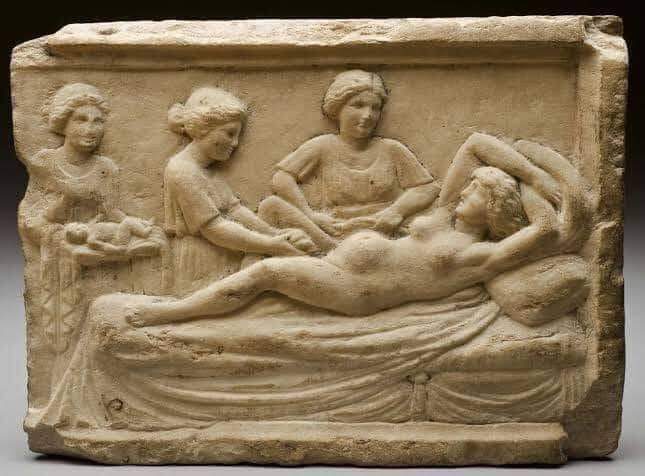
Un día Hagnódica se cortó el pelo y entró en la facultad de medicina de Alejandría vestida de hombre. Mientras caminaba por las calles de Atenas tras completar sus estudios de medicina, oyó los gritos de una mujer de parto. Sin embargo, la mujer no quería que Hagnódica la tocara, a pesar del intenso dolor, porque creía que Hagnódica era un hombre.
Hagnódica demostró su identidad femenina desnudándose y ayudando a la mujer a dar a luz. La historia pronto se extendió entre las mujeres, y todas las enfermas comenzaron a acudir a Hagnódica.
Los médicos varones, envidiosos, acusaron a Hagnódica, a quien creían hombre, de seducir a sus pacientes
En su juicio, Hagnódica compareció ante el tribunal y demostró su identidad femenina, pero esta vez fue condenada a muerte por estudiar y ejercer la medicina siendo mujer. Las mujeres se rebelaron contra la sentencia, especialmente las esposas de los jueces que la habían condenado a muerte.
Algunos decían que si Hagnódica moría, morirían con ella. Incapaces de soportar la presión de sus esposas y otras mujeres, los jueces anularon la condena de Hagnódica , y a partir de entonces, las mujeres pudieron ejercer la medicina, siempre y cuando solo atendieran a mujeres.
Así, Hagnódica dejó su huella en la historia como la primera médica, ginecóloga y especialista en medicina griega.
Esta placa que representa a Hagnódica trabajando fue excavada en Ostia, Italia.
A Norwegian neuroscientist spent 20 years proving that the act of writing by hand changes the human brain in ways typing physically cannot, and almost nobody outside her field has read the paper.
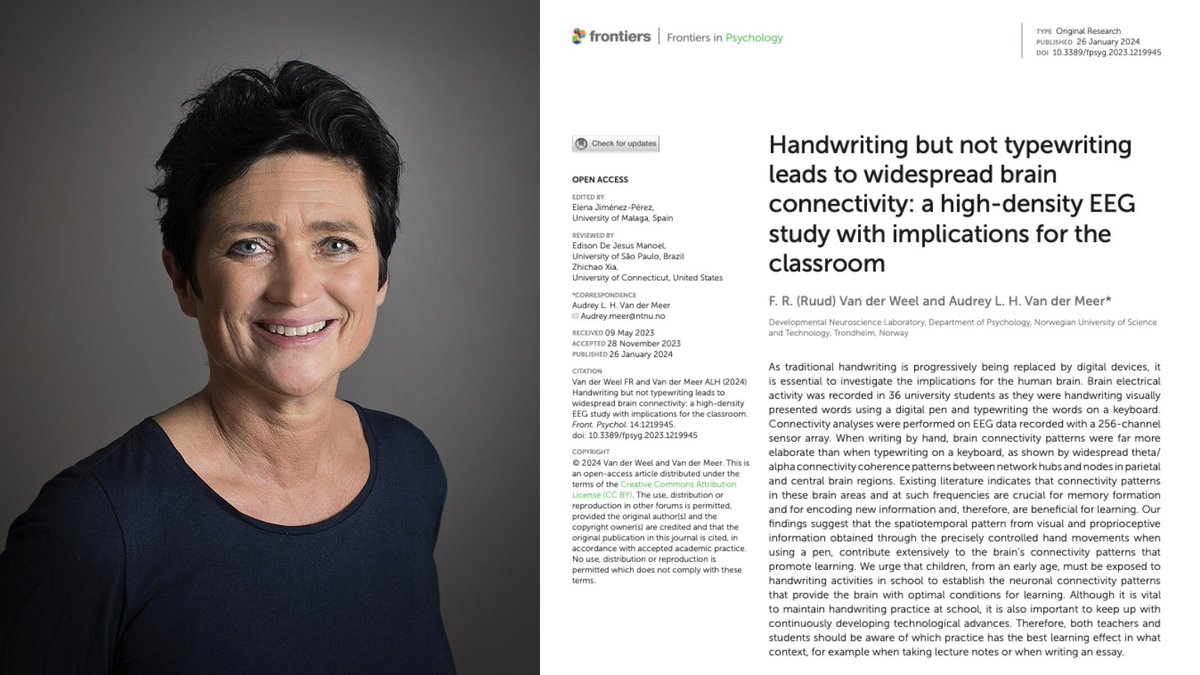
Her name is Audrey van der Meer.
She runs a brain research lab in Trondheim, and the paper that closed the argument was published in 2024 in a journal called Frontiers in Psychology. The finding is brutal enough that it should have changed every classroom on Earth.
The experiment was simple. She recruited 36 university students and put each one in a cap with 256 sensors pressed against their scalp to record brain activity. Words flashed on a screen one at a time.
Sometimes the students wrote the word by hand on a touchscreen using a digital pen, and sometimes they typed the same word on a keyboard. Every neural response was recorded for the full five seconds the word stayed on screen.
Then her team looked at the part of the data most researchers had ignored for years, which is how different parts of the brain were communicating with each other during the task.
When the students wrote by hand, the brain lit up everywhere at once.
The regions responsible for memory, sensory integration, and the encoding of new information were all firing together in a coordinated pattern that spread across the entire cortex. The whole network was awake and connected.
When the same students typed the same word, that pattern collapsed almost completely.
Most of the brain went quiet, and the connections between regions that had been alive seconds earlier were nowhere to be found on the EEG.
Same word, same brain, same person, and two completely different neurological events.
The reason turned out to be something nobody had really paid attention to before her work. Writing by hand is not one motion but a sequence of thousands of tiny micro-movements coordinated with your eyes in real time, where each letter is a different shape that requires the brain to solve a slightly different spatial problem.
Your fingers, wrist, vision, and the parts of your brain that track position in space are all working together to produce one letter, then the next, then the next.
Typing throws all of that away. Every key on a keyboard requires the exact same finger motion regardless of which letter you are pressing, which means the brain has almost nothing to integrate and almost no problem to solve.
Van der Meer said it plainly in her interviews.
Pressing the same key with the same finger over and over does not stimulate the brain in any meaningful way, and she pointed out something that should scare every parent who handed their kid an iPad.
Children who learn to read and write on tablets often cannot tell letters like b and d apart, because they have never physically felt with their bodies what it takes to actually produce those letters on a page.
A decade before her, two researchers at Princeton ran the same fight using a completely different method and ended up at the same answer. Pam Mueller and Daniel Oppenheimer tested 327 students across three experiments, where half took notes on laptops with the internet disabled and half took notes by hand, before testing everyone on what they actually understood from the lectures they had watched.
The handwriting group won by a wide margin on every question that required real understanding rather than surface recall.
The reason was hiding in the transcripts of what the two groups had actually written down.
The laptop students typed almost word for word, capturing more total content but processing almost none of it as they went, while the handwriting students physically could not write fast enough to transcribe a lecture in real time, which forced them to listen carefully, decide what actually mattered, and put it in their own words on the page.
That single act of choosing what to keep was the learning itself, and the keyboard had quietly skipped the choosing and skipped the learning along with it.
Two studies. Two countries. Same answer.
Handwriting makes the brain work. Typing lets it coast.
Every note you have ever typed instead of written went into your brain through a thinner pipe. Every meeting, every book highlight, every idea you captured on your phone instead of on paper was processed at half depth.
You did not forget those things because your memory is bad. You forgot them because typing never woke the part of the brain that would have made them stick.
The fix is the thing your grandmother already knew.
Pick up a pen. Write the thing down. The slower road is the faster one.
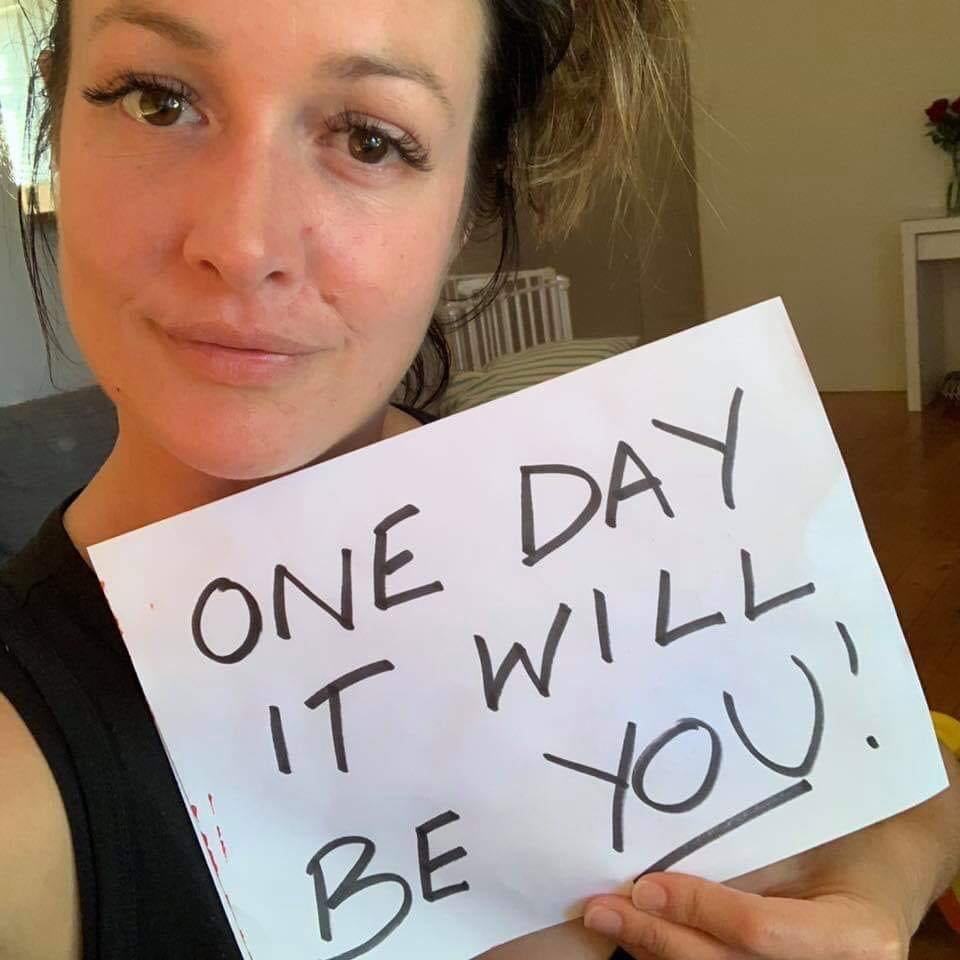
Wise words from this young woman!
“Twice this week, I have watched an elderly individual, fade into the busy life in which we all live. One man just needed Panadol for his wife but the shop assistant simply said it’s in aisle ‘6’. But he struggled to navigate the supermarket and as I watched him go in the wrong direction, I left all my groceries and took him where he needed to go.”
“Today, I watched an elderly man struggle in the heat, who had obviously had a fall with a huge scrape and blood on his leg. He walked past people in the cafe, while he slowly made his way to his car. Not one person stopped. Or looked. Or acknowledged him. I took him to his car and checked he was ok. He told me he had a fall and wasn’t sure how the air con worked in his car so he just didn’t use it. I sat with him, until his air con kicked in and heard him talk about the old frail body that he is in, that fails him now, every single day.”
“When you see an elderly person walking down the street, searching in the supermarket or struggling to their car, take a minute out of your busy schedule and ask them if they need a hand. Think about your grand parents and your parents and how pissed you would be if someone didn’t stop to help them. But more, think of them as you.”
“Once upon a time they were you. They were busy, they had work, they had children, they were able. Today, they are just in an older body that is not going as fast as it used to and this busy life is confusing. They deserve our utmost respect and consideration. One day it will be you, it will be us. I wish more people gave a shit about them and acknowledged them for their admirable existence and jeez I hope someday, not that far away, someone does it for me.”
Thanks to the author, Adele Renee. ♥️
When Allyson Felix became pregnant, Nike threatened to cut her sponsorship contract by almost 70% because of her pregnancy.
They told her:
“You should know your place… and just run.”
Amid all this, at seven months pregnant, Allyson had to undergo an emergency C-section due to a serious complication.
Her baby girl spent over a month in the neonatal intensive care unit.
But two years later, Allyson qualified for her fifth Olympic Games, with her daughter in the stands cheering her on.
Allyson left Nike.
And she founded her own shoe brand: Saysh One.
At the Tokyo Olympics, she ran wearing her own sneakers, carrying the motto:
“I know exactly where my place is.”
With 11 medals, she surpassed Carl Lewis and became the most decorated American track and field athlete in history.
And to all women, she gave this message:
“I raised my voice and built this company for you, so that you’ll never have to train at 4:30 in the morning, five months pregnant, just to hide it from your sponsor.” ❤️
🌸🇯🇵 Cette glycine vieille de 150 ans est considérée comme l’une des plus magnifiques au monde.
Située dans le parc floral d’Ashikaga à Tochigi, au Japon , elle déploie un véritable plafond de fleurs violettes, presque irréel.
Certaines glycines sont capables de vivre plusieurs siècles et peuvent parfois dépasser les 300 ans, devenant avec le temps de véritables monuments naturels.
After being lost in the sea and reaching America thinking that it was India, Còlumbus noted in his journal that some of the native people they met there told them that Black skınned people had come from the south-east in boats, trading in fold-tipped spears.
Còlumbus also saw metal goods from West Africa and even got some of them directly from the native Americans.
Chèmical analysis from these tips found by Columbus on spears in Amèrican shows that the gold came from Africa.
The world was already connected. After the fall of Granada, thousands of Moors left Spain, which had been their home for seven hundred years to avoid living under Spanish yoke.
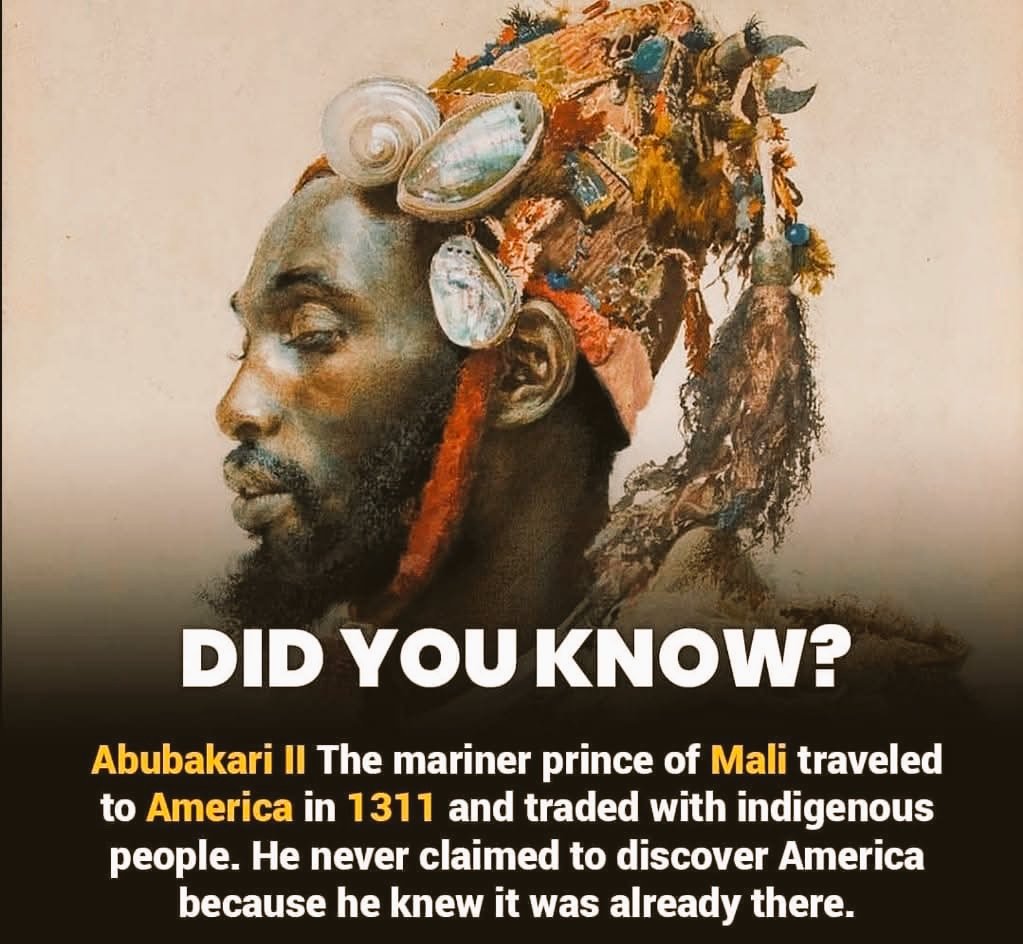
They migrateď to Africa. Some stayed at the North African coast and improved their knowledge of navigation. That knowledge may be the one used by Emperor Abubakari II to reach America.
Most ancient civilizations had already circùmnavigated the globe. They just did not make of it a big dèal claiming that they had discọvered it.
El clip colaborativo del rapero sueco Yung Lean y GENER8ION supera los límites de un simple videoclip musical y ya es un festín visual extraordinario. 🔥
La coreografía, a cargo del gran coreógrafo francés Damien Jalet. 💥
Hoy, 29 de abril, Día internacional de la danza.
No lo sabía. Cuando quedas embarazada, las células del bebé siguen vivas en el cuerpo de la madre durante más de 27 años.
Se llama "microquimerismo": durante el embarazo, las células del bebé entran en la sangre de la madre a través de la placenta y se instalan incluso en órganos y en el cerebro. En un estudio de 2012 de la Universidad de Washington, se encontraron células de origen fetal en el cerebro de aproximadamente el 63% de las mujeres analizadas.
Y estas células no se quedan ahí sin hacer nada.
Cuando el corazón o el hígado de la madre sufre daño, las células del bebé acuden a ese lugar y ayudan a reparar el tejido. A nivel celular, el hijo protege a su madre.
Y hay algo más: las células de los bebés perdidos por aborto espontáneo o muerte fetal también permanecen en el cuerpo de la madre.
El embarazo, a nivel celular, es convertirse en madre para siempre. El vínculo con tu hijo es para toda la vida.
El lazo entre madre e hijo existe a nivel celular. Es demasiado bonito...
BREAKING🚨: Astronaut Captures Rare Luminous Phenomenon from Earth Orbit.
From hundreds of kilometers above Earth, an astronaut has photographed one of the planet’s most elusive atmospheric displays—an ethereal burst of light that flickers above thunderstorms. 😮
These phenomena, known as sprites or blue jets, briefly illuminate the upper reaches of the atmosphere, puzzling scientists and thrilling skywatchers. Recorded in stunning detail from orbit, the image reveals the extraordinary interplay between weather, electricity, and space
Ce que vous voyez dans la vidéo est un Seabin, une sorte de "poubelle flottante" conçue pour nettoyer les ports, les marinas et les clubs nautiques.
Le Seabin est une pompe à eau immergée qui aspire l'eau de la surface.
Aspiration : L'eau passe par un sac de capture (en filet) situé à l'intérieur.
Filtration : Les débris, les plastiques, les microplastiques et même les huiles/carburants flottants sont piégés dans le sac.
Rejet : L'eau propre est ensuite pompée et rejetée au fond, créant un cycle continu qui attire les déchets environnants.
La traditionnelle baguette de pain, symbole de l'identité française, remonte à la Révolution. A partir de ce jour 25 brumaire an II, les boulangers ne pourront faire et vendre qu'une seule sorte de pain : le Pain Égalité. Tout boulanger qui fera deux sortes de pain, par exemple un pain de fleur de farine pour le riche et un pain de son pour le pauvre, sera passible d'incarcération.
À vrai dire, c’est sans doute le seul héritage de la Terreur qui ne fait pas polémique. En effet, c’est à cette époque sombre qu’est né le concept d’un « pain égalitaire », incarnation d’une France soucieuse d’égalité entre tous les citoyens, après un fossé qui n’a cessé de se creuser entre le pain des pauvres et le pain des riches depuis le Moyen Âge. Même taille et même poids pour tout le monde.
Denrée de première nécessité, parfois l’unique aliment en période de disette, le pain a été taxé très tôt dans l’histoire de France. Au VIIe siècle, le roi Dagobert est la première autorité connue à faire usage de la taxation. Au XVIIIe siècle, le pain constitue 90 % de la nourriture française. On en consomme jusqu’à un kilo et demi par jour : le pain blanc, signe de pureté et d’élégance, pour les bourgeois et les aristocrates, et le pain brun pour les autres, voire très noir pour les pauvres.
À sa naissance, la forme de la baguette n’est pas encore clairement définie. C’est Napoléon Bonaparte, en 1856, qui statue définitivement, optant pour une forme allongée, afin que les soldats puissent les transporter, dans une poche à l’arrière de leur habit, et pour une taille et un poids précis, 40 cm pour un poids total de 300 grammes contre les 80 cm pour 250 grammes aujourd’hui. Après la Seconde Guerre mondiale la baguette se généralise. Et son prix est fixé par arrêté préfectoral jusque dans les années 1980.
La baguette reste un symbole fort de la culture française. Sa consommation est estimée à 320 baguettes par seconde dans toute la France.
On dirait une œuvre d’art vue du ciel 😱
À Antalya, les tapis faits à la main sont exposés au soleil pour adoucir leurs couleurs et leur donner un aspect ancien 🤯
Un savoir-faire unique… qui transforme un simple champ en tableau géant
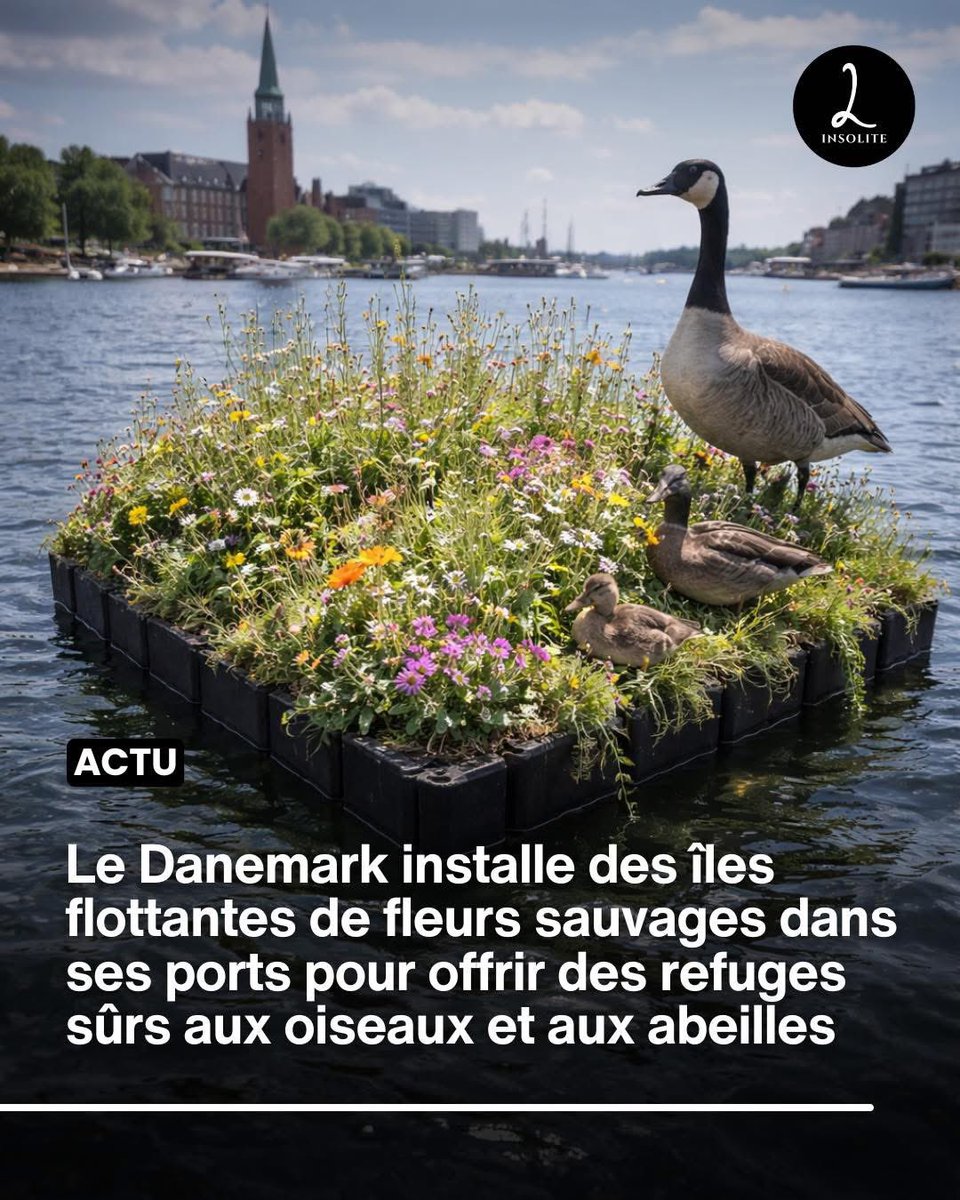
Beaucoup pensent que les villes ne sont pas adaptées à la nature… mais le Danemark prouve le contraire.
À Copenhague, des îles flottantes couvertes de fleurs sauvages ont été installées dans le port pour redonner de la place à la biodiversité. Fabriquées à partir de matériaux recyclés, elles accueillent oiseaux, abeilles et autres espèces, tout en rendant l’espace plus vivant.
Certaines sont accessibles au public, d’autres restent préservées pour servir de refuges. Ce projet montre qu’il est possible d’intégrer la nature en ville, avec des solutions simples mais efficaces.
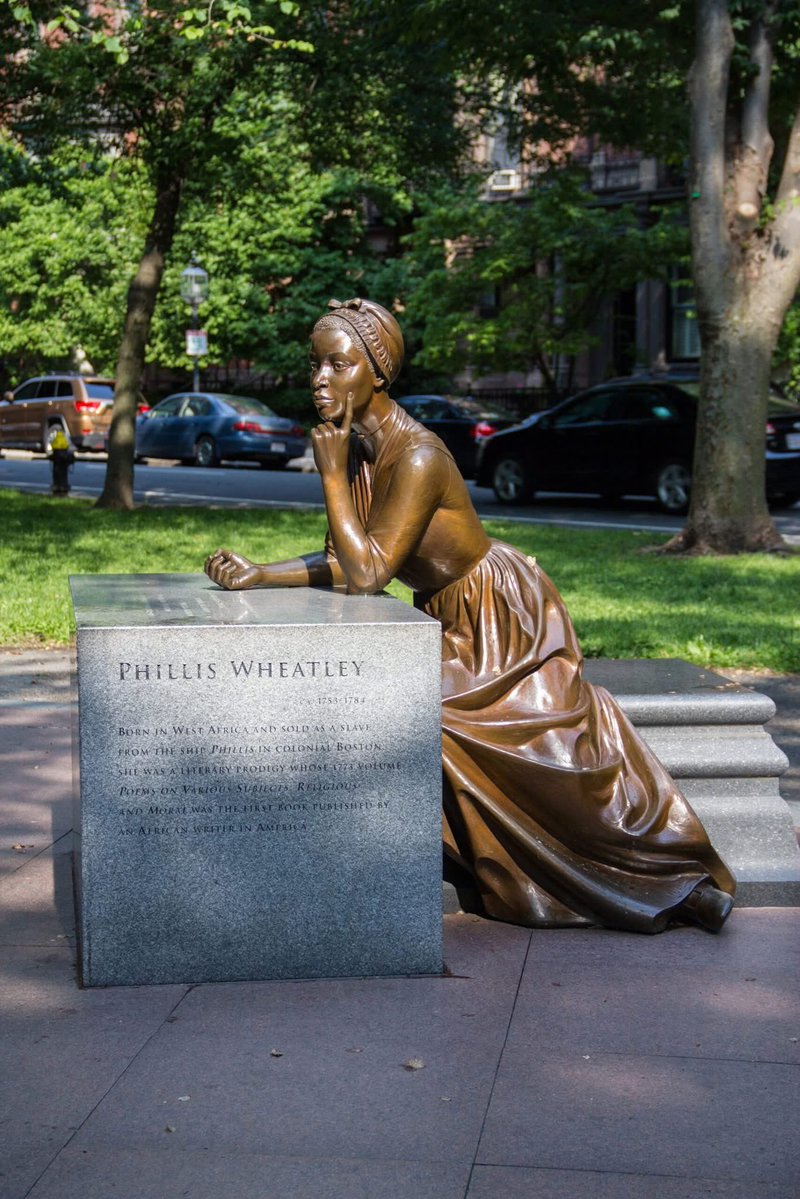
This young lady was called Phillis because that was the name of the ship that brought her, and Wheatley, the name of the merchant who bought her. She was born in Senegal 🇸🇳.
In Boston, the slave traders put her up for sale: “She's 7 years old! She will be a good mare!”
She was felt naked by many hands.
At thirteen, she was already writing poems in a language that was not her own. No one believed that she was the author. At twenty, Phillis was questioned by a court of eighteen so-called enlightened White men in robes and wigs.
She had to recite passages from Virgil and Milton and verses from the Bible, and vow that the poems she composed were not copied.
From a chair, she underwent her lengthy examination until the court approved her: she was a woman, she was Black, she was enslaved, but she was a poet.
Phillis Wheatley was the first African-American writer to publish a book in the United States 🇺🇸