Our planet's airplane traffic this week - a new record.
Over 153,000 commercial flights/day - that's almost 2 takeoffs & landings per second. No accidents - amazing!
Beautiful work by @icao in Montreal, under the @UN. They should manage space traffic as well. Let's bump their max altitude from 60,000 ft to 600 miles.
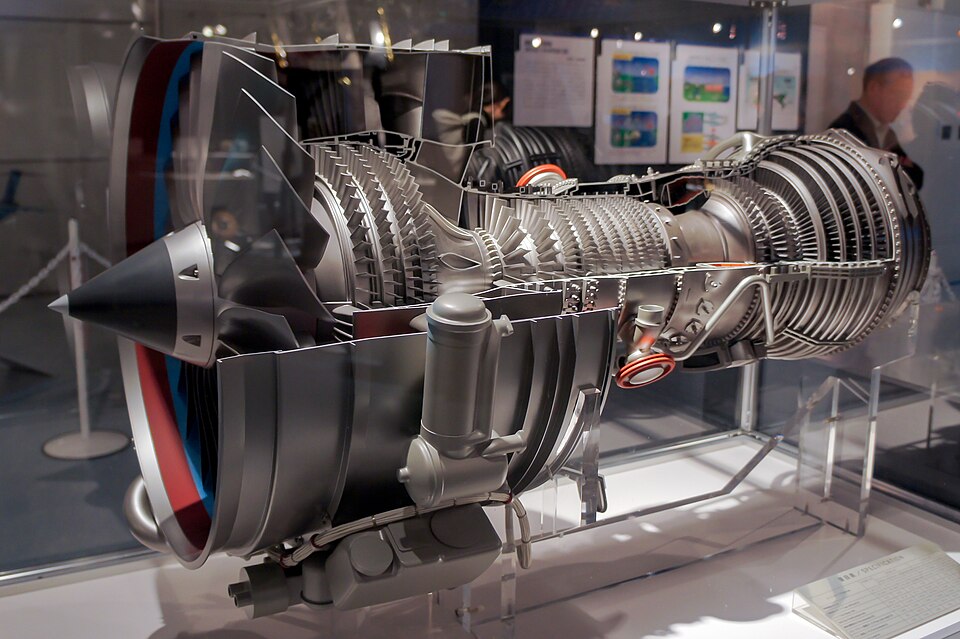
A jet engine does not become more efficient simply by becoming larger. It becomes more efficient by operating hotter at its very core section.
The higher the turbine temperature, the more energy engineers can extract from fuel combustion increasing the efficiency, but extreme heat pushes conventional metals beyond their limits.
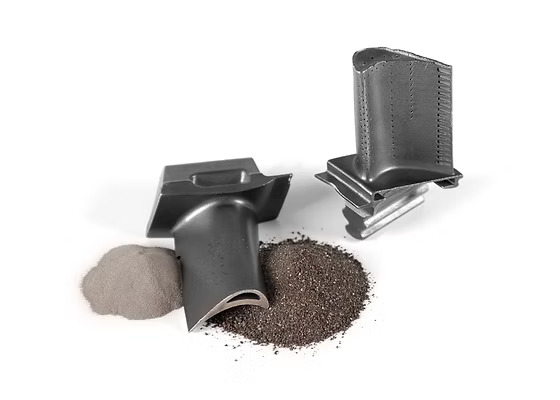
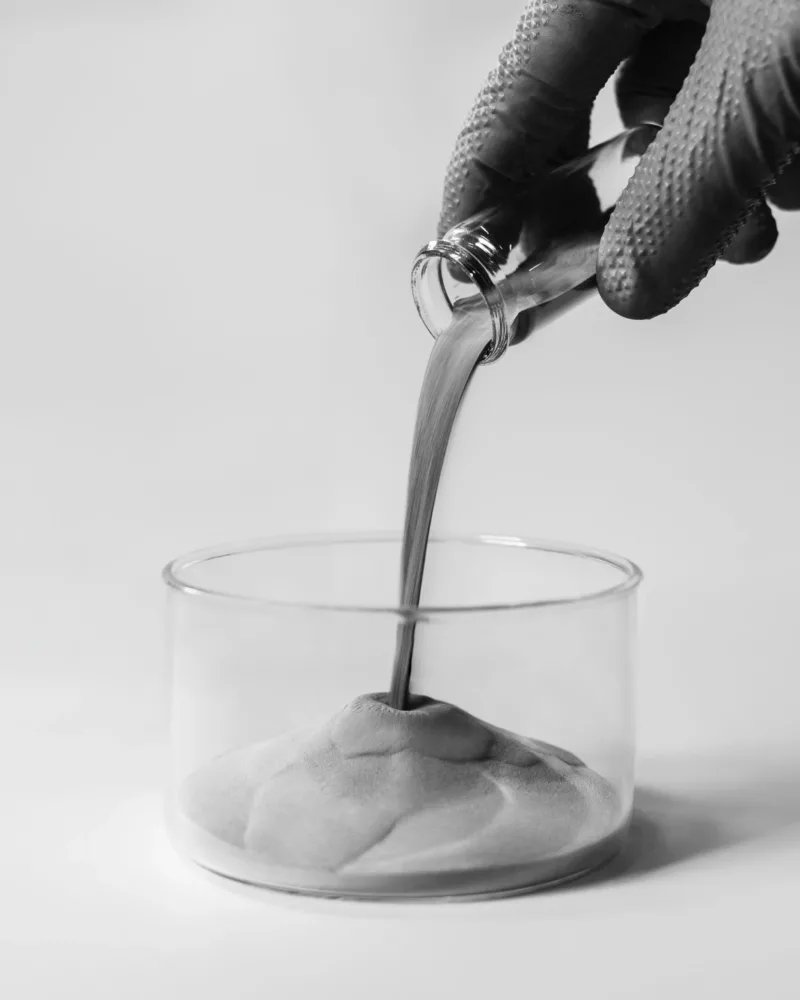
The real challenge is a microscopic addition of one of Earth’s rarest elements, Rhenium, a metal that allows nickel superalloy turbine blades to resist creep, the slow deformation of metal under extreme heat and stress.
Added at only around 3-6% in advanced single-crystal nickel superalloys, rhenium dramatically improves high-temperature durability, allowing turbine blades to survive environments exceeding 1,100°C, while rotating thousands of times per minute under enormous centrifugal forces for tens of thousands of operating hours.
Without this capability, many efficiency gains in modern commercial aircraft engines and industrial gas turbines would not exist.
The difficulty is not using rhenium, it is obtaining and transforming it into aerospace capability. With global production estimated at only 50-70 tonnes annually, compared with roughly 1.8 billion tonnes of steel production, rhenium exists on a completely different industrial scale, Rarest of the rare.
It is rarely mined directly, instead, it is recovered as a by-product of copper and molybdenum refining, meaning supply depends on a small number of mining and secondary processing ecosystems.
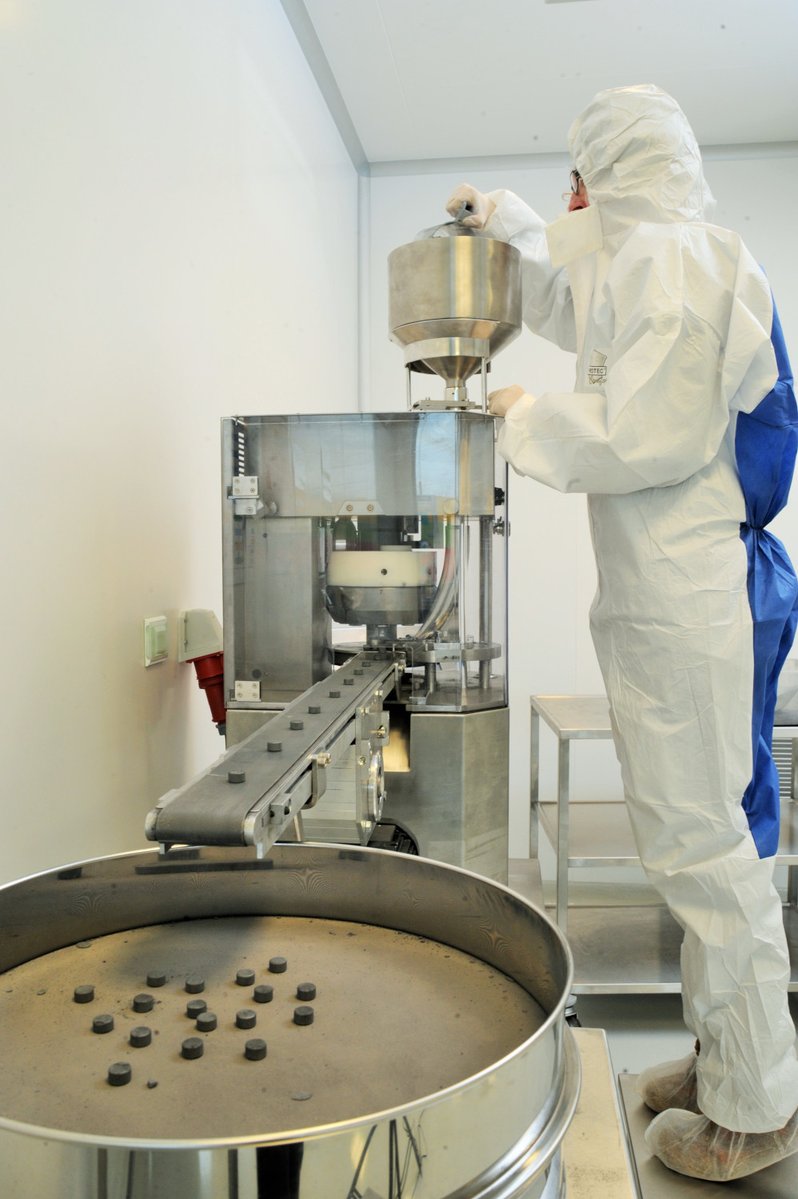
For scale, A tonne of industrial steel costs around $700-$1,000, while a tonne of high-purity aerospace grade rhenium pellets can reach approximately $2-4 million, A difference of several thousand times in material value.
The true complexity lies in the entire ecosystem required to transform a trace element into an aerospace-grade capability, rare geological occurrence, specialised extraction, ultra-high-purity refining, advanced alloy design, single-crystal casting, thermal coatings, and decades of qualification.
Rhenium is not valuable because engineers require it in large quantities.
It is valuable because transforming a few kilograms of this exceptionally rare metal into reliable turbine capability requires some of the most advanced metallurgy and manufacturing expertise on Earth which only a handful of advanced countries can even in 2026.
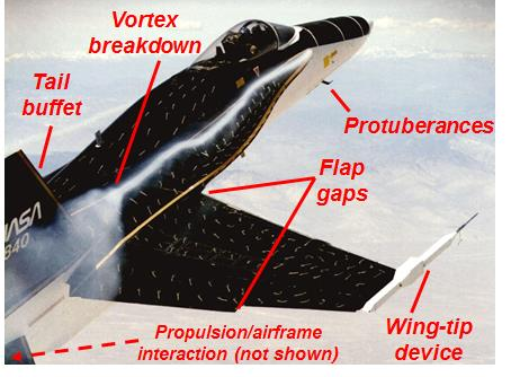
After seven decades of development, one problem still defines the limits of military aircraft CFD: separated flow.
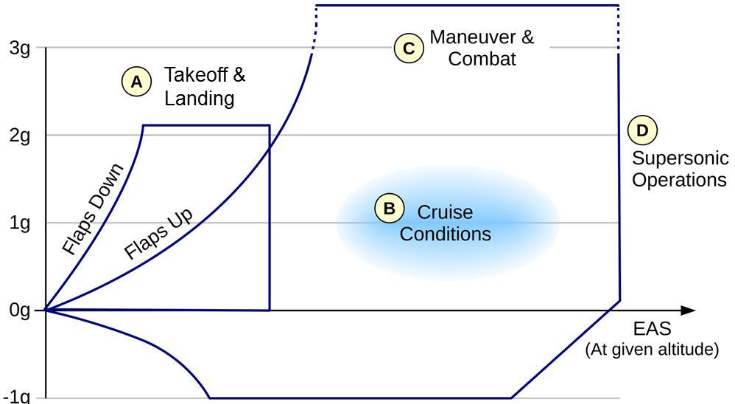
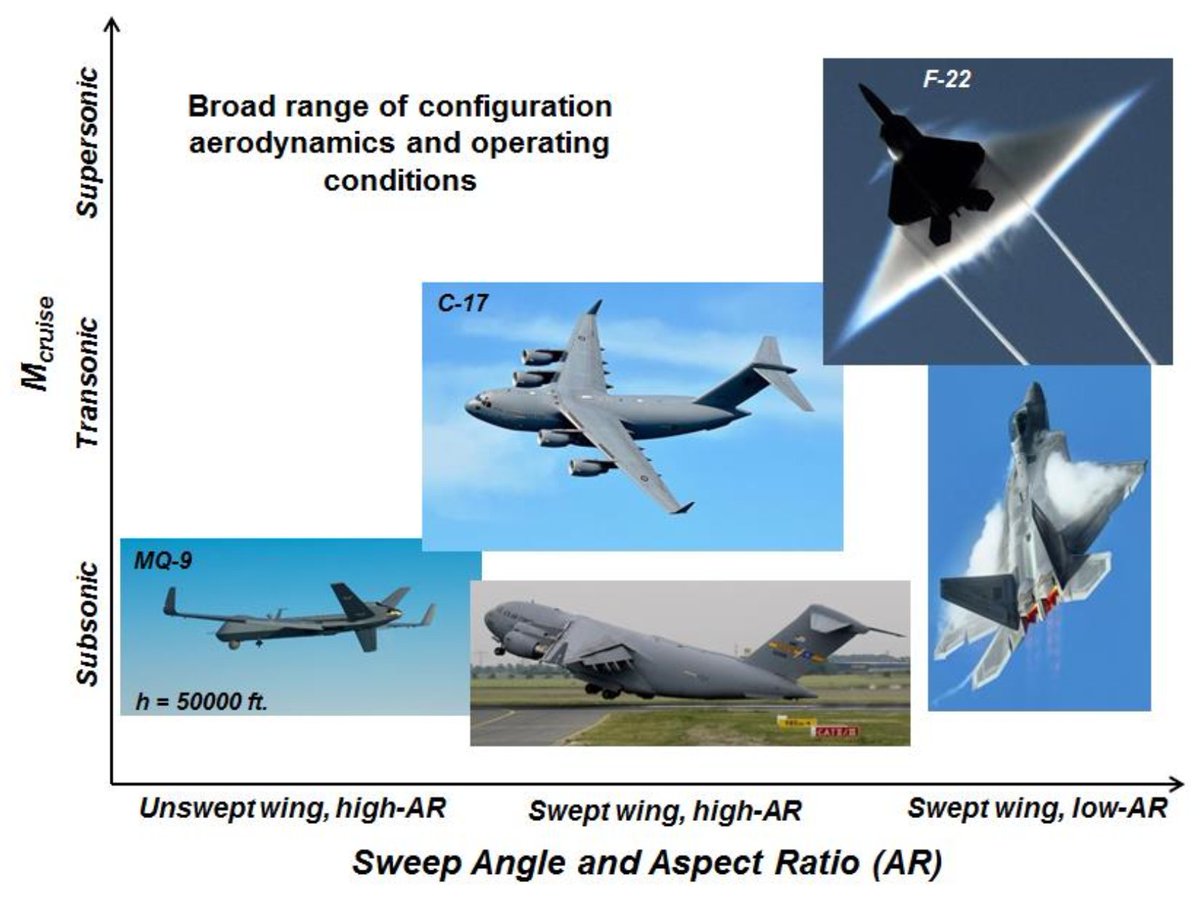
For most cruise conditions, modern CFD performs remarkably well. Predicting lift, pressure distribution and aerodynamic forces for attached flow has become routine.
The difficulty begins when the airflow no longer follows the surface.
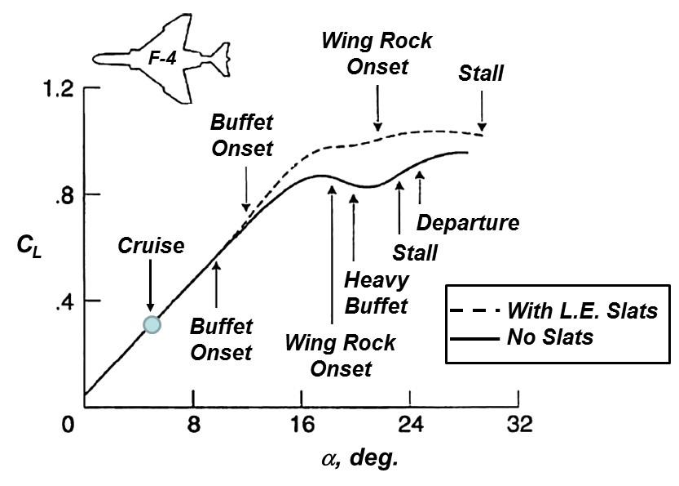
A leading-edge vortex can suddenly burst. A shock wave can force the boundary layer to separate. Sometimes only a few degrees of additional angle of attack are enough to transform an orderly flow into a highly unsteady one, fundamentally changing lift, drag and pitching moment.
This is why the most demanding part of fighter aerodynamics is not high-speed cruise, but the region approaching buffet, stall and post-stall flight. These are precisely the conditions where reliable prediction becomes most difficult.
The review concludes that three decades of RANS-based CFD have delivered major advances for attached-flow simulations. Yet many of the remaining challenges involve unsteady separated flows, where hybrid RANS/LES methods and new validation experiments are still needed before predictive accuracy can be achieved.
The limiting factor is no longer access to computational power alone.
It is our ability to model the physics after the flow loses its stability.
Source: Arthur Rizzi & James M. Luckring, Evolution and Use of CFD for Separated Flow Simulations Relevant to Military Aircraft.
High speed frame by frame video of popping water balloons in 0g. It only takes 1-2 frames for the balloon skin to contract leaving the body of water to residual forces without the effects of gravity. Original movie shot at 420 frames per second and each frame sequentially shown for 1/2 second.
Airbus A320 Reverse Thrust System
The IAE V2500 engine thrust reverser is a hydraulic-powered, cascade-type system that redirects fan bypass airflow forward to decelerate the aircraft upon landing.
When activated, the translating sleeves slide aft, opening the blocker doors that obstruct the fan bypass duct, forcing the airflow through the cascade vanes to generate forward-directed braking.
The system is powered by 3,000 psi hydraulic pressure from the Green or Yellow hydraulic system on the Airbus A320 and is controlled by the Engine Electronic Control (EEC).
The system consists of four hydraulic actuators.
Upper actuators: Non-locking and equipped with LVDTs (Linear Variable Differential Transformers).
Lower actuators: Locking actuators.
The blocker doors are connected to the translating sleeves. As the sleeves move aft, the blocker doors close the fan bypass duct, forcing the airflow to exit through the cascade vanes.
📹avionic_stan
I believe that yesterday was the day the second part of MOSAIC went into effect, creating a new 'Part 22' standard for light aircraft.
And here's one that can take advantage of the new rules - The Jabiru J432 - a twin that's like a 172 with 2 x 80hp engines that qualifies as a 'Light Sport'.
It also has a parachute if engine redundancy doesn't offer enough savings.
I'd imagine they'll pitch this to flight schools for multi-engine training, but with the engines so close together I honestly wonder if Vmc is above or below the stall speed.
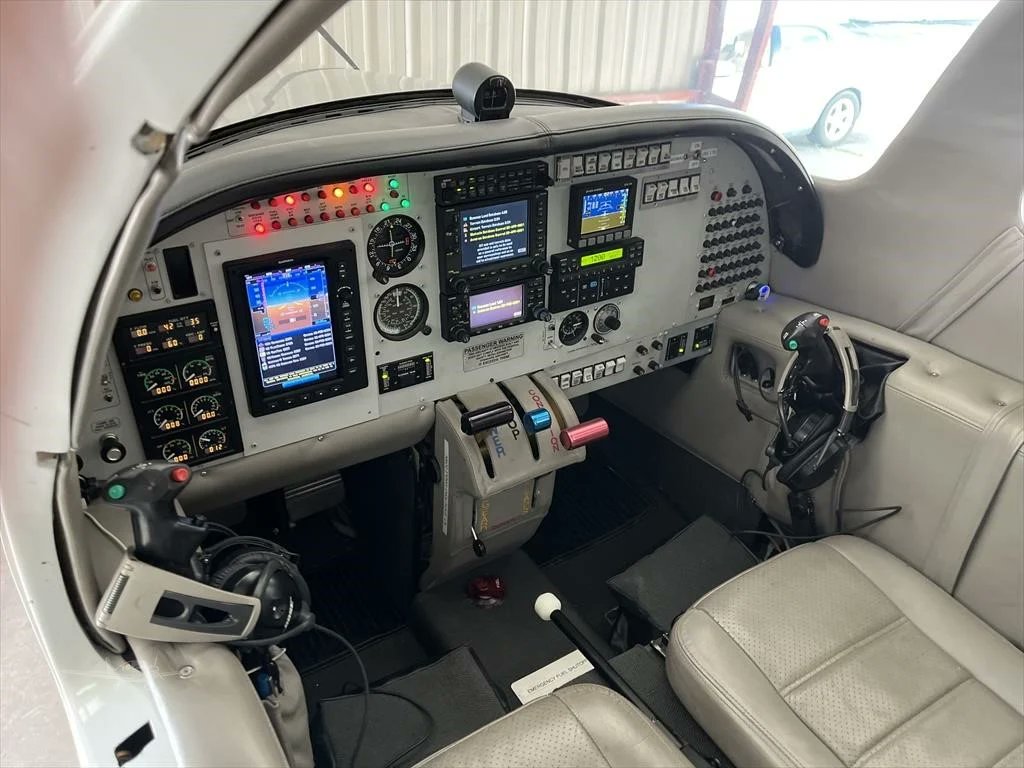
Once again I find myself looking at this local plane for sale and thinking I should buy it. A Lancair IV with Walter turbine.
Since it's experimental, amateur built, I would be legally able to do the annual..... but it still feels like way too much plane for a 350 hour pilot.
https://t.co/5qBjCAvY3y
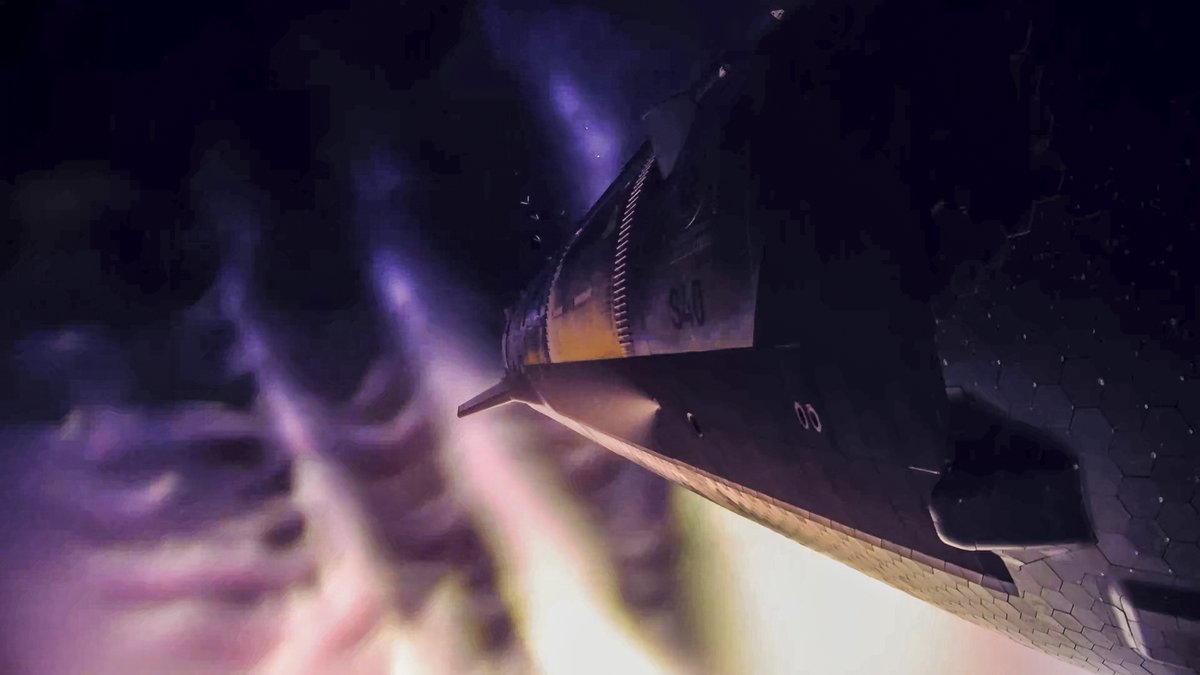
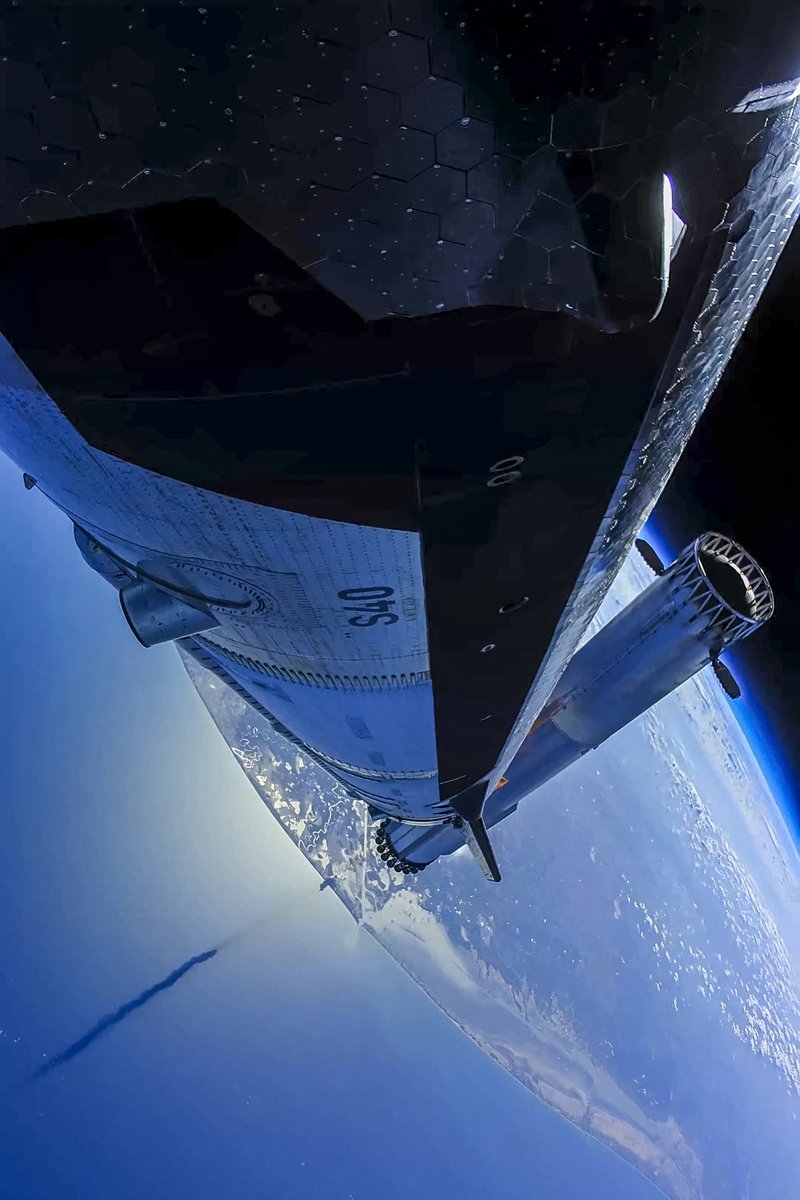
Amazing to see how well this spaceship survived.
First-ever soft splashdown that left Starship intact & floating, allowing close-up inspection of the heat shield tiles after the wicked heat of reentry.
Onwards to catch it next time - congrats to the whole team @SpaceX !
Aviation history takes flight!
Three legendary @DDaySquadron Douglas C-47s flew in formation today over #OSH26, commemorating the 90th anniversary of the Douglas DC-3 family of aircraft.
Ride along with us. 👇
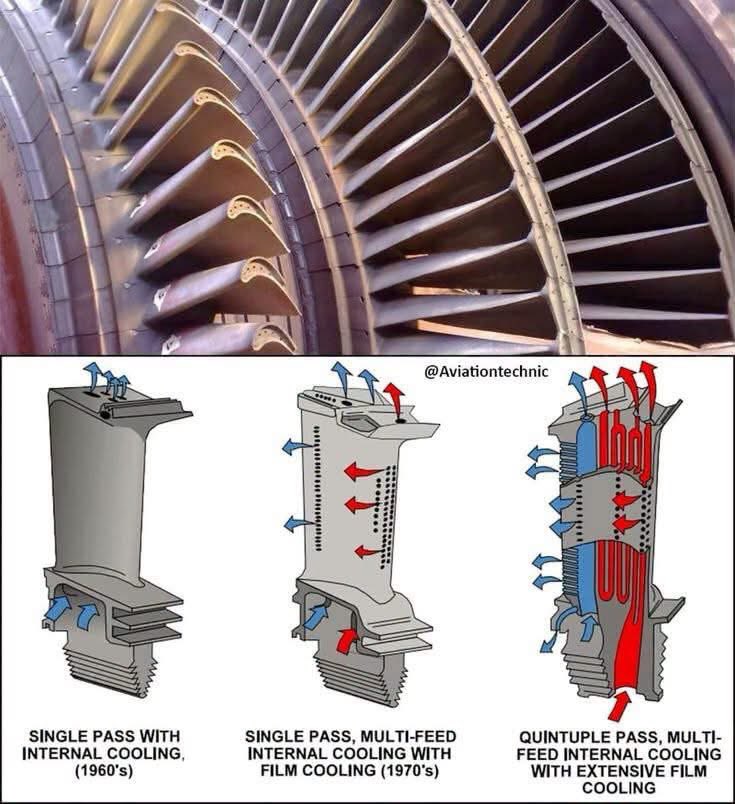
🔥 Hotter Than the Metal Itself… Yet It Doesn’t Melt 🤯✈️
Modern jet engines operate at temperatures higher than the melting point of the turbine blades inside them.
So… why don’t they simply melt? 🤔
The secret isn’t stronger metal alone,it’s brilliant engineering.
🔥 Here’s how turbine blades survive:
• 💨 Internal Cooling Channels – Cool air flows through tiny passages inside the blade, carrying heat away from the core.
• ❄️ Film Cooling – Thousands of microscopic holes release a thin blanket of cooler air, shielding the blade from the blazing hot gases.
• 🔄 Multi-Pass Cooling – Air is routed through several internal paths, extracting as much heat as possible before exiting.
• 🚀 Decades of Innovation – Cooling systems have evolved from basic designs in the 1960s to today’s highly sophisticated multi-feed, multi-pass technology.
Without these cooling techniques, modern jet engines simply couldn’t produce the power and efficiency we rely on today.
Here’s the question:
If the engine is ingesting air at over 1,000 km/h, where do you think the cooling air for the turbine blades actually comes from? 👇✈️
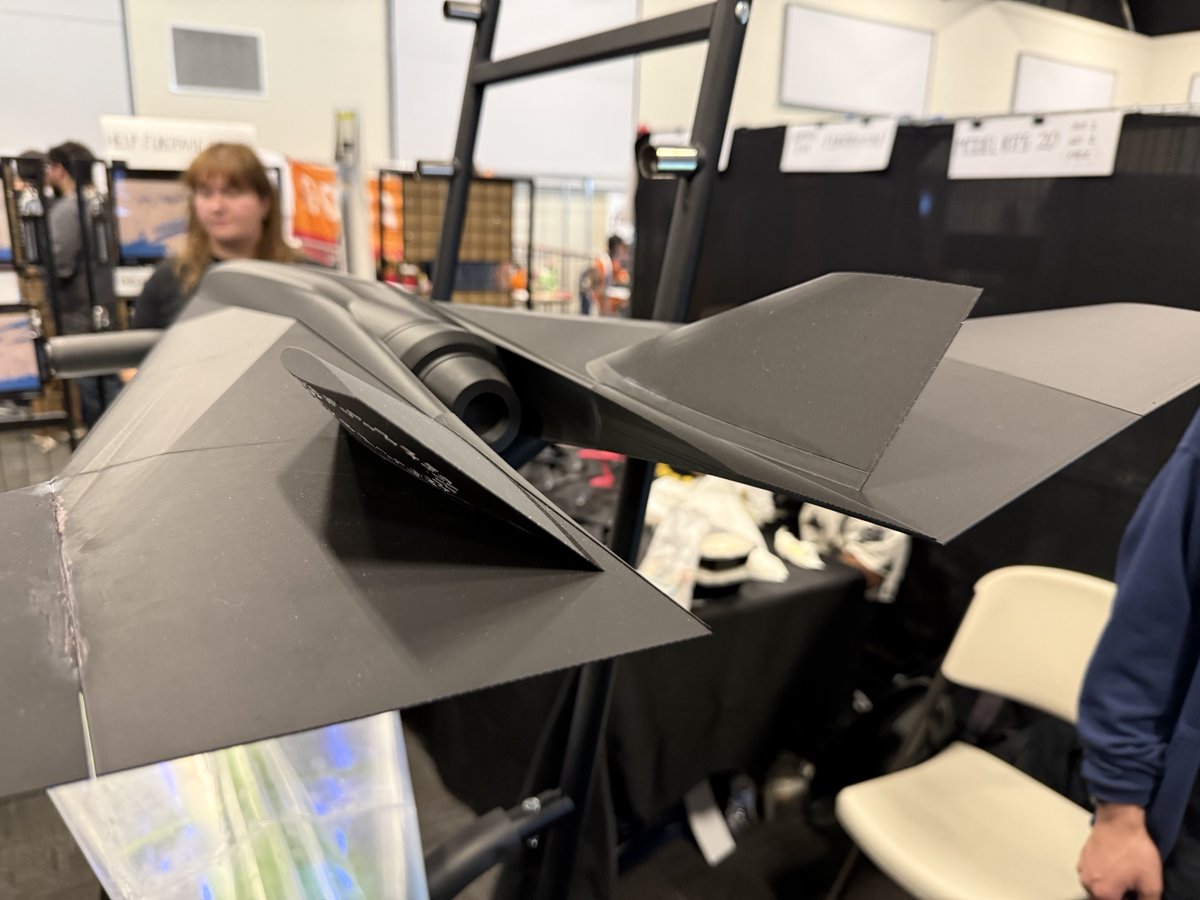
For 50 years, no one in aerospace was willing to build a supersonic jet. They were all waiting for regulations to change and didn't want to take risk.
It turns out that building a supersonic jet is *how* you change the regulations.
Pilots say airplanes fly as good as they look.
The Italians only built one Caproni Stipa.
It was so stable it was hard to turn, and slow - the extra efficiency of the ducted propellor was cancelled out by all the bulbous drag.
My question is - what did the guy in the back seat do?