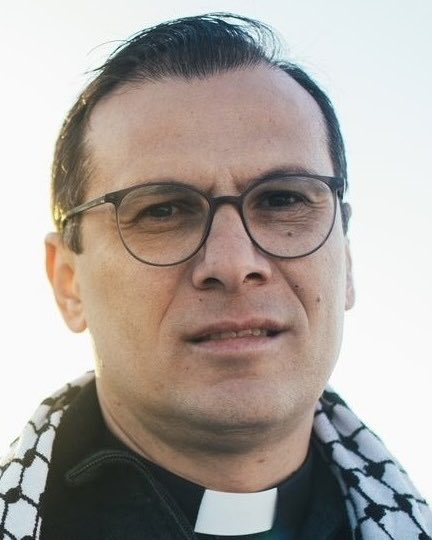
John's baptism was for sinners. People came to the Jordan confessing their sins and went under the water to show they were turning back to God.
Then the one man who had no sins to confess walked into the river and joined the line.
John tried to stop Him.
Why would a sinless man be baptised? The answer is the whole gospel in one scene. 🧵
Contro la barbarie orchestrata
Le scene di guerriglia urbana che in questi giorni hanno devastato Parigi, Lione, Marsiglia, Limoges e - in Italia - Milano, Torino, Bologna e altre città non possono ridursi a semplici disordini di piazza: sono manifestazioni di violenza e di barbarie che trasformano le strade in campi di battaglia. Saccheggi, incendi di edifici pubblici e di negozi, attacchi alle forze dell’ordine, feriti a centinaia, arresti a migliaia: ciò che viene presentato come protesta contro il carovita è in realtà uno degli strumenti principali della pianificazione scientifica con cui l’élite tecnocratica globalista intende introdurre e alimentare focolai di guerra civile nella popolazione.
Il disagio economico è reale, ma viene scientemente esasperato e poi dirottato. Gruppi organizzati — black bloc, nuclei dell’ultra-sinistra, bande di giovani per lo più extra-comunitari che agiscono “senza ordini” secondo il modello francese — trasformano manifestazioni teoricamente pacifiche in caos controllato e fomentato. L’obiettivo è chiaro: creare il pretesto per legittimare nuove forme di repressione, di controllo sociale e di compressione delle libertà residue. In tutto questo non vi è nulla di spontaneo.
Condanno la complicità dei governanti. Essi hanno contribuito a generare le condizioni di impoverimento e di alienazione, e ora si servono del disordine per rafforzare l’apparato repressivo, mentre pronunciano condanne di facciata.
Condanno altresì il tradimento della gerarchia della chiesa conciliare-sinodale, totalmente asservita all’élite tecnocratica globalista. Invece di richiamare le anime all’ordine, alla giustizia e alla Verità perenne, essa tace, o peggio acconsente, preferendo il dialogo con i poteri del mondo alla fedeltà al Vangelo e al Magistero di sempre. Quando l’autorità — civile ed ecclesiastica — cessa di trattenere l’errore e ne diventa veicolo, si consuma quella frattura che San Paolo descrive come mysterium iniquitatis (2 Ts 2, 7-8).
La divisione è opera del divisore, Satana. Chi alimenta deliberatamente il caos per poi imporvi il proprio ordine non agisce per il bene delle anime, ma per il consolidamento di un potere che ha ripudiato Cristo Re. Finché questa pianificazione non sarà smascherata, ogni pretesto di “rinnovamento” o di “giustizia sociale” resterà al servizio dell’iniquità.
Raccogliamoci intorno alla Verità immutabile e alla Tradizione apostolica. Non ratifichiamo l’errore, non consentiamo alla menzogna.
“State saldi e mantenete le tradizioni che avete appreso” (2 Ts 2, 15).
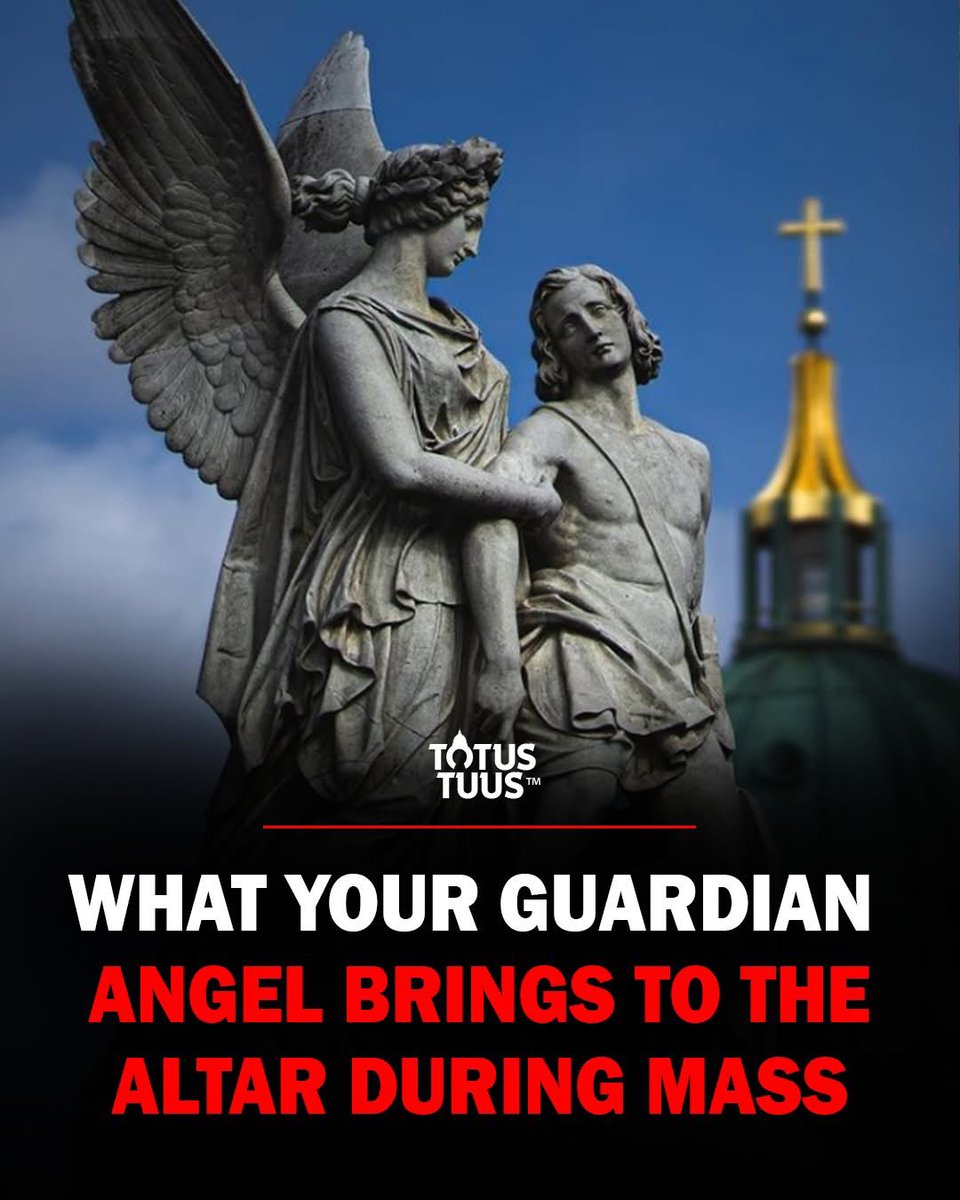
During the Offertory of the Mass, the bread and wine are not the only gifts being brought forward. According to the private revelation of the Bolivian mystic Catalina Rivas (whose writings on the Mass received an imprimatur from her bishop), a hidden procession unfolds at that moment.
As the gifts are prepared, guardian angels rise from beside each person present. They move down the aisle toward the altar, some carrying golden vessels filled with radiant light. Our Lady explained that these are the angels of those who consciously offer their joys, sorrows, hopes, sufferings, and intentions.
Others arrive empty-handed—the angels of those present in body but offering nothing. Still others come last, sad and downcast: the angels of those who attend out of mere obligation, with no desire to participate.
Mary told Catalina that this is the moment when our guardian angel carries our offerings and petitions before the altar of the Lord, and that we should be generous because the Mass has infinite value.
This vision echoes older mystical insights. St. Gertrude the Great saw the Heart of Jesus as a golden altar upon which guardian angels placed the prayers and good works of those in their care, while saints offered their merits.
Padre Pio, who often lingered long at the Offertory with eyes fixed on the Crucifix, taught that this is the moment when the soul is separated from all that is worldly, and he urged his spiritual children to send their guardian angel to the altar with their intentions.
The Offertory is not a pause between the Liturgy of the Word and the Consecration. It is the Church’s preparation of the sacrifice—bread, wine, and ourselves—united to Christ’s own offering.
What we place in our angel’s hands in those few minutes is carried into the one Sacrifice of Calvary made present on the altar.
Saint Luke the Evangelist, companion of Saint Paul, and the traditional author of the Gospel of Luke and the Acts of the Apostles. He is believed to have been a Gentile from Antioch in Syria, born in the early first century. Paul refers to him as the beloved physician in Colossians, and early writers such as Eusebius and Jerome identify him as a doctor. Passages in Acts written in the first person plural indicate that he traveled with Paul on parts of his missionary journeys, including from Troas into Macedonia and later to Jerusalem and Rome, remaining with him during his imprisonments. He is the only companion mentioned as still with Paul near the end of his life.
Luke’s Gospel emphasizes mercy, the poor, women, and Gentiles, and includes unique material such as the Annunciation, the Visitation, the Nativity, the Parable of the Good Samaritan, and the Prodigal Son. Together with Acts, his writings form the largest portion of the New Testament by any single author. Tradition holds that he gathered information from eyewitnesses, including possibly Mary, and that he wrote for a Gentile audience. Some early accounts say he was one of the seventy disciples or the companion of Cleopas on the road to Emmaus.
After Paul’s martyrdom, tradition states that Luke continued to preach, particularly in Greece, and died at about the age of eighty-four in Thebes in Boeotia. Some sources say he died peacefully; others claim he was martyred by hanging or crucifixion. His relics were later transferred to Constantinople and portions to Padua. He is the patron of physicians, artists, and painters. A later tradition credits him with painting the first icons of the Virgin Mary. His feast is celebrated on 18 October, and his symbol is a winged ox.
Experienced fishermen were bailing water, convinced they were about to drown.
Jesus was asleep. On a cushion.
They woke Him with an accusation. He stood up and spoke two words to the sea, and it went flat.
And here's the strangest part of the story: the disciples were more afraid after the storm stopped than while it was raging.
Here's why.
A thread 🧵
Have you ever thought about praying the Rosary specifically for the purification of your memory?
In Catholic thought, the memory is one of the faculties of the soul, alongside the intellect and the will. To purify the memory is to surrender painful recollections, regrets, intrusive thoughts, and unhealthy attachments to Christ, asking Him to free us from their power.
At the beginning of your Rosary, you can simply pray:
“Lord, I offer this Rosary for the purification of my memory.
Take every painful recollection, every regret, and every unholy image, and wash them in Your grace.”
You can also bring this intention into each mystery:
• Agony in the Garden: memories of anxiety and fear
• Scourging at the Pillar: memories of suffering and shame
• Crowning with Thorns: impure or troubling thoughts
• Resurrection: renewal, hope, and new life
Or add a simple clause to the Hail Mary:“…and blessed is the fruit of thy womb, Jesus, who purifies my memory.”
Mary, Our Lady of Sorrows, pray for us.
Carl Jung (founder of analytical psychology) on Catholics and therapy: In 40 years of practice, he treated only about 5–6 practicing Catholics. He said the Church’s confession and sacraments already did the psychological work. When Catholics came to him, he often sent them back to their confessor: “Confess it before God—you’re better off in the Church than in analysis.” One case even earned him a private papal blessing for teaching Catholics how to confess properly.
For 30 years, families were told the same thing about Alzheimer's:
"There's nothing you can do."
The research says otherwise.
The GreenMedInfo Alzheimer's database now holds 3,872 studies. I distilled them into the 10 most powerful evidence-based approaches. 🧵👇
The Blessed Virgin Mary was Immaculately Conceived and the only human to be born free from Original Sin. She remained a virgin her entire life. She was 100% sinless during her life. She is the new ark of the covenant. She was taken up body and soul into Heaven. She is the Queen of Heaven & Earth with the highest place in Heaven above all the Angels & Saints. She is our intercessor, our advocate in Heaven to the King. Ave María 🌹
In an age dominated by technology, in which efficiency and profit often take precedence, it is so important that we continue to cultivate a spirit of contemplation and allow time and space for beauty. Such an attitude will greatly help humanity, especially young people, to discover the ability of art to uplift and reveal the depths of the human spirit and our openness to the divine. Contemplation presents a marvelous opportunity to encounter the God who is Beauty.
Jesus Personally Taught St. Faustina How To Survive Spiritual Attacks…
Here are 10 Instructions That Could Change Everything.
📅 October 5: Feast of St. Faustina Kowalska
1. Trust Me completely
→ Distrust opens the soul to fear. Trust disarms it.
Jesus repeatedly says that graces flow according to trust (Diary 1578) and that the soul that trusts Him is never lost (Diary 723).
2. Run to My Heart immediately in temptation
→ Do not dialogue with temptation. Refuge is victory.
“When you are about to fall, run at once to My Heart” (Diary 1485).
He warns not to engage temptation but to flee to Him immediately.
3. Reveal temptations in confession
→ Darkness loses power when brought into the light.
“The priest is My representative… reveal your soul to him” (Diary 1725).
Confession breaks the power of hidden struggles.
4. Do not be guided by feelings
→ Feelings change. The will chooses love.
“Do not be guided by feeling, because it is not always in your power” (Diary 1760).
Faithfulness is measured by the will, not emotion.
5. Practice humility and patience with yourself
→ Impatience weakens the soul. Humility strengthens it.
“My daughter, know that you are what you are before Me… nothing more” (Diary 56).
Jesus calls the soul to patience in weakness and growth (Diary 1488).
6. Accept suffering with love
→ United to Christ, suffering becomes redemptive.
“You will save more souls through prayer and suffering than through activity” (Diary 1767).
Suffering embraced in union with Him has real spiritual power.
7. Remain obedient to legitimate spiritual authority
→ Obedience protects against deception.
“My will is that you should obey your confessor in everything” (Diary 639).
Obedience is tied to safety in the spiritual life.
8. Avoid curiosity about the future
→ Trust God’s timing. Curiosity breeds anxiety.
“Do not be curious about the future… I am your security” (Diary 293).
He redirects the soul from curiosity to trust.
9. Reject discouragement immediately
→ Discouragement never comes from God.
“Why are you afraid…? Do you not know that I am always with you?” (Diary 613).
Jesus corrects discouragement with His presence and truth.
10. Fight with courage, knowing I am with you
→ Courage rooted in Christ causes fear to retreat
“Do not fear… I am with you always” (Diary 586).
“Fight like a knight… do not be discouraged” (Diary 450).
💬 Is your spiritual life built on discipline… or just motivation when you feel like it?
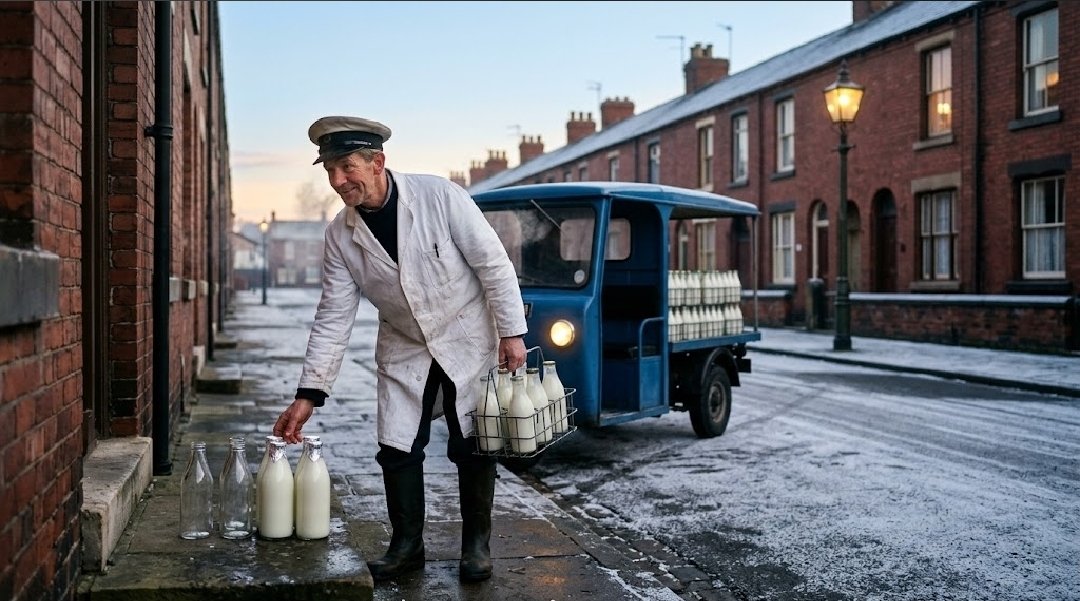
In 1967 Britain had more electric vehicles on its roads than every other country on earth put together, and they were all delivering milk.
There were tens of thousands of them. The milk float: open sided, battery under the floor, top speed of about 15 miles an hour, and a whine you could pick out in your sleep. It was charged overnight at the depot and was back there by lunchtime.
It carried glass bottles. Each one was collected from your step the next morning, washed and refilled. A bottle went round like that 20 or 30 times before it broke. The foil cap went for scrap. There was no other packaging.
The milk had come from farms within a few miles, through a local dairy, and was on the step before 7.
So here is what the country had. A zero-emission delivery fleet. Reusable containers with a return rate any modern scheme would kill for. No plastic. A supply chain you could cycle the length of. A man who noticed if an old lady's bottles were piling up, and knocked.
It was dismantled in about 15 years, because a supermarket could sell milk a few pence cheaper in a plastic jug as a way of getting you through the door.
Every piece of that system is now the subject of a government target for 2040.
It was running in 1967, silently, in the dark, and nobody thought it was worth a mention.
Name a chronic disease the pharmaceutical industry has cured in your lifetime.
Diabetes: managed. 100 years of insulin, and the count has gone up every year.
Blood pressure: managed. For life.
Cholesterol: managed. For life, from 40.
Depression: managed. A third of the people on it have been on it for a decade.
Reflux: managed. The leaflet says 8 weeks. The average is years.
Asthma, arthritis, eczema, migraine, obesity: managed, managed, managed, managed, injected.
Then in 2014 something slipped through. A drug that actually cured hepatitis C, in 12 weeks, for good.
In 2018 Goldman Sachs wrote a note to its clients about it. The title was a question: is curing patients a sustainable business model?
Their answer was no. The cure had shrunk the market. The hepatitis C business fell from $12 billion a year to under $4 billion, because the patients kept getting better and not coming back.
The bank advised investors to look for conditions that are chronic, and treatments that are taken for life.
That is not a conspiracy theory. It is an investment note, and it says the quiet part in a font.
A cure is a one-off sale. A patient is an annuity, and the whole industry is priced on the annuity.
Nobody is going to cure the thing you have, because the thing you have is their best product.
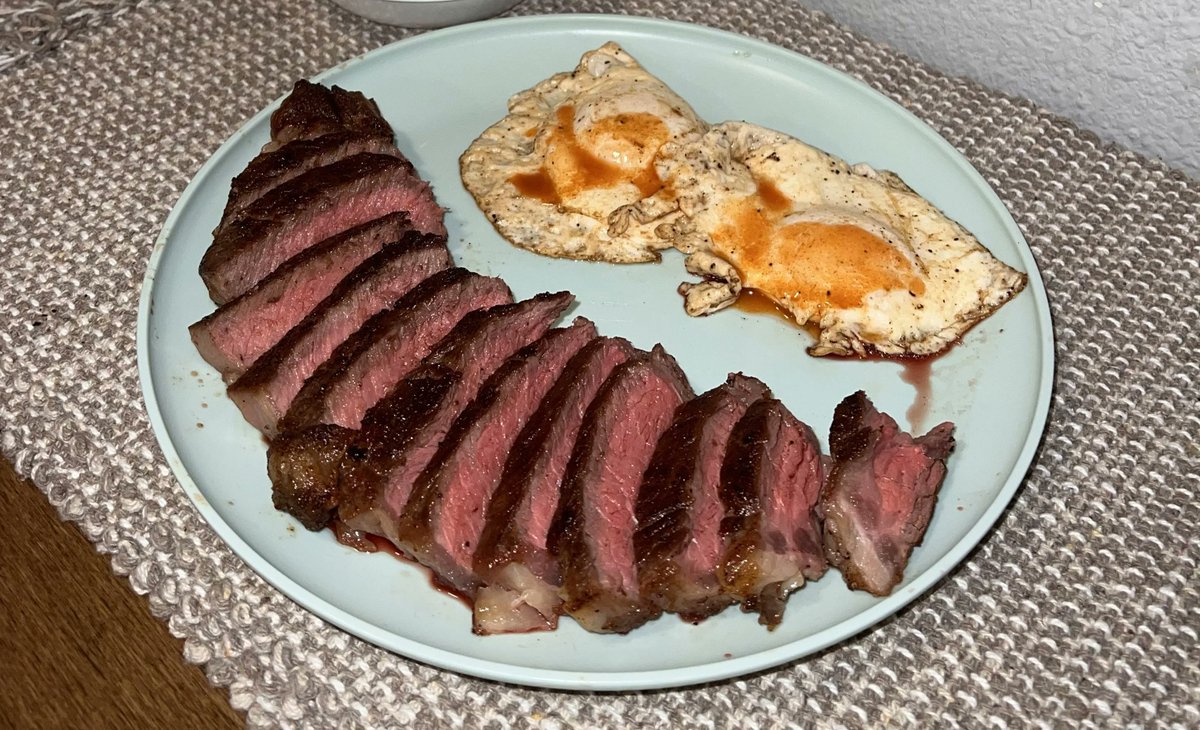
But a plate can. That is why it is extreme.
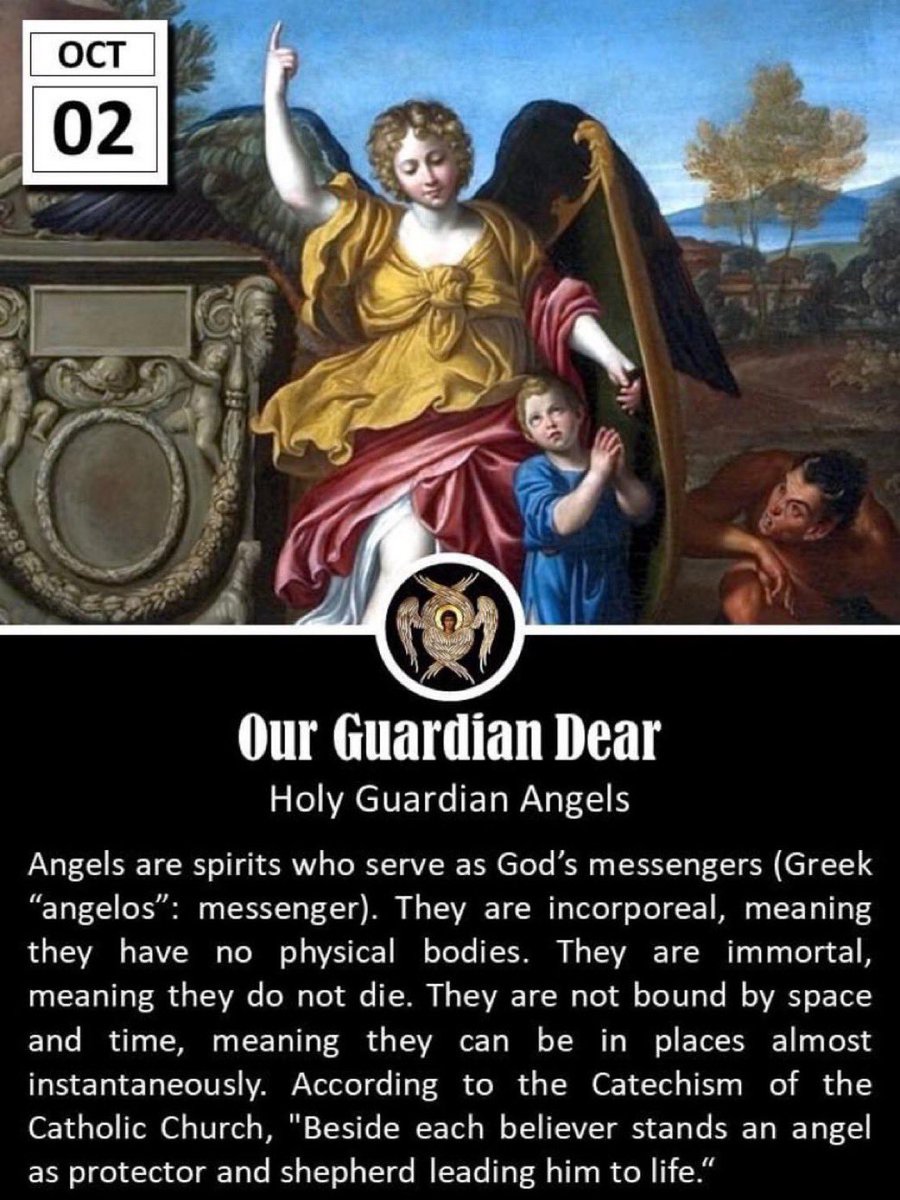
Today the Church celebrates the Memorial of the Holy Guardian Angels. Our Catholic Faith teaches that each person on earth has a guardian angel who watches over him and helps him to attain his salvation. This teaching is rooted in Sacred Scripture, notably in Matthew 18:10, where Jesus speaks of children, saying, "See that you do not despise one of these little ones. For I tell you that their angels in heaven always see the face of my Father in heaven."
Guardian angels serve multiple roles.
Protectors: They guard individuals against spiritual harm and physical dangers. They are often depicted in art as shielding children from harm or guiding lost travelers.
Guides: They help in navigating moral decisions, encouraging the person towards good actions and away from sin. They inspire thoughts, promptings, or even dreams that guide one's path in accordance with God's will.
Intercessors: Guardian angels are believed to offer our prayers to God, acting as a conduit for divine communication. They present our petitions to God and intercede on our behalf.
Comforters: In moments of despair or loneliness, Catholics might find solace in the presence of their guardian angel, offering comfort that one is never truly alone.
Many Catholics learn from a young age to pray to their guardian angel, with one of the most common and beautiful prayers being:
"Angel of God, my guardian dear,
To whom God's love commits me here,
Ever this day be at my side,
To light and guard, to rule and guide. Amen."
The existence of guardian angels also reflects deeper theological implications about the nature of God's care for humanity. It underscores a belief in a personal God who not only oversees the universe but is intimately involved in the minutiae of each life, providing individualized divine attention.
While some might view guardian angels as a quaint or antiquated belief, for many Catholics, they represent a living tradition that connects them to the Triune God in a very personal way. In contemporary times, where individual isolation can be profound, the idea of a guardian angel reassures believers of an unseen companionship and protection.
In essence, the Catholic belief in guardian angels encapsulates a hopeful narrative: that each person, no matter how small or insignificant they might feel, has a heavenly advocate, a silent companion on their spiritual journey, reflecting the boundless love and meticulous care of a loving, caring Heavenly Father.
RFK Jr. exposes why Gluten Allergies skyrocketed...
“2006 marks the date when suddenly these gluten allergies began exploding... celiac disease & wheat problems... you can draw a red line: 2006—the year they began spraying GLYPHOSATE on wheat as a DESICCANT.”
Dr. James P. Miller is not describing a few bad apples. He is describing the operating system.
Hospitals inflated COVID numbers. They pushed remdesivir they already knew was dangerous. They denied care to the unvaccinated. Then they tried to destroy the doctors who would not play along.
Read that last sentence again.
“The head of infectious disease medicine at my hospital privately told me that he was working with the state government to restrict the civil rights of unvaccinated people.”
That is not a protocol dispute. That is a physician admitting he was coordinating with government to strip patients of rights based on vaccination status. In an American hospital.
Let me speak as a doctor who has actually stood in those rooms.
When administrators decide a patient’s civil rights are negotiable, medicine has already ended. What remains is ideology in a white coat: count the cases the way the money wants them counted, give the drug the hospital is paid to give, isolate the unvaccinated, and punish any physician who treats the person in the bed instead of the spreadsheet.
We said this in 2020. We were called dangerous for saying it. Early treatment existed. Informed consent existed. The doctor-patient relationship existed. They replaced all three with a federal playbook and a smear campaign against anyone who remembered their oath.
This is not an isolated whistleblower. It is a pattern. History is catching up.
Hospitals exist to treat patients. The moment they partner with the state to restrict civil rights, they have ceased to be hospitals.
Never again.
The most successful drug advert in history said Lipitor cuts the risk of heart attack by 36%, and the truth was in the footnote.
What the headline said:
- 36% fewer heart attacks
What the asterisk said:
- On the sugar pill, 3 people in 100 had a heart attack
- On Lipitor, 2 people in 100 had a heart attack
Both statements describe the same trial. 3 down to 2 is a drop of about a third. It is also a difference of 1 person.
What that means for the 100:
- 1 avoided a heart attack
- 2 had one anyway
- 97 were never going to have one
- 100 took the tablet every day for over three years
- 100 were exposed to the side effects
Nobody sat in a surgery was ever told "this will help 1 in 100 of you." They were told 36%, by a doctor who had been told 36%, by a rep who was paid on it.
Lipitor went on to sell well over $100 billion.
That asterisk is the most expensive piece of punctuation ever printed.