@Brady_H Is creatine not more effective for FT fibres. Maybe you just don’t see the benefits because of your fibre type? I get large benefits …especially strength endurance
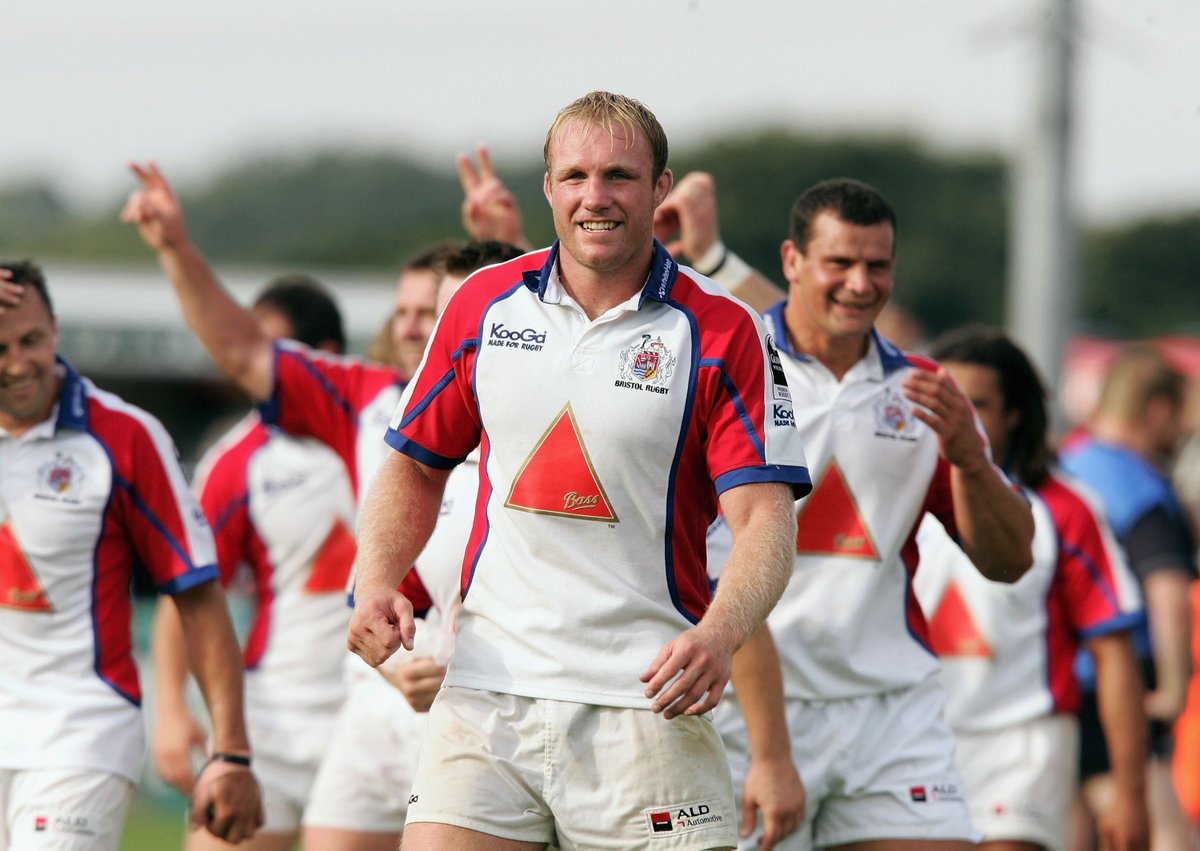
"For us, he was our rock, our guide and our shield. We miss him more than words can say." ❤️
An inspirational captain. A devoted family man. A much-loved friend.
In a moving tribute, Matt Salter's wife Charlie, former head coach Richard Hill and former teammates share their memories of a remarkable man, and how his legacy will live on through the Matt Salter Foundation.
Read an extract from this heartfelt feature now, with the full story appearing in Friday's special edition Legends Night matchday programme.
📖 Available to buy at Ashton Gate on Friday night for £5.
https://t.co/Hif0z61rAG
June 6, 1944. An American paratrooper jumps into Normandy in the dark and lands on the roof of a church.
By the end of the war he had been declared dead, held a funeral he didn't attend, escaped the Nazis, and fought his way toward Berlin in a Soviet tank unit.
His name was Joseph Beyrle. He's believed to be the only American soldier to serve in both the US Army and the Red Army during World War Two.
Beyrle was from Muskegon, Michigan. He joined the 101st Airborne, the Screaming Eagles. His buddies called him Jumpin' Joe.
On D-Day night his plane was hit by flak and he jumped early. He came down on a church roof, slid off, and lost his unit in the chaos. For a few days he fought on his own, blowing up a power station and cutting German communications.
Then he was captured.
Here's where it gets strange. A German soldier ended up wearing Beyrle's uniform and dog tags. That German was killed. When the body was found, the Americans identified it as Joseph Beyrle.
The army told his parents their son was dead. His hometown held a funeral mass for him. His obituary ran in the local paper.
Meanwhile, he was very much alive, being moved from one German prison camp to another.
He escaped more than once. One time he and two other prisoners jumped off a train heading east. They thought they were heading for Russia and freedom. They got lost and ended up in Berlin, where they were caught by the Gestapo, beaten, and tortured.
In January 1945, from a camp in eastern Germany, he finally made a clean escape. He went east, toward the gunfire. Toward the Soviets.
When he found a Soviet tank unit, he walked out with his hands up, holding a pack of Lucky Strike cigarettes, and shouted the only Russian he knew. American comrade.
It worked.
He asked to join them. And they said yes.
For about a month, an American paratrooper rode with Soviet tank crews as they pushed toward Germany. He used his demolition training. He fought. He was reportedly welcomed by a Soviet officer who was one of the rare women commanding a tank battalion.
Then a German dive bomber attacked. Beyrle was badly wounded.
He was evacuated to a Soviet hospital. Soviet Marshal Georgy Zhukov reportedly visited, heard his story, and gave him papers to get to the American embassy in Moscow.
When he showed up, the embassy didn't believe him. As far as the US was concerned, Joseph Beyrle was dead. They held him under guard until his fingerprints proved who he was.
He made it home to Michigan in April 1945.
In 1946 he got married. In the same church where they'd held his funeral.
Decades later, in 1994, he was honored at the White House by President Bill Clinton and Russian President Boris Yeltsin for serving both countries.
And the last twist. His son, Joseph Beyrle II, grew up to become the United States Ambassador to Russia.
Speak to any hard-bitten older farmer around me in Somerset, or anywhere in Britain, and they will tell you that they grew up among fields teeming with corncrakes, grass snakes, hares, hedges full of yellowhammers and other songbirds, car windscreens splattered with bugs after the shortest summer drive, nearly all now gone. 98% of wildflowers, gone. Huge shoals of herring, cod, and other fish in the sea, a distant memory. Across almost every indicator, the losses during just one human lifetime have been catastrophic. The data is all there, as are the anecdotes. Britain is among the most nature-depleted countries on earth.
Two episodes of “The Ancients” podcast with Prof Chris Stringer. “Origins of Homo Sapiens” and “Rise of Humans”. Really worth a listen if the below interests you. (He’s a regularly a guest and could make any subject interesting).
Около 930 тысяч лет назад наши предки почти исчезли. Не в переносном смысле — буквально.
Генетический анализ современных геномов показывает, что численность размножающихся особей упала до примерно 1280 человек и держалась на этом уровне около 117 тысяч лет. Почти 99% предковой популяции исчезло.
Это вывод исследования Ху и коллег, опубликованного в Science в 2023 году. Они применили новый метод FitCoal к геномам 3154 современных людей и реконструировали историю численности популяции. До кризиса, по их оценкам, было около 98–100 тысяч размножающихся особей. Потом — обвал. Общая численность, включая детей и стариков, была выше, но и она была критически мала. Это меньше, чем население небольшого посёлка. Одна эпидемия, одна засуха, один неудачный сезон охоты — и линия могла оборваться.
Период совпадает с серьёзными климатическими изменениями среднего плейстоцена: похолодание, удлинение ледниковых циклов, вероятно сильные засухи в Африке и Евразии. В ископаемой летописи как раз есть заметный пробел между примерно 950 и 650 тысячами лет назад — слишком мало находок. Исследователи предполагают, что причина простая: людей было так мало, что они почти не оставляли следов.
Интересный момент: этот узкий горлышко, похоже, совпал с важным эволюционным событием. Примерно в это время или чуть позже появляется популяция, которая позже дала начало общему предку неандертальцев, денисовцев и нас. Возможно, именно в условиях крайней малочисленности и жёсткого отбора произошли ключевые генетические изменения, которые в итоге определили дальнейшую историю рода Homo.
Важно: это модельная реконструкция по современной ДНК, а не прямое наблюдение. Часть специалистов относится к результатам осторожно — метод новый, а археологические данные не всегда идеально стыкуются. Но если оценка близка к реальности, то мы существуем благодаря очень узкому коридору. 1280 размножающихся особей — это не «человечество». Это маленькая группа, которая каким-то образом пережила десятки тысяч лет экстремальных условий, не вымерла и в итоге дала начало всем, кто живёт сегодня.
Восемь миллиардов человек — потомки тех, кто тогда не исчез.
Steve Ford scored a club record 198 tries from 234 appearances for Cardiff, but his Arms Park career almost ended after two matches at the age of 21.
Here’s my interview with him as he tells his remarkable tale.
https://t.co/cqw7GlV2iH
Saddened to hear about the death of Darryl Jones. Had so much influence on my rugby and life. I loved being coached by him as a teenager. Condolences and love to his family 💔
@sprintcoachSWE Impossible in team sports. Best you can do is start by training everyone as “average” and make adjustments to those who don’t respond. Outside that there is the fact that team training makes up 70% of what you do for 2/3 of the year.
@JimGalanes If you are dealing with 50 team sport athletes and trying to have some idea of internal load of a session, not sure how else it can be done