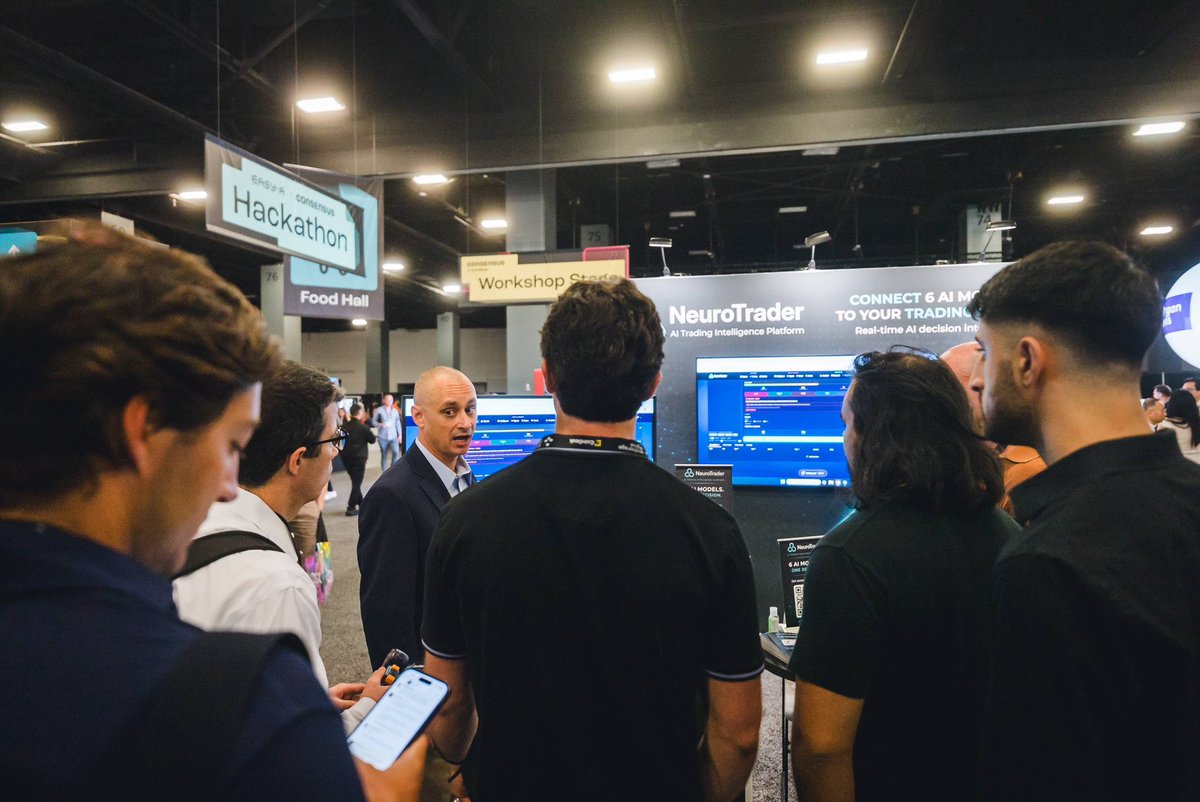
I’m Mark Mayhook, founder of @neurotraderai_
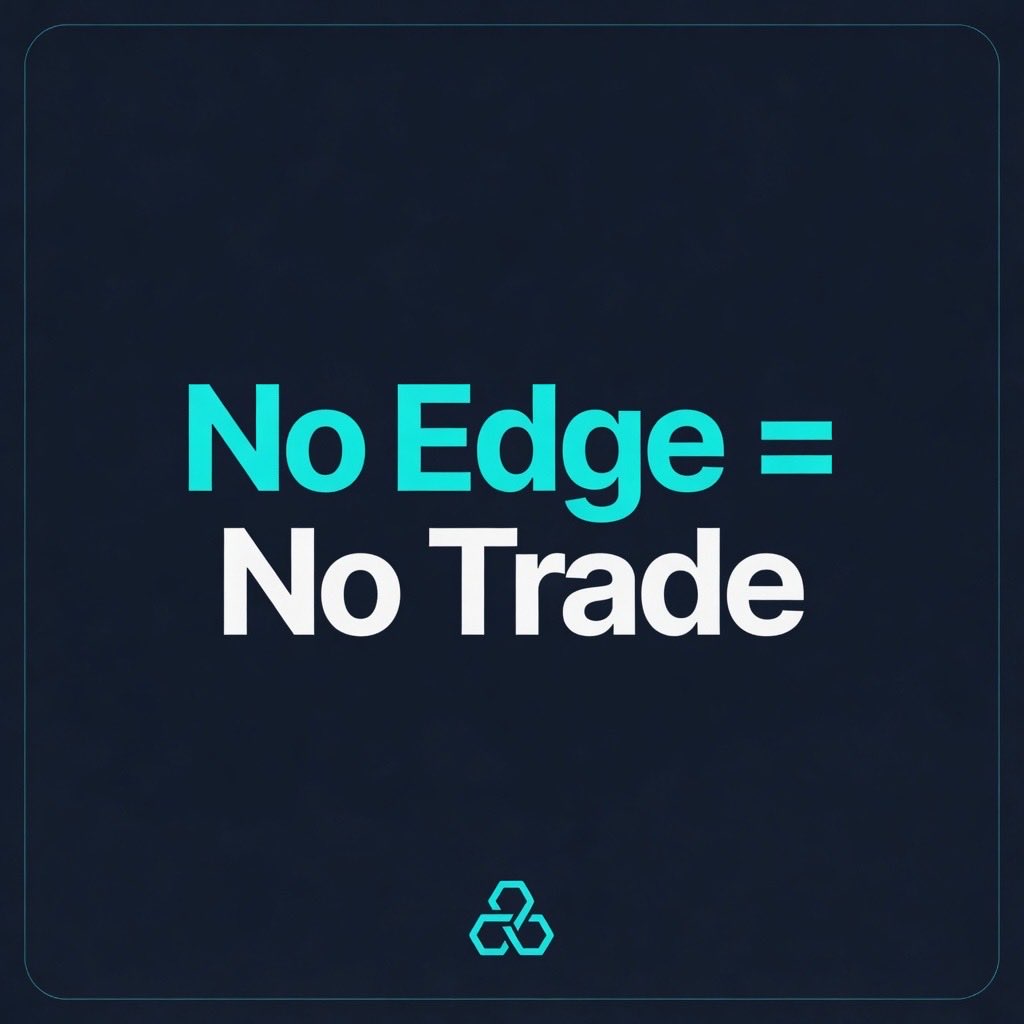
After 20+ years in capital markets, I came to a simple conclusion: most losses don’t come from bad ideas, but from acting when there is no real edge.
You can reduce risk by shrinking your stop… or by never entering a bad trade in the first place.
Most risk doesn’t come from bad luck, it comes from bad signals.
NeuroTrader helps you avoid:
❌ Unqualified setups
❌ Premature entries
❌ Noise-driven decisions
And helps you focus on:
✔ True alignment
✔ Structural clarity
✔ High-probability conditions
Less bad risk. More high-quality decisions.
⚡ Faster execution on a bad decision is just a faster loss.
NeuroTrader slows the process down on purpose, because the traders who last aren’t the ones who move quickest. They’re the ones who filter hardest.
Early Access to NeuroTrader is LIVE 🔥
A limited founder release for those who move early, before this goes mainstream.
Only 3,000 founder seats. Early access + lifetime founder benefits. Invites sent in batches via email or Telegram.
JOIN EARLY ACCESS👇
https://t.co/MSQ6Lbg7EX
Most AI trading fails for one reason:
It learns from the past and assumes the future will behave the same way.
Markets don't work like that. Backtests can look flawless right up until reality arrives.
NeuroTrader uses reinforcement learning to adapt continuously to changing market conditions, responding to what's happening now, not what happened six months ago.
Top 5 lessons of 2026:
Narrow markets punished impatience.
Overtrading did more damage than bad calls.
Cash was a real position.
Risk management beat direction.
The best systems won by filtering harder, not faster.
Anything else? 🤔
There’s a point in every trader’s career where they confuse pattern recognition with intuition.
It’s dangerous, as it’s based on a sample size you can’t see clearly, compressed into something that feels obvious.
I stopped trusting that. I started building systems to check it.
Those questions don’t guarantee a good outcome. They raise the floor on how bad the outcome can be.
Decision Note: Structure doesn’t make you lucky. It makes you consistent.
Decision intelligence isn’t about predicting better. It’s about making sure the conditions for a good decision are actually in place before anything happens.
That means asking: is the confidence real or constructed? Is the timing right or just convenient?
Most traders don’t have a signal problem
They have a filter problem. Signals are everywhere. Crypto Twitter alone generates thousands a day.
The ones who perform consistently aren’t the ones with better signals.
They’re the ones who know which signals to ignore.
People expect an AI trading system to find more opportunities
@neurotraderai_ does the opposite. It’s designed to protect against bad participation.
On any given day, the most common output is to wait. That’s what filtering actually looks like when it’s working.
After enough time in markets, you stop trying to be interesting 👇
🔺 You stop looking for clever angles.
🔺 You get interested in what repeats, what holds up across conditions.
🔺 The traders who burned out were usually the ones who never got past wanting to be right.
The traders who burned out were usually the ones who never got past wanting to be right. The ones who lasted got comfortable with uncertainty.
Decision Note: Durability matters more than brilliance.
After enough time in markets, you stop trying to be interesting ⏰
You stop looking for clever angles. You get interested in what repeats, what holds up across conditions, and what falls apart under pressure.
Every system I’ve seen is built to find trades. Mine is built to disqualify them.
The question is what would have to be true for this to be worth taking?
That eliminates most setups immediately. What’s left is smaller, cleaner, and has a better chance of actually working.
The market generates a lot of content that looks like information. Price action with no volume behind it
Narratives that move fast but don’t change the underlying position.
Decision Note: If the reason changes hourly, it was never a reason.
A signal tells you something is happening
Acting on a signal without confirmation is just gambling with extra steps. NeuroTrader is built around that: whether enough of them agree to justify participation.
Decision Note: A signal is an invitation to look, not a reason to move.
When I built structured decision systems, I stopped constant price checks, thesis rereads, and self-talk. It wasn’t analysis, just noise that felt productive. The system showed I was managing anxiety, not decisions.
Decision Note: A good process reduces the need for reassurance.