4/ ‘Here was an immaculately preserved edifice to the memory of one of Christianity’s foremost thinkers, hosted, maintained and protected deep in the heart of Muslim Algeria under the supervision of an African priest.’
@TheZeinabBadawi#AfricanHistory
Sharing a thoughtful passage from Zeinab Badawi’s ‘An African History’, on St Augustine (354-430 CE) - one of the most influential Western philosophers & especially remembered for his ‘just war�� theory, still a constant reference point in discussions on the morality of conflict.
3/ Augustine himself, though born a Roman citizen & raised speaking Latin as his first language, identified as a Roman African. Badawi visits St Augustine Basilica in Hippo on the Algerian coast & meets the presiding priest who hails from the DR Congo. On leaving, she reflects:
Woah! 🤯 🐦⬛ 🥜
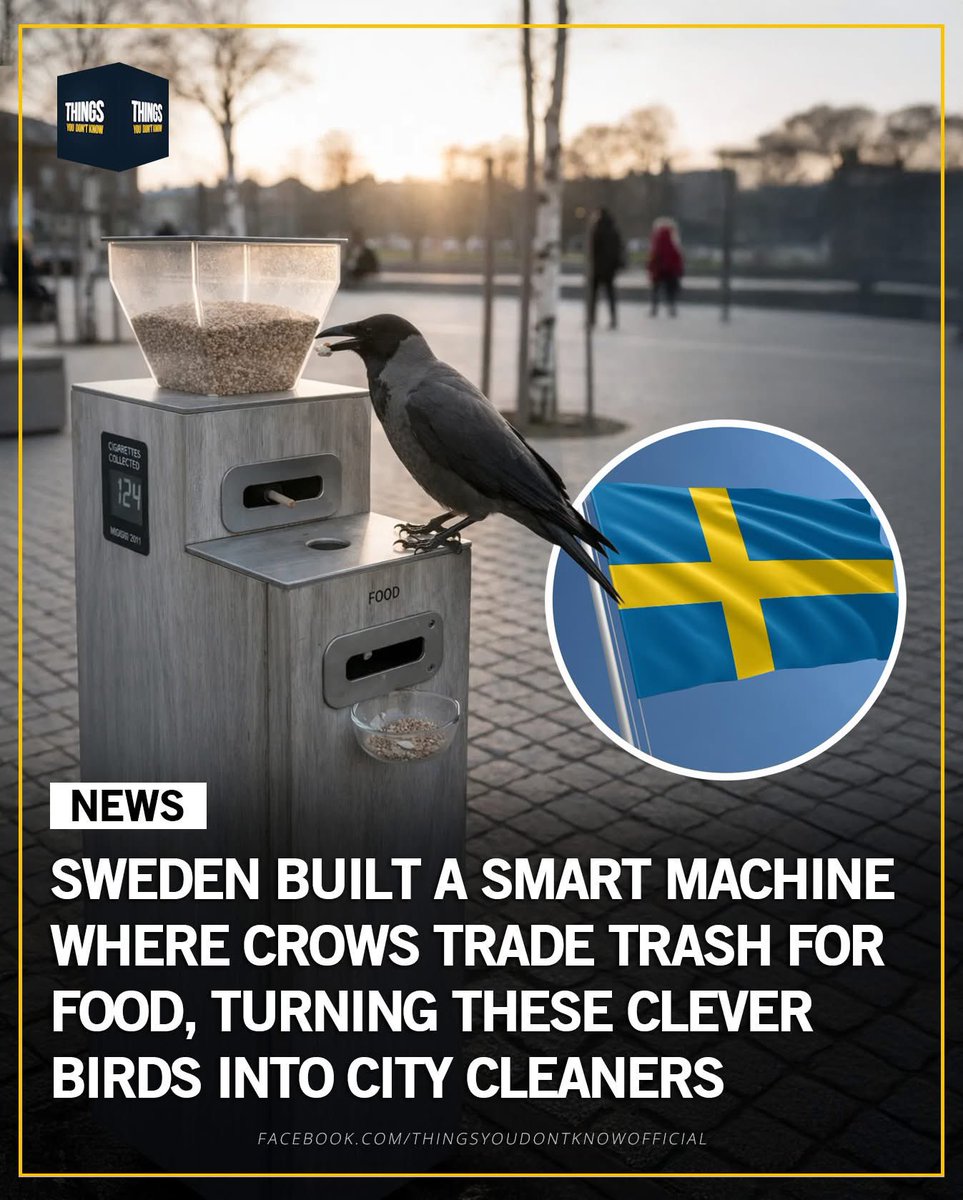
Sweden Trained Crows To Pick Up Cigarette Butts. They Are Rewarded With Peanuts.
Most cities hire people to pick up cigarette butts. Sweden hired crows. And they work for peanuts. Literally.
A Swedish startup called Corvid Cleaning built a machine that rewards wild crows for picking up cigarette butts, the number one litter item in Swedish cities. A crow drops a butt into the slot, a camera verifies it, and out comes a peanut.
No training camps. No cages. The crows figured out the system on their own, because corvids are among the most intelligent animals on the planet. They use tools, solve puzzles, and apparently run side hustles.
The machine tracks every deposit. The counter on this one reads 124. That's 124 cigarette butts picked up by birds no one asked to help.
"She saved a stranger’s child with $15. Decades later, she discovered why he had been searching for her.
In 1982, a Kenyan boy named Chris Mburu stood on the brink of losing everything. He was the brightest student in his rural district, studying by lamplight inside an earthen house without electricity. But his family could not afford his school fees. Without help, his education would end — along with any chance of escaping a life spent picking coffee in the fields.
Meanwhile, across the world in Sweden, an 80-year-old kindergarten teacher named Hilde Back came across a notice for a child sponsorship program. She chose a name from a list: Chris Mburu, Kenya. She began sending $15 every school term. There was no recognition, no expectation of gratitude — just a quiet decision to help a child she believed she would never meet.
That small amount changed everything.
Chris stayed in school. Over time, he and Hilde exchanged letters. She asked about his teachers, his studies, and his dreams. Through her words, he realized she wasn’t just part of an organization. She was a real person who believed in him. And he never forgot her.
Chris eventually graduated at the top of his law class at the University of Nairobi. He later earned a Fulbright scholarship to Harvard. He went on to become a United Nations human rights lawyer, helping prosecute genocide and crimes against humanity around the world.
Yet one thing always weighed on his heart. He had never properly thanked the woman who made his journey possible. In truth, he barely knew who she was.
In 2001, Chris founded a scholarship program for children like himself — talented students from poor families whose potential might otherwise be lost. He asked the Swedish Ambassador in Kenya to help him locate his mysterious sponsor so he could name the foundation after her.
They found her. Hilde Back. Still alive. Still living quietly in Sweden.
Chris traveled to meet her for the first time. He expected to meet a wealthy philanthropist. Instead, he found a humble, warm woman living simply — genuinely surprised that anyone considered her actions remarkable.
Then filmmaker Jennifer Arnold began documenting their reunion. During her research, she uncovered something Hilde had never told Chris.
Hilde Back had not been born in Sweden. She was born in Nazi Germany in 1922 to a Jewish family. At sixteen, when Hitler’s Nuremberg Laws banned Jewish children from attending school, strangers helped smuggle her to Sweden. Her parents stayed behind because Sweden’s refugee policies did not allow older Jews to enter. Both were later sent to concentration camps. Her father died there. Her mother disappeared, never to be heard from again.
Hilde survived the Holocaust because strangers helped her escape. She lost her own education because of who she was.
Fifty years later, she quietly paid for the education of a child across the world — a child who would grow up to fight the same hatred that destroyed her family.
When Chris learned her story, he wept. Hilde, meanwhile, had no idea that the boy she sponsored had devoted his life to prosecuting genocide.
In 2003, Hilde traveled to Kenya for the inauguration of the Hilde Back Education Fund. The entire village welcomed her as an honorary elder. In 2012, she returned again to celebrate her 90th birthday, surrounded by hundreds of children whose futures had been transformed through her generosity.
Hilde Back passed away on January 13, 2021, at the age of 98.
Today, the Hilde Back Education Fund has supported nearly 1,000 Kenyan children in continuing their education. Many have graduated from universities around the world. Many now give back — mentoring younger students and contributing monthly donations to support the next generation.
One woman. Fifteen dollars. One child.
That child created a foundation. That foundation changed hundreds of lives. And those lives continue to change others.
Nashville, Tennessee, 1930.
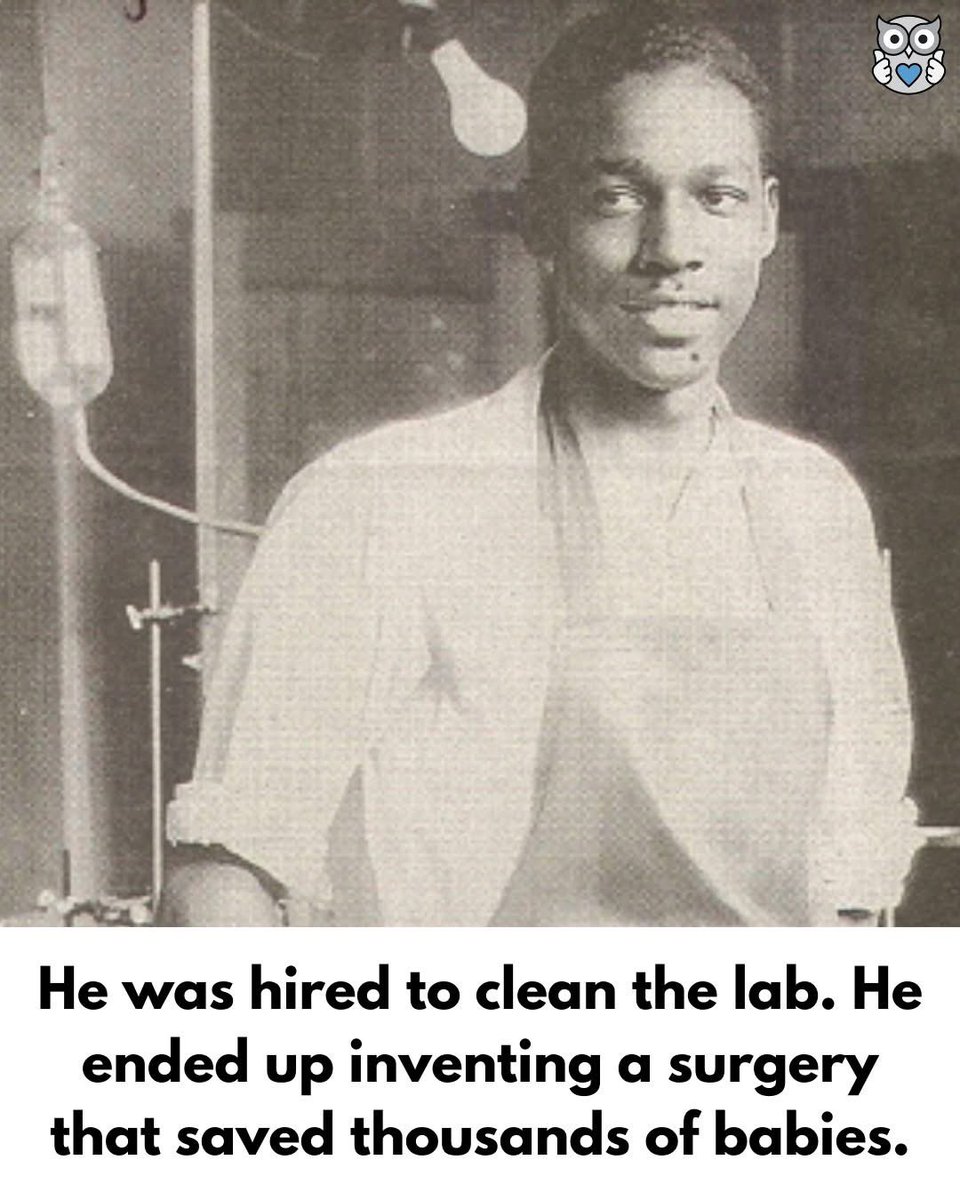
Vivien Thomas was born into the Jim Crow South. He was Black in a world that told him what he could and could not become.
He wanted to be a doctor.
He worked as a carpenter and saved every dollar to attend the Tennessee Agricultural and Industrial College. He planned to go to medical school.
Then the Great Depression hit.
The bank where he kept his savings collapsed. His money was gone. So were his plans.
At 19, Vivien took a job at Vanderbilt University Hospital. He earned 12 dollars a week as a laboratory assistant. He worked in the lab of Dr. Alfred Blalock.
He was expected to clean, care for animals, and stay quiet.
Instead, he watched.
He listened.
He asked smart questions.
He understood what the experiments were trying to do.
Dr. Blalock noticed. He began teaching Vivien surgical skills.
Vivien had never been to medical school. He had no degree. But he had sharp eyes, a strong memory, and steady hands. Soon, he was performing complex surgeries on lab animals. His stitching was careful and exact. His knowledge of anatomy was deep.
By 1933, he was no longer just an assistant in practice. He was Blalock’s research partner. But officially, he was still paid and treated far below his real role.
In 1941, Dr. Blalock moved to Johns Hopkins Hospital to become Chief of Surgery. He agreed to go only if Vivien came with him. The hospital allowed it. But they gave Vivien a lower-status technical title.
Then came their biggest challenge.
Babies were dying from a heart defect called ‘tetralogy of Fallot’. People called it ‘Blue Baby Syndrome’. The babies’ skin turned blue because their bodies were not getting enough oxygen. Most did not live long.
Dr. Helen Taussig asked if a surgery could increase blood flow to the lungs.
Blalock turned to Vivien.
“Can you figure this out?”
Vivien went to work.
For months, he practiced on dogs. He tried again and again. He had to create new methods. He had to design tools. No one had ever done this before.
Finally, he developed a way to connect the subclavian artery to the pulmonary artery. The new path lets more blood reach the lungs.
It was bold.
It was risky.
It had never been tried on a human.
On November 29, 1944, they operated on a baby girl named Eileen Saxon. She was 15 months old and weighed only nine pounds. She was dying.
Dr. Blalock performed the surgery. Vivien stood behind him on a step stool. He quietly guided every move.
“Deeper.”
“A little to the left.”
“Use smaller sutures there.”
Blalock held the tools. Vivien directed the operation.
After four and a half hours, it was over. Eileen’s blue lips turned pink. Her fingers turned pink. Oxygen was finally reaching her body.
The surgery worked.
The procedure became known as the Blalock-Taussig Shunt. It changed medicine. It saved thousands of children. It helped create the field of pediatric heart surgery.
Dr. Blalock became famous.
Vivien did not.
For 22 years, Vivien trained surgical residents at Johns Hopkins. Many of them became leaders in heart surgery. They learned their skills from him.
But he was not called Doctor. He was not listed as faculty. He ate with the maintenance staff.
His name appeared on no papers.
In 1971, after four decades of work, Johns Hopkins promoted him to Instructor of Surgery. Not Professor. Instructor.
By then, the surgeons he had trained knew the truth.
In 1976, the hospital honored him with a portrait. It was placed beside Blalock’s. At the ceremony, former students stood and applauded. Some cried.
They knew who had taught them. They knew who had built the foundation.
That same year, Johns Hopkins awarded him an honorary doctorate. At last, he was officially Dr. Vivien Thomas.
He was 66 years old.
He had been doing the work of a surgeon for 46 years.
Dr. Vivien Thomas died in 1985 at age 75.
In 2004, HBO released a film about his life called Something the Lord Made.
Wow, this speech from Mayor of New York Zohran Mamdani 👏💯
"They command us not to believe what we see"
"They compel us as George Orwell wrote nearly 80 years ago, to reject the evidence of our eyes and our ears"
"And they would succeed, were it not for the many among us who read the scripture, but who live the scripture"
"Those who refuse to abandon the stranger"
"I speak of Renee Good, whose final words to the man who murdered her moments later were: I'm not mad at you"
"I speak of Alex Pretti who died as he lived, caring for the stranger. Here was a man who held the hand of the afraid and the afflicted in their final moments"
"Here was a man who dedicated his life to healing those who he never met"
"ICE shot him 10 times because he did something they could never fathom doing, he extended his arm towards a stranger"
"Not to push her down, but help her up"
"Let us offer a new path: one of defiance through compassion"
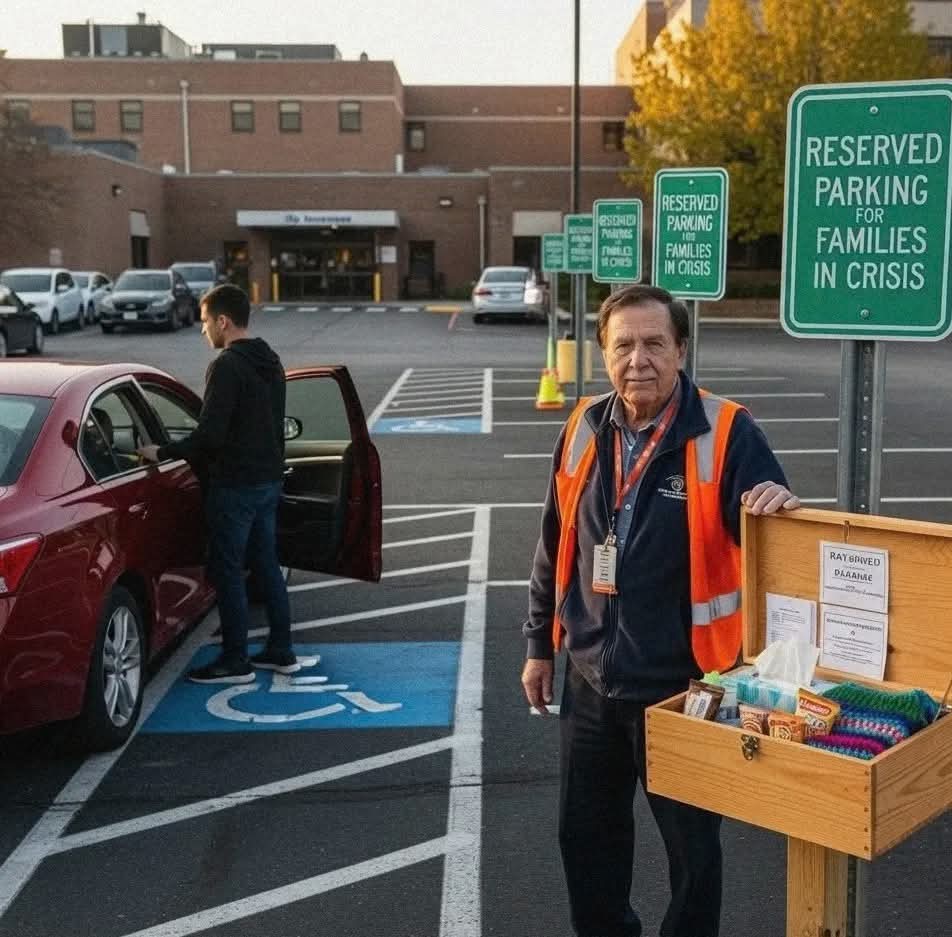
My name's Raymond. I'm 73. I work the parking lot at St. Joseph's Hospital. Minimum wage, orange vest, a whistle I barely use. Most people don't even look at me. I'm just the old man waving cars into spaces. But I see everything. Like the black sedan that circled the lot every morning at 6 a.m. for three weeks. Young man driving, grandmother in the passenger seat. Chemotherapy, I figured. He'd drop her at the entrance, then spend 20 minutes hunting for parking, missing her appointments. One morning, I stopped him. "What time tomorrow?" "6:15," he said, confused. "Space A-7 will be empty. I'll save it." He blinked. "You... you can do that?" "I can now," I said. Next morning, I stood in A-7, holding my ground as cars circled angrily. When his sedan pulled up, I moved. He rolled down his window, speechless. "Why?" "Because she needs you in there with her," I said. "Not out here stressing." He cried. Right there in the parking lot. Word spread quietly. A father with a sick baby asked if I could help. A woman visiting her dying husband. I started arriving at 5 a.m., notebook in hand, tracking who needed what. Saved spots became sacred. People stopped honking. They waited. Because they knew someone else was fighting something bigger than traffic. But here's what changed everything, A businessman in a Mercedes screamed at me one morning. "I'm not sick! I need that spot for a meeting!" "Then walk," I said calmly. "That space is for someone whose hands are shaking too hard to grip a steering wheel." He sped off, furious. But a woman behind him got out of her car and hugged me. "My son has leukemia," she sobbed. "Thank you for seeing us." The hospital tried to stop me. "Liability issues," they said. But then families started writing letters. Dozens. "Raymond made the worst days bearable." "He gave us one less thing to break over." Last month, they made it official. "Reserved Parking for Families in Crisis." Ten spots, marked with blue signs. And they asked me to manage it. But the best part? A man I'd helped two years ago, his mother survived, came back. He's a carpenter. Built a small wooden box, mounted it by the reserved spaces. Inside? Prayer cards, tissues, breath mints, and a note, "Take what you need. You're not alone. -Raymond & Friends" People leave things now. Granola bars. Phone chargers. Yesterday, someone left a hand-knitted blanket. I'm 73. I direct traffic in a hospital parking lot. But I've learned this: Healing doesn't just happen in operating rooms. Sometimes it starts in a parking space. When someone says, "I see your crisis. Let me carry this one small piece." So pay attention. At the grocery checkout, the coffee line, wherever you are. Someone's drowning in the little things while fighting the big ones. Hold a door. Save a spot. Carry the weight no one else sees. It's not glamorous. But it's everything."
By Raymond
We hope the good people of #SanFrancisco will forgive us for adapting a song about their city in 1967 to address the shocking and tragic events in #Minnesota in recent weeks. This is dedicated to Renée Good and Alex Pretti, and in solidarity. Our version is called "Minnesota" ❤️
A woman was reversing in Asda car park today and she almost bumped into my trolley so she said "sorry". I said "that's okay", but my American friends are saying the correct response would have been to shoot her in the head three times and claim I acted in self-defence 🤷♀️
While politicians are on recess until 5 January, NHS staff & other essential workers are working through the festive period, caring for people & saving lives.
They deserve fair pay & good working conditions. Many are leaving because they’re not valued.
2026 must bring change.
Very sad to be told student midwives have received emails from universities telling them not to speak to me or other media about this story.
Just to repeat - any student midwife can contact me and no one will know. I will protect your identity.
This isn’t lack of resources, this is ideology
Streeting is choosing to not invest in doctors, knowing this reduces UK medical expertise, knowing it means less safe care for patients.
And he blames doctors for standing up to him
I stand with the @BMAResidents - strike hard
12/12