Science has now confirmed what anyone who has ever sought shade under a tree on a scorching day already instinctively knew: trees are nature’s ultimate air conditioners.
A single mature tree can release up to 380 liters of water vapor into the atmosphere every day through a process called evapotranspiration. Water drawn up from the roots travels through the trunk and evaporates from the leaves, quietly absorbing heat and cooling the surrounding air in the process.
The scale of this natural cooling is astonishing. According to environmental researchers, one large tree can produce a cooling effect equivalent to running five to ten air conditioners continuously for 20 hours, every single day. It does this silently, without using any electricity, without making any noise, and without emitting a single gram of carbon.
Every tree standing on a hot afternoon is essentially a free, self-powered, zero-emission cooling system that has been working since the day it was planted. Every tree we cut down removes that powerful natural cooling forever. Every tree we plant adds it back.
Nature really did build the perfect climate control system long before we ever invented one.
¿OS ACORDÁIS CUANDO NOS SABÍAMOS TODOS LOS TELEFONOS FIJOS DE NUESTRO ENTORNO?
Antes recordar era guardar cosas dentro de la cabeza. Ahora recordar es saber dónde está: en Google, en una captura, en un chat, en una carpeta.
¿El cerebro se ha vuelto idiota? 🧠
HILO VAAAA🧵👇👇
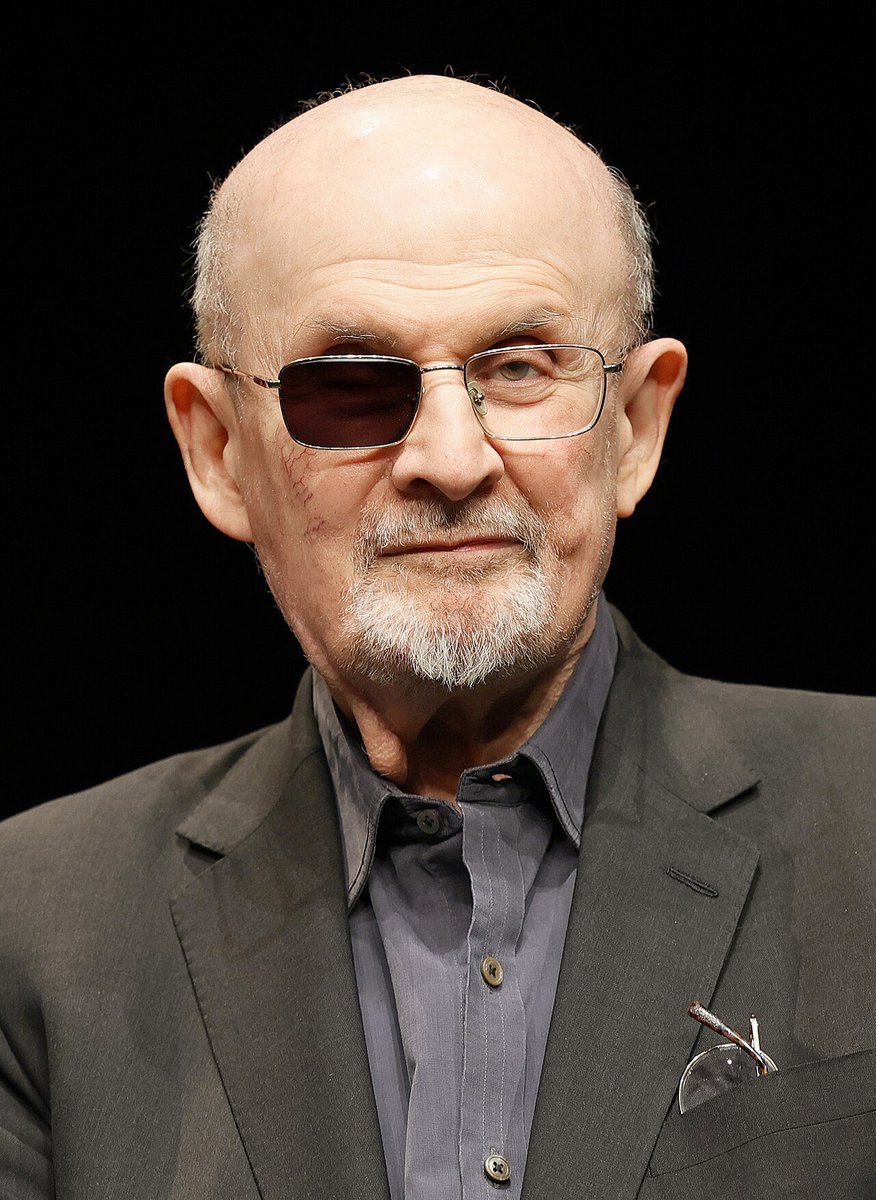
Heute wird Salman Rushdie 79. 1989 verurteilte ihn das Regime in Teheran zum Tode. Ayatollah Khomeini rief alle Muslime der Welt dazu auf, einen Schriftsteller zu ermorden, nur weil ihm dessen Roman nicht passte. Khomeini lebt seit über 35 Jahren nicht mehr. Sein Mordbefehl aber lebt weiter, noch 2017 bestätigte sein Nachfolger Chamenei das Todesurteil.
Und es blieb nie bei Worten. Rushdies japanischer Übersetzer wurde ermordet, sein italienischer niedergestochen, sein norwegischer Verleger angeschossen. Der islamistische Terror gegen ein einziges Buch reichte bis nach Tokio, Mailand und Oslo. 2022 stach man Rushdie schließlich auf offener Bühne nieder, ausgerechnet bei einem Vortrag über Meinungsfreiheit. Er verlor ein Auge, der Täter verehrte einen seit Jahrzehnten toten Fanatiker.
Das ist der Kern des Islamismus. Er erträgt kein freies Wort, nicht einen Roman oder auch keinen einen Witz. Und während ein Schriftsteller seit fast vierzig Jahren um sein Leben fürchtet, verhandelt der Westen mit seinen Häschern, hofiert das Regime und überweist am Ende noch Geld dafür.
Wer Freiheit ernst meint, verhandelt nicht mit denen, die Schriftsteller auf Todeslisten setzen. Er nennt sie beim Namen: Feinde jeder freien Gesellschaft.
Buffalo Central Terminal Station, Then vs. Now
Buffalo Central Terminal was once among the most magnificent railroad stations in the United States. Opened in 1929 at a cost of approximately $14 million—equivalent to more than $250 million today—the sprawling Art Deco complex featured a 17-story office tower, vast waiting halls, restaurants, shops, and dozens of rail lines. During the golden age of rail travel, more than 200 trains passed through the terminal each day, connecting Buffalo to destinations across the country.
Its decline came far more quickly than anyone expected. After World War II, Americans increasingly embraced automobiles and commercial air travel, leading to a nationwide collapse in passenger rail service. By the 1950s and 1960s, the terminal was operating well below its intended capacity. Amtrak ultimately abandoned the station in 1979, and the once-thriving transportation hub became one of America’s most recognizable abandoned landmarks. Years of neglect, vandalism, and exposure to the elements took a heavy toll on the structure.
Today, however, Buffalo Central Terminal’s story is entering a new chapter. In 2024, a major redevelopment initiative officially advanced with plans to transform the terminal and surrounding area into a vibrant mixed-use district. Restoration efforts have already stabilized much of the building, while future plans include housing, commercial spaces, public gathering areas, and cultural attractions designed to breathe new life into the historic site.
Ironically, the station was originally built on a scale far larger than Buffalo actually needed. Railroad executives believed the city would continue growing into one of North America’s most important transportation centers. Instead, the Great Depression began only months after the terminal opened, and it never fully achieved the level of traffic its designers had envisioned.
A research into cat behavior shows that domestic cats regard humans as social peers rather than superiors, often perceiving their owners as large, awkward kittens.
Far from being aloof or defiant, a cat’s apparent indifference stems from a profound interspecies mismatch in social expectations.
As anthrozoologist John Bradshaw explains, cats—unlike dogs—never evolved to recognize humans as dominant leaders or authority figures. Instead, they filter all interactions through an exclusively feline framework. Behaviors like kneading on your lap or licking your hair are not mere displays of affection; they are the same grooming and bonding rituals cats reserve for close kin or pride members. In their eyes, we are simply enormous, somewhat clumsy fellow cats who require inclusion in the group.
This absence of hierarchical deference accounts for cats’ frequent disregard of commands or household rules. Treating us as equals, they follow cat-to-cat social protocols in every encounter. The “gifts” of dead prey on the doorstep or constant shadowing around the home are acts of care toward what they see as a big, furless, rather inept companion.
Recognizing this mindset transforms the human-cat relationship from one based on authority and obedience to one of mutual companionship. It turns out that while many owners believe they have domesticated their cats, the cats themselves are quietly convinced they are patiently tending to their oversized, adopted family members.
[Bradshaw, J. (2013). Cat Sense: How the New Feline Science Can Make You a Better Friend to Your Pet. Basic Books]
Baseball can sometimes feel a little boring. This play was absolutely the highlight of the week when it happened. We definitely need to see more of this. 💯😲🤣
Suecia, una sociedad altamente tecnológica, ha tomado una decisión firme para sus escuelas: reducir pantallas y regresar a los libros impresos.
La razón principal es que evaluaciones recientes mostraron una preocupante caída en la comprensión lectora de sus estudiantes.
Investigadores señalan que el uso constante de dispositivos dificulta la concentración y el procesamiento profundo de la información leída.
Incluso se advierte que la exposición excesiva a pantallas podría llegar a afectar el desarrollo cerebral en niños pequeños.
Frente a esta situación, el gobierno está invirtiendo millones de dólares para garantizar textos físicos para cada alumno.
Además, este año entrará en vigor una estricta prohibición de teléfonos móviles en las aulas para limitar las distracciones.
Esta estrategia gubernamental ha provocado intensos debates sobre el impacto real de las herramientas tecnológicas en la educación moderna.
En este día Día Internacional del Libro vale la pena recordar que:
Sócrates ni dejó nada escrito ni pronunció nunca estas palabras: “Conócete a ti mismo”, sino que es lo que podía leerse en el pronaos del templo dedicado a Apolo en Delfos.
Jorge Luis Borges jamás utilizaría tal cursilería en una frase: “Con el tiempo comprendes que sólo quien es capaz de amarte con tus defectos, sin pretender cambiarte, puede brindarte toda la felicidad”
Cual es la frase más famosa de Albert Einstein? “Locura es hacer la misma cosa una y otra vez esperando obtener diferentes resultados”… en realidad fue escrita por Rita Mae Brown en 1983.
Mahoma tampoco dijo: “Si la montaña no viene a Mahoma, Mahoma irá a la montaña.”
En ninguno de los escritos de Platón se encuentra la frase: Sólo los muertos han visto cómo termina la guerra.
Miguel de Cervantes a través de Don Quijote de La Mancha no dijo: si los perros ladran , Sancho, es señal que vamos avanzando.
Maquiavelo nunca dijo y tampoco escribió “El fin justifica los medios”, si bien está se alinea con el pensamiento de este politólogo, la frase original es “Cuando el fin es lícito, también lo son los medios.” del jesuita alemán Hermann Busenbaum
La famosa frase Frederich Nietzsche “Todo lo que no te mata te fortalece” esta incompleta: “Lo que no te mata te hiere de gravedad y te deja tan apaleado, que luego aceptas cualquier maltrato y te dices a ti mismo que te fortalece”.
Uno de los grandes símbolos de la ilustración Marie Arouet “Voltaire” nunca dijo su frase más conocida: No estoy de acuerdo con lo que dices, pero defenderé con mi vida tu derecho a expresarlo.
Sherlock Holmes nunca dijo: Elemental, mi querido Watson.
Bertolt Brecht no escribió su poema más famoso: "Primero se llevaron a los judíos, pero a mí no me importó porque yo no lo era. Luego arrestaron a los comunistas, pero como yo no era comunista, tampoco me importó.”
Óscar Wilde nunca dijo en ninguna de sus obras o escritos: “Se tú mismo, los demás lugares ya están ocupados”.
Al fin la lectura es indispensable para llevar una vida mejor, no solo se compone de frases, si no de vastos conocimientos, todos a leer!
NASA has officially announced the retirement of legend Sunita Williams. Over a 27 year career, she logged 608 days in space including a final 9 month "stranded" mission in 2024. She holds the record for most cumulative spacewalk time by a woman (62 hours).
BREASTMILK
She thought she was studying milk.
What she uncovered was a conversation.
In 2008, evolutionary anthropologist Katie Hinde was working in a primate research lab in California, analyzing breast milk from rhesus macaque mothers. She had hundreds of samples and thousands of data points. Everything looked ordinary—until one pattern refused to go away.
Mothers raising sons produced milk richer in fat and protein.
Mothers raising daughters produced a larger volume with different nutrient balances.
It was consistent. Repeatable. And deeply uncomfortable for the scientific consensus.
Colleagues suggested error. Noise. Statistical coincidence.
But Katie trusted the data.
And the data pointed to a radical idea.
Milk is not just nutrition.
It is information.
For decades, biology treated breast milk as simple fuel. Calories in. Growth out. But if milk were only calories, why would it change depending on the sex of the baby?
Katie kept digging.
Across more than 250 mothers and over 700 sampling events, the story grew more complex. Younger, first-time mothers produced milk with fewer calories but significantly higher levels of cortisol—the stress hormone.
The babies who drank it grew faster.
They were also more alert, more cautious, more anxious.
Milk wasn’t just building bodies.
It was shaping behavior.
Then came the discovery that changed everything.
When a baby nurses, microscopic amounts of saliva flow back into the breast. That saliva carries biological signals about the infant’s immune system. If the baby is getting sick, the mother’s body detects it.
Within hours, the milk changes.
White blood cells surge.
Macrophages multiply.
Targeted antibodies appear.
When the baby recovers, the milk returns to baseline.
This was not coincidence.
It was call and response.
A biological dialogue refined over millions of years. Invisible—until someone thought to listen.
As Katie reviewed existing research, she noticed something unsettling. There were twice as many scientific studies on erectile dysfunction as on breast milk composition.
The first food every human consumes.
The substance that shaped our species.
Largely ignored.
So she did something bold.
She launched a blog with a deliberately provocative name: Mammals Suck Milk.
It exploded. Over a million readers in its first year. Parents. Doctors. Scientists. People asking questions research had skipped.
The discoveries kept coming.
Milk changes by time of day.
Foremilk differs from hindmilk.
Human milk contains over 200 oligosaccharides babies can’t digest—because they exist to feed beneficial gut bacteria.
Every mother’s milk is biologically unique.
In 2017, Katie brought this work to a TED stage. In 2020, it reached a global audience through Netflix’s Babies. Today, at Arizona State University’s Comparative Lactation Lab, she continues reshaping how medicine understands infant development, neonatal care, formula design, and public health.
The implications are staggering.
Milk has been evolving for more than 200 million years—longer than dinosaurs walked the Earth. What we once dismissed as simple nourishment is one of the most sophisticated communication systems biology has ever produced.
Katie Hinde didn’t just study milk.
She revealed that nourishment is intelligence.
A living, responsive system shaping who we become before we ever speak.
All because one scientist refused to accept that half the story was “measurement error.”
Sometimes the biggest revolutions begin by listening to what everyone else ignores.



![Rainmaker1973's tweet photo. A research into cat behavior shows that domestic cats regard humans as social peers rather than superiors, often perceiving their owners as large, awkward kittens.
Far from being aloof or defiant, a cat’s apparent indifference stems from a profound interspecies mismatch in social expectations.
As anthrozoologist John Bradshaw explains, cats—unlike dogs—never evolved to recognize humans as dominant leaders or authority figures. Instead, they filter all interactions through an exclusively feline framework. Behaviors like kneading on your lap or licking your hair are not mere displays of affection; they are the same grooming and bonding rituals cats reserve for close kin or pride members. In their eyes, we are simply enormous, somewhat clumsy fellow cats who require inclusion in the group.
This absence of hierarchical deference accounts for cats’ frequent disregard of commands or household rules. Treating us as equals, they follow cat-to-cat social protocols in every encounter. The “gifts” of dead prey on the doorstep or constant shadowing around the home are acts of care toward what they see as a big, furless, rather inept companion.
Recognizing this mindset transforms the human-cat relationship from one based on authority and obedience to one of mutual companionship. It turns out that while many owners believe they have domesticated their cats, the cats themselves are quietly convinced they are patiently tending to their oversized, adopted family members.
[Bradshaw, J. (2013). Cat Sense: How the New Feline Science Can Make You a Better Friend to Your Pet. Basic Books]](https://pbs.twimg.com/media/HKRpIX7WoAAnaMi.png)