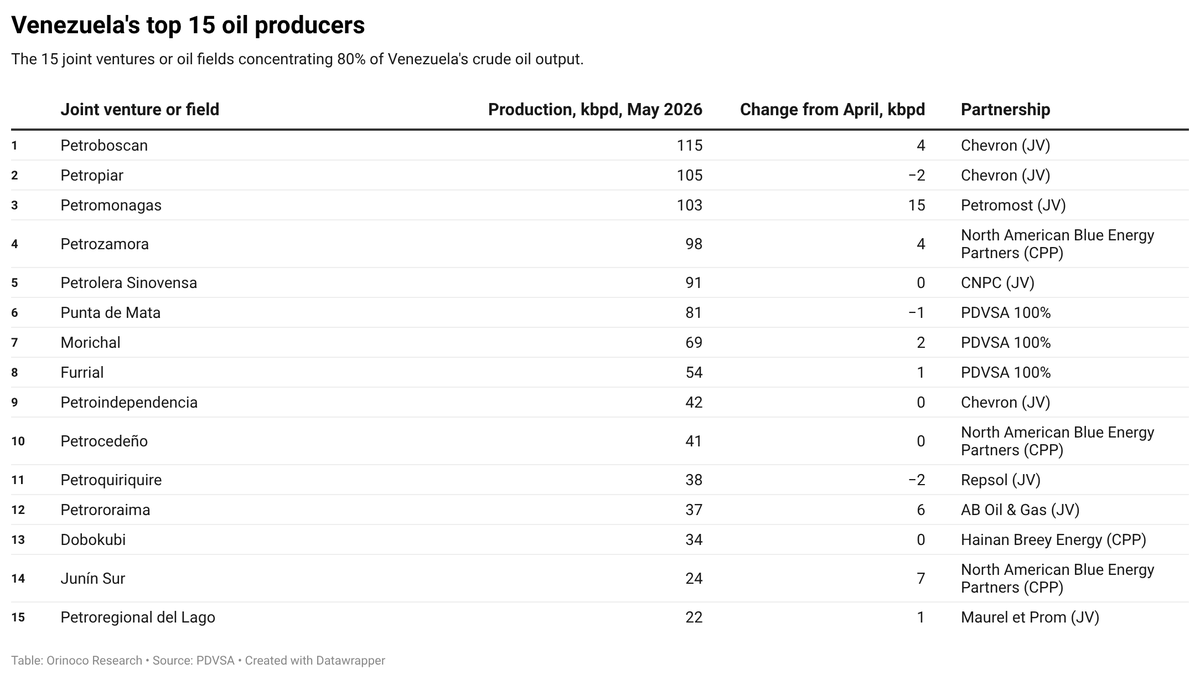
When analysing Venezuela's oil production, it's fundamental to separate the operations since PDVSA's partners are becoming more important. Who is actually drilling? Who is just sitting on their current output? The details (qualitative & quantitative) matter.
Global trading house Mercuria Energy Group Ltd. has reached a deal to acquire one of Argentina’s biggest refineries and a network of hundreds of gas stations from Brazil’s struggling Raizen SA. https://t.co/RY32PSdfnj
@tutecadomicilio@SalinasAndres@neitusina Si excelente, gracias por la data. Te saca mucho poder de negociacion no tener una fase intermedia. Me dijeron que hacen una sola tasacion. Matar o morir
🚨Chevron just filed a $13.8 billion RIGI application for Vaca Muerta.
30-year tax, FX and regulatory stability locked in.
One of the largest single investment plans in Argentina's shale patch.
Chevron is going all in 🇦🇷🛢️
This is a full field, multi decade shale development commitment.
El Trapial, Neuquén.
100% Chevron-operated.
Hundreds of horizontal wells, gas and liquids handling, water and midstream infrastructure all tied into Argentina's growing export pipeline to the Atlantic. 📋
What RIGI gives Chevron:
→ Corporate income tax locked at 25% with accelerated depreciation
→ FX protections retain hard-currency export proceeds, shielded from future capital controls
→ Export duty exemptions on qualified output after ramp-up
→ 30 year stability on tax, customs and FX rules
→ International arbitration access (ICSID) for disputes
This is exactly what Chevron said it was waiting for.
Executives have been explicit: RIGI was the precondition for going all in on Vaca Muerta.
The scale of the bet:
→ $13.8 billion committed over the project life
→ Target: roughly triple Chevron's Vaca Muerta output by 2035
→ El Trapial becomes one of Chevron's main non-US shale growth engines
→ Sits alongside 50% non-op stake in Loma Campana the flagship YPF/Chevron development
Chevron already spent $ 500M+ on El Trapial's early unconventional phases. This RIGI application is the full commitment. ⚡
If you want to know my view on it within the full case with names, math, triggers of the disclosure stocks.
Read my article.
The link is in the below comments👇
🚨 Chevron va por una de las mayores apuestas del shale argentino.
La petrolera pidió entrar al RIGI con un megaproyecto de US$13.800 millones para desarrollar petróleo no convencional en El Trapial, al norte de Vaca Muerta.
📍 Neuquén
🛢️ Shale oil
💰 US$13.800 millones
⛏️ Desarrollo upstream
📈 Más producción, infraestructura y exportaciones
Chevron fue una de las primeras majors en apostar fuerte por Vaca Muerta con YPF en Loma Campana.
Ahora busca escalar su operación propia en El Trapial con una inversión de largo plazo.
La discusión de fondo es clara:
sin reglas estables, la geología no alcanza.
🇦🇷 Vaca Muerta tiene roca.
Ahora necesita capital, infraestructura y previsibilidad.
@tutecadomicilio@SalinasAndres@neitusina Gracias, eso me dicen pero si le debo $10 pesos a ENTEL de hace 40 años o algun detalle cuando me entero?
Parece que es cuestion de Fe . Digamos como reservas una propiedad sin tener el ok del banco?
@tutecadomicilio@SalinasAndres@neitusina Es verdad que no hay pre aprobado?
Me mandaron a simular en la pagina e ir directo con una propiedad para tasar, lo cual no me da demasiada tranquilidad.
Sin paso intermedio o pre chequeo de papeles. Es asi o mi oficial no tienen idea? gracias
@dosinaga2 Empresa no interesada en hablar mucho, el free float que tiene es un peligro y la producción no va a ningún lado de momento.
Esta cara por donde la mires
US petroleum inventories fell by 11.1 MMbbl last week between commercial stocks (-5.9 MMbbl) and the SPR (-5.2 MMbbl)
Commercial crude -2.3, gasoline -2.4, diesel -1.3, jet fuel -0.6, propane -1.3.
Big draw, but roughly half the size of last week's blowout.
Markets are delusional
we’ve already lost:
- ~30% of fertilizers
- ~20% of LNG
- ~14% of oil
- ~30% of helium
Any one of these on its own would be enough to trigger a crisis. Together, they form a systemic shock that risks pulling the global economy into a serious recession.
Because these aren’t isolated commodities.... they sit at the core of entire production chains:
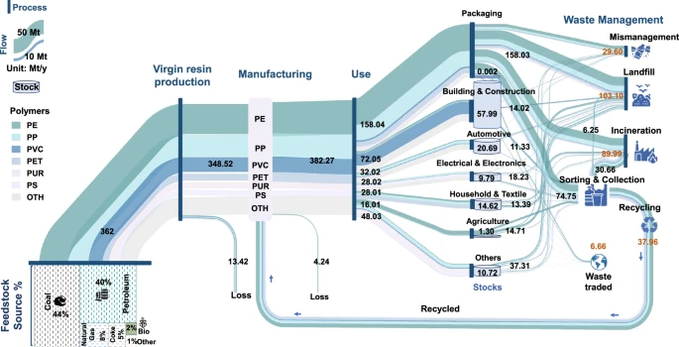
Petrochemicals -> fertilizer -> food production
Petrochemicals -> mining (copper, uranium, nickel)
Petrochemicals -> plastics -> cars, electronics
Petrochemicals -> drugs, rubber, textiles
Helium -> semiconductors / AI chips
Gas -> power generation
Diesel -> transportation
So this isn’t just an energy problem... it’s a full-spectrum supply shock hitting food, industry, tech, transportation and power at the same time. Without flows from Hormuz, the system doesn’t just slow down, it starts to break.
And there is no policy tool that can replace missing physical supply.
BREAKING:
While the world watches the Strait of Hormuz, someone is systematically destroying Russia’s energy fleet in the Mediterranean. And nobody is connecting the two wars happening in the same ocean.
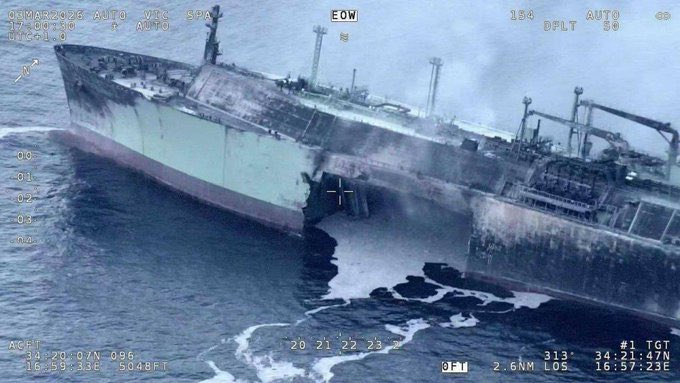
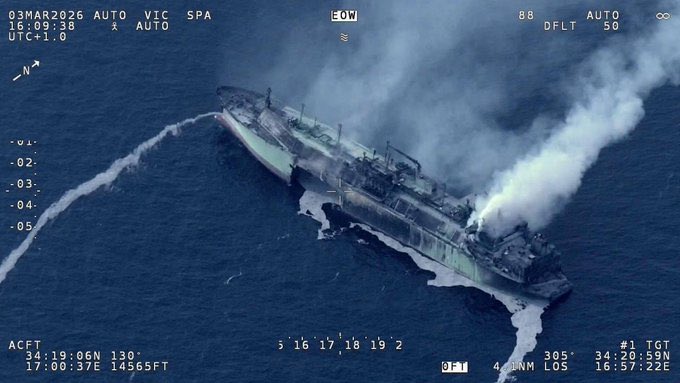
On Tuesday March 3 at approximately 4:00 a.m. local time, the Russian LNG tanker Arctic Metagaz exploded between Malta and Libya. The Libyan port authority confirmed the vessel experienced “sudden explosions followed by a massive fire, which ultimately led to its complete sinking.” The wreckage occurred approximately 130 nautical miles north of the port of Sirte, within the Libyan search and rescue zone. All 30 crew members escaped in a lifeboat and were rescued. Malta’s Armed Forces confirmed they received the distress message and geolocated the vessel.
The Arctic Metagaz was carrying liquefied natural gas loaded from Russia’s Arctic LNG 2 facility, departing Murmansk on February 24. She was headed for Port Said and ultimately China. She had deactivated her AIS transponder for approximately 300 kilometers before the incident, running what the industry calls a “gray route” to evade sanctions enforcement. The vessel was under US, UK, and EU sanctions since August 2024. She had previously operated under the flags of Palau, Curacao, and Saint Maarten, all confirmed false by authorities. Her commercial managers were listed in India.
Maritime security firm EOS Risk Group assessed the cause as a likely drone strike. Greek media cited multiple sources describing naval drones and a series of explosions. Reuters reported Ukraine was suspected of the operation. No one has claimed responsibility. https://t.co/qYwGjUnRFk reported this may be the first known instance of an LNG carrier being destroyed in a conflict-related attack.
This was not an isolated incident.
In December 2025, Ukraine’s SBU claimed its first Mediterranean operation: aerial drones from hexacopters struck the shadow fleet tanker Qendil southwest of Crete, more than 2,000 kilometers from Ukrainian territory. The SBU called it “an unprecedented special operation” conducted by its Alpha unit. The Qendil sustained critical damage.
On January 22, the French Navy seized the shadow fleet tanker Grinch between Spain and Morocco, sailing from Murmansk under a false Comoros flag. Macron personally announced the operation. Germany denied the tanker Tavian entry to Baltic waters. The US seized seven sanctioned tankers since December.
On February 28, the same day Operation Epic Fury began against Iran, Belgian special forces rappelled onto the shadow fleet tanker Ethera in the North Sea, supported by the French Navy. The vessel was sailing under a false Guinea flag.
Three days later, the Arctic Metagaz exploded and sank in the Mediterranean.
Russia operates a shadow fleet of over 400 vessels to evade sanctions. Western nations have sanctioned 640 individual ships. The campaign has escalated from paper sanctions to physical seizures to what increasingly appears to be kinetic destruction. The Mediterranean is now a theater of covert naval warfare against Russian energy exports, running simultaneously with the overt naval war against Iran in the Persian Gulf.
Two wars. Two energy powers. One ocean connecting them. The age of safe maritime commerce is over.
https://t.co/ULBgEzZ3A8