🚨 Elon Musk on how people will receive money in an AI-powered future:
“I think the Treasury should simply issue people checks. A lot of what we’re trying to think about involves things that were relevant in the past but will not be relevant in the future. Inflation is simply the ratio of money to the rate of goods and services. So if the output of goods and services increases dramatically, if it increases by 1,000%, you can increase the money supply. You can literally print money, or change the database and create money in the database. Provided the creation of that money is less than the rate at which goods and services increase, you actually have deflation. So I’ll make a prediction, which is that deflation will be the issue, not inflation, because if the output of goods and services increases faster than the money supply, you will have deflation.”
Elon Musk explains why AI and robots are the future of the economy?
“You can think of the economy as digital and physical intelligence. AI is advancing very rapidly, but it is still somewhat confined to the digital realm. You need end effectors in the form of humanoid robots. Then you can go from intelligence manifesting itself digitally to shaping atoms. An economy is the production of goods and the provision of services. If you have vast numbers of robots with vast amounts of digital intelligence, you have a quasi-infinite economy.”
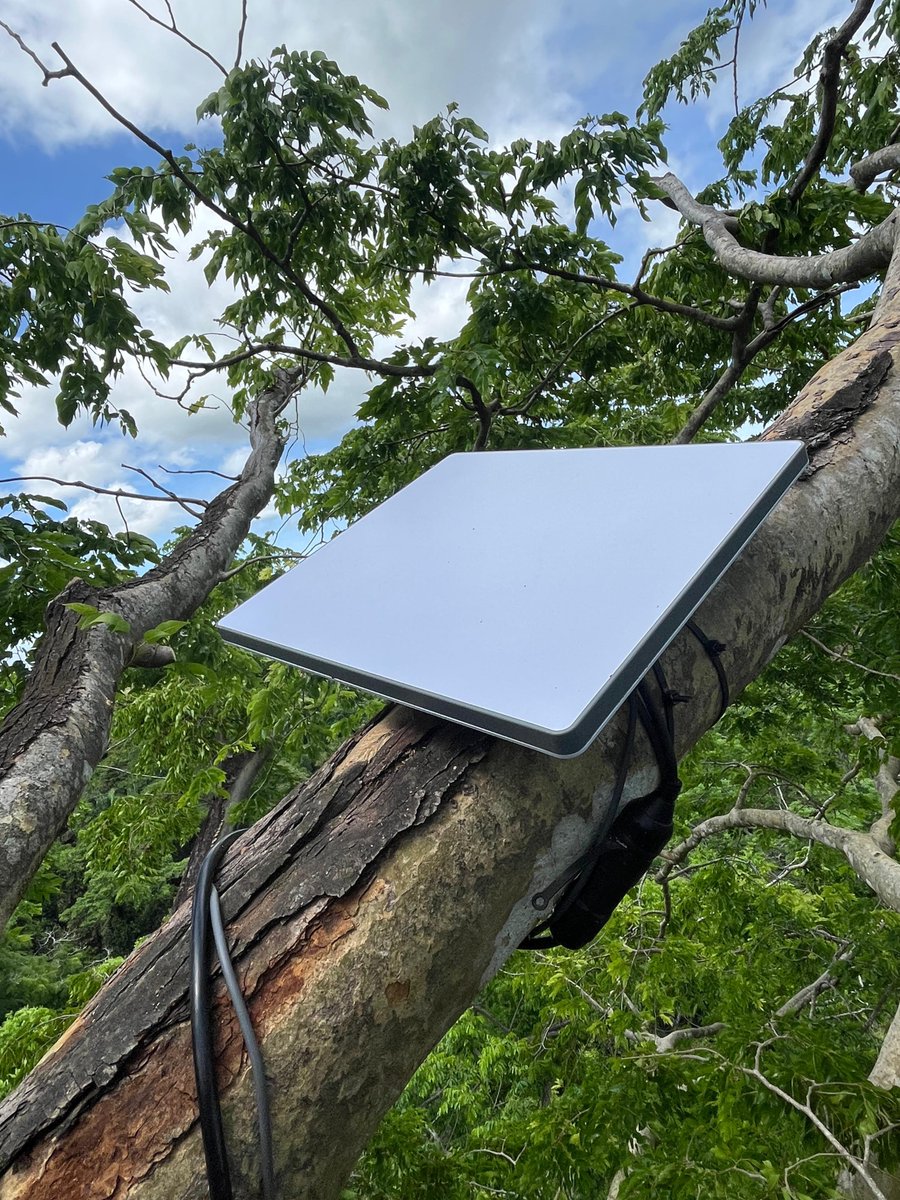
Starlink is providing connectivity to Project SPARROW, which is helping scientists protect biodiversity and discover new animal behaviors in remote parts of Colombia.
Previously, recordings took thousands of hours to review, and now, researchers can access AI-powered data to quickly analyze insights 🛰️❤️
ELON MUSK: Grok will act as the manager for Optimus.
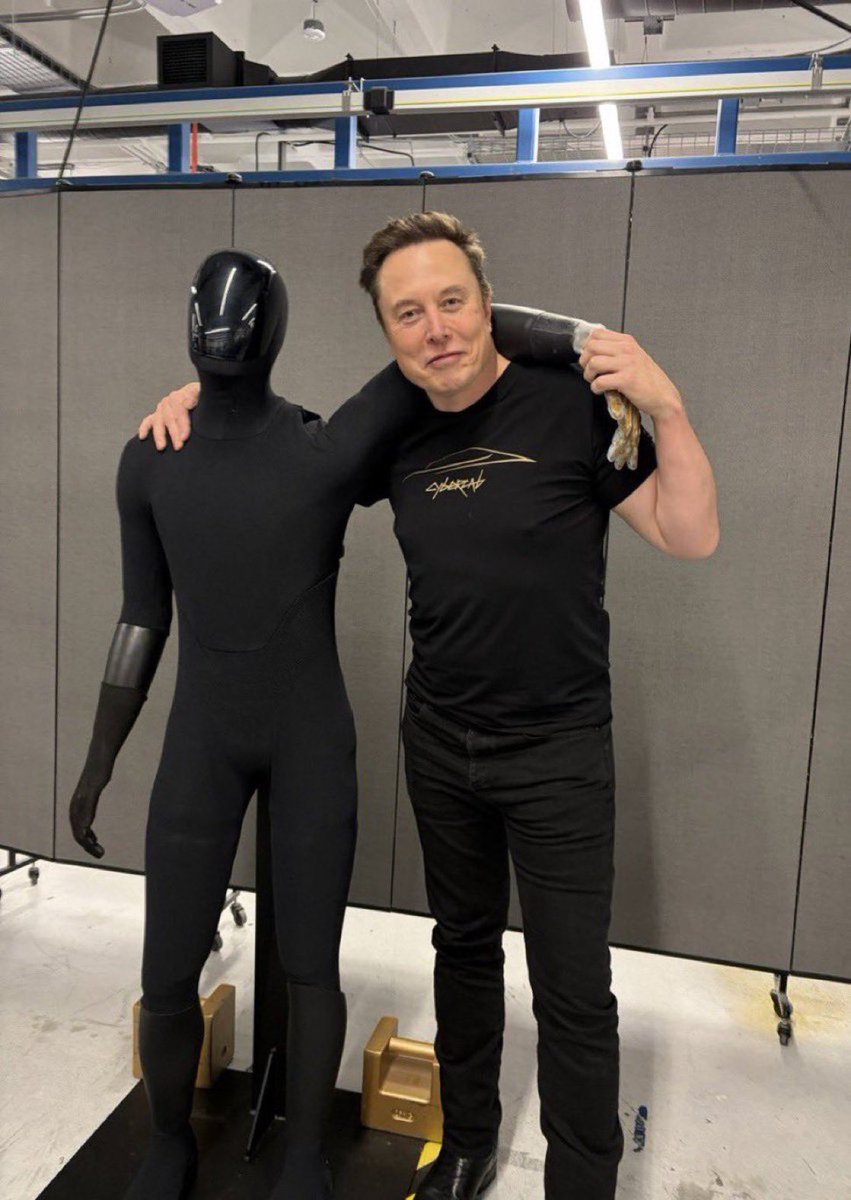
Optimus need to be able to walk up to a computer or touchscreen and use it just like a human. That requires a generalized ability to understand live video, control screens and operate computers in real time. This is being developed in partnership with SpaceXAI's Grok. The large Grok model would act as the manager, giving Optimus a series of tasks and telling it what to do.
Elon Musk explains Tesla’s new Megapod concept for scaling distributed AI compute:
“We’re building a Megapod design that pairs Tesla AI4 computers with x86 systems in a box...essentially digital Optimus in a box
Similar to how Megapack packages batteries, a Megapod would combine a large number of AI4 and x86 systems inside one deployable unit
These boxes could be placed anywhere across the country or outside the country allowing us to scale AI compute using distributed electricity production
There is power available all around the world, including at our Supercharger sites. We have something like 7 gigawatts of power across the Supercharger network, and that continues to grow
We could place Megapods at many of these locations and use that distributed power for AI compute
I think that could be quite a big deal”
Instead of relying entirely on enormous centralized data centers, Tesla could deploy modular AI-compute infrastructure wherever sufficient power is already available
Elon Musk on Optimus:
"You've probably seen lots of impressive demonstrations of robots on the Internet, but those demonstrations you're seeing are pre-programmed or remote-controlled. So there is no humanoid robot that is actually able to do generalized tasks. Optimus will be the first one that is capable of doing that.
It's not just a demo, it's genuinely useful in day-to-day life. Optimus is designed to have full human dexterity, so a hand that has the same level of dexterity, if not higher, than a human hand.
The human hand is an incredible thing. The more you study the human hand, the more amazing you realize how amazing hands are. The nuances of how human hands work are amazing. Optimus will have that capability. It will have superhuman dexterity, so it's really going to be quite something."
Q2 Shareholder Update → https://t.co/u0UcDOuMNa
Highlights
– Cybercab began production at Gigafactory Texas
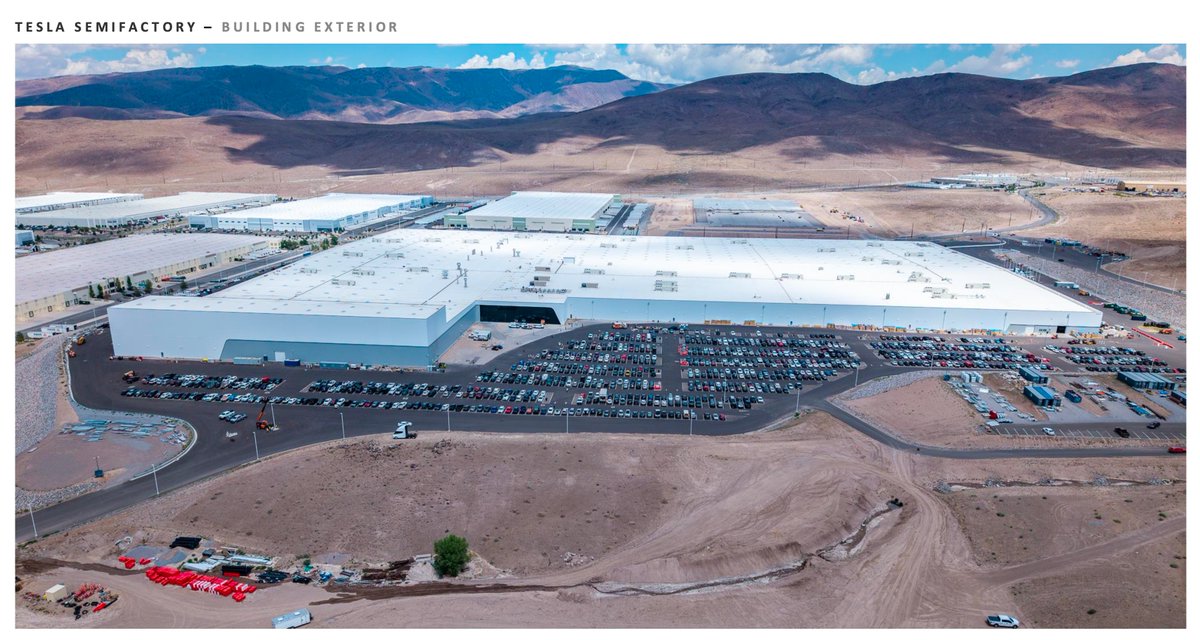
– Tesla Semi remains on track for volume production this year at our new factory in Nevada
– Making continued progress with battery pack capacity expansion (the main limiting factor to near-term vehicle production volume increase)
– Megafactory Texas is nearing completion (start of production planned for this year)
– More customers are now opting to subscribe to FSD at the time of vehicle purchase!
– Robotaxi rollout continued in the US. Now live in 7 major metros
– Construction of Optimus at Fremont Factory began after decommissioning the Model S & X lines. Planned production later this year
From here, there remains much hard work as we aim to revolutionize transportation, energy and productivity through our leading real-world AI. Scaling will be non-linear and we are focused on long-term value creation.
We’ve never been more optimistic about the future.
Automotive
– Record deliveries in several markets: South Korea, Australia, Colombia, Japan, Taiwan, Thailand, Portugal, the Philippines, Chile, Slovenia & Lithuania
– We launched the Model YL in the US in July and have seen a positive response from customers
Energy generation and storage
– Record energy storage deployments in EMEA, supported by record deployments from Megafactory Shanghai, which continues to ramp production
– On track to begin production of Megapack 3 & Megablock this year at our new Megafactory Texas
– Powerwall 3P (three-phase) is now available in Germany and is designed to meet the power needs of German homes with a single unit
Robotics
– Installing the first-generation lines for Optimus at Fremont Factory, where we expect to start production soon
– The initial Optimus builds will be used in our Optimus Academy for training data collection and further functionality development
– Additionally, we continued site development at Gigafactory Texas with building construction now in full swing
AI Training Compute
– More than doubled our onsite compute in Texas (in terms of MW of compute) during the first half of 2026
– Cortex 2 supports the development of both vehicle and humanoid robot autonomy software & will ramp further over the rest of the year
Battery
– Ramping new battery & material factories, including vehicle pack capacity in Berlin, cathode material production and lithium refining in Texas and LFP cells in Nevada for our energy storage products
– Increasing production of 4680 cells to support ramping Cybercab & Tesla Semi plus increased production of Model Y
Other Supporting Infrastructure
– Added over 2,400 net new Supercharging stalls, growing the network by 17% year-over-year
AI Software
– Started rolling out FSD v14 lite to early-access customers in the US & South Korea with AI3 hardware
This software build distills the driving behavior from AI4’s v14 series into both the camera & compute configuration of AI3, bringing destination options & speed profiles. It also addresses challenging driving scenarios with improved proactive & reactive responsiveness
AI Inference Compute
– Making progress on construction & equipment procurement for our semiconductor fab in Austin
Automotive and Other Software
– Rolled out Summer Release:
Self-Driving stats are now available in the mobile app
Grok can make phone calls, search & play music, and adjust climate controls, among other things
Automatic Navigation expands beyond home & work to support any destination based on personal habits and schedule
Robotaxi
– Started production of Cybercab, our purpose-built autonomous EV designed to be the workhorse of our Robotaxi fleet
– Began offering employee rides in Cybercabs on our GFTX campus in July
– Preparing for expansion of our Robotaxi service to additional US metros: testing, permitting & first responder training
– Expanded unsupervised rides to the entire Austin metro area & launched unsupervised rides in Miami, Orlando & Tampa in July
FSD Supervised
– Record net new subscriptions in Q2
– Record FSD attach rates in North America, with over half of new deliveries including FSD subscriptions
– Received additional approvals in Lithuania, Estonia, Denmark & Belgium, with customers in these countries driving over 50 million kilometers (31 million miles) on FSD as of July