🔵 Daily News :
The U.S. Coast Guard released videos showing its crews in action during the interdiction of a go-fast boat in the Eastern Pacific. According to the details, the cutter Forward was conducting standard patrols in the Pacific when it was alerted to the boat on February 24.
A maritime patrol aircraft detected the vessel and reported the location to Forward. The cutter deployed its over-the-horizon cutter pursuit boat and an embarked MH-65 aircraft from the Helicopter Interdiction Tactical Squadron (HITRON) to intercept the suspicious vessel. The Coast Guard reports the semi-submersible (SPSS) was more than 70 feet in length.
Despite repeated verbal commands issued by the boarding team, the self-propelled semi-submersible failed to comply or stop. The boarding team finally successfully gained access to the vessel and apprehended four suspects from the boat.
They reported, however, that the semi-submersible was experiencing flooding. Everyone was evacuated from the boat, which subsequently sank without the recovery of any narcotics from the vessel.
“SPSS vessels are purpose-built to move large quantities of illicit, dangerous cargo,” said Cmdr. Andrew Grantham, commanding officer of the Forward. “This interdiction of an SPSS prevented a potential 17,600 lbs of cocaine—more than 6 million lethal doses—from reaching U.S. shores. Stopping this vessel demonstrates the exceptional skill and dedication of the Forward crew, the HITRON, Joint Interagency Task Force South, and Coast Guard District Southwest.”
Coast Guard Cutter Forward is a 270-foot Famous-class medium-endurance cutter that conducts counterdrug, migrant interdictions, and search and rescue missions throughout the Western Hemisphere. The vessel was commissioned for the Coast Guard in 1990.
Follow @MaritimeInsider for verified maritime updates.
Join our WhatsApp channel for more updates:
https://t.co/P84F1J4riM
Join our X account :
https://t.co/3lm2KANJqn
Join our FB page :
https://t.co/TE7j5l13QM
#MaritimeInsider #MaritimeNew #ShippingNews #PortUpdates #GlobalShipping
����Daily News:
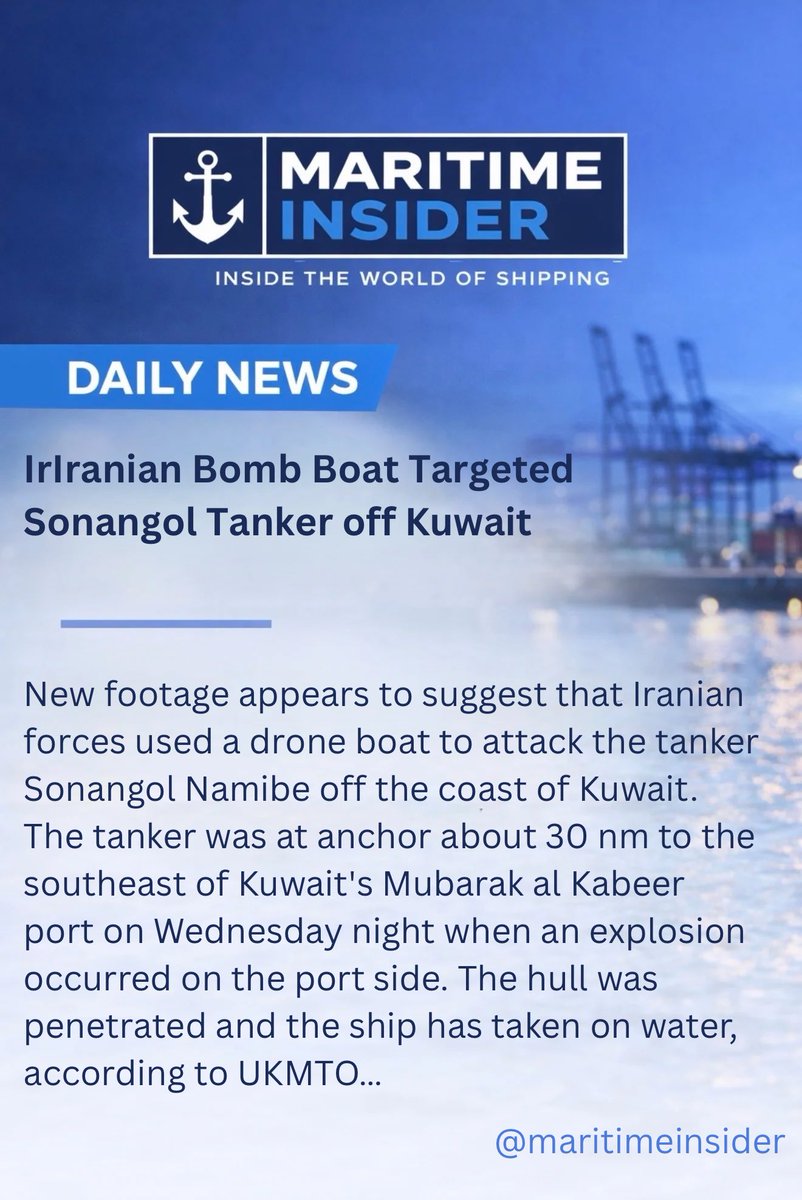
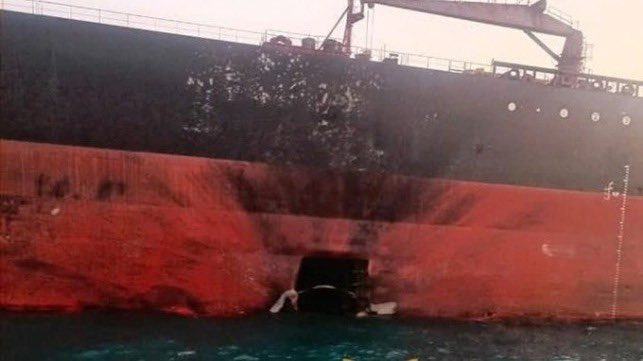
New footage appears to suggest that Iranian forces used a drone boat to attack the tanker Sonangol Namibe off the coast of Kuwait.
The tanker was at anchor about 30 nm to the southeast of Kuwait's Mubarak al Kabeer port on Wednesday night when an explosion occurred on the port side. The hull was penetrated and the ship has taken on water, according to UKMTO. However, there were no injuries, and the blast did not start a fire, according to the security agency.
The vessel was in ballast at the time of the blast, but satellite imaging taken the day after the strike shows a small petroleum slick emanating from the tanker.
The strike expanded the proven kinetic risk zone to the far northeastern end of the Gulf, confirming the possibility of an Iranian strike at any location within the area. It also showed that the threat picture for shipping will continue to include surface attacks, even though Iran's larger combatant vessels have substantially been eliminated by U.S. forces.
Iran is a longtime operator of unmanned bomb boats: it began providing the technology to Yemen's Houthi rebel group years before the concept was adopted and developed by Ukraine. Drone boats require a different defense strategy to prevent kinetic strikes, and they are difficult to defeat in swarms, as demonstrated by the Black Sea campaign targeting Russian warships and tankers.
The strike may have outsize importance for regional energy production. According to local Basra News, Sonangol Namibe was due to call at an Iraqi loading terminal to take on oil. Iraq is so short on shoreside storage space that it has begun to shut in production; A proven threat to tanker tonnage in Iraq has more immediate implications for the global crude oil supply than a similar threat in Saudi Arabia or the UAE, as Iraq's tank farm capacity is low and any production shut-in will take weeks to restart.
Follow @MaritimeInsider for verified maritime updates.
Join our WhatsApp channel for more updates:
https://t.co/P84F1J4riM
Join our X account :
https://t.co/3lm2KANJqn
Join our FB page :
https://t.co/TE7j5l13QM
#MaritimeInsider #MaritimeNew #ShippingNews #PortUpdates #GlobalShipping
🔵 Daily News:
Members of the Sri Lankan government confirmed during a session of parliament on Thursday, March 5, that an Iranian Navy supply ship, IRIS Bushehr (422), has made an urgent request for assistance and is seeking permission to dock in Sri Lanka. The request came after the sinking by the U.S. of the frigate Dena, and as Sri Lanka was conducting a search and rescue mission assisted by the Indian Navy.
The 3,300 dwt supply ship is believed to have been dispatched to resupply the Dena as the vessel was coming back from the Indian naval event. Commissioned in 1974, the vessel is 108 meters (354 feet) in length, with Sri Lankan government officials saying there are as many as 270 sailors and cadets aboard the vessel.
The request for urgent assistance and permission to dock in Sri Lanka came while the vessel was reported to be in international waters but within Sri Lanka’s EEZ. A minister told parliament the vessel remains outside Sri Lanka’s territorial waters, while the media reports said Sri Lankan President Anura Kumara Dissanayake was meeting with top government officials to decide what to do.
Some reports are saying the vessel, so far, has been denied permission to enter Sri Lanka’s waters, while another said after about 11 hours it was permitted to proceed to a point about 10 nautical miles off Colombo. Some reports said the ship was being denied docking privileges, while others said it was proposed that the ship would proceed to offload some of the people onboard, which is believed to include cadets, and that the ship would be placed at a secure dock in Colombo. One report suggested the ship would be interned for the remainder of the war.
Sri Lanka has condemned the American and Israeli hostilities and called for a diplomatic solution. It is reported to have consulted the Foreign Minister of Iran, but seeks to stay out of the war.
On Wednesday, Sri Lanka and India received the distress call from the frigate Dena after it was torpedoed. Reports placed the vessel between 20 and 50 nautical miles from the southern port of Galle. The Sri Lankan Navy responded and said the ship had sunk by the time it reached the scene. It reports that 32 Iranian sailors were rescued and taken under tight security to hospitals in Sri Lanka. They are reported to be suffering from burns, broken bones, and other less serious injuries.
Sri Lanka reports it recovered the bodies of Iranian sailors, with the media counts varying between 84 and 87, and is making diplomatic arrangements for their return to Iran. The Iranians said there were 130 aboard the Dena, but Sri Lanka said it believes there were 180 people aboard. It is continuing a search for as many as 60 people.
The Indian Navy said it dispatched a long-range maritime patrol aircraft to augment the efforts by the Sri Lankans. In addition, its vessel INS Taranigni was operating in the region and instructed to proceed to the location, where it arrived around 1600 local time on Wednesday. The INS Ikshak was also ordered to sail from Kochi, and a second long-range aircraft outfitted with a capability to drop rafts was placed on standby.
The Indian Government, on Thursday, is reported to have made a statement saying it will not be pulled into the war. It strongly denied rumors online and in the media that American forces were using Indian ports.
Follow @MaritimeInsider for verified maritime updates.
Join our WhatsApp channel for more updates:
https://t.co/P84F1J4riM
Join our X account :
https://t.co/3lm2KANJqn
Join our FB page :
https://t.co/TE7j5l13QM
#MaritimeInsider #MaritimeNew #ShippingNews #PortUpdates #GlobalShipping
🔵 Daily News:
Much attention has been paid to the effects of the Strait of Hormuz shutdown on the oil and LNG markets, but there are half a dozen other commodities that will be affected in the weeks to come if a security solution isn't reached soon. The GCC states produce half of the world's traded sulfur, a large share of its phosphate, and much of its nitrogen fertilizers - all needed for industrial agriculture. They also supply methanol, ethane, propane, naphtha and other basic ingredients to chemical plants across East Asia.
Agricultural fertilizer may be the most prominent market affected, as the natural gas-rich region is a leading producer and exporter. The broader MENA region produces about half of the world's urea, critical for row crops. Gas giant QatarEnergy alone accounts for 14 percent of the global supply, and Iran accounts for another 10 percent.
Saudi Arabia is also a major exporter of elemental phosphate. Crop production for staples like wheat and corn is heavily dependent on these chemical fertilizer inputs, and planting season is coming in the northern hemisphere. Fertilizer markets in the U.S. are already reacting with price increases: urea has jumped by 70 percent in three months.
"Nitrogen/phosphate markets, the timing of the Strait reopening is everything. If the Strait opens quickly, production can continue and flows return," said fertilizer wholesale executive Josh Linville in commentary posted Wednesday. "However, the longer it draws out, the more likely production will be to stop for lack [of storage] space."
With the shutdown of the strait, exports of chemical feedstocks from the Gulf have also ceased. Chemical plants in some East Asian nations are already curtailing production because of the unpredictability of future feedstock deliveries. Yeochun NCC, a South Korean petchem plant operator, told its customers that it had declared force majeure on Wednesday because of a naphtha shortage, forcing it to reduce output at its plants to "minimum capacity" effective immediately. It is expecting long delays in naphtha shipments that were scheduled to arrive in March. Indonesian manufacturer Chandra Asri has announced similar production-slowdown steps.
The Gulf also accounts for half of the world's seaborne sulfur trade. A byproduct of petroleum processing in the region, it is used for making sulfuric acid - key to extracting phosphate for fertilizer and for refining copper, cobalt, nickel, lithium and gold ores. Prices have already been high for sulfur and are expected to rise, especially in African markets that are more dependent on Gulf suppliers.
Follow @MaritimeInsider for verified maritime updates.
Join our WhatsApp channel for more updates:
https://t.co/P84F1J4riM
Join our X account :
https://t.co/3lm2KANJqn
Join our FB page :
https://t.co/TE7j5l13QM
#MaritimeInsider #MaritimeNew #ShippingNews #PortUpdates #GlobalShipping
🔵 Daily News :
The operators of Villa Vie Odyssey, one of the current residential cruise ships, announced that they are launching a new company to offer a premium residential cruise ship. Named Avora Residents, they report the new company will launch in January 2028 with the current Seven Seas Navigator operated by Regent Seven Seas Cruises.
Mikael Petterson, who was the creator of Villa Vie, reports the new model “strategically positions Avora between Villa Vie Residences’ contemporary residential cruise offerings and The World’s ultra-high-net-worth maritime estates.” The new product will offer two options: life-of-ship ownership, which is priced between approximately $545,000 and $4.2 million for 242 residences on the cruise ship, and Five-Year Ownership, which starts at $219,600. Villie Vie launched in October 2023 after a rocky start that included long delays at a shipyard in Scotland. They acquired a 30-year-old cruise ship, Braemar, from Fred. Olsen, which had been out of service since the pandemic. Renamed Odyssey, the ship is also operating a 3.5-year world cruise and recently arrived in New Zealand as the journey continues. The only other residential cruise ship is The World, which was purpose-built in 2002 and offers custom-designed luxury residences. Avora reports it has a nine-year charter agreement with “a nominal purchase option” with Norwegian Cruise Line Holdings, the parent company of Regent Seven Seas Cruises, for the Seven Seas Navigator. It also has a long-term operational agreement with NCLH and says it plans to “preserve the operational DNA” of the cruise ship by, where possible, forming relationships with key vendors and service providers to the ship. The Seven Seas Navigator is the oldest of the cruise ships operated by the ultra-luxury cruise line and had previously been slated to leave the fleet as Regent moves forward with the construction of four ultra-luxury all-suite cruise ships with Fincantieri. The first new ship enters service in December 2026. Regent currently operates five cruise ships introduced between 2001 and 2023, while the Seven Seas Navigator was built in the mid-1990s on the hull of an incomplete Soviet navy ship.
It is a 28,800 gross ton cruise ship currently designed with accommodations for 496 passengers in 244 suites. It is 566 feet (172 meters) in length and operates with a crew of 365. Avora plans to rename the ship Lumina and is calling it the flagship of its residential platform. It is the second time NCLH has made a deal with a startup residential cruise line for the Seven Seas Navigator. In March, a Miami-based real estate developer, Russel Galbut, announced the launch of Crescent Seas, which was to launch in December 2026 with the Navigator and later add the Insignia from Oceania Cruises. Crescent Seas reported in November 2025 that it had relinquished the charters on both ships, saying it would be too costly to convert them into residential ships and that the buyers were seeking more personalized spaces.
"Our philosophy is evolution, not disruption," said Kathy Villalba, Co-Founder & CEO of Avora Residences. Onboard, they are saying it will have a more upscale style than their first ship, Villa Vie’s Odyssey, and will introduce a culinary program for the passengers. The ship will feature destination-inspired dining concepts. The residences will range between approximately 300 & 1,173 square feet and, according to the company, will be designed as floating homes. They report the cruise ship will undergo a full residential conversion ahead of its launch in January 2028 from Lisbon, Portugal. Plans call for the first voyage to last three years, visiting more than 140 countries and over 400 destinations. They are reporting the ship will spend up to five days in a port, and on board, it will have a dedicated communications and business center to support extended voyages.After the first world cruise, the company reports that owners will help to shape where the Lumina sails..
🔵Daily News:
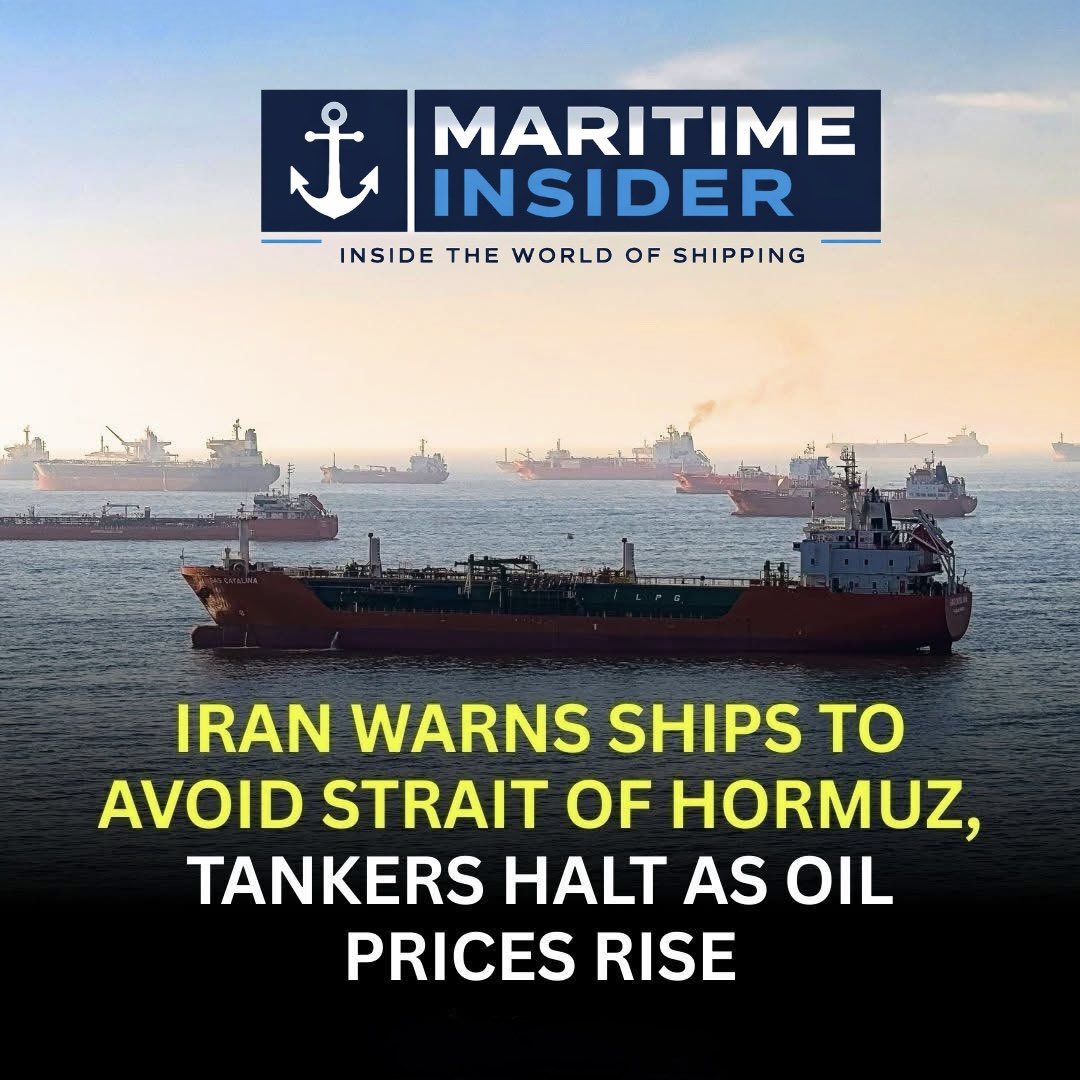
War risk at the Strait of Hormuz continues to deter shipowners from venturing near to Iran, and AIS-active traffic remains 90 percent below normal levels, according to MarineTraffic. Despite the hazards, a handful of owners are willing to make the run and join the 3,200-strong fleet inside of the high-risk zone of the Arabian Gulf.
"Stop trying to pass the Strait of Hormuz," security consultant Martin Kelly of EOS Risk Group implored shipowners. "There [have] been at least 10 attacks against shipping in 72 hours. At least one person dead, and at least one ship abandoned. . . . Please, defer transit."
Iran's strikes on shipping multiplied over the course of Tuesday and Wednesday, according to UKMTO. Six incidents were reported on March 3-4: a hit on the bulker Gold Oak off Fujairah, resulting in hull damage; a hit on the tanker Libra Trader off Fujairah, resulting in minor damage; a near-miss spotted by the container ship MSC Grace off Dubai; a close-in near miss on an unnamed vessel in the Gulf of Oman, nearly 140 nm offshore; a serious hit aboard the boxship Safeen Prestige in the Strait of Hormuz, resulting in a fire in the engine room and a decision to abandon ship; and (most recently) an apparent small-boat commando attack on a tanker 30 nm south of Kuwait, resulting in a blast and an oil spill.
A U.S. pledge to provide insurance for shipping in the region may help from a business standpoint, if it can be actualized, but improved physical security is likely a requirement for sustained commerce at scale. "Insurance may incentivize a few to start transiting but the Iranians will likely attack and then traffic will again cease transit," Odin head analyst Alpman Ilker told Argus Media.
Physical security have to await the resolution of the conflict. Odds of a naval escort mission appears limited given the intensity of ongoing combat in the Gulf region and the availability of resources. Most of the attacks to date have occurred far outside the Strait of Hormuz, at locations from Kuwait to Salalah. Any U.S. Navy assets tasked to escort duty would have to spend days in range of Iranian missiles and drones, requiring the crews to defend themselves as well as their convoys.
"The Red Sea precedent is instructive: 15 months of 'Operation Prosperity Guardian' escorts failed to restore commercial traffic despite 400 drones/missiles downed," commented analysts with SSY Global in a new research note. "[At Hormuz] physical geography favors the attacker. TSS lanes are two nm wide each direction; vessels transit at 10–12 knots and must turn at the narrowest point adjacent to Iranian islands. A destroyer can intercept missiles but cannot simultaneously sweep mines, counter drone-boat swarms from multiple bearings, and manage GPS disruption."
The shadow fleet tankers that serve Iran have no such security concerns, at least based on satellite imagery. The loading berths at Kharg Island are still running at full rate, according to https://t.co/fhXs3FGpHT.
Follow @MaritimeInsider for verified maritime updates.
Join our WhatsApp channel for more updates:
https://t.co/P84F1J4Z8k
Join our X account :
https://t.co/3lm2KAOhfV
Join our FB page :
https://t.co/TE7j5l1BGk
#MaritimeInsider #MaritimeNew #ShippingNews #PortUpdates #GlobalShipping
🔵 Daily News: (part 2/2)
It loaded again on Feb. 18 during a rare triple ship-to-ship (STS) transfer near Murmansk – the cargo believed to have been aboard when the explosion occurred.
That triple STS marked the first known simultaneous LNG transfers from both Yamal LNG and Arctic LNG 2 onto separate conventional carriers, underscoring Russia’s increasingly complex maritime choreography to sustain exports.
If the incident is confirmed as a deliberate attack, it could significantly complicate logistics for Novatek.
The company has just 11 shadow fleet LNG carriers at its disposal, according to shipping data – already too few to carry the project’s full nameplate capacity. Arctic LNG 2 is currently operating at roughly 30% of that level of 3mtpa, constrained largely by shipping limitations.
The loss or long-term sidelining of even one vessel would represent a meaningful blow to the project’s transport capacity.
The blast also raises immediate routing questions. Seven Arctic LNG 2 shadow fleet vessels have continued using the Mediterranean, Suez Canal and Red Sea corridor despite regional instability.
One of them, Arctic Pioneer, is currently holding outside Port Said after a northbound Suez transit. The vessel delivered Arctic LNG 2 cargo to Beihai on February 11 and was likely returning toward Murmansk to reload.
Its pause near Egypt may signal that Moscow is reassessing whether to continue risking Mediterranean passages – or whether to reroute via the Cape of Good Hope, adding weeks to voyages and further tightening available tonnage.
For a project already operating below capacity due to sanctions and shipping constraints, the explosion off Malta underscores the vulnerability of Russia’s Arctic LNG shadow fleet – and the mounting risks facing vessels that form the backbone of its sanctioned gas exports.
Follow @MaritimeInsider for verified maritime updates.
Join our WhatsApp channel for more updates:
https://t.co/P84F1J4riM
Join our X account :
https://t.co/3lm2KANJqn
Join our FB page :
https://t.co/TE7j5l13QM
#MaritimeInsider #MaritimeNew #ShippingNews #PortUpdates #GlobalShipping
🔵 Daily News : (part 1/2 )
An LNG carrier central to Russia’s sanctioned Arctic gas trade was rocked by an explosion around 4 a.m. on March 3 roughly 150 nautical miles southeast of Malta, in an incident Moscow said was a Ukrainian attack and that could ripple through the Kremlin’s fragile LNG shadow fleet logistics network.
Photos taken after the blast show at least one cargo compartment fully blown open, with extensive fire damage visible across much of the hull and deck.
Satellite images earlier on March 4 showed the vessel still afloat, but according to Libyan port officials the vessel has now sunk.
All 30 crew members escaped via life rafts and were rescued, according to Russian and Maltese authorities.
Russia’s Ministry of Transport said in a statement that “on March 3, the Russian gas carrier Arctic Metagaz was attacked in close proximity to the territorial waters of the European Union member state of Malta.”
The tanker was en route from Murmansk “carrying cargo cleared in accordance with all international regulations,” the ministry said, adding that “the attack was carried out off the coast of Libya by unmanned Ukrainian boats.”
“Thanks to the coordinated efforts of Maltese and Russian rescue services, all 30 crew members, all Russian citizens, were rescued,” it said.
“We classify this incident as an act of international terrorism and maritime piracy, a gross violation of the fundamental norms of international maritime law,” the statement added, alleging the attack was carried out “with the connivance of the authorities of EU member states.”
Ukraine has not publicly commented.
The vessel, currently sailing as Arctic Metagazand previously known as Everest Energy, has been one of the most closely tracked ships involved in exports from Russia’s Arctic LNG 2 project, majority owned by Novatek.
On Aug. 25, 2024, under its former name, it became the third vessel to load LNG from the sanctioned Utrenniy terminal at Arctic LNG 2. It returned to the terminal on Sept. 6 and Oct. 5, 2024, making three liftings during the project’s first export season.
In September 2024, the vessel also became the first ever conventional, non-ice-class LNG carrier to transit the Northern Sea Route (NSR), a high-risk passage typically reserved for specialized Arc7 ice-class tankers.
The decision underscored the extent to which Russia was prepared to stretch operational norms to keep gas flowing despite Western sanctions that have limited access to ice-class tonnage, insurance and buyers.
The risks became evident in August 2025 when Arctic Metagaz again attempted an NSR transit but became stuck near the ice edge, halting and reversing course in heavy sea ice.
The episode highlighted the hazards of deploying non-ice-class vessels in Arctic waters and the logistical strain facing Arctic LNG 2, which lacks sufficient purpose-built carriers.
During the 2024 season, the vessel offloaded at the Saam floating storage unit (FSU) on August 29 and at the Koryak FSU on September 22.
After the initial Arctic campaign, Arctic Metagaz spent much of the winter and spring of 2024/25 circling the eastern Mediterranean loaded with cargo, reflecting the difficulty of placing sanctioned LNG in stable end markets.
It returned north near Kola Bay on May 24, 2025, preparing to resume shadow fleet operations for the summer navigation window.
Following its 2025 ice entrapment it discharged a cargo at China’s Beihai terminal on October 13, 2025 – the ninth Arctic LNG 2 delivery to that facility.
On November 25, 2025, the vessel loaded LNG from the Saam FSU and returned to Asia via the Suez Canal, offloading at Beihai on January 3, 2026.
It loaded again on Feb. 18 during a rare triple ship-to-ship (STS) transfer near Murmansk – the cargo believed to have been aboard when the explosion occurred.
Follow @MaritimeInsider for verified maritime updates.
Join our WhatsApp channel for more updates:
https://t.co/P84F1J4riM
Join our X account :
https://t.co/3lm2KANJqn
🔵Daily News:
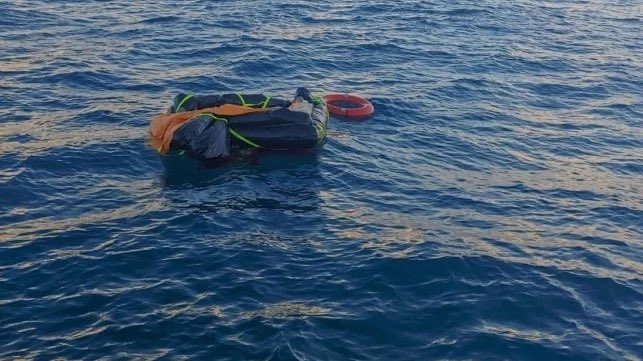
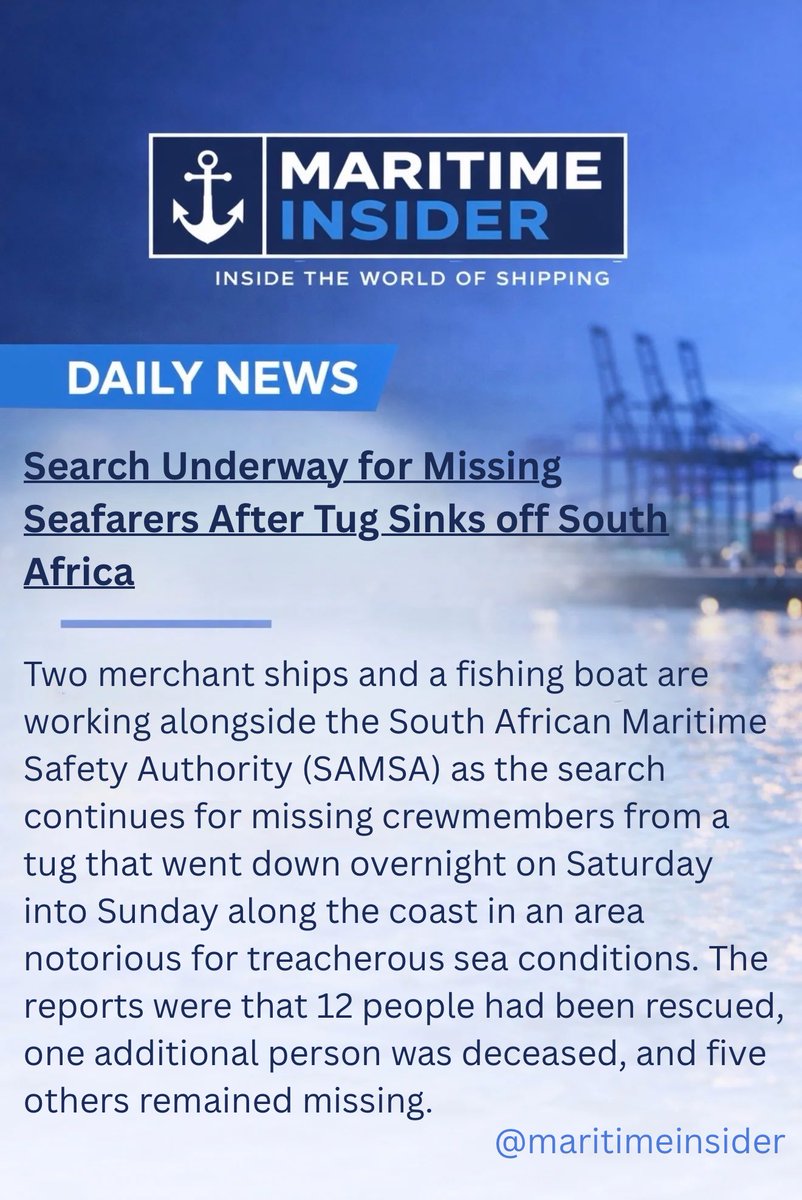
Two merchant ships and a fishing boat are working alongside the South African Maritime Safety Authority (SAMSA) as the search continues for missing crewmembers from a tug that went down overnight on Saturday into Sunday along the coast in an area notorious for treacherous sea conditions. The reports were that 12 people had been rescued, one additional person was deceased, and five others remained missing.
The emergency call was received by the Maritime Rescue Coordination Center in Cape Two at around 1900 on Saturday, February 28. The crew of the tugboat named Leo advised that they were uncontrollably taking on water. Some reports suggest that the vessel, which was 18 nautical miles off the coast between Cape Town and Durban, had grounded during a storm.
The 18 people aboard the tug reported they were preparing to go into four life rafts before the vessel went down early on March 1. SAMSA reports their position as approximately 80 nautical miles south of Mossel Bay.
The reports are that the tug was from Nigeria and had been in South Africa for repairs. It was starting a return voyage to Lagos.
The coastline is notorious for difficult sea conditions and strong storms. SAMSA reports that adverse weather conditions are challenging the search operation. It said all available resources were being utilized, including a helicopter.
The 12 survivors were being transferred to Port Elizabeth. The Nigerian government had been advised, and a representative was at Port Elizabeth to meet the survivors and provide them with assistance.
Follow @MaritimeInsider for verified maritime updates.
Join our WhatsApp channel for more updates:
https://t.co/P84F1J4riM
Join our X account :
https://t.co/3lm2KANJqn
Join our FB page :
https://t.co/TE7j5l13QM
#MaritimeInsider #MaritimeNew #ShippingNews #PortUpdates #GlobalShipping
🔵Daily News :
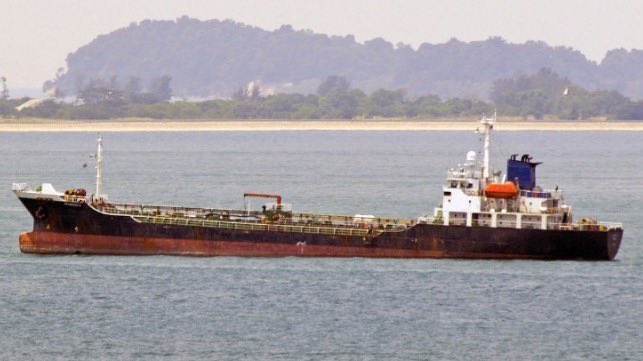
Iran's Islamic Revolutionary Guard Corps has claimed an attack on the bitumen tanker Athe Nova, currently located off the coast of Khor Fakkan. It is at least the sixth tanker strike attributed to Iran in two days, part of a wave of retaliatory attacks following last weekend's U.S.-Israeli airstrikes on Tehran.
Like previous tanker target Skylight, Athe Nova has a history of serving Iranian energy shipping interests, and is an unusual selection for Iranian forces to attack. According to shipping data firm Windward, the vessel has called before at the Iranian port of Soroosh and at ports in Oman.
IRGC-affiliated outlet Tasnim asserted that Athe Novahad attempted to make an "illegal" crossing of the Strat of Hormuz and was hit by two drones. Just before the claimed strike, the Athe Nova exhibited AIS movement behavior consistent with a distress situation or loitering near the Strait of Hormuz, Windward reports.
Athe Nova is a Honduran-flagged bitumen tanker built in 1998 and managed in the UAE. At 28 years of age, the vessel is operating beyond the normal commercial lifespan of a tanker, and has an extensive inspection and detention history. PSC inspectors have found issues on board in every boarding since 2015; the vessel was last examined in India in 2023, and port state control found issues with hatches, deck corrosion, lifeboats, drills, and electrical equipment safety.
Previously reported Iranian attacks of the last two days include strikes on the crude oil tanker MKD Vyom at a position 50 nm north of Muscat, resulting in the death of one crewmember; the tanker Hercules Star, hit off Mina Saqr; the tanker Sea La Donna, off Abu Dhabi; the U.S.-flagged product tanker Stena Imperative at Bahrain, killing one yard worker; and an unconfirmed strike on the Greek-owned MR tanker Ocean Electra, which has not been included in most reports. Media outlets and regional maritime security agencies have differing lists, and an exact accounting may take time.
Top image: Bitumen tanker Athe Nova (file image courtesy VesselFinder / mgklingsick)
Follow @MaritimeInsider for verified maritime updates.
Join our WhatsApp channel for more updates:
https://t.co/P84F1J4riM
Join our X account :
https://t.co/3lm2KANJqn
Join our FB page :
https://t.co/TE7j5l13QM
🔵Daily News:
The world's largest China-built dual-fuel container ship was seen leaving dock for its trial trip in Taicang city, east China's Jiangsu Province, on Sunday. Measuring 399.9 meters in length, the ship has a capacity of 24,212 twenty-foot equivalent units. #ChinaSeen
Follow @MaritimeInsider for verified maritime updates.
Join our WhatsApp channel for more updates:
https://t.co/P84F1J4Z8k
Join our X account :
https://t.co/3lm2KAOhfV
Join our FB page :
https://t.co/TE7j5l1BGk
🔵Daily News:
French President Emmanuel Macron has ordered the deployment of a French aircraft carrier to the Eastern Mediterranean in response to the rapidly escalating conflict in the Middle East. This strategic move follows a series of significant military developments, including Israeli strikes near Beirut and Hezbollah's retaliatory missile launches, which have threatened to engulf the entire region in a multi-front war.
The deployment of the carrier, likely the Charles de Gaulle, is intended to bolster European maritime security and provide a platform for potential humanitarian or evacuation operations should the situation in Lebanon and surrounding areas deteriorate further. France has historically maintained deep ties with Lebanon and has been vocal about the need for a diplomatic de-escalation to prevent a total regional collapse.
This naval mobilization comes as the international community remains fractured over the ongoing "Operation Epic Fury." While the United Kingdom has remained ambiguous about its support for U.S.-Israeli actions, France's deployment signals a proactive—yet independent—European effort to monitor the security of the Mediterranean's vital sea lanes.
Military analysts suggest that the presence of a French carrier group will serve as a stabilizing force, providing advanced radar and air defense capabilities to protect European interests in the area. It also allows Paris to maintain a significant diplomatic and military "seat at the table" as major powers like the U.S. and Russia exchange sharp rhetoric over the recent assassinations of Iranian leadership.
As the vessel moves into position, the global community is watching to see if France will take a more active role in mediating between the warring factions or if its presence will be primarily focused on defensive posturing and the protection of French nationals in the region.
#France #MiddleEast #Geopolitics #BreakingNews #Navy
Follow @MaritimeInsider for verified maritime updates.
Join our WhatsApp channel for more updates:
https://t.co/P84F1J4Z8k
Join our X account :
https://t.co/3lm2KAOhfV
Join our FB page :
https://t.co/66SKPp4t34
🔵Daily News :
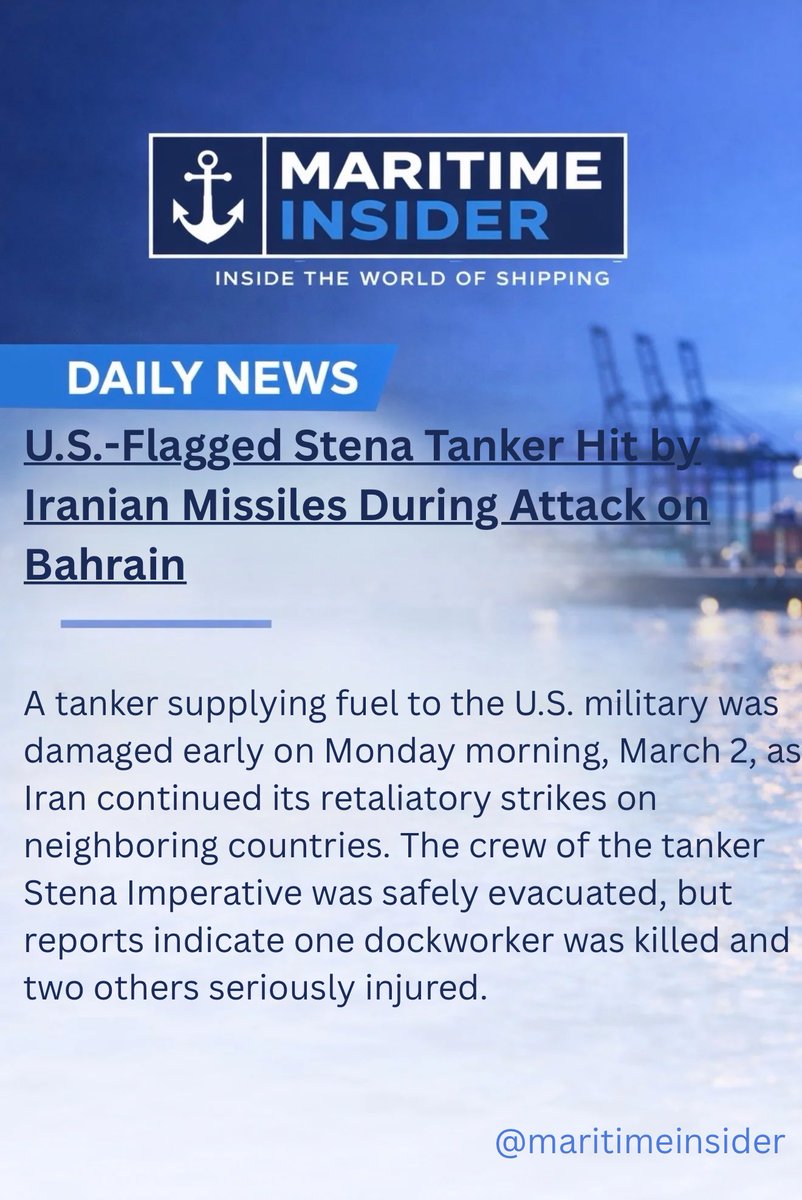
A tanker supplying fuel to the U.S. military was damaged early on Monday morning, March 2, as Iran continued its retaliatory strikes on neighboring countries. The crew of the tanker Stena Imperative was safely evacuated, but reports indicate one dockworker was killed and two others seriously injured.
The tanker Stena Imperative (49,800 dwt) appears to have been docked in Bahrain for the past few days as part of its participation in the U.S. Maritime Administration’s (MARAD) Tanker Security Program. U.S.-based shipping manager Crowley had highlighted in 2023 that it, along with its partner Stena Bulk USA, received the contract for three tankers to transport liquid fuel supplies in times of need for the U.S. Department of Defense. The tankers were Stena Immaculate, Stena Imperative, and Stena Impeccable, with Stena Immaculate involved in the allision in March 2025 off the coast of England when it was struck by a Portuguese-flagged containership.
In a statement to the wire services, Crowley and Stena Bulk confirmed the Stena Imperative was struck by two projectiles at around 0300 local time on March 2. The companies said there had been a fire aboard the vessel, which was extinguished. They acknowledged damage while saying a survey was underway to determine the full extent of the incident.
Some reports are saying the tanker was likely targeted for its involvement in the U.S. fuel program, but many analysts are also noting the haphazard nature of the Iranian attacks. The attacks on shipping near the Straits of Hormuz also seem to be indiscriminate and designed more to create fear than to hit a specific ship.
The Stena Imperative had been approached by the Iranians at the beginning of February when it was inbound into the Persian Gulf. Iranian speedboats approached the tanker and told it to stop or steer toward Iran, but the tanker reportedly increased speed and maneuvered. A U.S. warship was also in the area at the time, and the Stena tanker proceeded without further incident.
The tanker was believed to have been in Fujairah and later sailed to Bahrain. It ceased AIS signals on February 28, shortly before the attacks began.
The ship provided an important capability to the U.S., as it in 2025 was certified for ship-to-ship refueling while underway.
The incident comes as Iran continues to terrorize shipping around the Straits of Hormuz and the ports of the Persian Gulf. Security firms confirmed four vessels were struck on Sunday, with reports of at least one person killed. UK Maritime Trade Operations is reporting that another vessel was struck by a drone on Monday outside the Straits of Hormuz. Signals show that most commercial vessels have stopped their transits and are holding at a distance away from Iran.
U.S. Central Command asserts that it is systematically degrading Iranian ballistic missile capabilities.
Follow @MaritimeInsider for verified maritime updates.
Join our WhatsApp channel for more updates:
https://t.co/P84F1J4riM
Join our X account :
https://t.co/3lm2KANJqn
Join our FB page :
https://t.co/66SKPp3Vdw
{Stena Imperative is part of MARAD's Tanker Security Program which uses commercial tankers to supply the U.S. military (DoD photo from 2023)}
🔵 Daily News:
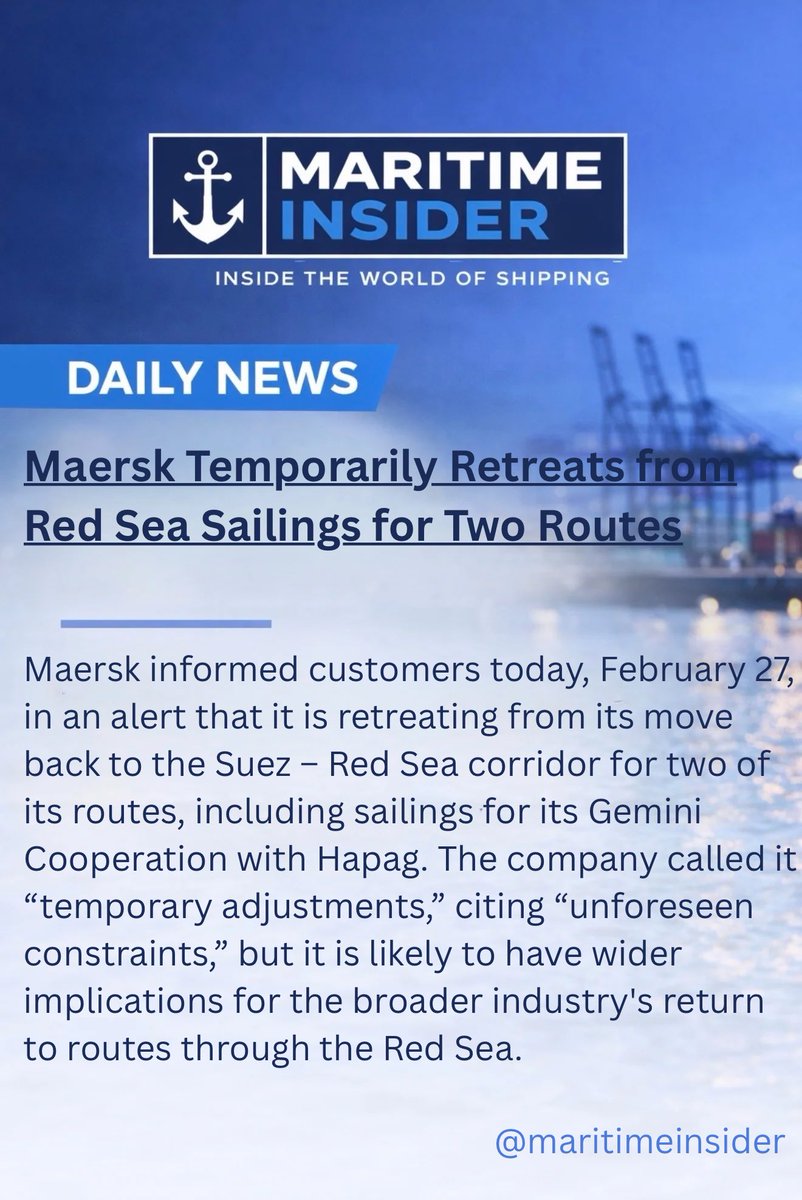
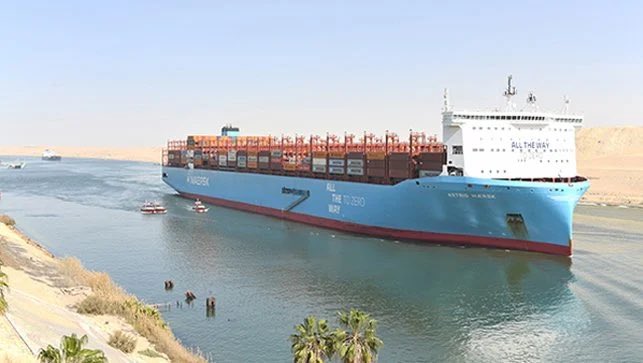
Maersk informed customers today, February 27, in an alert that it is retreating from its move back to the Suez – Red Sea corridor for two of its routes, including sailings for its Gemini Cooperation with Hapag. The company called it “temporary adjustments,” citing “unforeseen constraints,” but it is likely to have wider implications for the broader industry's return to routes through the Red Sea.
“We are currently experiencing unforeseen constraints arising from the wider operating environment?in the Red Sea region. After conversations with our security partners, it is clear that these constraints are making it challenging to avoid delays in regard to passage through the area. Therefore, we have made the decision to reroute some of our upcoming sailings on the ME11 and MECL services from Trans Suez to Cape of Good Hope,” the company advised customers.
The announcement reflects changes for the next three sailings each eastbound and westbound for the company’s independent route (MECL) that connects Saudi Arabia and the Middle East to the U.S. East Coast. It lists sailing through mid-March as diverting to the Cape of Good Hope and rounding Africa while saying it continues to prioritize the Trans-Suez route as it is the fastest, most sustainable, and most efficient for customers.
Possibly more significant for the industry, the next three westbound sailings and four eastbound sailings of Maersk vessels on a Gemini Cooperation route are also diverting back to the Cape of Good Hope. This service (ME11) connects India and the Middle East to the Mediterranean.
Maersk says it is sharing the changes for the next three weeks so that customers can adjust their supply chains. Customers will be receiving updated transport plans shortly, it advises.
The change comes just over two weeks after the first Maersk vessel completed the first eastbound route transit through the Suez – Red Sea corridor for the return of the ME11 route. Masesk had tested the Suez Canal and Red Sea with its first sailings in January.
The company emphasized that the return of both the Gemini service and its independently operated routes depended on security in the region and that the transits would “be secured by naval assistance.” It further said the service would “remain dependent on the ongoing stability in the Red Sea area and the absence of any escalation in conflicts in the region.”
Earlier this week, the European Council confirmed that it was extending its protection mission, Operation Aspides, for another year to the end of February 2027, however, with a slightly lower budget. Ships can request Aspides assistance, but the operation only has three warships available to provide escorts through the region. In the past, CMA CGM has cited the delays it experienced waiting for available assistance for its sailings.
The Suez Canal Authority was anxious to encourage the resumption of the routes to highlight the stability in the region. While the Houthis have issued some regional threats, they have not attacked a merchant ship since last September. However, the U.S. has been building up its naval presence in the Middle East and has threatened action against Iran, which has raised regional tensions.
Follow @MaritimeInsider for verified maritime updates.
Join our WhatsApp channel for more updates:
https://t.co/P84F1J4riM
Join our X account :
https://t.co/3lm2KANJqn
Join our FB page :
https://t.co/66SKPp3Vdw
🔵 Daily News:
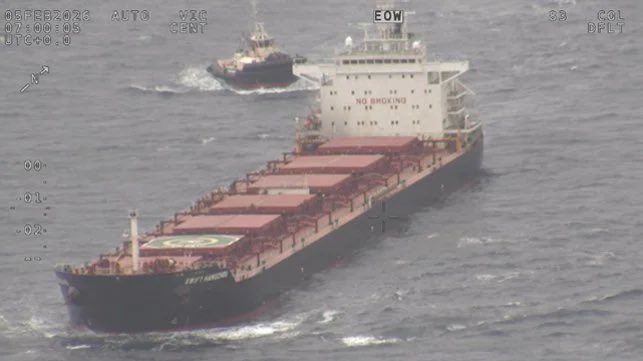
AMSA has been responding to the situation for 24 days after the Swift Hangzhou reported engines troubles shortly after departing (AMSA photos)
PUBLISHED FEB 27, 2026 5:09 PM BY T.M.E.
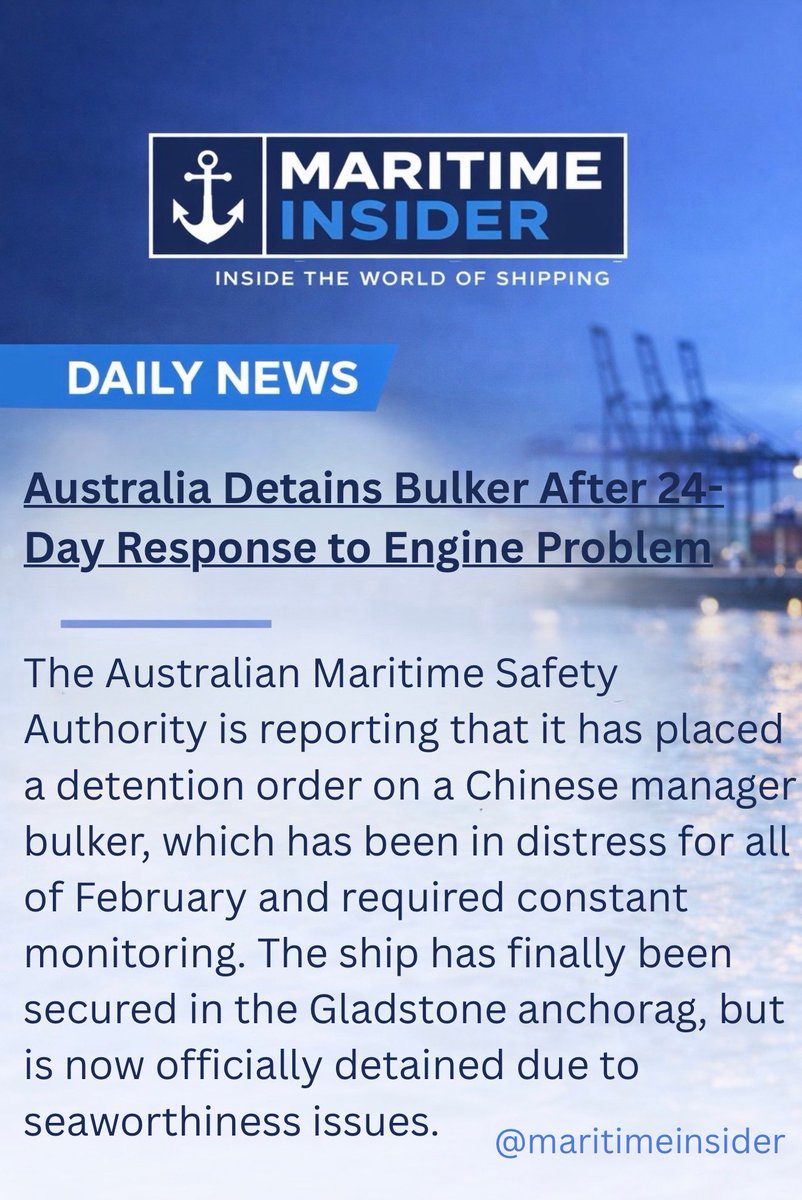
The Australian Maritime Safety Authority is reporting that it has placed a detention order on a Chinese manager bulker, which has been in distress for all of February and required constant monitoring. The ship has finally been secured in the Gladstone anchorag, but is now officially detained due to seaworthiness issues.
The saga of the bulker Swift Hangzhou began hours after the vessel departed Gladstone on January 31, bound for South Korea. The 79,343 dwt vessel, registered in Liberia, was built in 2015. Shortly after departing the Australian port, the vessel reported it was experiencing engine problems.
AMSA reported that it was working closely with the authorities in the Australian state of Queensland, as well as the vessel’s captain and operator, to manage the situation. It placed a maritime casualty officer aboard the ship, who inspected the engine and who was advised the captain and crew of the ship. The MCO was also liaising with AMSA.
Its primary concern was the safety of the 21 crew onboard, as well as the environment and other vessels in the area. AMSA reports it dispatched four emergency towing vessels to prevent the vessel from drifting into sensitive areas of the Great Barrier Reef and the surrounding marine park. AMSA also maintained a 24-hour monitoring operation for the vessel and weather conditions to prevent further risks.

As of February 24, the vessel is in the anchorage at Gladstone, and AMSA said its round-the-clock 24-day response has been concluded.
However, the saga for the vessel is far from over. A detention order was issued due to the problems onboard, and it requires the ship to demonstrate proper repairs before it will be permitted to depart again.
“This incident is a reminder that the unexpected in maritime work can happen at any point in a vessel’s voyage,” said Alex Barrell, ExecutiveDirector ofr Response for AMSA. “In the case of the Swift Hangzhou’s engine failure, AMSA’s approach in managing the incident prevented risk to vessel, crew and marine environment.”
Follow @MaritimeInsider for verified maritime updates.
Join our WhatsApp channel for more updates:
https://t.co/P84F1J4riM
Join our X account :
https://t.co/3lm2KANJqn
Join our FB page :
https://t.co/66SKPp3Vdw
🔵 Daily News :
As tensions rose in the Middle East immediately prior to the pre-emptive American and Israeli attack on Iran on February 28, there were indicators of an imminent attack. International airlines abandoned routes through Iranian airspace the previous day, as the USS Gerald Ford (CVN--78) carrier strike group neared the Israeli coast. But the regular Iranian Navy (Nedaja) appears not to have adjusted its deployments and has not conducted a wholesale dispersal to sea from its home ports.
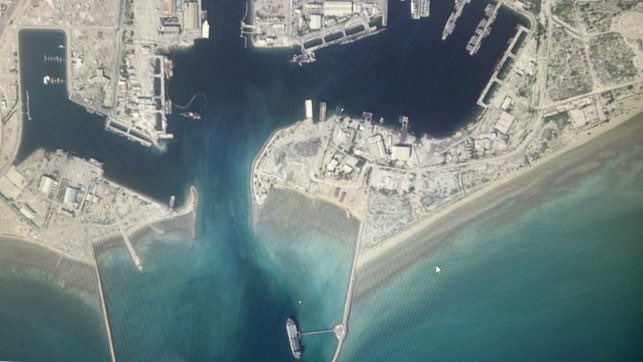
Over previous days, there has been a return to home ports of Nedaja ships which had been out on deployment. Moudge Class frigate IRINS Dena (F75) has completed its participation in the Indian International Fleet Review, and Exercise MILAN-2026 which followed. Read Admiral Shahram Irani, the Nedaja commander, on February 27 welcomed home the 103rd Naval Flotilla on its delayed return from participation in Exercise Will for Peace 2026 off Cape Town. The flotilla docked at the Konarak Naval Base in Chah Bahar rather than in Bandar Abbas, although the IRGC Navy participant the converted oil tanker, IRIS Shahid Mahdavi (C110-3) appeared to have moved on to its regular mooring in the Bandar Abbas roads.
On February 25, Nedaja frigates IRINS Sabalan (F73), Sahand (F74), Jamaran (F76) and Zagros (H313) were all alongside in the Bandar Abbas Naval Harbor. Also present was the one Kilo Class submarine believed to be semi-operational IRINS Taregh (S901) and a second still undergoing deep refit in dry dock IRINS Nooh (S902); the whereabouts of the third Kilo Class submarine IRINS Yunes (S903) remains uncertain since it left dry dock some months ago. Unusually, not one of the Bandar Abbas and Hengam Class logistic vessels was in port, and neither is the converted tanker IRINS Makran (K441), though IRINS Kurdestan (K442) is on its pier in the Outer Harbor.
Follow @MaritimeInsider for verified maritime updates.
Join our WhatsApp channel for more updates:
https://t.co/P84F1J4riM
Join our X account :
https://t.co/3lm2KANJqn
Join our FB page :
https://t.co/66SKPp3Vdw
🔵 Daily News :
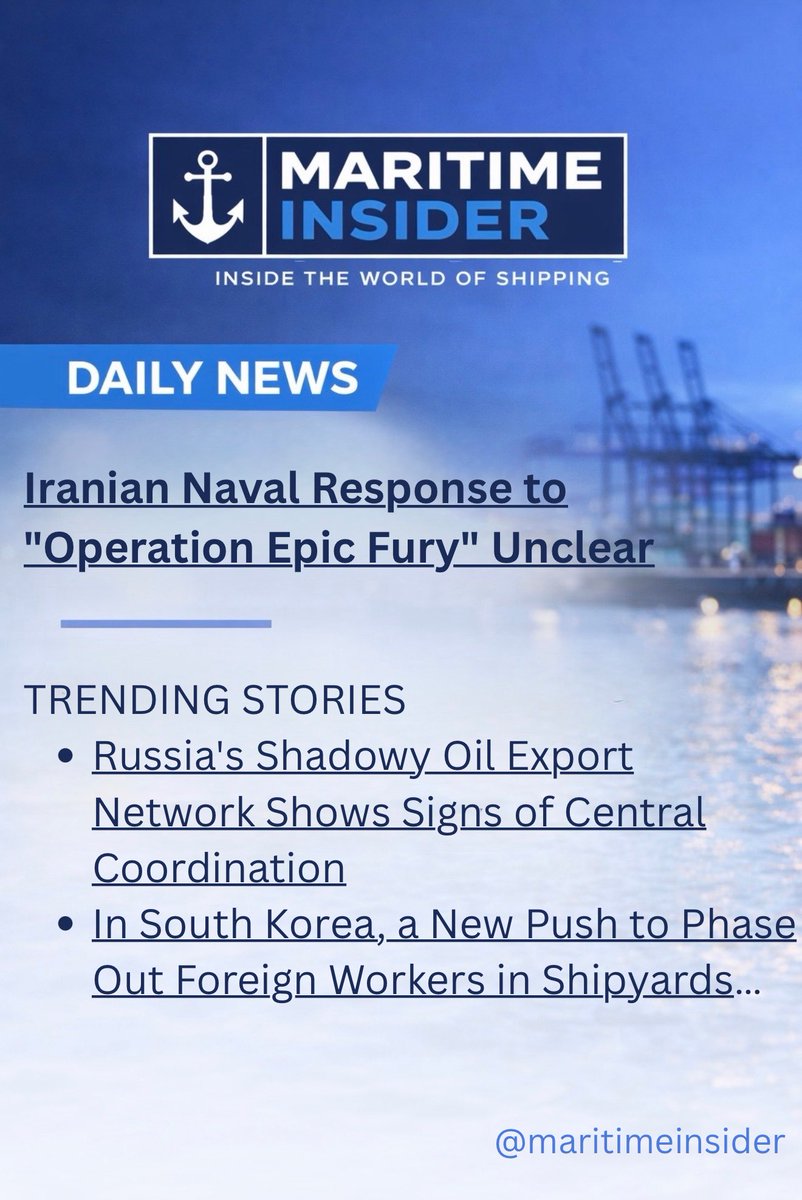
Iranian Naval Response to "Operation Epic Fury" Unclear
TRENDING STORIES:
🇷🇺Russia's Shadowy Oil Export Network Shows Signs of Central Coordination
🇰🇷In South Korea, a New Push to Phase Out Foreign Workers in Shipyards
🇨🇳Chinese Cruise Ship Arrested After Line Suspends Service
🇺🇸An American Energy Company is Preparing to Drill for Oil in Greenland…
Follow @MaritimeInsider for verified maritime updates.
Join our WhatsApp channel for more updates:
https://t.co/P84F1J4riM
Join our X account :
https://t.co/3lm2KANJqn
Join our FB page :
https://t.co/66SKPp3Vdw



![MartimeInsider's tweet photo. 🔵 Daily News:
Much attention has been paid to the effects of the Strait of Hormuz shutdown on the oil and LNG markets, but there are half a dozen other commodities that will be affected in the weeks to come if a security solution isn't reached soon. The GCC states produce half of the world's traded sulfur, a large share of its phosphate, and much of its nitrogen fertilizers - all needed for industrial agriculture. They also supply methanol, ethane, propane, naphtha and other basic ingredients to chemical plants across East Asia.
Agricultural fertilizer may be the most prominent market affected, as the natural gas-rich region is a leading producer and exporter. The broader MENA region produces about half of the world's urea, critical for row crops. Gas giant QatarEnergy alone accounts for 14 percent of the global supply, and Iran accounts for another 10 percent.
Saudi Arabia is also a major exporter of elemental phosphate. Crop production for staples like wheat and corn is heavily dependent on these chemical fertilizer inputs, and planting season is coming in the northern hemisphere. Fertilizer markets in the U.S. are already reacting with price increases: urea has jumped by 70 percent in three months.
"Nitrogen/phosphate markets, the timing of the Strait reopening is everything. If the Strait opens quickly, production can continue and flows return," said fertilizer wholesale executive Josh Linville in commentary posted Wednesday. "However, the longer it draws out, the more likely production will be to stop for lack [of storage] space."
With the shutdown of the strait, exports of chemical feedstocks from the Gulf have also ceased. Chemical plants in some East Asian nations are already curtailing production because of the unpredictability of future feedstock deliveries. Yeochun NCC, a South Korean petchem plant operator, told its customers that it had declared force majeure on Wednesday because of a naphtha shortage, forcing it to reduce output at its plants to "minimum capacity" effective immediately. It is expecting long delays in naphtha shipments that were scheduled to arrive in March. Indonesian manufacturer Chandra Asri has announced similar production-slowdown steps.
The Gulf also accounts for half of the world's seaborne sulfur trade. A byproduct of petroleum processing in the region, it is used for making sulfuric acid - key to extracting phosphate for fertilizer and for refining copper, cobalt, nickel, lithium and gold ores. Prices have already been high for sulfur and are expected to rise, especially in African markets that are more dependent on Gulf suppliers.
Follow @MaritimeInsider for verified maritime updates.
Join our WhatsApp channel for more updates:
https://t.co/P84F1J4riM
Join our X account :
https://t.co/3lm2KANJqn
Join our FB page :
https://t.co/TE7j5l13QM
#MaritimeInsider #MaritimeNew #ShippingNews #PortUpdates #GlobalShipping](https://pbs.twimg.com/media/HCq_-ZTXsAAuUrm.jpg)

![MartimeInsider's tweet photo. 🔵Daily News:
War risk at the Strait of Hormuz continues to deter shipowners from venturing near to Iran, and AIS-active traffic remains 90 percent below normal levels, according to MarineTraffic. Despite the hazards, a handful of owners are willing to make the run and join the 3,200-strong fleet inside of the high-risk zone of the Arabian Gulf.
"Stop trying to pass the Strait of Hormuz," security consultant Martin Kelly of EOS Risk Group implored shipowners. "There [have] been at least 10 attacks against shipping in 72 hours. At least one person dead, and at least one ship abandoned. . . . Please, defer transit."
Iran's strikes on shipping multiplied over the course of Tuesday and Wednesday, according to UKMTO. Six incidents were reported on March 3-4: a hit on the bulker Gold Oak off Fujairah, resulting in hull damage; a hit on the tanker Libra Trader off Fujairah, resulting in minor damage; a near-miss spotted by the container ship MSC Grace off Dubai; a close-in near miss on an unnamed vessel in the Gulf of Oman, nearly 140 nm offshore; a serious hit aboard the boxship Safeen Prestige in the Strait of Hormuz, resulting in a fire in the engine room and a decision to abandon ship; and (most recently) an apparent small-boat commando attack on a tanker 30 nm south of Kuwait, resulting in a blast and an oil spill.
A U.S. pledge to provide insurance for shipping in the region may help from a business standpoint, if it can be actualized, but improved physical security is likely a requirement for sustained commerce at scale. "Insurance may incentivize a few to start transiting but the Iranians will likely attack and then traffic will again cease transit," Odin head analyst Alpman Ilker told Argus Media.
Physical security have to await the resolution of the conflict. Odds of a naval escort mission appears limited given the intensity of ongoing combat in the Gulf region and the availability of resources. Most of the attacks to date have occurred far outside the Strait of Hormuz, at locations from Kuwait to Salalah. Any U.S. Navy assets tasked to escort duty would have to spend days in range of Iranian missiles and drones, requiring the crews to defend themselves as well as their convoys.
"The Red Sea precedent is instructive: 15 months of 'Operation Prosperity Guardian' escorts failed to restore commercial traffic despite 400 drones/missiles downed," commented analysts with SSY Global in a new research note. "[At Hormuz] physical geography favors the attacker. TSS lanes are two nm wide each direction; vessels transit at 10–12 knots and must turn at the narrowest point adjacent to Iranian islands. A destroyer can intercept missiles but cannot simultaneously sweep mines, counter drone-boat swarms from multiple bearings, and manage GPS disruption."
The shadow fleet tankers that serve Iran have no such security concerns, at least based on satellite imagery. The loading berths at Kharg Island are still running at full rate, according to https://t.co/fhXs3FGpHT.
Follow @MaritimeInsider for verified maritime updates.
Join our WhatsApp channel for more updates:
https://t.co/P84F1J4Z8k
Join our X account :
https://t.co/3lm2KAOhfV
Join our FB page :
https://t.co/TE7j5l1BGk
#MaritimeInsider #MaritimeNew #ShippingNews #PortUpdates #GlobalShipping](https://pbs.twimg.com/media/HCq7a6wWgAEQ8Mc.jpg)










![MartimeInsider's tweet photo. 🔵 Daily News:
Much attention has been paid to the effects of the Strait of Hormuz shutdown on the oil and LNG markets, but there are half a dozen other commodities that will be affected in the weeks to come if a security solution isn't reached soon. The GCC states produce half of the world's traded sulfur, a large share of its phosphate, and much of its nitrogen fertilizers - all needed for industrial agriculture. They also supply methanol, ethane, propane, naphtha and other basic ingredients to chemical plants across East Asia.
Agricultural fertilizer may be the most prominent market affected, as the natural gas-rich region is a leading producer and exporter. The broader MENA region produces about half of the world's urea, critical for row crops. Gas giant QatarEnergy alone accounts for 14 percent of the global supply, and Iran accounts for another 10 percent.
Saudi Arabia is also a major exporter of elemental phosphate. Crop production for staples like wheat and corn is heavily dependent on these chemical fertilizer inputs, and planting season is coming in the northern hemisphere. Fertilizer markets in the U.S. are already reacting with price increases: urea has jumped by 70 percent in three months.
"Nitrogen/phosphate markets, the timing of the Strait reopening is everything. If the Strait opens quickly, production can continue and flows return," said fertilizer wholesale executive Josh Linville in commentary posted Wednesday. "However, the longer it draws out, the more likely production will be to stop for lack [of storage] space."
With the shutdown of the strait, exports of chemical feedstocks from the Gulf have also ceased. Chemical plants in some East Asian nations are already curtailing production because of the unpredictability of future feedstock deliveries. Yeochun NCC, a South Korean petchem plant operator, told its customers that it had declared force majeure on Wednesday because of a naphtha shortage, forcing it to reduce output at its plants to "minimum capacity" effective immediately. It is expecting long delays in naphtha shipments that were scheduled to arrive in March. Indonesian manufacturer Chandra Asri has announced similar production-slowdown steps.
The Gulf also accounts for half of the world's seaborne sulfur trade. A byproduct of petroleum processing in the region, it is used for making sulfuric acid - key to extracting phosphate for fertilizer and for refining copper, cobalt, nickel, lithium and gold ores. Prices have already been high for sulfur and are expected to rise, especially in African markets that are more dependent on Gulf suppliers.
Follow @MaritimeInsider for verified maritime updates.
Join our WhatsApp channel for more updates:
https://t.co/P84F1J4riM
Join our X account :
https://t.co/3lm2KANJqn
Join our FB page :
https://t.co/TE7j5l13QM
#MaritimeInsider #MaritimeNew #ShippingNews #PortUpdates #GlobalShipping](https://pbs.twimg.com/media/HCq_-ZjWIAAuPC-.jpg)

![MartimeInsider's tweet photo. 🔵Daily News:
War risk at the Strait of Hormuz continues to deter shipowners from venturing near to Iran, and AIS-active traffic remains 90 percent below normal levels, according to MarineTraffic. Despite the hazards, a handful of owners are willing to make the run and join the 3,200-strong fleet inside of the high-risk zone of the Arabian Gulf.
"Stop trying to pass the Strait of Hormuz," security consultant Martin Kelly of EOS Risk Group implored shipowners. "There [have] been at least 10 attacks against shipping in 72 hours. At least one person dead, and at least one ship abandoned. . . . Please, defer transit."
Iran's strikes on shipping multiplied over the course of Tuesday and Wednesday, according to UKMTO. Six incidents were reported on March 3-4: a hit on the bulker Gold Oak off Fujairah, resulting in hull damage; a hit on the tanker Libra Trader off Fujairah, resulting in minor damage; a near-miss spotted by the container ship MSC Grace off Dubai; a close-in near miss on an unnamed vessel in the Gulf of Oman, nearly 140 nm offshore; a serious hit aboard the boxship Safeen Prestige in the Strait of Hormuz, resulting in a fire in the engine room and a decision to abandon ship; and (most recently) an apparent small-boat commando attack on a tanker 30 nm south of Kuwait, resulting in a blast and an oil spill.
A U.S. pledge to provide insurance for shipping in the region may help from a business standpoint, if it can be actualized, but improved physical security is likely a requirement for sustained commerce at scale. "Insurance may incentivize a few to start transiting but the Iranians will likely attack and then traffic will again cease transit," Odin head analyst Alpman Ilker told Argus Media.
Physical security have to await the resolution of the conflict. Odds of a naval escort mission appears limited given the intensity of ongoing combat in the Gulf region and the availability of resources. Most of the attacks to date have occurred far outside the Strait of Hormuz, at locations from Kuwait to Salalah. Any U.S. Navy assets tasked to escort duty would have to spend days in range of Iranian missiles and drones, requiring the crews to defend themselves as well as their convoys.
"The Red Sea precedent is instructive: 15 months of 'Operation Prosperity Guardian' escorts failed to restore commercial traffic despite 400 drones/missiles downed," commented analysts with SSY Global in a new research note. "[At Hormuz] physical geography favors the attacker. TSS lanes are two nm wide each direction; vessels transit at 10–12 knots and must turn at the narrowest point adjacent to Iranian islands. A destroyer can intercept missiles but cannot simultaneously sweep mines, counter drone-boat swarms from multiple bearings, and manage GPS disruption."
The shadow fleet tankers that serve Iran have no such security concerns, at least based on satellite imagery. The loading berths at Kharg Island are still running at full rate, according to https://t.co/fhXs3FGpHT.
Follow @MaritimeInsider for verified maritime updates.
Join our WhatsApp channel for more updates:
https://t.co/P84F1J4Z8k
Join our X account :
https://t.co/3lm2KAOhfV
Join our FB page :
https://t.co/TE7j5l1BGk
#MaritimeInsider #MaritimeNew #ShippingNews #PortUpdates #GlobalShipping](https://pbs.twimg.com/media/HCq7a7PasAAGUda.jpg)