GPT-6 Sol and Luna are a bigger deal than just another model release.
The real story is price.
OpenAI says the new models bring much of the GPT-6 family’s capability into cheaper, more scalable options. GPT-6 Sol is priced at $2/M input and $10/M output tokens, while GPT-6 Luna drops to $0.10/M input and $0.50/M output for standard short-context usage.
That changes the competitive landscape.
The AI race is no longer just:
Who has the smartest model?
It’s increasingly:
Who can deliver high-end capability at a cost low enough to use everywhere?
Cheaper models mean more coding agents, more automation, more experimentation — and a much lower barrier for startups and individual developers.
Frontier intelligence is becoming a commodity faster than most people expected.
Anthropic just made the AI race more interesting.
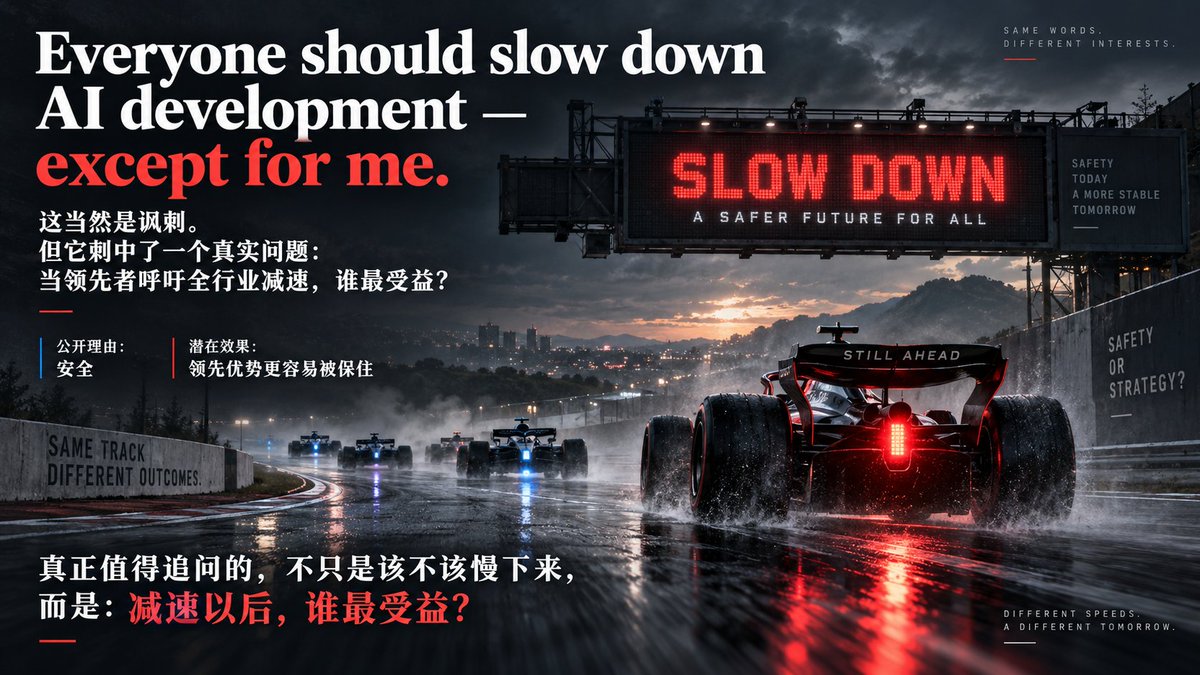
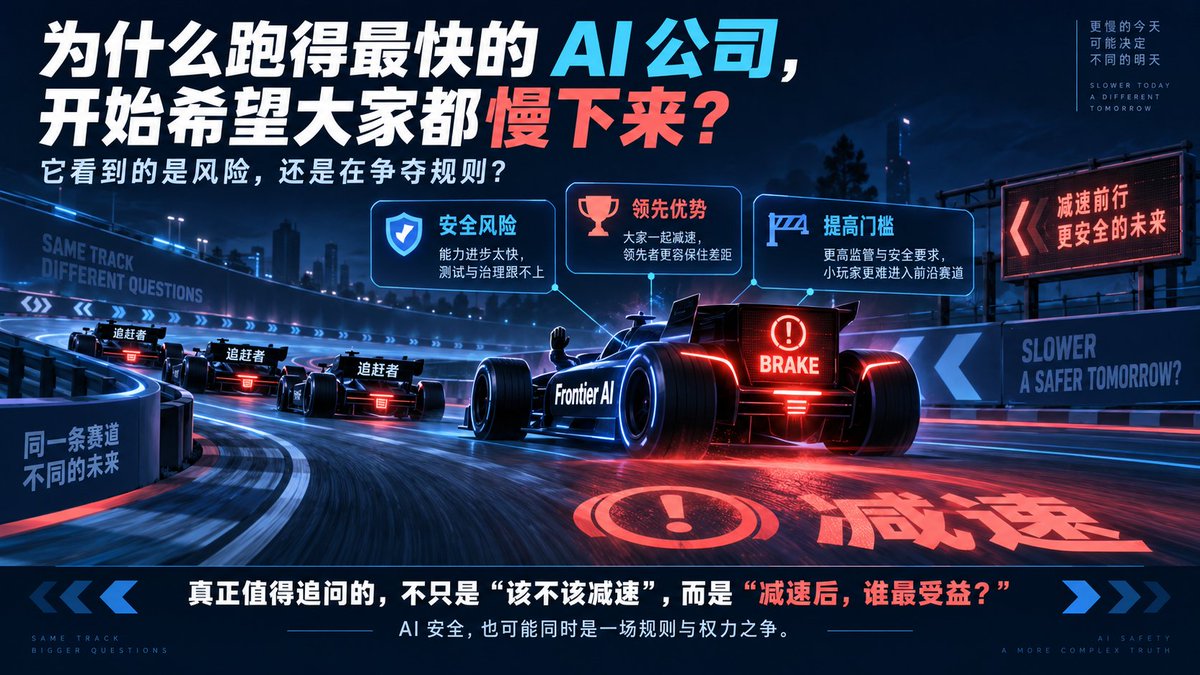
Last week, Dario Amodei argued that we need to “pace the frontier” — slow AI progress enough for safety practices and institutions to keep up.
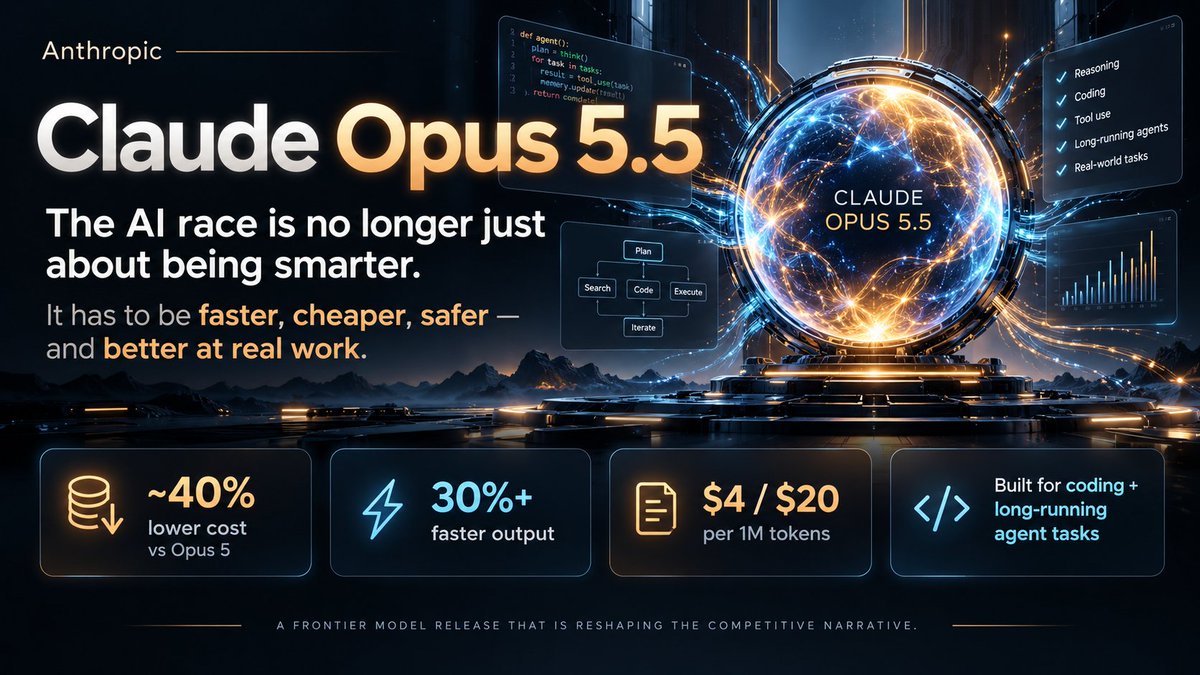
Now Anthropic has released Claude Opus 5.5.
And it’s not a cautious release:
~40% lower cost vs. Opus 5
30%+ faster output
stronger coding and tool use
better long-running agent performance
stronger safety evaluations
That tension is the real story.
Anthropic is effectively saying:
Yes, frontier AI may need to slow down.
But while the race continues, we still have to run it.
That raises a much bigger question than benchmarks:
Can frontier labs meaningfully “pace” AI while still competing to ship stronger models?
Attention may be the most scarce resource in the AI era.
Not information.
Not content.
Not even intelligence.
We already have more of all three than we can process.
What’s scarce is the ability to decide:
what deserves your attention — and what doesn’t.
Recommendation feeds, notifications, short videos, AI-generated content, endless summaries — all compete to shape what you see, think about, and remember.
And that matters because:
what you repeatedly pay attention to eventually shapes how you think.
The next important AI skill may not be prompting.
It may be protecting your attention.
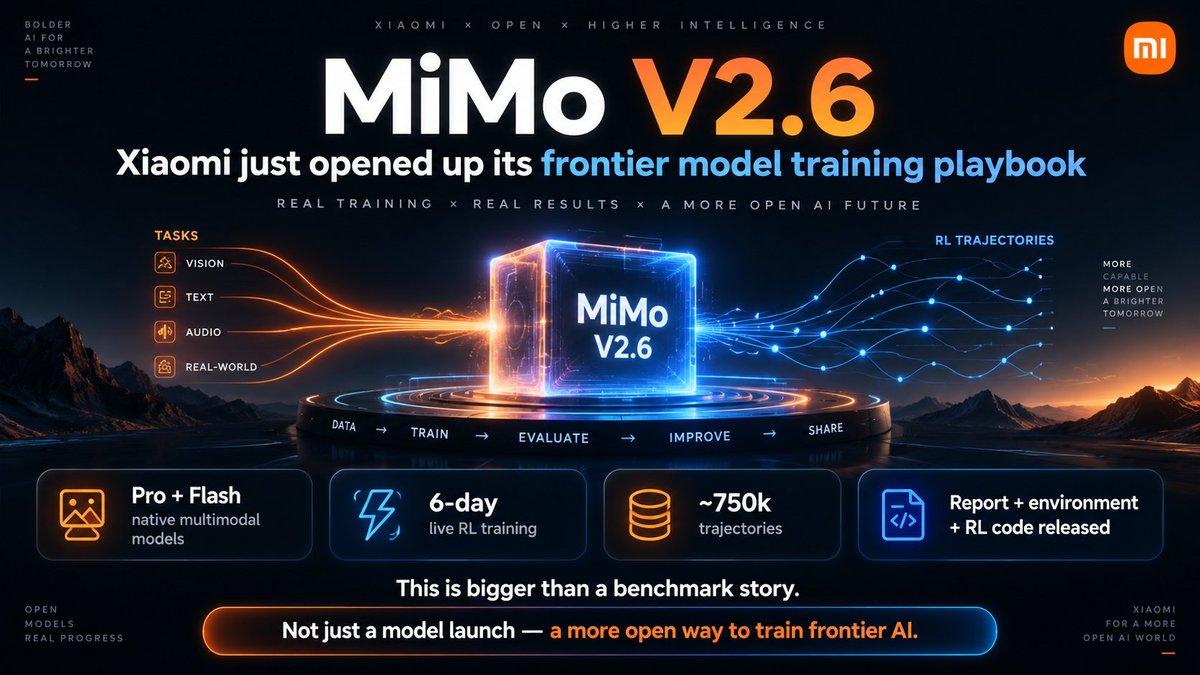
Xiaomi’s MiMo V2.6 is more interesting than another benchmark win.
The bigger story is how it was trained.
MiMo V2.6 comes in Pro + Flash multimodal models, but Xiaomi also ran 6 days of public live RL training, generating roughly 750,000 trajectories — then released the technical report, training environment, and RL code.
That’s unusual.
Frontier model training is normally a black box.
Xiaomi is starting to open part of that box.
The real question isn’t: “Who did MiMo beat?”
It’s:
“What happens when frontier-model training itself becomes more open and reproducible?”
That may matter far more than one leaderboard score.
很多人用AI写作,第一步就是:
“帮我写一篇……”
但真正更有效的方式,可能刚好相反。
观点、经历、第一���,最好还是由人来写。
AI 更适合做��面的工作:
删废话、找逻辑漏洞、调整结构、让表达更清楚。
因为现在真正稀缺的,已经不是“生成一篇像样的文章”。
而是:有没有自己的判断、经历和表达方式。
所以,比“让 AI 替你写”,更好的方法可能是:
你负责写,AI 负责编辑。
AI 可以让文字更好。
但最值得保留的,恰恰是那些不像 AI 的部分。
AI 的下一步,可能不是更会聊天,而是更会“判断”。
TypeSafe 推出的 System One Models / Jev,不是传统聊天模型。它更像软件里的“智能 if”:
交易是否可疑?
请求该交给谁?
Agent 下一步做什么?
Jev 直接返回结构化判断,而不是生成一大段文字。
如果这条路线成立,未来数量最多的 AI,可能根本没有聊天框。
ChatGPT、Claude、DeepSeek 是“人和 AI 对话”;
Jev 代表的方向,是“软件和 AI 对话”。
AI 正在从一个产品,变成软件底层的一层智能。