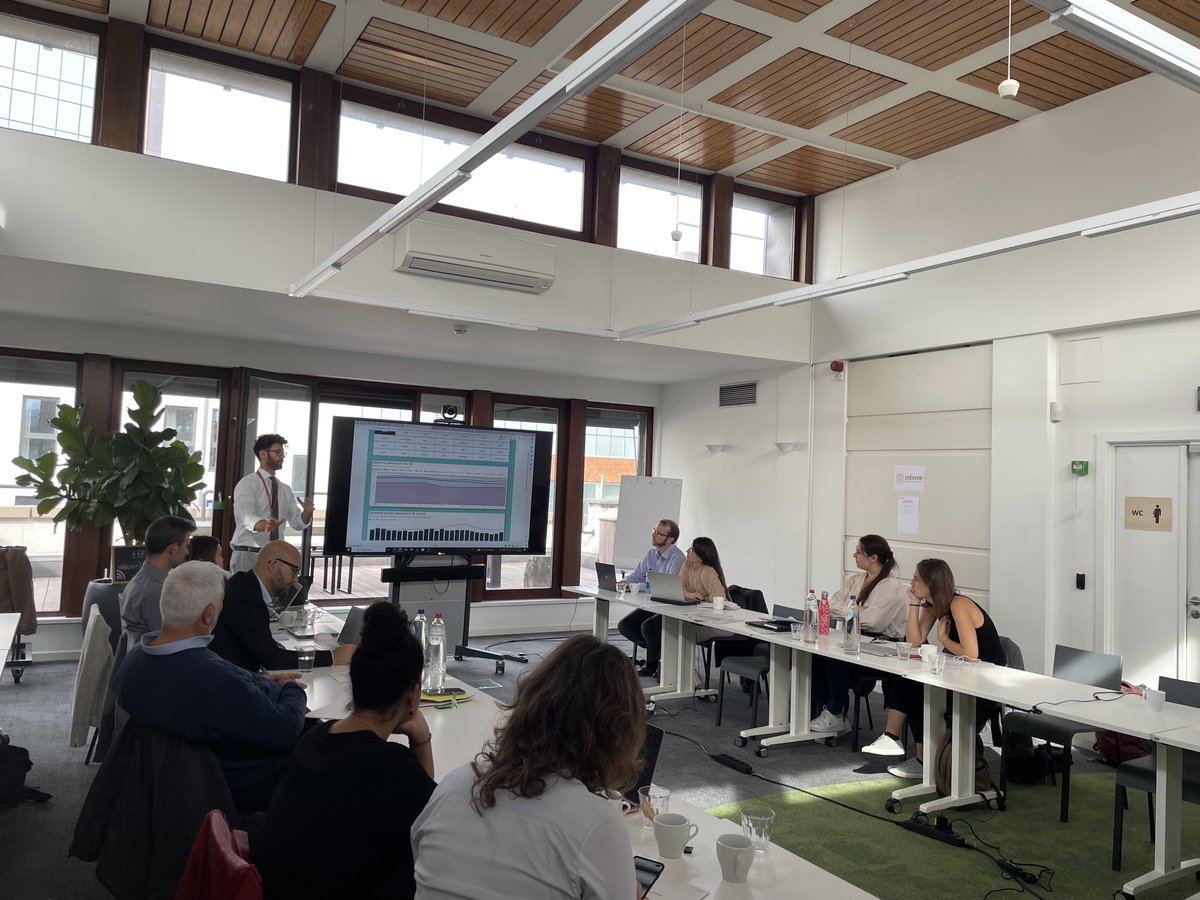
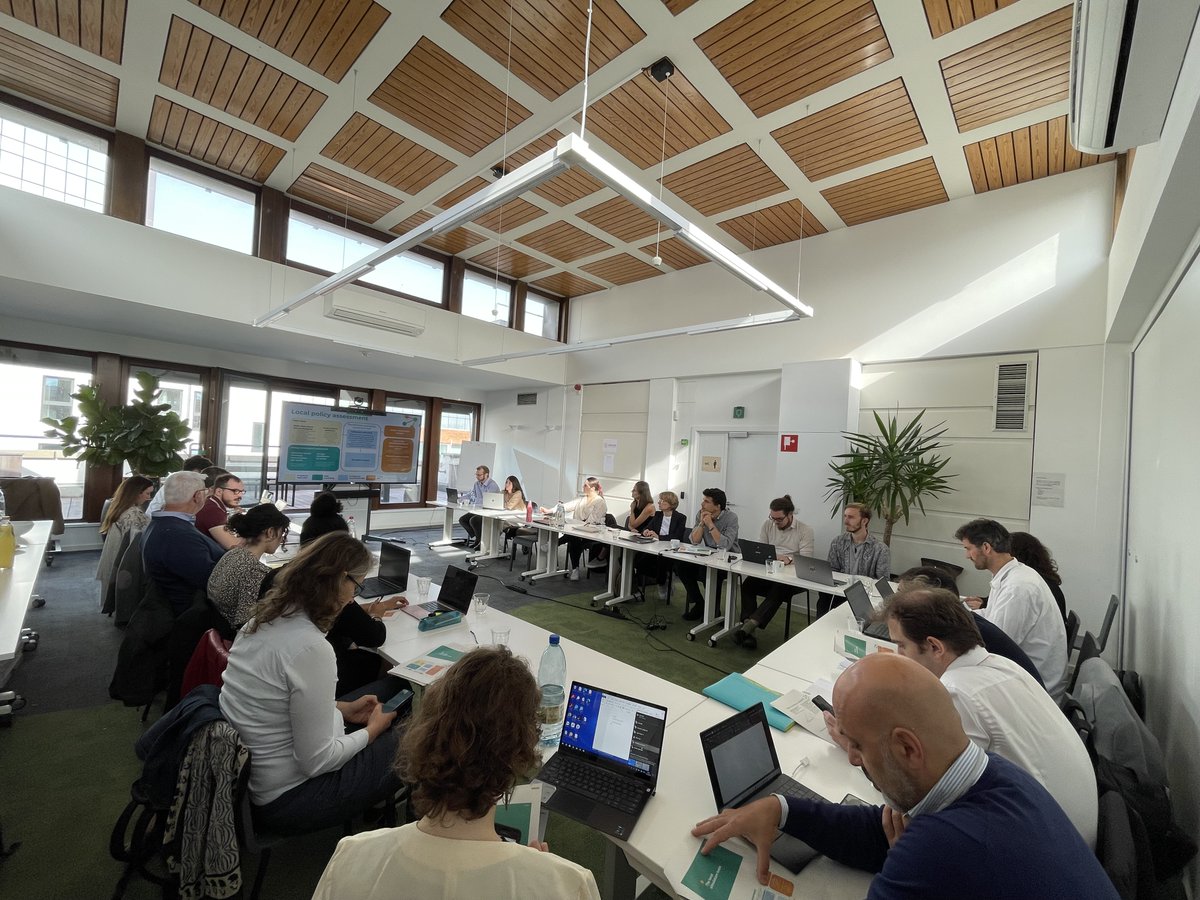
📢Today, REFEREE hosted a 4th Policy Advisory Group Event to discuss the abilities of the REFEREE tool for evaluating #EnergyEfficiency measures⚡️
Experts & policymakers tested the tool in #policy scenarios at the #local/#national levels💻
Thanks to all of our participants!👏
We launched our @CSDBuildBridges report on the Russian economic influence in Germany yesterday with our partners @FNFreiheit at a policy conference in Berlin yesterday.
“🇩🇪 needs to spearhead and support 🇪🇺 efforts to design and kick start a common economic security strategy with instruments on risk assessment, investment screening, customs and financial intelligence coordination, anti-money laundering", says @Rugeste, Co-author des Kremlin Playbooks. @CSDBuildBridges
Zur Studie 👉https://t.co/vKxWx7Vywr
Bulgaria should finally decouple from using Russian oil, which has been financing the Russian economic and political influence in the country in the past three decades.
My op-ed on the topic for @EURACTIV
https://t.co/FeaV9vrJwt
The deal is also “part of a larger Western strategy to bring the Ukrainian energy market into the European orbit,” he said.
“The Belene project was a key instrument for entrenching and expanding Russian influence in the Bulgarian political and economic elite,” Vladimirov said.
My 5 cents for @WSJ and @georgikantchev on the proposed sale of the Belene nuclear power plant reactors to Ukraine during @ZelenskyyUa visit to Sofia. Quotes in comments below.
https://t.co/0rrhNrPDRW
“The deal shows how Russia’s energy influence in Europe is diminishing fast,” said Martin Vladimirov, director of the energy and climate program at the Center for the Study of Democracy, a Sofia-based think tank.
Bulgarian magnate Hristo Kovachki, who presides over six coal-fired power plants in the country, poses a particular challenge. “At the current power prices, all are loss-making plants,” Vladimirov said. That means “without subsidies most of the workers will be gone” by 2026.
“It’s also the oligarchic networks around the coal power plants that benefit from the status quo and pressure the institutions not to act,” according to Vladimirov. Many companies involved in plant maintenance, transport and catering have “close ties with political parties,”.
No real strategic decoupling from Russia would, however, be possible without targetting the state capture networks that have enabled strategic partnerships between Russian and European energy companies.
Check out our @CSDBuildBridges latest analysis of the state of energy and climate security and on how to strengthen the enforcement of Russian sanctions. https://t.co/N2HO4fb7hL
Details in the thread below:
European countries should agree to start blocking the entry of Russian LNG in the EU gas market and phase out long-term pipeline-based contracts. In addition, there is a need for a common EU timeline for nuclear fuel diversification and gradual phase-in of Rosatom sanctions.