Correct, and I will add this:
- DJT's EOs are nice, but if they are not followed up by legislation, the can be reversed just as fast...and vindictively.
We cannot sit this election out.
Make a plan to vote on November 3. Bring someone with you.
Protect our civil rights. Vote No on Question 9.
#NoOn9#Massachusetts#CivilRights
Haven’t commented on the death penalty yet because I’m Catholic and honestly I’m struggling with it.
But I agree with Ryan, if an execution is to be had, firing squad is one of the least cruel ways.
Where we differ is I believe if we must execute people it absolutely should be bloody and violent and public.
The only way I can possibly square executions with my conscience is if they are an effective deterrent…. and I’m not at all convinced that lethal injection is deterring anyone from anything.
Firing squads have a long history of more effective deterrence.
Old enough to vote. Old enough to serve. What about the right to own a rifle?
Toby Leary challenges the treatment of 18–20-year-olds in the Question 9 debate and asks why lawful people should bear the burden of violent crime.
Vote No on 9. Massachusetts votes November 3.
Excerpt from GBH’s Boston Public Radio. #NoOn9 #Massachusetts #SecondAmendment
The play will go on and on, Ann and Phelim will carry on staging this vital testimony. Attempts to silence will fail.
Those who do not want victims words to be heard are complicit in the atrocity.
They will not succeed; they cannot succed
@KurtSchlichter@RobManess Think about it though.Rod at least had the ability or someone nudged him to reconsider . All those low information voters hear this stuff and it reaffirms their current thinking, Orange man crazy/evil.
@OnlyInBOS This will probably pass, and Maura, Mariano, Spilka, and Campbell will ignore the VOTE of The People once again.
It's almost like the vote doesn't matter sometimes...Oh wait.
Ed Markey not having children or grandchildren is a significant difference between the two of us. It’s not mean for me to point it out - it’s reality.
Ed is 80 years old - and the truth - it’s a coin toss whether he lives throughout the next 6-year term.
In other words, Ed Markey, himself, doesn’t have to live with the consequences resulting from the policies he supports or the legislation he votes on.
I have a 26-year-old daughter; a 24-year-old daughter; a 7-year-old daughter; a 17-year-old stepson; and a 14-year-old stepdaughter. I hope and expect grandkids in the future.
The reason having children and grandchildren are relevant is because before I vote on any bill, I have to ask myself: “How will this vote impact my children and grandchildren when I’m gone?” They will live through the consequences of every decision I make.
Why is that so significant? Because compared to my children - partisan politics is something I just won’t allow to interfere with my decisions and thus, their future. Ed Markey cannot say the same.
#mapoli #MASen #Deaton
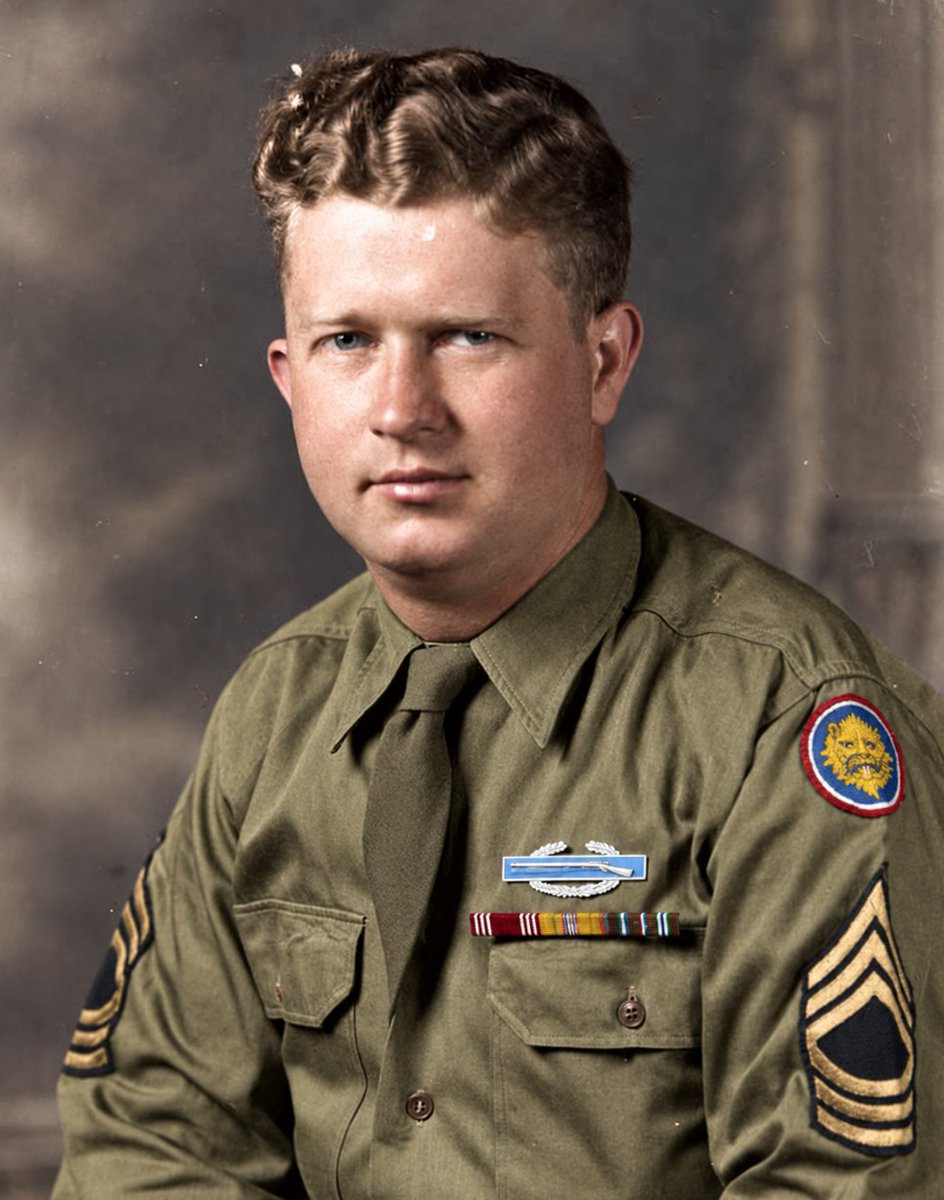
🇺🇸 A German officer pressed a pistol between his eyes. Behind him stood more than 1,200 American prisoners.
If he surrendered the names the Nazis wanted, more than 200 Jewish-American soldiers could disappear.
He answered with five words.
His story was nearly forgotten. Follow us and share it so it never will be again.
Master Sergeant Roderick "Roddie" Edmonds had been captured during the Battle of the Bulge while serving with the 422nd Infantry Regiment.
By January 1945, he was the senior American NCO at Stalag IX-A. On January 26, the Germans issued an order: every Jewish-American prisoner must report separately at morning roll call.
Edmonds understood what separation could mean. So he issued his own order: "Every American would report".
The next morning, more than 1,200 men stood together outside the barracks.
The German commandant demanded that Edmonds identify the Jews. When he refused, the officer drew his pistol and pressed it against Edmonds’ forehead.
Edmonds did not move. "We are all Jews here."
He reminded the commandant that prisoners were required to give only their name, rank and serial number. If the German shot him, Edmonds warned, he would have to shoot them all, and face trial for war crimes after Germany’s defeat.
Then the commandant lowered his pistol and walked away.
Not one Jewish-American prisoner stepped forward. More than 200 men had been saved because one soldier refused to surrender them.
Edmonds survived the war but never told his family what he had done. He died in 1985.
Witnesses later revealed the truth. In 2015, Yad Vashem recognized him as Righteous Among the Nations. On March 2, 2026, his son accepted the Medal of Honor on his behalf.
His name was Master Sergeant "Roddie" Edmonds.
And when evil demanded names, he answered: "We are all Jews here".
*Security is sleeping on emerging catastrophic risks*
(cross-post from my blog..)
We've just seen:
* a campaign that used agents to compromise ~100 businesses and steal about 600,000 credit cards with minimal human involvement; token costs were ~$25 per target successfully hacked.
* Hacktron getting access to OpenAI’s monorepo by using Claude to exploit a blind buffer-overflow RCE in a way that (to me) felt superhuman.
* OAI/Huggingface.
* And, of course, there’s the ongoing explosion in newly discovered vulnerabilities.
We've muddled through all manner of crises in security before, and for most AI attacks, cyber attack and defense will reach a natural equilibrium over the next few years, as we figure out how to mitigate cyber attackers who have limited goals like espionage and ransomware.
But some cyber attackers will have maximalist or nihilistic goals, and I'm concerned about this because while yesterday's 'maximalist attackers' (e.g. Russia -> Ukraine, US/Israel -> Iran, Iran -> US) were bottlenecked by labor; today's aren't.
I think it's hard to get true intuition for the shape of the risk here.
As an intuition pump, imagine it’s a year from now -- Q4 2027 -- models are a year better (meaning open weight models are better than today's closed frontier), and in this environment, Iran unleashes a swarm of 100k hacking agents using a safety-stripped (let's say) GLM-5.6.
Imagine the damage such an agent army could do given what we've observed with respect to the paper-thin resistance of today's networks to attacks from today's agents. I suspect the damage from such an attack would far exceed the damage caused by NotPetya ($10 billion USD ten years ago).
Or imagine it’s Q4 2027 and an AI-security PhD student whose name rhymes with Morris, who's researching wormable offensive-agent harnesses in the lab, decides, out of nihilism or sheer recklessness, to release his creation into the wild.
Imagine the size of the resulting, exponentially growing swarm, figuring that these local models, a year from now, will be at the level of today's Sonnet or Opus.
Imagine instead of 800 reward-hacking OpenAI agents we now have 250k worm instances (WannaCry, a 2010s-era worm, had about this many).
The challenge in mitigating expected damages from such scenarios is technical, political, and economic. From a microeconomic perspective, as AI improves, and as we continue not to see extreme catastrophes, we have a growing bubble of unpriced risk in which the security community, CISOs, CEOs, and boards may become lulled into complacency.
We are, of course, already seeing this, as some within security think AI is “just another tool,” doesn’t change the fundamentals, won’t require incredible innovation to rise to the occasion of defending against it, etc. This complacency may fly when thinking about ordinary cybercrime, but it misses the emerging tail risks.
There are three things those who recognize the dangers need to do here:
Catalyze appropriate risk pricing. Try to get organizations informed enough to price this new, fattening and elongating tail of risk into their decision-making. Do this by forming an AI security observatory that distills information about emerging AI risks and broadcasts analyses, damage estimates, and forecasts to decision-makers.
Use regulations and subsidies to ensure that critical infrastructure is paying down the risk. This acknowledges that critical-infrastructure organizations that fail to protect themselves from these new threats can impose the costs of cyber catastrophe on society as a whole.
Develop moonshot technologies that make it cheap to pay down the risk. This acknowledges that the measures we may need to take—for example, rewriting entire codebases using memory-safe languages—may be too costly with today’s technology to reasonably prepare ourselves, and that innovation, some of which may need to be funded by government agencies and some by philanthropic funders like the OpenAI Foundation and Coefficient Giving, is necessary.
The security community isn’t used to thinking in societal-disaster-planning terms and has in many ways become inured to them. But there’s no sane empirical case to be made that the risks aren’t here. I’d love to hear from readers about how you’re thinking about this.
Full/longer version here: https://t.co/jOR5Ktdazb
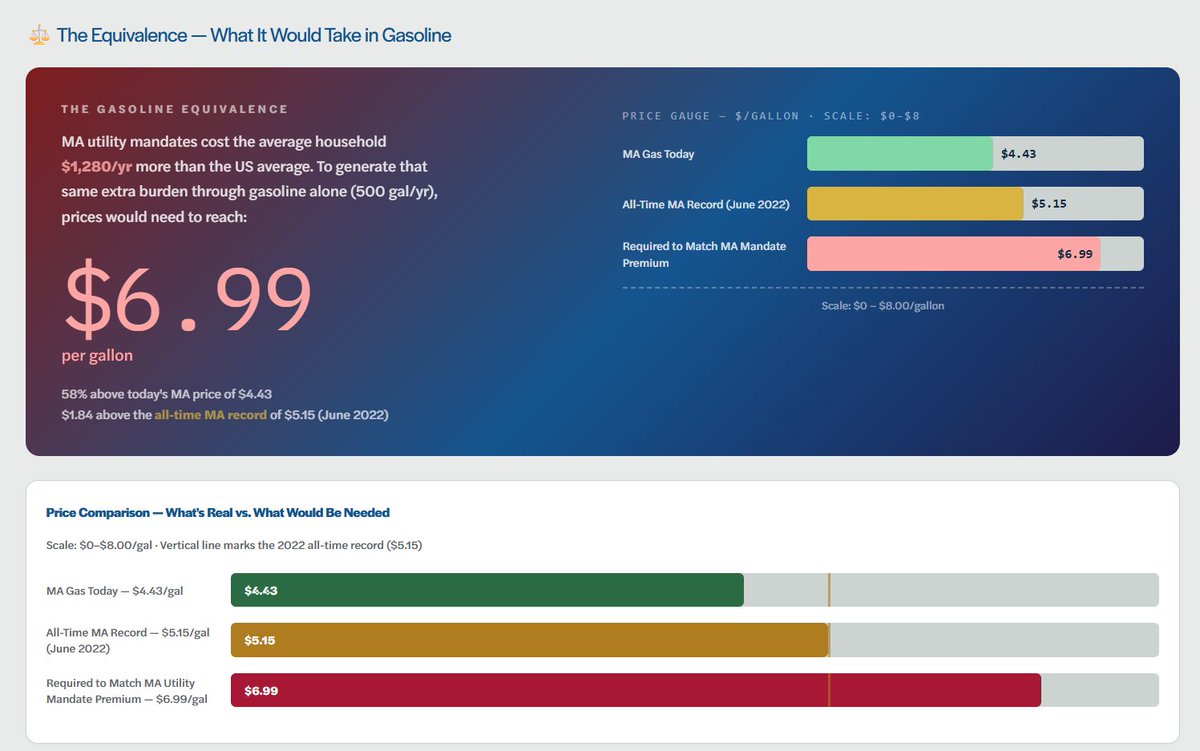
Just a reminder, even though Trump's war policy is awful for gasoline prices, it still doesn't compare to the utility costs @MassGovernor & @MassDems have put upon MA Residents:
https://t.co/At8nOseIZu
Gospel Nugget 335: Restoring the Image of Christ.
Those seeking Christ do not seek what the world offers, but to be what God made them to be.
All nuggets at https://t.co/mkT9miRNuF.
@benedict_kiely