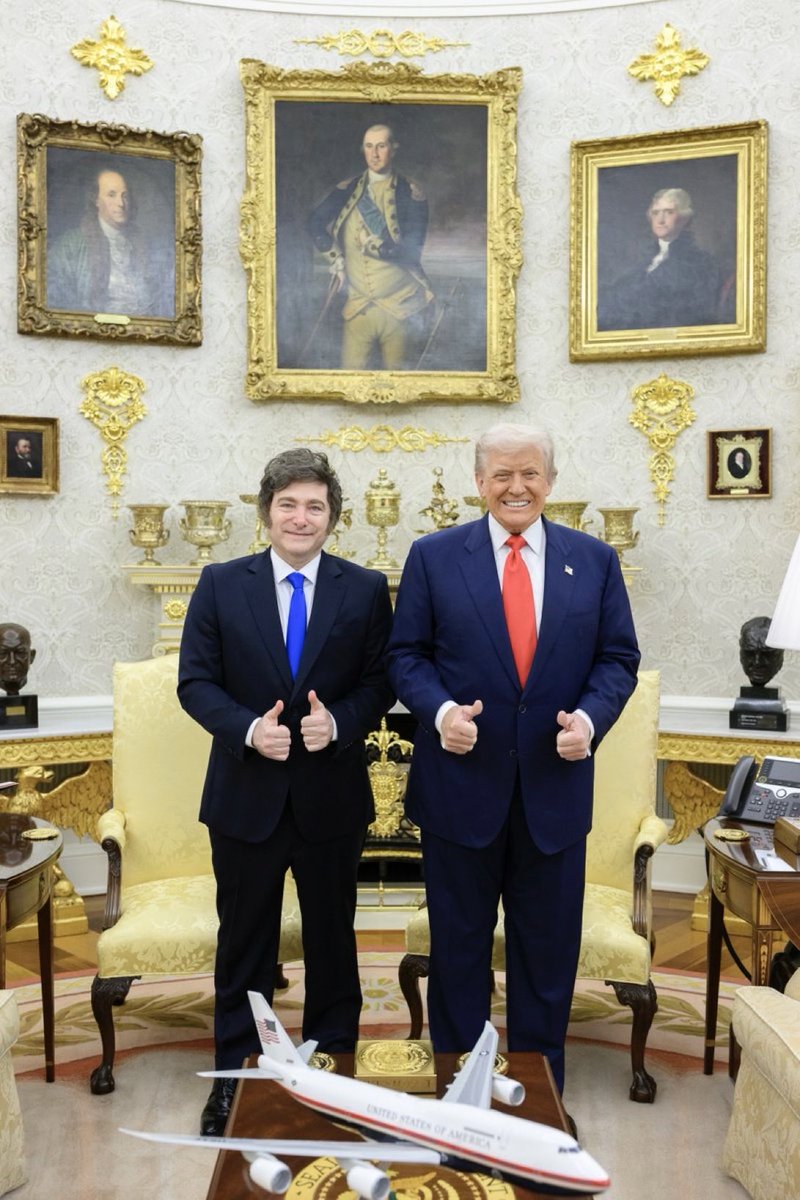
Ayer en Neuquén, en la Argentina Oil & Gas Expo, Javier Milei dijo una frase que vale más que muchos programas electorales: «En el largo plazo, la economía argentina va a ser todo un RIGI».
Para quien no lo sigue, el RIGI es el Régimen de Incentivo para Grandes Inversiones que aprobó el Congreso en 2024 con la Ley Bases. Al que invierte al menos 200 millones de dólares le cobra un 25% de impuesto a las ganancias en vez del 35%, le quita los aranceles para importar maquinaria, le elimina las retenciones a la exportación a partir del tercer año y, sobre todo, le garantiza por ley que durante treinta años nadie le va a cambiar las reglas.
¿El resultado? Ayer se aprobaron tres proyectos más para Vaca Muerta por más de 15.400 millones de dólares, el mayor de Pluspetrol con 12.240 millones. Con estos ya son veinticinco proyectos aprobados por 68.438 millones, y hay otros veintidós en evaluación por 140.544 millones. El mismo día el INDEC informó que en septiembre las exportaciones argentinas superaron por primera vez en la historia los 10.000 millones de dólares en un solo mes.
Los críticos hablan del «costo fiscal» del RIGI. Milei les contestó con una pregunta que resume la economía mejor que cualquier manual: ¿qué costo fiscal tiene una inversión que sin el RIGI nunca se habría hecho? El impuesto que no cobras de una fábrica que no existe no es un ahorro, es cero.
Pero lo más interesante es lo que confiesa el propio RIGI. Si para que alguien ponga su dinero en Argentina hace falta un régimen especial, es porque el régimen normal espanta. Por eso Milei tiene razón cuando dice que tarde o temprano los dos sistemas tienen que converger: que el panadero, la pyme y el emprendedor tengan lo mismo que Pluspetrol, impuestos bajos y reglas que no cambien cada vez que cambia el gobierno.
El capital no pide favores. Pide que no le cambien las reglas.
Argentina vuelve a estar abierta al mundo. 🇦🇷🇺🇸
Esto es mi moneda de Embajador de los EEUU en la Argentina - dice Juntos en Libertad. Y de eso se trata: una Argentina fuerte, soberana y libre para elegir con quién construir su futuro.
Estados Unidos ya puso respaldo concreto sobre la mesa: hasta USD 7.000 millones de EXIM para energía, minerales críticos, infraestructura y tecnología.
DFC está evaluando nuevas inversiones en Argentina.
Y el capital privado estadounidense y del mundo ahora también está llegando y buscando oportunidades.
Cuando Estados Unidos apuesta por Argentina, el mundo mira. Vuelve la confianza. Se abren las puertas al capital occidental.
Eso es soberanía: - tener opciones, atraer inversión y decidir el propio futuro sin depender de nadie - pero tener socios confiables como los Estados Unidos.
Argentina tiene los recursos. Tiene el talento. Y ahora tiene al mundo mirando.
Hay que aprovechar el envión.
Esto es solo el comienzo.
Es ahora. 🇦🇷🇺🇸
Win a ticket to football's biggest game.
One seat, New York New Jersey Stadium, this Sunday. To enter:
1. Follow @Nexo
2. Like & repost this
Closes in 24 hours. Random draw, winner DM'd – keep yours open, 2 hrs to reply or we redraw.
Could be you. Good luck.
Terms apply.
Esta elección es probablemente más importante que la del 23 cuando se votó un cambio de rumbo sin preguntar mucho. Pero ayer la gente ratificó un rumbo que ya conoce: equilibrio fiscal, orden, libertad económica y respeto a la propiedad privada. Gracias @JMilei. VLLC!
Peter, I arrived in Santa Fe capital today. The thing that is immediately visible to me is that the people of Argentina need to get into production.
An infusion of capital is great however, unless the working class people get into motion and can earn more money than their bills in this moment, it will be too late.
Few here will argue that on paper, Milei, is not doing the correct thing. The problem is now. It is dead, there is no money flow.
The past solution was print more money, live with runaway inflation, Ike a drug addict upping the dose.
Clearly this destroyed Argentina.
But, on the ground reality is they will go back to the non stop panic of the next fix rather than the no flow of death.
A huge difference between Milei and Trump is: Trump is “get back to work right now”. Boom now, now now. His actions are 1000% build and boom as the path to MAGA.
As important as the financial support is to this country, to make it out will require leadership that isolates where to hit the gas so the economy booms right now.
I don’t know this economy. You are in a better position to see global Argentina. I do know that it is agriculture that keeps this place alive. “El Campo”
I would suggest you, Scot B and our Administration focus on a clear path of building the campo (or any other related instant work boom) with money and production expertise that push back to work expansion NOW.
Something like… we are meeting with “….” In Cordoba” and reopening or updating this industrial facility to increase production of “….” Because the EEUU needs it today and can’t produce enough fast enough.
The locals are back to work next week. This has to happen over and over. This will move the economy immediately and the hope factor.
Mr Trump needs to say to Mr Milei, Javi, everything you have done is correct but…. But you need to boom the economy starting right now. The EEUU needs this now. Let’s put my guys with your guys in Santa Fe and Parana and open that old Fiat facility, retool it and up the export to …? We need my guys and your guys in Chubut yesterday to get flowing …!
“The Middle East needs your fabulous bee, their demand is beyond EEUU supply and get Qatar to order an outrageous amount.”
It can’t harm the EEUU economy but puts EEUU as a team with Arg to compliment each other globally which results in an exchange of tourism and work travel immediately.
People work, money flows right now.
Best,
Mark
Muchas gracias Presidente Trump por recibirme en la Casa Blanca.
Desde antes de ser Presidente vengo sosteniendo que la República Argentina debe ser una aliada estratégica de los Estados Unidos de América y ahora que el pueblo argentino confió en mí para guiar los destinos de nuestra patria, cumplir con esa promesa es un paso más en la dirección que emprendimos el 10 de diciembre del 2023: Hacer Argentina Grande Otra Vez (MAGA).
El apoyo que Usted y su gran país nos ha dado es de vital importancia para la continuidad del largo camino de reformas que hemos emprendido. Los Argentinos saben que la principal potencia del mundo continuará apoyándonos salvo que volvamos a abrazar al populismo.
La situación es clarísima: si el país se alejara de la senda de las ideas de la libertad para volver al populismo, Estados Unidos dejará de apoyar a nuestro País. En su defecto nos van a seguir acompañando.
Pero yo confío en que ésta vez el esfuerzo va a valer la pena, que los argentinos no van a volver al pasado y que vamos a volver a ser una potencia mundial donde la inflación, la inseguridad y la pobreza sean solamente un mal recuerdo del pasado.
VIVA LA LIBERTAD CARAJO...!!!
Cc: @POTUS@realDonaldTrump
tldr: Technologists vs the Fed
Stablecoins, CBDCs, and the Emerging Post-Scarcity Monetary Ideology
The rise of digital money has exposed a new ideological fault line, one that transcends traditional partisan divides and reconfigures the architecture of monetary power. Central Bank Digital Currencies (CBDCs) and Treasury-backed stablecoins, while superficially similar, represent fundamentally different visions of economic coordination. CBDCs extend the legacy of centralized control, reinforcing institutional hierarchies and regulatory orthodoxy. Stablecoins, by contrast, signal a shift toward decentralized liquidity, algorithmic governance, and post-scarcity economic logic. This essay explores how these instruments reflect competing elite ideologies, particularly in the context of fiscal dominance, AI acceleration, and the erosion of central bank primacy.
CBDCs are the digital continuation of fiat currency, preserving the hierarchical structure of monetary policy. Issued and managed by central banks, they maintain control over supply, interest rates, and settlement protocols. Financial intermediation remains routed through commercial banks, reinforcing the influence of legacy institutions. Programmable features allow for precise enforcement of monetary policy, but within a top-down framework that prioritizes stability and predictability. For elites invested in preserving institutional continuity, CBDCs offer a familiar extension of the existing system, one that maintains central bank independence and systemic control.
Stablecoins, though collateralized by sovereign assets, operate on distributed networks that bypass traditional banking channels. Their architecture reflects a fundamentally different logic aligned with technological acceleration and post-scarcity dynamics. Peer-to-peer settlement, automated liquidity flows, and integration with smart contracts enable real-time fiscal transmission without central bank mediation.
Stablecoins assume abundance, frictionless exchange, and recursive optimization, making them compatible with an AI-mediated economy where velocity and liquidity are algorithmically managed. Their adoption signals elite alignment with innovation over orthodoxy, and with distributed systems over centralized control.
The current administration’s repeated challenges to the Federal Reserve, including public critiques of interest rate policy and pressure regarding key appointments, interact with stablecoin adoption in structurally significant ways. While these interventions may appear tactical, their broader consequence is the weakening of Fed autonomy under fiscal dominance. Stablecoins amplify this effect by creating a parallel monetary layer that channels Treasury-backed liquidity directly into the economy. The administration’s populist rhetoric inadvertently legitimizes this shift, aligning political capital with technological interests that seek to reorient monetary power away from traditional institutions. In this sense, the administration functions as a Trojan horse for a post-scarcity monetary regime: its overt goals mask a deeper structural realignment toward decentralized fiscal transmission.
Within the Trump administration’s shadow cabinet, figures like AI/Crypto Czar David Sacks and Howard Lutnick of Tether-linked Cantor Fitzgerald, alongside tech-accelerationists orbiting Peter Thiel’s PayPal-Mafia network, are becoming the monetary strategists of a “new elite.” Inspired by the old logic of elite circulation, this group doesn’t align with traditional left-right divides; instead, their embrace of stablecoins signals a post-scarcity, accelerationist vision that seeks to downplay central bank hierarchies. Thiel’s early support for Ethereum helped lay the rails that now carry the world’s dominant stablecoins, embedding liquidity directly into ERC-20 network.
Crucially, stablecoin adoption also entrenches fiscal dominance: household deposits draining from banks into stablecoin rails potentially weakens private credit intermediation, leaving banks more dependent on government backstops and redirecting flows into the enterprise-owned state. This dynamic ultimately strengthens the position of the stablecoin elite, as fiscal liquidity circulates through the very platforms they control. In this light, the previous administration’s shutdown of Silicon Valley Bank can be reframed not as an isolated prudential action but as an early battle in the larger war -- an attempt by the old guard to suppress the financial nervous system of the tech elite before it became a parallel monetary order. Trump may think he is merely fighting for lower rates, but in reality, his political cover allows this new faction to entrench itself at the core of the fiscal regime.
Granting legal tender status to stablecoins would formalize their role as sovereign money and trigger a systemic transformation. Treasury-backed stablecoins would shift from private liabilities to sovereign assets, becoming final settlement media akin to currency or reserves. This would collapse the distinction between money market claims and money proper, integrating stablecoins into the monetary base. Fiscal spending could be distributed directly via stablecoins, bypassing credit intermediation and locking government outlays into digital circulation. This reinforces the 4Fs regime -- Fiscal dominance, Financial repression, Passive flows, and Fiat money -- by institutionalizing passive demand for Treasuries and automating capital allocation toward sovereign debt.
In the context of potential Fed operations targeting GDP via reserves, stablecoins function as distributed units of base money held not just by banks, but by households and firms. This expands the transmission mechanism of fiscal policy, allowing the state to issue stablecoins in proportion to GDP gaps and adjust liquidity in real time. Smart contracts can tie issuance to live economic indicators, enabling reflexive stabilization without relying on Fed interest rate operations. The result is a feedback loop: fiscal outlays drive stablecoin issuance, which absorbs Treasury collateral and reinforces liquidity, stabilizing nominal output through automated flows.
In conclusion, stablecoins and CBDCs are not merely competing forms of digital money; they are manifestations of competing visions for the future of monetary authority. CBDCs reinforce the legacy of central banking and institutional control. Stablecoins embody a post-scarcity, AI-optimized paradigm in which Treasury-backed liquidity flows through decentralized networks, enabling reflexive fiscal management and redistributing monetary power. The administration’s challenges to the Fed, though seemingly tactical in intent, accelerate the structural ascendancy of stablecoins, aligning political disruption with technological innovation. This convergence marks the emergence of a new ideological axis. In moments of revolutionary change, control over the monetary system is often the first lever seized.
larger accounts parroting 'new paradigm, no more brutal bear markets' due to ETFs are not just wrong - they're grifting
ETFs might impact volatility to the downside when it comes to coins with actual ETFs
most participants are holding alts that will -99%
enjoy your supercycle
I need you to do 3 things for me.
1. Comment below with your struggles and question about trading or investment and what do you want to learn.
2. If you see a comment by a different account, which also describes your struggle, then like it so I know which is the most comment problem.
3. Share this Post so all new traders can ask questions and benefit.
Our latest quarterly crypto lending &
leverage report is out!
The top three crypto lenders by outstanding loan book size as of June 30 were @tether, @Nexo, and @galaxyhq.
As of the end of Q2, Galaxy Research tracked a combined $17.78 billion of open CeFi borrows.
Nexo returns to the U.S. market.
We are embracing renewed optimism and entrepreneurial momentum to deliver our full products to American clients in a supportive environment. 🧵
Tokenized assets are the future — but without reliable pricing and liquidity, they go nowhere.
Band Protocol x @routerprotocol unlocks real-world value on-chain — with verified data and cross-chain mobility.
Here’s how Band Oracle v3 works with Router as Data Tunnel to bring fair RWA valuation and pricing across chains 🧵👇
This year we are expanding the worldwide availability of the award-winning Nexo Card. 💳
Stay tuned for exciting new features that bridge the gap between digital assets and everyday spending even further.