Are you looking to guarantee the strength, safety, and durability of your construction projects? Our comprehensive concrete and cement testing services are designed to help you achieve just that. Contact us today for reliable testing services https://t.co/wsaZRGFgJ3
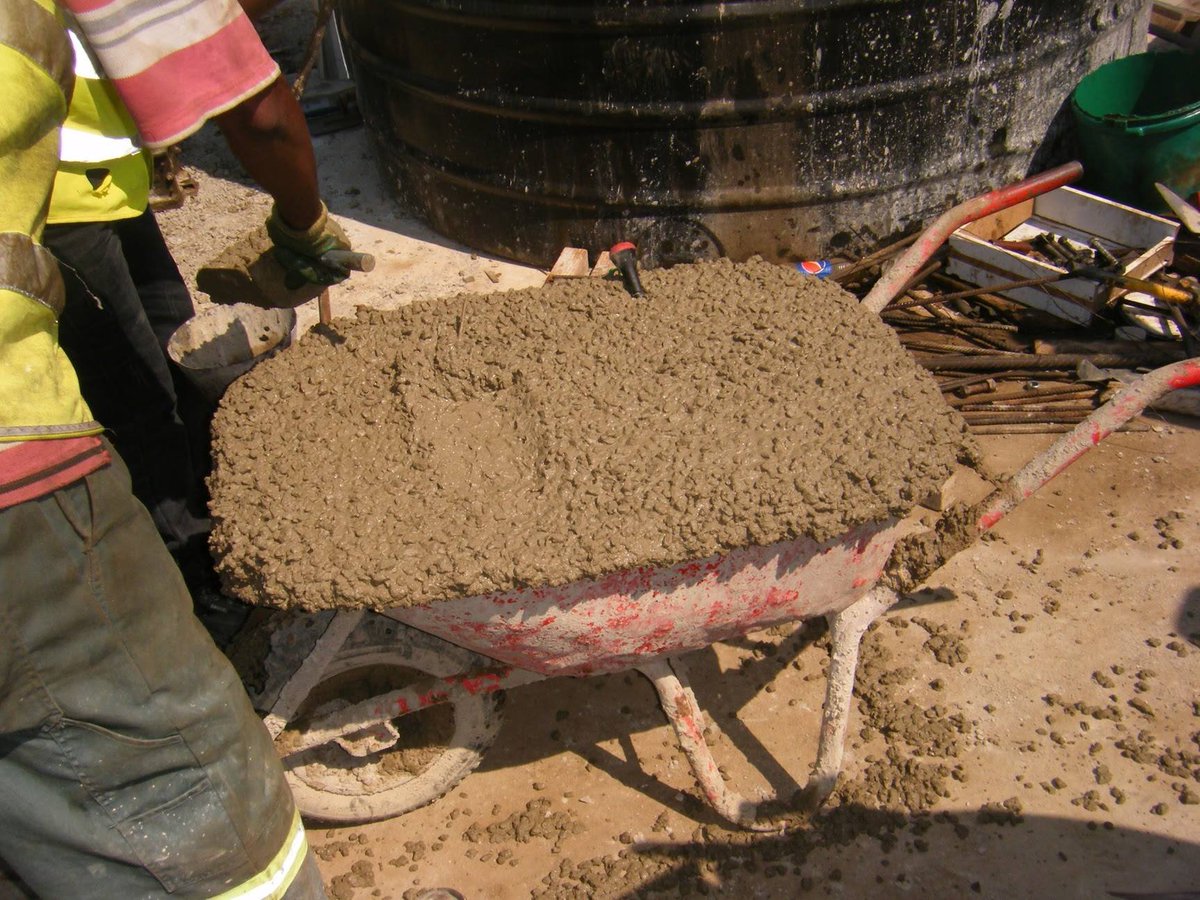
If Your Wheelbarrow Looks Like This, You're Not Saving Money. You're Wasting It.
=====
Let’s break it down.
1. The wheelbarrow breaks.
~~~~~~~
Load it to the brim like this and you’ll be replacing wheels before you finish the day. That's time lost, money gone, and momentum broken.
2. Concrete spills.
~~~~~~~~
You waste sand, stone, cement, and labour. You lose over 20% of your mix, which is roughly 140k UGX gone for every 700k spent on a cubic meter. That’s not a site problem. That’s a management failure.
3. Your workers burn out.
~~~~~~~~~~
Muscle fatigue, injuries, early exhaustion. Productivity dies by lunchtime. Tomorrow, they show up slower or they don’t show up at all.
Let me put it another way:
~~~~~~
The energy it takes to force through 10 overloaded wheelbarrows can deliver 100 half-loads. The first gives you just under 10 useful deliveries after spillage and pain. The second gives you 50 full ones, clean and smooth, with healthy workers still standing strong.
At Eco Concrete Ltd @ecoconcreteUG , this is what we practice. Concrete is not a game of strength. It’s a science of timing, skill, and care.
It’s not just about getting the job done. It’s about getting it done well, with minimal loss and maximum dignity.
If your site needs this kind of thinking, we’re just a call away: +256 772 435 763
Let’s build smarter.
Let’s lead with knowledge.
Okay I tried to deal with Portuguese banks to get a mortgage for a home I want to buy here but they don't even care if you have money, and they're extreeeeemely slow and risk averse, essentially they're always "out to lunch" and their lunch takes what seems like 8 hours
You gotta be an NPC with a regular salary from a Portuguese company for them to ever give you a mortgage here, which makes sense from a risk perspective I guess
I also tried IBKR margin loan but IBKR auto sells your stocks the moment it dips below a the maintenance margin, like in a market crash, they don't give you the option to deposit more money then, they just auto sell, too risky, the argument that made me not do it was someone on here replying "it'll probably never happen but you're always living with that risk in the back of your head" and that does seem unhealthy
So my new plan is: I'll just pay in 100% cash, then I will get a Lombard loan from an international (US? Swiss?) bank for the same amount as the home purchase, and transfer my Vanguard World + S&P500 ETF to them as collateral, and put the loan amount back into Vanguard World + S&P500, essentially margin trading those
There's still a risk of margin call but with an int'l bank you get quite some time to deposit more money in case that happens, and the Lombard loan is a relatively small % of my total assets, so it's not a massive risk and even if it's margin called we can cover it with other assets
Why get a loan at all if I have money? Because of this:
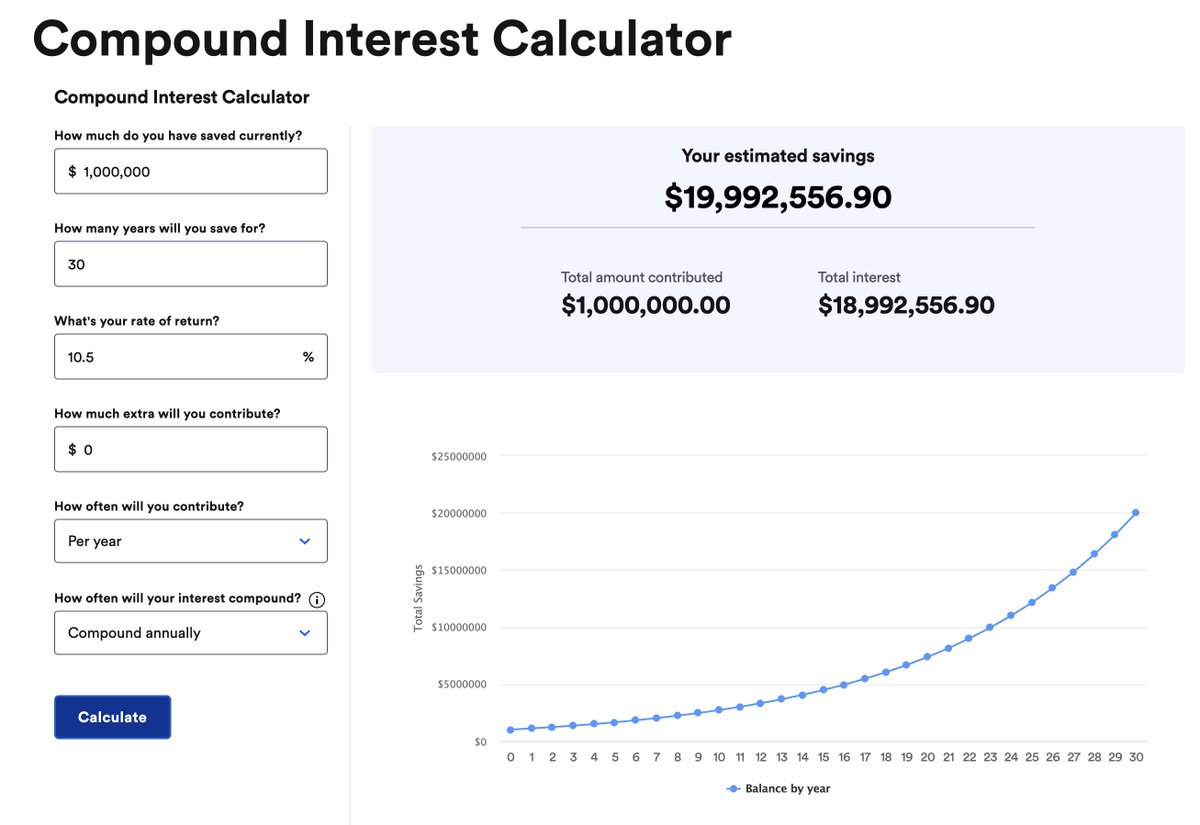
S&P500 avg return is 10.5%, if you invest $1M and keep that there 30 years you compound to almost $20M, inflation adjusted that's $7M in current dollars, a lot of money
That money you will completely miss out by taking the cash and putting it 100% in a house, you get the home appreciation but you get that anyway so in the end it's $20M less money
In a sense, I'll be simulating a mortgage but with a Lombard loan that goes back into the market to cover the money lost to buying a home, which will let me shortcut the slow process of regular dinosaur consumer banks
This is what will matter 1000 years from now.
Not your politics. Not your stupid tantrums about who platformed who on some website. Not your incomprehensible desire to send NASA's entire budget to the third world.
This guy reignited the Space Age.
He spent his own money, hired a bunch of dudes, and reignited the Space Age. And together, they underbid and outdid NASA and its pet dinosaur corporations on every conceivable level.
This is history happening before you.
If you are a puddlefish, if you think this is a wasteful showpiece or science project, then you don't understand physics, economics, astronomy, or in fact the basic layout of the universe you live in.
We live in a tiny puddle at the bottom of a well.
Out there is an entire universe, full not only of stuff to explore, but full of stuff to build things out of.
Big things. Wonderful things. Things that are going to make all of the cool stuff you have today, all of human civilization to date look like early Assyrians writing stuff down on wet clay with a reed.
Infinite resources. Infinite energy. Infinite space.
Instead of fighting over little patches of land, we will have an infinite 3d volume. Enclose it in steel, pump it full of air, spin it, and it's a habitat.
Instead of scratching tiny scraps of metal out of the crust of one planet, we will break down entire asteroids and smelt them.
Instead of drilling for hydrocarbons and turning water wheels, we will harness entire suns, split the atom, and eventually draw our fuel from the substance that makes up 99% of the entire universe.
None of your local, temporal Earth politics matter compared to this. This is more important than pride parades and abortions, more important than tribal conflicts in eastern Europe and southwest Asia, more important than tensions with Russia and China.
More important, in the long run, than the United States of America.
America's most important function, its one most vital purpose, is to serve as an incubator for this.
Because this changes everything.
All of our arguments about conditions on this planet become obsolete, because the whole planet becomes just one suburban neighborhood.
All of our wars over resources and territory become obsolete, because no one has time to brawl when we're all sitting on top of a dragon horde with sacks and shovels.
Everyone who was alive at the time remembers where they were when Kennedy died in Dallas. When the towers fell. When the Eagle landed. When the Wall came down.
But this... this is the real moment, one of the first of many. They are what every child will know about a thousand years from now, even if they have four arms and are genetically engineered for zero-g, or are sentient blocks of code running on a sphere of computronium enclosing an entire star.
You may not live to see that, depending on what we do or don't invent, and when.
But it will happen, and you will live to see wonderful things.
If the puddlefish don't get in the way.
Don't be a puddlefish.
The first entity to establish a Mars colony will be the universe's first trillionaire.
Lately, we've had a lot of puddlefish whining about how "we" shouldn't go to Mars.
Some of them actually think they get a vote, based on economic illiteracy and the delusion that SpaceX is somehow part of the US federal government.
[Closed caption for the hard-of-thinking: it isn't.]
But others just think they are giving good investment advice... SpaceX investors can do what they want, but Mars is a frozen wasteland full of nothing but near-vacuum and rocks. So why would anyone want to go there?
@elonmusk likes to answer this question by pointing out that it's not a good idea to store all humanity's eggs in one basket.
He's right, but this kind of argument isn't comprehensible to everyone, nor is it the full picture.
So now it's the SF writer's turn. And therefore I present to you...
An Economic Roadmap for the Future of Humanity.
(In which Devon Eriksen explains how to bring about a second industrial revolution, and what the next step is on the road to becoming a Kardashev-1 civilization.)
The invention of manufacturing, and the transition from an agricultural to a manufacturing economy, is called the "Industrial Revolution" because its effect on the state of not only the economy, but daily life and the entire human world, was... revolutionary.
Unprecedented.
Unimaginable.
Understandable only in hindsight.
Everything changed.
Imagine trying to describe the modern world to your preindustrial ancestors.
"We took that black stuff that seeps out of the ground, set it on fire, and used the fire to turn things that do the work of skilled craftsmen, only thousands of times faster, and now we all have horseless carriages and talking abacuses that can send a message to the other side of the planet in the time it takes to cough."
This would sound like nonsense.
Because to them, tar was just sticky black stuff that you find in the bottom of bogs, and coal was a dirty rock, and steam was the stuff that came out of your tea kettle.
And Mars... well, Mars is just a frozen, airless, desert... right?
To bring about technological and economic revolutions, you have to learn to see value in new ways.
The conquistadors who first introduced civilization to the Americas were looking for spices and gold. That was their definition of "value".
But if all they found was gold, all they would have gained was an unprecedented economic crisis. With their preindustrial knowledge of economics, they didn't understand that gold is a token of value, not a store of value. A massive influx of gold alone would have brought about unprecedented inflation.
Ouch.
Fortunately for Europe, civilization, and humanity, they found real value as well, of sorts they were looking for.
Land. Timber. Navigable rivers.
Potatoes.
Yes, potatoes. Laugh it up, fuzzball, but potatoes allow you to feed populations you just couldn't before. With less farmers.
More workers. More craftsmen. More geniuses to invent things.
More civilization.
Potatoes.
So... Mars is just a frozen, airless, desert... right?
Well, for those of you who can read between the blatantly obvious lines, maybe not. But... how?
Well, what do you need for an industrial revolution?
You need a new source of cheaper energy. The first one had wood, coal, and oil, replacing animal labor, and wind turbines, which are only suitable for grinding flour for medieval peasants.
You need cheap raw materials. The new world abounded with timber and ore. And bigger populations, from better crops, and new energy sources meant cheaper mining.
You need clever people to figure out new technologies. The West was never short of smart people. And now they had more than ever.
You need a permissive legal environment. Enterprises that push the technological envelope tend not to be established companies trying something new. These entities already have their revenue model. Instead, new tech comes from startups, all the way from well-funded, high tech enterprises, to the often-surprising ingenuity of three dudes in a shed.
The first industrial revolution had America, and England, which at the time were quite capitalist.
Cheap energy. Cheap raw materials. Technically educated people. Free market capitalism.
In order to have a new industrial revolution, you need an order-of-magnitude increase in some, or ideally all, of these things.
Now we are ready to answer the question "why Mars?"
The next level of the human economy is post-terrestrial, and it rests on three pillars as its foundation: Earth, the asteroid belt, and Mars.
Earth:
Right now, Earth is everything. It's where we keep all our stuff.
In the future, Earth is merely very important. It's where people want to live. It's the swanky real estate. It's not only where you store most of your people, it's where you especially store anyone who works with data, and therefore doesn't have to be in any particular place to do his work.
Earth is the suburbs. It's the Hamptons. It's Myrtle Beach and Key Largo.
In the near future, it's also where your food comes from, but in a post-terrestrial economy, that changes quickly with hydroponics and genetic engineering.
The Asteroid Belt:
This is where your accessible raw materials are. And it beats Earth not just by an order of magnitude, but by many.
To understand why, here's physics lesson number one, gravity wells.
We've all heard the local gravitation fields of planets referred to as "wells", but to fully understand, we really need to lean into the metaphor. It explains a lot.
Imagine Earth's gravity as a deep, deep pit. Steep sides, hard to get out of.
And heavy stuff sinks to the bottom.
Don't believe me? Can't fully visualize it?
Try it yourself. Fill a jar with sand, water, and lead buckshot. Shake the jar, watch it sort itself. Layer of buckshot at the bottom, layer of sand on top of that, clear water at the top. Yes, the lighter stuff will fill the gaps in the heavier stuff, but all the heavier stuff will sink to the bottom.
Well, the Earth is like the jar. It's got a core of iron and heavy radioactive elements, and the lighter stuff is on top. The only heavy elements and metals we can mine on Earth are the small amounts near the surface, which are there because the Earth isn't as fluid, and hasn't been shaken quite as hard, as that jar.
Which means that the Earth is a metal-poor, heavy-element-poor environment. We just don't think of it that way because it's what we are used to. And it's a major bottleneck holding our industrial development back. Not because these elements will run out, but because the expense of extracting them limits availability, and drives costs up.
So what about the asteroid belt?
Well, the mass of the asteroid belt is roughly 0.05% of Earth's mass. But, unlike the Earth, the asteroid belt isn't a big lump of material, sitting in its own steep gravity well.
It's a powder. A spray of fine dust orbiting the sun. The largest asteroid is only about the size of Texas, and most are much smaller.
And the thing about powder is that it has a really high ratio of surface area to mass. Everything is near the surface, because surface is all there is. Not only can you cut in easily, you can break the whole rock apart to get at the valuable stuff inside.
And is there ever valuable stuff inside.
One single asteroid, 16 Psyche, some 140 miles across, has an estimated value at today's market prices of 100 quadrillion dollars.
You read that right.
That's roughly 900 times the value of the entire world economy. All of civilization. Everything.
One asteroid.
Now, does that mean it would actually sell for that much?
Of course not.
What would happen, if you extracted all that stuff is that the market prices of all those metals and heavy elements would crash. They'd all become dirt cheap. In fact, that's a poor metaphor, because dirt would be a lot more expensive than iron.
We'd be making bullets out of gold.
But, unlike the gold the conquistadors brought back, these metals aren't just tokens of value, only useful as currency because they are rare. They have inherent value, because you make stuff out of them.
So all the stuff you can make out of them would get a whole lot cheaper.
That's... pretty much everything.
But what about all the energy we would need? Well, space solves that, too.
If you're close to the sun, and you have some kinda solar panel fetish, you use those. No air in space, no weather, nothing to get in the way, just point them at the big bright thing for free electricity.
If you're not close to the sun, or you just don't like dicking around with second-rate methods, well, there's plenty of everything in the asteroid belt, including fissionables.
Really, the energy problem has been solved for over 50 years, but that solution has been held back.
See, on Earth, we have these things called "governments", which is a fancy name for a bunch of theater kids who studied liberal arts in college, and aren't good at anything but stuffing ballot boxes and taking bribes. Their hobbies include banning things they don't understand, regulating things they don't understand, and visiting their best buddy Jeff on his private island.
But there aren't any of them in space. And if they go there, well good luck enforcing your "regulations" on a volume of 3.59×10^30 cubic kilometers.
So fissionables, the real energy solution until we solve fusion containment, are back on the menu.
The fact that traditional territory-based governments don't work so well in space also solves our need for free market capitalism.
So, cheap energy, cheap raw materials, free market capitalism, and smart, technically educated people.
It's all there.
So where does Mars come in?
Mars:
Around now, someone will be objecting that asteroid mining ain't so cheap.
Sure, all that shiny stuff is lying around in plain view, but getting there is really, really difficult. At least for now.
Yes, that's true. But how is it difficult? In exactly what way?
Time for physics lesson number two. This one is also about gravity wells.
If you go back to thinking about a planet's gravity as a well or pit, then you can think about the solar system as a sort of flat surface (actually a gently sloping bowl due to the gravity of the distant sun), with deep pits in it representing the planets' gravity.
Well, the hard part it getting out of that pit.
The reason "rocket science" (actually rocket engineering) is so hard that it's a euphemism for really hard stuff is that we live in a really deep gravity pit.
Earth's gravity exerts a constant acceleration of about 10 meters per second per second on everything near its surface. That means that everything near the surface is going to fall, picking up speed, until it finds something to rest on.
To accelerate upwards so fast that you rise up out of the pit despite gravity, you need a powerful engine and a lot of fuel and something called reaction mass, which you don't need to worry about reading this beyond knowing that all those things are heavy.
Because they're heavy, you need a still more powerful engine, and still more fuel/oxidizer/reaction mass.
Which are heavy.
And on and on and on it goes.
But, if you can do all that really, really hard engineering, and get out of that pit, then the gravity acceleration you must overcome to move away from the sun is 0.006 meters per second per second.
Which you could easily do by farting.
So Earth's gravity well is a climbing wall, but at the top of that climbing wall is a skating rink, and it's really easy to glide around.
So, much of the difficulty, if not much of the delay, in travel to the asteroid belt is getting off Earth's front driveway.
But what about Mars? Well, Mars's gravity acceleration is about a third of Earth's. A little over 3.5 m/s^2.
Rocket science is not so difficult on Mars.
[Closed caption for the hard-of-thinking: Devon is speaking comparatively. Rocket engineering is still difficult.]
So if you think SpaceX can move stuff to orbit cheaply now, with their fancy reusable rocket boosters, and all their lightyears-ahead-of-NASA space tech, and their $2 million dollar Starship launches, you ain't seen nothing yet.
On Mars, with its 1/3 gravity, and thin atmosphere, you wouldn't even need a rocket. Just fling stuff into orbit with a big railgun.
That's why Mars.
The value of Mars isn't the balmy weather, the fresh air, or even Deja Thoris in a chainmail bikini. It's the fact that here you have a planet, where people can live in sealed habitats (above or below the surface), and it's really, really easy to throw things into orbit, and get them to and from the asteroid belt.
In other words, if Earth is the suburbs, and the Belt is the mine, Mars is your industrial zone.
Hell, you don't even need to mine asteroids in place. Depending on the economics, you can just attach boosters to your smaller rocks and push them right into Mars orbit.
It's called a Hohmann transfer.
But whether you are moving metal from a mobile refinery, raw ore, or entire rocks, cargo is cheap to move in space, at least compared to space launch from Earth's surface.
Space isn't an ocean, you see. There's no waves, your cargo can't sink, and there's no air to slow it down.
So you don't load it up into a ship, and sail the ship somewhere. That's pre-spaceflight thinking. What you do is you tie your cargo in a big bundle, give it a carefully aimed push, and glide into a Mars orbit.
Then you make stuff out of it in your factories on Mars.
Then you toss it to Earth.
Takes a while gliding through the void, but so what? There's no crew to get bored or breathe up all the oxygen.
You just wait patiently and catch it on the far end.
Sure, reentry is a bit of problem, and you need heat shields and stuff, but that's a hell of a lot easier problem than making a rocket go the other way.
And you don't bother moving a lot of it to Earth. Because you can have all, or at least most, of your near-Earth industry on the moon. No reentry necessary.
Got all that?
If so we are finally done.
You now understand this:
A Mars colony is the next step in human civilization. It is not a token exploratory feat, but a critical center point of the post-terrestrial economy.
This is how humanity ascends, instead of dicking around on one single planet, fighting stupid little wars over stupid little oil fields and generally being the galactic equivalent of a bunch of stupid tribal yaboos with stone-tipped arrows and bone through our noses.
You and I and everyone else alive today are unfortunate enough to live in humanity's embarrassingly primitive poo-flinging monkey period.
But if we are not too stupid or ignorant to imagine what the next step looks like, we can lay the foundation for getting there.
Don't be a puddlefish.
It took close to 30 mins for a prompt to return a response. And lots of local configuration to set up the dev environment. Training a local model maybe an option, but I watched @larryellison yesterday. Looks like my best option is a frontier model.
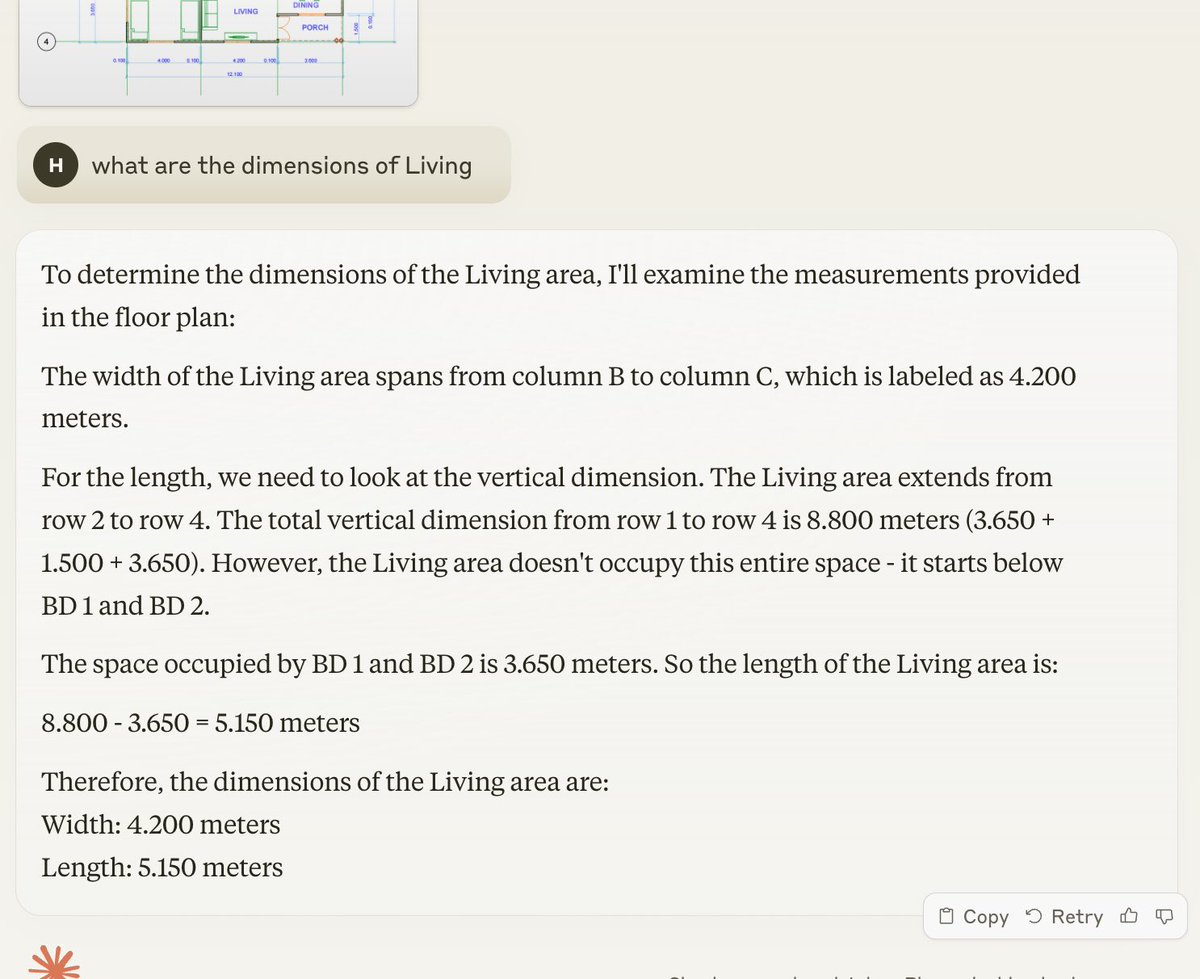
Claude 3.5 sonnet is my most preferred LLM. For this simple house plan, I asked ChatGPT by @OpenAI, Claude 3.5 sonnet by @AnthropicAI and Gemini by @GoogleAI the same question.These were their responses. ChatGPT gave me 2 answers, had to choose one. Gemini was the worst overall
I have an app that takes key dimensions from a floor plan and then computes materials and labour quantities for a structure. The first task is extraction. I want to outsource this to an LLM. I’ve tried local open source alternatives, the m2 air can’t handle the processing
Ongoing production of 8 inch Solid blocks for a seed school in Jinja. At @ecoconcreteUG, we pride ourselves on always offering quality while being cost-effective. Visit https://t.co/qnAy6yovfU for a free quote on blocks, pavers and retainers. Manufacture on site, save costs!
In 2019, during my first year of college I was looking for a project to work on for a class assignment. One of the articles I read involved a system that could one day be used by writers to complete novels. I rmr being intrigued how such a thing would work. Now it’s common, GPTs.
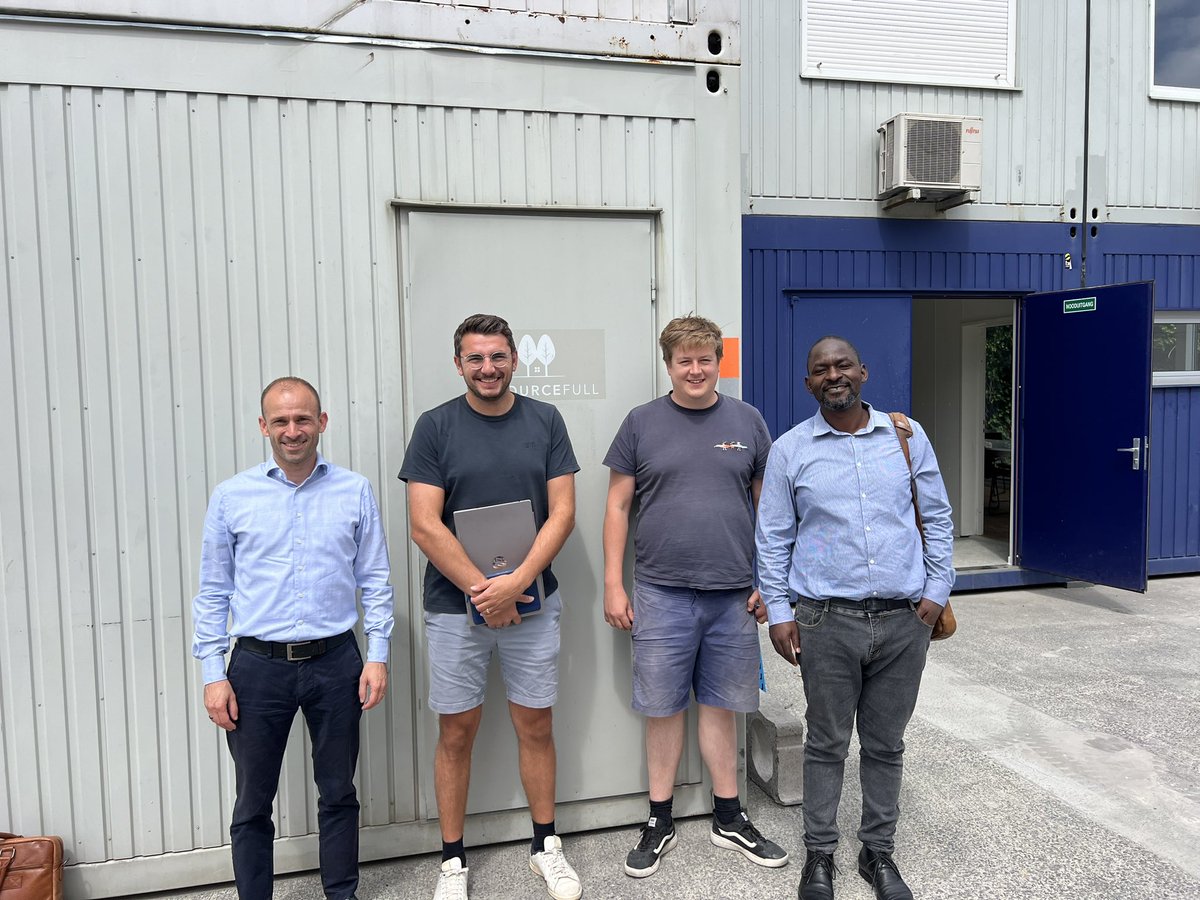
The team at Resourefull cement laboratories in Ghent, Belgium, that helped us in validating our initial low carbon binder recipes from Ugandan clays and volcanic ashes. Alexander and I visited them today to catch up and align our resources for the next phase of development.
A Namilyango College OB was battling cancer. Struggling to find the medicine he needed because it was difficult to come by..
@TonyNatif stepped in.. found the drugs and paid for them.
And that’s just one of many stories.
The NBA has honestly suppressed the fact that Jaylen Brown is a modern polymath.
Some NBA GMs said he was “too smart” for the League during the 2016 draft.
Great role model. UC Berkeley chess team. MIT Media Lab Fellow. He is such a League asset. He should be a cultural icon.