Back in 2019 I was very active on Instagram.
I used to be a fan of Christopher Lee (who became popular after his portrayal of Dracula from the Bram Stoker's) novel back in the 60s.
Someone made a post on Ig, where he made a snide remark about him.
As a Christopher fan, I was quick to argue some facts albeit movies, but seems I used a tone that was not polite.
I didn't know the poster but from his response i could tell he wasn't happy, I was so sorry.
I deleted the post entered the Dm and apologized. Apology was accepted.
After that encounter, we became friends and exchanged numbers on WhatsApp.
we had never seen, just chat buddies.
Months after service I got a job at Victoria Island, of course like every young hustler.
I could not afford an apartment on the Island in Lagos back then.
It was a challenging period of my life.
So one day, my pen buddy who was like a brother chatted me up, he could tell from my tone. Something was wrong.
Hey Sina! What's good he said?
I opened up about having apartment problems and having a job on the Island.
He wasn't in Nigeria.
He goes, 'you know what' I'd talk to my family I'm sure they'd be able to fix you a place pending the time you get yours.
This was someone that didn't know me well and the trust was based off being friends and chatting on whatsapp, few voice and video calls.
I was so happy.
My mood went from 0 to 100. He called his family and set up a meeting.
I went to visit.
Of course, since I was a stranger I was asked some questions just to get to know me better.
I answered truthfully.
His family lived in one of the most expensive locations on the Island in Lagos.
The family took me in, housed me, fed me, their private chauffeur was taking me to work.
I could not imagine. I was loved.
One day a family member had an issue, of course as a young Doctor I swung in, I had my Blood pressure kit and sugar kit , ran quick tests and made sure we headed to a hospital as an emergency.
He got there and got better.
The family was happy. What are the odds that someone who was a stranger , a Doctor was available when this emergency happened and gave it all.
I still had in my mind to get my apartment once I stabilized in Lagos.
One day, Big Mum comes to meet me and says . Dr Sina , you don't have to leave.
You are a part of our family.
Feel free to call this your home. You are our son.
Anytime you are in Lagos know you have a home.
I cried, I sobbed, my eyes popped out.
I was overwhelmed with love.
This was me who didn't have a place and now I have a family that housed, fed me, Took care of me like a son.
I even wanted to say thank you and offer something to family..they laughed and said No. You are now part of the family.
On Big Mummy's birthday, I surprised her with a gift she will never forget.
Till date she keeps it.
When I was leaving lagos I cried, I went on my knees, The family prayed for me and gave me hugs.
Anytime I'm in Lagos. Big Mummy knows my best meal and I definetly have a home away from home on the Island.
I have gotten connections and links to High profile people from his family.
All this started over an online banter.
Will you call it coincidence?
No, I think it was predestined and fate.
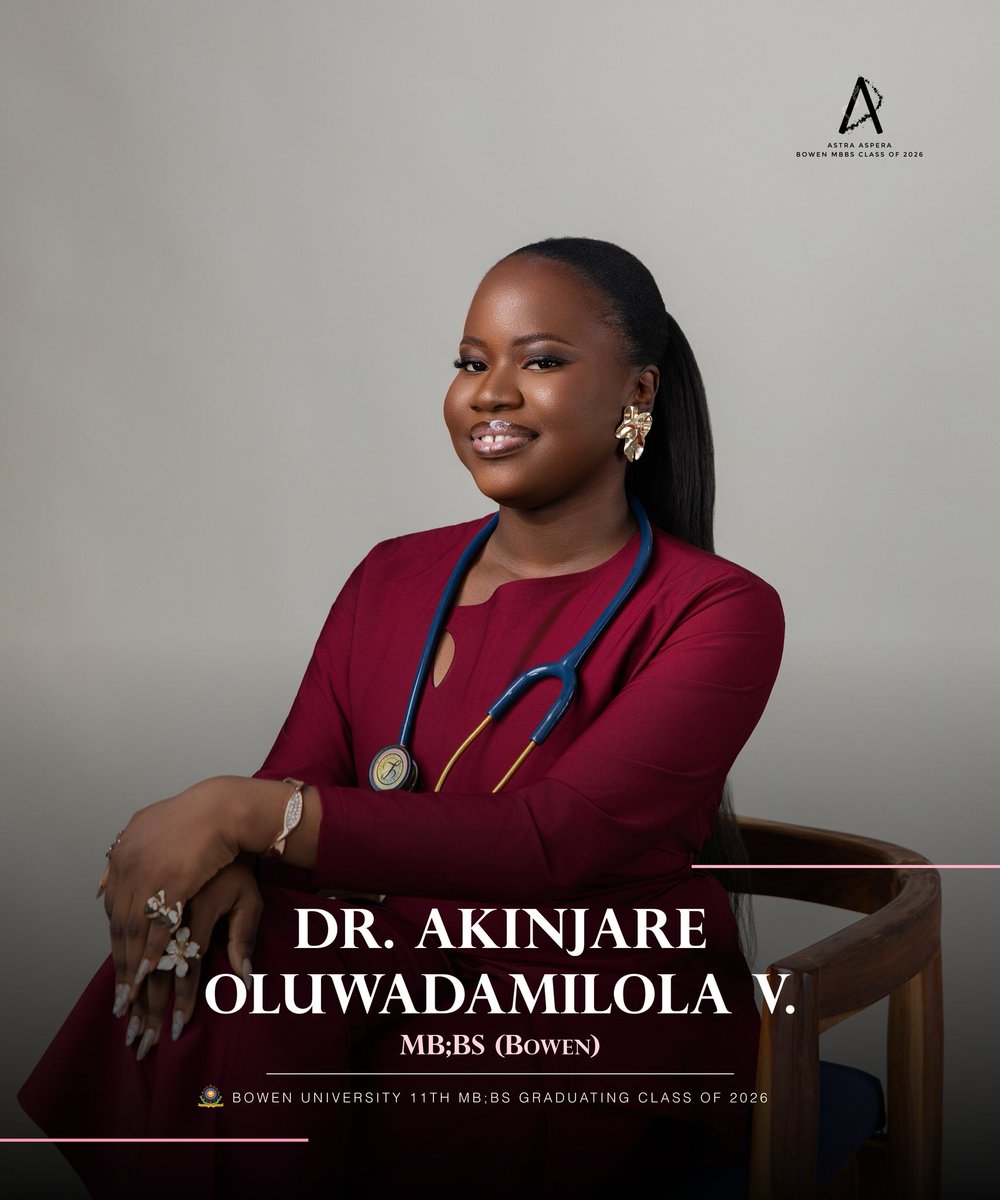
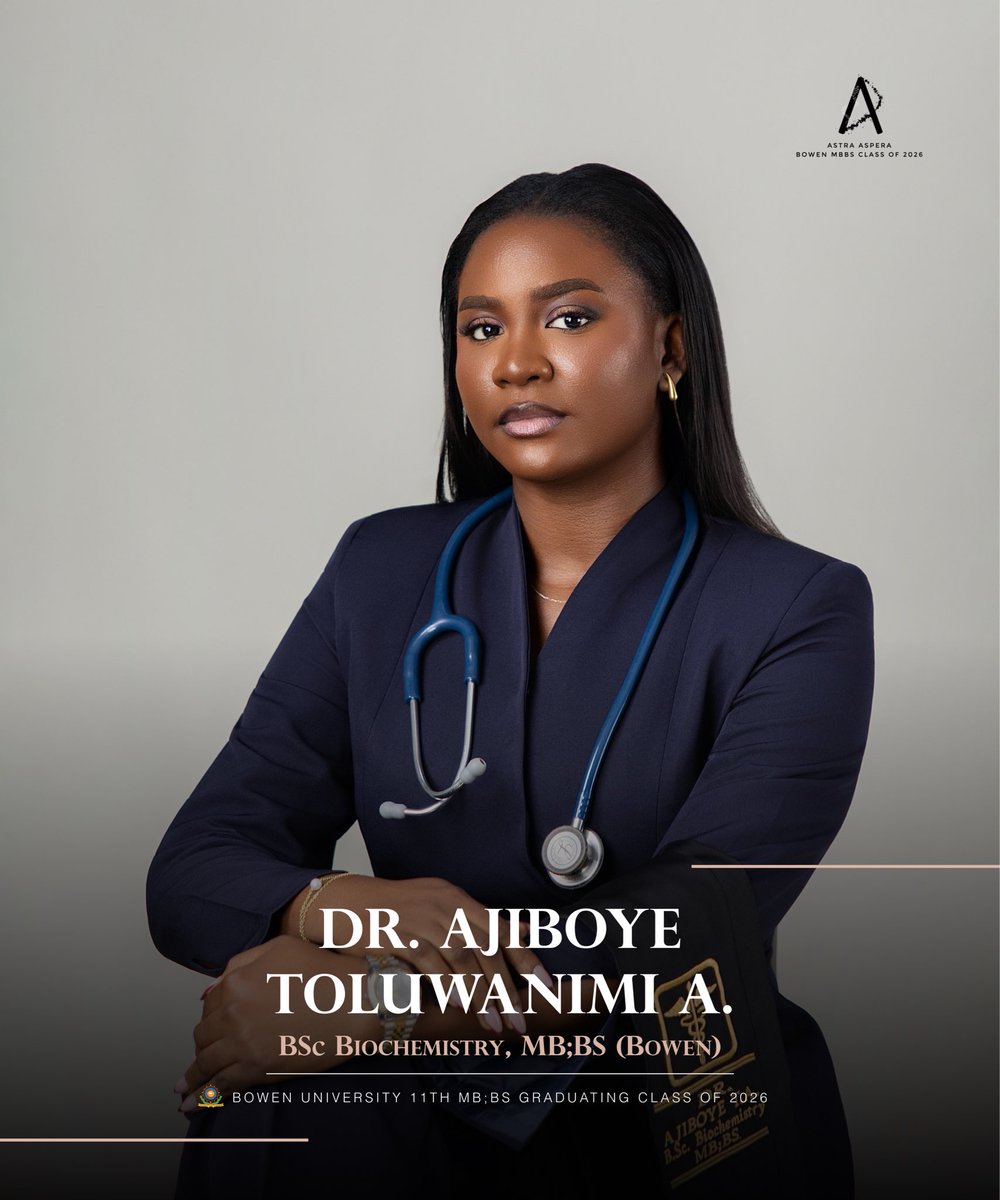
Finally earned the title after years of hard work and perseverance. 🤍
REINTRODUCING,
Dr. Alade Fiyinfoluwa F. 🩺✨
(Bsc. Biochemistry, MB;BS BOWEN)
#AstraAspera
“I have held many things in my hands, and I have lost them all; but whatever I have placed in God’s hands that I still possess”
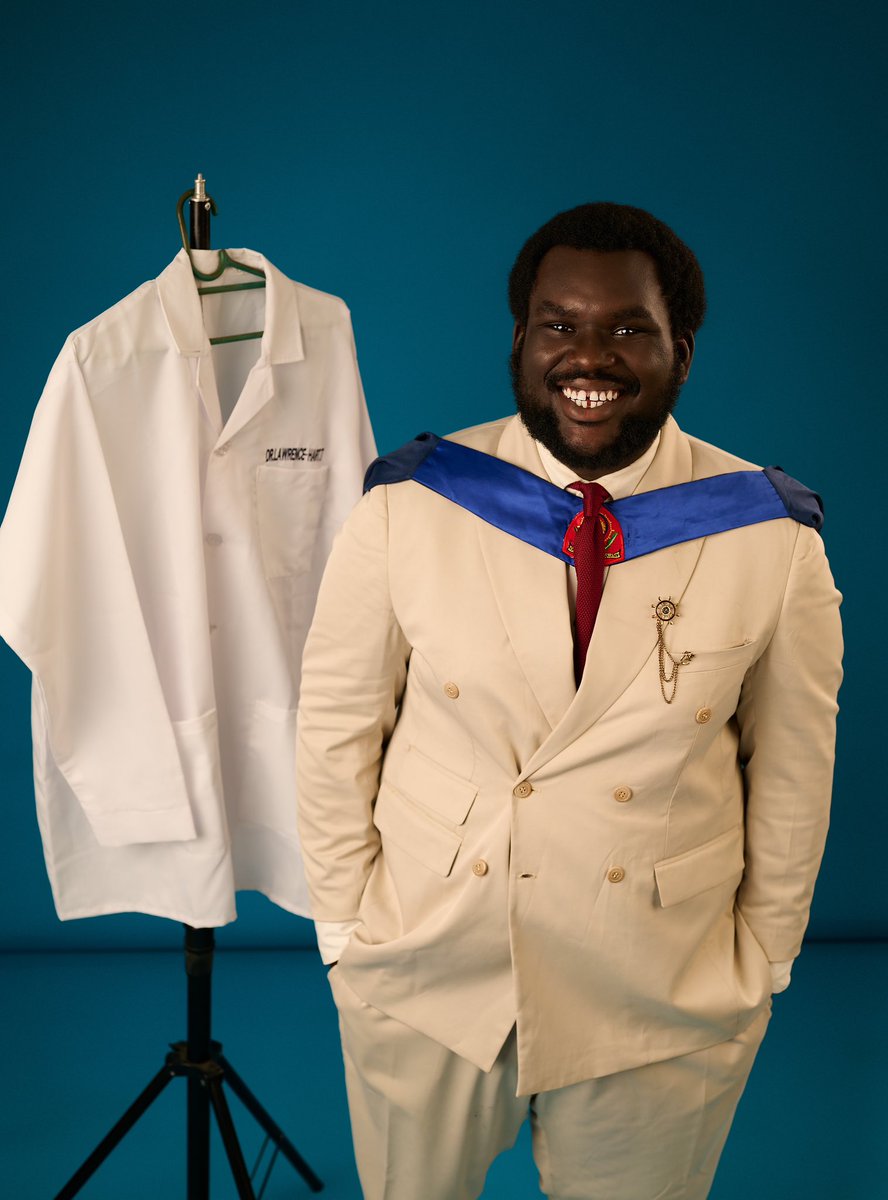
Dr Lawrence-Hart Tamunokuro.
Bsc Biochemistry, MB;BS Bowen.
#AstraAspera#Ogbasurvivor.
Allow me to reintroduce myself🤭, my name is Doctor Aboloye Jesutofunmi Success.
https://t.co/iEutiXBe99 Anatomy, MB;BS (Bowen)
It’s Dr A.J. to you now🥳
God really did!
#AstraAspera
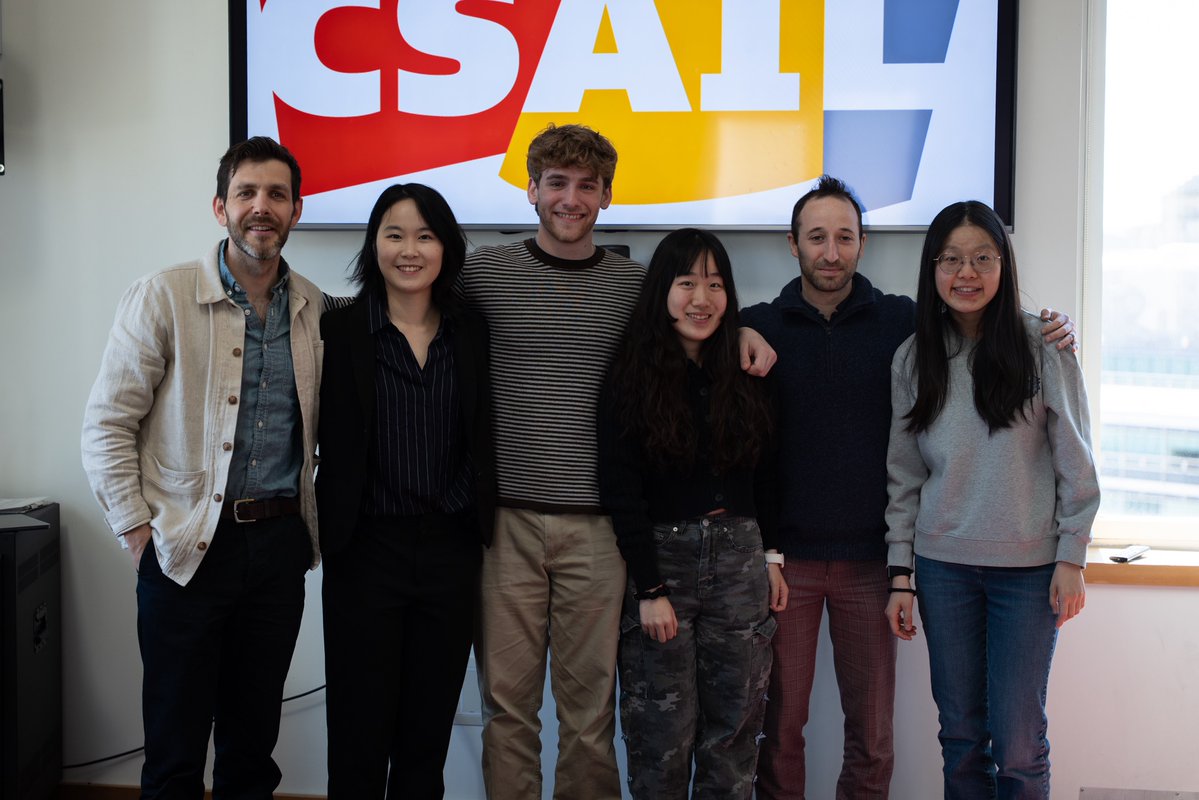
I've defended and graduated!
Perhaps the most important lesson I've learned during my time at MIT is that progress in science (and in society!) is deeply collective. In today's world --- and especially in a hyper-competitive field like AI research --- it's easy to get sucked into comparison and self-doubt. Much of this, I think, comes from a misunderstanding of how scientific progress actually works: we tend to attribute oversized credit to a small number of figures. But certainly none of the work I've done, and none of the growth I've undergone, would have been possible without the support of my mentors, collaborators, and the insights of millions of brilliant scientists before me.
Along these lines, I am grateful to the amazing community around me who have supported my journey: most importantly, to my advisor @jacobandreas, the dozens of collaborators I've worked with during my PhD, my labmates, my mentees, and my co-organizers at @MITGradUnion --- all of whom have shown me, in various ways, what it means to work not out of comparison but out of love: for science, for the community around me, and for humanity.
I hope to carry forward these values wherever I go.
There was a time in Nigeria when the man carrying a sewing machine on his shoulder was called Obioma.
Because almost all the artisanal tailors were Easterners of Igbo descent.
After the Civil War, many Easterners emerged from one of the most devastating chapters in Nigerian history with almost nothing but skill, mobility, discipline, and a survival instinct.
Some carried sewing machines from street to street, patching clothes, repairing trousers, adjusting school uniforms, and moving from compound to compound looking for work.
That image became so common that the name stuck.
Obioma.
A man with a sewing machine on his shoulder, moving under the sun and doing work many people looked down on.
But the same people who were once reduced in the public imagination to street tailoring slowly began to move.
From roadside tailoring to shops.
From shops to markets.
From markets to importation.
From importation to manufacturing.
From apprenticeship to industrial clusters.
From survival to ownership.
Go to Nnewi.
Go to Aba.
Go to Onitsha.
Go to Alaba.
Go to Ladipo.
Go to Ariaria.
You will still see poverty, struggle, disorder, bad roads, poor power supply, and all the normal Nigerian problems. Nobody is pretending the Southeast has become Singapore.
But you will also see something powerful.
You will see a people who took humiliation, displacement, and economic ruin and built a survival machine around trade, apprenticeship, mobility, and family capital.
And this is what makes my heart sink as a Northerner.
Today, the mai guard, mai ruwa, mai shayi, mai kaya, shoe repairer, the man pushing a wheelbarrow, carrying loads, shining shoes, patching clothes, riding okada, clearing construction sites, packing refuse, digging soakaway pits, hawking small goods, or sleeping beside a kiosk in Lagos, Abuja, Port Harcourt, Ibadan, Onitsha, and other cities is often called "Aboki."
That is the story we don't want to face.
One people moved from grass to grace.
Another moved from grace to grass.
This is not to take anything away from the Igbo people. I have nothing but admiration for them.
And it is not an insult to the Hausa people or to menial jobs. I am a proud son of Arewa, and in Arewa we do not look down on any vocation earned through halal means.
This is a history lesson.
Now look at us in the North.
We did not begin from the bottom.
Long before colonial Nigeria existed, Kano was already one of the great commercial cities of West Africa. Merchants from Tripoli, Fez, Agadez, Timbuktu, and Bornu passed through its markets. Caravans crossed the Sahara carrying leather goods, textiles, kola nuts, salt, and livestock. The city walls of Kano were not built around a village. They were built around a thriving urban economy that connected West Africa to North Africa.
We had cities that were centres of commerce when many parts of modern Nigeria were still organized around smaller local economies.
We had emirates that provided administration, taxation, courts, and political order across vast territories.
We had centres of Islamic scholarship that attracted students from across the region. In places like Kano, Katsina, Sokoto, and Borno, generations of scholars produced manuscripts and taught jurisprudence, theology, grammar, astronomy, and history. The reputation of northern scholarship travelled far beyond Nigeria's borders.
We had trade routes that linked us to the wider world. For centuries, merchants moved goods across the Sahara and across the savannah belt. Northern markets were not isolated local markets. They were part of international commercial networks.
We had cattle wealth on a scale few regions could match. Fulani pastoralists moved millions of cattle across grazing routes stretching from Senegal to Cameroon. Livestock was not merely food. It was wealth, trade, transport, status, and economic security.
We had one of the most respected leather industries in Africa. Kano leather was famous across the continent. Tanned hides from northern Nigeria found their way into trans-Saharan commerce and international markets. The famous red goatskin known as Morocco leather often originated from skins processed through West African leather networks in which Kano played a major role.
We had textile industries that employed thousands long before modern factories arrived. Hand-spun cotton was woven into cloth across northern towns. Entire communities depended on spinning, weaving, dyeing, trading, and transporting textiles.
We had the famous dye pits of Kano.
Not one or two pits.
Dozens of them.
For centuries, the Kofar Mata dye pits transformed locally woven cloth into richly coloured fabrics using indigo. Traders came from different parts of West Africa to buy these textiles. The dye pits became one of the oldest continuously operating industrial sites on the continent. They supported craftsmen, traders, transporters, farmers growing indigo, and entire commercial networks built around textile production.
We had the groundnut economy.
There was a time when the groundnut pyramids of Kano were not merely tourist attractions on postcards.
They were symbols of enormous agricultural wealth.
Thousands of farmers cultivated groundnuts across the North. Rail lines carried produce southward for export. Groundnut exports generated foreign exchange, supported industries, created jobs, and helped finance government revenues. The pyramids themselves represented mountains of produce waiting to enter global markets.
And if we move into the colonial and post-colonial era, the advantages become even harder to ignore.
We had numbers.
The North occupies roughly three-quarters of Nigeria's landmass. Depending on how one defines the region, the nineteen northern states account for well over half of Nigeria's population. Kano State alone has a population larger than many African countries.
We had manpower.
For decades, millions of young people entered the labour force every year. We were not a small minority struggling to find relevance. We were one of the largest demographic blocs in Africa.
We had land.
Hundreds of thousands of square kilometres of territory stretching across the Sudan and Sahel savannahs.
Land suitable for millet, sorghum, maize, rice, cotton, groundnuts, and livestock.
Land crossed by major river systems such as the Niger and Benue, and supported by irrigation projects in several states.
We had agricultural potential that many countries would envy.
We had political influence.
From independence onward, northern politicians, military officers, civil servants, traditional rulers, and power brokers occupied some of the most influential positions in the Nigerian state for long periods.
Prime ministers.
Heads of state.
Presidents.
Military rulers.
Senior ministers.
Powerful bureaucrats.
Influential legislators.
Whether one likes that fact or not, the North was never politically invisible.
We had religious authority.
The Sultanate of Sokoto remains one of the most influential Islamic institutions in Africa.
The emirates commanded legitimacy that extended beyond politics.
Mosques, Islamic schools, scholars, judges, and religious networks shaped social life across millions of households.
We had institutions.
Not perfect institutions.
But institutions nonetheless.
Emirate councils.
Traditional courts.
Islamic learning centres.
Agricultural boards.
Marketing boards.
Regional administrations.
Cooperative systems.
Educational establishments.
Commercial associations.
Structures that survived for generations.
We had a head start.
That is what makes the present situation so painful.
Because today, when millions of young Hausa and northern boys enter any big city, what work are many of them known for?
These boys are not lazy.
A lazy man does not leave Kano, Katsina, Zamfara, Sokoto, Jigawa, Bauchi, Kebbi, or Borno and sleep under a bridge in Lagos just to survive.
A lazy man does not push water from street to street.
A lazy man does not carry cement until his back bends.
A lazy man does not guard another man's house all night and still open a kiosk by morning.
The problem is not laziness.
The problem is that too many of our people enter the modern economy from the lowest possible point.
No certificate.
No skill that scales.
No capital.
No protection.
No formal training.
No strong educational foundation.
No industrial ladder waiting for them.
So they sell their bodies first.
Their backs.
Their hands.
Their legs.
Their sleep.
Their youth.
That is the real tragedy.
The Igbo Obioma story became a ladder because it was connected to apprenticeship, trade discipline, family networks, and commercial ambition.
The Hausa Aboki story too often becomes a trap because it is connected to poverty, broken schooling, rural collapse, insecurity, and survival migration.
One system turns a boy into a trader.
The other turns a boy into cheap labour or, worse, a recruitment ground for terrorism.
This is the painful contrast.
The Southeast came out of war and produced commercial networks.
The North came out of power and produced surplus labour.
That sentence is harsh, but look around before you reject it.
Who is carrying the load?
Who is guarding the gate?
Who is pushing the cart?
Who is fetching the water?
Who is sleeping in the market?
Who is leaving the village because bandits have made farming impossible?
Who is entering the city with nothing but strength?
If the answer to all the questions above is Arewa youth, then you must not be offended by the diagnosis. Instead, start asking your leaders the harder questions.
Because what is happening to Arewa is a failure of social organization. We shield our leaders too much and outsource criticism of them.
Our fathers inherited a civilization.
Too many of our boys inherited migration.
Our fathers inherited functioning economic systems.
Too many of our boys inherited survival.
Our fathers participated in trade networks stretching across continents.
Too many of our boys participate only in daily labour markets.
Our fathers built industries around leather, textiles, livestock, agriculture, and commerce.
Too many of our boys now rent out their muscles by the day.
And the painful thing is that the word Aboki, which originally means "friend," now, in the mouth of the Nigerian city, often becomes a class marker.
It becomes a way of saying: the northern poor man who does the work nobody respects but everybody needs.
That should break our hearts.
Not because the work is shameful.
No honest work is shameful.
What is shameful is that a whole region with history, population, religious authority, political influence, institutions, agricultural potential, and vast territory keeps producing young people whose first contact with the economy is desperation.
This is why history matters.
The question is not whether the Igbo are better than the Hausa.
That is a childish argument.
The real question is: what system turns hardship into enterprise, and what system turns heritage into dependency?
Because poverty alone does not explain everything.
War did not stop the Igbo from building trade networks.
Lack of oil did not stop Nnewi from producing industrialists.
Bad Nigerian roads did not stop Aba from becoming a manufacturing symbol.
Weak government did not stop apprenticeship from creating business owners.
So what stopped us?
What happened to the North that inherited thriving cities, trans-Saharan commerce, respected scholarship, textile industries, leather industries, livestock wealth, agricultural exports, demographic strength, political influence, and enormous land resources?
How did a people with so much historical structure produce so many young men with so little modern preparation?
That is the conversation we need.
Not insults.
Not denial.
Not ethnic pride.
Not hiding behind "our culture."
Not pretending every criticism is hatred.
The Obioma story should humble us.
Because it shows that a people can begin with a sewing machine on the shoulder and still build a commercial ladder.
The Aboki story should disturb us.
Because it shows that a people can begin with history on their side and still end up supplying cheap labour to other people's cities.
That is the mirror.
Igbo moved from Obioma to enterprise.
Hausa must not remain trapped inside Aboki survival.
The North needs a ladder.