Went out today after the rain,mushin was a mess, the road was filled with refuse that has been dumped on the pavements for over a month, it was such an eyesore. Let’s not even talk about how every house on the street has a lot of refuse right in front of them waiting to be packed
🧵 THREAD:
Cost Breakdown of Migrating to Canada as a Registered Nurse via Express Entry (From Nigeria) 🇨🇦
A lot of people asked for the estimated costs after my previous thread.
Here's a realistic breakdown of the major expenses you should budget for.
👇🏽
From my POV/
Pages of the Glorius Qur'ān today, Friday 26/6/26, Sūrah al-Tawbah (9): 14-26, tafakkur verse 9: 24
Theme: In the heart of a true believer, nothing and no one comes before Allah and His Messenger (ṣallāLlāhu 'alayhi wa sallam)
{قُلۡ إِن كَانَ ءَابَاۤؤُكُمۡ وَأَبۡنَاۤؤُكُمۡ وَإِخۡوَ ٰنُكُمۡ وَأَزۡوَ ٰجُكُمۡ وَعَشِیرَتُكُمۡ وَأَمۡوَ ٰلٌ ٱقۡتَرَفۡتُمُوهَا وَتِجَـٰرَةࣱ تَخۡشَوۡنَ كَسَادَهَا وَمَسَـٰكِنُ تَرۡضَوۡنَهَاۤ أَحَبَّ إِلَیۡكُم مِّنَ ٱللَّهِ وَرَسُولِهِۦ وَجِهَادࣲ فِی سَبِیلِهِۦ فَتَرَبَّصُوا۟ حَتَّىٰ یَأۡتِیَ ٱللَّهُ بِأَمۡرِهِۦۗ وَٱللَّهُ لَا یَهۡدِی ٱلۡقَوۡمَ ٱلۡفَـٰسِقِینَ}
"Say, [O Muḥammad], If your fathers, your sons, your brothers, your wives, your relatives, wealth which you have obtained, commerce wherein you fear decline, and dwellings with which you are pleased are more beloved to you than Allāh and His Messenger and jihād [i.e., striving] in His cause, then wait until Allāh executes His command. And Allāh does not guide the defiantly disobedient people".
LESSONS:
Allah, the Exalted, revealed this verse in connection with the Expedition of Tabuk, when some Muslims hesitated to answer the Prophet's call because of their attachment to family, wealth, business, and worldly comfort. The verse does not prohibit loving parents, children, spouses, or possessions, for these are blessings from Allah. Rather, it teaches that love for Allah, His Messenger, and His religion must always take precedence. As the Prophet said: "None of you truly believes until I am more beloved to him than his father, his child, and all mankind." Thus, Islam establishes the correct order of love: Allah first, His Messenger next, and everything else thereafter.
1. Faith Is Proven by Priorities
True faith is shown when a believer chooses Allah's pleasure over personal interests. Every decision, whether about family, career, business, or relationships, should be guided by obedience to Allah.
2. Blessings Can Become Tests
The verse mentions family, wealth, trade, and homes as cherished blessings. While lawful and valuable, they become trials if they distract a person from worship or lead to compromising Islamic principles.
3. Faith Demands Sacrifice
Loving Allah requires sacrifice. Today, striving in His cause includes remaining honest, rejecting corruption, observing prayers, supporting good causes, and standing firmly for the truth despite personal cost.
4. Do Not Delay Obedience
Allah warns those who prefer worldly attachments over His commands: "Then wait until Allah brings about His command." Delaying obedience may result in the loss of blessings, spiritual decline, or punishment. The believer should therefore hasten to obey Allah.
5. Guidance Is for the Obedient
Allah concludes that He does not guide the defiantly disobedient. Those who consistently place Allah above worldly desires are granted guidance, steadfastness, and success in this life and the Hereafter.
This verse reminds believers that worldly blessings are to be enjoyed, not worshipped. Family, wealth, career, and comfort should strengthen, not weaken, our relationship with Allah. Lasting success belongs to those who place Allah above everything else.
May Allah grant us understanding and unite us with our beloved ones in Jannah. Āmīn.
@AdekolaJoy4 It was that OSCE fee that demotivated me too when I made findings about the pathway 😩😩. Coupled with the fact that you’ll still have to travel down there to do the OSCE
Pages of the Glorius Qur'ān today, Thursday 25/6/26, Sūrah al-Tawbah (9): 1-13, tafakkur verse 9: 7
Theme: Islam is a religion of justice, fidelity, and principled peace. Muslims are commanded to honour their covenants and maintain peace with those who remain faithful to their agreements.
{كَیۡفَ یَكُونُ لِلۡمُشۡرِكِینَ عَهۡدٌ عِندَ ٱللَّهِ وَعِندَ رَسُولِهِۦۤ إِلَّا ٱلَّذِینَ عَـٰهَدتُّمۡ عِندَ ٱلۡمَسۡجِدِ ٱلۡحَرَامِۖ فَمَا ٱسۡتَقَـٰمُوا۟ لَكُمۡ فَٱسۡتَقِیمُوا۟ لَهُمۡۚ إِنَّ ٱللَّهَ یُحِبُّ ٱلۡمُتَّقِینَ}
"How can there be for the polytheists a treaty in the sight of Allāh and with His Messenger, except for those with whom you made a treaty at al-Masjid al-Ḥarām? So as long as they are upright toward you, be upright toward them. Indeed, Allāh loves the righteous [who fear Him]".
LESSONS:
The verse was revealed in connection with the events following the conquest of Makkah and the declaration of Sūrah al-Tawbah in the ninth year after Hijrah. At that time, some Arab polytheist tribes had repeatedly violated their peace treaties with the Muslims by assisting enemies, attacking Muslim allies, and breaking their covenants. Allah declared that such treacherous treaties were no longer binding. However, He made a clear exception for those tribes who remained faithful to their agreements and committed no act of betrayal. Muslims were commanded to honour their treaties with these loyal parties until the agreed period expired.
This verse therefore establishes an enduring Islamic principle: peace agreements must be respected as long as the other party remains faithful to them.
1. Islam Commands Faithfulness to Treaties
Even when dealing with non-Muslims, Islam requires Muslims to honour every lawful agreement. Breaking treaties without justification is prohibited. A Muslim's word and covenant are sacred and should never be violated.
2. Peace Is the Default as Long as Others Honour It
The command: "So long as they remain true to you, remain true to them."
shows that Islam does not encourage conflict for its own sake. Peace should continue whenever the other party remains committed to it. Muslims should always prefer peaceful coexistence over unnecessary confrontation.
3. Justice Is Not Limited by Religious Differences
Although the verse speaks about polytheists, Allah still commands fairness and fulfilment of agreements with them. Justice in Islam is based on righteousness, not on religious or ethnic identity.
4. Taqwā Includes Honouring Commitments
The verse concludes: "Indeed, Allah loves those who are mindful of Him."
This teaches that fulfilling promises and agreements is an act of taqwā. Integrity and trustworthiness are signs of true God-consciousness.
5. Betrayal Is Never the Islamic Way
The verse distinguishes between those who betrayed their treaties and those who remained faithful. Muslims were not permitted to treat both groups alike.
Islam condemns collective punishment and requires that people be judged according to their own actions. Loyalty should be met with loyalty, while treachery has legal consequences.
Honour contracts, agreements, and promises in business, marriage, and public life.
Promote peaceful coexistence with neighbours of all faiths.
Avoid betrayal, deception, and breach of trust.
Encourage governments and communities to respect lawful treaties and international agreements.
Demonstrate that true taqwā is reflected not only in worship but also in honesty, justice, and reliability in all dealings.
Pages of the Glorius Qur'ān today, Saturday 20/6/26, Sūrah al-Anfāl (8): 1-16, tafakkur verse 8: 11
Theme: Understanding Divine Assistance Through Tranquility, Purification, and Steadfastness
{إِذۡ یُغَشِّیكُمُ ٱلنُّعَاسَ أَمَنَةࣰ مِّنۡهُ وَیُنَزِّلُ عَلَیۡكُم مِّنَ ٱلسَّمَاۤءِ مَاۤءࣰ لِّیُطَهِّرَكُم بِهِۦ وَیُذۡهِبَ عَنكُمۡ رِجۡزَ ٱلشَّیۡطَـٰنِ وَلِیَرۡبِطَ عَلَىٰ قُلُوبِكُمۡ وَیُثَبِّتَ بِهِ ٱلۡأَقۡدَامَ}
"[Remember] when He overwhelmed you with drowsiness [giving] security from Him and sent down upon you from the sky, rain by which to purify you and remove from you the evil [suggestions] of Satan and to make steadfast your hearts and plant firmly thereby your feet".
LESSONS:
This verse was revealed about the believers at Badr, but its lessons are timeless. Every believer faces his own "Badr" in life: moments of fear, uncertainty, hardship, and overwhelming challenges. Allah's treatment of the believers then teaches us how He still deals with His servants today.
1. Calmness During Chaos Is One of Allah's Greatest Blessings
Before solving their external problem, Allah first calmed their hearts through drowsiness and tranquility.
Today, many people are battling financial difficulties, family problems, academic pressure, health challenges, and emotional distress. Often, the greatest blessing is not the immediate removal of the problem but the ability to sleep peacefully and think clearly despite it. A calm heart in the midst of a storm is a sign of Allah's mercy. When Allah grants you inner peace while others panic, He has already given you a tremendous favour.
2. Allah Often Solves Problems Through Unexpected Means
The Muslims expected military assistance, but Allah first sent rain. What appeared ordinary turned out to be part of the victory.
Likewise, many people pray for a solution and expect it to come through one door, while Allah opens another. A conversation, a new friend, a job opportunity, a delay, or even a setback may become the means through which Allah changes your life. Never underestimate the small blessings Allah sends your way. Sometimes the answer to your du'ā' arrives disguised as an ordinary event.
3. Spiritual and Physical Cleanliness Affect Our Well-Being
The rain purified the believers physically and spiritually.
Today, when people neglect prayer, dhikr, Qur'ān, and personal hygiene, they often experience a decline in confidence, discipline, and emotional stability. Cleanliness and spirituality create a positive cycle that strengthens the believer. A person who keeps his body clean, his heart clean, and his relationship with Allah clean is usually better prepared to face life's challenges.
4. Many Battles Are Won or Lost in the Mind
Before the actual battle, Shayṭān was already attacking the believers with fear, doubt, and negative thoughts.
This remains true today. Many people are defeated by anxiety before they even begin. They convince themselves they will fail, that they are not good enough, or that their situation can never improve. Do not believe every thought that enters your mind. Some fears are whispers, not realities. Strengthen yourself with faith, positive action, and trust in Allah.
5. Firm Hearts Produce Firm Footing
Allah strengthened their hearts and then made their feet firm.
In life, success rarely begins with resources. It begins with conviction, patience, and determination. Those who remain steadfast through difficulties are often the ones who eventually succeed.
A student who perseveres despite setbacks, a business owner who remains patient during losses, or a family that stays united during hardship all embody this lesson. Before Allah changes your circumstances, He often strengthens your heart to endure them.
O Allah, grant us tranquility in times of fear, purity in body and soul, firmness in faith, and protection from the whispers of Shayṭān. Strengthen our hearts upon Your obedience and make us steadfast until we meet You. Āmīn.
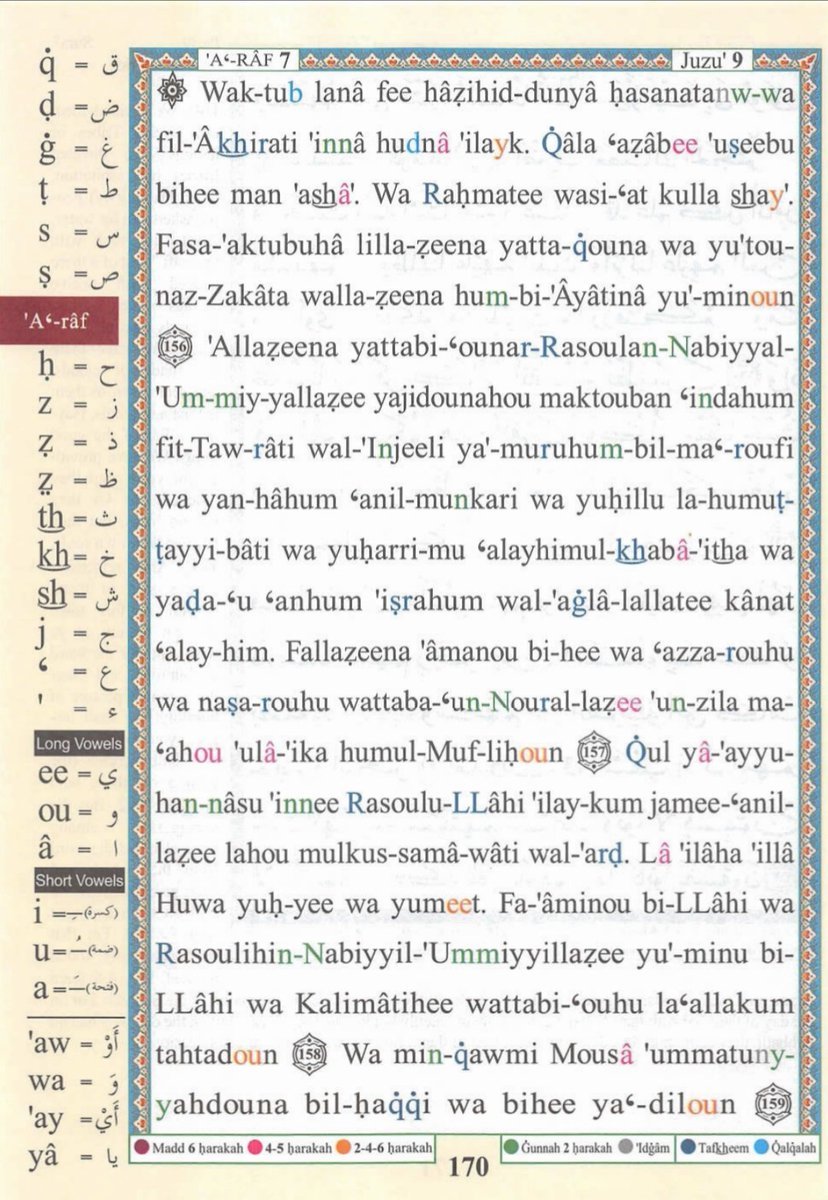
Pages of the Glorius Qur'ān today, Thursday 18/6/26, Sūrah al-'Araf (7): 171-187, tafakkur verse 7: 178
Theme: True Guidance Comes Only from Allāh, and Real Loss Is the Loss of Guidance
{مَن یَهۡدِ ٱللَّهُ فَهُوَ ٱلۡمُهۡتَدِیۖ وَمَن یُضۡلِلۡ فَأُو۟لَـٰۤىِٕكَ هُمُ ٱلۡخَـٰسِرُونَ}
"Whoever Allāh guides - he is the [rightly] guided; and whoever He sends astray - it is those who are the losers".
LESSONS:
This verse comes after a discussion of people who reject the signs of Allāh despite clear evidence. It reminds us that success, intelligence, wealth, status, or popularity do not guarantee guidance. The greatest blessing is to be guided by Allāh, while the greatest calamity is to be deprived of that guidance.
1: Guidance Is the Greatest Gift from Allāh
Many people seek wealth, influence, education, and worldly achievements, but the greatest gift a servant can receive is guidance (hidāyah). A person may possess the entire world yet remain spiritually lost, while another may own little but be among the most successful in the sight of Allāh because he knows and follows the truth.
This is why Muslims repeatedly ask in every ṣalāh: "Guide us to the straight path." (Qur'ān 1:6)
Guidance is not a one-time gift; it is a blessing that must be sought, preserved, and increased every day.
2: Misguidance Is Often the Consequence of Human Choices
Allāh is perfectly just. He does not wrong anyone. When people repeatedly reject truth, follow desires, become arrogant, and turn away from divine guidance, Allāh may leave them to the path they themselves have chosen.
The Qur'ān repeatedly teaches that hearts become sealed after persistent rejection of truth. Therefore, believers should never become arrogant about their own faith. Rather, they should constantly ask Allāh for firmness and protection from deviation.
The Prophet frequently supplicated:
"O Turner of the hearts, keep my heart firm upon Your religion."
3: Real Success Is Not Measured by Worldly Standards
Society often judges success by wealth, fame, power, or social influence. The Qur'ān presents a different standard. A person may be celebrated by the world yet be among the losers before Allāh, while another may be unknown among people but beloved to his Lord.
The truly guided person is one whose beliefs, actions, and character conform to the guidance of Allāh, regardless of public opinion.
Therefore, Muslims should measure themselves by obedience to Allāh rather than by worldly comparisons.
4: The Greatest Loss Is the Loss of One's Hereafter
The verse describes the misguided as "the losers." This loss is not merely financial or social. It is the loss of eternal happiness, divine pleasure, and success in the Hereafter.
A business loss can be recovered. A lost position can be regained. A damaged reputation can be repaired.
But if a person loses his relationship with Allāh and dies upon misguidance, that is the ultimate loss.
This is why the righteous predecessors feared spiritual decline more than worldly hardship.
5: Guidance Requires Gratitude, Humility, and Constant Effort
A believer should never assume that guidance is guaranteed forever. Hearts can change, circumstances can alter, and temptations can increase.
The more grateful a servant is for guidance, the more likely Allāh is to increase him in it.
This verse teaches that guidance is the greatest treasure a human being can possess and that misguidance is the greatest loss. The believer therefore lives between gratitude for the guidance already received and constant supplication for continued steadfastness. Success is not merely reaching worldly goals; true success is meeting Allāh with sound faith, sincere worship, and a heart firmly attached to His guidance.
O Allāh, guide us among those whom You have guided, keep our hearts firm upon Your religion, do not let our hearts deviate after You have guided us, and grant us mercy from Yourself. Indeed, You are the Bestower. Āmīn.
Pages of the Glorius Qur'ān today, Tuesday 16/6/26, Sūrah al-'Araf (7): 150-159, tafakkur verse 7: 153
Theme: The Door of Repentance Remains Open
{وَٱلَّذِینَ عَمِلُوا۟ ٱلسَّیِّـَٔاتِ ثُمَّ تَابُوا۟ مِنۢ بَعۡدِهَا وَءَامَنُوۤا۟ إِنَّ رَبَّكَ مِنۢ بَعۡدِهَا لَغَفُورࣱ رَّحِیمࣱ}
"But those who committed misdeeds and then repented after them and believed - indeed your Lord, thereafter, is Forgiving and Merciful".
LESSONS:
1. No sin is too great for Allah's mercy No matter how serious a person's wrongdoing may be, sincere repentance can erase it. Allah's mercy is always greater than the sins of His servants.
2. True repentance requires change The verse does not merely mention wrongdoing; it mentions repentance afterward. Genuine tawbah involves regretting the sin, abandoning it, and resolving not to return to it.
3. Faith strengthens repentance Allah mentions repentance together with belief (īmān). A repentant heart draws closer to Allah through renewed faith, obedience, and righteous deeds.
4. A person's past does not have to define their future Islam does not imprison people in their mistakes. The one who sincerely repents can become better than before, transforming a history of sin into a future of righteousness.
5. Hope should always overcome despair Shayṭān wants sinners to believe they are beyond redemption. This verse teaches that despair is misplaced, for Allah remains Al-Ghafūr (The Forgiving) and Ar-Raḥīm (The Merciful).
The story surrounding this verse follows the incident of the worship of the calf by some of the Children of Israel. Despite the enormity of their error, Allah still opened the door of repentance to them. This demonstrates a timeless principle: whenever a servant returns sincerely to Allah, he will find a Lord who is Forgiving and Merciful.
اللَّهُمَّ اغْفِرْ لَنَا ذُنُوبَنَا وَتُبْ عَلَيْنَا إِنَّكَ أَنْتَ التَّوَّابُ الرَّحِيمُ
O Allah, forgive our sins and accept our repentance. Indeed, You are the Acceptor of Repentance, the Most Merciful. Āmīn.


![IdrisAOni1's tweet photo. Pages of the Glorius Qur'ān today, Friday 26/6/26, Sūrah al-Tawbah (9): 14-26, tafakkur verse 9: 24
Theme: In the heart of a true believer, nothing and no one comes before Allah and His Messenger (ṣallāLlāhu 'alayhi wa sallam)
{قُلۡ إِن كَانَ ءَابَاۤؤُكُمۡ وَأَبۡنَاۤؤُكُمۡ وَإِخۡوَ ٰنُكُمۡ وَأَزۡوَ ٰجُكُمۡ وَعَشِیرَتُكُمۡ وَأَمۡوَ ٰلٌ ٱقۡتَرَفۡتُمُوهَا وَتِجَـٰرَةࣱ تَخۡشَوۡنَ كَسَادَهَا وَمَسَـٰكِنُ تَرۡضَوۡنَهَاۤ أَحَبَّ إِلَیۡكُم مِّنَ ٱللَّهِ وَرَسُولِهِۦ وَجِهَادࣲ فِی سَبِیلِهِۦ فَتَرَبَّصُوا۟ حَتَّىٰ یَأۡتِیَ ٱللَّهُ بِأَمۡرِهِۦۗ وَٱللَّهُ لَا یَهۡدِی ٱلۡقَوۡمَ ٱلۡفَـٰسِقِینَ}
"Say, [O Muḥammad], If your fathers, your sons, your brothers, your wives, your relatives, wealth which you have obtained, commerce wherein you fear decline, and dwellings with which you are pleased are more beloved to you than Allāh and His Messenger and jihād [i.e., striving] in His cause, then wait until Allāh executes His command. And Allāh does not guide the defiantly disobedient people".
LESSONS:
Allah, the Exalted, revealed this verse in connection with the Expedition of Tabuk, when some Muslims hesitated to answer the Prophet's call because of their attachment to family, wealth, business, and worldly comfort. The verse does not prohibit loving parents, children, spouses, or possessions, for these are blessings from Allah. Rather, it teaches that love for Allah, His Messenger, and His religion must always take precedence. As the Prophet said: "None of you truly believes until I am more beloved to him than his father, his child, and all mankind." Thus, Islam establishes the correct order of love: Allah first, His Messenger next, and everything else thereafter.
1. Faith Is Proven by Priorities
True faith is shown when a believer chooses Allah's pleasure over personal interests. Every decision, whether about family, career, business, or relationships, should be guided by obedience to Allah.
2. Blessings Can Become Tests
The verse mentions family, wealth, trade, and homes as cherished blessings. While lawful and valuable, they become trials if they distract a person from worship or lead to compromising Islamic principles.
3. Faith Demands Sacrifice
Loving Allah requires sacrifice. Today, striving in His cause includes remaining honest, rejecting corruption, observing prayers, supporting good causes, and standing firmly for the truth despite personal cost.
4. Do Not Delay Obedience
Allah warns those who prefer worldly attachments over His commands: "Then wait until Allah brings about His command." Delaying obedience may result in the loss of blessings, spiritual decline, or punishment. The believer should therefore hasten to obey Allah.
5. Guidance Is for the Obedient
Allah concludes that He does not guide the defiantly disobedient. Those who consistently place Allah above worldly desires are granted guidance, steadfastness, and success in this life and the Hereafter.
This verse reminds believers that worldly blessings are to be enjoyed, not worshipped. Family, wealth, career, and comfort should strengthen, not weaken, our relationship with Allah. Lasting success belongs to those who place Allah above everything else.
May Allah grant us understanding and unite us with our beloved ones in Jannah. Āmīn.](https://pbs.twimg.com/media/HLtztxbXQAAekr2.jpg)
![IdrisAOni1's tweet photo. Pages of the Glorius Qur'ān today, Friday 26/6/26, Sūrah al-Tawbah (9): 14-26, tafakkur verse 9: 24
Theme: In the heart of a true believer, nothing and no one comes before Allah and His Messenger (ṣallāLlāhu 'alayhi wa sallam)
{قُلۡ إِن كَانَ ءَابَاۤؤُكُمۡ وَأَبۡنَاۤؤُكُمۡ وَإِخۡوَ ٰنُكُمۡ وَأَزۡوَ ٰجُكُمۡ وَعَشِیرَتُكُمۡ وَأَمۡوَ ٰلٌ ٱقۡتَرَفۡتُمُوهَا وَتِجَـٰرَةࣱ تَخۡشَوۡنَ كَسَادَهَا وَمَسَـٰكِنُ تَرۡضَوۡنَهَاۤ أَحَبَّ إِلَیۡكُم مِّنَ ٱللَّهِ وَرَسُولِهِۦ وَجِهَادࣲ فِی سَبِیلِهِۦ فَتَرَبَّصُوا۟ حَتَّىٰ یَأۡتِیَ ٱللَّهُ بِأَمۡرِهِۦۗ وَٱللَّهُ لَا یَهۡدِی ٱلۡقَوۡمَ ٱلۡفَـٰسِقِینَ}
"Say, [O Muḥammad], If your fathers, your sons, your brothers, your wives, your relatives, wealth which you have obtained, commerce wherein you fear decline, and dwellings with which you are pleased are more beloved to you than Allāh and His Messenger and jihād [i.e., striving] in His cause, then wait until Allāh executes His command. And Allāh does not guide the defiantly disobedient people".
LESSONS:
Allah, the Exalted, revealed this verse in connection with the Expedition of Tabuk, when some Muslims hesitated to answer the Prophet's call because of their attachment to family, wealth, business, and worldly comfort. The verse does not prohibit loving parents, children, spouses, or possessions, for these are blessings from Allah. Rather, it teaches that love for Allah, His Messenger, and His religion must always take precedence. As the Prophet said: "None of you truly believes until I am more beloved to him than his father, his child, and all mankind." Thus, Islam establishes the correct order of love: Allah first, His Messenger next, and everything else thereafter.
1. Faith Is Proven by Priorities
True faith is shown when a believer chooses Allah's pleasure over personal interests. Every decision, whether about family, career, business, or relationships, should be guided by obedience to Allah.
2. Blessings Can Become Tests
The verse mentions family, wealth, trade, and homes as cherished blessings. While lawful and valuable, they become trials if they distract a person from worship or lead to compromising Islamic principles.
3. Faith Demands Sacrifice
Loving Allah requires sacrifice. Today, striving in His cause includes remaining honest, rejecting corruption, observing prayers, supporting good causes, and standing firmly for the truth despite personal cost.
4. Do Not Delay Obedience
Allah warns those who prefer worldly attachments over His commands: "Then wait until Allah brings about His command." Delaying obedience may result in the loss of blessings, spiritual decline, or punishment. The believer should therefore hasten to obey Allah.
5. Guidance Is for the Obedient
Allah concludes that He does not guide the defiantly disobedient. Those who consistently place Allah above worldly desires are granted guidance, steadfastness, and success in this life and the Hereafter.
This verse reminds believers that worldly blessings are to be enjoyed, not worshipped. Family, wealth, career, and comfort should strengthen, not weaken, our relationship with Allah. Lasting success belongs to those who place Allah above everything else.
May Allah grant us understanding and unite us with our beloved ones in Jannah. Āmīn.](https://pbs.twimg.com/media/HLtzs67XUAAWmzt.jpg)
![IdrisAOni1's tweet photo. Pages of the Glorius Qur'ān today, Friday 26/6/26, Sūrah al-Tawbah (9): 14-26, tafakkur verse 9: 24
Theme: In the heart of a true believer, nothing and no one comes before Allah and His Messenger (ṣallāLlāhu 'alayhi wa sallam)
{قُلۡ إِن كَانَ ءَابَاۤؤُكُمۡ وَأَبۡنَاۤؤُكُمۡ وَإِخۡوَ ٰنُكُمۡ وَأَزۡوَ ٰجُكُمۡ وَعَشِیرَتُكُمۡ وَأَمۡوَ ٰلٌ ٱقۡتَرَفۡتُمُوهَا وَتِجَـٰرَةࣱ تَخۡشَوۡنَ كَسَادَهَا وَمَسَـٰكِنُ تَرۡضَوۡنَهَاۤ أَحَبَّ إِلَیۡكُم مِّنَ ٱللَّهِ وَرَسُولِهِۦ وَجِهَادࣲ فِی سَبِیلِهِۦ فَتَرَبَّصُوا۟ حَتَّىٰ یَأۡتِیَ ٱللَّهُ بِأَمۡرِهِۦۗ وَٱللَّهُ لَا یَهۡدِی ٱلۡقَوۡمَ ٱلۡفَـٰسِقِینَ}
"Say, [O Muḥammad], If your fathers, your sons, your brothers, your wives, your relatives, wealth which you have obtained, commerce wherein you fear decline, and dwellings with which you are pleased are more beloved to you than Allāh and His Messenger and jihād [i.e., striving] in His cause, then wait until Allāh executes His command. And Allāh does not guide the defiantly disobedient people".
LESSONS:
Allah, the Exalted, revealed this verse in connection with the Expedition of Tabuk, when some Muslims hesitated to answer the Prophet's call because of their attachment to family, wealth, business, and worldly comfort. The verse does not prohibit loving parents, children, spouses, or possessions, for these are blessings from Allah. Rather, it teaches that love for Allah, His Messenger, and His religion must always take precedence. As the Prophet said: "None of you truly believes until I am more beloved to him than his father, his child, and all mankind." Thus, Islam establishes the correct order of love: Allah first, His Messenger next, and everything else thereafter.
1. Faith Is Proven by Priorities
True faith is shown when a believer chooses Allah's pleasure over personal interests. Every decision, whether about family, career, business, or relationships, should be guided by obedience to Allah.
2. Blessings Can Become Tests
The verse mentions family, wealth, trade, and homes as cherished blessings. While lawful and valuable, they become trials if they distract a person from worship or lead to compromising Islamic principles.
3. Faith Demands Sacrifice
Loving Allah requires sacrifice. Today, striving in His cause includes remaining honest, rejecting corruption, observing prayers, supporting good causes, and standing firmly for the truth despite personal cost.
4. Do Not Delay Obedience
Allah warns those who prefer worldly attachments over His commands: "Then wait until Allah brings about His command." Delaying obedience may result in the loss of blessings, spiritual decline, or punishment. The believer should therefore hasten to obey Allah.
5. Guidance Is for the Obedient
Allah concludes that He does not guide the defiantly disobedient. Those who consistently place Allah above worldly desires are granted guidance, steadfastness, and success in this life and the Hereafter.
This verse reminds believers that worldly blessings are to be enjoyed, not worshipped. Family, wealth, career, and comfort should strengthen, not weaken, our relationship with Allah. Lasting success belongs to those who place Allah above everything else.
May Allah grant us understanding and unite us with our beloved ones in Jannah. Āmīn.](https://pbs.twimg.com/media/HLtzr1iWAAAPakc.jpg)
![IdrisAOni1's tweet photo. Pages of the Glorius Qur'ān today, Thursday 25/6/26, Sūrah al-Tawbah (9): 1-13, tafakkur verse 9: 7
Theme: Islam is a religion of justice, fidelity, and principled peace. Muslims are commanded to honour their covenants and maintain peace with those who remain faithful to their agreements.
{كَیۡفَ یَكُونُ لِلۡمُشۡرِكِینَ عَهۡدٌ عِندَ ٱللَّهِ وَعِندَ رَسُولِهِۦۤ إِلَّا ٱلَّذِینَ عَـٰهَدتُّمۡ عِندَ ٱلۡمَسۡجِدِ ٱلۡحَرَامِۖ فَمَا ٱسۡتَقَـٰمُوا۟ لَكُمۡ فَٱسۡتَقِیمُوا۟ لَهُمۡۚ إِنَّ ٱللَّهَ یُحِبُّ ٱلۡمُتَّقِینَ}
"How can there be for the polytheists a treaty in the sight of Allāh and with His Messenger, except for those with whom you made a treaty at al-Masjid al-Ḥarām? So as long as they are upright toward you, be upright toward them. Indeed, Allāh loves the righteous [who fear Him]".
LESSONS:
The verse was revealed in connection with the events following the conquest of Makkah and the declaration of Sūrah al-Tawbah in the ninth year after Hijrah. At that time, some Arab polytheist tribes had repeatedly violated their peace treaties with the Muslims by assisting enemies, attacking Muslim allies, and breaking their covenants. Allah declared that such treacherous treaties were no longer binding. However, He made a clear exception for those tribes who remained faithful to their agreements and committed no act of betrayal. Muslims were commanded to honour their treaties with these loyal parties until the agreed period expired.
This verse therefore establishes an enduring Islamic principle: peace agreements must be respected as long as the other party remains faithful to them.
1. Islam Commands Faithfulness to Treaties
Even when dealing with non-Muslims, Islam requires Muslims to honour every lawful agreement. Breaking treaties without justification is prohibited. A Muslim's word and covenant are sacred and should never be violated.
2. Peace Is the Default as Long as Others Honour It
The command: "So long as they remain true to you, remain true to them."
shows that Islam does not encourage conflict for its own sake. Peace should continue whenever the other party remains committed to it. Muslims should always prefer peaceful coexistence over unnecessary confrontation.
3. Justice Is Not Limited by Religious Differences
Although the verse speaks about polytheists, Allah still commands fairness and fulfilment of agreements with them. Justice in Islam is based on righteousness, not on religious or ethnic identity.
4. Taqwā Includes Honouring Commitments
The verse concludes: "Indeed, Allah loves those who are mindful of Him."
This teaches that fulfilling promises and agreements is an act of taqwā. Integrity and trustworthiness are signs of true God-consciousness.
5. Betrayal Is Never the Islamic Way
The verse distinguishes between those who betrayed their treaties and those who remained faithful. Muslims were not permitted to treat both groups alike.
Islam condemns collective punishment and requires that people be judged according to their own actions. Loyalty should be met with loyalty, while treachery has legal consequences.
Honour contracts, agreements, and promises in business, marriage, and public life.
Promote peaceful coexistence with neighbours of all faiths.
Avoid betrayal, deception, and breach of trust.
Encourage governments and communities to respect lawful treaties and international agreements.
Demonstrate that true taqwā is reflected not only in worship but also in honesty, justice, and reliability in all dealings.](https://pbs.twimg.com/media/HLoqiQbWcAAQIgb.jpg)
![IdrisAOni1's tweet photo. Pages of the Glorius Qur'ān today, Thursday 25/6/26, Sūrah al-Tawbah (9): 1-13, tafakkur verse 9: 7
Theme: Islam is a religion of justice, fidelity, and principled peace. Muslims are commanded to honour their covenants and maintain peace with those who remain faithful to their agreements.
{كَیۡفَ یَكُونُ لِلۡمُشۡرِكِینَ عَهۡدٌ عِندَ ٱللَّهِ وَعِندَ رَسُولِهِۦۤ إِلَّا ٱلَّذِینَ عَـٰهَدتُّمۡ عِندَ ٱلۡمَسۡجِدِ ٱلۡحَرَامِۖ فَمَا ٱسۡتَقَـٰمُوا۟ لَكُمۡ فَٱسۡتَقِیمُوا۟ لَهُمۡۚ إِنَّ ٱللَّهَ یُحِبُّ ٱلۡمُتَّقِینَ}
"How can there be for the polytheists a treaty in the sight of Allāh and with His Messenger, except for those with whom you made a treaty at al-Masjid al-Ḥarām? So as long as they are upright toward you, be upright toward them. Indeed, Allāh loves the righteous [who fear Him]".
LESSONS:
The verse was revealed in connection with the events following the conquest of Makkah and the declaration of Sūrah al-Tawbah in the ninth year after Hijrah. At that time, some Arab polytheist tribes had repeatedly violated their peace treaties with the Muslims by assisting enemies, attacking Muslim allies, and breaking their covenants. Allah declared that such treacherous treaties were no longer binding. However, He made a clear exception for those tribes who remained faithful to their agreements and committed no act of betrayal. Muslims were commanded to honour their treaties with these loyal parties until the agreed period expired.
This verse therefore establishes an enduring Islamic principle: peace agreements must be respected as long as the other party remains faithful to them.
1. Islam Commands Faithfulness to Treaties
Even when dealing with non-Muslims, Islam requires Muslims to honour every lawful agreement. Breaking treaties without justification is prohibited. A Muslim's word and covenant are sacred and should never be violated.
2. Peace Is the Default as Long as Others Honour It
The command: "So long as they remain true to you, remain true to them."
shows that Islam does not encourage conflict for its own sake. Peace should continue whenever the other party remains committed to it. Muslims should always prefer peaceful coexistence over unnecessary confrontation.
3. Justice Is Not Limited by Religious Differences
Although the verse speaks about polytheists, Allah still commands fairness and fulfilment of agreements with them. Justice in Islam is based on righteousness, not on religious or ethnic identity.
4. Taqwā Includes Honouring Commitments
The verse concludes: "Indeed, Allah loves those who are mindful of Him."
This teaches that fulfilling promises and agreements is an act of taqwā. Integrity and trustworthiness are signs of true God-consciousness.
5. Betrayal Is Never the Islamic Way
The verse distinguishes between those who betrayed their treaties and those who remained faithful. Muslims were not permitted to treat both groups alike.
Islam condemns collective punishment and requires that people be judged according to their own actions. Loyalty should be met with loyalty, while treachery has legal consequences.
Honour contracts, agreements, and promises in business, marriage, and public life.
Promote peaceful coexistence with neighbours of all faiths.
Avoid betrayal, deception, and breach of trust.
Encourage governments and communities to respect lawful treaties and international agreements.
Demonstrate that true taqwā is reflected not only in worship but also in honesty, justice, and reliability in all dealings.](https://pbs.twimg.com/media/HLoqhyYXoAAFqoF.jpg)
![IdrisAOni1's tweet photo. Pages of the Glorius Qur'ān today, Thursday 25/6/26, Sūrah al-Tawbah (9): 1-13, tafakkur verse 9: 7
Theme: Islam is a religion of justice, fidelity, and principled peace. Muslims are commanded to honour their covenants and maintain peace with those who remain faithful to their agreements.
{كَیۡفَ یَكُونُ لِلۡمُشۡرِكِینَ عَهۡدٌ عِندَ ٱللَّهِ وَعِندَ رَسُولِهِۦۤ إِلَّا ٱلَّذِینَ عَـٰهَدتُّمۡ عِندَ ٱلۡمَسۡجِدِ ٱلۡحَرَامِۖ فَمَا ٱسۡتَقَـٰمُوا۟ لَكُمۡ فَٱسۡتَقِیمُوا۟ لَهُمۡۚ إِنَّ ٱللَّهَ یُحِبُّ ٱلۡمُتَّقِینَ}
"How can there be for the polytheists a treaty in the sight of Allāh and with His Messenger, except for those with whom you made a treaty at al-Masjid al-Ḥarām? So as long as they are upright toward you, be upright toward them. Indeed, Allāh loves the righteous [who fear Him]".
LESSONS:
The verse was revealed in connection with the events following the conquest of Makkah and the declaration of Sūrah al-Tawbah in the ninth year after Hijrah. At that time, some Arab polytheist tribes had repeatedly violated their peace treaties with the Muslims by assisting enemies, attacking Muslim allies, and breaking their covenants. Allah declared that such treacherous treaties were no longer binding. However, He made a clear exception for those tribes who remained faithful to their agreements and committed no act of betrayal. Muslims were commanded to honour their treaties with these loyal parties until the agreed period expired.
This verse therefore establishes an enduring Islamic principle: peace agreements must be respected as long as the other party remains faithful to them.
1. Islam Commands Faithfulness to Treaties
Even when dealing with non-Muslims, Islam requires Muslims to honour every lawful agreement. Breaking treaties without justification is prohibited. A Muslim's word and covenant are sacred and should never be violated.
2. Peace Is the Default as Long as Others Honour It
The command: "So long as they remain true to you, remain true to them."
shows that Islam does not encourage conflict for its own sake. Peace should continue whenever the other party remains committed to it. Muslims should always prefer peaceful coexistence over unnecessary confrontation.
3. Justice Is Not Limited by Religious Differences
Although the verse speaks about polytheists, Allah still commands fairness and fulfilment of agreements with them. Justice in Islam is based on righteousness, not on religious or ethnic identity.
4. Taqwā Includes Honouring Commitments
The verse concludes: "Indeed, Allah loves those who are mindful of Him."
This teaches that fulfilling promises and agreements is an act of taqwā. Integrity and trustworthiness are signs of true God-consciousness.
5. Betrayal Is Never the Islamic Way
The verse distinguishes between those who betrayed their treaties and those who remained faithful. Muslims were not permitted to treat both groups alike.
Islam condemns collective punishment and requires that people be judged according to their own actions. Loyalty should be met with loyalty, while treachery has legal consequences.
Honour contracts, agreements, and promises in business, marriage, and public life.
Promote peaceful coexistence with neighbours of all faiths.
Avoid betrayal, deception, and breach of trust.
Encourage governments and communities to respect lawful treaties and international agreements.
Demonstrate that true taqwā is reflected not only in worship but also in honesty, justice, and reliability in all dealings.](https://pbs.twimg.com/media/HLoqhRiWYAATa0d.jpg)

![IdrisAOni1's tweet photo. Pages of the Glorius Qur'ān today, Saturday 20/6/26, Sūrah al-Anfāl (8): 1-16, tafakkur verse 8: 11
Theme: Understanding Divine Assistance Through Tranquility, Purification, and Steadfastness
{إِذۡ یُغَشِّیكُمُ ٱلنُّعَاسَ أَمَنَةࣰ مِّنۡهُ وَیُنَزِّلُ عَلَیۡكُم مِّنَ ٱلسَّمَاۤءِ مَاۤءࣰ لِّیُطَهِّرَكُم بِهِۦ وَیُذۡهِبَ عَنكُمۡ رِجۡزَ ٱلشَّیۡطَـٰنِ وَلِیَرۡبِطَ عَلَىٰ قُلُوبِكُمۡ وَیُثَبِّتَ بِهِ ٱلۡأَقۡدَامَ}
"[Remember] when He overwhelmed you with drowsiness [giving] security from Him and sent down upon you from the sky, rain by which to purify you and remove from you the evil [suggestions] of Satan and to make steadfast your hearts and plant firmly thereby your feet".
LESSONS:
This verse was revealed about the believers at Badr, but its lessons are timeless. Every believer faces his own "Badr" in life: moments of fear, uncertainty, hardship, and overwhelming challenges. Allah's treatment of the believers then teaches us how He still deals with His servants today.
1. Calmness During Chaos Is One of Allah's Greatest Blessings
Before solving their external problem, Allah first calmed their hearts through drowsiness and tranquility.
Today, many people are battling financial difficulties, family problems, academic pressure, health challenges, and emotional distress. Often, the greatest blessing is not the immediate removal of the problem but the ability to sleep peacefully and think clearly despite it. A calm heart in the midst of a storm is a sign of Allah's mercy. When Allah grants you inner peace while others panic, He has already given you a tremendous favour.
2. Allah Often Solves Problems Through Unexpected Means
The Muslims expected military assistance, but Allah first sent rain. What appeared ordinary turned out to be part of the victory.
Likewise, many people pray for a solution and expect it to come through one door, while Allah opens another. A conversation, a new friend, a job opportunity, a delay, or even a setback may become the means through which Allah changes your life. Never underestimate the small blessings Allah sends your way. Sometimes the answer to your du'ā' arrives disguised as an ordinary event.
3. Spiritual and Physical Cleanliness Affect Our Well-Being
The rain purified the believers physically and spiritually.
Today, when people neglect prayer, dhikr, Qur'ān, and personal hygiene, they often experience a decline in confidence, discipline, and emotional stability. Cleanliness and spirituality create a positive cycle that strengthens the believer. A person who keeps his body clean, his heart clean, and his relationship with Allah clean is usually better prepared to face life's challenges.
4. Many Battles Are Won or Lost in the Mind
Before the actual battle, Shayṭān was already attacking the believers with fear, doubt, and negative thoughts.
This remains true today. Many people are defeated by anxiety before they even begin. They convince themselves they will fail, that they are not good enough, or that their situation can never improve. Do not believe every thought that enters your mind. Some fears are whispers, not realities. Strengthen yourself with faith, positive action, and trust in Allah.
5. Firm Hearts Produce Firm Footing
Allah strengthened their hearts and then made their feet firm.
In life, success rarely begins with resources. It begins with conviction, patience, and determination. Those who remain steadfast through difficulties are often the ones who eventually succeed.
A student who perseveres despite setbacks, a business owner who remains patient during losses, or a family that stays united during hardship all embody this lesson. Before Allah changes your circumstances, He often strengthens your heart to endure them.
O Allah, grant us tranquility in times of fear, purity in body and soul, firmness in faith, and protection from the whispers of Shayṭān. Strengthen our hearts upon Your obedience and make us steadfast until we meet You. Āmīn.](https://pbs.twimg.com/media/HLO5HHmXMAEbvVM.jpg)
![IdrisAOni1's tweet photo. Pages of the Glorius Qur'ān today, Saturday 20/6/26, Sūrah al-Anfāl (8): 1-16, tafakkur verse 8: 11
Theme: Understanding Divine Assistance Through Tranquility, Purification, and Steadfastness
{إِذۡ یُغَشِّیكُمُ ٱلنُّعَاسَ أَمَنَةࣰ مِّنۡهُ وَیُنَزِّلُ عَلَیۡكُم مِّنَ ٱلسَّمَاۤءِ مَاۤءࣰ لِّیُطَهِّرَكُم بِهِۦ وَیُذۡهِبَ عَنكُمۡ رِجۡزَ ٱلشَّیۡطَـٰنِ وَلِیَرۡبِطَ عَلَىٰ قُلُوبِكُمۡ وَیُثَبِّتَ بِهِ ٱلۡأَقۡدَامَ}
"[Remember] when He overwhelmed you with drowsiness [giving] security from Him and sent down upon you from the sky, rain by which to purify you and remove from you the evil [suggestions] of Satan and to make steadfast your hearts and plant firmly thereby your feet".
LESSONS:
This verse was revealed about the believers at Badr, but its lessons are timeless. Every believer faces his own "Badr" in life: moments of fear, uncertainty, hardship, and overwhelming challenges. Allah's treatment of the believers then teaches us how He still deals with His servants today.
1. Calmness During Chaos Is One of Allah's Greatest Blessings
Before solving their external problem, Allah first calmed their hearts through drowsiness and tranquility.
Today, many people are battling financial difficulties, family problems, academic pressure, health challenges, and emotional distress. Often, the greatest blessing is not the immediate removal of the problem but the ability to sleep peacefully and think clearly despite it. A calm heart in the midst of a storm is a sign of Allah's mercy. When Allah grants you inner peace while others panic, He has already given you a tremendous favour.
2. Allah Often Solves Problems Through Unexpected Means
The Muslims expected military assistance, but Allah first sent rain. What appeared ordinary turned out to be part of the victory.
Likewise, many people pray for a solution and expect it to come through one door, while Allah opens another. A conversation, a new friend, a job opportunity, a delay, or even a setback may become the means through which Allah changes your life. Never underestimate the small blessings Allah sends your way. Sometimes the answer to your du'ā' arrives disguised as an ordinary event.
3. Spiritual and Physical Cleanliness Affect Our Well-Being
The rain purified the believers physically and spiritually.
Today, when people neglect prayer, dhikr, Qur'ān, and personal hygiene, they often experience a decline in confidence, discipline, and emotional stability. Cleanliness and spirituality create a positive cycle that strengthens the believer. A person who keeps his body clean, his heart clean, and his relationship with Allah clean is usually better prepared to face life's challenges.
4. Many Battles Are Won or Lost in the Mind
Before the actual battle, Shayṭān was already attacking the believers with fear, doubt, and negative thoughts.
This remains true today. Many people are defeated by anxiety before they even begin. They convince themselves they will fail, that they are not good enough, or that their situation can never improve. Do not believe every thought that enters your mind. Some fears are whispers, not realities. Strengthen yourself with faith, positive action, and trust in Allah.
5. Firm Hearts Produce Firm Footing
Allah strengthened their hearts and then made their feet firm.
In life, success rarely begins with resources. It begins with conviction, patience, and determination. Those who remain steadfast through difficulties are often the ones who eventually succeed.
A student who perseveres despite setbacks, a business owner who remains patient during losses, or a family that stays united during hardship all embody this lesson. Before Allah changes your circumstances, He often strengthens your heart to endure them.
O Allah, grant us tranquility in times of fear, purity in body and soul, firmness in faith, and protection from the whispers of Shayṭān. Strengthen our hearts upon Your obedience and make us steadfast until we meet You. Āmīn.](https://pbs.twimg.com/media/HLO5GlIWAAAo7qw.jpg)
![IdrisAOni1's tweet photo. Pages of the Glorius Qur'ān today, Saturday 20/6/26, Sūrah al-Anfāl (8): 1-16, tafakkur verse 8: 11
Theme: Understanding Divine Assistance Through Tranquility, Purification, and Steadfastness
{إِذۡ یُغَشِّیكُمُ ٱلنُّعَاسَ أَمَنَةࣰ مِّنۡهُ وَیُنَزِّلُ عَلَیۡكُم مِّنَ ٱلسَّمَاۤءِ مَاۤءࣰ لِّیُطَهِّرَكُم بِهِۦ وَیُذۡهِبَ عَنكُمۡ رِجۡزَ ٱلشَّیۡطَـٰنِ وَلِیَرۡبِطَ عَلَىٰ قُلُوبِكُمۡ وَیُثَبِّتَ بِهِ ٱلۡأَقۡدَامَ}
"[Remember] when He overwhelmed you with drowsiness [giving] security from Him and sent down upon you from the sky, rain by which to purify you and remove from you the evil [suggestions] of Satan and to make steadfast your hearts and plant firmly thereby your feet".
LESSONS:
This verse was revealed about the believers at Badr, but its lessons are timeless. Every believer faces his own "Badr" in life: moments of fear, uncertainty, hardship, and overwhelming challenges. Allah's treatment of the believers then teaches us how He still deals with His servants today.
1. Calmness During Chaos Is One of Allah's Greatest Blessings
Before solving their external problem, Allah first calmed their hearts through drowsiness and tranquility.
Today, many people are battling financial difficulties, family problems, academic pressure, health challenges, and emotional distress. Often, the greatest blessing is not the immediate removal of the problem but the ability to sleep peacefully and think clearly despite it. A calm heart in the midst of a storm is a sign of Allah's mercy. When Allah grants you inner peace while others panic, He has already given you a tremendous favour.
2. Allah Often Solves Problems Through Unexpected Means
The Muslims expected military assistance, but Allah first sent rain. What appeared ordinary turned out to be part of the victory.
Likewise, many people pray for a solution and expect it to come through one door, while Allah opens another. A conversation, a new friend, a job opportunity, a delay, or even a setback may become the means through which Allah changes your life. Never underestimate the small blessings Allah sends your way. Sometimes the answer to your du'ā' arrives disguised as an ordinary event.
3. Spiritual and Physical Cleanliness Affect Our Well-Being
The rain purified the believers physically and spiritually.
Today, when people neglect prayer, dhikr, Qur'ān, and personal hygiene, they often experience a decline in confidence, discipline, and emotional stability. Cleanliness and spirituality create a positive cycle that strengthens the believer. A person who keeps his body clean, his heart clean, and his relationship with Allah clean is usually better prepared to face life's challenges.
4. Many Battles Are Won or Lost in the Mind
Before the actual battle, Shayṭān was already attacking the believers with fear, doubt, and negative thoughts.
This remains true today. Many people are defeated by anxiety before they even begin. They convince themselves they will fail, that they are not good enough, or that their situation can never improve. Do not believe every thought that enters your mind. Some fears are whispers, not realities. Strengthen yourself with faith, positive action, and trust in Allah.
5. Firm Hearts Produce Firm Footing
Allah strengthened their hearts and then made their feet firm.
In life, success rarely begins with resources. It begins with conviction, patience, and determination. Those who remain steadfast through difficulties are often the ones who eventually succeed.
A student who perseveres despite setbacks, a business owner who remains patient during losses, or a family that stays united during hardship all embody this lesson. Before Allah changes your circumstances, He often strengthens your heart to endure them.
O Allah, grant us tranquility in times of fear, purity in body and soul, firmness in faith, and protection from the whispers of Shayṭān. Strengthen our hearts upon Your obedience and make us steadfast until we meet You. Āmīn.](https://pbs.twimg.com/media/HLO5F-CXEAA5Z9m.jpg)
![IdrisAOni1's tweet photo. Pages of the Glorius Qur'ān today, Thursday 18/6/26, Sūrah al-'Araf (7): 171-187, tafakkur verse 7: 178
Theme: True Guidance Comes Only from Allāh, and Real Loss Is the Loss of Guidance
{مَن یَهۡدِ ٱللَّهُ فَهُوَ ٱلۡمُهۡتَدِیۖ وَمَن یُضۡلِلۡ فَأُو۟لَـٰۤىِٕكَ هُمُ ٱلۡخَـٰسِرُونَ}
"Whoever Allāh guides - he is the [rightly] guided; and whoever He sends astray - it is those who are the losers".
LESSONS:
This verse comes after a discussion of people who reject the signs of Allāh despite clear evidence. It reminds us that success, intelligence, wealth, status, or popularity do not guarantee guidance. The greatest blessing is to be guided by Allāh, while the greatest calamity is to be deprived of that guidance.
1: Guidance Is the Greatest Gift from Allāh
Many people seek wealth, influence, education, and worldly achievements, but the greatest gift a servant can receive is guidance (hidāyah). A person may possess the entire world yet remain spiritually lost, while another may own little but be among the most successful in the sight of Allāh because he knows and follows the truth.
This is why Muslims repeatedly ask in every ṣalāh: "Guide us to the straight path." (Qur'ān 1:6)
Guidance is not a one-time gift; it is a blessing that must be sought, preserved, and increased every day.
2: Misguidance Is Often the Consequence of Human Choices
Allāh is perfectly just. He does not wrong anyone. When people repeatedly reject truth, follow desires, become arrogant, and turn away from divine guidance, Allāh may leave them to the path they themselves have chosen.
The Qur'ān repeatedly teaches that hearts become sealed after persistent rejection of truth. Therefore, believers should never become arrogant about their own faith. Rather, they should constantly ask Allāh for firmness and protection from deviation.
The Prophet frequently supplicated:
"O Turner of the hearts, keep my heart firm upon Your religion."
3: Real Success Is Not Measured by Worldly Standards
Society often judges success by wealth, fame, power, or social influence. The Qur'ān presents a different standard. A person may be celebrated by the world yet be among the losers before Allāh, while another may be unknown among people but beloved to his Lord.
The truly guided person is one whose beliefs, actions, and character conform to the guidance of Allāh, regardless of public opinion.
Therefore, Muslims should measure themselves by obedience to Allāh rather than by worldly comparisons.
4: The Greatest Loss Is the Loss of One's Hereafter
The verse describes the misguided as "the losers." This loss is not merely financial or social. It is the loss of eternal happiness, divine pleasure, and success in the Hereafter.
A business loss can be recovered. A lost position can be regained. A damaged reputation can be repaired.
But if a person loses his relationship with Allāh and dies upon misguidance, that is the ultimate loss.
This is why the righteous predecessors feared spiritual decline more than worldly hardship.
5: Guidance Requires Gratitude, Humility, and Constant Effort
A believer should never assume that guidance is guaranteed forever. Hearts can change, circumstances can alter, and temptations can increase.
The more grateful a servant is for guidance, the more likely Allāh is to increase him in it.
This verse teaches that guidance is the greatest treasure a human being can possess and that misguidance is the greatest loss. The believer therefore lives between gratitude for the guidance already received and constant supplication for continued steadfastness. Success is not merely reaching worldly goals; true success is meeting Allāh with sound faith, sincere worship, and a heart firmly attached to His guidance.
O Allāh, guide us among those whom You have guided, keep our hearts firm upon Your religion, do not let our hearts deviate after You have guided us, and grant us mercy from Yourself. Indeed, You are the Bestower. Āmīn.](https://pbs.twimg.com/media/HLEnlCSW4AAuH_i.jpg)
![IdrisAOni1's tweet photo. Pages of the Glorius Qur'ān today, Thursday 18/6/26, Sūrah al-'Araf (7): 171-187, tafakkur verse 7: 178
Theme: True Guidance Comes Only from Allāh, and Real Loss Is the Loss of Guidance
{مَن یَهۡدِ ٱللَّهُ فَهُوَ ٱلۡمُهۡتَدِیۖ وَمَن یُضۡلِلۡ فَأُو۟لَـٰۤىِٕكَ هُمُ ٱلۡخَـٰسِرُونَ}
"Whoever Allāh guides - he is the [rightly] guided; and whoever He sends astray - it is those who are the losers".
LESSONS:
This verse comes after a discussion of people who reject the signs of Allāh despite clear evidence. It reminds us that success, intelligence, wealth, status, or popularity do not guarantee guidance. The greatest blessing is to be guided by Allāh, while the greatest calamity is to be deprived of that guidance.
1: Guidance Is the Greatest Gift from Allāh
Many people seek wealth, influence, education, and worldly achievements, but the greatest gift a servant can receive is guidance (hidāyah). A person may possess the entire world yet remain spiritually lost, while another may own little but be among the most successful in the sight of Allāh because he knows and follows the truth.
This is why Muslims repeatedly ask in every ṣalāh: "Guide us to the straight path." (Qur'ān 1:6)
Guidance is not a one-time gift; it is a blessing that must be sought, preserved, and increased every day.
2: Misguidance Is Often the Consequence of Human Choices
Allāh is perfectly just. He does not wrong anyone. When people repeatedly reject truth, follow desires, become arrogant, and turn away from divine guidance, Allāh may leave them to the path they themselves have chosen.
The Qur'ān repeatedly teaches that hearts become sealed after persistent rejection of truth. Therefore, believers should never become arrogant about their own faith. Rather, they should constantly ask Allāh for firmness and protection from deviation.
The Prophet frequently supplicated:
"O Turner of the hearts, keep my heart firm upon Your religion."
3: Real Success Is Not Measured by Worldly Standards
Society often judges success by wealth, fame, power, or social influence. The Qur'ān presents a different standard. A person may be celebrated by the world yet be among the losers before Allāh, while another may be unknown among people but beloved to his Lord.
The truly guided person is one whose beliefs, actions, and character conform to the guidance of Allāh, regardless of public opinion.
Therefore, Muslims should measure themselves by obedience to Allāh rather than by worldly comparisons.
4: The Greatest Loss Is the Loss of One's Hereafter
The verse describes the misguided as "the losers." This loss is not merely financial or social. It is the loss of eternal happiness, divine pleasure, and success in the Hereafter.
A business loss can be recovered. A lost position can be regained. A damaged reputation can be repaired.
But if a person loses his relationship with Allāh and dies upon misguidance, that is the ultimate loss.
This is why the righteous predecessors feared spiritual decline more than worldly hardship.
5: Guidance Requires Gratitude, Humility, and Constant Effort
A believer should never assume that guidance is guaranteed forever. Hearts can change, circumstances can alter, and temptations can increase.
The more grateful a servant is for guidance, the more likely Allāh is to increase him in it.
This verse teaches that guidance is the greatest treasure a human being can possess and that misguidance is the greatest loss. The believer therefore lives between gratitude for the guidance already received and constant supplication for continued steadfastness. Success is not merely reaching worldly goals; true success is meeting Allāh with sound faith, sincere worship, and a heart firmly attached to His guidance.
O Allāh, guide us among those whom You have guided, keep our hearts firm upon Your religion, do not let our hearts deviate after You have guided us, and grant us mercy from Yourself. Indeed, You are the Bestower. Āmīn.](https://pbs.twimg.com/media/HLEnkcxXAAA8KZe.jpg)
![IdrisAOni1's tweet photo. Pages of the Glorius Qur'ān today, Thursday 18/6/26, Sūrah al-'Araf (7): 171-187, tafakkur verse 7: 178
Theme: True Guidance Comes Only from Allāh, and Real Loss Is the Loss of Guidance
{مَن یَهۡدِ ٱللَّهُ فَهُوَ ٱلۡمُهۡتَدِیۖ وَمَن یُضۡلِلۡ فَأُو۟لَـٰۤىِٕكَ هُمُ ٱلۡخَـٰسِرُونَ}
"Whoever Allāh guides - he is the [rightly] guided; and whoever He sends astray - it is those who are the losers".
LESSONS:
This verse comes after a discussion of people who reject the signs of Allāh despite clear evidence. It reminds us that success, intelligence, wealth, status, or popularity do not guarantee guidance. The greatest blessing is to be guided by Allāh, while the greatest calamity is to be deprived of that guidance.
1: Guidance Is the Greatest Gift from Allāh
Many people seek wealth, influence, education, and worldly achievements, but the greatest gift a servant can receive is guidance (hidāyah). A person may possess the entire world yet remain spiritually lost, while another may own little but be among the most successful in the sight of Allāh because he knows and follows the truth.
This is why Muslims repeatedly ask in every ṣalāh: "Guide us to the straight path." (Qur'ān 1:6)
Guidance is not a one-time gift; it is a blessing that must be sought, preserved, and increased every day.
2: Misguidance Is Often the Consequence of Human Choices
Allāh is perfectly just. He does not wrong anyone. When people repeatedly reject truth, follow desires, become arrogant, and turn away from divine guidance, Allāh may leave them to the path they themselves have chosen.
The Qur'ān repeatedly teaches that hearts become sealed after persistent rejection of truth. Therefore, believers should never become arrogant about their own faith. Rather, they should constantly ask Allāh for firmness and protection from deviation.
The Prophet frequently supplicated:
"O Turner of the hearts, keep my heart firm upon Your religion."
3: Real Success Is Not Measured by Worldly Standards
Society often judges success by wealth, fame, power, or social influence. The Qur'ān presents a different standard. A person may be celebrated by the world yet be among the losers before Allāh, while another may be unknown among people but beloved to his Lord.
The truly guided person is one whose beliefs, actions, and character conform to the guidance of Allāh, regardless of public opinion.
Therefore, Muslims should measure themselves by obedience to Allāh rather than by worldly comparisons.
4: The Greatest Loss Is the Loss of One's Hereafter
The verse describes the misguided as "the losers." This loss is not merely financial or social. It is the loss of eternal happiness, divine pleasure, and success in the Hereafter.
A business loss can be recovered. A lost position can be regained. A damaged reputation can be repaired.
But if a person loses his relationship with Allāh and dies upon misguidance, that is the ultimate loss.
This is why the righteous predecessors feared spiritual decline more than worldly hardship.
5: Guidance Requires Gratitude, Humility, and Constant Effort
A believer should never assume that guidance is guaranteed forever. Hearts can change, circumstances can alter, and temptations can increase.
The more grateful a servant is for guidance, the more likely Allāh is to increase him in it.
This verse teaches that guidance is the greatest treasure a human being can possess and that misguidance is the greatest loss. The believer therefore lives between gratitude for the guidance already received and constant supplication for continued steadfastness. Success is not merely reaching worldly goals; true success is meeting Allāh with sound faith, sincere worship, and a heart firmly attached to His guidance.
O Allāh, guide us among those whom You have guided, keep our hearts firm upon Your religion, do not let our hearts deviate after You have guided us, and grant us mercy from Yourself. Indeed, You are the Bestower. Āmīn.](https://pbs.twimg.com/media/HLEnjtzXsAAkNSV.jpg)


![IdrisAOni1's tweet photo. Pages of the Glorius Qur'ān today, Friday 26/6/26, Sūrah al-Tawbah (9): 14-26, tafakkur verse 9: 24
Theme: In the heart of a true believer, nothing and no one comes before Allah and His Messenger (ṣallāLlāhu 'alayhi wa sallam)
{قُلۡ إِن كَانَ ءَابَاۤؤُكُمۡ وَأَبۡنَاۤؤُكُمۡ وَإِخۡوَ ٰنُكُمۡ وَأَزۡوَ ٰجُكُمۡ وَعَشِیرَتُكُمۡ وَأَمۡوَ ٰلٌ ٱقۡتَرَفۡتُمُوهَا وَتِجَـٰرَةࣱ تَخۡشَوۡنَ كَسَادَهَا وَمَسَـٰكِنُ تَرۡضَوۡنَهَاۤ أَحَبَّ إِلَیۡكُم مِّنَ ٱللَّهِ وَرَسُولِهِۦ وَجِهَادࣲ فِی سَبِیلِهِۦ فَتَرَبَّصُوا۟ حَتَّىٰ یَأۡتِیَ ٱللَّهُ بِأَمۡرِهِۦۗ وَٱللَّهُ لَا یَهۡدِی ٱلۡقَوۡمَ ٱلۡفَـٰسِقِینَ}
"Say, [O Muḥammad], If your fathers, your sons, your brothers, your wives, your relatives, wealth which you have obtained, commerce wherein you fear decline, and dwellings with which you are pleased are more beloved to you than Allāh and His Messenger and jihād [i.e., striving] in His cause, then wait until Allāh executes His command. And Allāh does not guide the defiantly disobedient people".
LESSONS:
Allah, the Exalted, revealed this verse in connection with the Expedition of Tabuk, when some Muslims hesitated to answer the Prophet's call because of their attachment to family, wealth, business, and worldly comfort. The verse does not prohibit loving parents, children, spouses, or possessions, for these are blessings from Allah. Rather, it teaches that love for Allah, His Messenger, and His religion must always take precedence. As the Prophet said: "None of you truly believes until I am more beloved to him than his father, his child, and all mankind." Thus, Islam establishes the correct order of love: Allah first, His Messenger next, and everything else thereafter.
1. Faith Is Proven by Priorities
True faith is shown when a believer chooses Allah's pleasure over personal interests. Every decision, whether about family, career, business, or relationships, should be guided by obedience to Allah.
2. Blessings Can Become Tests
The verse mentions family, wealth, trade, and homes as cherished blessings. While lawful and valuable, they become trials if they distract a person from worship or lead to compromising Islamic principles.
3. Faith Demands Sacrifice
Loving Allah requires sacrifice. Today, striving in His cause includes remaining honest, rejecting corruption, observing prayers, supporting good causes, and standing firmly for the truth despite personal cost.
4. Do Not Delay Obedience
Allah warns those who prefer worldly attachments over His commands: "Then wait until Allah brings about His command." Delaying obedience may result in the loss of blessings, spiritual decline, or punishment. The believer should therefore hasten to obey Allah.
5. Guidance Is for the Obedient
Allah concludes that He does not guide the defiantly disobedient. Those who consistently place Allah above worldly desires are granted guidance, steadfastness, and success in this life and the Hereafter.
This verse reminds believers that worldly blessings are to be enjoyed, not worshipped. Family, wealth, career, and comfort should strengthen, not weaken, our relationship with Allah. Lasting success belongs to those who place Allah above everything else.
May Allah grant us understanding and unite us with our beloved ones in Jannah. Āmīn.](https://pbs.twimg.com/media/HLtzuhrWwAA1mv6.jpg)
![IdrisAOni1's tweet photo. Pages of the Glorius Qur'ān today, Thursday 25/6/26, Sūrah al-Tawbah (9): 1-13, tafakkur verse 9: 7
Theme: Islam is a religion of justice, fidelity, and principled peace. Muslims are commanded to honour their covenants and maintain peace with those who remain faithful to their agreements.
{كَیۡفَ یَكُونُ لِلۡمُشۡرِكِینَ عَهۡدٌ عِندَ ٱللَّهِ وَعِندَ رَسُولِهِۦۤ إِلَّا ٱلَّذِینَ عَـٰهَدتُّمۡ عِندَ ٱلۡمَسۡجِدِ ٱلۡحَرَامِۖ فَمَا ٱسۡتَقَـٰمُوا۟ لَكُمۡ فَٱسۡتَقِیمُوا۟ لَهُمۡۚ إِنَّ ٱللَّهَ یُحِبُّ ٱلۡمُتَّقِینَ}
"How can there be for the polytheists a treaty in the sight of Allāh and with His Messenger, except for those with whom you made a treaty at al-Masjid al-Ḥarām? So as long as they are upright toward you, be upright toward them. Indeed, Allāh loves the righteous [who fear Him]".
LESSONS:
The verse was revealed in connection with the events following the conquest of Makkah and the declaration of Sūrah al-Tawbah in the ninth year after Hijrah. At that time, some Arab polytheist tribes had repeatedly violated their peace treaties with the Muslims by assisting enemies, attacking Muslim allies, and breaking their covenants. Allah declared that such treacherous treaties were no longer binding. However, He made a clear exception for those tribes who remained faithful to their agreements and committed no act of betrayal. Muslims were commanded to honour their treaties with these loyal parties until the agreed period expired.
This verse therefore establishes an enduring Islamic principle: peace agreements must be respected as long as the other party remains faithful to them.
1. Islam Commands Faithfulness to Treaties
Even when dealing with non-Muslims, Islam requires Muslims to honour every lawful agreement. Breaking treaties without justification is prohibited. A Muslim's word and covenant are sacred and should never be violated.
2. Peace Is the Default as Long as Others Honour It
The command: "So long as they remain true to you, remain true to them."
shows that Islam does not encourage conflict for its own sake. Peace should continue whenever the other party remains committed to it. Muslims should always prefer peaceful coexistence over unnecessary confrontation.
3. Justice Is Not Limited by Religious Differences
Although the verse speaks about polytheists, Allah still commands fairness and fulfilment of agreements with them. Justice in Islam is based on righteousness, not on religious or ethnic identity.
4. Taqwā Includes Honouring Commitments
The verse concludes: "Indeed, Allah loves those who are mindful of Him."
This teaches that fulfilling promises and agreements is an act of taqwā. Integrity and trustworthiness are signs of true God-consciousness.
5. Betrayal Is Never the Islamic Way
The verse distinguishes between those who betrayed their treaties and those who remained faithful. Muslims were not permitted to treat both groups alike.
Islam condemns collective punishment and requires that people be judged according to their own actions. Loyalty should be met with loyalty, while treachery has legal consequences.
Honour contracts, agreements, and promises in business, marriage, and public life.
Promote peaceful coexistence with neighbours of all faiths.
Avoid betrayal, deception, and breach of trust.
Encourage governments and communities to respect lawful treaties and international agreements.
Demonstrate that true taqwā is reflected not only in worship but also in honesty, justice, and reliability in all dealings.](https://pbs.twimg.com/media/HLoqiuoXgAAd9hf.jpg)
![IdrisAOni1's tweet photo. Pages of the Glorius Qur'ān today, Saturday 20/6/26, Sūrah al-Anfāl (8): 1-16, tafakkur verse 8: 11
Theme: Understanding Divine Assistance Through Tranquility, Purification, and Steadfastness
{إِذۡ یُغَشِّیكُمُ ٱلنُّعَاسَ أَمَنَةࣰ مِّنۡهُ وَیُنَزِّلُ عَلَیۡكُم مِّنَ ٱلسَّمَاۤءِ مَاۤءࣰ لِّیُطَهِّرَكُم بِهِۦ وَیُذۡهِبَ عَنكُمۡ رِجۡزَ ٱلشَّیۡطَـٰنِ وَلِیَرۡبِطَ عَلَىٰ قُلُوبِكُمۡ وَیُثَبِّتَ بِهِ ٱلۡأَقۡدَامَ}
"[Remember] when He overwhelmed you with drowsiness [giving] security from Him and sent down upon you from the sky, rain by which to purify you and remove from you the evil [suggestions] of Satan and to make steadfast your hearts and plant firmly thereby your feet".
LESSONS:
This verse was revealed about the believers at Badr, but its lessons are timeless. Every believer faces his own "Badr" in life: moments of fear, uncertainty, hardship, and overwhelming challenges. Allah's treatment of the believers then teaches us how He still deals with His servants today.
1. Calmness During Chaos Is One of Allah's Greatest Blessings
Before solving their external problem, Allah first calmed their hearts through drowsiness and tranquility.
Today, many people are battling financial difficulties, family problems, academic pressure, health challenges, and emotional distress. Often, the greatest blessing is not the immediate removal of the problem but the ability to sleep peacefully and think clearly despite it. A calm heart in the midst of a storm is a sign of Allah's mercy. When Allah grants you inner peace while others panic, He has already given you a tremendous favour.
2. Allah Often Solves Problems Through Unexpected Means
The Muslims expected military assistance, but Allah first sent rain. What appeared ordinary turned out to be part of the victory.
Likewise, many people pray for a solution and expect it to come through one door, while Allah opens another. A conversation, a new friend, a job opportunity, a delay, or even a setback may become the means through which Allah changes your life. Never underestimate the small blessings Allah sends your way. Sometimes the answer to your du'ā' arrives disguised as an ordinary event.
3. Spiritual and Physical Cleanliness Affect Our Well-Being
The rain purified the believers physically and spiritually.
Today, when people neglect prayer, dhikr, Qur'ān, and personal hygiene, they often experience a decline in confidence, discipline, and emotional stability. Cleanliness and spirituality create a positive cycle that strengthens the believer. A person who keeps his body clean, his heart clean, and his relationship with Allah clean is usually better prepared to face life's challenges.
4. Many Battles Are Won or Lost in the Mind
Before the actual battle, Shayṭān was already attacking the believers with fear, doubt, and negative thoughts.
This remains true today. Many people are defeated by anxiety before they even begin. They convince themselves they will fail, that they are not good enough, or that their situation can never improve. Do not believe every thought that enters your mind. Some fears are whispers, not realities. Strengthen yourself with faith, positive action, and trust in Allah.
5. Firm Hearts Produce Firm Footing
Allah strengthened their hearts and then made their feet firm.
In life, success rarely begins with resources. It begins with conviction, patience, and determination. Those who remain steadfast through difficulties are often the ones who eventually succeed.
A student who perseveres despite setbacks, a business owner who remains patient during losses, or a family that stays united during hardship all embody this lesson. Before Allah changes your circumstances, He often strengthens your heart to endure them.
O Allah, grant us tranquility in times of fear, purity in body and soul, firmness in faith, and protection from the whispers of Shayṭān. Strengthen our hearts upon Your obedience and make us steadfast until we meet You. Āmīn.](https://pbs.twimg.com/media/HLO5HpuXIAAO3uh.jpg)
![IdrisAOni1's tweet photo. Pages of the Glorius Qur'ān today, Thursday 18/6/26, Sūrah al-'Araf (7): 171-187, tafakkur verse 7: 178
Theme: True Guidance Comes Only from Allāh, and Real Loss Is the Loss of Guidance
{مَن یَهۡدِ ٱللَّهُ فَهُوَ ٱلۡمُهۡتَدِیۖ وَمَن یُضۡلِلۡ فَأُو۟لَـٰۤىِٕكَ هُمُ ٱلۡخَـٰسِرُونَ}
"Whoever Allāh guides - he is the [rightly] guided; and whoever He sends astray - it is those who are the losers".
LESSONS:
This verse comes after a discussion of people who reject the signs of Allāh despite clear evidence. It reminds us that success, intelligence, wealth, status, or popularity do not guarantee guidance. The greatest blessing is to be guided by Allāh, while the greatest calamity is to be deprived of that guidance.
1: Guidance Is the Greatest Gift from Allāh
Many people seek wealth, influence, education, and worldly achievements, but the greatest gift a servant can receive is guidance (hidāyah). A person may possess the entire world yet remain spiritually lost, while another may own little but be among the most successful in the sight of Allāh because he knows and follows the truth.
This is why Muslims repeatedly ask in every ṣalāh: "Guide us to the straight path." (Qur'ān 1:6)
Guidance is not a one-time gift; it is a blessing that must be sought, preserved, and increased every day.
2: Misguidance Is Often the Consequence of Human Choices
Allāh is perfectly just. He does not wrong anyone. When people repeatedly reject truth, follow desires, become arrogant, and turn away from divine guidance, Allāh may leave them to the path they themselves have chosen.
The Qur'ān repeatedly teaches that hearts become sealed after persistent rejection of truth. Therefore, believers should never become arrogant about their own faith. Rather, they should constantly ask Allāh for firmness and protection from deviation.
The Prophet frequently supplicated:
"O Turner of the hearts, keep my heart firm upon Your religion."
3: Real Success Is Not Measured by Worldly Standards
Society often judges success by wealth, fame, power, or social influence. The Qur'ān presents a different standard. A person may be celebrated by the world yet be among the losers before Allāh, while another may be unknown among people but beloved to his Lord.
The truly guided person is one whose beliefs, actions, and character conform to the guidance of Allāh, regardless of public opinion.
Therefore, Muslims should measure themselves by obedience to Allāh rather than by worldly comparisons.
4: The Greatest Loss Is the Loss of One's Hereafter
The verse describes the misguided as "the losers." This loss is not merely financial or social. It is the loss of eternal happiness, divine pleasure, and success in the Hereafter.
A business loss can be recovered. A lost position can be regained. A damaged reputation can be repaired.
But if a person loses his relationship with Allāh and dies upon misguidance, that is the ultimate loss.
This is why the righteous predecessors feared spiritual decline more than worldly hardship.
5: Guidance Requires Gratitude, Humility, and Constant Effort
A believer should never assume that guidance is guaranteed forever. Hearts can change, circumstances can alter, and temptations can increase.
The more grateful a servant is for guidance, the more likely Allāh is to increase him in it.
This verse teaches that guidance is the greatest treasure a human being can possess and that misguidance is the greatest loss. The believer therefore lives between gratitude for the guidance already received and constant supplication for continued steadfastness. Success is not merely reaching worldly goals; true success is meeting Allāh with sound faith, sincere worship, and a heart firmly attached to His guidance.
O Allāh, guide us among those whom You have guided, keep our hearts firm upon Your religion, do not let our hearts deviate after You have guided us, and grant us mercy from Yourself. Indeed, You are the Bestower. Āmīn.](https://pbs.twimg.com/media/HLEnlpYWQAA5dlb.jpg)