Si crees que “entrenar el cerebro” es solo hacer sudokus…
te falta una pieza importante:
coordinación mano–ojo + atención + ritmo.
Y un bolígrafo basta para empezar.
⚡️#ÚltimaHora | #Sismo magnitud 5.2 [PRELIMINAR] en la región de #Aragua, 🇻🇪 #Venezuela
📅 Originado el:
27/Jun - 19:20 [hora Universal]
❔️ Se trataría de la réplica más significativa de los terremotos M7.2 y M7.5 del pasado 24/Jun.
🟡 Intensidades máximas de VI - Fuerte (escala Mercalli).
⚠️ Es posible que se generen nuevos daños en las zonas afectadas
Ampliamos..
Créditos
.: GlobalQuake
#SASSLA
#AlertaCibernética | La #PolicíaCibernética alerta a la ciudadanía de una nueva modalidad de fraude que utiliza paquetes inesperados, acompañados de códigos #QR maliciosos para obtener información personal y financiera de las víctimas.
Con estas recomendaciones que te brindamos puedes evitar caer en este delito.👇🏻
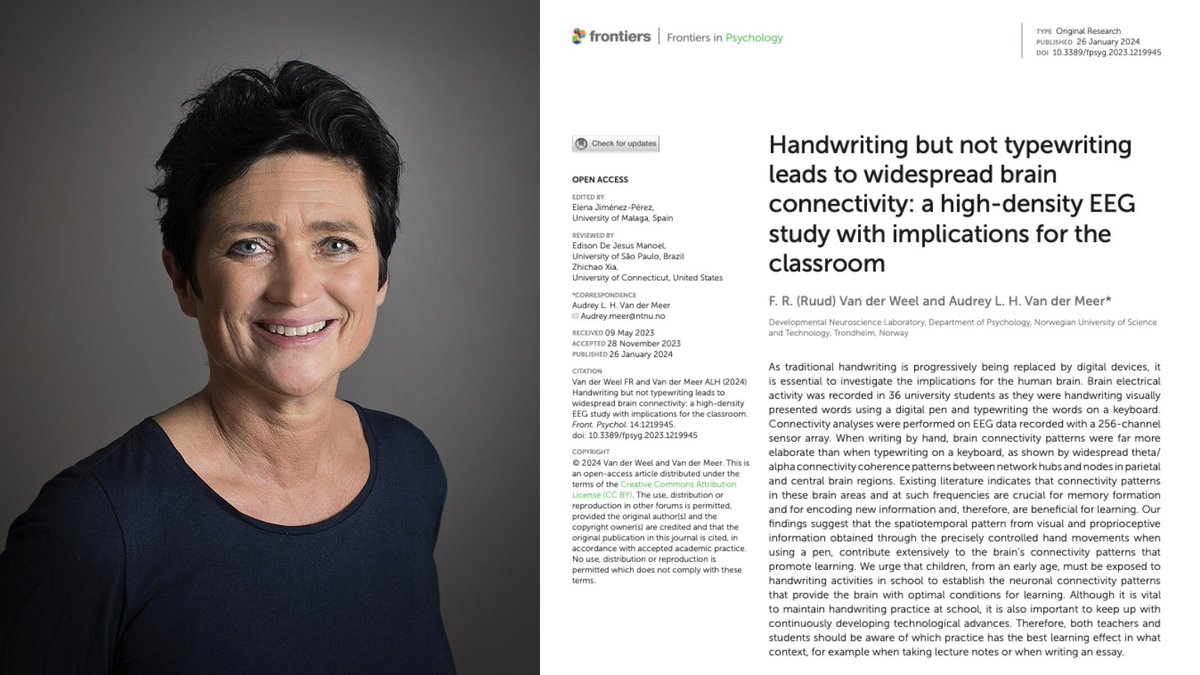
A Norwegian neuroscientist spent 20 years proving that the act of writing by hand changes the human brain in ways typing physically cannot, and almost nobody outside her field has read the paper.
Her name is Audrey van der Meer.
She runs a brain research lab in Trondheim, and the paper that closed the argument was published in 2024 in a journal called Frontiers in Psychology. The finding is brutal enough that it should have changed every classroom on Earth.
The experiment was simple. She recruited 36 university students and put each one in a cap with 256 sensors pressed against their scalp to record brain activity. Words flashed on a screen one at a time.
Sometimes the students wrote the word by hand on a touchscreen using a digital pen, and sometimes they typed the same word on a keyboard. Every neural response was recorded for the full five seconds the word stayed on screen.
Then her team looked at the part of the data most researchers had ignored for years, which is how different parts of the brain were communicating with each other during the task.
When the students wrote by hand, the brain lit up everywhere at once.
The regions responsible for memory, sensory integration, and the encoding of new information were all firing together in a coordinated pattern that spread across the entire cortex. The whole network was awake and connected.
When the same students typed the same word, that pattern collapsed almost completely.
Most of the brain went quiet, and the connections between regions that had been alive seconds earlier were nowhere to be found on the EEG.
Same word, same brain, same person, and two completely different neurological events.
The reason turned out to be something nobody had really paid attention to before her work. Writing by hand is not one motion but a sequence of thousands of tiny micro-movements coordinated with your eyes in real time, where each letter is a different shape that requires the brain to solve a slightly different spatial problem.
Your fingers, wrist, vision, and the parts of your brain that track position in space are all working together to produce one letter, then the next, then the next.
Typing throws all of that away. Every key on a keyboard requires the exact same finger motion regardless of which letter you are pressing, which means the brain has almost nothing to integrate and almost no problem to solve.
Van der Meer said it plainly in her interviews.
Pressing the same key with the same finger over and over does not stimulate the brain in any meaningful way, and she pointed out something that should scare every parent who handed their kid an iPad.
Children who learn to read and write on tablets often cannot tell letters like b and d apart, because they have never physically felt with their bodies what it takes to actually produce those letters on a page.
A decade before her, two researchers at Princeton ran the same fight using a completely different method and ended up at the same answer. Pam Mueller and Daniel Oppenheimer tested 327 students across three experiments, where half took notes on laptops with the internet disabled and half took notes by hand, before testing everyone on what they actually understood from the lectures they had watched.
The handwriting group won by a wide margin on every question that required real understanding rather than surface recall.
The reason was hiding in the transcripts of what the two groups had actually written down.
The laptop students typed almost word for word, capturing more total content but processing almost none of it as they went, while the handwriting students physically could not write fast enough to transcribe a lecture in real time, which forced them to listen carefully, decide what actually mattered, and put it in their own words on the page.
That single act of choosing what to keep was the learning itself, and the keyboard had quietly skipped the choosing and skipped the learning along with it.
Two studies. Two countries. Same answer.
Handwriting makes the brain work. Typing lets it coast.
Every note you have ever typed instead of written went into your brain through a thinner pipe. Every meeting, every book highlight, every idea you captured on your phone instead of on paper was processed at half depth.
You did not forget those things because your memory is bad. You forgot them because typing never woke the part of the brain that would have made them stick.
The fix is the thing your grandmother already knew.
Pick up a pen. Write the thing down. The slower road is the faster one.
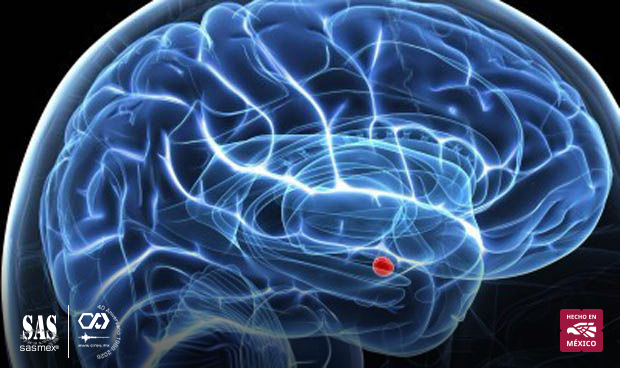
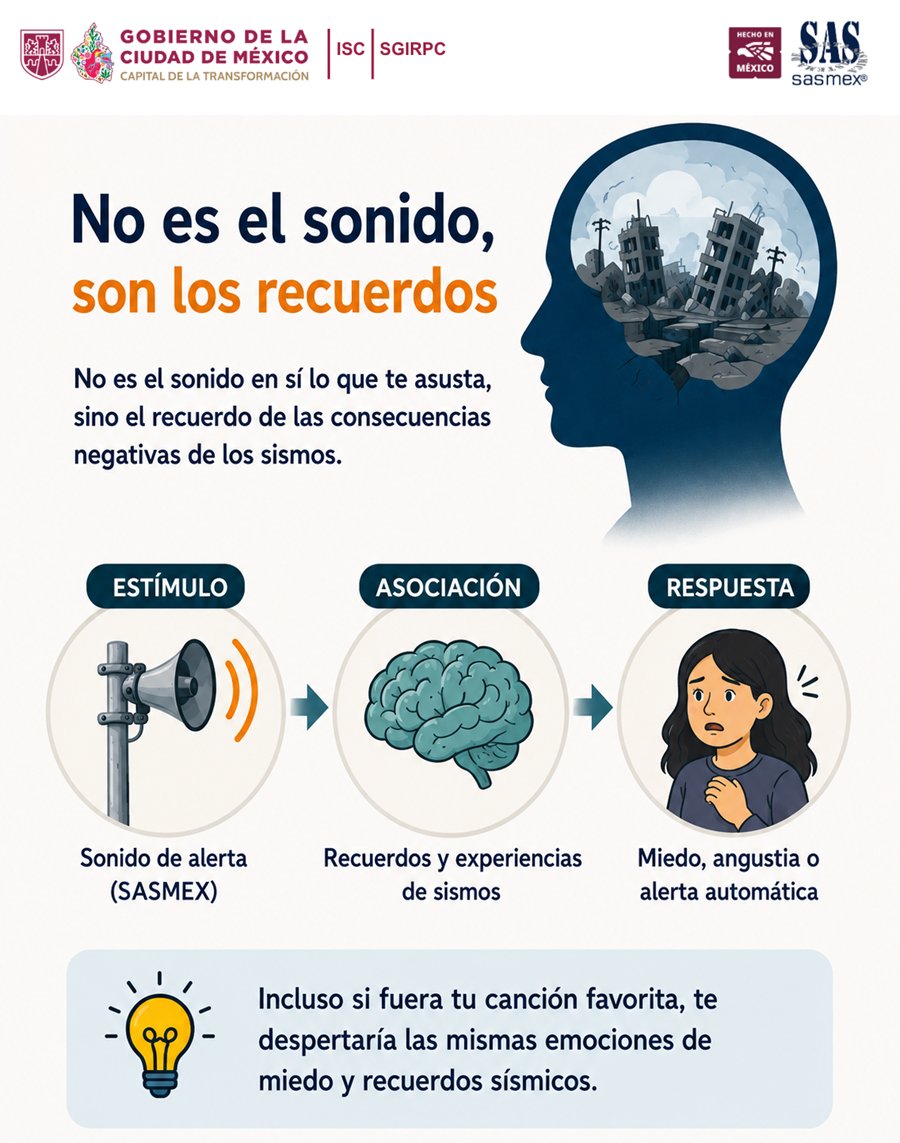
Pruebas realizadas mediante resonancia magnética revelaron que los sonidos desagradables inducen respuestas más intensas en la amígdala, que es la parte del cerebro involucrada en el procesamiento del miedo/peligro. @SGIRPC_CDMX, @CNPC_MX, @PreMxOficial
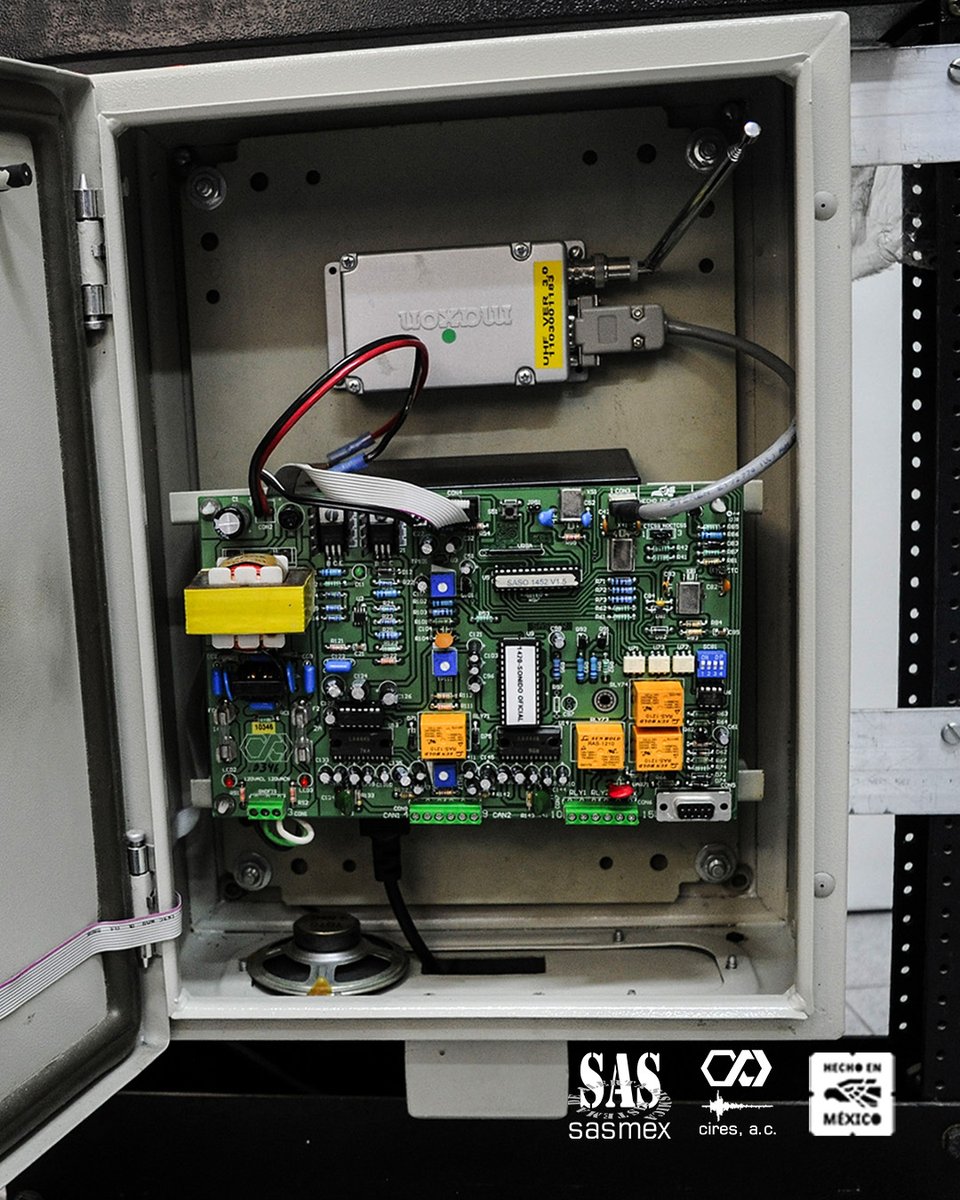
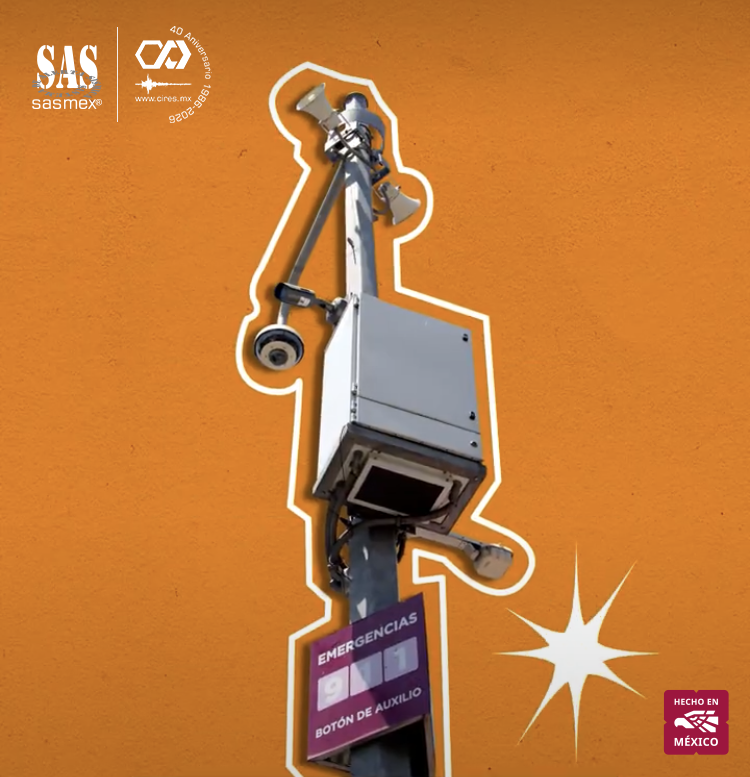
Este equipo receptor de la señal de alerta, brinda
segundos de anticipación antes de la llegada de las
ondas sísmicas.
#SASMEX#tecnología#alertasísmica#SASPER
¿Sabes cómo funciona la #AlertaSísmica?
Es un sistema de alertamiento que permite informar sobre un sismo mayor a 5.5 grados, para que puedas prepararte, tienes de 20 a 120 segundos previos, dependiendo el epicentro. Recuerda que hoy habrá un ejercicio a las 11 de la mañana como parte del #PrimerSimulacroNacional2026. #PrevenciónMH⚠️
Si tomas magnesio y sigues con calambres nocturnos, te despiertas a las 3 de la madrugada sin razón, tu ansiedad no cede aunque "todo esté bien" o tus músculos siguen tensos después de días de descanso el problema no es que el magnesio no funcione. El problema es la forma de magnesio que estás tomando.
Existen 11 formas de magnesio en el mercado. La mayoría óxido, carbonato, citrato barato tiene una biodisponibilidad del 4 al 30%. Eso significa que de cada 300mg que tragas, tu cuerpo absorbe entre 12 y 90mg reales. El resto llega al intestino grueso sin haberse absorbido, lo irrita, genera diarrea y se elimina. Literalmente estás pagando por un laxante.
El glicinato de magnesio funciona de forma radicalmente distinta. La glicina, un aminoácido, envuelve al mineral como una cápsula protectora y lo transporta directamente a través de la pared intestinal usando los canales de absorción de aminoácidos los mismos que el cuerpo nunca cierra porque los necesita para construir proteínas. Su biodisponibilidad supera el 80%.
Una revisión sistemática de 2024 publicada en PubMed documentó que la suplementación con magnesio redujo el dolor muscular tardío entre un 20 y 30%, frenando la acumulación de lactato y los picos de la enzima CK los marcadores del colapso muscular. En 12 ensayos distintos, el bisglicinato fue consistentemente la forma con resultados más significativos gracias a su transporte mitocondrial directo.
El segundo mecanismo que hace al glicinato diferente es la glicina misma. Este aminoácido no es un simple "vehículo" tiene actividad biológica propia: es el neurotransmisor inhibidor más abundante de tu médula espinal, actúa sobre receptores NMDA calmando la excitotoxicidad neuronal, y es el precursor del GABA, el compuesto que tu cerebro necesita para pasar de alerta a descanso. Cuando tomas glicinato, no solo recibes magnesio recibes el aminoácido del sueño.
Las mujeres después de los 40 tienen una demanda aumentada de magnesio por tres razones simultáneas: el cortisol crónico lo agota por los riñones a una velocidad 3 veces mayor, la caída de estrógenos reduce su retención en hueso y músculo, y la dieta moderna promedio cubre apenas el 50% de los requerimientos diarios. Es una triple pérdida que ninguna forma de magnesio barata puede compensar porque nunca llega en cantidad suficiente.
El momento de ingesta determina el efecto predominante. Tomado en la mañana: soporte para la función muscular, reducción del cortisol y concentración. Tomado 30 minutos antes de dormir: activa los receptores de glicina en el sistema nervioso, baja la temperatura corporal central la señal biológica del inicio del sueño y reduce el tiempo para conciliar el sueño hasta un 40% según estudios de suplementación nocturna.
Sugerencia:
Toma 300-400mg de glicinato de magnesio (bisglicinato quelado) 30 minutos antes de dormir con un vaso de agua tibia. Agrega una pizca de sal celta para potenciar la absorción celular. Para calambres musculares activos: divide la dosis 200mg en la mañana y 200mg en la noche. Mantén mínimo 3 semanas para ver el efecto acumulativo en la calidad del sueño.
📚 WBCIL Review Biodisponibilidad y absorción del bisglicinato de magnesio (2025). wbcilcom
📚 PubMed Systematic Review Magnesium supplementation reduces DOMS 20-30% (2024)
📚 Independent Español Glicinato de magnesio: la forma más recomendada. Cleveland Clinic (2026)
Para nosotros tu #Seguridad y tu #Patrimonio son lo más importante, por ello, te invitamos a seguir estas recomendaciones para preservar tu documentación esencial en caso de presentarse un #Sismo o un #FenómenoMeteorológico. 🎒📄📄
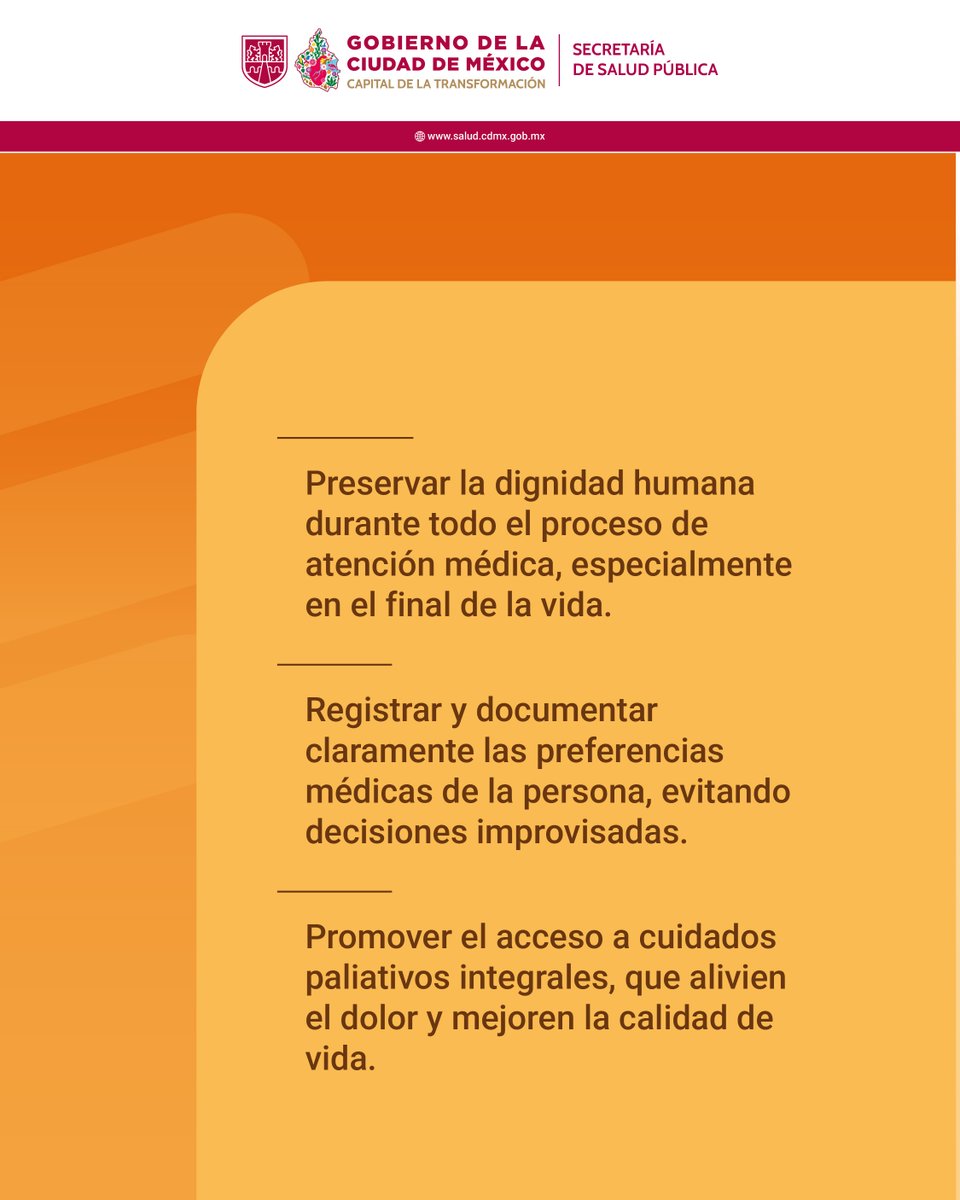
🦋 La voluntad anticipada... ¿tiene objetivos claros? ¡Síiii! ¡Muchísimos!
🤍 Uno de sus propósitos es preservar en todo momento la dignidad de las personas, además de respetar su autonomía al decidir cómo actuar conforme a su voluntad.
Conoce más en esta publicación. 😊🤝 Compártela con más personas para que también conozcan de qué va la #VoluntadAnticipada.
#VidaDigna #Prevención #RespetoALaVida
MUY SERIO Y NECESARIO:
Esto es INDISPENSABLE de conocer para todas las mujeres y adolescentes al tomar un taxi.
Por favor que esto ruede mucho en las redes para que llegue muy lejos.
Expertos alertan sobre el fraude del “paquete fantasma”, donde delincuentes recolectan etiquetas de envíos en la basura para suplantar identidades y robar en domicilios de la CDMX. #LasNoticiasDeFORO con @_fernandanews | #nmásforo | #SiempreEnVivo | #SiempreContigo | Sigue la señal en vivo por https://t.co/fhlrNLkagJ








![SasslaMx's tweet photo. ⚡️#ÚltimaHora | #Sismo magnitud 5.2 [PRELIMINAR] en la región de #Aragua, 🇻🇪 #Venezuela
📅 Originado el:
27/Jun - 19:20 [hora Universal]
❔️ Se trataría de la réplica más significativa de los terremotos M7.2 y M7.5 del pasado 24/Jun.
🟡 Intensidades máximas de VI - Fuerte (escala Mercalli).
⚠️ Es posible que se generen nuevos daños en las zonas afectadas
Ampliamos..
Créditos
.: GlobalQuake
#SASSLA](https://pbs.twimg.com/media/HL1_0HwXcAAWBPm.jpg)