Microsoft CEO Satya Nadella on why the company offered buyouts to around 60,000 employees:
The buyouts were meant to give employees a sense of agency in making their own career choices.
Microsoft isn't treating software engineers as obsolete. Software engineering will "thrive," but the way teams are organized and the work engineers do will change significantly with AI.
Employees will increasingly become managers of AI agents and systems that produce the work, with this shift expected across all jobs.
One Microsoft team of just 11 developers building Cowork now builds "a software factory that builds the product," rather than building the product directly.
As a 51-year-old incumbent, Microsoft isn't an AI-first company. The transition to AI-driven workflows will take longer than many expect, and some employees may choose to leave.
In 1971, Nobel prize winner Herbert Simon coined the phrase that "a wealth of information creates a poverty of attention." Everyone now agrees this to be true.
It is my belief that AI has now created the sequel.
That now in the 2020s, a wealth of intelligence creates a poverty of judgment.
As these agentic tools become more widely adopted in every aspect of our lives, what becomes apparent is that the differentiator between one individual and another, or one organization and another, is their ability to deploy their own human judgment to direct these tools. And I'm not talking about prompt engineering.
If you had asked the version of Mason from a decade ago working in AI, he would have told you these tools were AGI. Now even these AGI-like tools are becoming commoditized. As the frontier labs push the edge, everything sitting just behind that line, open source and lower tier models, is trending towards extremely low cost for the value it provides.
As that continues and access becomes more widespread, it is my belief that the real value in this whole AI equation reverts back to the human. That is where the return will concentrate for businesses.
This is what I call "The Human Judgment Premium".
I see it every day in my line of work. We deploy agents for individuals inside the same company. Same role, same context, same everything. The only difference is the human operator.
Those with domain expertise, who have great judgment and know what good looks like, meaning they can validate the outcome, get categorically better. While those without it get either incrementally better, or honestly measurably worse, because they let the tools run rather than applying any judgment of their own.
As this fountain of intelligence keeps compounding, that divide is going to get wider inside organizations.
Here is the real problem nobody is talking about. It takes years, and in some industries decades, to build judgment. Add to that the paradox that the exact activities that used to build it are now being handed to the tools.
To combat this, companies need to intentionally build for judgment, not simply hire the people who already have the domain expertise built in. We have to manufacture judgment reps in juniors on purpose, by making them own real decisions and validate their own outcomes.
Because the tools are going to keep getting better at the execution and the creation of OUTPUTS. But they will always struggle with owning OUTCOMES.
That is the Human Judgment Premium in action.
These machines are making execution cost dramatically less. However they are making the right people priceless.
Just further emphasizing my belief that people are the real secret sauce to any organization, ours included.
For my first post, I’m sharing a letter @NVIDIA signed on why open models matter.
AI will transform every industry, power every company, and be built by every country.
Open models strengthen safety and cybersecurity, accelerate innovation and diffusion, and enable sovereignty.
The world needs both frontier closed models and frontier open models.
https://t.co/AUKzoQ5Ikb
Get up to speed on the Power Platform integration with #MSDyn365BC including simplified editing experience, new features for approvals, support for multiple companies and more 😍 Watch the video: https://t.co/yRzXHIVtM9
@steveendow 0 executive leadership or company buy-in. Meaning they write the check, but then expect everything to be done by the partner without attending any training, providing feedback on design or approving test scenarios. Leads to collapse always.
@MeFriis @MSDYN365BC Our biggest issue for our customers that could be solved is general service interruptions. The M365 service health dashboards are not accurate for the users specific tenant and this causes them to submit cases to us which turn out to just be a “blip” in availability.
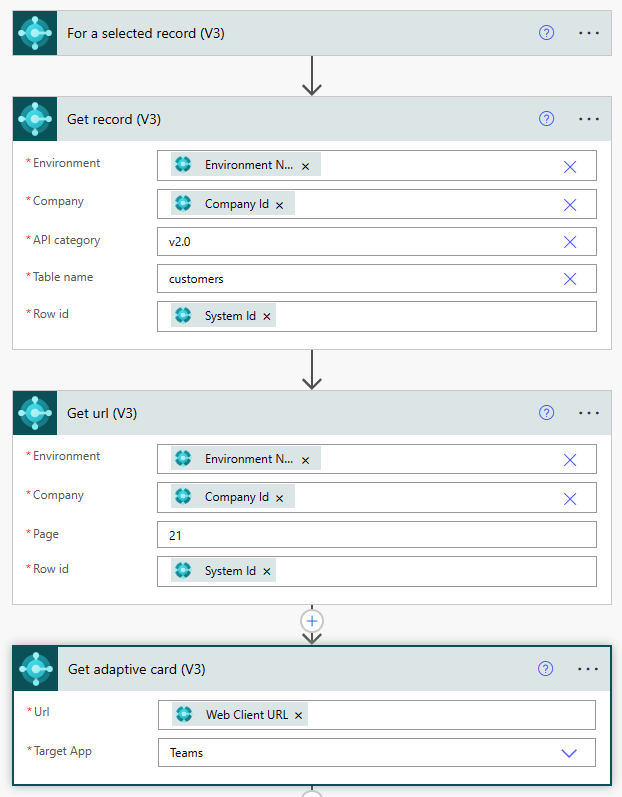
Build Power Automate flows that can easily switch #MSDyn365BC context. Use parameters from triggers in your flows as all the triggers include that context now! Reuse your Power Automate flows for different customers. Easy win with 2023 release wave 1! 👏 https://t.co/prQ88laBPz
… And we're live! The #MSDyn365BC 2023 release wave 1 is now available 🥳 Review the release plan here: https://t.co/ELoBSlFit3 and register for the Business Central Launch Event to discover what's new! https://t.co/Z24TtjfrqI
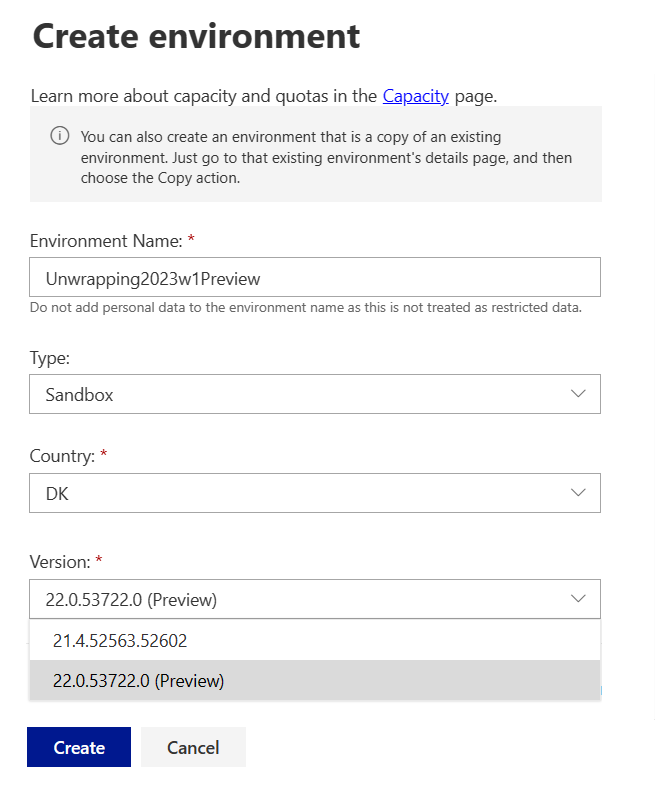
Did you try out the preview for #MSDyn365BC 2023 release wave 1? If not, go ahead and please remember to submit feedback! 🥳 Learn more: https://t.co/XerE1GaFYT
To help you get unblocked from issues when working with #MSDyn365BC, we're adding actions to error messages. Making error messages more user friendly helps build trust in Business Central and saves time by making it easy to correct common issues ✅ https://t.co/y7U3ej8AA2
Is anyone currently working (or know someone who is working on) integrating Business Central data into Open AI Service? This seems like a no brainer to enable customers to ask “What is my top selling item?” in an informal dialogue setting.
#bcalhelp#bcal#businesscentral
#bcalhelp
How does one attach the debugger to a ServiceEnabled bound OData action? Trying to debug an action from Power Automate at the moment and it won’t latch onto the session.