@amarula The old ladies in phalaborwa look nothing like this, from the age group used for the marula pickers to the attire and where they place the 50-80kg bags of marula looks nothing like this. The marula itself is also in the wrong colour, the processing plant in phb closed years back.
Again
they are sacrificing the unemployed to save the rich
I tried explaining this thing when the SARB started hiking rates
Here it is...
akere labona???
This whole tax conversation is another reason why we should not glorify privatisation as government policy.
It’s not okay to normalise privately paying for services that we’re already being taxed for. The state must do its job, and it must do it competently!
48%.
That is the effective tax burden on someone earning R30,000 a month in South Africa. Same rate as someone earning R432,000 a month in a top European country.
The numbers sound wrong. They are not.
Where the 48% comes from.
PAYE is what people see on the payslip. It is not the whole picture.
VAT - 15% on almost everything. Every swipe. Every fill-up. Most people do not think of VAT as a tax. It is the largest single source of government revenue after income tax.
Fuel levy - built into every litre. Petrol at R26.92 inland includes roughly R3.80 in fuel levy and Road Accident Fund levy. That is a tax on getting to work.
Then there are the charges that look like fees but function like taxes. E-tolls. Municipal surcharges. Electricity tariffs with embedded levies.
Add the visible and the invisible - you get 48%.
The key difference with Europe.
In the Netherlands. In Denmark. In Germany. High taxes come with a social contract.
Free tertiary education. Universal healthcare that does not require medical aid. Childcare subsidies. Paid parental leave that covers an actual year. Robust unemployment support.
You pay 45%. And you get services back.
In South Africa you pay 48%. And then you pay again - privately.
Medical aid because public healthcare is collapsed. Security because policing is broken. Private schools because public education cannot be trusted. Solar panels or a generator because Eskom cannot guarantee power. Water tanks because the municipality cannot guarantee supply.
The middle-class earner pays twice. Once in tax. Once in escape.
Who actually pays.
There are about 8.3 million personal income taxpayers in South Africa. A relatively small slice of the population. The top earners supply most of the revenue.
Corporations optimise. The wealthy structure. Offshore trusts. Semigration. Emigration. The R30,000 earner cannot escape - it comes out before they see the money.
The base is narrow. The burden is concentrated. The services are not.
Why it accumulated this way.
No one designed this system. It grew.
Income tax funds the general budget. VAT funds the general budget. Fuel levy funds roads and the general budget. Each mechanism made sense when it was introduced. Each one expanded quietly.
Raising income tax visibly upsets people. Raising VAT is less visible - it is embedded in the price. Raising fuel levy is buried in the pump price. Municipal charges are non-negotiable.
The objective was not fairness to the middle class. It was revenue extraction with minimum political friction.
The uncomfortable part.
This is not a policy failure. It is a policy success. The system extracts efficiently. It offends quietly. And the people who carry it do not have the means to opt out.
The question is not whether 48% is too high.
It is how long the R30,000 earner can pay twice - once in tax and once in escape - before something breaks.
Maria Makgato was a 45 year old Black woman. She was searching for expired food dumped for pigs on a farm near Polokwane when she was shot and killed . Her body was thrown into a pigsty to be eaten by pigs .
She was brutally killed by a white farmer, Zachariah Olivier.
@zwidenyapT Yeah not by choice, its end of season. Demand is very low, quality is poor. Best is to try and sell to extracting companies that make juice and concentrate or give it back to the community for free
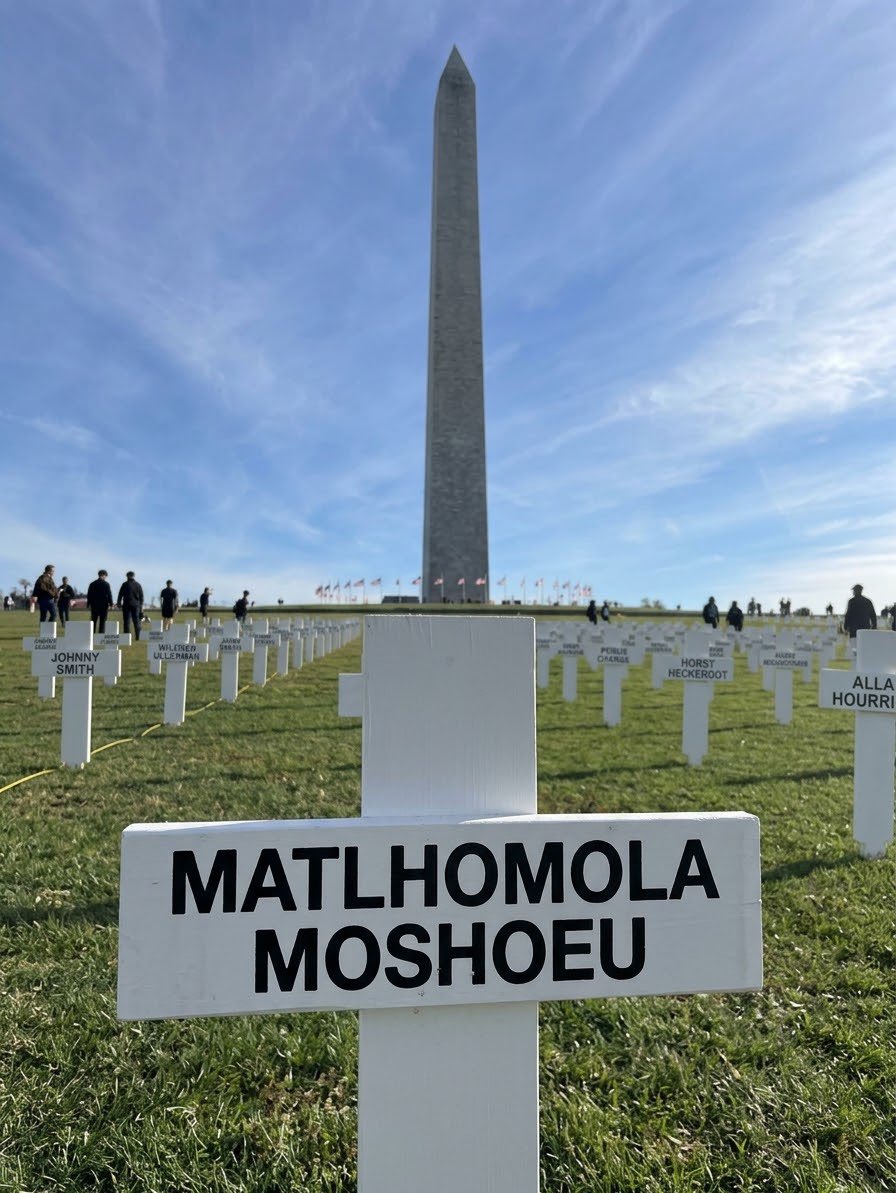
Matlhomola Moshoeu was a 16 year old black boy killed after being accused of stealing sunflowers worth R80, about five U.S. dollars.
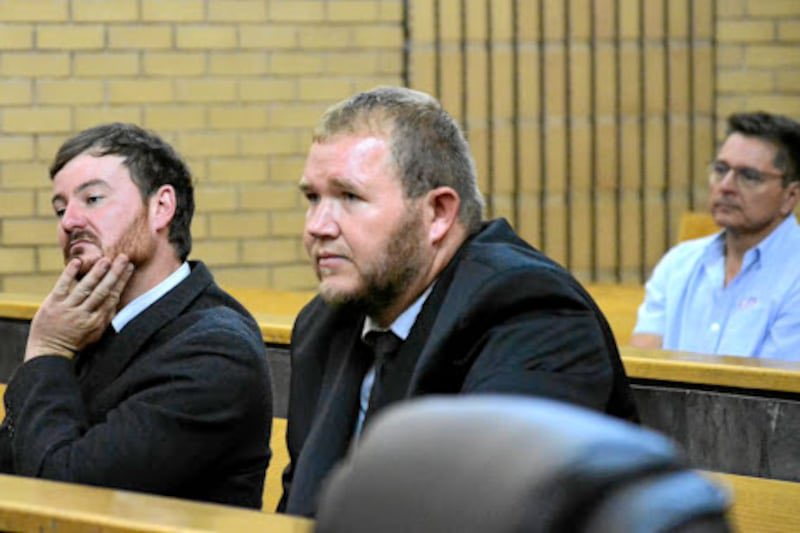
Two white farmers, Pieter Doorewaard and Phillip Schutte, pushed him from a moving van, causing fatal neck injuries. He died on 20 April 2017. They claimed he jumped. The court rejected that. Both were convicted of murder, kidnapping, intimidation, theft and pointing a firearm.
The judge called their actions towards Moshoeu DISGRACEFUL and said his death had a DEVASTATING EFFECT on his family and polarised the Coligny community.
That is the story being erased when crosses representing fake "White Genocide" are planted in Washington.
@GamingNaRoli@Absolut_Sabs 160km/h+ and revs are sitting just above 2k, naah. Either the speedo is not working well or the tune on that engine needs to be put on every car in Mzansi
@VendaVendor They closing all airports, only Hoedspruit and Polokwane will be operating soon. It’s all part and parcel of the exercise that’s happening at Transnet, they going to ctrl+c then ctrl+v the whole thing
"African males from the homelands have no rights whatsoever in South Africa. They are only in South Africa to sell their labour." (📹The Last Grave At Dimbaza, 1973)