BREAKING 🚨: U.S. Housing Market
227,500 properties filed for foreclosure so far this year, a 21% increase from last year and a 30% increase from two years ago 🤯 👀
BREAKING: The average interest rate on a US 30-year fixed mortgage rises to 6.55%, the highest since August 2025.
As the Iran War continues, interest rates are hitting new one-year highs.
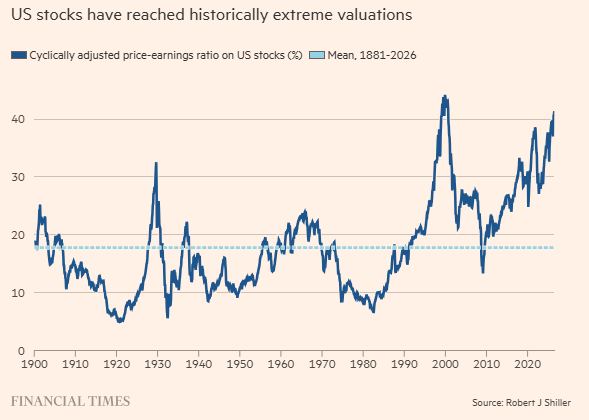
We are so far detached from reality that it is hard to explain with words. I’ve been at a loss for words for weeks now, reading sellside reports about how the Strait of Hormuz will return to normal by the end of July. Well, we are two weeks away now. Does it look like things are going back to normal?
https://t.co/oCE30F7Idp
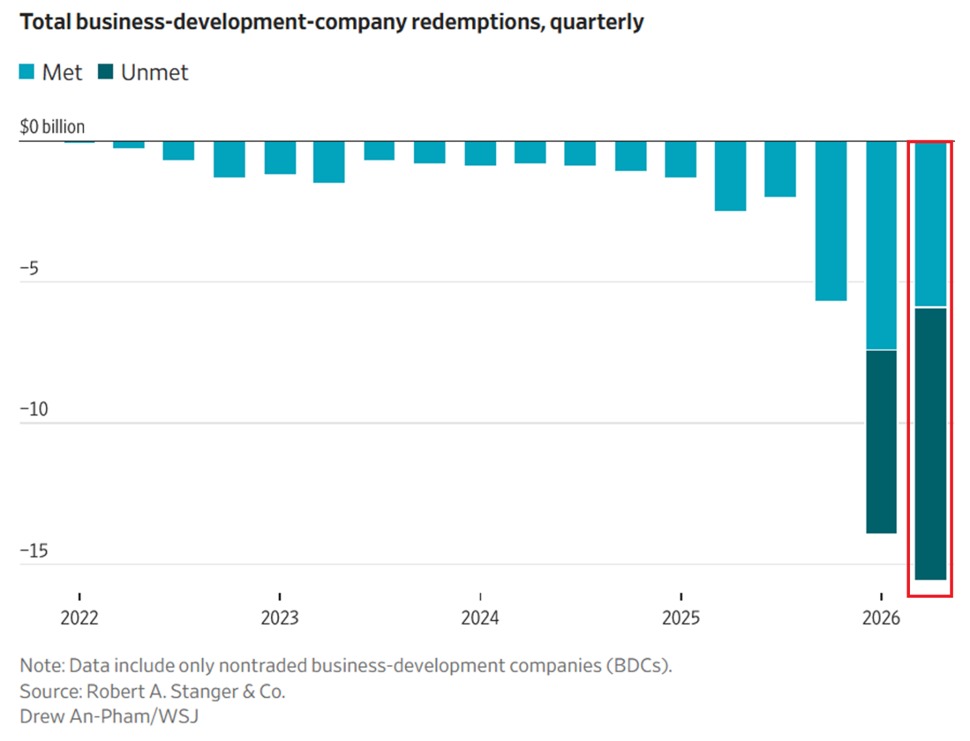
Stress in the US private credit market is intensifying:
Investors requested a record -$15.6 billion in redemptions from private credit funds in Q2 2026.
This marks the 3rd consecutive quarterly increase by a total of +$13 billion, or +500%.
Furthermore, just 38% of these requests were met, down from 53% in Q1 2026, leaving $9.7 billion in unmet redemptions, the largest backlog on record.
Blue Owl's flagship fund, Blue Owl Credit Income, was the most impacted at 19% of shares outstanding, with 14% unmet, the highest redemption rate among its large competitors.
This was followed by Apollo, at 16% requested with 11% unmet, and Ares, at 14% requested with 9% unmet.
Meanwhile, inflows into the private credit industry declined -75% since January to ~$500 million in May, the smallest monthly intake in at least 18 months.
The private credit crisis shows no signs of slowing.
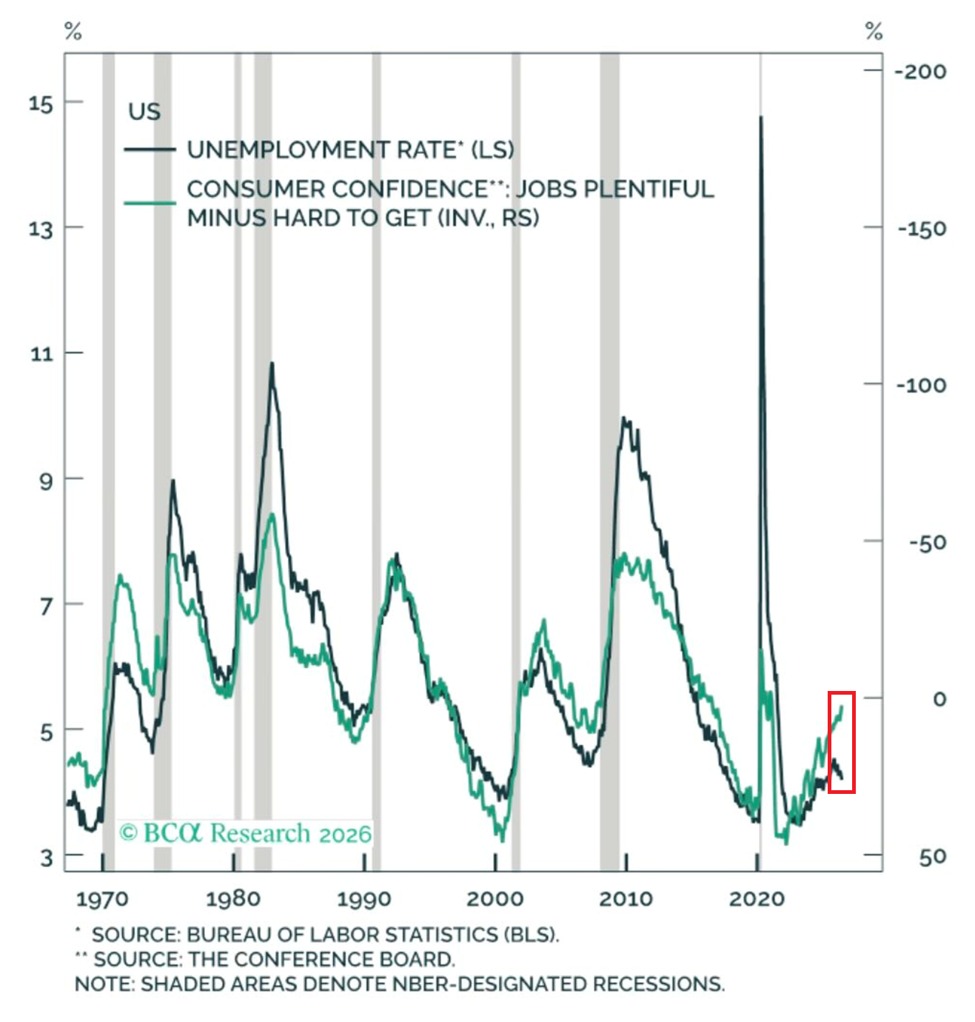
US consumer sentiment points to further job market weakness:
The gap between consumers saying jobs are "plentiful" versus "hard to find" fell to just 2.4 points in June, the lowest since the 2020 pandemic.
Just 24.9% of consumers now say jobs are "plentiful," down from ~55.0% in 2022, while 22.5% say jobs are "hard to find," up from ~10.0% over the same period, and the highest since January 2021.
Historically, this measure has been one of the most reliable leading indicators of rising unemployment, and it now suggests the US unemployment rate could rise to as high as 6.0%, from the current 4.2%.
Meanwhile, the labor force participation rate, which measures the working-age population of those either employed or looking for a job, fell to 61.5% in June, the lowest since June 1976, excluding the pandemic period.
This comes as the labor force dropped -720,000 last month, to 169.36 million, the lowest since December 2024.
The job market is much weaker than headlines suggest.
This is completely insane...or evidence of official use of paper shorts to drive oil prices down. What the chart says is that exactly zero other times in the past 15 years have MM's been this short oil. Outside of a massive global recession (or manipulation), it's difficult to align this positioning with current risks and events.
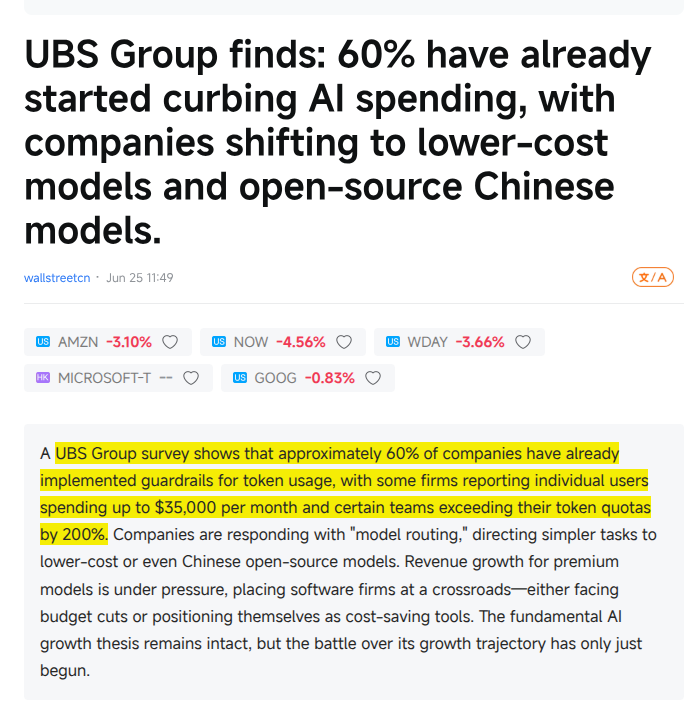
UBS says 60% of companies now watching AI budgets are moving to cheaper models and open-source Chinese models
The pressure is coming from extreme bills, including users spending up to $35K/month, teams exceeding quotas by 200%, and companies cutting internal AI tools from 5 to 2.
Companies are not abandoning AI, they are using model routing, which sends easy tasks to cheaper models and saves premium models for hard reasoning, code, and long-context work.
Chinese open-source models such as Qwen, DeepSeek, MiniMax, GLM, and Kimi now fit the enterprise cost curve because they can be run locally or used through cloud catalogs.
---
news .futunn.com/en/post/75068082/ubs-group-finds-60-have-already-started-curbing-ai-spending?level=2&data_ticket=1780870170397383
We Are 'Still' Going Full Speed Into The Wall
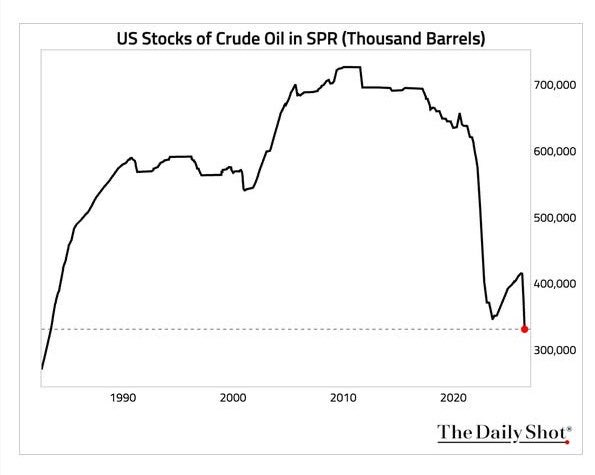
Product storage is about to get tighter unless China steps in and lifts the product export ban. If it does, expect a meaningful reversal in crude.
https://t.co/QLf85aEz7i
This is what’s causing Anthropic to aggressively beg for govt protection (see below). Customers are finding cheaper alternatives. Keeping employees requires continuing ultra-rich secondaries ($$$) that are dependent on revenue growth. When you can’t win on the field go to DC.
It's official:
Crypto has now erased more than HALF of its value in just 8 months.
On October 6th, 2025, the total market cap of crypto hit a record $4.3 trillion.
Today, 261 days later, crypto is worth just $2.0 trillion, marking a -54% decline in value.
This means crypto markets have erased an average of -$8.8 billion PER DAY for 261 days straight.
Crypto is in desperate need of a new narrative.