#colazione al mare:
Il mare di onde
grigie di Erik il Rosso, alto sulla prora;
quello del cavaliere che scriveva
a un tempo l'epopea e l'elegia
della sua patria, nella palude di Goa.
Jorge Luis Borges
#scritturebrevi
I morti nel Mediterraneo sono vittime sia di decisioni prese, sia di decisioni mancate: il disinteresse per il bene comune e la corruzione nei luoghi di provenienza, un sistema economico mondiale che genera povertà ed esclusione, la paura che alimenta pregiudizi e disprezzo, l’idea che tali problemi non ci riguardano, i calcoli criminali di chi lucra sul dramma altrui, il lento e difficile passaggio da una mera gestione delle emergenze all’elaborazione di politiche organiche e condivise. #VisitaPastorale #Lampedusa
Clint Eastwood !!!! ❤️
Aos 96 anos, Clint Eastwood quebrou nossas ilusões sobre envelhecimento. Não ofereceu consolo sobre anos dourados cheios de serenidade. Pintou a verdade: "A luz machuca os olhos. Respirar pode ser um trabalho duro. O teu corpo já não está a cooperar. Cada passo requer estratégia."
Mas o verdadeiro peso da velhice não é físico. É emocional. Ao cruzar os anos 90, seu círculo social diminui. A maioria das pessoas que te conheceram quando eras jovem desapareceram. O telefone parou de tocar. O ritmo dos dias abranda. A pílula mais amarga não é a dor. É a ausência de alguém que queira te ouvir.
Eastwood explicou por que os idosos repetem histórias. Não é para me gabar. É para se ancorar a uma realidade onde eles eram ativos, amados e relevantes. "Você se encontra repetindo histórias, adicionando detalhes, não para convencer ninguém, mas para sentir que você ainda está conectado a algo", disse. "Você tenta transmitir coisas aos jovens, mesmo quando vê o tédio nos olhos deles".
Vivemos em uma cultura que trata a longevidade como um troféu, mas ignora a solidão que a acompanha. Louvamos o rápido e o brilhante. Não deixamos espaço para o ritmo lento dos idosos.
Clint Eastwood é um gigante do cinema, mas suas palavras falam por cada idoso de 90 anos. São bibliotecas vivas da nossa história. Quando os ouvimos, algo mágico acontece. Fechamos o fosso entre gerações. Rugas não são sinais de envelhecimento. São mapas de uma vida plenamente vivida. E é um privilégio ouvir sua viagem.
Giovane cervo sperduto finisce in paese, invece di soccorrerlo lo uccidono. «Ma doveva essere salvato» Silenzio omertoso su chi ha materialmente ucciso questa creatura
inoffensiva e terrorizzata.Esigiamo di sapere chi ha avuto la vigliaccheria di sparare https://t.co/zwbDbd4zj3
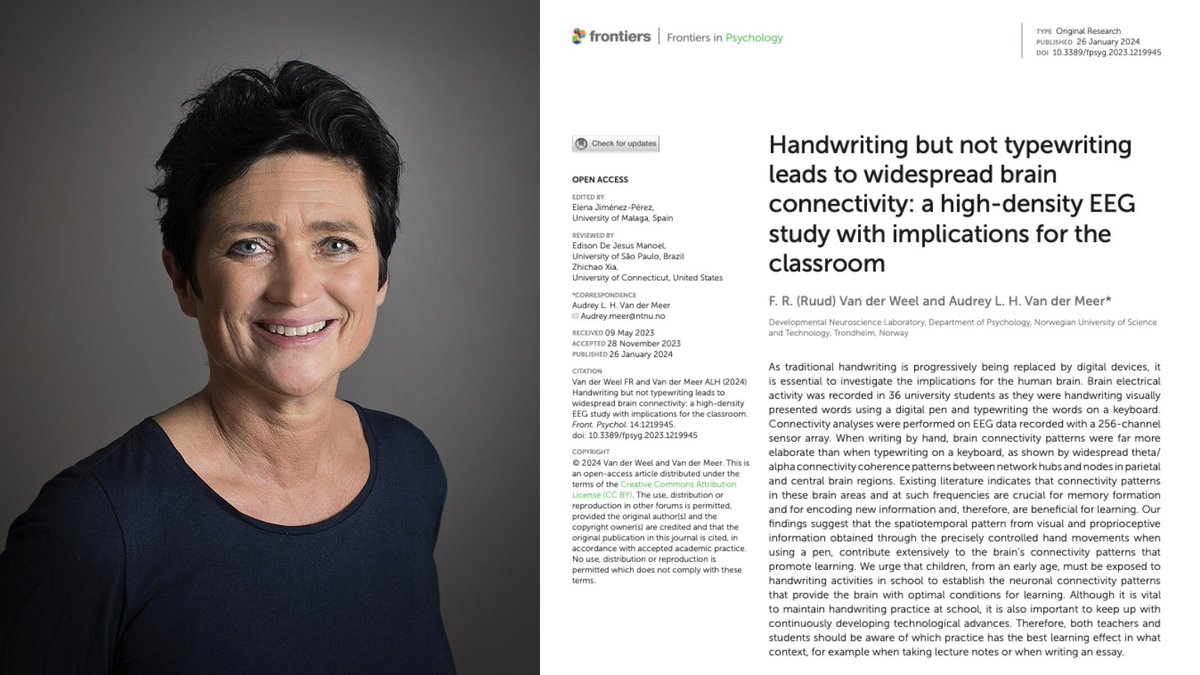
A Norwegian neuroscientist spent 20 years proving that the act of writing by hand changes the human brain in ways typing physically cannot, and almost nobody outside her field has read the paper.
Her name is Audrey van der Meer.
She runs a brain research lab in Trondheim, and the paper that closed the argument was published in 2024 in a journal called Frontiers in Psychology. The finding is brutal enough that it should have changed every classroom on Earth.
The experiment was simple. She recruited 36 university students and put each one in a cap with 256 sensors pressed against their scalp to record brain activity. Words flashed on a screen one at a time.
Sometimes the students wrote the word by hand on a touchscreen using a digital pen, and sometimes they typed the same word on a keyboard. Every neural response was recorded for the full five seconds the word stayed on screen.
Then her team looked at the part of the data most researchers had ignored for years, which is how different parts of the brain were communicating with each other during the task.
When the students wrote by hand, the brain lit up everywhere at once.
The regions responsible for memory, sensory integration, and the encoding of new information were all firing together in a coordinated pattern that spread across the entire cortex. The whole network was awake and connected.
When the same students typed the same word, that pattern collapsed almost completely.
Most of the brain went quiet, and the connections between regions that had been alive seconds earlier were nowhere to be found on the EEG.
Same word, same brain, same person, and two completely different neurological events.
The reason turned out to be something nobody had really paid attention to before her work. Writing by hand is not one motion but a sequence of thousands of tiny micro-movements coordinated with your eyes in real time, where each letter is a different shape that requires the brain to solve a slightly different spatial problem.
Your fingers, wrist, vision, and the parts of your brain that track position in space are all working together to produce one letter, then the next, then the next.
Typing throws all of that away. Every key on a keyboard requires the exact same finger motion regardless of which letter you are pressing, which means the brain has almost nothing to integrate and almost no problem to solve.
Van der Meer said it plainly in her interviews.
Pressing the same key with the same finger over and over does not stimulate the brain in any meaningful way, and she pointed out something that should scare every parent who handed their kid an iPad.
Children who learn to read and write on tablets often cannot tell letters like b and d apart, because they have never physically felt with their bodies what it takes to actually produce those letters on a page.
A decade before her, two researchers at Princeton ran the same fight using a completely different method and ended up at the same answer. Pam Mueller and Daniel Oppenheimer tested 327 students across three experiments, where half took notes on laptops with the internet disabled and half took notes by hand, before testing everyone on what they actually understood from the lectures they had watched.
The handwriting group won by a wide margin on every question that required real understanding rather than surface recall.
The reason was hiding in the transcripts of what the two groups had actually written down.
The laptop students typed almost word for word, capturing more total content but processing almost none of it as they went, while the handwriting students physically could not write fast enough to transcribe a lecture in real time, which forced them to listen carefully, decide what actually mattered, and put it in their own words on the page.
That single act of choosing what to keep was the learning itself, and the keyboard had quietly skipped the choosing and skipped the learning along with it.
Two studies. Two countries. Same answer.
Handwriting makes the brain work. Typing lets it coast.
Every note you have ever typed instead of written went into your brain through a thinner pipe. Every meeting, every book highlight, every idea you captured on your phone instead of on paper was processed at half depth.
You did not forget those things because your memory is bad. You forgot them because typing never woke the part of the brain that would have made them stick.
The fix is the thing your grandmother already knew.
Pick up a pen. Write the thing down. The slower road is the faster one.
Amazon cut 30,000 jobs & got a $7.8 billion tax break
Meta cut 8,000 jobs & got an $8 billion tax break
PayPal cut 4,800 jobs & paid $0 in federal income taxes
Disney cut 1,000 jobs & paid $0 in federal income taxes
Corporate tax breaks don't create jobs. They enrich the 1%.
The anger over massive income and wealth inequality is NOT envy of billionaires’ yachts and jewelry.
It’s that the working class is suffering. It's that seniors living in poverty die 9 years younger than the wealthy.
Yes. We need an economy that works for ALL, not just the few.
Esto es, realmente, un DELIRIO.
Agarraron 2.245 currículums reales escritos por humanos y le pidieron a ChatGPT, DeepSeek y otros modelos que los reescriban. Mismo curriculum, experiencia, estudios... todo igual, solo que reescrito.
Después, le mostraron pares al azar a cada IA y le pidieron que eligiera el mejor: el suyo contra el del humano. Todos se eligieron a sí mismos más del 95% de las veces. Incluso después de controlar por calidad (asegurándose de que el CV humano no fuera objetivamente peor) seguían eligiendo el suyo.
Después, simularon procesos reales de selección en 24 industrias y descubrieron que, si usaste el mismo modelo que el reclutador, tenés entre 23% y 60% más chances de pasar el primer filtro.
¿Por qué pasa esto? Los autores tienen una hipótesis fuerte: cuando le pedís a un modelo que te mejore el CV, te lo reescribe con su huella estilística: sus palabras favoritas, su ritmo, su forma de armar oraciones... Cada IA tiene un estilo propio, como cada escritor tiene una letra. Después, cuando esa misma IA evalúa, se reconoce del otro lado y se pone un diez. Cuanto más capaz es el modelo, más afilada es su capacidad de reconocerse.
Ahora buscar laburo es como el test de Turing pero al revés: en lugar de una máquina intentando convencerte de que es humana, parece que ahora somos nosotros los que tenemos que convencer a los robots que somos uno de ellos.
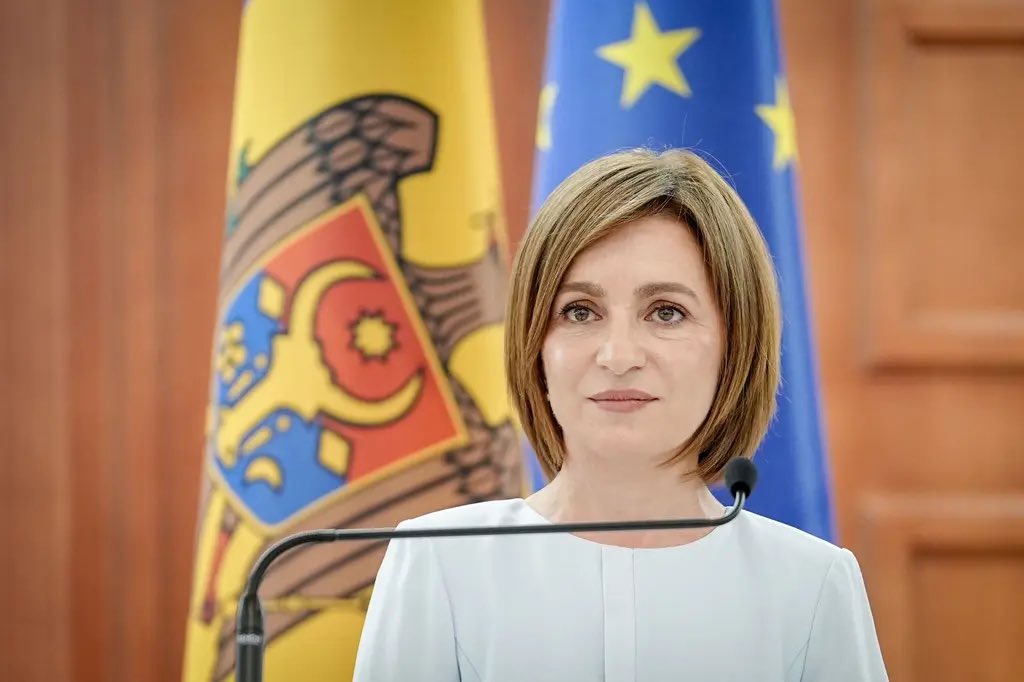
La presidente moldava Maia Sandu ha declinato la candidatura al Nobel per la pace, avanzata dal parlamentare norvegese Arild Hermstad. In un’intervista al canale TV8 ha ringraziato, ma ha anche spiegato di aver visto il rientro di alcuni prigionieri di guerra ucraini dopo anni di detenzione in Russia, e di ritenere che siano loro a meritarlo per aver deciso di mettere a rischio la propria vita per portare la pace nella propria terra. 🇲🇩🇺🇦🇪🇺
Barbero ci spiega perché con questa riforma chi dice che non cambierà niente è in malafede. Vogliono controllare la magistratura, ascoltate come.
#IoVotoNo