Every time I learn a better way to structure posts, the question comes up: do you update everything again?
At some point, optimization feels like negative ROI.
For those running blogs as a business, how do you decide:
• what’s worth updating
• what’s good enough to freeze
• what should never be touched again?
Curious how others think about this.
@bbrian017 This makes sense. Outcomes first removes a lot of noise.
How do you handle learning-driven improvements, though? If a post performs well but you now know a much better way to structure it, do you still leave it frozen?
If your content brings you the business, then optimize it for intent, trust, and timing.
Virality optimizes for emotion and novelty and usually attracts the wrong audience.
What I learned after publishing content for years: most people treat content like self-expression. Businesses should treat it like inventory.
Every serious business has inventory that compounds value over time. Content should work the same way. Each piece should answer a durable question, attract qualified intent, and stay relevant for years.
Most creators focus on saying something new. Businesses should focus on saying something useful that keeps selling quietly.
Ask yourself: would this content still help your business 3 years from now?
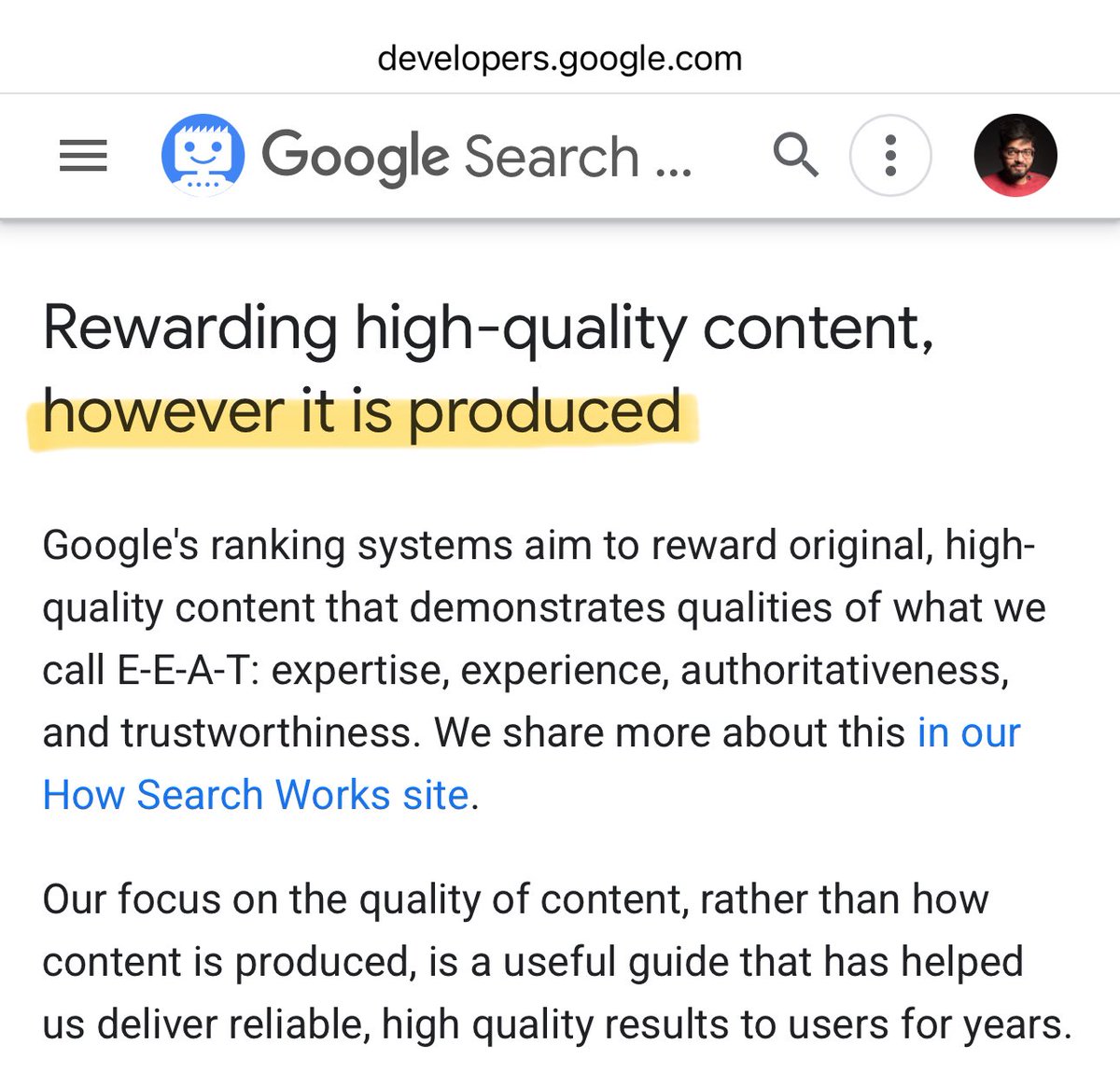
There’s a significant difference between AI-generated content and content that’s “helped” by AI.
Google values helpful content, regardless of whether it’s generated by AI or a human.
Most bloggers leave money on the table because they never ask.
Negotiating higher affiliate commissions is one of the easiest wins in affiliate marketing.
If you’re thinking “I just need backlinks and everything will work”, slow down. On a new site, forced links do more damage than good. Real links come when someone actually finds your content useful enough to share. Build something worth linking to first. The rest follows.
If you’re 20–30 days into blogging and already feeling demotivated, you’re not failing. You’re just in the invisible phase. Google is still watching you, not rewarding you. This is the part nobody talks about and most people quit. If you stay, you already have an edge.
15 years in content creation… here’s what actually works:
1. You need to create before you consume each day.
2. One strong idea will grow you faster than ten average posts.
3. If nobody saves your content, you need to make it clearer.
4. If people don’t respond, you’re not being understood.
5. Stop chasing virality, start creating content that actually helps.
6. Your drafts are where you improve. Publishing alone won’t make you better.
7. If you can’t explain it simply, you don’t understand it well enough yet.
8. Study why a post works, not just that it works.
9. Even boring topics can win if you give them a fresh perspective.
10. If making it doesn’t excite you, nobody else will enjoy it either.
11. Build trust first; growth and monetization follow.
If this helped, hit retweet and save it for when you need it most.
@_NameOffice Congratulations, Michael! 🎉
I’m still buying and waiting for sales. I hope 2026 brings me luck! Thanks for your insights in the DomainerIQ community. My domain picking skills have improved a lot because of you.
Hard to believe people still sleep on these AI tools:
1. MidJourney – create visuals
2. ChatGPT – think, write, plan
3. Pictory – turn text into videos
4. Lovable – design websites
5. Soundraw – generate music
6. Replit – build with code
7. Revid – create viral AI videos
8. PicWish – edit images
9. Grammarly – writing assistant
10. Gamma – instant presentations
AI is no longer optional. It’s leverage.