#News Mike Lindell is bringing a class-action lawsuit against voting machine companies over incidents of backwards vote counts, more votes than the number of voters and the statistically impossible .85 data that has emerged.
He’s specifically calling on Texas Gov. Greg Abbott not to certify the Nov. 3 results while his team investigates the machines.
Lindell is calling on supporters to help “get rid of the machines” and is calling his lawsuit the culmination of a six-year fight.
🔵Gina Hinojosa defeated Gov. Greg Abbott (about 52.8% to 45.7%),
🔵James Talarico defeated Ken Paxton for U.S. Senate, getting more votes than any Democrat Presidential candidate in the state of Texas
🔵Democrats also won other statewide offices and flipped control of the Texas House for the first time since 2001.
New data shows Republican candidates consistently got 85% of Donald Trump’s 2024 vote share in a near-perfect formula of Republican 2026 ≈ 0.85 × Trump 2024, with the same 15% drop almost everywhere from red states to blue ones.
Texas Secretary of State Robert Howden’s office is already running the first statewide risk-limiting audit under state law.
However tech experts say this is a ruse, and is not meant to find deliberately designed algorithms they say were used to alter the election.
Lindell says that electronic tabulators are defective or manipulable, and that only hand-counted paper ballots are reliable.
Should Texas, and every other state, pause certification of the midterm results until thorough audits by experts who cracked the .85 code are conducted?
#ChristinaAguayoNews
Breaking: 43 states exposed in history's most massive election fraud—24.6 million fake voters registered with zero ID, and Democrats conjured 20 million ghost ballots overnight! The numbers will shock you… or will they?!
Forty-three states listed here allegedly cheated
in the Midterms‼️‼️
Congress has failed to codify our mandate in
2024. Are we going to allow @LeaderJohnThune
continue as "Leader" after he has clearly been
bought by his globalist buddies –– the Bushes?
I say pick a new leader, a Trump Republican - not
the status quo old guard that are stuck in the past
playing Blue-slip & Pro-forma games to hold onto
the bit of power in the Senate while ignoring the
wishes of their constituents. Failures‼️
We need a MAGA Republican to lead the Senate
so President Trump can get his nominees approved
and at some point, address all of this mess 👇👇
If we don't demand they fix our elections NOW it
won't happen IMO.
Source: @JeffGrunow TS
For those who claim it’s not public info, or they don’t track this data. You’re right, Sony doesn’t, the algorithms do & PlayStation built in “No Refunds” protocol protects Sony at a 50% Refund Request/Uninstall percentile. I work on “Entertainment” servers. Let’s get technical😉systems architecture lets platform holders, Sony shares W/ Rockstar, instruments & observe uninstall state internally.
Sony runs the full stack: PlayStation platform, account identity layer, entitlement/licensing subsystem, & the bidirectional console-to-backend channel. Every digital GTA VI acquisition resolves as a durable license bound to a PSN account ID; ownership is an authoritative, queryable fact on Sony’s side.
Installed-state tracking follows from the same control plane. Consoles sync regularly W/ Sony’s services for license validation, updates, cloud-save reconciliation, activity/playtime telemetry, & remote management. Uninstall is a local mutation of the console’s installed-titles database. On check-ins (routine in rest mode or when online), absence of a previously reported title becomes visible to backend. PS App’s ability to enumerate & remotely delete titles confirms the installed inventory is server-visible. Playtime, recently-played records, & activity history are already aggregated server-side as first-class telemetry.
Sony can thus run a set-difference query: licenses owned versus titles currently reported as installed across the console population. That yields precise uninstall (or “owned-but-not-installed”) counts for digital copies. Physical media weakens the signal; Sony limited this in advance.
Rockstar & Take-Two do not control console OS, so they receive no uninstall event mobile package-removal callbacks. What they do receive is:
• Official unit-sales figures supplied by Sony,
• First-party telemetry once the title launches (session records, platform & device identifiers, playtime, engagement metrics; standard instrumentation disclosed in modern Rockstar privacy policies),
• Derived engagement series such as concurrent users, DAU/WAU, & retention curves.
Granular uninstall counts arrive, when they do, via contractual data-sharing agreements W/ the platform holder. Those agreements typically surface aggregated analytics dashboards that can include install/uninstall ratios or ownership-versus-activity deltas. Independently, Rockstar can infer elevated abandonment from divergence between cumulative sales & active-player trajectories.
Large install footprints (200+ GB) are routinely purged to reclaim storage & later restored, yet users are not reinstalling, but the license remains surviving intact. Refund-request volume is itself a monitored signal. Once that volume reaches a defined sales-margin threshold (approximately 50%), the platform’s protective logic can suppress the refund pathway for subsequent purchasers of the same title, an automatic cutoff that removes the option at the point of request. No verified public uninstall figures exist for GTA VI. Circulating claims of multi-million uninstalls within 48 hours remain traceable only to social-media propagation, consistent W/ Sony’s automated denial of refund prompts & the subsequent removal of the option for other accounts. Rockstar’s own public disclosures have been limited to sales updates.
In short, Sony occupies the strongest observational position through console check-ins & license-state reconciliation. Rockstar possesses sales & engagement telemetry & can obtain precise or estimated uninstall data via Sony’s shared analytics. Both parties can see the underlying signal. The decisive indicator is Sony’s own protective algorithms: the instantiation of a hard “no-refund” gate once uninstall or direct refund-request volume crosses the 50% threshold constitutes an internal acknowledgment of the scale of the event, even while the quantitative results remain unpublished to the public eye, those understanding algorithmic protection, know this true.
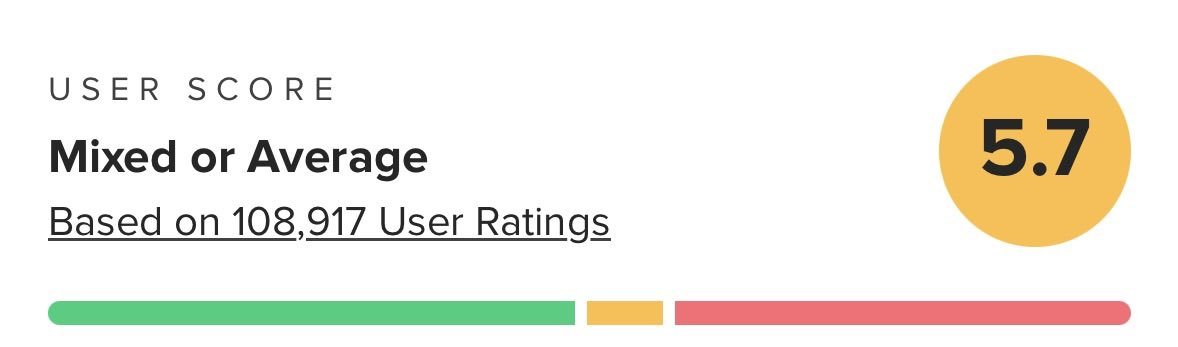
After 100K user reviews, GTA 6 is still hard-stuck in the 5s.
There have been reports of multiple attempts to scrub negative reviews from Metacritic, and it’s insane watching them seemingly clean up the score only for it to keep landing around 5. 😭😭
At this point, just accept that this isn’t review bombing. It’s a general consensus
🚨 GTA 6 IS A WARNING - LEGENDARY DROPS NAILS IT!
Finally, someone willing to acknowledge the elephant in the room without pretending the game is either a complete disaster or the second coming of Christ.
Legendary Drops, in his latest YouTube commentary, exposes much of what we've been discussing here at Ethica Gaming.
His assessment? A technically extraordinary game undermined by questionable design decisions, restrictive gameplay, poor performance and predatory business practices.
He describes an unstable 30 FPS experience, unresponsive controls, mediocre gunplay and a franchise that has sacrificed much of its traditional freedom.
Yet professional gaming journalists were practically tripping over one another to award it perfect scores.
HOW DO YOU RECONCILE THAT?
An $80 base game, a $100 premium edition, subscription-based gameplay advantages, restrictive refund options and no confirmed PC release date.
Apparently, the standards by which we judge video games are negotiable when the publisher is big enough.
Legendary Drops actually enjoys GTA 6. That's what makes his commentary particularly interesting. He appreciates the technical accomplishments while refusing to excuse the shortcomings.
When asked whether he would recommend purchasing it?
"Absolutely not."
He recommends waiting for the PC release or meaningful performance improvements.
Sound familiar?
I've already made my decision. I'm not buying it. No amount of manufactured excitement, corporate marketing or fanboy evangelism is going to change that.
The most important takeaway from his commentary is that consumers are fighting amongst themselves while the corporations responsible for these decisions walk away with their money.
Enjoying a game does not obligate you to defend its publisher.
Criticizing a game does not make you an entitled gamer.
WE ARE CUSTOMERS, NOT SHAREHOLDERS OR CORPORATE AMBASSADORS!
Credit to Legendary Drops for a refreshingly critical discussion.
Source: Legendary Drops - YouTube
"Grand Theft Auto 6 is a warning"
https://t.co/uEqRgtqKLq
#GTA6 #RockstarGames #GamingIndustry #ConsumerRights #EthicaGaming
You’re right WrenchBitch, Sony doesn’t post public numbers when they are hurting, identifying their algorithms do guide you to these facts though & PlayStation built in “No Refunds” protocol protects Sony @ 50% Refund Request/Uninstall percentile. I work on “Entertainment” servers. Let’s get technical😉systems architecture lets platform holders, Sony shares W/ Rockstar, instruments & observe uninstall state internally.
Sony runs the full stack: PlayStation platform, account identity layer, entitlement/licensing subsystem, & the bidirectional console-to-backend channel. Every digital GTA VI acquisition resolves as a durable license bound to a PSN account ID; ownership is an authoritative, queryable fact on Sony’s side.
Installed-state tracking follows from the same control plane. Consoles sync regularly W/ Sony’s services for license validation, updates, cloud-save reconciliation, activity/playtime telemetry, & remote management. Uninstall is a local mutation of the console’s installed-titles database. On check-ins (routine in rest mode or when online), absence of a previously reported title becomes visible to backend. PS App’s ability to enumerate & remotely delete titles confirms the installed inventory is server-visible. Playtime, recently-played records, & activity history are already aggregated server-side as first-class telemetry.
Sony can thus run a set-difference query: licenses owned versus titles currently reported as installed across the console population. That yields precise uninstall (or “owned-but-not-installed”) counts for digital copies. Physical media weakens the signal; Sony limited this in advance.
Rockstar & Take-Two do not control console OS, so they receive no uninstall event mobile package-removal callbacks. What they do receive is:
• Official unit-sales figures supplied by Sony,
• First-party telemetry once the title launches (session records, platform & device identifiers, playtime, engagement metrics; standard instrumentation disclosed in modern Rockstar privacy policies),
• Derived engagement series such as concurrent users, DAU/WAU, & retention curves.
Granular uninstall counts arrive, when they do, via contractual data-sharing agreements W/ the platform holder. Those agreements typically surface aggregated analytics dashboards that can include install/uninstall ratios or ownership-versus-activity deltas. Independently, Rockstar can infer elevated abandonment from divergence between cumulative sales & active-player trajectories.
Large install footprints (200+ GB) are routinely purged to reclaim storage & later restored, yet users are not reinstalling, but the license remains surviving intact. Refund-request volume is itself a monitored signal. Once that volume reaches a defined sales-margin threshold (approximately 50%), the platform’s protective logic can suppress the refund pathway for subsequent purchasers of the same title, an automatic cutoff that removes the option at the point of request. No verified public uninstall figures exist for GTA VI. Circulating claims of multi-million uninstalls within 48 hours remain traceable only to social-media propagation, consistent W/ Sony’s automated denial of refund prompts & the subsequent removal of the option for other accounts. Rockstar’s own public disclosures have been limited to sales updates.
In short, Sony occupies the strongest observational position through console check-ins & license-state reconciliation. Rockstar possesses sales & engagement telemetry & can obtain precise or estimated uninstall data via Sony’s shared analytics. Both parties can see the underlying signal. The decisive indicator is Sony’s own protective algorithms: the instantiation of a hard “no-refund” gate once uninstall or direct refund-request volume crosses the 50% threshold constitutes an internal acknowledgment of the scale of the event, even while the quantitative results remain unpublished to the public eye, those understanding algorithmic protection, know this true.
For those who claim it’s not public info, or they don’t track this data. You’re right, Sony doesn’t, the algorithms do & PlayStation built in “No Refunds” protocol protects Sony at a 50% Refund Request/Uninstall percentile. I work on “Entertainment” servers. Let’s get technical😉systems architecture lets platform holders, Sony shares W/ Rockstar, instruments & observe uninstall state internally.
Sony runs the full stack: PlayStation platform, account identity layer, entitlement/licensing subsystem, & the bidirectional console-to-backend channel. Every digital GTA VI acquisition resolves as a durable license bound to a PSN account ID; ownership is an authoritative, queryable fact on Sony’s side.
Installed-state tracking follows from the same control plane. Consoles sync regularly W/ Sony’s services for license validation, updates, cloud-save reconciliation, activity/playtime telemetry, & remote management. Uninstall is a local mutation of the console’s installed-titles database. On check-ins (routine in rest mode or when online), absence of a previously reported title becomes visible to backend. PS App’s ability to enumerate & remotely delete titles confirms the installed inventory is server-visible. Playtime, recently-played records, & activity history are already aggregated server-side as first-class telemetry.
Sony can thus run a set-difference query: licenses owned versus titles currently reported as installed across the console population. That yields precise uninstall (or “owned-but-not-installed”) counts for digital copies. Physical media weakens the signal; Sony limited this in advance.
Rockstar & Take-Two do not control console OS, so they receive no uninstall event mobile package-removal callbacks. What they do receive is:
• Official unit-sales figures supplied by Sony,
• First-party telemetry once the title launches (session records, platform & device identifiers, playtime, engagement metrics; standard instrumentation disclosed in modern Rockstar privacy policies),
• Derived engagement series such as concurrent users, DAU/WAU, & retention curves.
Granular uninstall counts arrive, when they do, via contractual data-sharing agreements W/ the platform holder. Those agreements typically surface aggregated analytics dashboards that can include install/uninstall ratios or ownership-versus-activity deltas. Independently, Rockstar can infer elevated abandonment from divergence between cumulative sales & active-player trajectories.
Large install footprints (200+ GB) are routinely purged to reclaim storage & later restored, yet users are not reinstalling, but the license remains surviving intact. Refund-request volume is itself a monitored signal. Once that volume reaches a defined sales-margin threshold (approximately 50%), the platform’s protective logic can suppress the refund pathway for subsequent purchasers of the same title, an automatic cutoff that removes the option at the point of request. No verified public uninstall figures exist for GTA VI. Circulating claims of multi-million uninstalls within 48 hours remain traceable only to social-media propagation, consistent W/ Sony’s automated denial of refund prompts & the subsequent removal of the option for other accounts. Rockstar’s own public disclosures have been limited to sales updates.
In short, Sony occupies the strongest observational position through console check-ins & license-state reconciliation. Rockstar possesses sales & engagement telemetry & can obtain precise or estimated uninstall data via Sony’s shared analytics. Both parties can see the underlying signal. The decisive indicator is Sony’s own protective algorithms: the instantiation of a hard “no-refund” gate once uninstall or direct refund-request volume crosses the 50% threshold constitutes an internal acknowledgment of the scale of the event, even while the quantitative results remain unpublished to the public eye, those understanding algorithmic protection, know this true.
Your inability to comprehend a larger picture is the issue here, not the numbers Sony isn’t sharing, that’s where You’re right. Algorithms do PS’s dirty work, built in “No Refunds” protocol protects Sony @ 50% Refund Request/Uninstall percentile. I work on “Entertainment” servers. Let’s get technical😉systems architecture lets platform holders, Sony shares W/ Rockstar, instruments & observe uninstall state internally.
Sony runs the full stack: PlayStation platform, account identity layer, entitlement/licensing subsystem, & the bidirectional console-to-backend channel. Every digital GTA VI acquisition resolves as a durable license bound to a PSN account ID; ownership is an authoritative, queryable fact on Sony’s side.
Installed-state tracking follows from the same control plane. Consoles sync regularly W/ Sony’s services for license validation, updates, cloud-save reconciliation, activity/playtime telemetry, & remote management. Uninstall is a local mutation of the console’s installed-titles database. On check-ins (routine in rest mode or when online), absence of a previously reported title becomes visible to backend. PS App’s ability to enumerate & remotely delete titles confirms the installed inventory is server-visible. Playtime, recently-played records, & activity history are already aggregated server-side as first-class telemetry.
Sony can thus run a set-difference query: licenses owned versus titles currently reported as installed across the console population. That yields precise uninstall (or “owned-but-not-installed”) counts for digital copies. Physical media weakens the signal; Sony limited this in advance.
Rockstar & Take-Two do not control console OS, so they receive no uninstall event mobile package-removal callbacks. What they do receive is:
• Official unit-sales figures supplied by Sony,
• First-party telemetry once the title launches (session records, platform & device identifiers, playtime, engagement metrics; standard instrumentation disclosed in modern Rockstar privacy policies),
• Derived engagement series such as concurrent users, DAU/WAU, & retention curves.
Granular uninstall counts arrive, when they do, via contractual data-sharing agreements W/ the platform holder. Those agreements typically surface aggregated analytics dashboards that can include install/uninstall ratios or ownership-versus-activity deltas. Independently, Rockstar can infer elevated abandonment from divergence between cumulative sales & active-player trajectories.
Large install footprints (200+ GB) are routinely purged to reclaim storage & later restored, yet users are not reinstalling, but the license remains surviving intact. Refund-request volume is itself a monitored signal. Once that volume reaches a defined sales-margin threshold (approximately 50%), the platform’s protective logic can suppress the refund pathway for subsequent purchasers of the same title, an automatic cutoff that removes the option at the point of request. No verified public uninstall figures exist for GTA VI. Circulating claims of multi-million uninstalls within 48 hours remain traceable only to social-media propagation, consistent W/ Sony’s automated denial of refund prompts & the subsequent removal of the option for other accounts. Rockstar’s own public disclosures have been limited to sales updates.
In short, Sony occupies the strongest observational position through console check-ins & license-state reconciliation. Rockstar possesses sales & engagement telemetry & can obtain precise or estimated uninstall data via Sony’s shared analytics. Both parties can see the underlying signal. The decisive indicator is Sony’s own protective algorithms: the instantiation of a hard “no-refund” gate once uninstall or direct refund-request volume crosses the 50% threshold constitutes an internal acknowledgment of the scale of the event, even while the quantitative results remain unpublished to the public eye, those understanding algorithmic protection, know this true.
I won’t judge, I hope you understand, Sony doesn’t post these numbers “why publicize when you’re in trouble?” However, the algorithms do & PlayStation built in “No Refunds” protocol protects Sony at a 50% Refund Request/Uninstall percentile. I work on “Entertainment” servers. Let’s get technical😉systems architecture lets platform holders, Sony shares W/ Rockstar, instruments & observe uninstall state internally.
Sony runs the full stack: PlayStation platform, account identity layer, entitlement/licensing subsystem, & the bidirectional console-to-backend channel. Every digital GTA VI acquisition resolves as a durable license bound to a PSN account ID; ownership is an authoritative, queryable fact on Sony’s side.
Installed-state tracking follows from the same control plane. Consoles sync regularly W/ Sony’s services for license validation, updates, cloud-save reconciliation, activity/playtime telemetry, & remote management. Uninstall is a local mutation of the console’s installed-titles database. On check-ins (routine in rest mode or when online), absence of a previously reported title becomes visible to backend. PS App’s ability to enumerate & remotely delete titles confirms the installed inventory is server-visible. Playtime, recently-played records, & activity history are already aggregated server-side as first-class telemetry.
Sony can thus run a set-difference query: licenses owned versus titles currently reported as installed across the console population. That yields precise uninstall (or “owned-but-not-installed”) counts for digital copies. Physical media weakens the signal; Sony limited this in advance.
Rockstar & Take-Two do not control console OS, so they receive no uninstall event mobile package-removal callbacks. What they do receive is:
• Official unit-sales figures supplied by Sony,
• First-party telemetry once the title launches (session records, platform & device identifiers, playtime, engagement metrics; standard instrumentation disclosed in modern Rockstar privacy policies),
• Derived engagement series such as concurrent users, DAU/WAU, & retention curves.
Granular uninstall counts arrive, when they do, via contractual data-sharing agreements W/ the platform holder. Those agreements typically surface aggregated analytics dashboards that can include install/uninstall ratios or ownership-versus-activity deltas. Independently, Rockstar can infer elevated abandonment from divergence between cumulative sales & active-player trajectories.
Large install footprints (200+ GB) are routinely purged to reclaim storage & later restored, yet users are not reinstalling, but the license remains surviving intact. Refund-request volume is itself a monitored signal. Once that volume reaches a defined sales-margin threshold (approximately 50%), the platform’s protective logic can suppress the refund pathway for subsequent purchasers of the same title, an automatic cutoff that removes the option at the point of request. No verified public uninstall figures exist for GTA VI. Circulating claims of multi-million uninstalls within 48 hours remain traceable only to social-media propagation, consistent W/ Sony’s automated denial of refund prompts & the subsequent removal of the option for other accounts. Rockstar’s own public disclosures have been limited to sales updates.
In short, Sony occupies the strongest observational position through console check-ins & license-state reconciliation. Rockstar possesses sales & engagement telemetry & can obtain precise or estimated uninstall data via Sony’s shared analytics. Both parties can see the underlying signal. The decisive indicator is Sony’s own protective algorithms: the instantiation of a hard “no-refund” gate once uninstall or direct refund-request volume crosses the 50% threshold constitutes an internal acknowledgment of the scale of the event, even while the quantitative results remain unpublished to the public eye, those understanding algorithmic protection, know this true.
I already posted this for you, the factual numbers are around 3 million 2 days ago. If you didn’t see my other comment, here it is again. (For those who claim it’s not public info, or they don’t track this data. You’re right, Sony doesn’t, the algorithms do & PlayStation built in “No Refunds” protocol protects Sony at a 50% Refund Request/Uninstall percentile. Systems architecture lets platform holders, Sony shares W/ Rockstar, instruments & observe uninstall state internally.
Sony runs the full stack: PlayStation platform, account identity layer, entitlement/licensing subsystem, & the bidirectional console-to-backend channel. Every digital GTA VI acquisition resolves as a durable license bound to a PSN account ID; ownership is an authoritative, queryable fact on Sony’s side.
Installed-state tracking follows from the same control plane. Consoles sync regularly W/ Sony’s services for license validation, updates, cloud-save reconciliation, activity/playtime telemetry, & remote management. Uninstall is a local mutation of the console’s installed-titles database. On check-ins (routine in rest mode or when online), absence of a previously reported title becomes visible to backend. PS App’s ability to enumerate & remotely delete titles confirms the installed inventory is server-visible. Playtime, recently-played records, & activity history are already aggregated server-side as first-class telemetry.
Sony can thus run a set-difference query: licenses owned versus titles currently reported as installed across the console population. That yields precise uninstall (or “owned-but-not-installed”) counts for digital copies. Physical media weakens the signal; Sony limited this in advance.
Rockstar & Take-Two do not control console OS, so they receive no uninstall event mobile package-removal callbacks. What they do receive is:
• Official unit-sales figures supplied by Sony,
• First-party telemetry once the title launches (session records, platform & device identifiers, playtime, engagement metrics; standard instrumentation disclosed in modern Rockstar privacy policies),
• Derived engagement series such as concurrent users, DAU/WAU, & retention curves.
Granular uninstall counts arrive, when they do, via contractual data-sharing agreements W/ the platform holder. Those agreements typically surface aggregated analytics dashboards that can include install/uninstall ratios or ownership-versus-activity deltas. Independently, Rockstar can infer elevated abandonment too.
Large install footprints (200+ GB) are routinely purged to reclaim storage & later restored, yet users are not reinstalling, but the license remains surviving intact. Refund-request volume is itself a monitored signal. Once that volume reaches a defined sales-margin threshold (approximately 50%), the platform’s protective logic can suppress the refund pathway for subsequent purchasers of the same title, an automatic cutoff that removes the option at the point of request. No verified public uninstall figures exist for GTA VI. Circulating claims of multi-million uninstalls within 48 hours remain traceable only to social-media propagation, consistent W/ Sony’s automated denial of refund prompts & the subsequent removal of the option for other accounts. Rockstar’s own public disclosures have been limited to sales updates.
In short, Sony occupies the strongest observational position through console check-ins & license-state reconciliation. Rockstar possesses sales & engagement telemetry & can obtain precise or estimated uninstall data via Sony’s shared analytics. Both parties can see the underlying signal. The decisive indicator is Sony’s own protective algorithms: the instantiation of a hard “no-refund” gate once uninstall or direct refund-request volume crosses the 50% threshold constitutes an internal acknowledgment of the scale of the event, even while the quantitative results remain unpublished to the public eye, those understanding algorithmic protection, know this true.
Research? It’s server info most don’t understand 🤣 For those who claim it’s not public info, or they don’t track this data. You’re right, Sony doesn’t publicly post their troubles, algorithms do & PlayStation built in “No Refunds” protocol protects Sony at a 50% Refund Request/Uninstall percentile. I work on “Entertainment” servers. Let’s get technical😉systems architecture lets platform holders, Sony shares W/ Rockstar, instruments & observe uninstall state internally.
Sony runs the full stack: PlayStation platform, account identity layer, entitlement/licensing subsystem, & the bidirectional console-to-backend channel. Every digital GTA VI acquisition resolves as a durable license bound to a PSN account ID; ownership is an authoritative, queryable fact on Sony’s side.
Installed-state tracking follows from the same control plane. Consoles sync regularly W/ Sony’s services for license validation, updates, cloud-save reconciliation, activity/playtime telemetry, & remote management. Uninstall is a local mutation of the console’s installed-titles database. On check-ins (routine in rest mode or when online), absence of a previously reported title becomes visible to backend. PS App’s ability to enumerate & remotely delete titles confirms the installed inventory is server-visible. Playtime, recently-played records, & activity history are already aggregated server-side as first-class telemetry.
Sony can thus run a set-difference query: licenses owned versus titles currently reported as installed across the console population. That yields precise uninstall (or “owned-but-not-installed”) counts for digital copies. Physical media weakens the signal; Sony limited this in advance.
Rockstar & Take-Two do not control console OS, so they receive no uninstall event mobile package-removal callbacks. What they do receive is:
• Official unit-sales figures supplied by Sony,
• First-party telemetry once the title launches (session records, platform & device identifiers, playtime, engagement metrics; standard instrumentation disclosed in modern Rockstar privacy policies),
• Derived engagement series such as concurrent users, DAU/WAU, & retention curves.
Granular uninstall counts arrive, when they do, via contractual data-sharing agreements W/ the platform holder. Those agreements typically surface aggregated analytics dashboards that can include install/uninstall ratios or ownership-versus-activity deltas. Independently, Rockstar can infer elevated abandonment too.
Large install footprints (200+ GB) are routinely purged to reclaim storage & later restored, yet users are not reinstalling, but the license remains surviving intact. Refund-request volume is itself a monitored signal. Once that volume reaches a defined sales-margin threshold (approximately 50%), the platform’s protective logic can suppress the refund pathway for subsequent purchasers of the same title, an automatic cutoff that removes the option at the point of request. No verified public uninstall figures exist for GTA VI. Circulating claims of multi-million uninstalls within 48 hours remain traceable only to social-media propagation, consistent W/ Sony’s automated denial of refund prompts & the subsequent removal of the option for other accounts. Rockstar’s own public disclosures have been limited to sales updates.
In short, Sony occupies the strongest observational position through console check-ins & license-state reconciliation. Rockstar possesses sales & engagement telemetry & can obtain precise or estimated uninstall data via Sony’s shared analytics. Both parties can see the underlying signal. The decisive indicator is Sony’s own protective algorithms: the instantiation of a hard “no-refund” gate once uninstall or direct refund-request volume crosses the 50% threshold constitutes an internal acknowledgment of the scale of the event, even while the quantitative results remain unpublished to the public eye, those understanding algorithmic protection, know this true.
Not understanding how protective algorithms work is your disability. You’re right, Sony doesn’t post these numbers, the algorithms does & PlayStation’s built in “No Refunds” protocol protects Sony at a 50% Refund Request/Uninstall percentile. I work on “Entertainment” servers. Let’s get technical😉systems architecture lets platform holders, Sony shares W/ Rockstar, instruments & observe uninstall state internally.
Sony runs the full stack: PlayStation platform, account identity layer, entitlement/licensing subsystem, & the bidirectional console-to-backend channel. Every digital GTA VI acquisition resolves as a durable license bound to a PSN account ID; ownership is an authoritative, queryable fact on Sony’s side.
Installed-state tracking follows from the same control plane. Consoles sync regularly W/ Sony’s services for license validation, updates, cloud-save reconciliation, activity/playtime telemetry, & remote management. Uninstall is a local mutation of the console’s installed-titles database. On check-ins (routine in rest mode or when online), absence of a previously reported title becomes visible to backend. PS App’s ability to enumerate & remotely delete titles confirms the installed inventory is server-visible. Playtime, recently-played records, & activity history are already aggregated server-side as first-class telemetry.
Sony can thus run a set-difference query: licenses owned versus titles currently reported as installed across the console population. That yields precise uninstall (or “owned-but-not-installed”) counts for digital copies. Physical media weakens the signal; Sony limited this in advance.
Rockstar & Take-Two do not control console OS, so they receive no uninstall event mobile package-removal callbacks. What they do receive is:
• Official unit-sales figures supplied by Sony,
• First-party telemetry once the title launches (session records, platform & device identifiers, playtime, engagement metrics; standard instrumentation disclosed in modern Rockstar privacy policies),
• Derived engagement series such as concurrent users, DAU/WAU, & retention curves.
Granular uninstall counts arrive, when they do, via contractual data-sharing agreements W/ the platform holder. Those agreements typically surface aggregated analytics dashboards that can include install/uninstall ratios or ownership-versus-activity deltas. Independently, Rockstar can infer elevated abandonment from divergence between cumulative sales & active-player trajectories.
Large install footprints (200+ GB) are routinely purged to reclaim storage & later restored, yet users are not reinstalling, but the license remains surviving intact. Refund-request volume is itself a monitored signal. Once that volume reaches a defined sales-margin threshold (approximately 50%), the platform’s protective logic can suppress the refund pathway for subsequent purchasers of the same title, an automatic cutoff that removes the option at the point of request. No verified public uninstall figures exist for GTA VI. Circulating claims of multi-million uninstalls within 48 hours remain traceable only to social-media propagation, consistent W/ Sony’s automated denial of refund prompts & the subsequent removal of the option for other accounts. Rockstar’s own public disclosures have been limited to sales updates.
In short, Sony occupies the strongest observational position through console check-ins & license-state reconciliation. Rockstar possesses sales & engagement telemetry & can obtain precise or estimated uninstall data via Sony’s shared analytics. Both parties can see the underlying signal. The decisive indicator is Sony’s own protective algorithms: the instantiation of a hard “no-refund” gate once uninstall or direct refund-request volume crosses the 50% threshold constitutes an internal acknowledgment of the scale of the event, even while the quantitative results remain unpublished to the public eye, those understanding algorithmic protection, know this true.
For those who claim it’s not public info, or they don’t track this data. You’re right, Sony doesn’t, the algorithms do & PlayStation built in “No Refunds” protocol protects Sony at a 50% Refund Request/Uninstall percentile. I work on “Entertainment” servers. Let’s get technical😉systems architecture lets platform holders, Sony shares W/ Rockstar, instruments & observe uninstall state internally.
Sony runs the full stack: PlayStation platform, account identity layer, entitlement/licensing subsystem, & the bidirectional console-to-backend channel. Every digital GTA VI acquisition resolves as a durable license bound to a PSN account ID; ownership is an authoritative, queryable fact on Sony’s side.
Installed-state tracking follows from the same control plane. Consoles sync regularly W/ Sony’s services for license validation, updates, cloud-save reconciliation, activity/playtime telemetry, & remote management. Uninstall is a local mutation of the console’s installed-titles database. On check-ins (routine in rest mode or when online), absence of a previously reported title becomes visible to backend. PS App’s ability to enumerate & remotely delete titles confirms the installed inventory is server-visible. Playtime, recently-played records, & activity history are already aggregated server-side as first-class telemetry.
Sony can thus run a set-difference query: licenses owned versus titles currently reported as installed across the console population. That yields precise uninstall (or “owned-but-not-installed”) counts for digital copies. Physical media weakens the signal; Sony limited this in advance.
Rockstar & Take-Two do not control console OS, so they receive no uninstall event mobile package-removal callbacks. What they do receive is:
• Official unit-sales figures supplied by Sony,
• First-party telemetry once the title launches (session records, platform & device identifiers, playtime, engagement metrics; standard instrumentation disclosed in modern Rockstar privacy policies),
• Derived engagement series such as concurrent users, DAU/WAU, & retention curves.
Granular uninstall counts arrive, when they do, via contractual data-sharing agreements W/ the platform holder. Those agreements typically surface aggregated analytics dashboards that can include install/uninstall ratios or ownership-versus-activity deltas. Independently, Rockstar can infer elevated abandonment from divergence between cumulative sales & active-player trajectories.
Large install footprints (200+ GB) are routinely purged to reclaim storage & later restored, yet users are not reinstalling, but the license remains surviving intact. Refund-request volume is itself a monitored signal. Once that volume reaches a defined sales-margin threshold (approximately 50%), the platform’s protective logic can suppress the refund pathway for subsequent purchasers of the same title, an automatic cutoff that removes the option at the point of request. No verified public uninstall figures exist for GTA VI. Circulating claims of multi-million uninstalls within 48 hours remain traceable only to social-media propagation, consistent W/ Sony’s automated denial of refund prompts & the subsequent removal of the option for other accounts. Rockstar’s own public disclosures have been limited to sales updates.
In short, Sony occupies the strongest observational position through console check-ins & license-state reconciliation. Rockstar possesses sales & engagement telemetry & can obtain precise or estimated uninstall data via Sony’s shared analytics. Both parties can see the underlying signal. The decisive indicator is Sony’s own protective algorithms: the instantiation of a hard “no-refund” gate once uninstall or direct refund-request volume crosses the 50% threshold constitutes an internal acknowledgment of the scale of the event, even while the quantitative results remain unpublished to the public eye, those understanding algorithmic protection, know this true.