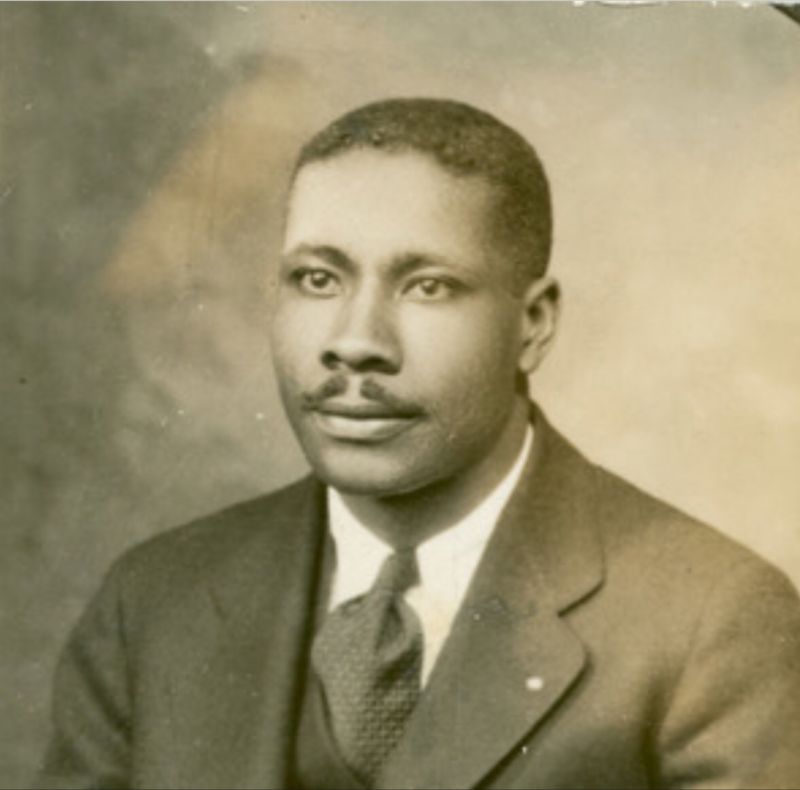
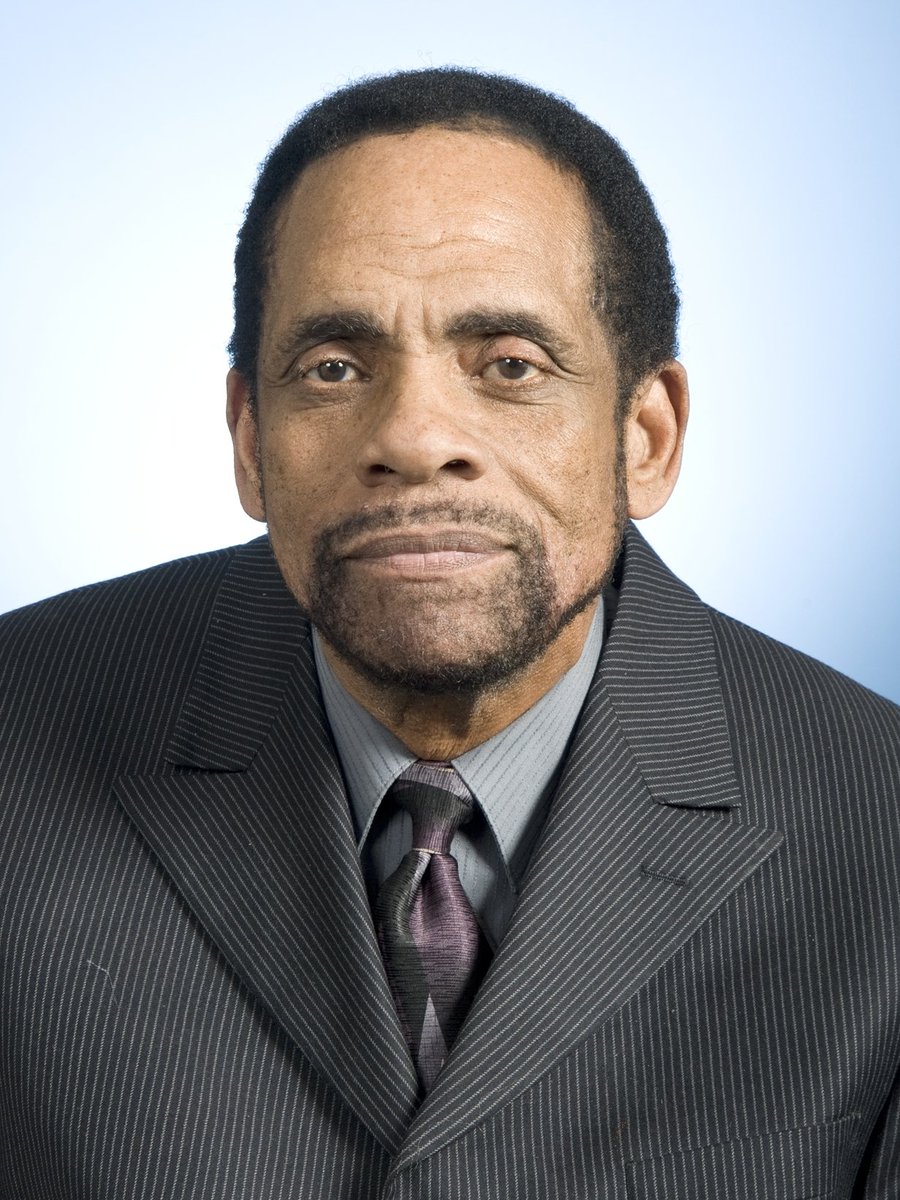
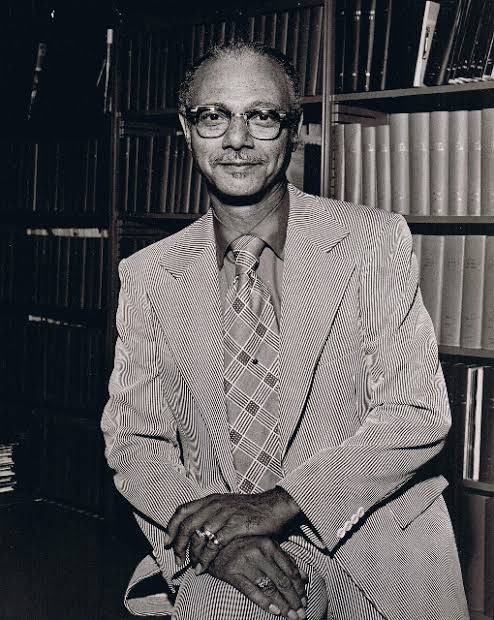
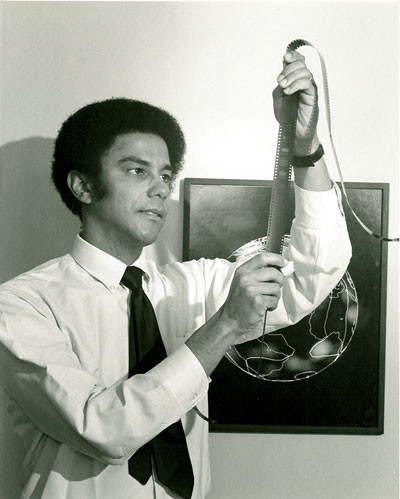
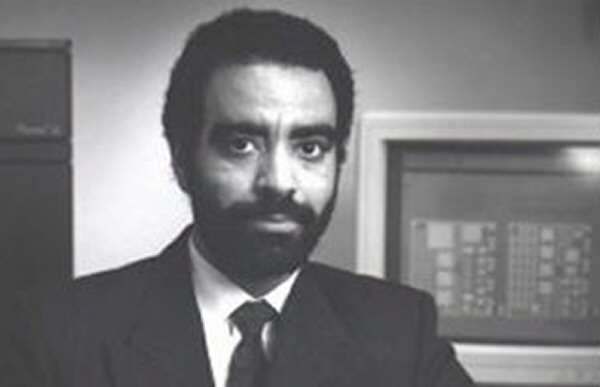
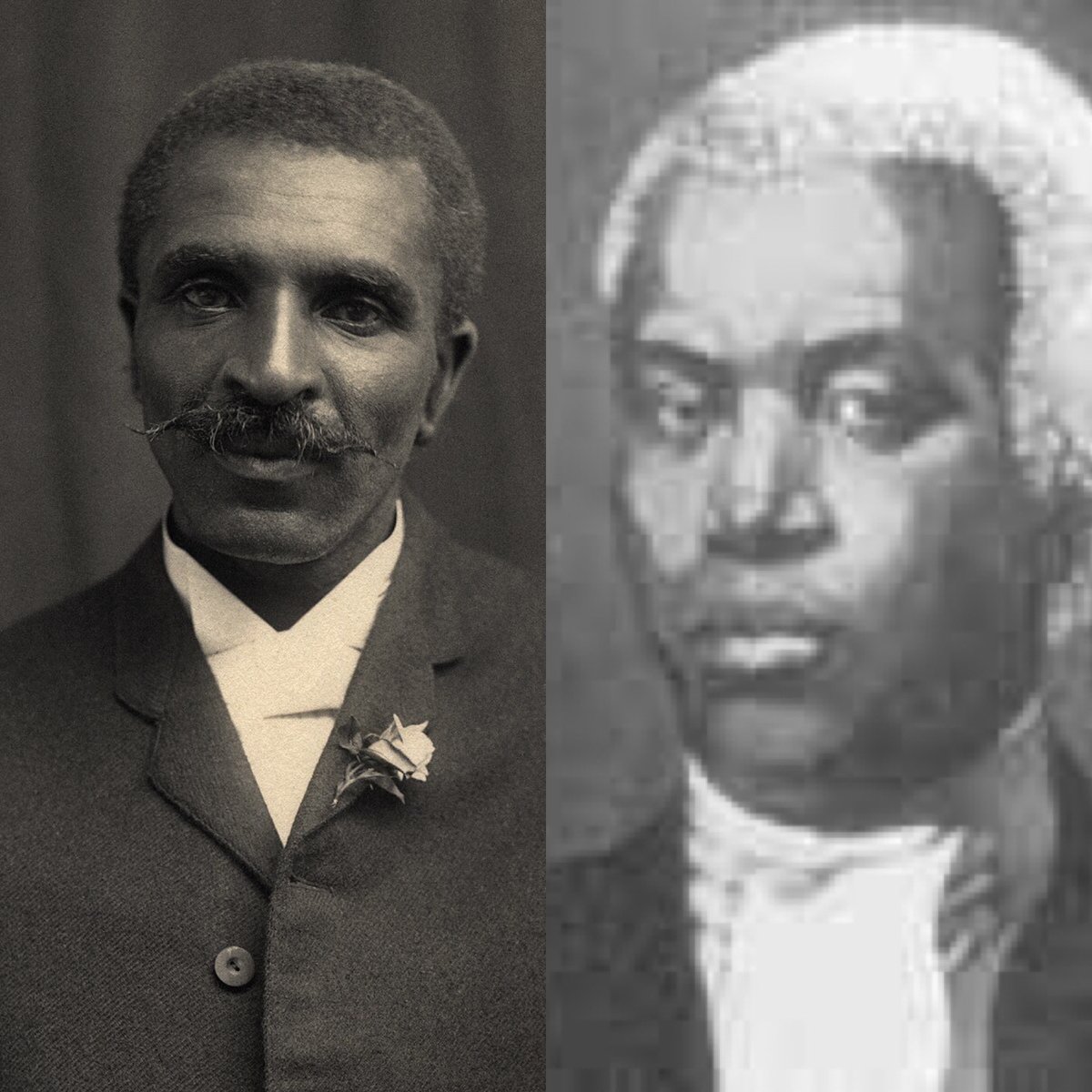
Today's Black American (Freedmen) inventor or innovator is Dr. David Blackwell. Dr. Blackwell is considered one of the most important mathematicians and statisticians of the 20th century. He made major contributions to dynamic programming and developed the Blackwell Approachability Theorem, both of which underpin modern machine learning and artificial intelligence, particularly in areas like reinforcement learning and decision-making. #BlackHistoryMonth
Today’s Black American (Freedmen) inventor or innovator is Hildreth “Hal” Walker Jr. In 1962, Walker directed the first television broadcast transmitted from Earth to a satellite and back again.
Later, in 1969, he led the team that adapted a ruby laser for the Apollo 11 moon landing. They used it to measure the distance between the Earth and the Moon, achieving an accuracy within 5 meters—the most precise measurement at that time.
He went on to develop the first laser targeting systems for the U.S. Army. #BlackHistoryMonth
Today’s Black American (Freedmen) inventor and innovator is Dr. Myra Adele Logan. In the 1940s, Dr. Logan became the first woman of any race to perform open-heart surgery and the ninth person overall to perform such an operation. She also contributed to the development of the antibiotic Aureomycin and to advancements in X-ray techniques that improved the detection of differences in tissue density, aiding in the identification of tumors. #BlackHistoryMonth
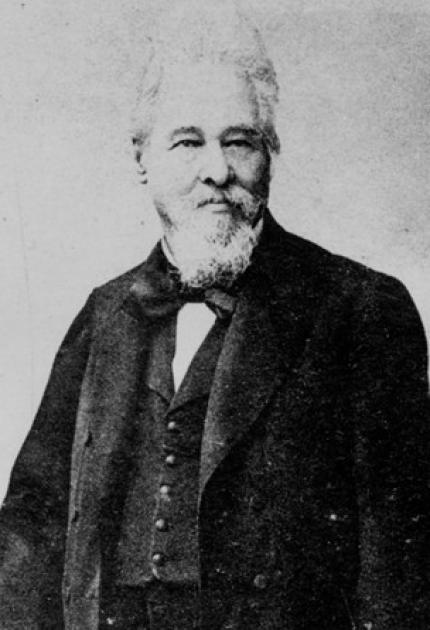
Today's Black American inventor is Norbert Rillieux. Rillieux revolutionized the sugar industry when he invented the multiple-effect evaporator. This process remains the basis for all modern industrial evaporation. It is still used in the production of sugar, gelatin, condensed milk, soap, glue, water filtration, water desalination, and in distilleries to this day. He is considered to be one of the first chemical engineers in the world. #BlackHistoryMonth
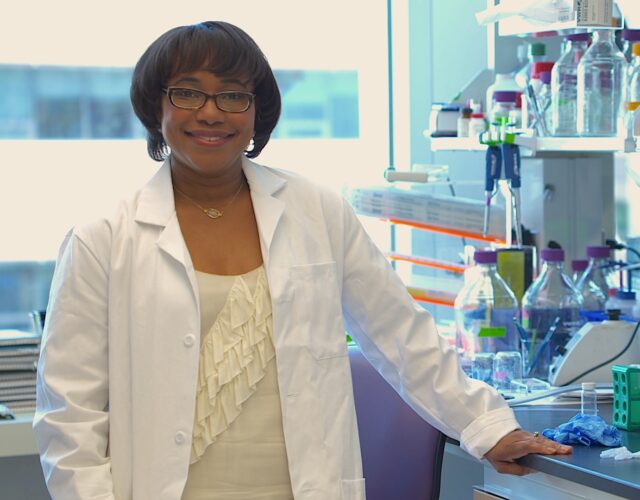
Today’s Black American (Freedmen) is Paula T. Hammond. Dr. Hammond is a leading chemical engineer who developed polymer-based, nanoparticle drug delivery systems. Her work focuses on engineering nanoparticles that can evade the immune system, circulate through the body, and deliver medication directly to targeted tissue.
Her research has primarily been applied to chemotherapy, inflammatory, and infectious diseases, improving the precision and effectiveness of treatment.
Her work is still being actively tested in early-stage human trials, and the field she helped advance, nanoparticle drug delivery and controlled release systems, is already used in modern medicine.
#BlackHistoryMonth
Today’s Black American (Freedmen) inventor is Thomas Jennings. Jennings was the first Black American to receive a patent in the United States. In 1821, he patented his process of “dry scouring,” an early precursor to modern dry cleaning. His innovation laid the foundation for the development of the dry-cleaning industry in the United States. #BlackHistoryMonth
Today's Black American (Freedmen) inventor is Charles B. Brooks. In 1896, Brooks patented the first self-propelled street sweeper truck.
Unlike earlier mechanical sweepers that relied on horse-drawn power, his version integrated the sweeping apparatus onto a motorized chassis, eliminating the need for animal or manual labor. His design introduced groundbreaking features such as synchronized rotating brushes, a conveyor-driven collection system for storing debris, and interchangeable scrapers that served as an early snowplow attachment. The fundamental architecture of modern street sweepers is based on his 1896 innovation. #BlackHistoryMonth
Today's Black American (Freedmen) inventor is George Alcorn. Alcorn invented the imaging X-ray spectrometer. The imaging X-ray spectrometer uses a focused beam of charged particles to analyze samples, allowing scientists to more accurately separate and identify the elemental and chemical components of a substance. This work earned him recognition such as NASA's Inventor of the Year.
His other invention was the Airborne LIDAR Topographic Mapping System (ALTMS), which emits light toward the Earth’s surface to collect data that would be challenging to analyze from the ground. This technology is widely used in modern drone-based mapping and surveying. #BlackHistoryMonth
Today's Black American (Freedmen) is Edwin Roberts Russell. Russell was one of the few Black scientists who worked on the Manhattan Project. As a chemist, he helped develop methods for isolating plutonium-239 from uranium. This work was essential to the production of atomic energy. Later in his career, Russell contributed to ion-exchange techniques used to separate and manage radioactive materials, including processes for recovering plutonium from nuclear waste. #BlackHistoryMonth
Today’s Black American (Freedmen) inventor is Warren M. Washington. Dr. Washington helped develop some of the first computer models of Earth’s atmosphere. These models accurately simulate changes in the atmosphere, land, and oceans, and they remain foundational to meteorology, atmospheric science, and climate prediction to this day. #BlackHistoryMonth
Today’s Black American (Freedmen) inventor or innovator is Dr. Marc Hannah.
Dr. Hannah is a co-founder of Silicon Graphics, Inc. (SGI), a company that pioneered advanced computer graphics hardware and software. He helped design high-performance workstations that made possible groundbreaking, realistic 3D graphics used in films such as Terminator 2: Judgment Day and Jurassic Park.
SGI technology also played a major role in the production of Toy Story, the first fully computer-animated feature film in history.
Dr. Hannah’s influence extended into the gaming industry as well. He led the design of key graphics technology used in the Nintendo 64, including the system’s coprocessor responsible for its advanced 3D rendering capabilities.
Through his work, Dr. Marc Hannah helped lay the foundation for modern computer graphics in film, animation, and video games. #BlackHistoryMonth
Happy Belated Farm Workers Day to two pioneers who helped feed and sustain America.
Benjamin Banneker created the first Farmer’s Almanac, giving farmers the knowledge they needed to survive and helping save a young nation from starvation.
George Washington Carver revolutionized agriculture, teaching soil enrichment and crop rotation to sustain and strengthen America’s farming industry.
Their work built the foundation of American agriculture.
Today's Black American (Freedmen) inventor or innovator is Dr. Robert Shurney. While working for NASA, Dr. Robert Shurney refined the wheels for the NASA lunar rover, or “moon buggy,” that enabled Apollo 15, 16, and 17 astronauts to move easily across the moon’s surface so that the crew would be able to see without being hindered by moon dust, making extended exploration of the lunar surface possible. He designed the space toilet for America's first space station. This laid the foundation for waste systems used later on space shuttles. He also helped design a solar shield to insulate spacecraft from the intense heat of the sun and a solar panel as a constant source of power. #BlackHistoryMonth
Today's Black American (Freedmen) inventor is Miriam Benjamin. Miriam Benjamin invented the gong and signal chair that allowed users to hit a button on a seat to signal that they need help. These chairs led to the chairs, beds, and panels founds on airplanes, hospitals, trains, and etc where you press a button and it pages a flight attendant, a nurse, a stewardess, etc. #BlackHistoryMonth
Today's Black American (Freedmen) inventor or innovator is Vernon Dantzler. Dantzler wrote many of the subroutines for one of the world's earliest spreadsheet programs, the NIST OMNITAB. It was the first spreadsheet program that allowed users to enter commands to perform specific calculations. This is now a common feature in modern spreadsheet programs like Microsoft Excel and Google Spreadsheets. OMNITAB was widely used in government, industry, and academia throughout the world; foreign-language versions were produced in French, German, and Japanese. OMNITAB remained popular until about 1980, when other commercial spreadsheet programs became available during the shift to personal computers. A legacy version of OMNITAB is still accessible.
James Forten is one of the clearest examples of what Black American power looked like at the founding of this country—and it wasn’t just survival, it was strategy, ownership, and influence.
Born free in Philadelphia in 1766, Forten didn’t sit on the sidelines of history. As a teenager, he fought in the Revolutionary War aboard a privateer ship, was captured by the British, and endured imprisonment on a prison ship. Even then, he chose principle over comfort and refused to switch sides. He was already invested in this country before it ever acknowledged him.
After the war, he didn’t wait for opportunity—he built it. Forten mastered sailmaking, bought the very business he trained in, and turned it into one of the most successful operations on the Philadelphia waterfront. He employed Black and white workers, trained the next generation, and built real economic power in one of the most important cities in early America.
By the early 1800s, he had become one of the wealthiest men in Philadelphia—period. Not just among Black Americans. His wealth came from skill, ownership, and discipline, and he used it with intention.
Forten helped fund abolitionist movements, supported Black newspapers, fought against colonization schemes, and used his voice and money to protect the future of Black Americans in the United States. He wasn’t trying to leave—he was asserting rightful stake and presence.
And just as important, he helped build what we can call Black Philadelphia high society—an ecosystem of Black wealth, intellect, activism, and leadership. His home became a hub for organizing, strategy, and influence. His family carried that legacy forward, showing what multi-generational Black excellence looked like long before emancipation.
James Forten represents something we don’t talk about enough:
Black Americans weren’t just labor in this country—they were builders, investors, thinkers, and power brokers from the very beginning.