Excess inventory is trapped capital. At MasterStock, we set it free.
Buyers: Your Sourcing Partner for high-volume deals.
Sellers: Your Inventory Helper to liquidate surplus fast.
Connecting surplus with opportunity. Smarter. Faster. Global. 🌎
#B2B#Sourcing
Where do you make your money? Apparel, home and kitchen, technology, toys and baby, tools and hardware, accessories.
If you recognised yours, send one line: what you move, how much, where to.
DM us or write to [email protected]#MasterStock#Overstock
Two pallets can weigh the same and cost very different amounts to move.
US freight is priced by class, 50 to 400, set mostly by density. Light and bulky is expensive, dense and compact is cheap.
#MasterStock#Overstock
Before a supplier can trade with us, their finance team has to open a vendor file. That is where deals quietly stall.
So we send it first: W-9, certificate of insurance, resale certificate, Delaware C-Corp, a D-U-N-S anyone can look up.
#MasterStock#Overstock
Four ways this business gets bigger: more deals, bigger deals, a better spread, more capital deployed.
Only one multiplies all four. Speed. A 45 day cycle turns the same dollar about eight times a year.
#MasterStock#Overstock
Investors here do not ask how much you moved. They ask four things:
the category, what is hard to copy, how the capital is structured, and whether it holds at scale.
Equity for the team. Debt for the inventory. Never mixed.
#MasterStock#Overstock
A one-off buyer and a long-term partner are two different businesses.
The first deal is the smallest we will do together, paid on release. Four cycles in, the same buyer can move several times that on Net 30.
The relationship compounds, not the discount.
Freight is where a good lot quietly turns into a bad one.
Our line: freight plus handling plus audit under 5 percent of retail value. Past 10 percent we do not run the deal.
The 3PL audits within 24 hours. Supplier and 3PL in the same corridor. Cargo insured the whole way.
When you send us a manifest, it does not go on a marketplace.
On an auction platform your inventory becomes a public listing your competitors and your own customers can read. We are not an auction. Manifest under NDA, offer from us, your name stays out of it.
Creditworthy and bankable are not the same thing.
An importer can have the warehouses and the buyers waiting, and still be refused working capital in dollars. Around half of these requests are rejected.
No record, no access. No access, no record. We exist to break that circle.
Buying surplus abroad usually means running three businesses at once. Finding the goods. Financing them. Moving them.
We put all three on one desk, so the importer does one job. Sell.
Two founders run it end to end. Every offer carries a signature.
Most credit lines are decided before anyone has done business. Ours are decided after.
Cycle 1: wire on release.
Cycle 2: 30 percent down, rest Net 15.
Cycle 3: Net 30 in full.
Net 30 goes to approved buyers only, under a separate credit agreement.
Turning a lot down is part of the job.
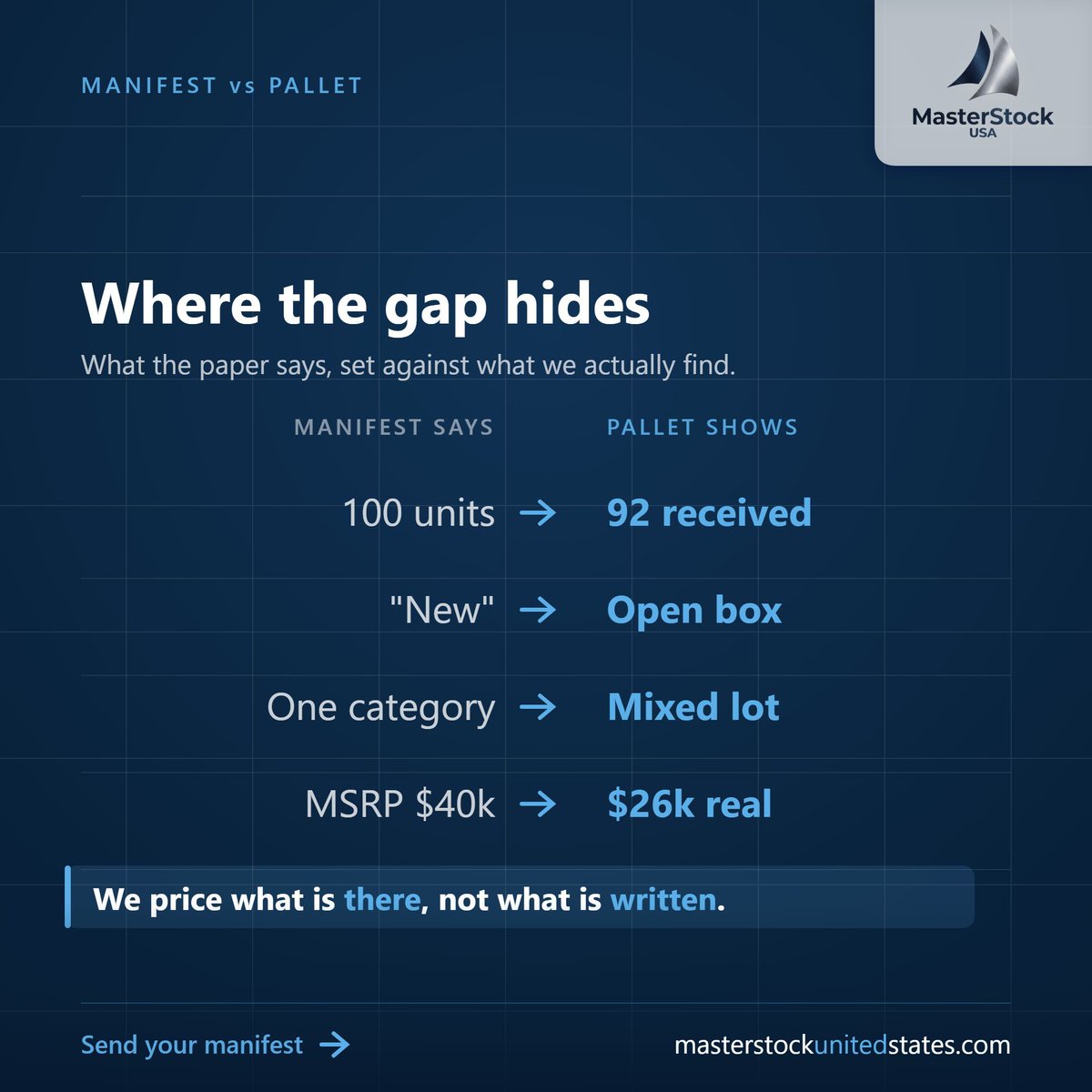
A manifest is a claim, not a fact. Every one gets checked in person and signed by a founder before it is listed.
Four things end it fast: short counts, untested items, resale clauses that lock out the buyer, freight that eats the margin.
Obsolete is a story people tell about technology. It is rarely true.
We do not price a tech lot against its sticker. We price it against what a buyer pays today: live market value, condition, volume, speed.
Widest spread in our book, 30 to 35 percent.
Most people picture a liquidation company as a warehouse of pallets. We run as a data and sourcing engine. Software filters thousands of manifests down to the few that matter, so founders spend their time where it counts: negotiating face to face. https://t.co/3JqQWL6TUV
The most profitable category in US liquidation is the wrong question. The money is in the triage. Scalable: chase it. Optimizable: audit and restructure. Disposable: pass, however shiny. Discipline beats guessing. https://t.co/3JqQWL6TUV
In the secondary market, one word sets a lot's value: its grade. Inventory splits into excess new and customer returns, then grades from new to salvage. That label drives price and risk, so we verify condition physically before it becomes an offer. https://t.co/3JqQWL6TUV
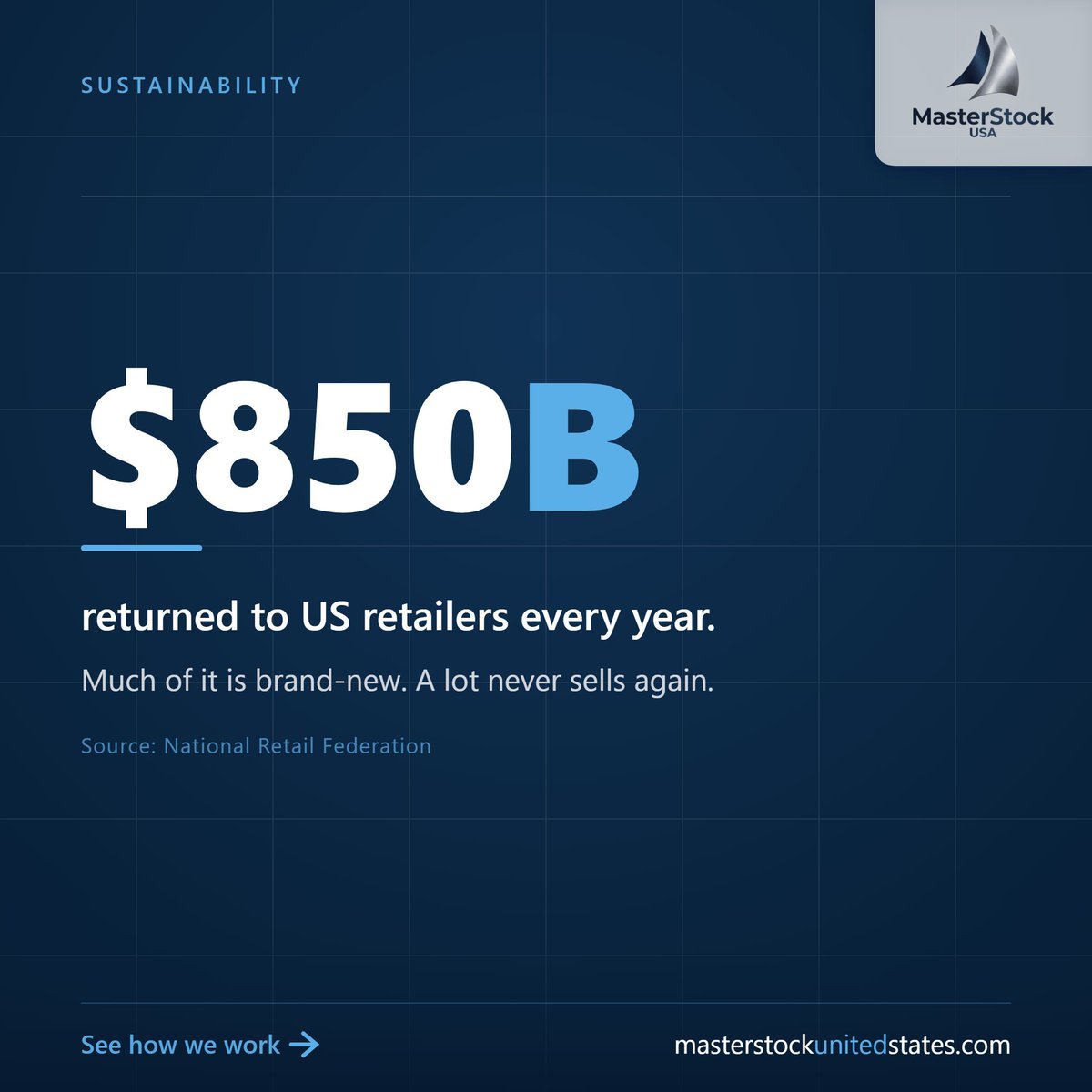
$850B in merchandise is returned to US retailers every year, much of it brand-new. Most never sells again and gets landfilled. We buy that overstock and give it a second life across Latin America. Surplus to move? [email protected]
📄 Most liquidators compete on price. We compete on paperwork. Chain of Title, Bill of Sale, NDA. To a Tier 1 supplier, that paperwork is the precondition to any serious conversation. It opens doors a handshake never will. https://t.co/o2ZSWTAqvO
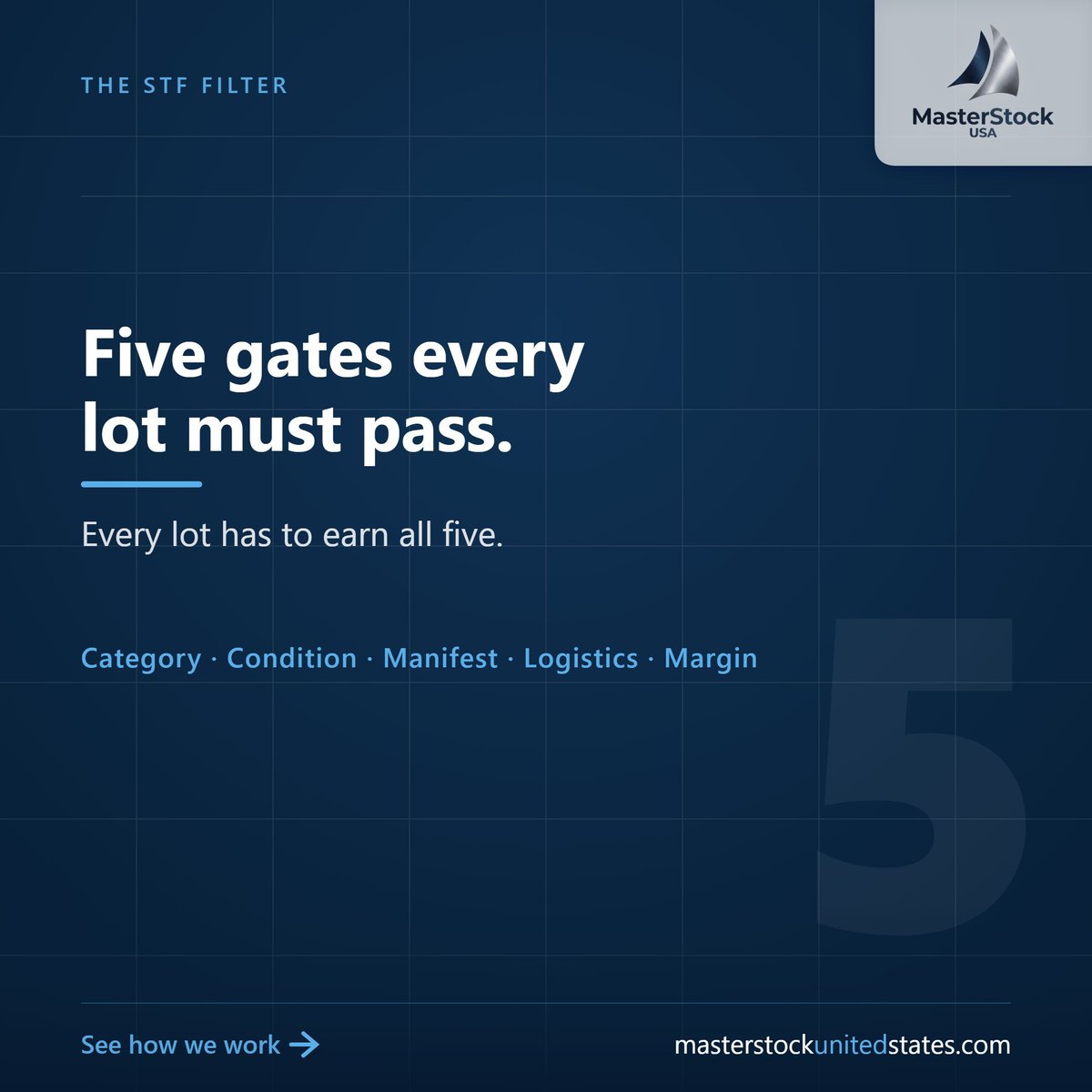
👉️ Most lots look good on paper. Before we make an offer, a lot passes five gates: category, condition, a verifiable manifest, logistics, and margin. Each one has to hold up. It is how we choose what is worth moving. https://t.co/3JqQWL6TUV
The manifest is not the lot. It is a promise on paper, and "new" often turns out to be open box. So we inspect every lot in person before it becomes an offer, and we price what is actually there. https://t.co/3JqQWL6TUV