If you look closely at this hug, you can see two broken pieces fitting perfectly back together. They clung to each other when they were scared, and now they cling to each other because they’re happy. From the streets to safety, their love was the bridge that brought them home. 🐾😭💛
Vitamin D is not really a vitamin.
It is a steroid hormone. Your body manufactures it from cholesterol when UVB strikes your skin, sends it to the liver for one conversion, sends it to the kidneys for another, and from there the active form goes on to regulate over a thousand genes. Bone health. Immune function. Mood. Insulin sensitivity. Cardiovascular function. Cancer risk. Fertility. Cognition.
The dose is the sun. The factory is your skin. The raw material is cholesterol, which we have also been told to be afraid of.
So look at what has actually happened.
You have been told to avoid the sun. You have been told to lower the cholesterol your body uses as the precursor. You have been told that animal fat, the natural dietary source of the finished hormone, is what's killing you.
And then, when the inevitable deficiency arrives at your annual blood test, you have been prescribed a small synthetic pill to replace the hormone the system was designed to make for free.
Three of the inputs your body requires were removed. The output collapsed. The output is now sold back to you in capsule form.
The system was not broken before we started fixing it.
We were.
The biggest mistake people make on carnivore is bringing the calorie-counting brain with them.
They count macros. They weigh portions. They track sodium and potassium and magnesium in a spreadsheet. They calculate their fat to protein ratio. They worry about microplastics in their salt. They worry about whether their water is too pure or not pure enough. They take a stack of supplements timed to the hour.
And then they wonder why they are not healing.
The body has been trying to repair itself since the day they started. Pulling old oxalates out of joints. Rebuilding gut lining. Resetting hormones. Recalibrating thirst, hunger, salt cravings, sleep cycles. It is the most sophisticated maintenance operation on earth, and it has been running quietly in the background for two million years.
But every time the body tries to recalibrate, the spreadsheet overrides it. The body asks for more salt, the tracker says you have hit your daily target. The body asks for a four-day fast on instinct, the macro app panics. The body says the steak is enough, the supplement timer says it is 2pm and the magnesium is due. The body keeps trying to do its job, and the management keeps interrupting.
You are not letting it heal. You are running the show on top of it.
The whole point of eating like an animal that eats animals is that the system is meant to run itself. The hunger signal works. The satiety signal works. The thirst signal works. The salt craving works. The body has been calibrating these things for two million years and got rather good at it before MyFitnessPal showed up.
Eat the fattiest cut you can find, until full. Drink water when thirsty. Sleep when tired. Lift heavy things twice a week. Get sun on your skin when there is sun, which in Britain is a niche window between April and September.
That is it. That is the whole protocol.
Stop measuring. Stop tracking. Stop optimising. Stop reading your fifth article of the day about a trace mineral you have never tested for and have no actual symptoms of being short of.
The body knows what it is doing.
Get out of its way and let it work.
Dry fasting burns more fat than water fasting.
Not as a trick. Not as a biohack. As basic metabolic physiology.
Oxidising one gram of fat produces approximately one gram of metabolic water. The body, deprived of external water, responds by increasing fat oxidation to generate its own supply. Studies suggest up to three times more fat oxidised compared to a standard fast.
Yes. You still need to drink water to stay alive. Nobody is disputing this. The question is whether you need to sit there chugging two litres across a 24-hour fast, or whether your body has mechanisms for this that predate the invention of the wellness industry's hydration targets.
It does. It's called metabolic water production and it works considerably better when you're not eating carbohydrates, because carbohydrates bind water in the cells and ketosis is already a lower-fluid state.
Carnivore fasters are doubly positioned for this. Less hydration needed at baseline. More fat available to oxidise. The body handles it.
You are not a houseplant. You don't need constant watering.
Sugar addiction isn't real, apparently.
Because nobody's cutting lines of caster sugar in a nightclub toilet. Nobody's stealing to fund a croissant habit. Nobody wakes up shaking if they don't have a Hobnob.
So it must not be real.
What is real:
Dopamine release on consumption. Check.
Tolerance build-up requiring more for the same effect. Check.
Cravings during withdrawal. Check.
Relapse triggered by stress or environmental cues. Check.
Rationalisation and minimisation of consumption. Absolutely check.
The pharmacology of sugar addiction maps onto classical addiction pathways with the kind of accuracy that should prompt a serious conversation.
It hasn't prompted a serious conversation.
It's prompted a third supermarket aisle of "reduced sugar" products containing maltodextrin, which has a higher glycaemic index than table sugar.
Addiction isn't defined by the delivery mechanism. It's defined by the neurological response.
The response is real.
The industry prefers to argue about the mechanism.
In 1206, Genghis Khan united the Mongol tribes and set about building the largest contiguous land empire in human history.
His army covered ground that no army before or since has matched. They crossed the Gobi Desert. They crossed the Himalayas. They rode from the Pacific coast to the gates of Vienna. In winter. Without supply lines.
No supply lines.
Think about what that means for a moment. Every European army of the period ran on supply lines. Grain carts. Bread wagons. Foraging parties. The Roman model, which had not fundamentally changed in a thousand years: you march the army and you feed it from behind, from the settled agricultural territory you're defending or departing from.
The Mongols had no grain carts. The Mongols had horses.
And the horses were not just transport. The horses were the food.
A Mongol warrior on campaign drank fermented mare's milk, airag, which provided fat, protein, B vitamins, and a mild alcoholic content that didn't impair function but stabilised the gut on campaign. When things were desperate, he made a small cut in his horse's neck, drank blood directly, and sealed the wound. The horse survived. The warrior continued.
He also carried borts: dried, pulverised meat so desiccated it could survive months in a saddlebag in any climate. Reconstitute it in hot water and you have a high-protein broth that would keep a man functional through a forced march that would have killed his European counterpart inside a week.
The Mongol warrior carried his food on his body. He needed no infrastructure. He could move at a speed armies dependent on grain logistics physically could not follow.
The Europeans who encountered Mongol forces and survived described them with a very consistent set of adjectives. Inhuman. Tireless. Appearing from nowhere. Gone before you could respond.
They were not superhuman. They were just not slowed down by bread.
The largest empire ever built was built on meat and fermented milk, by men who carried their food supply at a canter.
No supply chains were harmed in the making of this conquest.
>be Mongol warrior, 13th century
>diet: mutton, beef, horsemeat, dried blood sausage, fermented mare's milk
>vegetables are considered "goat food"
>Marco Polo notes your soldiers can ride ten days without cooking, living on dried milk curd, fermented milk, and cured meat
>your empire becomes the largest contiguous land empire in human history
>you control territory from the Pacific coast to the Danube
>you conquer China, Persia, Central Asia, Russia
>you do this on horseback, in all weather, at speed no grain-fed army could match
>later historians spend a long time explaining this
>none of them lead with "the dried horsemeat was probably a factor"
>but it probably was
There is a persistent myth, extremely popular in certain wellness circles, that the samurai were vegetarians.
This myth exists because some samurai texts discuss the refinement of the warrior spirit, the cultivation of inner stillness, and the idea that the warrior should not be overly attached to physical pleasures. From this, some people have concluded that samurai ate like monks.
They did not eat like monks. Let us be clear about this.
The standard samurai diet of the Edo period included miso soup, rice, pickled vegetables, and fish: often generous quantities of fish, cooked in various ways, preserved as various preparations.
Wealthy samurai ate meat. Hunting was a legitimate samurai pursuit: both for the protein and for the martial training it provided. Deer, wild boar, rabbit, and duck appeared regularly on the tables of those samurai who could hunt or afford it.
What the samurai did avoid, at various points and for various reasons, was the meat of domesticated animals: specifically cattle and horses. This prohibition was not primarily about health or spirituality. It was a practical cultural hangover from agricultural Buddhism, which had framed the killing of work animals as economically wasteful, and from the specific symbolic relationship between samurai culture and horses, which were military equipment, not food.
But wild game was fine. Fish was fine. Game birds were fine. And in periods of less strict observance, the historical record shows samurai eating what samurai could afford, which was often more than the accounts suggest.
What is not in the historical record is a caste of elite professional warriors subsisting on the plant-based diet of the peasant class below them.
The peasant class below them subsisted on rice, barley, millet, and whatever protein they could obtain from fish scraps and fermented soy products. They did so because they were not paid enough to eat otherwise.
The samurai class ate differently because they were the samurai class.
The distinction was, in the most literal sense, the point.
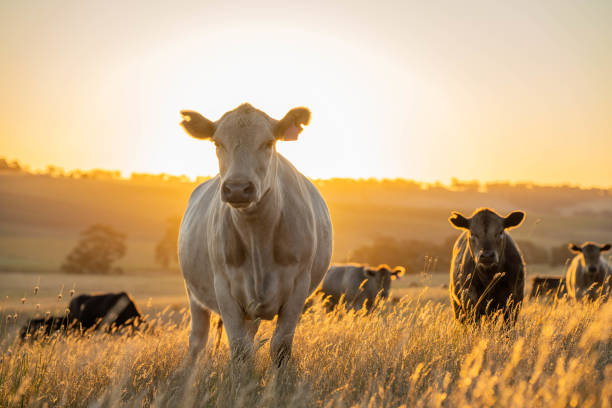
Australia is the world's largest beef exporter.
People who find this uncomfortable sometimes suggest that Australia should redirect this toward plant agriculture and feed itself more ethically.
Have they looked at a map of Australia?
Not the bit with the cities. Not the coastline. The bit in the middle. The part that constitutes 95% of the agricultural land.
It looks like the Outback at 40 degrees in October, where the annual rainfall in good years is 250mm and the soil has never had topsoil in recorded geological history.
It looks like the Mitchell grass downs of Queensland, where the black cracking clays grow native perennial grasses that have evolved specifically to be eaten by ruminants and cannot support cropping without irrigation that doesn't exist.
It looks like the Northern Territory station country, where a single cattle station might be larger than England and the nearest agronomist is six hours away by plane.
You cannot grow quinoa in the Northern Territory.
You cannot grow wheat in the Pilbara.
You can run cattle on both, because cattle evolved to convert the inedible into the edible, which is the precise function being asked of them.
The people saying Australia should eat less beef have not been to the places the beef comes from.
They've been to Melbourne.
Melbourne is lovely.
It is not where the food grows.
People act like carnivore is a 2019 invention by American podcasters.
The Mongols would like a word.
Genghis Khan's army moved faster than any force in history. They covered ground that modern military planners still find impressive. They conquered more territory in twenty-five years than Rome did in four hundred. They did this without a supply chain that could carry grain. They did this on horseback, which requires staying awake and functional for very long periods under considerable duress.
What did they eat? Meat and fermented mare's milk. That's it. That was the dietary strategy of the most effective conquering force the world has ever seen.
No bread. No pasta. No "complex carbohydrates for sustained energy." Just animal products and the Eurasian steppe.
The Maasai. The Inuit. The Sioux. The Sámi. Every traditional culture that lived far enough from the equator to be unable to grow crops year-round worked out the same answer independently. Animal fat and animal protein. Fermented, dried, fresh. Hunted, herded, fished.
None of them had registered dietitians. None of them had food pyramids. All of them had functional metabolisms, dense bones, and the energy requirements of people who actually moved.
Carnivore is not new. Carnivore is not a fad. Carnivore is not a Silicon Valley biohacking experiment.
It is, by an enormous margin, the oldest dietary strategy in human history.
We are the fad.
When you start carnivore, the healing happens in a predictable sequence.
Week 1-2: Digestive symptoms as gut bacteria shifts from fermenting plant fibre to processing animal protein. Uncomfortable. Expected.
Month 1-2: Energy stabilises. Fat adaptation begins. Hunger becomes manageable. No more 3pm crash.
Month 2-4: Inflammation starts dropping. Joint pain reducing. Skin clearing. Sleep improving. Mental fog lifting.
Month 4-8: Chronic conditions begin improving. IBS resolving. Autoimmune symptoms calming. Metabolic markers shifting.
Month 6-18: Body composition changing. Muscle preserving. Fat mobilising. Mitochondria rebuilding.
Year 2-3: Full metabolic healing. The damage accumulated over decades is, cell by cell, membrane by membrane, resolved.
People call this a "miracle."
It isn't.
It's what happens when you remove everything your body was reacting to, provide complete nutrition, and wait long enough for cellular reconstruction.
The body knows how to heal.
It just needed you to stop poisoning it first.
LET’S HEAR IT! Share your best “GET OVER HERE” or “FINISH HIM” and use #MortalKombatKall. You may just introduce the new Mortal Kombat II trailer on 2/25 at #IGNFanFest.