#Econjobmarket PhD candidate from MLU Halle-Wittenberg. Specialized in #econhist, growth, and political economy.
I am on the 2024-2025 Econ Job Market.
@MatCabelloEcon presenta su trabajo «Divided into progress! How Europe’s political and religious fragmentation spurred creativity: 1100-1900». En @ehvalencia@fdeconomiauv
@BurlHorniachek@JosephPConlon@BlasuttoFabio Yes, it seems to me that the dominant revisionism of the last 40 years or so went too far. 19th-century historians, despite their biases, weren't so wrong after all.
@BurlHorniachek@JosephPConlon@BlasuttoFabio@JosephPConlon is right to be skeptical (he indeed reflects the historians' consensus). But the fact is that the number of known scientists, publications, inventions, etc., declined in regions and periods where intellectual conservatism held sway.
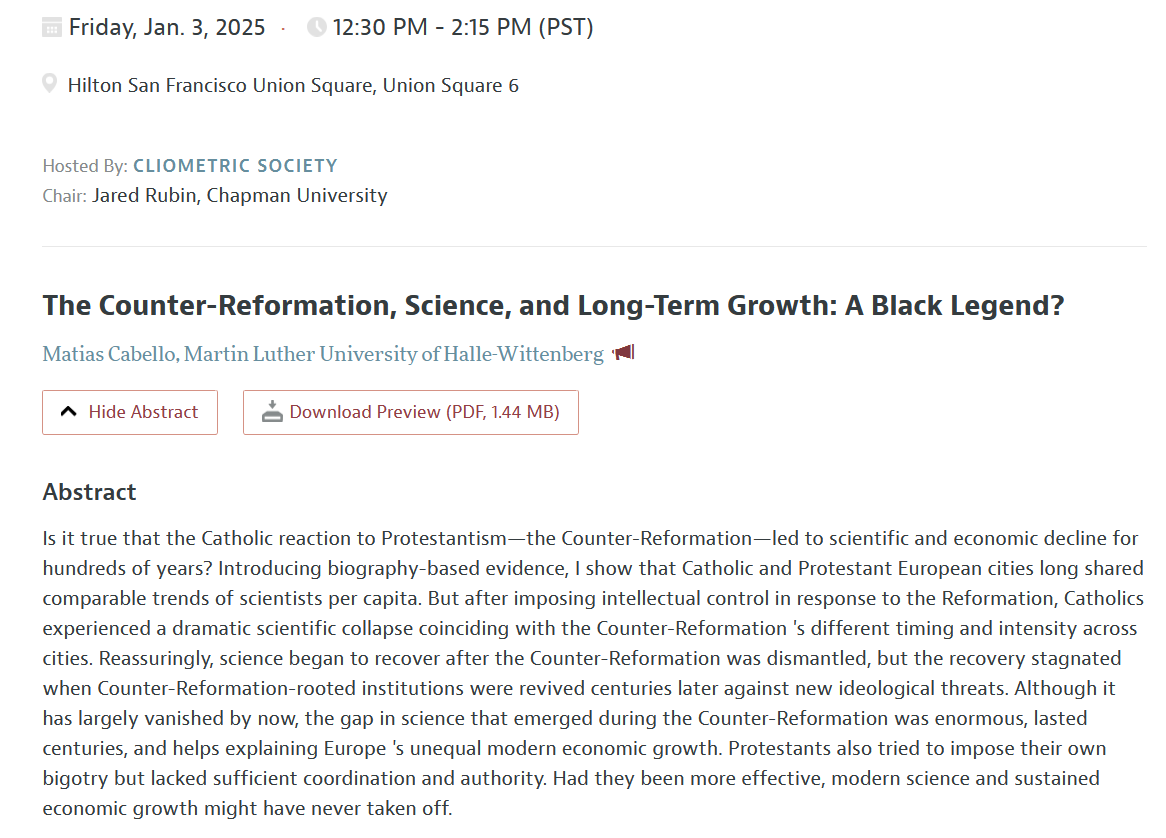
How the Catholic reaction to Protestantism harmed science! Presenting on this super debated historical question at #ASSA2025, @ClioSociety session chaired by @jaredcrubin: https://t.co/4SCrBKVEet
@JamesCUngureanu@whyvert Hi James, thanks for the link. Will take a close look at it soon for sure. And it would be great to chat some day! Just message me...
Interesting new paper!
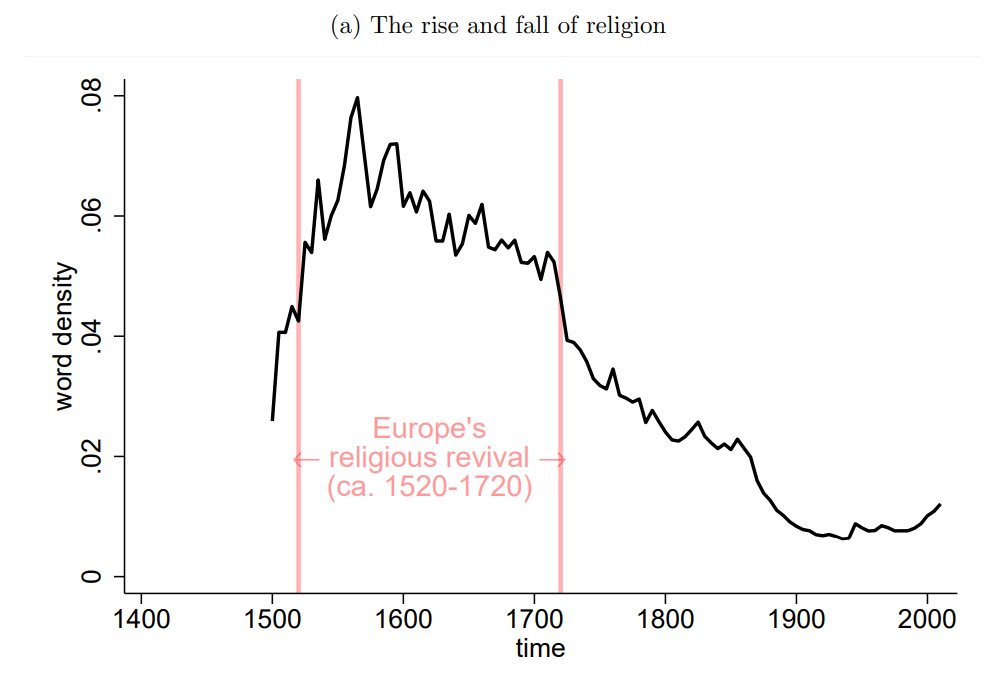
1520-1720 elite human capital became obsessed with religion (and likely high in religiosity) then 200 years later suddenly changed to be less religious.
As shown by density of the words God, Jesus, and Christ (vernacular and Latin) in books.
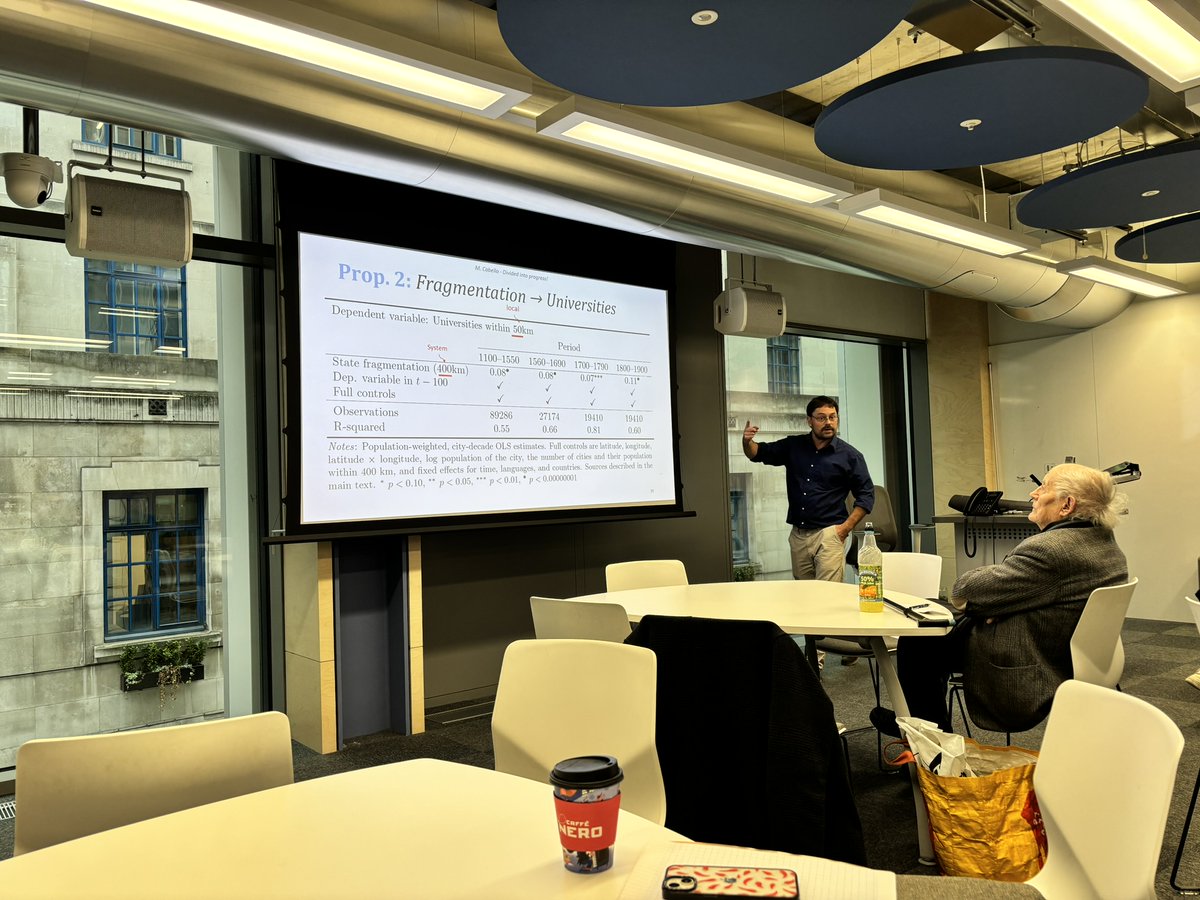
🚨 How did Europe's political and religious fragmentation drive creativity? 📜
At this LSE's Graduate Economic History Seminar, Matías Cabello (@MatCabelloEcon) presented fascinating research spanning 800 years (1100–1900). Let’s dive in. 🧵👇 (1/10)
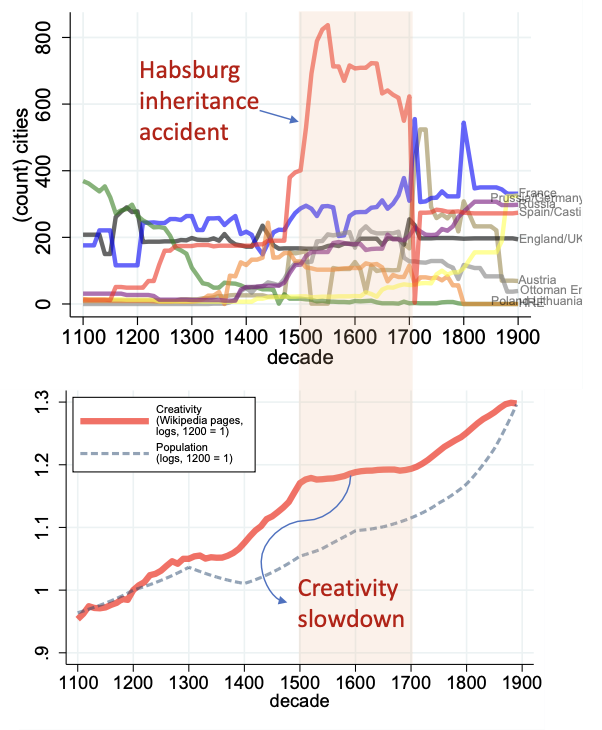
@MatCabelloEcon He uses two Natural Experiments to demonstrate this:
· The Reformation (1517): Fragmented Europe couldn’t suppress heterodox ideas, fostering intellectual mobility.
· The Habsburg Empire’s centralization: Highlighted the trade-offs between unification & fragmentation. (5/10)
The third is Matias Cabello @MatCabelloEcon from Halle, with a great paper on religion and innovation, summarized below. He works at the intersection of economic growth, economic history and innovation, more information about his other work on his webpage https://t.co/rV9QCkHudH
Innovation is the backbone of modern economic growth, and without the Protestants, we probably wouldn't have it🧵
Consider the period of the Counter-Reformation. During this time, the Catholic Church set science back in the territories it governed:
This isn’t just an ‘event study’
(ie one event produced long-run effects)
Instead @MatCabelloEcon charts change over time
The Spanish Inquisition was reactivated after the French Revolution and remained in place until the 1830s
Repression hurts science.
Protestant and Catholic regions produced just as many scientists
Until...
The Counter-Reformation successfully imposed prohibitions, instilled fear, and quashed innovation
Awesome paper by @MatCabelloEcon
https://t.co/r5BJOIeOBs