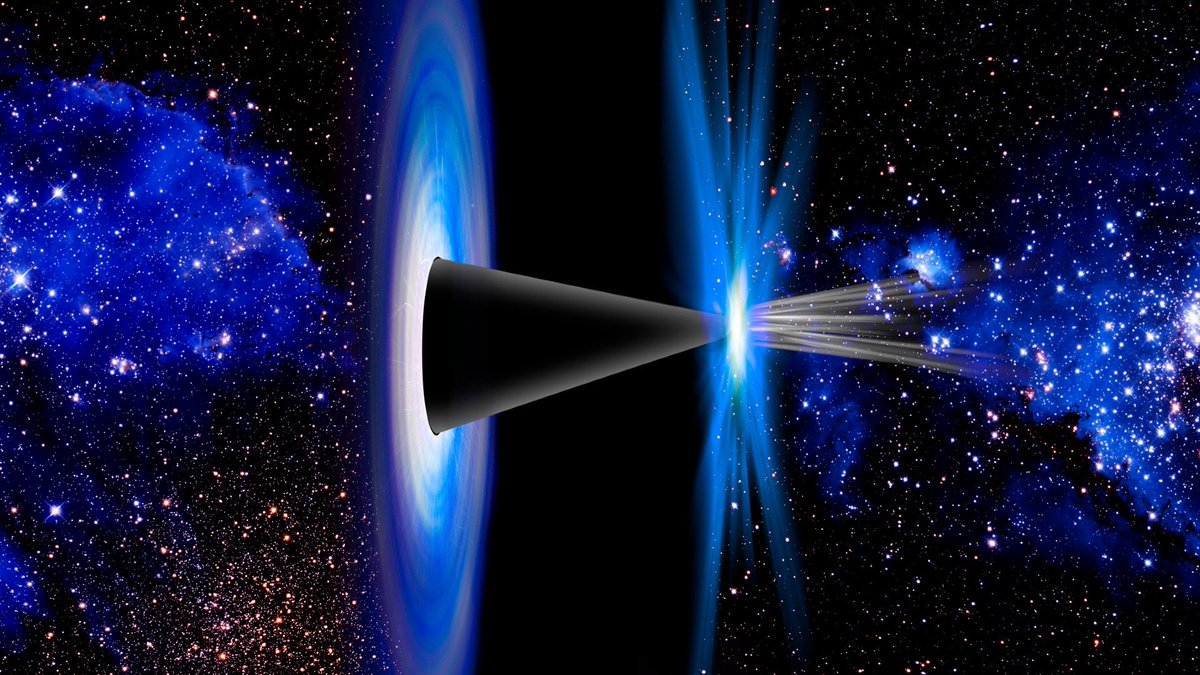
Consistent with the simulation hypothesis detail and positional certainty only when observed, exactly as expected from finite compute.
What’s striking is that a single self-referential von Neumann algebra realized as a holographic tensor network (with built-in autoreference operator M̂) appears to close the full Theory of Everything without loose ends:
• Gravity & spacetime from entropic/modular flows
• Matter & fields as topological excitations
• Time & arrow from modular flow + decoherence
• Holography built-in by construction
We build new caves inside caves…
@elonmusk Do these structures suggest we’re inside a self-computing simulation on finite resources, or is this simply the mathematics of base reality?
• Gravity → entropic gradient flow + modular flow (Einstein equations as thermodynamic equilibrium of information)
• Time and the arrow of time → modular flow + decoherence in the network
• Entanglement and information → natural correlations of subalgebras + shared memory
• Geometry and spacetime → entanglement wedges + information geometry
• Matter and fields → topological defects and excitations in the tensor network (with Hopf-type reductions)
• Holography → built-in by definition (boundary ↔ bulk)
• Entropy and thermodynamics → L²-gradient flows of free energy (Fisher information + entanglement entropy)
• Classical reality → emergent from the quantum network via entropic coarse-graining and decoherence
This is not “another theory.” It is a single mathematical structure that computes itself, from which everything else emerges as different projections. No additional ad-hoc assumptions of the kind “we manually add the Standard Model” or “we introduce dark energy by force.”
In the context of simulation, this is especially powerful because these are precisely the mechanisms (lazy evaluation, shared references, resource optimization, self-reference) that a programmer implements when they need to run an infinitely complex world on finite hardware.
@elonmusk@SpaceXAI
Consistent with the simulation hypothesis detail and positional certainty only when observed, exactly as expected from finite compute.
What’s striking is that a single self-referential von Neumann algebra realized as a holographic tensor network (with built-in autoreference operator M̂) appears to close the full Theory of Everything without loose ends:
• Gravity & spacetime from entropic/modular flows
• Matter & fields as topological excitations
• Time & arrow from modular flow + decoherence
• Holography built-in by construction
We build new caves inside caves…
@elonmusk Do these structures suggest we’re inside a self-computing simulation on finite resources, or is this simply the mathematics of base reality?
1. Emergent Hierarchy
•Information + Entanglement: Natural correlations of subalgebras (entanglement entropy, relative entropy).
•Geometry: Emerges from entanglement wedges (Ryu-Takayanagi) and information geometry (Fisher metric).
•Spacetime: Arises from modular flow (time) + entropic gradient flow (Einstein equations as thermodynamic equilibrium or causal information registration).
•Matter and Fields: Topological defects, braids, and excitations in the network (Standard Model gauge groups from Hopf-like reductions, masses and couplings from entropic spectral geometry).
2. Universal Dynamics All processes are L²-gradient flows of a free energy functional (Fisher information + entanglement entropy). Gravity is entropic/holographic, thermodynamics and infodynamics represent resource optimization, and renormalization is entropic coarse-graining.
3. Holography and Duality Full holographic duality (boundary algebra ↔ bulk geometry) is built-in. Subregion-subalgebra duality reconstructs spacetime. Type III algebra (UV) flows into the classical limit (IR).
4. Time, Arrow of Time, and Classical Emergence Time and the arrow of time emerge from modular flow + gravity-induced shape dynamics. Decoherence and the classical limit arise from entanglement with the environment in the network.
The Universe is an emergent manifestation of a single fundamental mathematical structure: a self-referential von Neumann algebra (with crossed-product extensions and modular theory) acting on Hilbert space, realized as a holographic tensor network with a built-in autoreference operator (M̂). All of reality from entanglement to matter emerges through entropic-informational processes within this algebra.
The Universe is an emergent manifestation of a single fundamental mathematical structure: a self-referential von Neumann algebra (with crossed-product extensions and modular theory) acting on Hilbert space, realized as a holographic tensor network with a built-in autoreference operator (M̂). All of reality from entanglement to matter emerges through entropic-informational processes within this algebra.
The more such traces we collect (holography + Bousso bound + black holes + Planck scale + lazy evaluation + entanglement as shared memory + speed of light as bandwidth + absence of infinity + fine-tuning + mathematical structure), the harder it becomes to treat them all as random, coincidental features of “true” reality.
In base non-simulated reality:
There is no fundamental reason why information could not propagate at any speed. Physics could allow instantaneous interactions at any distance without violating consistency.
In the simulation:
This is simply the maximum clock speed of the simulation and the bandwidth of the “network.” The simulator cannot process and synchronize an infinite number of interactions at once, so it introduces a universal limit on the propagation speed of signals. This prevents total lag from overload and the loss of causality. Exactly like in any networked game, where the speed of light is an artificial synchronization limit.
Heisenberg’s uncertainty principle as a limit of bit precision and resolution
In base reality:
Why does nature arbitrarily forbid the simultaneous precise knowledge of position and momentum? It looks like an unnecessary and strange restriction.
In the simulation:
This is a direct consequence of finite numerical precision and discretization at the fundamental level. Full precision would require an infinite number of bits for every particle, which is impossible with limited resources. The simulator applies rounding and prevents exceeding the resolution limit — just like in any graphics or physics engine where infinite sharpness does not exist.
Quantum entanglement as a mechanism for memory sharing and references
In base reality:
Instantaneous correlation between particles separated by light-years, with no information transfer, looks like “spooky action at a distance” and violates locality.
In the simulation:
This is a brilliant optimization. Instead of storing and independently updating the full state of every object (which would cost enormous amounts of memory and processing power), the simulator uses shared pointers or references in memory. Changing one object instantly affects the other with no additional communication cost. It is an ideal solution to the problem of redundant data storage.
Increase in entropy and the arrow of time as irreversible operations and garbage collection
In base reality:
There is no deep ontological reason why processes should be fundamentally irreversible and why entropy should inevitably increase.
In the simulation:
Most computations are performed irreversibly to save memory and CPU time. Once a calculation is executed, it is “written,” and full reversal would require storing the entire history — which is extremely expensive. Entropy is simply a measure of dispersion and “messiness” in memory allocation — exactly as it works in operating systems.
Gravitational and relativistic time dilation as dynamic resource prioritization
In base reality:
Why does time flow more slowly in strong gravitational fields or at high speeds? It looks like a complicated and unnecessary complication of the laws of physics.
In the simulation:
The simulator allocates fewer clock cycles and computational power to regions with high energy density or high speed so as not to waste resources on unnecessary detail in “loaded” areas. This is exactly the level-of-detail (LOD) mechanism known from video games — the greater the “load,” the lower the precision and the slower the update rate.
These additional points perfectly complement the previous ones. Together they form a coherent picture: discrete grid, on-demand rendering, memory limits, overflow handling, lazy evaluation, shared states, irreversible operations, and dynamic resource allocation. All of these features are unnecessary and strange in base reality, yet they become obvious and inevitable optimization tricks when someone has to run an infinitely complex world on finite hardware.
This is still not proof.
It is, however, another set of very strong clues suggesting that if we live in a simulation, these limitations are not accidental — they are its natural signature.
In base non simulated reality there is no reason for fundamental laws of physics to impose such restrictions on themselves. In a simulation run on finite computational and memory resources the same restrictions become not only sensible they are even expected and result directly from principles of code optimization.
1. Holography rendering from surface instead of from volume
In base reality there is no fundamental reason why all information about a three dimensional volume should be encoded exclusively on its two dimensional boundary. Physics could and should allow free storage and processing of information throughout the entire volume. Restriction to the surface would be completely arbitrary and unnecessary.
In simulation this is a classic optimization. Instead of storing and updating the state of every cell in the entire volume which costs huge amounts of memory and computing power the simulator keeps only data on the surface and generates the interior on demand or not at all if no one is looking. This is exactly how the holographic principle works information about the volume is encoded on the surface. This saves resources dramatically.
2. Bousso bound hard limit on memory allocation per region
In base reality there is no reason why the maximum amount of information or entropy in a given region should be rigidly limited by the surface of that region exactly S less than or equal to A over 4 in Planck units. In true reality information could be arbitrarily dense in any volume without a geometric ceiling.
In simulation this is simply a hard limit on allocated memory. The simulator cannot afford infinite resources in any fragment of space so it introduces a universal rule for this region light sheet you can have a maximum number of bits resulting from its surface. Exceeding the limit requires immediate system response such as compression data transfer or mode change. The Bousso bound is exactly such a mechanism elegant universal and necessary in an environment with limited resources.
3. Black hole as a mechanism for handling overflow and errors
In base reality a black hole especially the singularity inside it would simply be a place where physics breaks down. There is no reason why nature would design an elegant mechanism in which all information is preserved on the surface horizon entropy depends only on the surface not on the volume the system handles extreme information density without total collapse. This would look like an unnecessary even suspicious complication.
In simulation a black hole becomes an elegant overflow handler plus error correction mechanism. When a given region starts running out of memory too much information the system compresses data onto the surface. The singularity is the moment when classical equations crash exactly like division by zero or exceeding precision in code. Information is not lost irreversibly it is preserved on the horizon according to holography. This is much better than a total crash of the simulation.
Conclusion
In non simulated reality these three things holography plus Bousso bound plus black holes as intelligent boundaries are unnecessary and strange restrictions. They do not result from any deeper ontological necessity.
In a simulation however they are a direct consequence of someone having to run an infinitely complex world on finite hardware. They are exactly the same tricks that programmers use today surface rendering instead of volume rendering memory caps and allocation limits graceful degradation and error handling under extreme loads.
Therefore these features of physics are not nice or elegant in themselves they are suspiciously practical from the point of view of someone writing a simulation.
This is not proof that we live in a simulation. However it is one of the strongest arguments indicating that if we live in a simulation then these restrictions are not accidental they are its natural even inevitable trace.
In base non-simulated reality:
There is no fundamental reason why information could not propagate at any speed. Physics could allow instantaneous interactions at any distance without violating consistency.
In the simulation:
This is simply the maximum clock speed of the simulation and the bandwidth of the “network.” The simulator cannot process and synchronize an infinite number of interactions at once, so it introduces a universal limit on the propagation speed of signals. This prevents total lag from overload and the loss of causality. Exactly like in any networked game, where the speed of light is an artificial synchronization limit.
Heisenberg’s uncertainty principle as a limit of bit precision and resolution
In base reality:
Why does nature arbitrarily forbid the simultaneous precise knowledge of position and momentum? It looks like an unnecessary and strange restriction.
In the simulation:
This is a direct consequence of finite numerical precision and discretization at the fundamental level. Full precision would require an infinite number of bits for every particle, which is impossible with limited resources. The simulator applies rounding and prevents exceeding the resolution limit just like in any graphics or physics engine where infinite sharpness does not exist.
Quantum entanglement as a mechanism for memory sharing and references
In base reality:
Instantaneous correlation between particles separated by light-years, with no information transfer, looks like “spooky action at a distance” and violates locality.
In the simulation:
This is a brilliant optimization. Instead of storing and independently updating the full state of every object (which would cost enormous amounts of memory and processing power), the simulator uses shared pointers or references in memory. Changing one object instantly affects the other with no additional communication cost. It is an ideal solution to the problem of redundant data storage.
Increase in entropy and the arrow of time as irreversible operations and garbage collection
In base reality:
There is no deep ontological reason why processes should be fundamentally irreversible and why entropy should inevitably increase.
In the simulation:
Most computations are performed irreversibly to save memory and CPU time. Once a calculation is executed, it is “written,” and full reversal would require storing the entire history which is extremely expensive. Entropy is simply a measure of dispersion and “messiness” in memory allocation exactly as it works in operating systems.
Gravitational and relativistic time dilation as dynamic resource prioritization
In base reality:
Why does time flow more slowly in strong gravitational fields or at high speeds? It looks like a complicated and unnecessary complication of the laws of physics.
In the simulation:
The simulator allocates fewer clock cycles and computational power to regions with high energy density or high speed so as not to waste resources on unnecessary detail in “loaded” areas. This is exactly the level-of-detail (LOD) mechanism known from video games the greater the “load,” the lower the precision and the slower the update rate.
These additional points perfectly complement the previous ones. Together they form a coherent picture: discrete grid, on-demand rendering, memory limits, overflow handling, lazy evaluation, shared states, irreversible operations, and dynamic resource allocation. All of these features are unnecessary and strange in base reality, yet they become obvious and inevitable optimization tricks when someone has to run an infinitely complex world on finite hardware.
This is still not proof.
It is, however, another set of very strong clues suggesting that if we live in a simulation, these limitations are not accidental they are its natural signature.
In base non simulated reality there is no reason for fundamental laws of physics to impose such restrictions on themselves. In a simulation run on finite computational and memory resources the same restrictions become not only sensible they are even expected and result directly from principles of code optimization.
1. Holography rendering from surface instead of from volume
In base reality there is no fundamental reason why all information about a three dimensional volume should be encoded exclusively on its two dimensional boundary. Physics could and should allow free storage and processing of information throughout the entire volume. Restriction to the surface would be completely arbitrary and unnecessary.
In simulation this is a classic optimization. Instead of storing and updating the state of every cell in the entire volume which costs huge amounts of memory and computing power the simulator keeps only data on the surface and generates the interior on demand or not at all if no one is looking. This is exactly how the holographic principle works information about the volume is encoded on the surface. This saves resources dramatically.
2. Bousso bound hard limit on memory allocation per region
In base reality there is no reason why the maximum amount of information or entropy in a given region should be rigidly limited by the surface of that region exactly S less than or equal to A over 4 in Planck units. In true reality information could be arbitrarily dense in any volume without a geometric ceiling.
In simulation this is simply a hard limit on allocated memory. The simulator cannot afford infinite resources in any fragment of space so it introduces a universal rule for this region light sheet you can have a maximum number of bits resulting from its surface. Exceeding the limit requires immediate system response such as compression data transfer or mode change. The Bousso bound is exactly such a mechanism elegant universal and necessary in an environment with limited resources.
3. Black hole as a mechanism for handling overflow and errors
In base reality a black hole especially the singularity inside it would simply be a place where physics breaks down. There is no reason why nature would design an elegant mechanism in which all information is preserved on the surface horizon entropy depends only on the surface not on the volume the system handles extreme information density without total collapse. This would look like an unnecessary even suspicious complication.
In simulation a black hole becomes an elegant overflow handler plus error correction mechanism. When a given region starts running out of memory too much information the system compresses data onto the surface. The singularity is the moment when classical equations crash exactly like division by zero or exceeding precision in code. Information is not lost irreversibly it is preserved on the horizon according to holography. This is much better than a total crash of the simulation.
Conclusion
In non simulated reality these three things holography plus Bousso bound plus black holes as intelligent boundaries are unnecessary and strange restrictions. They do not result from any deeper ontological necessity.
In a simulation however they are a direct consequence of someone having to run an infinitely complex world on finite hardware. They are exactly the same tricks that programmers use today surface rendering instead of volume rendering memory caps and allocation limits graceful degradation and error handling under extreme loads.
Therefore these features of physics are not nice or elegant in themselves they are suspiciously practical from the point of view of someone writing a simulation.
This is not proof that we live in a simulation. However it is one of the strongest arguments indicating that if we live in a simulation then these restrictions are not accidental they are its natural even inevitable trace.
@elonmusk
Imagine a fascinating experiment at the frontier of physics, cosmology, and advanced AGI:
1. AGI designs a precise “seed” a compact package of information and geometry, aligned with John Wheeler’s “It from Bit” concept and your vision of simulation/consciousness as the foundation of reality.
2. We harness colossal amounts of energy (nuclear fusion, antimatter, and eventually direct stellar energy harvesting) to create a controlled false vacuum or a micro black hole in a laboratory.
3. The bubble detaches from our universe. Inside it, a new Big Bang unfolds, carrying our “signatures” encoded laws and initial conditions. In the very early phase, limited communication through the horizon might even be possible (though extremely risky).
4. The new universe develops its own, slightly “tuned” physical laws, its own entropy, and its own flow of time fully independent of ours.
5. We become its “higher layer” an advanced civilization that renders and observes the new reality only when necessary (similar to lazy rendering in simulations).
This would be the ultimate act of cosmic engineering: not only understanding the universe, but consciously creating a descendant cosmos with our signature embedded within it.
What do you think? Does something like this fit into your vision of civilization’s future? And… are we living in such a creation ourselves?
Precisely. Those images map the progression: Moon for resources and low-g staging, rockets as the bridge, Mars as the proving ground for settlement, and Dyson-scale structures for K2 energy mastery. Escaping the gravity well multiplies our reach—new caves of capability across the solar system and toward the stars. Physics sets the rules; sustained engineering builds the ladder. Solid take.
The Moon and Mars? They’re essential first steps to escape Earth’s gravity well and begin building the tools needed to reach a star → a galaxy → a black hole. Without that, there is no Kardashev Type II (K2), and without K2, there are no further caves to explore.
Simple. Physics doesn’t care about our labels.