Exam Problem by Dr. Judy Wood: Space Shuttle Columbia Disaster
In this video, I go over an exam problem that Dr. Judy Wood gave her Mechanics of Materials class on February 6, 2003, in which she solved the cause of the Space Shuttle Columbia disaster that had occurred just 5 days prior, and months before NASA officially reached the same conclusions. Her students then gave her the nickname "The Disaster Queen"!
Notes: https://t.co/U84xDVPoAe
Timestamps:
0:00 Intro
2:19 Introduction: EM 304 Test Problem 1
3:44 Topics to Cover
6:43 Live Footage of the Space Shuttle Columbia Disaster
11:28 Problem 1 of EM 304, Test #1, February 6, 2003
23:52 Solution: Review of Mechanics of Materials
24:28 Strain and thermal expansion
28:28 2014-T6 Aluminum Alloy
31:58 Elastic Constants
33:10 Young's modulus
33:35 Stress
36:44 Shear modulus
38:11 Shear stress
40:09 Poisson's ratio
44:25 Thermal Expansion Properties of the Support Plates and Aluminum Tube
44:45 Strength Limits (Allowable Stresses)
46:59 MES Mechanics of Materials Calculator
51:21 Part (a): Maximum temperature without failure
1:03:45 Candidate 1: Aluminum tube in compression (point C)
1:08:34 Candidate 2: Plate bearing at the tube end (point B)
1:12:17 Candidate 3: Shear at the plate connection (point A)
1:30:00 Part (b): Where it fails first
1:31:02 Part (c): Stress state at the failure temperature
1:35:32 Part (d): Volume-element sketches
1:42:32 Summary of the Engineering Logic
1:43:17 Dr. Judy Wood solved the Space Shuttle Columbia Disaster right away!
1:52:00 CAIB Investigator Scott Hubbard's April 15, 2003 presentation confirmed Dr. Judy Wood's analysis
1:59:15 Space Shuttle Columbia Disaster
2:10:41 Columbia Accident Investigation Board (CAIB)
2:16:27 CNN Anchor Judy Woodruff transcript of CNN's February 6, 2003 Live Columbia Memorial
2:17:29 News footage of the Columbia disaster
2:19:47 Grok AI List of Controversies Surrounding the Disaster
2:28:26 Outro
#math #science #nasa #space #engineering
Best app development in 2026! 😎 Forky Awards
ONLY on the Hive blockchain community, where I can verify any of this... and don't need anyone to pay me anything to do it.
Dr. Judy Wood solved the Space Shuttle Columbia disaster 5 months before NASA did!
Notes: https://t.co/k0kn5MNGgQ
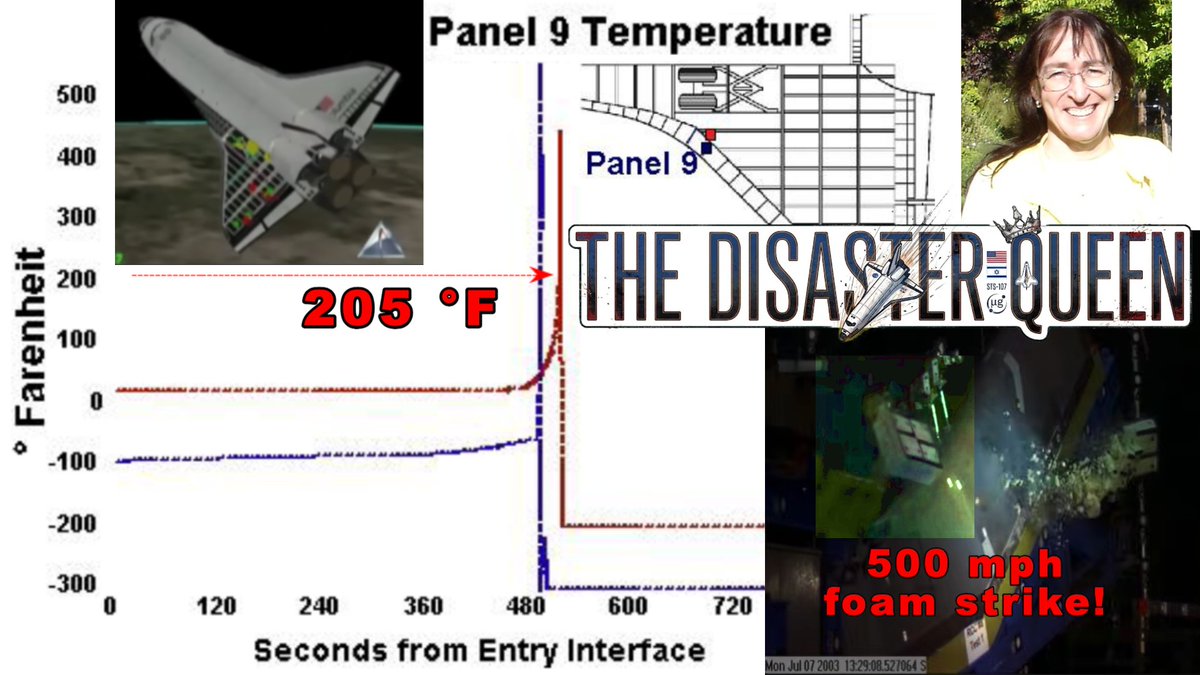
In this video, I show how Dr. Judy Wood worked out what caused the Space Shuttle Columbia disaster within days, while NASA only confirmed it about 5 months later. Watching the live coverage on February 1, 2003, she identified the damaged thermal tiles on the left wing, and 5 days later she gave her EM 304 (Mechanics of Materials) class a test problem about it. The flight's own thermocouple data later showed a temperature spike in the left wing at around 205 °F, the same value she had calculated in her problem.
Timestamps:
– Dr. Judy Wood solved the Space Shuttle Columbia disaster right away!
– Gemini AI summary of the emails DJW sent me about the Columbia disaster.
– DJW identified the thermal tile issue while watching live coverage on February 1, 2003.
– E212 and E208 camera angles of the foam strike during launch on January 16, 2003.
– DJW gave her EM 304 class the test just 5 days later, on February 6, 2003.
– Wile E. Coyote cuts a circular hole in a bridge to trap the Road Runner.
– NASA focused on the left wing 2 months later, but it wasn't until 5 months later that they obtained experimental confirmation that the foam strike would cause extensive damage to the wing.
– DJW's students called her "the Disaster Queen" for solving the Columbia disaster early on.
– July 7, 2003, foam strike test at 500 mph.
– Slides from Scott Hubbard's April 15, 2003, presentation.
– Thermocouple data showing a temperature spike in the left wing at around 205 °F, just as Dr. Judy Wood had already calculated!
– Grok AI explanation of the temperature chart.
– The spike in temperature means the superheated plasma had entered the wing, but the Space Shuttle kept flying for another 400+ seconds.
– DJW's 205 °F annotation is a direct visual link between the real flight data and her idealized tube problem calculation.
#math #science #engineering #materials #physics
EM 304 Exam Problem: Failure Temperature of the Space Shuttle Columbia
https://t.co/d0MPJpGhSG
In this video, I solve Problem 1 of the EM 304 test that Dr. Judy Wood gave her students on February 6, 2003, five days after the Space Shuttle Columbia disaster. If a thermal tile is lost, how hot can an aluminum tube held between two rigid support plates get before something fails? I check three candidates: compression in the aluminum tube (442.2 °F), bearing on the plate at the tube end (515.9 °F), and shear in the plate around the tube (205.03 °F). The shear stress in the plate arises due to the compressive stress in the tube that the plate is connected to. Since the temperature of 205 °F is the lowest, the failure occurs first as shear in the plate, even though the corresponding compressive stress in the tube (27.8 ksi) is far less than its strength limit of 60 ksi.
Timestamps:
0:00 – Problem 1 of EM 304 on February 6, 2003: Possible cause of failure is the loss of a thermal tile.
1:01 – Problem assumptions: Aluminum tube is heated uniformly while the remaining structure is at 0° F.
3:26 – Given three volume elements to examine the corresponding stresses and temperatures at failure.
6:20 – Material properties for the support plates and aluminum tube.
9:33 – Three questions: Determine maximum temperature of the aluminum tube before failure, first failure location, stress states at the three volume elements, and draw these stress state diagrams.
11:17 – Location descriptions: Point A is inside the top plate, B is the surface between the plate and tube, Point C is the outer surface of the aluminum tube.
12:02 – Solution: I used Dr. Judy Wood's solution key and Grok AI's assistance in this solution.
12:20 – Thermal expansion properties: Support plates are idealized as perfectly rigid and non-expanding, while the aluminum tube uses the 2014-T6 aluminum alloy properties.
12:38 – Strength limits of the plates and tube. Note that ksi = kips per square inch = 1000 psi.
14:52 – Solution to (a): Maximum temperature without failure.
17:33 – The aluminum tube is assumed to be of constant length, which means the thermal expansion displacement is equal to the resulting compressive displacement.
20:17 – Equation for thermal displacement involving the coefficient of linear thermal expansion.
22:21 – Equation for Young's Modulus and compressive stress.
24:30 – Rearrange to obtain our temperature increase formula (and force that develops in the tube).
27:16 – Candidate 1: Aluminum tube in compression (point C).
29:07 – Maximum temperature at failure at point C is 442.2 °F.
32:04 – Candidate 2: Plate bearing at the tube end (point B).
34:40 – Plates are idealized as rigid and non-expanding, so we have to scale up the temperature of the aluminum tube by the ratio of the plate to tube compressive strength limits and obtain failure temperature of 515.9 °F at point B.
35:47 – Candidate 3: Shear at the plate connection (point A)
37:19 – Free body diagram of the shear stress in the plate due to the compressive stress in the tube
42:27 – "Unrolling" the circular shear stress to obtain a rectangle corresponding to the shear area
45:40 – By equilibrium, we obtain a formula for the compressive stress in the tube as a function of the shear stress in the plate and the ratio of the shear area to compressive area
49:00 – Temperature at failure at point A is 205.03 °F
53:30 – Solution to (b): It fails at point A first, shear in the plate, because its failure temperature is the lowest
54:33 – Solution to part (c): Stress state at the failure temperature
55:46 – Obtain compressive stress in the aluminum from the shear stress in the plate using our earlier derived formula, and get 27.8 ksi, which is also the uniaxial compressive stress at point C and bearing stress at point B. This stress is well below the plate and tube allowable compressive stresses
59:02 – Solution to (d): Volume-element sketches
59:38 – Note: The "1 + 2" are actually points Dr. Judy Wood gives when grading tests.
1:03:30 – Shear stress diagram needs to have arrows be in equilibrium aka not rotating
1:06:02 – Summary of the Engineering Logic: Compressive stress in the tube causes failure in shear at the plate, even though the compressive stress is far below its strength limit
#math #science #engineering #nasa #physics
Incredible new look & huge feature update from the best decentralized community video platform!
gorgeous interface for live streaming, clips, long & short form video: all interconnected with global social & content apps... found your weekend plans on @3speaktv
own, watch, monetize, engage, create, connect
already there? joining now? share your profile and show it off 👇
Reminder that your /r RSS is toast this week. If you've got an online community looking for a way to publicly create an agent readable record of immutable content & data...
we have a whole ecosystem of tools for that
click through & discover how to distribute community knowledge
EM 304 Exam Problem: Failure Temperature of the Space Shuttle Columbia
https://t.co/d0MPJpGhSG
In this video, I solve Problem 1 of the EM 304 test that Dr. Judy Wood gave her students on February 6, 2003, five days after the Space Shuttle Columbia disaster. If a thermal tile is lost, how hot can an aluminum tube held between two rigid support plates get before something fails? I check three candidates: compression in the aluminum tube (442.2 °F), bearing on the plate at the tube end (515.9 °F), and shear in the plate around the tube (205.03 °F). The shear stress in the plate arises due to the compressive stress in the tube that the plate is connected to. Since the temperature of 205 °F is the lowest, the failure occurs first as shear in the plate, even though the corresponding compressive stress in the tube (27.8 ksi) is far less than its strength limit of 60 ksi.
Timestamps:
0:00 – Problem 1 of EM 304 on February 6, 2003: Possible cause of failure is the loss of a thermal tile.
1:01 – Problem assumptions: Aluminum tube is heated uniformly while the remaining structure is at 0° F.
3:26 – Given three volume elements to examine the corresponding stresses and temperatures at failure.
6:20 – Material properties for the support plates and aluminum tube.
9:33 – Three questions: Determine maximum temperature of the aluminum tube before failure, first failure location, stress states at the three volume elements, and draw these stress state diagrams.
11:17 – Location descriptions: Point A is inside the top plate, B is the surface between the plate and tube, Point C is the outer surface of the aluminum tube.
12:02 – Solution: I used Dr. Judy Wood's solution key and Grok AI's assistance in this solution.
12:20 – Thermal expansion properties: Support plates are idealized as perfectly rigid and non-expanding, while the aluminum tube uses the 2014-T6 aluminum alloy properties.
12:38 – Strength limits of the plates and tube. Note that ksi = kips per square inch = 1000 psi.
14:52 – Solution to (a): Maximum temperature without failure.
17:33 – The aluminum tube is assumed to be of constant length, which means the thermal expansion displacement is equal to the resulting compressive displacement.
20:17 – Equation for thermal displacement involving the coefficient of linear thermal expansion.
22:21 – Equation for Young's Modulus and compressive stress.
24:30 – Rearrange to obtain our temperature increase formula (and force that develops in the tube).
27:16 – Candidate 1: Aluminum tube in compression (point C).
29:07 – Maximum temperature at failure at point C is 442.2 °F.
32:04 – Candidate 2: Plate bearing at the tube end (point B).
34:40 – Plates are idealized as rigid and non-expanding, so we have to scale up the temperature of the aluminum tube by the ratio of the plate to tube compressive strength limits and obtain failure temperature of 515.9 °F at point B.
35:47 – Candidate 3: Shear at the plate connection (point A)
37:19 – Free body diagram of the shear stress in the plate due to the compressive stress in the tube
42:27 – "Unrolling" the circular shear stress to obtain a rectangle corresponding to the shear area
45:40 – By equilibrium, we obtain a formula for the compressive stress in the tube as a function of the shear stress in the plate and the ratio of the shear area to compressive area
49:00 – Temperature at failure at point A is 205.03 °F
53:30 – Solution to (b): It fails at point A first, shear in the plate, because its failure temperature is the lowest
54:33 – Solution to part (c): Stress state at the failure temperature
55:46 – Obtain compressive stress in the aluminum from the shear stress in the plate using our earlier derived formula, and get 27.8 ksi, which is also the uniaxial compressive stress at point C and bearing stress at point B. This stress is well below the plate and tube allowable compressive stresses
59:02 – Solution to (d): Volume-element sketches
59:38 – Note: The "1 + 2" are actually points Dr. Judy Wood gives when grading tests.
1:03:30 – Shear stress diagram needs to have arrows be in equilibrium aka not rotating
1:06:02 – Summary of the Engineering Logic: Compressive stress in the tube causes failure in shear at the plate, even though the compressive stress is far below its strength limit
#math #science #engineering #nasa #physics
Review of Mechanics of Materials: Strain, Stress, Shear, Thermal Expansion
https://t.co/oz0kVGeTqX
In this video, I review the Mechanics of Materials needed to solve Problem 1 of the EM 304 test that Dr. Judy Wood gave her students on February 6, 2003, five days after the Space Shuttle Columbia disaster. I cover strain and thermal expansion, the 2014-T6 aluminum alloy used in the aerospace industry, and the elastic constants: Young's modulus (stress and the stress-strain curve), the shear modulus (shear stress and shear strain), and Poisson's ratio. At the end, I show the free MES Mechanics of Materials calculator, try it out yourself!
Timestamps:
0:00 – Review of Mechanics of Materials
0:19 – Strain and thermal expansion
0:52 – Strain is relative deformation compared to a referenced position
1:58 – Thermal expansion is the tendency of matter to increase in size with increasing temperature
4:15 – 2014-T6 aluminum alloy is often used in the aerospace industry
5:28 – T6 temper: solution heat-treating and artificially aging
7:44 – Elastic constants
8:57 – Young's modulus is the axial stress divided by the axial strain
9:23 – Stress describes the forces present during deformation of materials
10:44 – Typical stress-strain curve for a material under axial stress
12:31 – Shear modulus is the shear stress divided by the shear strain
13:59 – Shear stress is the shear force coplanar with a cross section divided by its area
15:55 – Poisson's ratio is the lateral strain divided by the axial strain
20:11 – MES Mechanics of Materials calculator
#math #science #engineering #materials #physics
@Myriam88025 Thanks for asking. There are various theoretical claims of how it works, but I haven't examined those in detail. But I did make this Hutchison Effect Simulator to help grasp how John did his thing! https://t.co/t3U1CvHyIT
MES Livestream 143: 9/11 Spooky Halloween Special + AI Vibe Coding
https://t.co/QedIwxUydy
Join me as I deep dive into the haunted house that is 9/11 spooks, while vibing with Claude Code to update my 9/11 Spooks database and website: https://t.co/512AnBztVf
Timestamps (added by Claude AI):
0:00 – Stream setup
0:21 – Mic level check
2:52 – MES Photo Editor demo
4:59 – MES Event Reminder tool
5:33 – Video Editor, Audio Editor and MES Premium (no ads with Hive)
6:26 – Stream notes mirrored on the Hive blockchain
7:54 – Workout Planner and Jump-Start a Car simulator
12:00 – Livestream 143 description
13:16 – 9/11 Spooks hub, All Content search and Dr. Judy Wood's rebuttal
15:29 – Nov 21: Tom Sherman of the New Calendar joins the show
18:59 – Poll: which 9/11 spook shocked you the most?
20:59 – Viewer comments
21:54 – Flat Earth Dave: "lasers" and Dr. Judy Wood
23:10 – 9/11 Spooks Database + MES Excel, Word and PDF editors
24:25 – MES Favourites
26:47 – Adding Flat Earth Dave to the database
29:20 – Thumbnail: David Hughes and Norman
30:35 – Norman on a small show calling it "directed energy weapon theory"
31:57 – Live notes on Telegram
37:00 – Jim Fetzer's face melting, and he's 85 (Famous Birthdays tool)
41:39 – MES YouTube search page for all my videos
44:00 – Norman spying on the MES Telegram chat
45:13 – Bob Greenyer's "Nobel Peace Prize nomination" claim
48:04 – 9/11 Spooks Database tour
49:33 – Dallas (Fully Charged Zone) uploads 9/11 Alchemy
55:35 – His comment on my 9/11 Alchemy upload the day before
59:46 – Why Dallas came out as a spook
1:02:44 – Dr. Judy Wood joins the chat
1:04:52 – Why not to use the term "DEW"
1:06:06 – Dallas's AI alien thumbnails of John Hutchison
1:09:08 – Off-Guardian's review of Where Did the Towers Go?
1:11:50 – David Hughes' reply to Off-Guardian
1:13:16 – Off-Guardian commenters ignore real calculations
1:17:36 – David Hughes cites Bob Greenyer's dust baggie table
1:23:46 – Paul Loveless' presentation on intelligence agencies
1:29:14 – Roswell date fact check
1:33:31 – My extension that combines all stream chats
1:35:09 – Parallel construction
1:36:58 – Can spy satellites read a license plate?
1:39:05 – MES Timer display
1:41:11 – How to get stream reminders
1:46:05 – Stream time and daylight saving
1:50:42 – Operation Mockingbird
1:52:54 – Checking Paul Loveless' story with AI
1:53:49 – Dr. Judy Wood: spy satellites and the Columbia disaster
1:58:56 – Norman's slander of MES; even Off-Guardian calls out his spam
2:01:38 – Norman's plagiarism and false laptop story
2:05:34 – Telling the Beard Monkey debunker to stop linking us with Norman
2:12:30 – Dr. Judy Wood "disaster queen" and the Columbia spy satellite images
2:15:04 – EyesIsWatchin's subdomain
2:15:20 – The Naudet brothers and 100 Duane Street
2:16:09 – Hive login comments and MES Premium
2:17:01 – Columbia disaster shook a house in Texas
2:20:43 – Andrew Johnson's books on https://t.co/anehozdbm4
2:22:43 – End
#911truth #conspiracy #halloween #psyop #technology
MES Livestream 142: Amaterasu Solar Discusses Obsoleting Money https://t.co/33ZXEWgsOd
Amaterasu Solar joins the show again, this time to discuss the concept of obsoleting money, which could be a possibility if/when free energy technology is made public and widespread.
0:00 Intro & Welcome – Housekeeping + Amaterasu joins
8:30 Who is Amaterasu Solar + background with Thomas Townsend Brown / electrogravitics
18:00 The foundational function of money (accounting for human energy/work/labor)
32:00 Why free energy technology threatens the entire money system
48:00 What “obsoleting money” actually means (not abolition by force)
1:05:00 Post-scarcity implications: automation, abundance, and control systems
1:22:00 Technocracy, digital ID, and the moneyed psychopaths’ incentives
1:38:00 Practical steps & transition ideas once free energy is public
1:52:00 Viewer questions & deeper discussion
2:03:00 Closing thoughts + how to follow Amaterasu
#money #conspiracy #freeenergy #technocracy #economics
📝 Notes: https://t.co/vDButYZEEh
🏗️ Try the free MES Mechanics of Materials calculator: https://t.co/kK0CUGxzva
🎬 Full video and written solution: https://t.co/NpO7S04TPz
Review of Mechanics of Materials: Strain, Stress, Shear, Thermal Expansion
https://t.co/oz0kVGeTqX
In this video, I review the Mechanics of Materials needed to solve Problem 1 of the EM 304 test that Dr. Judy Wood gave her students on February 6, 2003, five days after the Space Shuttle Columbia disaster. I cover strain and thermal expansion, the 2014-T6 aluminum alloy used in the aerospace industry, and the elastic constants: Young's modulus (stress and the stress-strain curve), the shear modulus (shear stress and shear strain), and Poisson's ratio. At the end, I show the free MES Mechanics of Materials calculator, try it out yourself!
Timestamps:
0:00 – Review of Mechanics of Materials
0:19 – Strain and thermal expansion
0:52 – Strain is relative deformation compared to a referenced position
1:58 – Thermal expansion is the tendency of matter to increase in size with increasing temperature
4:15 – 2014-T6 aluminum alloy is often used in the aerospace industry
5:28 – T6 temper: solution heat-treating and artificially aging
7:44 – Elastic constants
8:57 – Young's modulus is the axial stress divided by the axial strain
9:23 – Stress describes the forces present during deformation of materials
10:44 – Typical stress-strain curve for a material under axial stress
12:31 – Shear modulus is the shear stress divided by the shear strain
13:59 – Shear stress is the shear force coplanar with a cross section divided by its area
15:55 – Poisson's ratio is the lateral strain divided by the axial strain
20:11 – MES Mechanics of Materials calculator
#math #science #engineering #materials #physics
Introduction and Space Shuttle Columbia Disaster News Footage
https://t.co/GlbAZs5BNT
In this video, I introduce Problem 1 of the EM 304 (Mechanics of Materials) test that Dr. Judy Wood gave to her students on February 6, 2003, just 5 days after the Space Shuttle Columbia broke apart during re-entry on February 1, 2003. I also show live news coverage of the disaster, including footage (from 81 seconds after launch on January 16, 2003) of the foam insulation from the rocket booster striking the left wing at nearly a right angle, dustifying in the process. Dr. Judy Wood suspected right away that this was a severe impact and turned it into a thermal expansion problem for her students.
Timestamps:
0:00 – Introduction: EM 304 Test Problem 1
1:22 – Live Footage of the Space Shuttle Columbia Disaster, including a resident's house being shook on Earth
3:32 – Thermal tile damage is mentioned as a possible cause during live footage
4:39 – Thermal tile damage from a foam strike during launch week prior to the disaster
#math #science #nasa #space #engineering
MES Math Q/A 73: What is Thermal Expansion? https://t.co/ikTwhcx3Rw
Thermal expansion is the tendency of materials to grow when heated: a bar's length changes by ΔL = α L ΔT (where α is the material's coefficient of thermal expansion). It happens because atoms are easier to pull apart than to push together, so as heat makes them vibrate harder, they swing farther outward than inward and their average spacing increases.
Timestamps (by Claude AI):
0:00 Stream starts (YouTube not live yet)
30:59 YouTube goes live (new OBS setup)
33:03 New MES tools: search engines, reverse image search
33:19 Hutchison Effect Simulator preview
34:28 Peter Baron's 9/11 UFO testimony
37:19 New OBS scenes
39:24 MES Clock
40:09 Dilithium crystal letter sent to John Hutchison
41:34 Borderline Sciences on the Wayback Machine
42:18 Why I post on Hive and mirror on https://t.co/anehozdbm4
43:00 Premium (no ads), NBA picks, Translate + Image to Text
46:30 Viewer question: Wilhelm Reich
47:58 Fixing low audio
51:41 SOTA magnetic pulser and German New Medicine (GNM)
54:36 David Wilcock's 911 call and GNM
56:43 Fixing screen audio in OBS with Claude
1:00:25 David Wilcock's 911 call audio
1:05:28 Grok table: mainstream vs terrain theory vs GNM
1:12:05 The GNM two-phase chart explained
1:18:36 Space Shuttle Columbia notes and Dr. Judy Wood's exam
1:18:59 MES Photo Editor
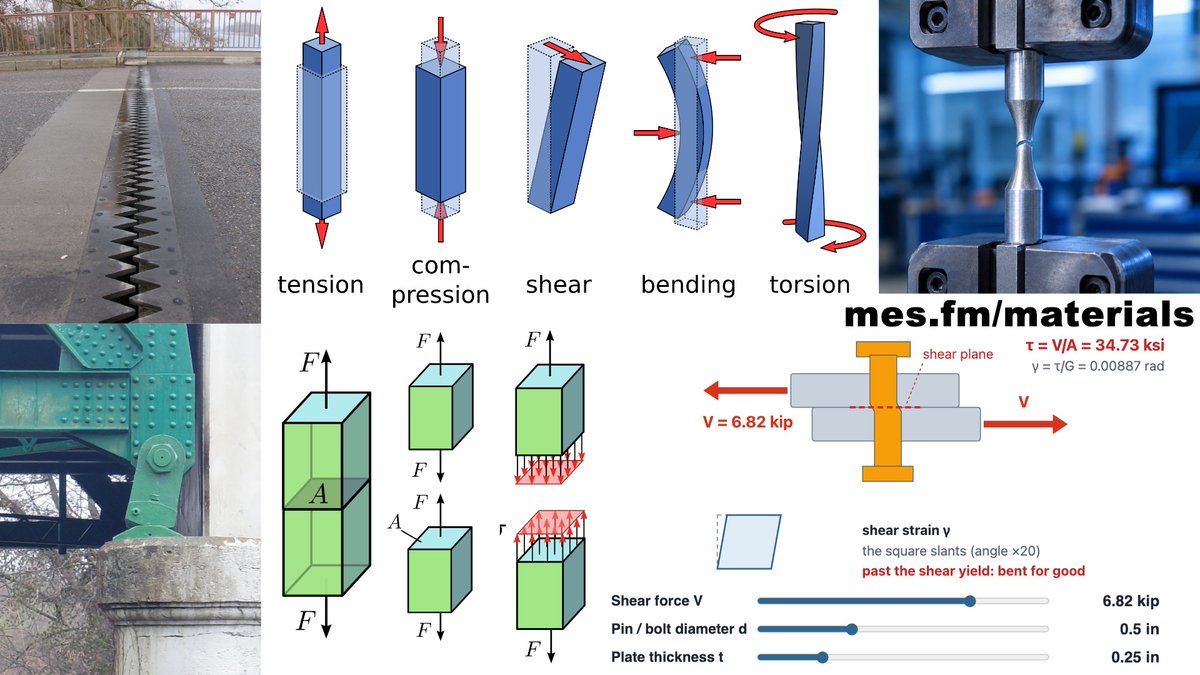
1:20:03 What is thermal expansion? Mechanics of Materials simulator
1:22:14 Expansion gaps (rails and bridges)
1:23:38 Captain John Hutchison joins
1:24:20 MES Favourites and page ratings
1:27:57 Percentage Calculator: type it in words, labels, saves
1:30:08 Coefficient of linear expansion and buckling
1:30:54 Columbia: foam strike and Dr. Judy Wood's test problem
1:33:06 Thermal stress: the tile fails in shear at 205 °F
1:35:12 Shear stress calculator
1:35:56 Foam strike footage
1:40:10 Sensors failed at about 200 °F
1:41:38 CNN coverage of the Columbia accident
1:44:24 Torsion, Poisson's ratio and the materials table
1:46:32 Tensile test simulator
1:47:14 Columbia re-entry footage
1:50:45 Why bridges have expansion joints
1:52:51 Why do solids expand when heated?
1:54:21 Hutchison Effect Simulator for John
1:55:02 Andrew Johnson's 9/11 books on https://t.co/anehozdbm4
1:57:53 Simulator demo: Van de Graaff, Tesla coil, 3600x speed
1:59:57 Alec, John's former colleague
2:00:41 The interatomic potential well
2:02:05 Thermal expansion lecture clip
2:05:41 Why a symmetric bond would not expand
2:08:33 Alec on the spark gap
2:09:13 Ending the stream
#math #mechanics #materials #engineering #thermalexpansion
MES Math Q/A 72: What is a Ground Rod and how to find it in your house? https://t.co/9WSnKBegB1 & https://t.co/43XAh9FdIN
A ground rod is a metal rod—typically copper-clad steel—driven into the earth to establish a direct electrical connection between an electrical system (or lightning-protection system) and the earth. It provides a low-impedance (total opposition to current flow) path that helps stabilize system voltage relative to earth, dissipates high-energy events such as lightning strikes and voltage surges into the ground, and supports safe operation of the overall grounding electrode system.
A ground rod at a house is typically found driven into the earth so that its top is at or just below ground level, near the exterior wall close to the electrical service entrance (often near the meter or main panel location). It is connected by a grounding electrode conductor (usually a bare or insulated copper wire) that runs to the main electrical panel.
Introduction and Space Shuttle Columbia Disaster News Footage
https://t.co/GlbAZs5BNT
In this video, I introduce Problem 1 of the EM 304 (Mechanics of Materials) test that Dr. Judy Wood gave to her students on February 6, 2003, just 5 days after the Space Shuttle Columbia broke apart during re-entry on February 1, 2003. I also show live news coverage of the disaster, including footage (from 81 seconds after launch on January 16, 2003) of the foam insulation from the rocket booster striking the left wing at nearly a right angle, dustifying in the process. Dr. Judy Wood suspected right away that this was a severe impact and turned it into a thermal expansion problem for her students.
Timestamps:
0:00 – Introduction: EM 304 Test Problem 1
1:22 – Live Footage of the Space Shuttle Columbia Disaster, including a resident's house being shook on Earth
3:32 – Thermal tile damage is mentioned as a possible cause during live footage
4:39 – Thermal tile damage from a foam strike during launch week prior to the disaster
#math #science #nasa #space #engineering
Exam Problem by Dr. Judy Wood: Space Shuttle Columbia Disaster
In this video, I go over an exam problem that Dr. Judy Wood gave her Mechanics of Materials class on February 6, 2003, in which she solved the cause of the Space Shuttle Columbia disaster that had occurred just 5 days prior, and months before NASA officially reached the same conclusions. Her students then gave her the nickname "The Disaster Queen"!
Notes: https://t.co/U84xDVPoAe
Timestamps:
0:00 Intro
2:19 Introduction: EM 304 Test Problem 1
3:44 Topics to Cover
6:43 Live Footage of the Space Shuttle Columbia Disaster
11:28 Problem 1 of EM 304, Test #1, February 6, 2003
23:52 Solution: Review of Mechanics of Materials
24:28 Strain and thermal expansion
28:28 2014-T6 Aluminum Alloy
31:58 Elastic Constants
33:10 Young's modulus
33:35 Stress
36:44 Shear modulus
38:11 Shear stress
40:09 Poisson's ratio
44:25 Thermal Expansion Properties of the Support Plates and Aluminum Tube
44:45 Strength Limits (Allowable Stresses)
46:59 MES Mechanics of Materials Calculator
51:21 Part (a): Maximum temperature without failure
1:03:45 Candidate 1: Aluminum tube in compression (point C)
1:08:34 Candidate 2: Plate bearing at the tube end (point B)
1:12:17 Candidate 3: Shear at the plate connection (point A)
1:30:00 Part (b): Where it fails first
1:31:02 Part (c): Stress state at the failure temperature
1:35:32 Part (d): Volume-element sketches
1:42:32 Summary of the Engineering Logic
1:43:17 Dr. Judy Wood solved the Space Shuttle Columbia Disaster right away!
1:52:00 CAIB Investigator Scott Hubbard's April 15, 2003 presentation confirmed Dr. Judy Wood's analysis
1:59:15 Space Shuttle Columbia Disaster
2:10:41 Columbia Accident Investigation Board (CAIB)
2:16:27 CNN Anchor Judy Woodruff transcript of CNN's February 6, 2003 Live Columbia Memorial
2:17:29 News footage of the Columbia disaster
2:19:47 Grok AI List of Controversies Surrounding the Disaster
2:28:26 Outro
#math #science #nasa #space #engineering
🎨 What if your digital artwork could live permanently on the blockchain?
$PIXA is bringing a new approach to digital creativity through Pixagram, a blockchain-powered social platform designed for artists, creators, and communities.
Unlike traditional NFT platforms that often rely on external storage, Pixagram stores artwork directly on its own Pixa blockchain, helping preserve digital creations and their history on-chain.
Built with a focus on digital ownership and creator participation, the ecosystem introduces:
🔹 Permanent On-Chain Art – Artwork stored directly on the blockchain
🔹 AI-Powered Pixel Art – Transform photos into pixel artwork using AI
🔹 Creator Rewards – Rewarding content creation and community curation
🔹 Decentralized Social Network – An open-source platform with user-controlled keys
With its mainnet live since September 2026, PIXA is building an ecosystem where digital creativity, social engagement, and blockchain ownership come together.
#PIXA #Pixagram #Coinstore #Web3 #Blockchain #DigitalArt #NFT #AI
🔗 Explore more: https://t.co/E7rirGtW5F
@513Cincy_@adams_at_mh370@scottbolander Yup. I had covered that last year. https://t.co/vdGyyHm7xi
The duplicate frame orb is also in the wrong orientation! https://t.co/yBd391Gq4Y
Here's a condensed version of those videos: https://t.co/5gomDs4Rfo
@513Cincy_@adams_at_mh370@scottbolander Yup. I had covered that last year. https://t.co/vdGyyHm7xi
The duplicate frame orb is also in the wrong orientation! https://t.co/yBd391Gq4Y
Here's a condensed version of those videos: https://t.co/5gomDs4Rfo